分类: business

  • Beijing’s Chaoyang aims to be top spot for global tourists

    Beijing’s Chaoyang aims to be top spot for global tourists

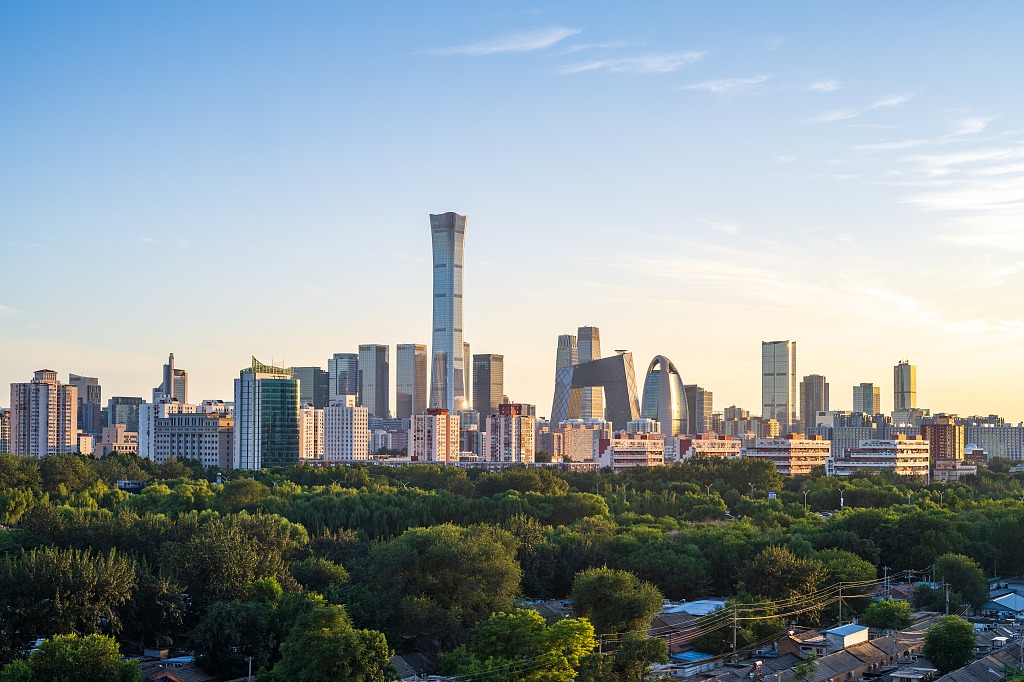
    Beijing’s Chaoyang district has announced a comprehensive development strategy to establish itself as the primary destination for international tourists visiting China’s capital. The initiative, revealed during the district’s annual legislative and political advisory meetings, forms a cornerstone of Chaoyang’s 15th Five-Year Plan (2026-2030) objectives.

    Commercial Bureau Director Chen Feng outlined the district’s vision to create an internationally-oriented shopping environment through significant expansion and modernization of duty-free retail facilities and instant tax refund shopping zones. The strategy aims to enhance the overall visitor experience while boosting retail revenue from international tourists.

    Chaoyang district currently hosts an impressive retail infrastructure including more than 100 commercial complexes and over 2,000 flagship stores. The area dominates Beijing’s premium dining scene, containing 30% of the city’s traditional teahouses, 50% of its cafes, 60% of Michelin-starred restaurants, and 70% of Black Pearl-recognized dining establishments.

    The development blueprint includes substantial renovations to several prominent commercial centers. Blue Island Tower, The Place, and Yansha Youyi Shopping Cities are among the major complexes scheduled for modernization to meet international standards and consumer expectations.

    This strategic positioning aligns with Beijing’s broader economic development goals and demonstrates the city’s commitment to enhancing its global tourism competitiveness. The transformation of Chaoyang district represents a significant investment in retail infrastructure and international consumer services, potentially establishing new benchmarks for urban commercial development in China.


  • BNW Developments and Radisson Hotel Group announce the signing of Radisson Blu Hotel and Radisson Blu Residences at RAK Central, Ras Al Khaimah

    BNW Developments and Radisson Hotel Group announce the signing of Radisson Blu Hotel and Radisson Blu Residences at RAK Central, Ras Al Khaimah

    In a significant move for UAE’s hospitality and real estate sectors, Radisson Hotel Group has forged a strategic partnership with BNW Developments to establish a new Radisson Blu presence in Ras Al Khaimah. The agreement, signed on January 15, 2026, will bring both a premium hotel and branded residences to the heart of RAK Central—a developing financial hub scheduled to open in 2029.

    The development forms part of a comprehensive 3.1 million square foot master plan designed to integrate commercial, financial, residential, and recreational facilities. Strategically positioned near Al Marjan Island and Al Hamra Village, the site offers direct access to the E11 highway, connecting Ras Al Khaimah with other emirates and key tourist attractions.

    According to Ankur Aggarwal, Chairman and Founder of BNW Developments, this project represents a milestone in the company’s vision to transform Ras Al Khaimah into a prominent destination. “We are focused on delivering a development that sets a new benchmark for branded living in the UAE,” he stated, emphasizing the commercial resilience and international appeal of the mixed-use asset.

    Dr. Vivek Anand Oberoi, Managing Director and Co-Founder of BNW Developments, highlighted the lifestyle-oriented approach: “We curate lifestyles that redefine the living experience. Bringing Radisson Blu to RAK Central reflects our pursuit of excellence.”

    Elie Milky, Chief Development Officer for the Middle East, North Africa, Cyprus, and Greece at Radisson Hotel Group, noted the emirate’s strong infrastructure and investment potential as key factors driving the expansion. “Ras Al Khaimah stands out for its expanding mix of demand drivers,” he remarked.

    The Radisson Blu Hotel will feature 361 rooms situated above retail and cinema venues, along with five food and beverage outlets, a rooftop terrace, pool bar, meeting spaces, spa, gym, Business Class lounge, and a kids’ club. Adjacent to it, the Radisson Blu Residences will offer 222 units with access to hotel-style services and amenities.

    This project underscores the growing trend of branded residences in the Gulf region, where buyers increasingly seek homes backed by trusted hospitality brands. Radisson Hotel Group continues to strengthen its regional portfolio, with over 100 properties currently operational or in development across the Middle East.

  • Dubai: Gold prices slip on profit-taking; 24K continues to trade above Dh550

    Dubai: Gold prices slip on profit-taking; 24K continues to trade above Dh550

    Gold markets in Dubai and worldwide experienced a downward adjustment on Thursday morning as investors capitalized on recent gains, triggering a sell-off that pushed prices lower. The precious metal, which had reached unprecedented levels in previous sessions, faced pressure from reduced safe-haven demand amid easing geopolitical concerns and profit-taking activities.

    According to the latest data from the Dubai Jewellery Group, 24K gold traded at Dh553.0 per gram, representing a decline of nearly Dh2 from previous levels. Other variants followed similar patterns, with 22K gold slipping to Dh512.25 per gram, while 21K, 18K and 14K varieties traded at Dh491, Dh421 and Dh328.25 per gram respectively. In international markets, spot gold registered $4,590 per ounce at 9 am UAE time, reflecting a 0.8 percent decrease.

    Market analysts attribute the recent volatility to multiple factors. Vijay Valecha, Chief Investment Officer at Century Financial, noted that softer-than-anticipated US inflation data has strengthened expectations for two potential interest rate reductions by the US Federal Reserve within the year. Additionally, growing apprehensions regarding the Federal Reserve’s independence, fueled by reports of potential legal action against Chair Jerome Powell, have created uncertainty in rate markets and exerted downward pressure on the US dollar.

    Despite the current correction, underlying market conditions remain supportive for gold. Geopolitical tensions continue to persist, including violent protests in Iran, renewed US pressure on Venezuela, fresh tariff threats associated with Tehran, and the ongoing conflict in Ukraine. These factors collectively contribute to sustained demand for assets that provide insulation from political outcomes.

    From a technical analysis perspective, Century Financial identifies potential resistance for gold near the $4,675 level, based on trendline connections from highs recorded on October 27, November 13, and December 26, 2025. Support levels are anticipated around $4,550, a threshold that has been tested previously.

    The market continues to demonstrate resilience despite the current pullback, with analysts monitoring both technical indicators and fundamental drivers for future price direction.

  • American consumers paid higher prices in December for food and rent

    American consumers paid higher prices in December for food and rent

    New economic data reveals American households faced mounting financial pressures in December 2025 as consumer prices climbed steadily, driven primarily by escalating food and housing expenses. The Bureau of Labor Statistics reported a 2.7 percent year-over-year increase in the Consumer Price Index, underscoring the persistent challenge of inflation that has plagued consumers for half a decade.

    The latest figures from the Labor Department indicate a 0.3 percent monthly rise in CPI, with housing and shelter costs emerging as the predominant contributors to this upward trend. December’s numbers presented a more accurate economic snapshot following November’s artificially suppressed inflation data during the government shutdown.

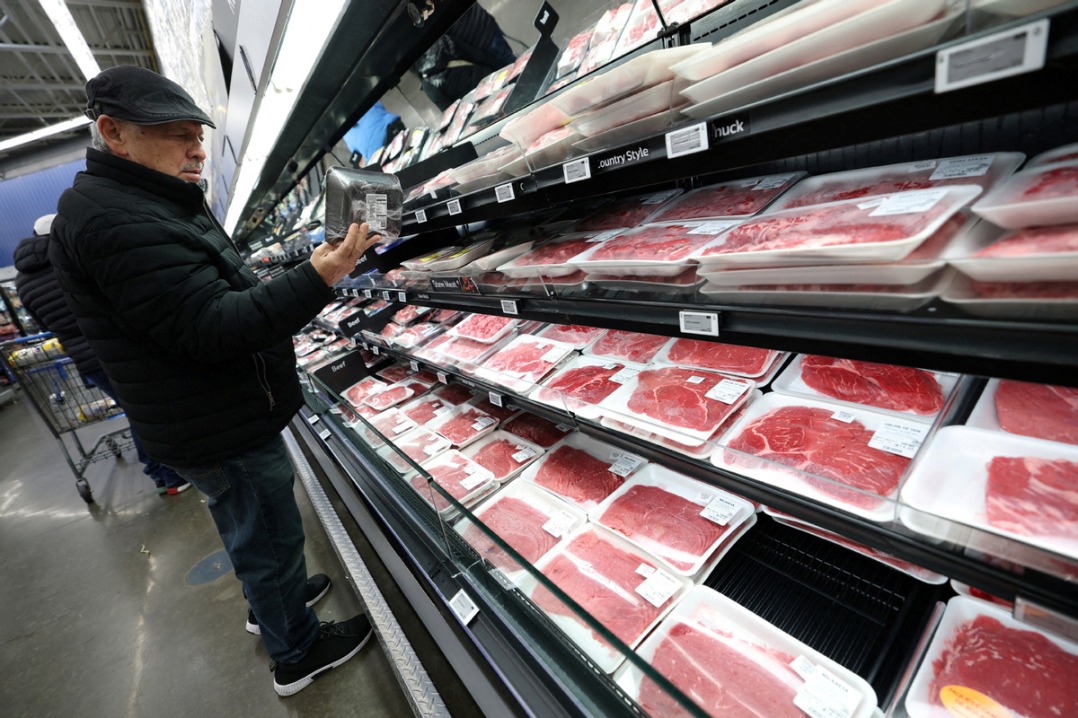
    Food prices experienced their most significant surge in over three years, with particular sharp increases in beef (17.8 percent year-on-year) and coffee (1.9 percent). Restaurant and food outlet costs climbed 0.7 percent—the largest three-year increase—while overall food prices jumped 3.1 percent annually.

    President Trump’s administration has implemented several measures to combat rising costs, including instructing the Federal Housing Finance Agency to purchase $200 billion in bonds from Fannie Mae and Freddie Mac to reduce mortgage rates. The administration has also adjusted agricultural tariffs, though experts note that the constantly shifting tariff policy has created uncertainty for businesses and consumers alike.

    Despite financial pressures, holiday retail sales demonstrated remarkable resilience. The National Retail Federation reported 4.1 percent growth from November through December, totaling strong seasonal performance that exceeded expectations.

    The Federal Reserve is anticipated to maintain its benchmark interest rate between 3.50-3.75 percent at its upcoming January meeting, despite unusual circumstances including a Justice Department investigation into Chair Jerome Powell.

    Trade experts warn that consumers may bear increasing burden of tariffs through 2026, with current rates including a 10 percent baseline tariff for many nations and approximately 47 percent tariffs on Chinese imports following the October summit between US and Chinese leaders.

  • Indian flights disrupted due to Iran airspace closure, dense fog; airlines issue advisories

    Indian flights disrupted due to Iran airspace closure, dense fog; airlines issue advisories

    India’s aviation sector encountered significant operational challenges on Thursday, January 15, 2026, as two distinct factors converged to create widespread flight disruptions across the country. Dense winter fog blanketing northern regions coincided with the unexpected closure of Iranian airspace, creating a perfect storm for air travel operations.

    Meteorological conditions resulted in severely reduced visibility across key northern Indian airports, with Delhi reporting near-zero visibility as temperatures plummeted below 3°C. Domestic carriers responded proactively to the situation, issuing advisories and implementing schedule adjustments. Indigo Airlines notified passengers of ‘slower flight movements’ specifically affecting Chandigarh operations, while Akasa Air implemented network-wide rescheduling, citing circumstances beyond their control.

    The simultaneous closure of Iranian airspace created additional complications for international operations. Multiple global carriers, including Air India, were forced to reroute flights or cancel services when alternative pathways proved unavailable. This dual disruption prompted airlines to urgently advise passengers to monitor flight statuses through official channels before proceeding to airports.

    Compounding these immediate challenges, Indian media reports indicated upcoming operational adjustments at Delhi Airport. From January 21-26, the aviation hub will implement daily suspensions of approximately two-and-a-half hours as part of enhanced security measures preceding Republic Day celebrations in the capital.

    These disruptions highlight the complex interplay between seasonal weather patterns, geopolitical developments, and security considerations that modern aviation networks must navigate. The incidents demonstrate how regional events can create ripple effects throughout global transportation systems, affecting both domestic and international travel operations.

  • Business leaders welcome Carney’s China visit, citing trade opportunities

    Business leaders welcome Carney’s China visit, citing trade opportunities

    Canadian Prime Minister Mark Carney’s official visit to Beijing, commencing January 14, 2026, has been met with robust approval from the nation’s business sector. Industry representatives are characterizing the diplomatic mission as a pivotal step toward stabilizing and diversifying Canada’s economic partnerships amid a complex global landscape.

    Bijan Ahmadi, Executive Director of the Canada China Business Council, emphasized the critical nature of re-engagement between Ottawa and Beijing. “Prime Minister Carney’s presence in China signifies a welcome recalibration of bilateral relations that began its gradual revival last summer,” Ahmadi stated. He underscored that sustained high-level dialogue provides the essential framework for navigating practical challenges, particularly within economic and trade domains.

    The economic interdependence between the two nations forms a compelling foundation for renewed cooperation. With approximately $120 billion in bilateral merchandise trade, China stands as Canada’s second-largest trading partner. Investment flows reflect similarly robust connections: Chinese foreign direct investment in Canada exceeds $60 billion, while Canadian enterprises have invested over $40 billion in China.

    Zheng Xiaoling, President of the Canada International Trade Promotion Society, highlighted the visit’s strategic timing against a backdrop of international geopolitical tensions and supply chain reorganization. “This diplomatic engagement carries profound economic significance,” Zheng observed. “It enables businesses to pursue market expansion and investment planning with renewed confidence, moving beyond previous hesitations caused by diplomatic friction.”

    Industry leaders identified multiple sectors ripe for expanded collaboration, including clean energy technology, agricultural exports (canola, lobster, and meat products), financial services, higher education, healthcare innovation, and artificial intelligence. The visit also opens possibilities for enhanced two-way investment, potentially allowing Canadian firms to attract Chinese capital while optimizing Asia-Pacific production and supply-chain arrangements—particularly in electric vehicles, battery materials, and critical minerals.

    Even during cooler diplomatic periods, commercial exchanges persisted through channels like the China International Import Expo, which attracted nearly 100 companies from British Columbia alone. Business leaders now urge stronger governmental support to leverage such platforms effectively, hoping to ignite broader recognition of Canadian products and technologies within the Chinese market.

  • Boeing knew of flaw in part linked to UPS plane crash, US safety board report says

    Boeing knew of flaw in part linked to UPS plane crash, US safety board report says

    Federal investigators have uncovered alarming evidence connecting a fatal cargo plane crash in Kentucky to a structural deficiency previously identified by Boeing over a decade earlier. The November incident involved a UPS-operated MD-11F freighter that erupted in flames after experiencing catastrophic engine separation during takeoff from Louisville International Airport.

    According to the National Transportation Safety Board’s (NTSB) latest investigative update, the aircraft briefly became airborne before veering uncontrollably into an industrial zone. The tragedy claimed fifteen lives—three flight crew members and twelve individuals on the ground.

    The investigation has pinpointed fatigue cracks within the engine mounting assembly as the primary failure point. These fractures, resulting from repeated stress on a critical bearing component, mirror incidents documented by Boeing in 2011. At that time, the aerospace manufacturer issued a non-binding service letter to operators acknowledging identical part failures across four instances involving three different aircraft.

    Despite this recognition, Boeing’s internal assessment concluded the issue ‘would not result in a safety of flight condition.’ The company recommended voluntary visual inspections at five-year intervals and proposed optional component upgrades, neither of which were mandated.

    Aviation safety expert Tim Atkinson, a former accident investigator, expressed grave concerns regarding Boeing’s judgment. ‘The structure concerned is not decorative—it’s an essential part of the mechanism that attaches the engine to the wing and carries loads such as thrust and drag,’ Atkinson stated. ‘It’s extraordinary that Boeing concluded that a failure of this part would not have safety consequences.’

    This incident renews scrutiny of Boeing’s safety protocols, echoing criticisms from recent 737 Max controversies and manufacturing quality issues. The company extended condolences to affected families while pledging continued cooperation with the ongoing NTSB investigation. A final determination regarding the crash’s cause awaits the agency’s comprehensive report.

  • Plan aims to clear real estate backlog

    Plan aims to clear real estate backlog

    Chinese authorities are implementing a multi-faceted national strategy to address the country’s substantial housing inventory surplus, combining targeted municipal policies with broader market interventions. The initiative comes as data reveals a critical imbalance, with the average inventory clearance period across 100 major cities reaching 27.4 months in November—nearly double the 14-month threshold considered healthy for a balanced market.

    The approach features distinct regional variations, with first-tier cities averaging 17.1 months of inventory, second-tier cities at 22.6 months, and third- and fourth-tier markets facing a daunting 40.3-month backlog. Housing Minister Ni Hong emphasized the implementation of city-specific measures to manage new supply while reducing existing stock, particularly through the conversion of commercial properties into affordable housing.

    A cornerstone of the strategy involves the innovative use of a 300-billion-yuan ($42.96 billion) relending facility established by the People’s Bank of China to support affordable housing conversions. This financial mechanism, potentially expanded through local government bond allocations, enables the purchase of existing commercial properties for transformation into subsidized housing.

    Concurrently, local governments are deploying creative mechanisms including housing “trade-in” programs and voucher systems for urban redevelopment projects. These initiatives facilitate residents’ transition from older properties to new developments while simultaneously reducing inventory overhang.

    Market analysts highlight the potential for further policy relaxation in core metropolitan areas. Wang Qing, chief macroeconomic analyst at Golden Credit Rating International, suggested that additional easing of purchase restrictions in Beijing, Shanghai, and Shenzhen could generate significant positive ripple effects across smaller markets.

    The long-term vision extends beyond inventory reduction to quality transformation. Minister Ni advocated for constructing “quality homes” with superior design, materials, and maintenance standards, while simultaneously upgrading existing housing stock. Market trends already indicate shifting preferences, with units exceeding 120 square meters comprising 30% of new supply in key cities.

    Experts emphasize that stabilizing the property market is crucial for mitigating negative wealth effects on household consumption. Morgan Stanley’s chief China economist Robin Xing noted that restoring confidence in this key asset class would be instrumental in unlocking broader economic spending power.

  • US and Taiwan sign $250B trade deal, cutting tariffs on Taiwanese goods

    US and Taiwan sign $250B trade deal, cutting tariffs on Taiwanese goods

    In a landmark economic agreement reached Thursday, the United States and Taiwan have established a comprehensive trade partnership centered on massive technology investments and reduced tariffs. The deal secures $250 billion in Taiwanese commitments to advance U.S. semiconductor manufacturing and artificial intelligence infrastructure while lowering tariff rates on Taiwanese goods to 15%—aligning with rates applied to other Asia-Pacific partners like Japan and South Korea.

    The arrangement, negotiated under the Trump administration’s broader trade rebalancing initiative, represents a strategic economic alignment between the two nations. The U.S. Department of Commerce characterized the agreement as ‘historic,’ emphasizing its potential to catalyze a ‘massive reshoring of America’s semiconductor sector’ through the development of world-class industrial parks.

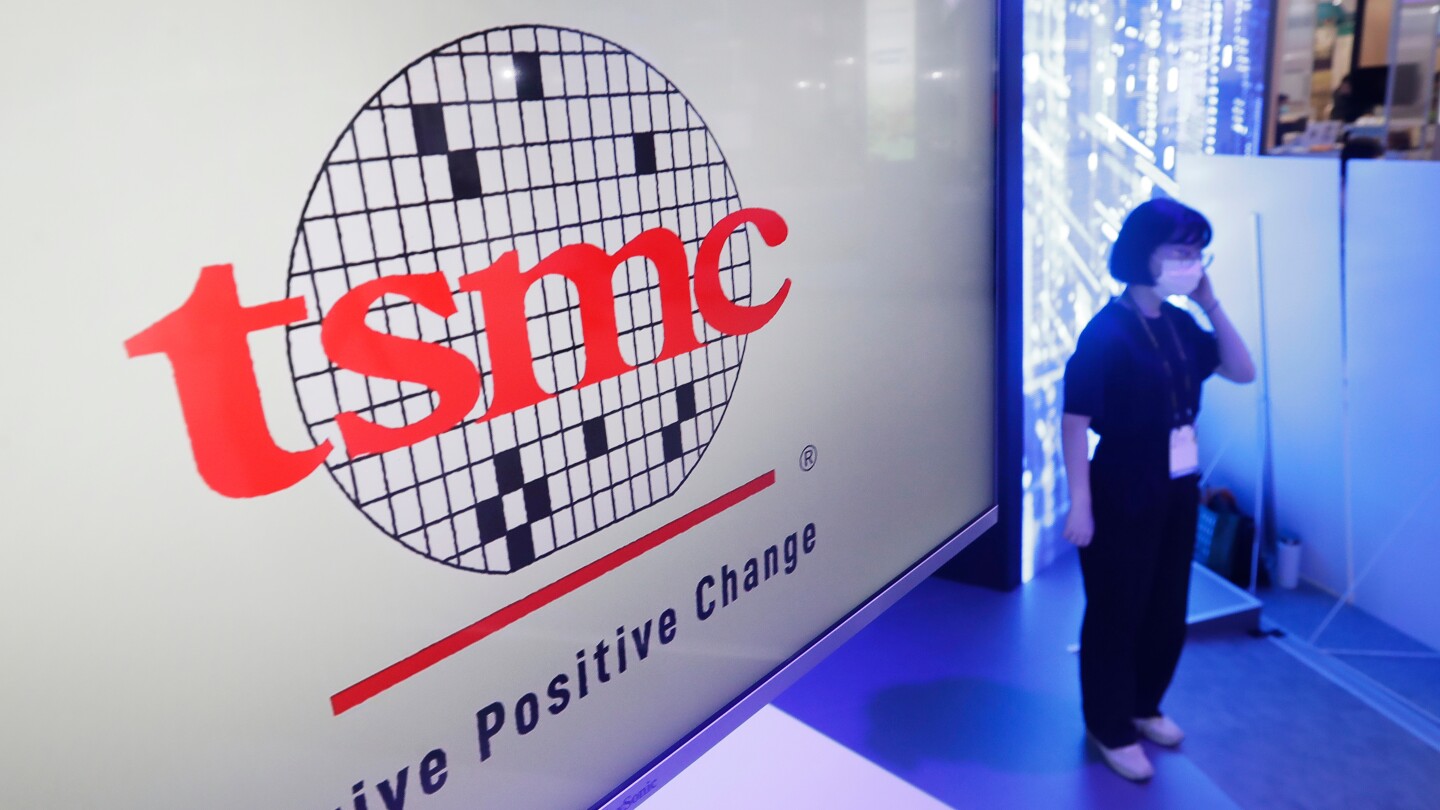
    Taiwanese semiconductor giant TSMC stands at the forefront of this investment surge, announcing parallel plans to increase capital expenditures by nearly 40% this year following a stellar quarterly performance. The chipmaker reported a 35% year-over-year profit increase to $16 billion, with revenue climbing to $33 billion in the October-December period.

    While Beijing immediately criticized the agreement as ‘economic plunder,’ Taiwanese officials framed the ‘Taiwan model’ as a vehicle for enhancing global competitiveness and deepening strategic cooperation with the United States. The deal includes targeted exemptions for specific Taiwanese imports such as generic pharmaceuticals and aircraft components, alongside favorable treatment for semiconductor producers investing stateside.

    TSMC’s ambitious expansion strategy includes accelerating construction of its Arizona fabrication plants, with total U.S. investments approaching $165 billion. Company leadership expressed confidence in sustained AI-driven demand despite market concerns about potential technology bubbles, noting that AI adoption ‘is starting to grow into our daily life.’

    Market analysts reinforce TSMC’s dominant position, highlighting its unparalleled pricing power and robust customer backlog that insulates against short-term demand fluctuations. With a market capitalization of $1.4 trillion, TSMC now ranks as Asia’s most valuable listed company—a testament to its critical role in the global technology ecosystem.

  • ‘Not a luxury’: Fury as community bank closes 15 branches, forcing some to drive 150km for services

    ‘Not a luxury’: Fury as community bank closes 15 branches, forcing some to drive 150km for services

    A prominent Australian customer-owned financial institution is confronting significant criticism following its decision to shutter multiple physical locations across the country. People First Bank, formed through the recent merger of Heritage Bank and People’s Choice Credit Union, has announced plans to close 15 branch offices and three agency outlets, triggering concerns about customer abandonment in regional communities.

    The Financial Sector Union has vehemently opposed the decision, highlighting that the closures contradict previous commitments made during the 2022 merger negotiations that guaranteed branch network stability. According to union representatives, the banking network has already contracted by approximately 40 percent since the consolidation was finalized in 2023.

    Julia Angrisano, National Secretary of the Financial Sector Union, criticized the institution for prioritizing profitability over community service. “While publicly professing support for customers and communities, the bank’s actions demonstrate contradictory priorities,” Angrisano stated. “Local banking services are being systematically eliminated despite the organization reporting consistently rising profits.”

    The closures will disproportionately affect vulnerable demographic groups including elderly customers, individuals with disabilities, and small business owners who depend on in-person banking services. Certain Queensland communities including Oakey and Pittsworth will be left without any physical banking facilities, forcing residents to travel distances up to 150 kilometers to access face-to-face financial services.

    Bank executives have defended the decision as necessary adaptation to evolving consumer behavior. Chief Customer Officer Maria-Ann Camilleri characterized the move as “difficult but inevitable,” noting that less than one percent of transactions now occur through physical branches with fewer than 0.7 percent of customers regularly utilizing in-person services.

    The institution has committed to retaining all affected employees through alternative role offerings and emphasized that digital banking services remain available through mobile applications and internet platforms. Additionally, customers will maintain access to cash services via ATMs, EFTPOS systems, and Australia Post banking facilities located near the affected branches.

    Despite these assurances, the union maintains that the bank’s 7 percent profit increase during the previous financial year undermines claims of financial necessity driving the branch closures.