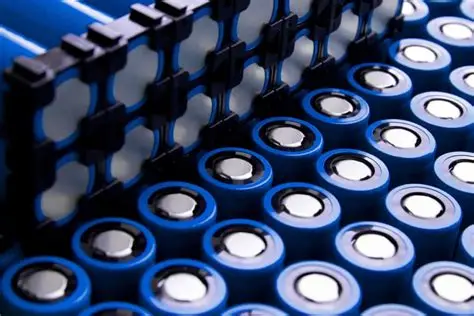
Against a backdrop of surging global demand for renewable energy storage solutions, South Africa is moving forward with plans to launch its first domestic lithium-iron phosphate (LFP) battery cell production sector, building on collaborative partnerships with experienced Chinese industry players, multiple industry and government stakeholders have confirmed.
Regional resource endowments position southern Africa uniquely well to support the emerging battery industry, according to Irshaad Kathrada, chief executive officer of South Africa’s Localisation Support Fund, a non-governmental organization focused on local industrial development. Kathrada noted that South Africa and its regional neighbors, including mineral-rich Zimbabwe and Mozambique, hold abundant raw material reserves required for battery production. When it comes to building a competitive domestic battery sector from scratch, he added, China’s decades of scaled manufacturing experience and technological advancement make it an indispensable strategic partner.
While South Africa boasts a large general labor force, the country currently faces a gap in specialized skilled battery manufacturing professionals, as many local technical experts have relocated abroad in recent years for better career opportunities. This means attracting overseas talent and building local skills through international collaboration will be a core priority for the sector’s development, Kathrada explained.
Beyond meeting local renewable energy needs, the African Continental Free Trade Area (AfCFTA) agreement creates massive untapped potential to scale South African battery production for regional, European and global export markets, Kathrada emphasized. LFP battery cells, the type South Africa aims to produce, have become a dominant technology across fast-growing renewable energy segments, including electric vehicles and grid-connected renewable energy storage systems.
A recent feasibility analysis from EY-Parthenon Africa confirms that launching a large-scale gigafactory in South Africa is a sound operational and commercial investment. Heather Orton, head of strategy and innovation at EY-Parthenon Africa, told reporters that a 5 to 10 gigawatt-hour annual capacity LFP gigafactory checks out on both technical and commercial grounds under all tested scenarios. “There is sufficient existing and projected demand across the region to support multiple local manufacturers and anchor a complete, competitive new battery value chain here over the next 10 years,” Orton said.
Global market projections underscore the scale of the opportunity. Orton noted that the total global battery cell market is forecast to jump from 1.6 terawatt-hours in 2024 to 4.9 terawatt-hours by 2034, with total demand for battery storage in southern Africa alone expected to hit 55 gigawatt-hours over that period. She added that developing a full battery storage project typically takes up to three years from planning to operation, with roughly 12 months of that timeline allocated to securing required legislative and regulatory approvals. Beyond revenue growth, Orton stressed that building a domestic battery manufacturing sector will deliver major public benefits, including creating thousands of new local jobs and strengthening South Africa’s overall national energy security.
South Africa’s official development finance body, the Industrial Development Corporation, stands ready to support the sector’s launch by acting as a funding catalyst, according to Kgashane Mohale, a senior industrial specialist at the agency. Mohale confirmed that South Africa remains actively open to forging partnerships with Chinese battery manufacturers that bring proven industry experience and technical capacity to the table.
Deshan Naidoo, founder and managing director of South African renewable energy firm Afrivolt, said South Africa has a once-in-a-generation opportunity to build a competitive, export-focused battery manufacturing industry, and can draw key lessons from China’s successful sector development. China’s targeted policy support, research and development investment and industry incentives have allowed it to become the global leader in renewable energy and battery manufacturing, a position that cannot be ignored, Naidoo explained. “We need to work alongside Chinese partners to close our local skills gap, and our industry is fully ready to collaborate on this development journey,” he said. Joint projects with Chinese firms will not only bring capital and technology to South Africa, but also facilitate critical skills transfer that will build long-term local industry expertise, he added.
Local academic institutions are also preparing to support the emerging sector. Sean Jobson, a professional engineering technologist at the University of Johannesburg, said the university is eager to collaborate with public and private stakeholders working to establish domestic battery manufacturing. The institution already has an active research program focused on battery technology and renewable energy innovation, ready to contribute to the sector’s development.