Australia’s second-largest grocery retailer Coles will not learn the full legal consequences of its deceptive discounting practices for several more months, after a recent Federal Court hearing laid out the timeline for the ongoing case brought by the country’s top consumer regulator. Last month, Justice Michael O’Bryan of the Federal Court issued a landmark ruling finding Coles had misled Australian consumers through false discount claims on hundreds of everyday household products sold as part of its high-profile ‘Down Down’ national promotional campaign. The Australian Competition and Consumer Commission (ACCC), Australia’s independent consumer protection and competition watchdog, first initiated legal proceedings against the supermarket giant over questionable pricing practices across 245 products between February 2022 and May 2023. The ACCC has alleged that Coles deliberately manipulated prices during a period of soaring nationwide inflation, temporarily inflating baseline prices before marketing a subsequent ‘now’ price as a discount to consumers. These false discount claims were prominently displayed on large red in-store stickers that clearly showed a higher ‘was’ price alongside the advertised ‘now’ discounted price. The case returned to the Federal Court on Wednesday morning to lock in procedural next steps for both the ACCC’s enforcement action and a separate class action lawsuit filed on behalf of thousands of consumers who were impacted by the misleading pricing. Justice O’Bryan has ordered all involved parties to collaborate to draft a joint agreed statement of facts covering the majority of the 245 products at the center of the case, aligned with his earlier liability ruling. To streamline the initial trial process earlier this year, legal teams selected 14 representative products to test the arguments, and the remaining 231 products are scheduled to be finalized in advance of an August case management hearing. A two-day penalty hearing has been tentatively scheduled for December 16, where the ACCC and Coles will present legal submissions on what financial and legal penalties are appropriate for Coles’ violation of Australian consumer law. The court confirmed the ACCC is seeking both a significant financial penalty and declaratory relief that formally confirms Coles broke the law. The separate consumer class action, which has proceeded alongside the ACCC’s case to date, may be heard alongside the penalty hearing or split into a separate proceeding at a later date, depending on the court’s final decision. During the main liability trial, the court heard evidence that Coles had previously maintained an internal 12-week policy requiring products to be sold at a new baseline price for three months before the retailer could advertise it as a discount, a rule designed specifically to avoid misleading consumers about the authenticity of price cuts. However, amid intense price competition that witnesses described as a “race to the bottom” between Coles and its primary rival Woolworths, paired with widespread supplier price increases during the inflationary period, Coles cut this required waiting period from 12 weeks to just four weeks. Justice O’Bryan’s ruling confirmed that if Coles had retained the original 12-week waiting policy, ordinary consumers would have viewed the resulting price changes as genuine discounts. Notably, the judge also found that the underlying price increases implemented by Coles reflected actual supplier cost increases rather than artificially inflated baseline prices, a key point of distinction in the ruling. Coles has defended its conduct throughout the case, arguing that all price adjustments were legitimate responses to widespread inflation, and that the ‘Down Down’ campaign was intended to signal to consumers the retailer was working to keep grocery costs low. Following the liability ruling, ACCC Chair Gina Cass-Gottlieb confirmed the watchdog would push for a harsh penalty to act as a deterrent for similar misleading conduct across the retail sector. “While the level of penalty is a matter for the court to determine, the ACCC will be seeking a significant deterrent for such conduct,” Cass-Gottlieb said. “We will certainly make strong submissions on the level of penalty.” Justice O’Bryan has also issued suppression orders for certain commercial figures included in his ruling, to protect Coles’ commercially sensitive information including supplier costs, supplier funding support, and the retailer’s gross margin calculations. The case will next return to court for a case management hearing in August, with the final penalty decision not expected until early 2025 at the earliest.
分类: business
-

AFL stars’ drinks company Barry races to raise $5m from investors
A cult-favorite Australian ready-to-drink (RTD) alcoholic beverage brand founded by four star Australian Football League (AFL) players is making waves with a groundbreaking crowdfunding campaign that has already pulled in more than $2.2 million, on track to hit its $5 million target by this Wednesday.
Launched in 2023 by AFL standouts Bailey Smith, Nick Daicos, Josh Daicos and Charlie Curnow, Barry carved out a niche in the competitive RTD space with its line of low-sugar, low-carb spirit-based seltzers. The brand has already posted impressive early results, posting $3.68 million in revenue in the last financial year, achieving profitability early, and building a loyal customer base that has driven consistent, massive demand for its products.
Unlike most early-stage beverage brands that turn to traditional private equity for expansion capital, Barry made a deliberate choice to open up investment opportunities to everyday Australian consumers, allowing members of its loyal customer community to become direct stakeholders in the business. The campaign is hosted by Australian investment platform OnMarket, with a minimum investment threshold of just $250. Investors who participate will receive ordinary shares in the company, granting them formal shareholder status.
As of the latest update, Barry’s fundraising drive has already crossed the $2.2 million mark, and is set to close at 11:59 pm Wednesday. Company CEO Chris Pang noted that early response to the campaign has been far more promising than the team anticipated, crediting the brand’s tight-knit community for the groundswell of support. “The groundswell of support has been phenomenal and it’s clear that people can recognise the potential of the business,” Pang said, highlighting the brand’s early profitability and strong market traction. He added that the choice to pursue crowdfunding over private equity was rooted in the brand’s origins: “Our community has built Barry from day one and it’s important to us that they get to share its future.”
The Australian RTD market, which currently has a total valuation of $5 billion, is one of the fastest-growing segments in the domestic alcohol industry, expanding 15% year-on-year driven primarily by shifting consumer preferences among Gen Z drinkers who prioritize lower-sugar, lower-calorie ready-to-drink options. Barry is positioning itself to capture a larger share of this growing market with the capital raised through the campaign, with plans to allocate the new funding toward expanding national distribution and deepening partnerships with commercial stakeholders.
OnMarket Managing Director Tim Eisenhauer called the early response to Barry’s campaign exceptional and record-breaking, noting that the brand set a new platform record for the most single-day expression of interest sign-ups in the platform’s history.
Even amid the enthusiastic response, industry guidelines remind potential investors that crowdfunded investments in early-stage startups carry inherent high risk. Early-stage companies are far less established than mature public or private businesses, and carry a significantly higher failure rate than more traditional investment options. If the company were to collapse, investors would stand to lose their entire contributed capital.
The campaign marks a rare example of a consumer brand leaning into its community for growth capital rather than turning to institutional investors, giving casual consumers and loyal customers a rare opportunity to own a stake in a popular emerging business that aligns with their consumer preferences.
-
World’s largest chipmaker does not rule out price rises as costs increase
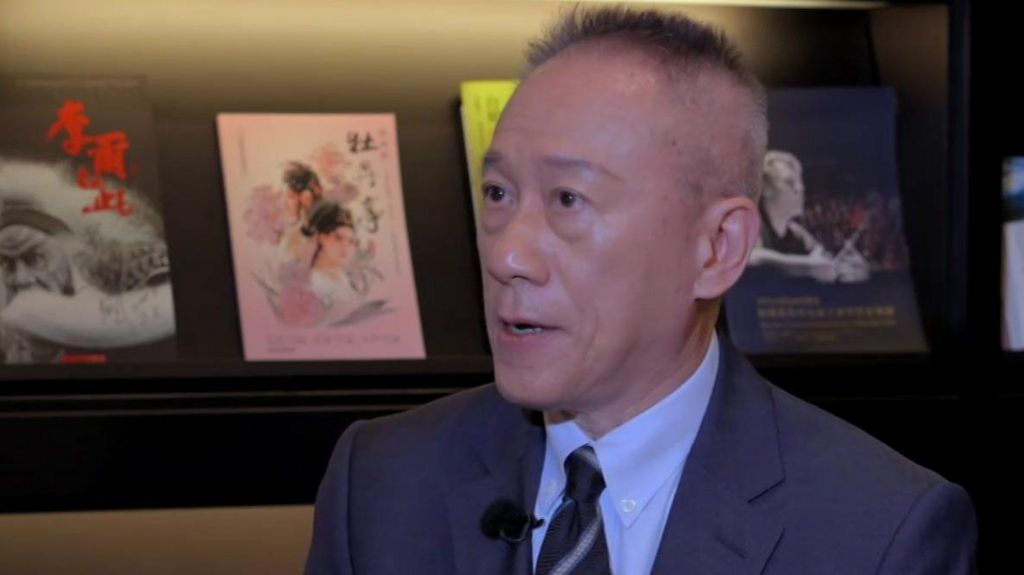
In a rare, exclusive interview held at the Taiwan Semiconductor Manufacturing Company (TSMC) headquarters in Taiwan’s Hsinchu Science Park, the top financial leader of the world’s most advanced chipmaker opened up about a range of pressing industry and geopolitical issues that are shaking global tech and economic sectors.
As the dominant producer of cutting-edge semiconductors designed by industry leaders including Nvidia, AMD and Apple, TSMC’s every decision ripples across global supply chains. During the conversation with the BBC on the sidelines of the firm’s annual shareholder meeting, chief financial officer Wendell Huang confirmed that persistent global inflation has driven up operational costs across the company’s business, and he declined to rule out future price increases for its manufacturing services. Any pricing adjustment from TSMC would have far-reaching consequences: it would likely lift costs for AI infrastructure providers, and eventually translate to higher price tags for consumer electronics ranging from smartphones to laptops.
Huang, however, moved quickly to reassure markets and clients that the firm would not impose extreme, sudden hikes such as four- or five-fold increases. He argued that TSMC’s pricing has always been aligned with its unmatched industry position, citing the company’s long-held technology leadership and proven manufacturing excellence as justification for its value proposition. The company’s chairman and CEO CC Wei echoed this framing earlier to shareholders, noting that he would support a price increase in line with moves already made by competing chip manufacturers.
The interview also tackled two of the most debated questions surrounding TSMC and the global semiconductor industry right now: the sustainability of the AI boom, and the drivers behind the firm’s ongoing global expansion. Amid recent stock market volatility that saw sharp sell-offs in AI and chip stocks across the U.S. and Asia, fueled by investor worries that inflated valuations signal an AI bubble, Huang pushed back firmly on those concerns. He said TSMC maintains strong confidence in the long-term AI megatrend, based on direct conversations with its clients and end-users, most of which are large-scale hyperscale cloud and technology firms. These companies hold strong balance sheets and substantial financial resources, Huang noted, meaning they can sustain continued investment in AI infrastructure for years to come.
On the geopolitical front, TSMC sits at the heart of escalating U.S.-China tensions over Taiwan, the self-governed island that Beijing claims as its territory and which produces over 90% of the world’s most advanced semiconductors. At a recent summit between U.S. President Donald Trump and Chinese President Xi Jinping, Xi warned that mishandling the Taiwan issue could push relations between the two superpowers into an extremely dangerous situation. Washington has spent years pressuring leading chipmakers including TSMC to expand production capacity on U.S. soil to shore up resilient critical supply chains, leading many analysts to frame TSMC’s expansion projects in the U.S., Germany, Japan and Taiwan itself as a response to geopolitical pressure from major world powers.
Huang rejected this framing outright in the interview. He emphasized that TSMC’s decision to build new capacity outside of Taiwan is driven entirely by customer demand, not government requests from Washington, Beijing or any other national government. When it comes to the most cutting-edge chip manufacturing, however, Huang was unambiguous: advanced production will remain centered in Taiwan for the foreseeable future. He noted that building a complete semiconductor manufacturing ecosystem from scratch in the U.S. would take five to 10 years, or even longer — a timeline that directly complicates the ambitions of U.S. industrial policy, which has incentivized TSMC’s $165 billion investment in its Arizona fabrication operations.
Even with the positive long-term outlook on AI, Huang acknowledged that TSMC is facing unprecedented pressure to scale up production fast enough to meet exploding client demand for AI chips. TSMC’s share price has surged dramatically over the past 12 months as AI demand boomed, but the company is still racing to keep up. “We’re doing everything we can, wherever we can, and however we can,” Huang said. “The customers ask us to grow so much, but all we can do is try to grow as fast as possible. So far, still trying.”
-
Australian shares fight back from sharp falls as retailers rally against miners
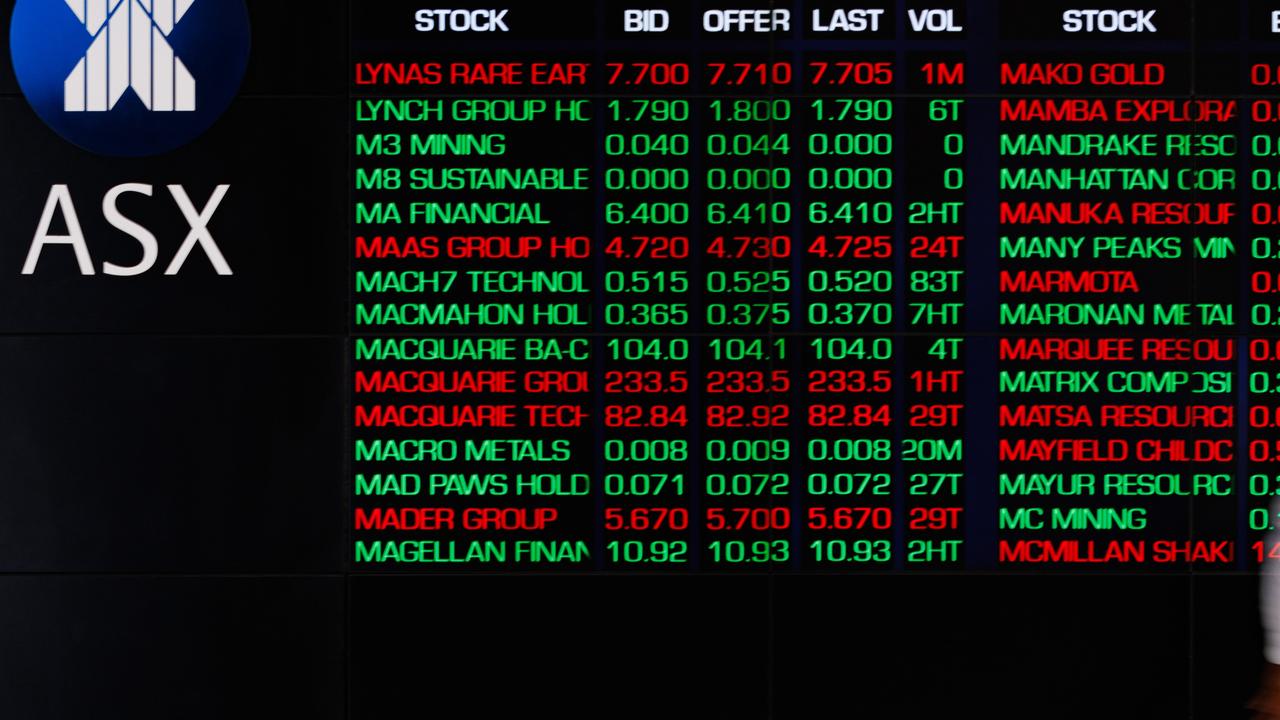
After a volatile, stomach-churning opening drop that sent the Australian benchmark index down 134 points at Tuesday’s opening bell, Australia’s sharemarket staged a remarkable afternoon recovery, driven by shifting investor sentiment around Middle East tensions and growing expectations of an Australian interest rate cut. While both the benchmark ASX 200 and broader All Ordinaries still closed in negative territory by session end, the partial rebound erased much of the early session’s steep losses that followed widespread global market downturns over the prior two trading days. The ASX 200 finished the day down just 0.24% (20.90 points) to settle at 8604.20, while the All Ordinaries closed 0.35% lower (31.10 points) at 8824.80, a far better outcome than the catastrophic opening numbers had forecast. The Australian dollar also gained ground against the U.S. dollar, rising 0.25% to hit 70.54 U.S. cents by market close.
-
China’s exports jump 19.4% in May from a year earlier, despite Iran war
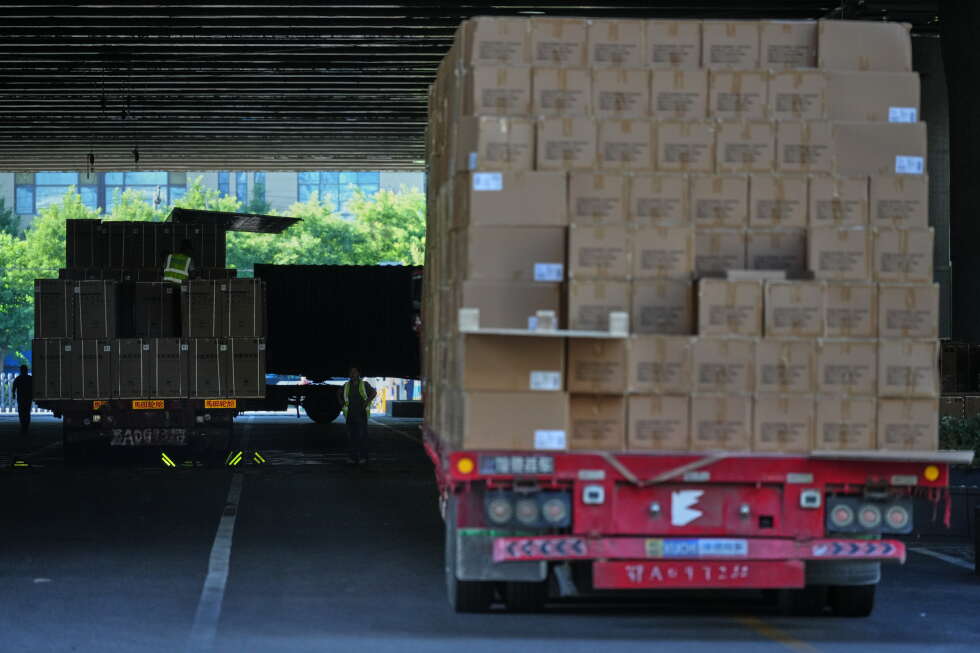
HONG KONG – New data released Tuesday by China’s General Administration of Customs reveals that the country’s export growth accelerated notably in May, defying widespread market expectations that were weighed down by ongoing geopolitical disruptions linked to the Iran conflict. The latest figures put year-on-year export expansion at 19.4%, a solid jump from the 14.1% growth recorded in April, marking a third consecutive month of improving export momentum.
Analysts point to several key drivers behind the stronger-than-forecast performance. Even amid global supply chain jitters and heightened Middle Eastern tensions, demand for China’s high-value goods has held firm. Passenger vehicle exports have surged in recent months, fueled by growing international demand for Chinese-made electric vehicles, while technology and AI-related products—most notably advanced semiconductors and semiconductor manufacturing equipment—have emerged as consistent top contributors to outbound shipments, propping up overall export volumes.
Import growth also picked up speed last month, climbing 27.4% year-on-year, up from April’s 25.3% expansion. The acceleration in inbound goods points to steady recovery in domestic Chinese demand, as manufacturers increase imports of raw materials and intermediate components to meet strong export orders, and consumer demand for imported goods continues to gradually rebound following earlier economic slowdowns.
Against this overall positive trade performance, one key downward trend persists: bilateral trade between China and the United States has continued to contract, extending a slump that began shortly after U.S. President Donald Trump returned to office last year. Immediately upon taking office, Trump implemented steep, broad-based tariffs on Chinese imports and applied similar trade measures to other major U.S. trading partners, upending long-standing bilateral trade flows.
Cumulative data for the first five months of 2025 underscores the contraction: Chinese exports to the U.S. fell 2.7% compared with the same period a year earlier, while Chinese imports of U.S.-origin goods dropped by an even sharper 5.5%. Trade experts note that the ongoing tariff regime continues to create persistent uncertainty for cross-border businesses, leading many importers and exporters on both sides to diversify their supply chains and shift orders to alternative markets, a restructuring that is likely to keep bilateral trade volumes depressed in the coming quarters.
Overall, the May trade data paints a mixed picture for China’s external sector: the country’s export base has proven more resilient than many analysts predicted, even amid global geopolitical instability, but long-term trade headwinds from U.S. trade policy remain a major downside risk for the remainder of the year.
-
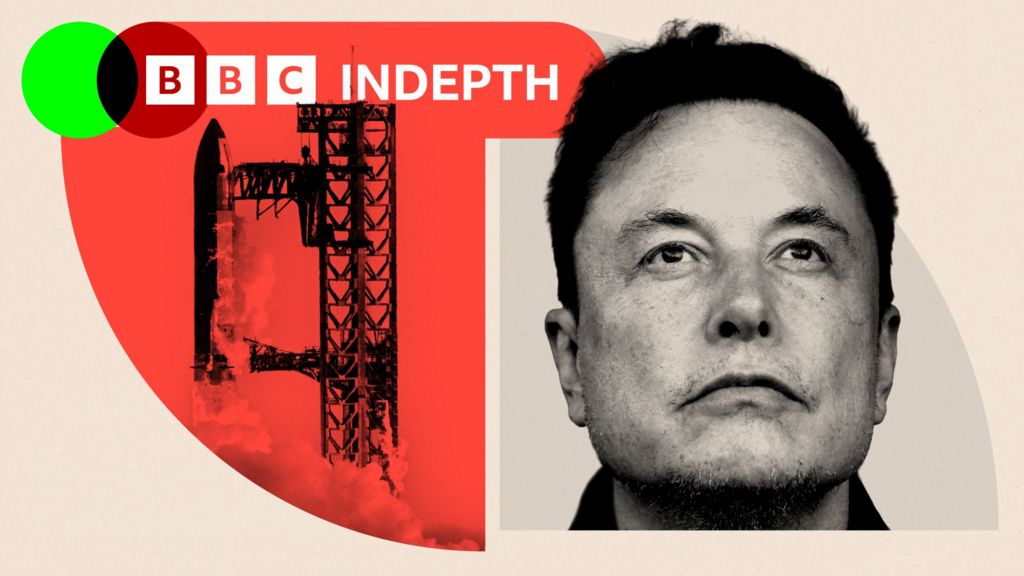
SpaceX’s stock market blast-off could be Musk’s biggest gamble yet
On a crisp October morning in 2024, engineers and executives at SpaceX’s Starbase facility along the U.S.-Mexico border watched as the largest rocket ever constructed lifted off from its launch pad over the Gulf of Mexico. What made this event a landmark for space exploration was not the launch itself, but the unprecedented precision of the booster’s return. Seven minutes after propelling the Starship craft toward orbit, the massive first stage reignited its engines mid-descent, slowed its fall, and locked into the mechanical ‘Mechazilla’ capture arms colloquially called ‘the chopsticks’ — a feat no aerospace operator had ever achieved before. Amid cheers and high-fives in the control room, CEO Elon Musk framed the success as a critical leap toward his decades-long goal of making human life multiplanetary, by delivering a fully reusable rocket system that will drastically cut the cost of accessing orbit, the Moon, and eventually Mars.
This technical breakthrough arrives just months before SpaceX opens its doors to public investors, in what is poised to become one of the most consequential initial public offerings (IPO) in modern stock market history. Starting June 12, a slice of SpaceX shares previously held exclusively by Musk and a small group of elite private investors will begin trading on public markets. UK stockbrokers have already reported a massive surge in retail investor interest, with leading investment platforms projecting the offering could draw a new generation of first-time investors into the market. Around £1.5 billion in shares are expected to be allocated to UK retail buyers alone, and even passive investors with standard pension funds will almost certainly hold a stake in the company through diversified funds, whether they have chosen to invest directly or not.
Underwriters have set a target valuation of $1.75 trillion for SpaceX, a figure that would place the company firmly among the top 10 most valuable public corporations on Earth. That staggering valuation comes despite the firm posting nearly $5 billion in losses last year, leading analysts and critics to question what exactly investors are buying when they purchase SpaceX stock.
SpaceX operates a sprawling portfolio of businesses far beyond its iconic rocket development program. It designs, builds, and launches both its own satellites and those owned by public and private entities around the globe, with launch capabilities that outpace those of any other private company or even sovereign nation. Its Starlink satellite internet network has already become a profitable core business, delivering critical communications infrastructure for Ukrainian defense efforts against Russia’s invasion and generating steady, significant revenue. Even the most bullish independent estimates, however, value Starlink and SpaceX’s core launch operations at only around $300 billion — less than one-fifth of the company’s targeted $1.75 trillion IPO valuation.
The real bet underpinning SpaceX’s public valuation is not rocketry, but artificial intelligence. Included in the public offering is Musk’s standalone AI firm xAI, alongside long-term plans to build solar-powered, space-cooled data centers in orbit that would deliver unprecedented computing capacity, paired with the development of crewed lunar and Mars bases. According to SpaceX’s own IPO prospectus, of the $28.5 trillion total addressable market the company projects for its services, $26.5 trillion comes from AI-related opportunities. For this valuation to hold, investors must believe the global AI industry will grow to match the size of the entire U.S. or European economy combined — a projection that has left many industry observers deeply skeptical.
“Most of the capital expenditure is actually on data centers and an AI company that seems to be more about social media than anything to do with space,” notes Sinead O’Sullivan, an economist and former NASA advisor. O’Sullivan argues that the IPO is less a bet on a coherent business and more a bet on the Musk brand itself: “When you buy a share at this valuation, you’re buying a stake in Elon Musk’s reputation more than any proven space or technology business.” Other critics echo concerns about the concentration of corporate and political power, pointing out that even though Musk holds only 42% of SpaceX’s equity, special voting rights give him effective control of 85% of the company. That level of unaccountable control, says financial journalist Robert Armstrong, means ordinary investors should demand a discount for surrendering all decision-making power: “What does ownership mean if you have no say over how the company is run?” As one large institutional investor put it to the BBC, the “cult of Elon Musk” requires followers to pay a premium for the privilege of having no control — and many are still willing to do so.
Critics also point to Musk’s controversial use of his wealth and power, including his nearly $300 million contribution to Donald Trump’s 2024 presidential campaign, his receipt of billions in U.S. government contracts, and his public interventions in the domestic politics of nations including the United Kingdom, to argue that SpaceX represents a dangerous fusion of private wealth, tech power, and geopolitical influence.
Still, history has shown that betting against Musk has rarely paid off for skeptics. Twenty years after founding Tesla, he upended the global auto industry, growing the electric car maker’s valuation to exceed the combined market capitalization of Toyota, Ford, General Motors, and Volkswagen. Since 2020 alone, SpaceX’s valuation has skyrocketed from $40 billion to $1.75 trillion — a more than 40-fold increase — while Tesla’s stock rose tenfold over the same period, even as vehicle production plateaued. Musk’s track record of defying expectations has created a powerful fear of missing out (FOMO) among investors, who watched early Tesla skeptics miss out on life-changing gains.
Some market watchers warn the SpaceX IPO could signal the start of a 21st-century repeat of the late 1990s dot-com boom and bust, as a wave of unprofitable, high-growth AI companies rush to go public. SpaceX is only selling 5% of its total equity in this first offering, but fellow AI leaders Anthropic and OpenAI are also expected to launch their own IPOs in the near future. Over the coming years, trillions of dollars in new tech stock could flood the market, creating a supply glut that demand may struggle to absorb, potentially dragging down valuations across the sector. Unlike the dot-com era, however, modern automatic index funds that buy all constituents of major market indices may absorb much of this new supply over time, softening any potential correction.
If the IPO succeeds, SpaceX will cement its place alongside other U.S. tech giants as one of the most powerful and influential companies in the world, with outsize influence over both the future of AI and the future of human space exploration. Just as the world watched Starship lift off from the Texas coast last October, all eyes on global financial markets are now fixed on this historic IPO — a test of both investor appetite for AI ambition and the cult of personality around one of the most controversial business leaders in modern history.
-
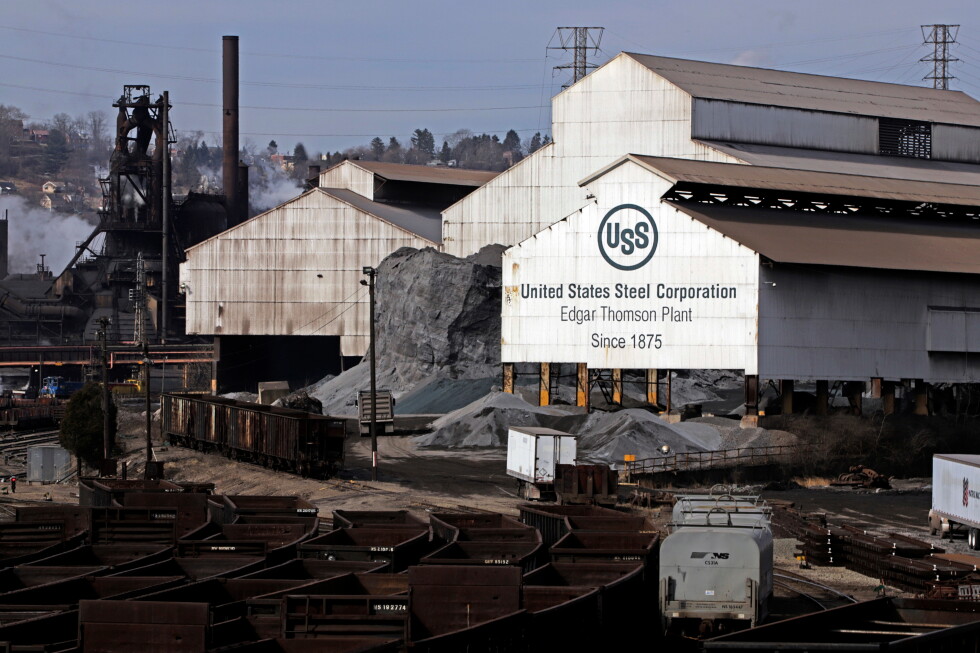
U.S. Steel pledges up to $2.5 billion in upgrades to Mon Valley Works
Less than a year after closing its $15 billion acquisition by Japan-based Nippon Steel, U.S. Steel has announced a major up to $2.5 billion modernization investment at its historic Mon Valley Works complex in southwestern Pennsylvania, a project framed as a pivotal commitment to revitalizing one of the birthplaces of the American steel industry. The new investment, which doubles the company’s earlier $1 billion pledge for the site, forms a core part of U.S. Steel’s broader $11 billion domestic expansion initiative slated for completion by 2028, and independent economic analysis projects it will deliver $1.7 billion in total economic benefit to Pennsylvania over the construction period.
The centerpiece of the upgrade is a state-of-the-art hot strip mill to be constructed at Mon Valley’s Edgar Thomson plant in Braddock. This new facility will replace an outdated 87-year-old mill at the complex’s nearby Irvin plant in West Mifflin, enabling U.S. Steel to manufacture high-strength steel products for the automotive sector that the current operations cannot produce competitively, according to company materials shared with local community leaders. Beyond expanded production capabilities, the modernization will integrate lower-emission technology to create a cleaner, more energy-efficient manufacturing process, aligning with ongoing climate action planning in Allegheny County, where Mon Valley Works currently accounts for roughly a quarter of the county’s total greenhouse gas output.
Beyond manufacturing upgrades, the project delivers clear near-term economic and labor benefits, the company’s official economic impact report confirms. It will permanently protect the roughly 3,000 existing jobs at the three-site Mon Valley Works complex (which also includes the Clairton Coke Works) and support nearly 3,200 indirect and induced jobs across the region over the three-year construction timeline. Over that same period, the project is projected to generate up to $58 million in combined state and local tax revenue. The economic impact analysis was conducted by Philadelphia-based independent consulting firm Parker Strategy Group.
The announcement was made official at a Monday press conference where U.S. Steel President and CEO David Burritt was joined by U.S. Secretary of Commerce Howard Lutnick, who credited the Trump administration for clearing the path to finalize the Nippon Steel acquisition. The deal, which was approved by U.S. Steel shareholders in April 2024, faced significant political and labor opposition during the Biden administration, with then-President Biden blocking the transaction via executive order over cited national security concerns. The acquisition ultimately closed after Donald Trump returned to office, with a negotiated “golden share” provision granting the U.S. federal government limited oversight rights, including the ability to appoint one board member and require presidential approval for any cuts to Nippon’s capital commitments. At the press conference, Lutnick noted that Nippon has fully complied with all terms of the agreement, and he does not expect the federal government will need to exercise its golden share authority.
“The Mon Valley Works is where the American steel industry was first forged, and this investment is proof that its best days are still ahead,” Burritt said in his official remarks, adding that U.S. Steel intends to maintain a long-term presence in Pennsylvania: “We’re here to stay not for the next generation, but generations and generations to come. All I can say about the way we do business in Pennsylvania — you ain’t seen nothing yet.”
The announcement comes amid growing industry shifts, as many U.S. steel manufacturers have increasingly shifted new investment to non-unionized Southern states, where operations are located close to the fast-growing Southern automotive corridor that stretches from South Carolina to Mississippi. U.S. Steel itself has already outlined a $3 billion investment in its Big River Steel facility in Arkansas, with $1.9 billion earmarked for a low-emission direct reduced iron plant that Burritt called the “beating heart of America’s steel industry” during a November 2024 address. Direct reduced iron production and the electric-arc furnaces used at Big River generate far fewer carbon emissions than the traditional blast furnaces that still power most operations at Mon Valley Works.
Local community leaders have welcomed the Mon Valley investment, which comes after months of outreach to encourage the company to keep its core operations in the region. “We need to be thinking about what it is we can do in our communities to help U.S. Steel want to stay here. If they don’t build here, what are we going to be left with?” An Lewis, executive director of the Steel Rivers Council of Governments, a regional collaborative of Mon Valley community governments, told the organization’s board in June. Lewis confirmed that company officials met with local stakeholders last week to walk through details of the investment plan.
While the project has been broadly celebrated, it comes amid ongoing environmental and safety scrutiny of the Mon Valley complex. None of the $2.5 billion in allocated funding is earmarked for upgrades to either the Irvin plant or the Clairton Coke Works, which was the site of a fatal explosion in 2024 that killed two workers and injured 10 more. U.S. Steel was later fined $118,000 by federal OSHA, which cited the facility for inadequate safety procedures, insufficient training, and faulty equipment. On the environmental front, Allegheny County’s upcoming climate action plan, set to be finalized by the end of August, calls on U.S. Steel to phase out its current high-emission processes and invest in carbon capture technology, which is not included in the current upgrade package. The company is also currently appealing more than $4 million in air quality fines issued by the Allegheny County Health Department for alleged hydrogen sulfide violations between 2020 and 2023, and reached a $1.5 million class action settlement in 2025 to compensate local residents for odor and emissions issues, while denying all wrongdoing related to the claims.
As the third-largest steel producer in the world, Nippon Steel has committed to reaching full carbon neutrality across its global operations by 2050, a target that U.S. Steel has aligned with since the acquisition closed. Company officials frame the Mon Valley investment as a balance between honoring the site’s iconic legacy in American industrial history and building a more sustainable, competitive future for domestic steel manufacturing.
-
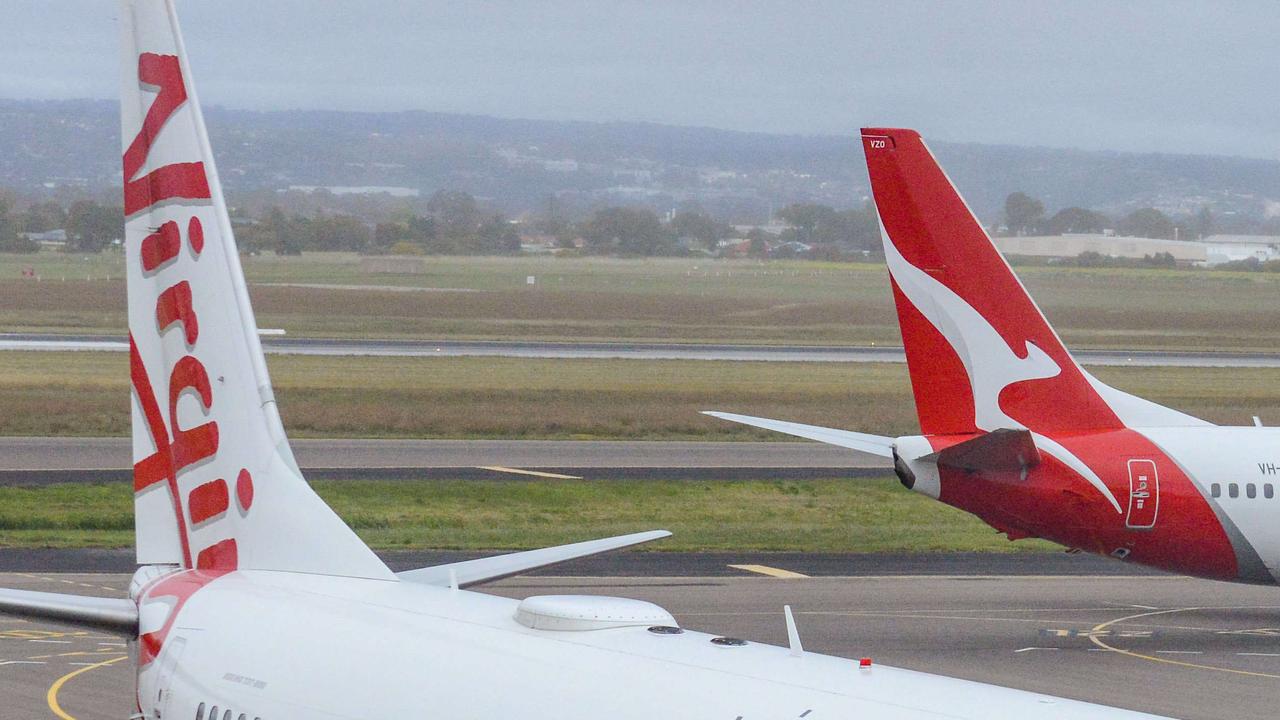
Asia-Pacific airline per-passenger profit tipped to fall 35 per cent
The global airline industry is facing unprecedented financial pressure in 2026, with the International Air Transport Association (IATA) issuing a stark warning that per-passenger profits for Asia-Pacific carriers could plummet by as much as 35.9% this year, driven by skyrocketing jet fuel prices and depreciating regional currencies against the U.S. dollar.
In its latest analysis released overnight Australian time from IATA’s annual general meeting held in Rio de Janeiro, Brazil, the industry trade group projects that average profit per passenger across the Asia-Pacific region will fall from US$5.30 recorded in 2025 to just US$3.40 in 2026. The net profit margin for regional carriers is also expected to slump by 40% year-over-year. Globally, the downturn is equally severe: IATA forecasts total industry profits will halve from US$45 billion in 2025 to US$23 billion in 2026, with overall margins shrinking from 4.2% to 2%.
“It is a tough year for all airlines, but especially for those whose balance sheets have not yet recovered from Covid-19,” IATA Director General Willie Walsh told attendees on Sunday local time. Walsh emphasized that even the reduced projected profit figure demonstrates a degree of industry resilience, but warned the slim margin leaves almost no room for unexpected cost increases. “It won’t even buy you a hot dog at most of the FIFA World Cup venues, and it does not leave much of a buffer, should other costs or taxes start rising,” he said.
The root of the current crisis traces back to escalating conflict-related disruptions in the Middle East, which have pushed global jet fuel prices up 70% year-to-date. By mid-April 2026, regional jet fuel prices had climbed to 125% above pre-conflict levels, prompting major Australian carriers Qantas and Virgin Australia to take immediate defensive action: both have raised ticket prices and cut flight capacity to offset rising energy costs.
Australia’s flag carrier Qantas confirmed to the Australian Securities Exchange (ASX) in mid-April that it had restructured its route network, cutting domestic flight capacity by 5% and reallocating aircraft from U.S. and domestic services to meet strong demand for travel to Europe. The shift comes as both airlines and passengers avoid travel through the volatile Middle East. So far in 2026, Qantas’ share price has fallen 11.5%, though it has staged an 8.6% rebound over the past 30 days.
Virgin Australia similarly announced mid-April that it had implemented fare hikes and capacity cuts after jet fuel costs doubled between March and April 2026. The carrier noted that its fuel suppliers have guaranteed near-term supply to support operations through to May 2026. Virgin’s share price has dropped 25.4% year-to-date, matching Qantas’ recent rebound trend with a 14.5% gain over the past month. Both major Australian airlines declined to provide additional comment beyond their existing public disclosures when contacted by NewsWire.
IATA notes that the Asia-Pacific region faces amplified pressure compared to other global markets, due to its heavy reliance on crude oil imports from the Persian Gulf, which has strained regional refinery operations. Further cost increases have been driven by the depreciation of multiple Asian currencies against the U.S. dollar, since jet fuel and other major aviation expenses are dollar-denominated, pushing up local currency costs for carriers. Walsh did acknowledge one small bright spot for some regional operators: “Some Asia-Pacific carriers are benefiting from shifting traffic flows linked to the Middle East conflict, particularly on Europe-Asia routes.”
To mitigate near-term supply risks for Australian airlines, the Australian government secured a 100 million-litre jet fuel shipment from China last month that is scheduled to arrive in early June.
-

Spain’s visitor numbers hit new highs as tourists avoid Middle East
Standing on a sun-drenched hotel rooftop in Benidorm, Fede Fuster, president of the city’s local tourism association, gazes out over a skyline of high-rises stretching toward the iconic sweeping Mediterranean coastline. A third-generation tourism industry leader – his family was among the first to build a hotel here in the 1950s – Fuster says of the resort, “With all its virtues and its defects this is a place we feel proud of. It’s a place of opportunities.”
Benidorm, a permanent home to just 77,000 residents, regularly swells to five times that population at the peak of summer, making it one of Spain’s most valuable coastal tourism hubs. Like destinations across the country, it has staged a remarkable comeback since the Covid-19 pandemic left resorts empty and the national tourism industry at a complete standstill. Since borders reopened, annual international visitor arrivals have broken records year after year, hitting 97 million in 2025. Today, Spain ranks as the world’s second most popular tourist destination, trailing only France, and industry leaders are gearing up for an even stronger 2026.
Fuster is bullish on the coming year, predicting Spain will hit the historic milestone of 100 million international visitors and claim the top global ranking before long. What was originally projected to be a year of modest growth has been boosted by an unexpected tailwind: escalating geopolitical tensions between the U.S.-Israeli coalition and Iran have driven holidaymakers away from traditional Middle Eastern and Eastern Mediterranean destinations, turning Spain into a safe alternative. Fuster notes that this pattern is not new – demand for Spanish holidays jumped during the 2011 Arab Spring uprisings – though he emphasizes he would rather compete on equal footing than gain market share from global instability.
Francisco Femenia-Serra, a geography lecturer at Madrid’s Complutense University, explains that the safety dividend reshapes tourist flows across the region. “In these moments of crisis, of military strikes or wars, the bookings always increase,” he says, adding that price-sensitive travelers who would normally visit lower-cost destinations like Turkey or Egypt are now diverting to Spain. Official national visitor data backs this up: Spain welcomed 9.1 million international travelers in April 2026, a new all-time high for the month, representing a 5.2% increase (450,000 additional visitors) over April 2025. By contrast, Dubai International Airport reported a 66% drop in passenger numbers in March 2026, as flight cancellations and canceled bookings hammered the emirate’s travel sector in the wake of escalating tensions.
For Spain’s national economy, the tourism boom could not come at a better time: the sector directly contributes 13% of national GDP, and has driven overall economic growth that has outpaced major European peers including France, Germany, Italy and the United Kingdom in recent years. But despite the record-breaking numbers, two major threats loom on the horizon that could undermine the industry’s momentum. The first is a global risk: rising fuel costs that could push up airfares and discourage Europeans from taking international holidays. The second is a growing domestic crisis: rising public anger among local residents over the negative impacts of mass tourism on daily life.
Public opinion has shifted dramatically over the past decade. “Tourism was always accepted as a positive economic sector for Spain,” says Femenia-Serra. “That changed from 2016, 2017, with the label of over-tourism being put on some cities, like Barcelona. And now, most young Spaniards under 45 have a different image of tourism. They see it as a sector that obviously has a positive impact but also some negative outcomes in their lives.”
Since 2024, summer protests against excessive visitor numbers have spread across popular tourist destinations, from Mediterranean coastal hubs to the Balearic and Canary Islands. A 2024 Europe-wide YouGov poll found that 28% of Spaniards hold a negative view of foreign tourism – the highest share of any European country by a wide margin – and two-thirds of respondents sympathized with anti-over-tourism protests.
Local grievances center on three core issues: chronic congestion in city centers, increased environmental strain, and most critically, the role of short-term tourist accommodation in worsening Spain’s ongoing housing affordability crisis. In recent weeks, a new wave of protests has targeted soaring residential rents, with tourism repeatedly singled out as a key driver of the problem.
In a central Valencia bookshop, members of the local tenants’ union Sindicat de Llogateres gather regularly to help local residents navigate rental disputes. Many attendees have faced sharp rent hikes when their contracts come up for renewal, as landlords increasingly pivot to higher-yield short-term tourist stays. “When it comes to renewing rental contracts, the owners of properties no longer think about setting rents according to local salaries, but rather the salaries of people visiting from abroad, which might be three or four times higher,” says union representative Jordi Vila. “So local people end up getting pushed out of their homes.”
Vila points to Barcelona as the clearest example of this displacement, describing the city’s historic center as “a kind of theme park” where the proliferation of short-term tourist rentals has pushed long-term residents out to suburban areas. Even in smaller, northern destinations like Asturias, anger has boiled over into direct action: graffiti targeting holiday rental properties has appeared in recent days, bearing the slogan “Your business, our ruin.”
Both national and local governments have moved to address public anger, implementing new rules to curb the growth of unregulated short-term accommodation. In 2025, Prime Minister Pedro Sánchez’s left-wing coalition government warned that “there are too many Airbnbs and not enough homes,” and later fined the short-term rental platform €65 million ($75.5 million) for advertising unlicensed properties. Local authorities have gone further: many city councils have halted the issuance of new permits for tourist apartments, and Barcelona has announced plans to revoke licenses for all 10,000 of its existing short-term rental units by 2028, while doubling the city’s tourist tax to €8 for short-stay cruise ship visitors.
While tenant activists and protest groups have welcomed these measures, they say far more action is needed to protect local communities. But the tourism industry has pushed back against aggressive regulation. Exceltur, Spain’s leading national tourism industry association, has called for “the reparation of the links between the tourism sector and local residents,” warning that overly strict rules will harm both jobs and economic growth. The short-term rental sector has cited a PwC analysis of Barcelona’s license revocation plan, which warns the policy could erode the city’s tourism competitiveness and lead to the loss of thousands of local jobs.
Femenia-Serra notes that policymakers are still struggling to find a balanced solution that addresses local grievances without damaging the critical tourism economy. “We have measures that try to alleviate the impact that tourism has and that try to distribute tourists in cities in a different way,” he says. “But we still haven’t seen a single measure that is effective in reducing the number of tourists.”
Back in Benidorm, as Fuster prepares for what is projected to be another record-breaking summer, he acknowledges the legitimacy of local discontent and says the industry must adapt to retain social license. “We say we are the industry of happiness,” he says. “But we also have to realise that we impact the normal life of citizens. The way we welcome people and we care about them and our happiness, the way we live, I think that’s something the tourist really appreciates – that’s the key. That’s why we have to work a lot in these places, mostly in cities, where there is a feeling of not welcoming tourists. It’s very important for us because if we lose that, we’re dead.” To Fuster, making visitors feel welcome while respecting the needs of local communities is not just a social good – it is the foundation of the industry’s long-term survival.
-
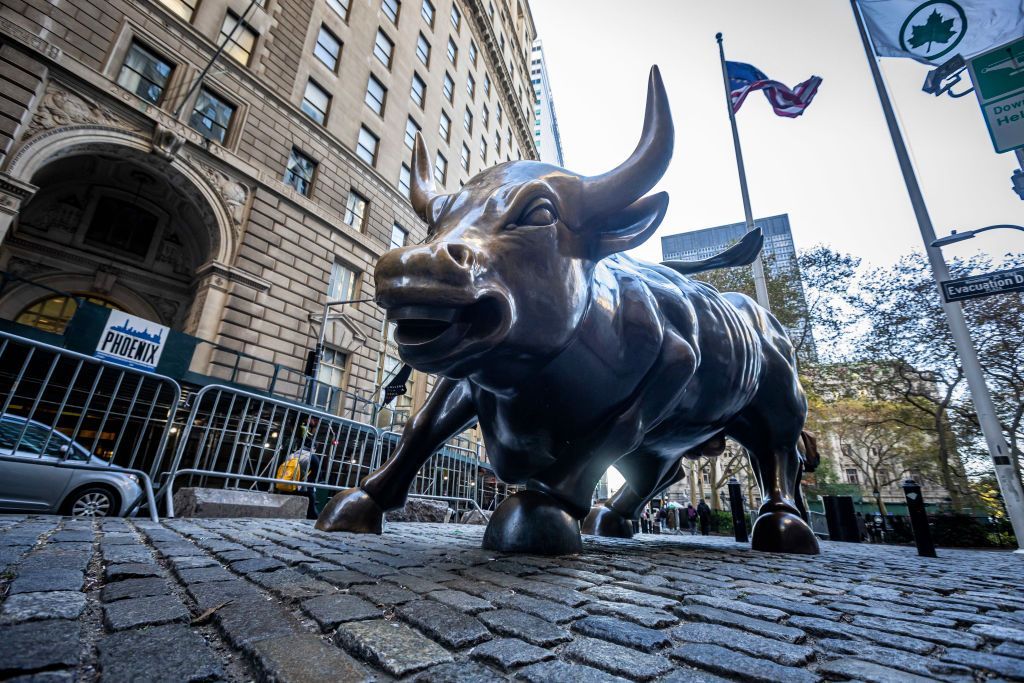
US stocks slump as fears over Big Tech shake Wall Street
U.S. equity markets endured a dramatic downturn on Friday, with the technology-heavy Nasdaq Composite posting its steepest single-day decline since April 2025. The sudden selloff was triggered by a far stronger-than-expected April U.S. jobs report, which amplified growing investor anxiety that the stellar market gains recorded through the first half of 2026 may have become unsustainable.
The hotter-than-forecast employment data reignited concerns that the U.S. Federal Reserve will keep benchmark interest rates elevated for an extended period, particularly as persistent inflation continues to hold above the central bank’s target. By the closing bell, the Nasdaq had tumbled more than 4%, the broad-market S&P 500 shed 2.6% of its value, and the Dow Jones Industrial Average retreated 1.35%. All three major U.S. indexes finished the week in negative territory.
The selloff extended beyond traditional equities to digital assets, as investors raced to offload exposure to higher-risk assets across all sectors. Bitcoin, the world’s largest cryptocurrency by market capitalization, suffered a sharp double-digit drop alongside the stock market downturn. Market analysts emphasized that the sudden pullback underscores the profound impact of investor expectations around interest rates: while a robust labor market is typically viewed as a positive signal for economic health, it also rules out imminent rate cuts that equity markets have priced in over recent months.
“Friday’s jobs report was potentially ‘too good’ for markets, especially against the current backdrop of stubbornly high inflation,” explained David Doyle, head of economics at global financial services firm Macquarie Group. He noted that the stronger-than-expected data has increased the probability of additional interest rate hikes from the Fed before the end of the year, a shift that directly sparked the widespread selloff. Investors who had been holding out for rate cuts starting as early as the third quarter were forced to rapidly reprice their portfolios and adjust their outlook.
Contrary to some initial reporting, Friday’s downturn did not signal a broad, full-scale global market panic. Instead, the move represented a deliberate rotation by investors away from overinflated technology stocks, which some market watchers have compared to the overvalued dotcom sector that crashed dramatically in the early 2000s. Large institutional investment funds pulled billions of dollars out of artificial intelligence and semiconductor companies, which have seen their share prices skyrocket over the past two years amid the global AI boom.
Rather than exiting the market entirely, investors reallocated capital to traditionally defensive, stable assets. Defensive sectors including healthcare, regulated utilities, and consumer staples — household names like food conglomerate Kraft Heinz and beverage giant Keurig Dr Pepper — all recorded gains on Friday as traders sought shelter from volatility. The sharp pullback also highlights the structural vulnerability of today’s U.S. stock market: a small handful of mega-cap technology firms now make up such a large share of total market capitalization that even a small shift in investor sentiment can drag the entire market lower.
In response to the market downturn, former U.S. President Donald Trump pushed back against the negative market reaction to the solid jobs report. He argued that policymakers and market participants place “too much emphasis” on persistent inflation. “I hope the market starts to learn that when you have good numbers the market should go up not down,” Trump added.
Looking ahead to next week, the intersection of technology and policy will take center stage in U.S. markets. Trump has invited a group of the nation’s top AI industry executives to the White House to discuss a sweeping new proposal: the U.S. federal government would take direct public ownership stakes in leading AI firms. Trump has stated that the policy would reshape public perceptions of artificial intelligence and allow ordinary Americans to directly “benefit from the success of AI.”