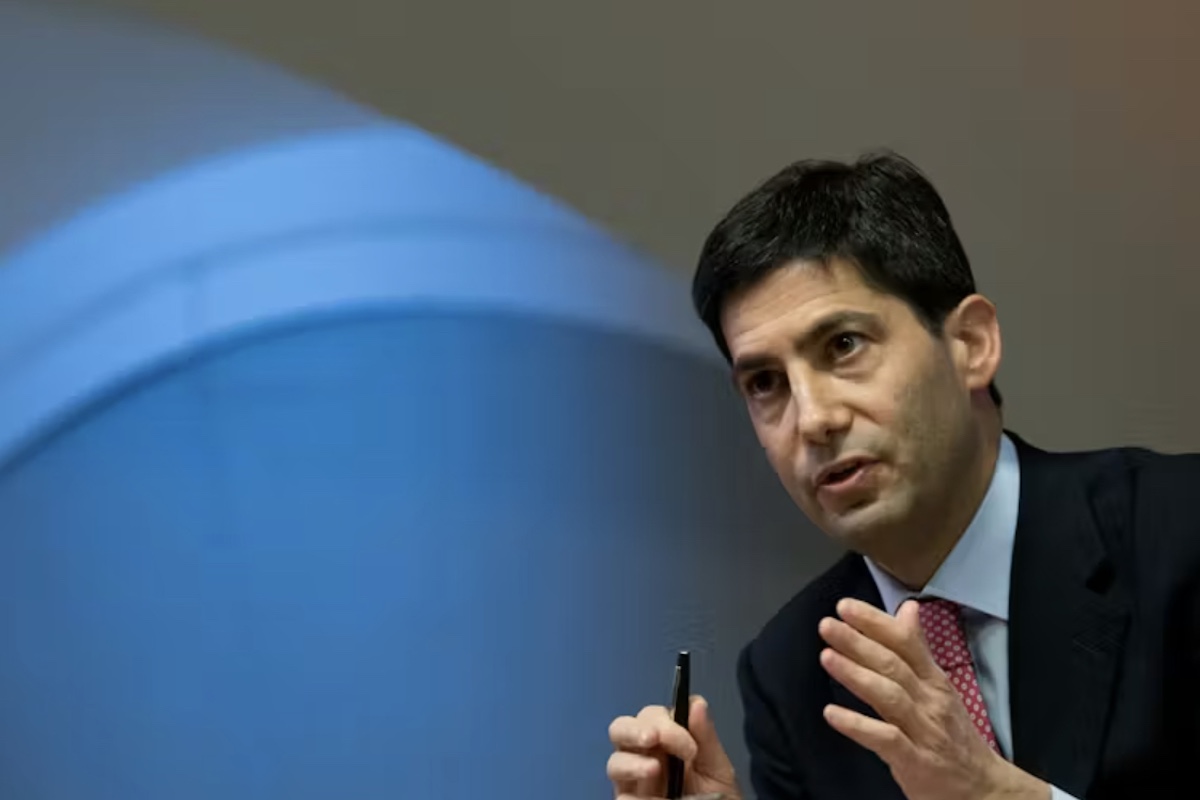
When former U.S. President Donald Trump named Kevin Warsh as his pick for Federal Reserve Chair on January 30, 2026, global financial markets immediately zeroed in on one prevailing question: Would the long-time inflation hawk retain his tough stance on price growth, or would he bend to the president’s long-standing demand for lower benchmark interest rates?
But two New York University economists argue that this widespread focus misses the bigger, underdiscussed story. Drawing on decades of peer-reviewed research on central banking practice and an extensive 2023 interview with Warsh conducted for an upcoming book on the Federal Reserve, the pair argue that the most transformative change under Warsh’s leadership would not be shifts in interest rate levels, but an overhaul of how the Fed conducts internal deliberations and communicates its policy decisions to the public.
The 2023 interview revealed two core throughlines in Warsh’s thinking on central banking. The first, a long-stated commitment to anchoring price stability, aligned with market expectations. The second, however, offered surprising insight into his policy priorities: a deep desire to reimagine the Fed’s current framework for internal policy debate and public communication.
During the conversation, Warsh shared a formative anecdote from 2006, when he was first nominated to the Fed’s Board of Governors and sought guidance from legendary former Fed Chair Paul Volcker. Volcker’s first instruction was to set interest rates “about right” — a phrase Warsh says acknowledges the unavoidable reality that policymakers can never calculate the exact optimal policy rate with perfect precision, given the complexity of the U.S. economy.
But Volcker shared a second, far more important lesson that has stayed with Warsh: Always project confidence and intentionality in the Fed’s actions. For Warsh, this framing underscores a core truth of modern central banking: setting policy is only half the job; the other half is framing outcomes as the product of rigorous, thoughtful deliberation to maintain public and market confidence.
Warsh has long advocated for what he calls the “family fight” model of monetary policymaking: robust, unfiltered disagreement among committee members behind closed doors, followed by a unified public message once a final decision is reached. He pointed to the 2007-2009 financial crisis under then-Chair Ben Bernanke as a successful example of this approach: heated debates unfolded in the chair’s office until the Federal Open Market Committee (FOMC) reached a consensus, after which all members spoke with one cohesive voice to markets. For large, systemically important institutions — particularly during periods of economic crisis — projecting a unified public stance is non-negotiable, Warsh argues.
This framework shaped Warsh’s 2014 policy review for the Bank of England, where he recommended that policy meetings open with unrecorded, off-the-record discussion to enable this type of open debate. His core concern is that the current norm of releasing full meeting transcripts years after the fact changes how policymakers speak: when officials know their words will eventually face public scrutiny, they tend to hedge their positions and avoid blunt, honest takes rather than sharing unvarnished perspectives. This dynamic, he argues, weakens the quality of decision-making by discouraging genuine debate.
Warsh’s stance represents a sharp break from the Fed’s 30-year trajectory toward greater transparency, a shift that policymakers have framed as critical to reducing market uncertainty, anchoring economic expectations, and improving policy effectiveness. The shift began in 1994 under then-Chair Alan Greenspan, when the Fed first started publicly announcing its interest rate decisions — a major break from decades prior, when markets were forced to infer policy shifts from the Fed’s open market operations. Bernanke expanded this transparency push after the 2008 crisis, introducing quarterly press conferences, forward guidance on future interest rate moves, and the publication of FOMC members’ interest rate projections, widely known as the “dot plot.” Subsequent chairs Janet Yellen and Jerome Powell retained this framework, with Powell holding a press conference after every FOMC meeting and working to replace cryptic “Fed speak” with clear, accessible language. Today, the Fed is far more transparent than at any point in its history, regularly explaining both its decisions and its interpretation of broader economic trends.
Warsh, however, remains deeply skeptical of this push for ever-greater transparency. In the 2023 interview, he argued that publishing individual policymakers’ projections encourages a “troubling convergence of views” that stifles genuine, productive disagreement within the FOMC. In his view, short-term economic forecasts offer limited practical benefit while subtly biasing how officials think about future policy, locking in consensus before new data can shift perspectives.
His critique extends to all forms of expansive central bank communication. He argues that oversharing policy intentions makes it harder for policymakers to adjust course when economic conditions change, noting that extensive pre-commitment to a policy path erodes a central banker’s “ability to change his mind.” For Warsh, a central bank that cannot adapt its position when new information emerges cannot be considered credible — and credibility, he argues, comes from adaptability, not rigid consistency, a stance that would put widely used tools like the dot plot into question.
The debate over Fed communication carries far more weight than many observers recognize, because modern financial markets respond just as much to central bank signals as they do to actual policy actions. Investors do not wait for rate changes to adjust their portfolios; they rebalance holdings based on expectations of future Fed moves. Proponents of current transparency practices argue forward guidance and published projections reduce volatility by helping markets anticipate policy shifts.
A shift toward Warsh’s model would not inherently push interest rates higher or lower, but it would almost certainly make policy less predictable — even though the unified public stance he favors would offset some of that uncertainty. Markets would likely become more sensitive to incoming economic data, as fewer explicit signals about the Fed’s long-term intentions would be available to price in.
These impacts stretch far beyond Wall Street trading floors. Mortgage rates, corporate investment plans, and business hiring decisions all rely on expectations of future borrowing costs. The current framework of clear communication stabilizes these expectations, while a shift toward greater policymaker discretion would give the Fed more flexibility to respond to unexpected economic shocks.
Based on his 2023 comments, Warsh’s priority would be to trade some of that current predictability for greater policy adaptability. Under his leadership, the public would likely receive less explicit guidance about where policy is heading, but policy could adjust faster when economic conditions shift.
The authors note that they cannot predict whether Warsh would push for lower rates or stick to Volcker’s mantra of getting policy “about right.” But Warsh’s own public and private comments make clear that his first priority would be reshaping how the Fed debates, signals, and defends its policy decisions — and in modern central banking, changing how the Fed communicates can ultimately change the very nature of policy itself.