分类: business

  • Why copper’s moment is far from over and what’s driving the next phase

    Why copper’s moment is far from over and what’s driving the next phase

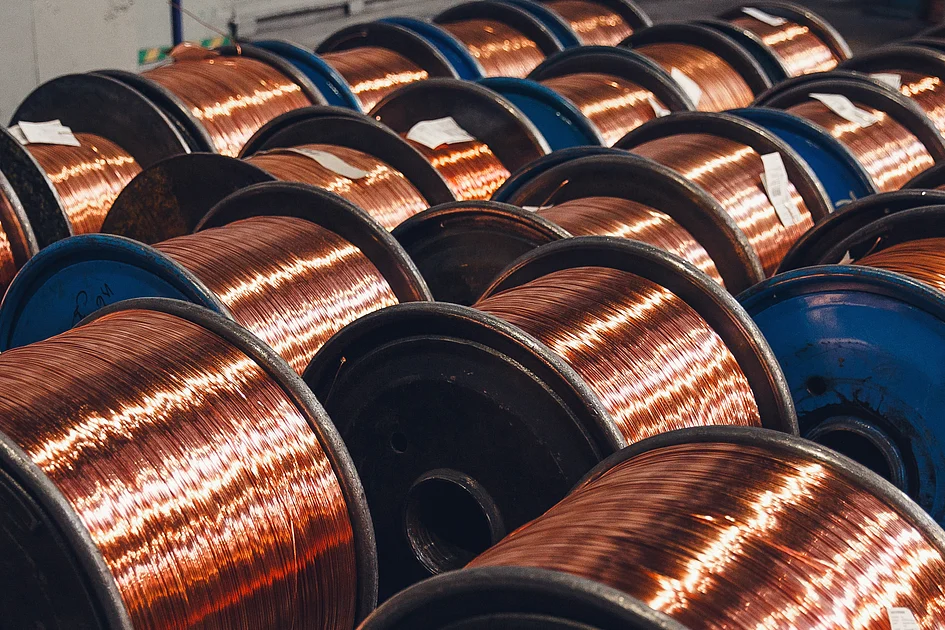
    Copper continues to defy market expectations, establishing unprecedented price levels despite near-term volatility. The industrial metal’s remarkable 40% surge throughout 2025 has extended into 2026, with London Metal Exchange benchmarks breaching the $13,000/tonne threshold for the first time in January. This sustained appreciation reflects a complex convergence of supply constraints, evolving demand dynamics, and macroeconomic influences reshaping the global commodities landscape.

    Supply-side challenges have emerged as the dominant market driver, with significant production disruptions at major mining operations worldwide. The prolonged outage at Indonesia’s Grasberg facility – the planet’s second-largest copper mine – continues to constrain output, with normal operations not anticipated before 2027. Concurrently, labor strikes at Chile’s Mantoverde mine further tightened global supplies during early 2026, exacerbating the structural deficit.

    Market analysts identify multiple reinforcing factors behind copper’s ascent. Federal Reserve monetary policy expectations, geopolitical uncertainties, and potential US tariffs on refined copper have collectively created what Standard Chartered’s Sudakshina Unnikrishnan describes as ‘a perfect storm’ of supportive conditions. The traditional inverse correlation between copper and the US dollar positions the metal favorably amid anticipated interest rate reductions, while speculative activity has amplified recent price movements.

    Despite near-term overbought conditions prompting predictions of corrections to $11,000/tonne, the long-term outlook remains fundamentally bullish. S&P Global projections indicate copper demand will reach 42 million metric tonnes by 2040 – a 50% increase from current consumption levels – driven primarily by electrification initiatives, artificial intelligence infrastructure, and defense manufacturing. Vice Chairman Daniel Yergin emphasizes that ‘new vectors of demand that didn’t exist 10 years ago’ now permanently alter market dynamics, with electric vehicles consuming 2.9 times more copper than conventional automobiles and data centers requiring substantial electrical components.

    The critical supply-demand imbalance appears structural rather than cyclical. With new mining projects requiring approximately 17 years from discovery to production, S&P Global anticipates supply will peak at 33 million metric tonnes by 2030, potentially creating a 10-million-tonne deficit within fifteen years. This outlook has attracted diversified investment interest, including sovereign wealth funds and institutional investors increasing commodity allocations beyond traditional stock-bond portfolios.

    Market participants can access copper exposure through physical metal ownership, exchange-traded products tracking futures contracts, or equity positions in mining corporations. While price consolidation may occur pending US tariff policy clarification in June, the metal’s fundamental supply constraints and expanding demand applications suggest sustained long-term appreciation potential despite interim volatility.


  • Dubai gears up for largest edition of Gulfood; commute, parking explained

    Dubai gears up for largest edition of Gulfood; commute, parking explained

    Dubai is poised to host the most expansive iteration of Gulfood in its history, marking a significant milestone by simultaneously utilizing two premier venues for the first time. The 2026 edition of this globally recognized food and beverage sourcing exhibition will unfold across both the Dubai Exhibition Centre (DEC) at Expo City and the Dubai World Trade Centre (DWTC) from January 26 to 30.

    This strategic expansion facilitates an unprecedented scale, featuring over 8,500 exhibitors from 195 countries presenting more than 1.5 million products. The event introduces several innovative programs, including curated discovery tours designed to connect investors with buyers. Prestigious competitions, such as the Gulfood Innovation Awards and the World Agri Food-tech Startup Challenge, will spotlight groundbreaking products and services within the industry.

    Attendees are advised on logistical arrangements to navigate the dual-venue format. The Dubai Metro is highly recommended for access to both locations, complemented by a complimentary shuttle bus service operating between DEC and DWTC. Paid parking is available at DWTC facilities, starting at Dh100 for the first hour, while DEC offers entirely free visitor parking. Organizers have implemented enhanced security protocols at both sites, including bag checks and screenings, and encourage pre-printing of badges and use of the official event app to streamline entry and improve the visitor experience.

    The event programming is strategically divided between the two venues. DWTC will host exhibitors from core categories like beverages, meat, seafood, and dairy, alongside the Future Food 500, NXT stage, and startup investor lounges. The Dubai World Cuisine program will feature culinary demonstrations from seven Michelin-starred chefs and 80 masterclasses. Conversely, DEC will serve as the global hub for international country pavilions and multi-commodity suppliers, housing the Gulfood Fresh exhibit, a new dedicated Grocery Trade sector, and the pivotal Gulfood World Economy summit.

  • Dubai gold prices hit Dh600: Shoppers continue buying, selling unused jewellery

    Dubai gold prices hit Dh600: Shoppers continue buying, selling unused jewellery

    Dubai’s gold market is demonstrating remarkable resilience as prices surge past unprecedented thresholds, with 24K gold reaching a historic peak of Dh601 per gram over the weekend. Despite the soaring valuations, consumer activity remains robust as both buyers and sellers adapt to the new market reality.

    The precious metal has maintained a consistent upward trajectory, achieving record highs during five separate trading sessions within the past week alone. This sustained appreciation has created a dynamic marketplace where traditional purchasing patterns are evolving in response to economic conditions.

    Market observers report two distinct consumer behaviors emerging. Many buyers are accelerating previously planned jewelry acquisitions in anticipation of further price increases, while others are shifting toward lighter, more intricate designs that emphasize craftsmanship over pure weight. According to Aditya Singh of Titan Company, ‘Trust matters more than ever at this current price point.’

    Concurrently, jewelry retailers note increased activity in the secondary market as consumers capitalize on high prices to monetize unused pieces. Anil Dhanak of Kanz Jewels clarified that this trend represents strategic value realization rather than distress selling, with customers frequently exchanging older items for contemporary designs through transparent exchange programs.

    The fundamental drivers of gold demand in the region—cultural traditions, wedding requirements, and emotional value—continue to sustain market activity despite price pressures. Consumers are adapting purchase quantities and designs to accommodate budgetary constraints rather than withdrawing from the market entirely, demonstrating gold’s enduring perception as a long-term store of value in the UAE market.

  • Venezuela targets 18% oil output expansion

    Venezuela targets 18% oil output expansion

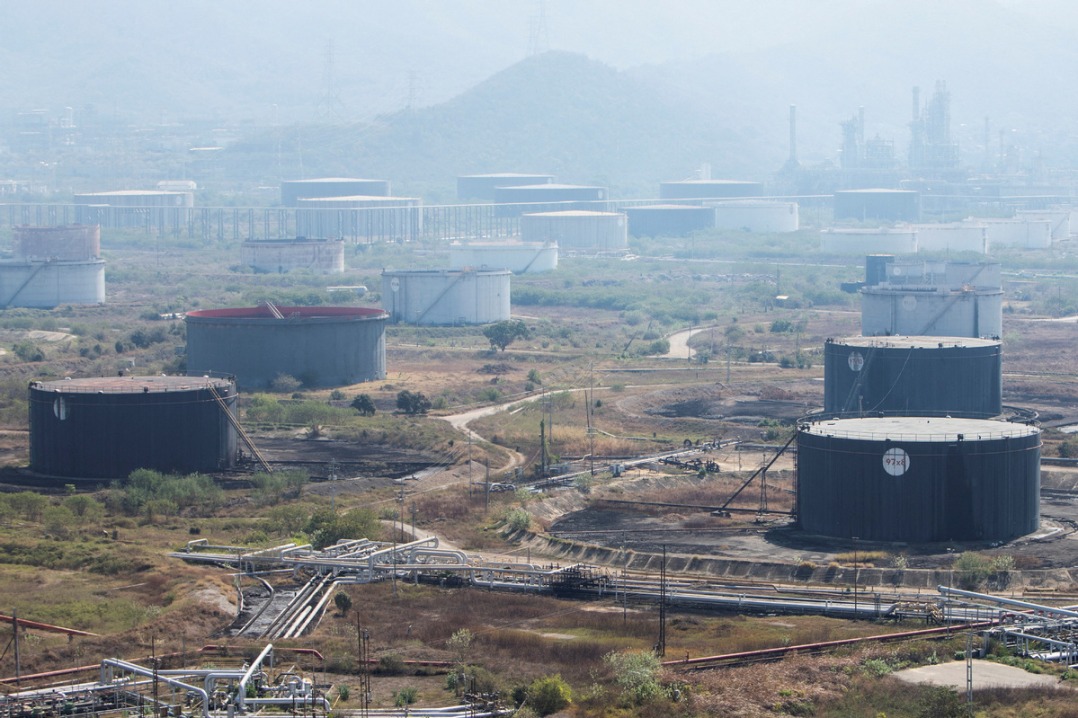
    CARACAS — In a strategic move to revitalize its energy sector, Venezuela has announced plans to increase oil output by 18% throughout 2026. This ambitious target follows proposed legislative reforms that would dramatically open the country’s petroleum industry to private investment, marking a significant departure from decades of state dominance.

    Hector Obregon, Chief Executive of state-owned oil giant PDVSA, revealed the production goals during a Saturday address from the Puerto La Cruz refinery complex. He emphasized that existing hydrocarbon regulations require modernization to align with contemporary industry needs and provide legal assurances to potential private partners.

    “Our current legislation falls short of what we require as a modern energy industry,” Obregon stated. “The fundamental objective for this year is to achieve minimum growth of 18 percent in production capacity.”

    The proposed amendments to Venezuela’s Organic Hydrocarbons Law, which received preliminary parliamentary approval on Thursday, would enable privately-registered Venezuelan companies to engage in oil extraction through contractual agreements. This legislative shift represents the most substantial market liberalization since the industry’s nationalization under former president Hugo Chavez during the mid-2000s.

    Political analysts note the reforms emerged following significant geopolitical developments, including the January 3rd military operation by United States forces that resulted in the detention of President Nicolas Maduro. Interim leader Delcy Rodriguez has championed the legislative changes under apparent international pressure.

    Parallel developments indicate active negotiations between U.S. officials and major energy corporations regarding Venezuela’s production recovery. Bloomberg News reported ongoing discussions with Chevron and leading oilfield service providers—including SLB, Halliburton, and Baker Hughes—concerning equipment modernization and operational reactivation strategies. The mentioned companies haven’t publicly commented on these reports.

    In related developments, former U.S. President Donald Trump asserted in a New York Post interview that American authorities had confiscated petroleum from Venezuelan tankers and would process the crude stateside. “The straightforward reality is they no longer possess that oil. We’ve taken control of it,” Trump declared.

    National Assembly President Jorge Rodriguez framed the reforms as essential for national benefit: “The core purpose of amending hydrocarbon regulations is production expansion. We must adapt our framework to facilitate extraction of resources that rightfully belong to all Venezuelan citizens.”

  • Capital city targets 5% GDP growth for 2026

    Capital city targets 5% GDP growth for 2026

    Beijing has established an ambitious economic target for 2026, aiming to achieve over 5% GDP growth following its milestone achievement of reaching 5 trillion yuan ($717 billion) in economic output during 2025. Mayor Yin Yong announced this objective while presenting the government work report at the city’s annual legislative and advisory sessions, marking a strategic commencement to China’s 15th Five-Year Plan period (2026-2030).

    The municipal government outlined comprehensive plans to deepen regional integration with Tianjin and Hebei province while accelerating scientific and technological innovation. Statistical data reveals substantial progress in regional collaboration, with 689 enterprises relocating from Beijing to register at the Binhai-Zhongguancun science park in Tianjin’s Binhai New Area. Technology contract transactions from Beijing to Tianjin and Hebei surged to 99.6 billion yuan, representing an 18.1% year-on-year increase.

    Significant advancements were reported across key industrial sectors including biopharmaceuticals, complemented by the launch of a new energy vehicle ecological port within the region. Mayor Yin emphasized enhanced focus on optimizing regional technological innovation mechanisms, stating: “We will implement a series of initiatives to pioneer basic research and overcome critical core technologies, while strengthening strategic scientific capabilities including Beijing’s national laboratories.”

    Beijing plans to establish innovative research platforms in cutting-edge fields such as brain-computer interfaces and high-temperature superconductors. The city will further reinforce its innovation infrastructure, with Zhongguancun Science Park prioritizing artificial intelligence development. Concurrently, the Huairou National Comprehensive Science Center will advance high-end scientific equipment manufacturing, while accelerated development of Nankou and Machikou national-level key centers alongside Changping district’s science town will facilitate industrial achievement transformation.

    Lin Jianhua, Deputy Director of the Beijing Municipal Commission of Development and Reform, revealed the launch of an “AI Plus” initiative designed to expand artificial intelligence integration across quantum technology, commercial aerospace, and biopharmaceutical sectors. “This strategic approach will cultivate new industrial growth engines,” Lin affirmed.

    The municipal government also highlighted quality-of-life improvements, particularly for elderly residents. Li Fengqin, member of the Beijing Municipal Committee of the Chinese People’s Political Consultative Conference, shared an impactful anecdote demonstrating enhanced government services: an elderly man expressed profound gratitude through a banner presentation after his 90-year-old disabled mother received professional bathing assistance through the district’s long-term care insurance program after four years of inability. This initiative, described as a “sixth type” of social insurance, addresses China’s aging population challenges and after six years of pilot implementation in Shijingshan district, is poised for expansion across Beijing and nationwide.

  • Asian shares mostly dip as the yen rises against the U.S. dollar

    Asian shares mostly dip as the yen rises against the U.S. dollar

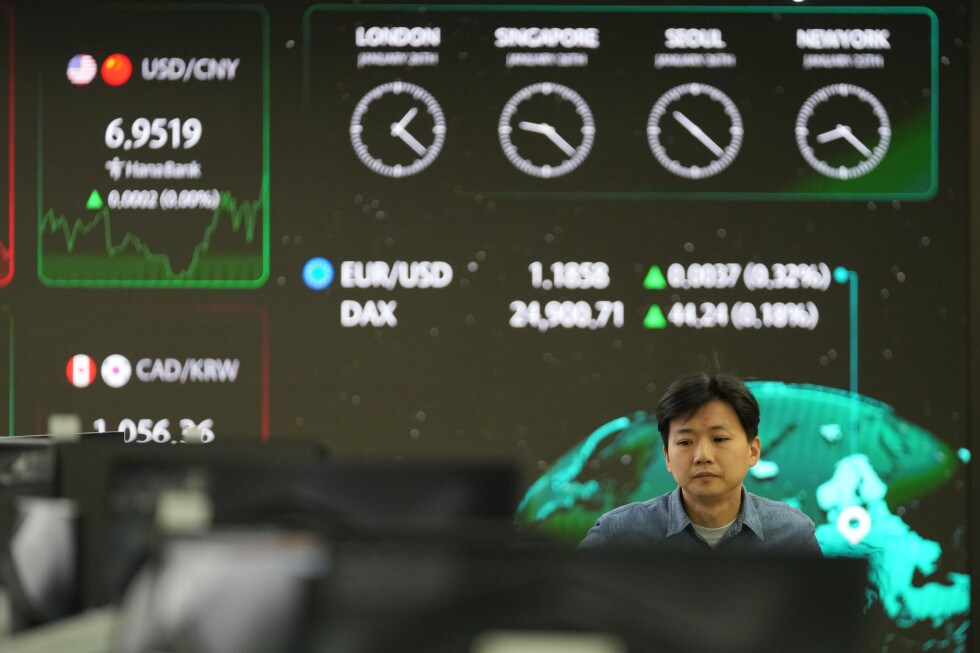
    Asian financial markets experienced broad declines on Monday, with Japan’s benchmark index leading the losses following a significant appreciation of the yen against the U.S. dollar. The Nikkei 225 plummeted 1.9% to close at 52,812.45, driven by substantial selling of major export-oriented corporations. Toyota Motor Corp. witnessed a notable 3.2% decline in share value, reflecting market concerns about reduced competitiveness in international markets due to currency fluctuations.

    The yen’s surge to 154.26 against the dollar, marking a substantial recovery from last week’s 158 yen level, came after financial authorities from both Japan and the United States indicated potential intervention measures to support the Japanese currency. This currency movement represents a dramatic shift from recent trends where the dollar had been consistently gaining ground against the yen.

    Other Asian markets followed the downward trend with South Korea’s Kospi declining 0.6% to 4,961.58. Hong Kong’s Hang Seng experienced a marginal 0.1% decrease to 26,722.89, while China’s Shanghai Composite managed a slight 0.1% gain to 4,141.10. Trading remained suspended in several major markets including Australia, New Zealand, India, and Indonesia due to local holidays.

    U.S. futures indicated continued market uncertainty, with S&P 500 and Dow Jones Industrial Average futures both declining 0.3%. This cautious sentiment reflects ongoing concerns regarding U.S. tariff policies and international trade tensions. Precious metals demonstrated strong performance as investors sought safe-haven assets, with gold climbing 2% to approach $5,100 per ounce and silver surging 6.4% to approximately $108 per ounce.

    Energy markets showed minimal movement with benchmark U.S. crude edging up 2 cents to $61.09 per barrel and Brent crude increasing 3 cents to $65.10. Market participants await the upcoming U.S. Federal Reserve meeting on Wednesday, where officials are expected to maintain current interest rate levels amid ongoing economic uncertainty.

  • India to slash tariffs on cars to 40% in trade deal with EU, Reuters report

    India to slash tariffs on cars to 40% in trade deal with EU, Reuters report

    In a historic move poised to reshape global trade dynamics, India has agreed to dramatically reduce import tariffs on European Union automobiles as part of a comprehensive free trade agreement expected to be finalized imminently. According to sources familiar with the negotiations, New Delhi will slash levies on EU-sourced vehicles from their current peak of 110% down to 40%, marking the most significant opening of India’s protected automotive market in decades.

    The breakthrough agreement, potentially announced as early as Tuesday, will immediately benefit premium European automakers including Volkswagen, Mercedes-Benz, and BMW. The reduced tariffs will apply to combustion-engine vehicles with an import value exceeding €15,000 ($17,739), with approximately 200,000 units annually qualifying under the new framework. The duty reduction represents a phased approach, with further decreases to 10% planned over subsequent years.

    This monumental pact, informally dubbed the ‘Mother Of All Deals’ by negotiators, extends beyond automotive trade. The agreement is expected to substantially boost bilateral commerce between the world’s largest trading bloc and one of its fastest-growing economies. Indian export sectors previously hampered by recent 50% U.S. tariffs—particularly textiles and jewelry—stand to gain significant market access to European consumers.

    Notably, battery electric vehicles (EVs) will be excluded from the tariff reductions for an initial five-year period. This protective measure aims to safeguard investments by domestic manufacturers Mahindra & Mahindra and Tata Motors in India’s emerging electric vehicle sector before eventually aligning with the reduced duty structure.

    The tariff reduction promises to transform market dynamics in India’s 4.4-million-unit automotive market, currently dominated by Japan’s Suzuki and domestic brands controlling two-thirds of sales. European manufacturers presently hold less than 4% market share, constrained by prohibitive import costs. The new framework will enable automakers to introduce broader product portfolios at competitive prices while testing consumer demand before committing to expanded local manufacturing.

    With India’s automotive market projected to reach 6 million annual units by 2030, several European manufacturers are already preparing increased investment. Renault is implementing a renewed India strategy seeking growth beyond Europe, while Volkswagen Group is finalizing additional investment plans through its Skoda brand. The agreement signifies India’s strategic pivot toward deeper economic integration with Western markets amid shifting global trade alliances.

  • Smart money pivots to Dubai offices, logistics, retail as investors recalibrate

    Smart money pivots to Dubai offices, logistics, retail as investors recalibrate

    Dubai’s commercial property sector is experiencing a strategic repositioning as sophisticated investors recalibrate their portfolios toward income-generating assets with strong fundamentals. Market data reveals a pronounced pivot toward off-plan offices, logistics hubs, and community retail centers, signaling a departure from speculative residential investments toward stable, long-term returns.

    The emirate’s real estate market recorded transactions exceeding Dh760 billion in 2025, with commercial and industrial assets contributing an estimated Dh90-100 billion according to Dubai Land Department statistics. This substantial commercial segment growth reflects deepening institutional confidence in Dubai’s non-residential property market.

    Office market dynamics show particular strength in prime locations. CBRE reports Grade A offices in central business districts like DIFC and Business Bay achieved high single-digit rental growth in 2025, driven by constrained new supply. Savills projects this supply limitation will persist through 2027, creating competitive conditions for premium space. Commercial lease registrations have increased year-on-year, with strongest demand for modern, energy-efficient buildings featuring flexible layouts and premium amenities.

    Logistics real estate demonstrates even more vigorous performance, with JLL reporting prime warehouse rents surging over 15% annually in key submarkets. This growth stems from Dubai’s expanding role as a global trade hub, supported by Jebel Ali Port, Dubai South logistics corridor, and growing air cargo volumes. Supply chain diversification and e-commerce expansion are structurally boosting demand for modern distribution facilities across the Gulf region.

    Retail investment patterns are evolving toward neighborhood centers embedded within residential communities rather than destination malls. Knight Frank data indicates these community assets deliver stable yields supported by daily consumer spending and population-driven footfall, making them less vulnerable to tourism fluctuations.

    Geographically, investment remains concentrated in established commercial districts including Business Bay, Jumeirah Lake Towers, and Barsha Heights, while emerging residential corridors like Jumeirah Village Circle and Dubai South are witnessing their first purpose-built commercial developments.

    Investor profiles are becoming increasingly segmented. International capital favors stabilized office and retail assets offering predictable income streams, while domestic investors are pursuing development-led strategies in the industrial sector where supply remains constrained.

    Market analysts emphasize this shift toward quality, location, and long-term performance indicates market maturation. With population growth exceeding 3.7 million, infrastructure expansion, and robust trade activity, Dubai’s commercial real estate fundamentals remain strong heading into 2026.

  • Geopolitics overshadows mood at global financial markets

    Geopolitics overshadows mood at global financial markets

    Global financial markets are commencing 2026 under the substantial weight of geopolitical tensions, creating an investment landscape where political narratives increasingly override fundamental economic indicators. This paradigm shift represents a fundamental transformation in market behavior, with political risk premiums expanding across asset classes at unprecedented velocity and scale.

    The current environment reflects a convergence of concerning developments: softening US economic metrics, ongoing earnings season uncertainties, and escalating geopolitical flashpoints. These include renewed discussions regarding US-Greenland acquisition ambitions, Middle Eastern regime instability following Venezuela’s political transition, and persistent Russia-Ukraine tensions. This complex backdrop has created a market exceptionally sensitive to headline-driven volatility rather than traditional valuation metrics.

    Market technicals reveal extraordinary conditions. Gold maintains historically elevated positions above $4,500, silver demonstrates exponential price structures approaching triple-digit territory, while crude oil rebounds toward $60 amid heightened hedging demand. US equity indices test record highs despite visible momentum deterioration, with the Dow approaching 50,000, Nasdaq near 26,300, and S&P 500 around 7,000. Even the US dollar defies rate-cut expectations through sustained safe-haven demand.

    Razan Hilal, Market Analyst and CMT at FOREX.com, observes: ‘These conditions reveal the limitations of conventional forecasting. When overnight sentiment shifts can reverse market directions, disciplined exposure management and scenario planning surpass directional predictions in importance.’

    This transformation manifests across investment vehicles. Precious metals, traditional geopolitical hedges, exhibit increasingly volatile trajectories. Silver’s dual nature as monetary and industrial asset attracts particular attention, though exponential advances carry significant correction risks. Crude oil’s price strength appears driven more by temporary supply concerns than structural narrative changes.

    Equity markets display growing fragility beneath surface-level strength. Technology-heavy benchmarks show concerning divergences as capital rotates toward defensive positions. Market participants increasingly view stability above technical thresholds as conditional rather than guaranteed.

    Hilal emphasizes: ‘This environment demands investment restraint. Successful navigation requires renewed focus on capital preservation fundamentals: defined invalidation levels, multi-timeframe analysis, and volatility-absorbing hedging strategies. Flexibility in exposure management becomes paramount as narratives evolve.’

    As 2026 progresses, the primary challenge transforms from interpreting individual geopolitical events to managing their cumulative market impact. In this new paradigm, sophisticated risk management emerges as the primary strategic approach rather than secondary consideration.

  • India expected to report over 7% GDP growth

    India expected to report over 7% GDP growth

    India’s economy is demonstrating remarkable resilience with leading global financial institutions revising their growth projections upward for the current fiscal year. The International Monetary Fund announced on January 19 an upgraded forecast of 7.3% GDP expansion for the April 2025-March 2026 period, significantly higher than its previous 6.6% estimate. This revision follows the World Bank’s January 13 adjustment increasing its FY26 growth projection to 7.2% from 6.3%.

    The optimistic assessments align with the Indian government’s own projection of 7.4% growth for the fiscal year ending March. According to analysts, this robust performance stems from multiple driving forces including strong domestic consumption patterns, effective tax reforms, and improved household incomes in rural regions.

    Professor Swaran Singh of Jawaharlal Nehru University identifies four key growth catalysts: structural reforms, demographic advantages, policy interventions, and external factors. “India benefits from a young and expanding workforce with a median age of approximately 28 years, ensuring sustained labor supply and continuously rising domestic consumption levels,” he explained. The expanding middle class continues to spearhead domestic demand, serving as a primary engine for economic expansion.

    Despite the encouraging figures, sustainability concerns emerge among experts. The nation faces significant challenges in maintaining this growth trajectory long-term. Karori Singh, former director of the South Asia Studies Centre, emphasizes the critical need to address manufacturing sector deficiencies. “India cannot fully capitalize on international trade and investment opportunities without strengthening manufacturing capabilities and integrating them with agricultural operations,” he noted.

    Additionally, wealth distribution presents another substantial hurdle. Economic benefits remain concentrated among limited segments rather than being broadly distributed across the population. Experts suggest India could draw meaningful lessons from China’s manufacturing and industrial development experience to address these structural challenges while leveraging its demographic dividend through appropriate skill development and job creation initiatives.