分类: business

  • Indonesian authorities attempt to soothe worries after $80 billion market rout

    Indonesian authorities attempt to soothe worries after $80 billion market rout

    Indonesian financial regulators initiated emergency stabilization measures on Thursday following a massive two-day market selloff that erased approximately $80 billion in market valuation. The dramatic downturn was triggered by index provider MSCI raising serious concerns about ownership transparency and trading practices within the Indonesian equity market.

    The Jakarta Composite Index experienced extreme volatility, plummeting 7.4% on Wednesday followed by an additional 8% decline on Thursday that activated circuit-breaker trading halts. The benchmark ultimately closed with a moderated 1% loss following intervention announcements from authorities.

    Central to the crisis are investor apprehensions regarding President Prabowo Subianto’s economic policies, particularly the expansion of fiscal deficits and increased governmental involvement in financial markets. These concerns were exacerbated by recent controversial appointments, including the president’s nephew to the central bank and the dismissal of respected Finance Minister Sri Mulyani Indrawati last year.

    In response to MSCI’s potential downgrade warning, Indonesian authorities unveiled a comprehensive package of corrective measures. The Financial Services Authority (OJK) announced the doubling of free-float requirements for listed companies from 7.5% to 15%, alongside commitments to enhance ownership transparency through detailed disclosure of shareholdings above and below 5% thresholds.

    Mahendra Siregar, Head of OJK, indicated during a press conference that communications with MSCI have been constructive, with expectations for resolution by March. Meanwhile, the Indonesian rupiah continued its decline, trading at 16,745 against the US dollar, approaching recent record lows.

    International financial institutions responded decisively. Goldman Sachs and UBS both downgraded their recommendations for Indonesian equities, with Goldman warning of potential outflows reaching $7.8 billion in a worst-case downgrade scenario. Market analysts characterized the selloff as predominantly driven by structural concerns rather than fundamental economic weaknesses.

    Despite the aggressive measures, analysts anticipate continued market fragility in the near term, emphasizing that investor confidence will require demonstrable improvements in transparency and consistent policy implementation rather than merely announcements of intent.

  • India sees 6.8%-7.2% growth next year, flags risks from geopolitics, weak exports

    India sees 6.8%-7.2% growth next year, flags risks from geopolitics, weak exports

    India’s economic trajectory remains strong with projected growth between 6.8% and 7.2% for the upcoming fiscal year starting April, according to the government’s annual economic survey presented Thursday. While this represents a slight moderation from the current year’s 7.4% expansion, the forecast underscores the resilience of domestic demand against mounting global challenges.

    The comprehensive assessment, presented to parliament by Finance Minister Nirmala Sitharaman, characterizes the outlook as ‘steady growth amid global uncertainty, requiring caution, but not pessimism.’ The report highlights several external pressures including slower growth among key trading partners, trade disruptions from tariff impositions, and capital flow volatility that may periodically affect export performance and investor sentiment.

    International institutions have echoed this cautiously optimistic assessment. The IMF recently upgraded India’s growth forecast by 0.7 percentage points to 7.3%, while the World Bank increased its projection by 0.9 points to 7.2% for the coming fiscal year.

    Currency dynamics present a particular challenge. The Indian rupee hit a historic low of 91.9850 per dollar on Thursday, with the survey noting the currency is ‘punching below its weight’ despite strong economic fundamentals. This depreciation, while partially offsetting the impact of higher U.S. tariffs, has contributed to significant capital outflows—foreign investors withdrew a record $19 billion from Indian equities in 2025.

    The report identifies recent structural reforms—including consumption-tax reductions, labor law modernization, and nuclear-power sector liberalization—as key drivers expected to bolster both investment and consumption. Additionally, ongoing trade negotiations with the United States could potentially reduce external uncertainties if concluded successfully within the year.

    Monetary policy has supported growth momentum, with the Reserve Bank of India implementing 125 basis points of rate cuts since February 2025—the most aggressive easing cycle since 2019. Current indicators suggest sustained demand buoyancy as the new year progresses, positioning India among the world’s fastest-growing major economies despite global headwinds.

  • Abu Dhabi real estate heads into 2026 with steady gains

    Abu Dhabi real estate heads into 2026 with steady gains

    Abu Dhabi’s real estate sector is positioned for a year of sustained expansion in 2026, bolstered by robust economic fundamentals and favorable demographic trends. According to the latest ValuStrat Market Outlook, the emirate’s property landscape demonstrates remarkable resilience across residential, commercial, and hospitality segments, creating an environment conducive to continued investor engagement and market stability.

    Residential markets are anticipated to experience accelerated capital appreciation, with values projected to surge by 16%—a notable increase from the 13% growth recorded in the previous year. Rental rates are expected to rise by an average of 6%, with apartments poised to outperform villas in capital gains. This shift reflects evolving buyer preferences emphasizing value optimization, convenience, and lifestyle amenities, alongside emerging affordability constraints in the villa rental segment.

    Supply dynamics continue to favor sellers, with approximately 6,500 new units expected to enter the market despite a theoretical pipeline of over 16,000 units. This persistent delivery delay pattern maintains occupancy rates at approximately 90%, sustaining upward pressure on prices across various submarkets.

    The commercial sector demonstrates even more pronounced tightness, particularly in Grade A office space. With minimal new supply additions—only 4,200 square meters of gross leasable area anticipated—and occupancy rates reaching 93%, prime office rents are forecast to increase by over 20%, while capital values may rise by 10%. The competition for premium, well-located office spaces remains intense as businesses prioritize building quality and strategic location.

    Hospitality indicators show promising improvement, with average occupancy projected at 82% alongside an average daily rate of Dh551 and revenue per available room of Dh452. The scheduled opening of several luxury properties, including Mondrian Abu Dhabi and The Mangroves Abu Dhabi, complements the emirate’s tourism strategy aiming to attract 39.3 million visitors annually by 2030.

    Underpinning this real estate momentum is Abu Dhabi’s strong economic outlook, with GDP growth anticipated around 5% and inflation remaining manageable at approximately 2%. Population growth toward 4.5 million residents, coupled with significant infrastructure developments including the Etihad Rail project and enhanced light rail connectivity, provides additional structural support for sustained real estate performance throughout 2026.

  • Abu Dhabi Airports closes 2025 with record traffic

    Abu Dhabi Airports closes 2025 with record traffic

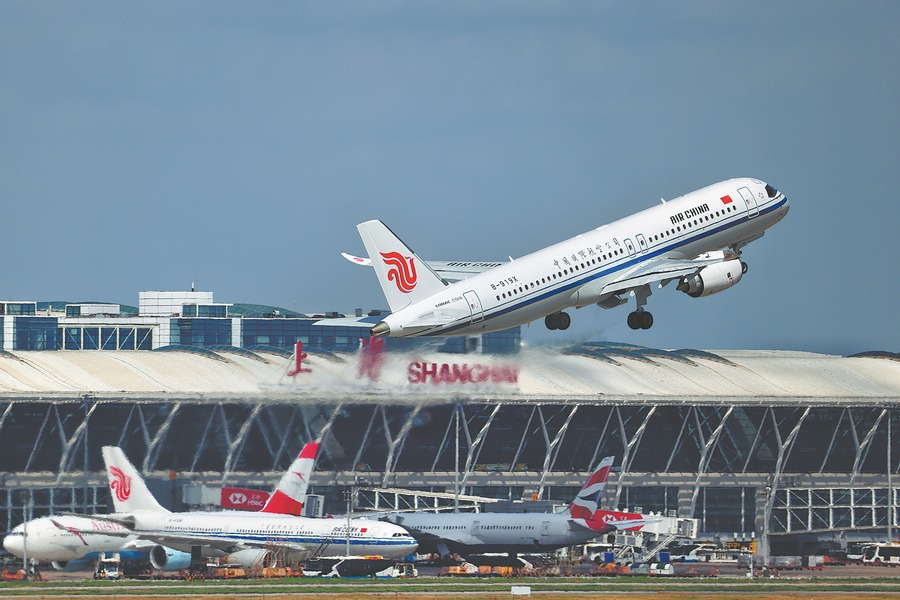
    Abu Dhabi’s aviation sector has achieved an unprecedented milestone, with its airport network processing over 33 million passengers throughout 2025. This remarkable figure represents the highest annual passenger volume in the emirate’s history, cementing its position as a rapidly expanding global aviation hub.

    The crown jewel of this network, Zayed International Airport (AUH), has emerged as the fastest-growing mega airport across the Europe, Middle East, and Africa (EMEA) region. In its second full year of operations, AUH handled approximately 98% of all passenger traffic within the emirate’s airport system. The fourth quarter alone witnessed 8.59 million passengers passing through its gates, marking a substantial 13.8% increase compared to the same period in the previous year.

    This extraordinary growth was propelled by strategic network expansion that saw 39 new route launches and the addition of seven new airline partners. Major carriers including China Eastern Airlines, Ethiopian Airlines, Eurowings, Jazeera Airways, and Etihad Airways either initiated or enhanced services to key global destinations. The expanded connectivity now spans from established hubs like Addis Ababa, Atlanta, and Hong Kong to emerging markets such as Berlin, Hanoi, Pune, and Warsaw.

    The airport’s operational excellence was further demonstrated through multiple days where daily passenger traffic exceeded the 100,000 mark, underscoring AUH’s efficiency and its growing appeal as a preferred hub for both direct and transfer passengers.

    Ahmed Juma Al Shamisi, Acting Chief Executive Officer at Abu Dhabi Airports, emphasized that surpassing the 33 million passenger milestone reflects the organization’s operational readiness to meet escalating global demand. He attributed this performance to concerted efforts across all operational levels to fulfill the strategic vision set by leadership, with continued focus on maintaining momentum through operational excellence and expanded cargo capabilities.

    The achievement marks the 19th consecutive period of double-digit growth in passenger traffic—a record in itself—and the first time Abu Dhabi’s five airports collectively surpassed 30 million annual passengers. This consistent multi-year growth trajectory has been driven by strategic network expansion, strengthened airline partnerships, and sustained investment in capacity enhancement and passenger experience improvements.

    Complementing this success, cargo volumes experienced significant growth with nearly 770,000 tonnes handled across the emirate’s airports—a 12% year-on-year increase that highlights Abu Dhabi’s growing prominence as a strategic trade corridor.

    The year 2025 also brought multiple industry accolades, including Best Airport for Retail at the Frontier Awards and recognition as Highly Commended at the Aviation Business Awards. AUH further distinguished itself by achieving ACI’s Level 2 Accessibility Accreditation and the coveted Level 3 Customer Experience Accreditation, alongside awards for innovative technology systems and passenger experience initiatives.

  • Gold prices set for best monthly gain in 50 years after hitting record high

    Gold prices set for best monthly gain in 50 years after hitting record high

    Global gold markets witnessed an unprecedented surge on Thursday, January 29, 2026, as the precious metal shattered previous records by breaching the $5,500 per ounce threshold for the first time in history. This remarkable rally positions gold for its most substantial monthly appreciation in half a century, driven primarily by escalating geopolitical tensions and shifting economic indicators.

    In Dubai’s vibrant gold market, 24K gold reached an extraordinary peak of Dh666 per gram during daytime trading before settling at Dh664.5 per gram by evening. This represents a staggering year-to-date increase of Dh144.5 per gram, demonstrating the metal’s sustained upward trajectory. The phenomenon extended beyond pure gold, with 22K variants momentarily crossing the Dh600 barrier for the first time ever, achieving an unprecedented high of Dh616.75 per gram before moderating to Dh615.25.

    Financial experts attribute this historic surge to multiple converging factors. Vijay Valecha, Chief Investment Officer at Century Financial, identified deteriorating US-Iran relations as a primary catalyst. ‘The breakdown in nuclear negotiations between Washington and Tehran, coupled with President Trump’s暗示 of potential military intervention in the Middle East, has created substantial market uncertainty,’ Valecha explained. The strategic deployment of a US aircraft carrier strike group, bringing total American warships in the region to ten, has significantly heightened geopolitical anxieties.

    Concurrently, the weakening US dollar index has prompted investors to seek refuge in traditional safe-haven assets, further accelerating gold’s ascent. From a technical perspective, Valecha noted that gold approached $5,604 during early trading sessions before experiencing a slight correction to $5,549. Critical resistance is currently identified at $5,604, with a potential breakthrough potentially propelling prices toward $5,700. Conversely, support levels stand firm at $5,438 on hourly charts, with a breach possibly triggering a decline to $5,317.

    This extraordinary market performance underscores gold’s enduring role as a financial sanctuary during periods of international instability and economic uncertainty.

  • Big challenges lurk behind India’s world-beating growth

    Big challenges lurk behind India’s world-beating growth

    As Finance Minister Nirmala Sitharaman prepares to unveil India’s annual budget this Sunday, the nation presents a complex economic portrait of surface-level prosperity overshadowing persistent structural vulnerabilities. Official metrics indicate remarkable progress: GDP growth racing toward 7.3%, inflation reined below 2%, and agricultural output strengthening rural livelihoods. The economy is poised to surpass $4 trillion, eclipsing Japan as Asia’s second-largest economy.

    This apparent golden era—described by the Reserve Bank of India as a ‘Goldilocks phase’ of ideal expansion—has been fueled by strategic fiscal measures. Last year’s income tax reductions and rationalized Goods and Services Tax structure stimulated consumer spending, particularly during festive seasons, injecting vitality into domestic markets.

    Beneath these impressive headlines, however, lurk substantial challenges. India’s celebrated growth narrative conceals alarming labor market weaknesses. The technology sector—long the engine of middle-class creation—has witnessed catastrophic hiring stagnation, with the five largest IT firms adding merely 17 net employees through three quarters of 2025. This paralysis reflects AI’s disruptive impact on India’s back-office economy and signals broader white-collar employment concerns.

    Trade dynamics present additional complications. While the government has pursued aggressive trade diversification through recently signed agreements with the European Union and other partners, the persistent shadow of Trump’s 50% tariffs continues to constrain exports. HSBC Research notes weakening US-bound shipments with only marginal recovery in other markets, raising questions about India’s competitiveness against manufacturing hubs like Vietnam and Bangladesh.

    Most critically, private investment has remained stagnant at approximately 12% of GDP since 2012—a thirteen-year plateau that economists identify as fundamentally alarming. JP Morgan’s Jehangir Aziz attributes this investment freeze to persistent factory overcapacity and insufficient demand, creating a self-reinforcing cycle that inhibits new capital formation.

    Foreign direct investment tells another troubling story. Despite rapid growth, India has never achieved the 4%+ FDI-to-GDP ratios that propelled China and Vietnam’s economic miracles, currently languishing at just 0.1%. Rockefeller International’s Ruchir Sharma cites the lingering ‘Licence Raj’ bureaucracy and restrictive labor regulations as primary deterrents to international capital.

    In response, the budget is expected to emphasize fiscal restraint alongside targeted reforms. Analysts anticipate expanded production-linked incentives, support for small exporters, defense capital allocations, and customs duty reductions. While infrastructure investment—exceeding $100 billion annually—will likely continue at 3% of GDP, the government faces constrained fiscal space following last year’s tax cuts. The overarching priority remains deficit reduction, with Nuvama Securities forecasting continued deleveraging rather than stimulus measures.

  • ‘Having little money taught me a lot’: British expat reveals journey to financial success

    ‘Having little money taught me a lot’: British expat reveals journey to financial success

    Dubai-based entrepreneur Emily Abraham has transformed early financial hardship into a remarkable business success story. The 48-year-old British expatriate, who co-founded pre-loved luxury retailer Love Luxury, credits her disciplined approach to money management to experiences of having “very little” earlier in life.

    Now residing in Dubai for three years, Abraham maintains an unconventional perspective on wealth, viewing money as “leverage” rather than a measure of worth. Despite operating within the emirate’s glamorous luxury sector, she maintains grounded financial habits, saving an impressive 80% of her income while reinvesting profits back into her growing business.

    In an exclusive reflection on her financial journey, Abraham describes money as neither inherently good nor bad, but rather a tool that reveals character. “In some hands, you divide, inflate egos, and tempt people to measure worth in numbers instead of values. In other hands, you heal, feed and build futures,” she addresses in a hypothetical letter to money.

    The entrepreneur emphasizes transparency in financial matters, regularly discussing money with her husband Adam and rejecting the notion that finances should be taboo. Her approach to wealth management was forged through necessity—learning to budget “down to the last penny” during periods of financial constraint while raising children.

    Abraham’s philosophy centers on financial discipline and charitable giving. She advocates saving half of one’s income, noting that “the peace of mind that comes with financial stability is priceless.” Her long-term vision involves transitioning from income-driven work to full-time charitable endeavors focused on helping children in need.

    The businesswoman considers her greatest financial achievement the founding of Love Luxury and the strategic reinvestment of all profits back into the company. She views past financial challenges not as regrets but as essential learning experiences that shaped her current success.

  • Oh My Desk: Building a new kind of coworking space and business center in Dubai

    Oh My Desk: Building a new kind of coworking space and business center in Dubai

    In Dubai’s competitive business landscape, where grandeur often overshadows functionality, Oh My Desk emerges as a transformative force in the coworking sector. Founded by entrepreneur Guillaume Rassemi, this innovative business center challenges conventional office models by prioritizing human-centered design over superficial extravagance.

    The concept originated from Rassemi’s personal frustration with existing workspaces that prioritized aesthetics over practicality. “Most offices were built either to impress visitors or to maximize square meters,” Rassemi explains. “Very few were designed around how people actually live and work every day.” This realization sparked the creation of workspaces that balance professional functionality with homely comfort.

    Oh My Desk’s distinctive approach manifests through carefully calibrated environments featuring warm materials, natural lighting, and functional layouts that foster concentration rather than distraction. The company consciously avoids both sterile minimalism and over-designed theatricality, instead crafting spaces where professionals can thrive long-term.

    Beyond physical infrastructure, Oh My Desk redefines community building in coworking environments. Unlike venues that force networking, this establishment cultivates organic relationships through thoughtfully designed common areas and optional events. This authentic approach has generated genuine collaborations among its diverse membership of entrepreneurs, consultants, creatives, and international teams.

    Strategically located in Dubai’s prime business districts—Downtown Dubai and Business Bay—the company offers fully serviced private offices, flexible contracts, and all-inclusive pricing. This model particularly appeals to scaling businesses and international companies entering the UAE market, providing operational flexibility without compromising on security or professional standards.

    The leadership combination of Rassemi’s strategic vision and co-founder Amir Mottaghi’s architectural expertise ensures both operational excellence and timeless design. Their disciplined expansion strategy focuses on sustainable growth across the GCC region, with planned locations in Abu Dhabi and Saudi Arabia.

    Oh My Desk’s upcoming flagship in Dubai Design District, featuring a panoramic rooftop space, represents the culmination of their philosophy—demonstrating that in a city known for excess, restraint and human-centered design can become powerful competitive advantages.

  • Venezuelan MPs approve bill to open up oil sector to private firms

    Venezuelan MPs approve bill to open up oil sector to private firms

    Venezuela’s National Assembly has passed a transformative reform of its hydrocarbons legislation, marking a significant policy shift that grants private enterprises—including international firms—greater operational autonomy within the nation’s oil industry. The legislative overhaul, which received approval from lawmakers aligned with former President Nicolás Maduro, is poised to reshape the investment landscape in a country possessing the world’s largest proven oil reserves.

    Interim President Delcy Rodríguez, who assumed leadership following Maduro’s detention during a U.S. military operation earlier this month, is expected to formally enact the legislation. This move represents a substantial departure from the state-centric model established under former leader Hugo Chávez in 2006, which had progressively tightened governmental control over petroleum operations.

    The reformed framework eliminates previous requirements mandating state-owned PDVSA to maintain majority stakes in joint ventures, thereby allowing foreign companies to exercise enhanced management control and obtain direct access to revenue streams from oil production. This structural change addresses longstanding investor concerns regarding contractual autonomy and financial transparency.

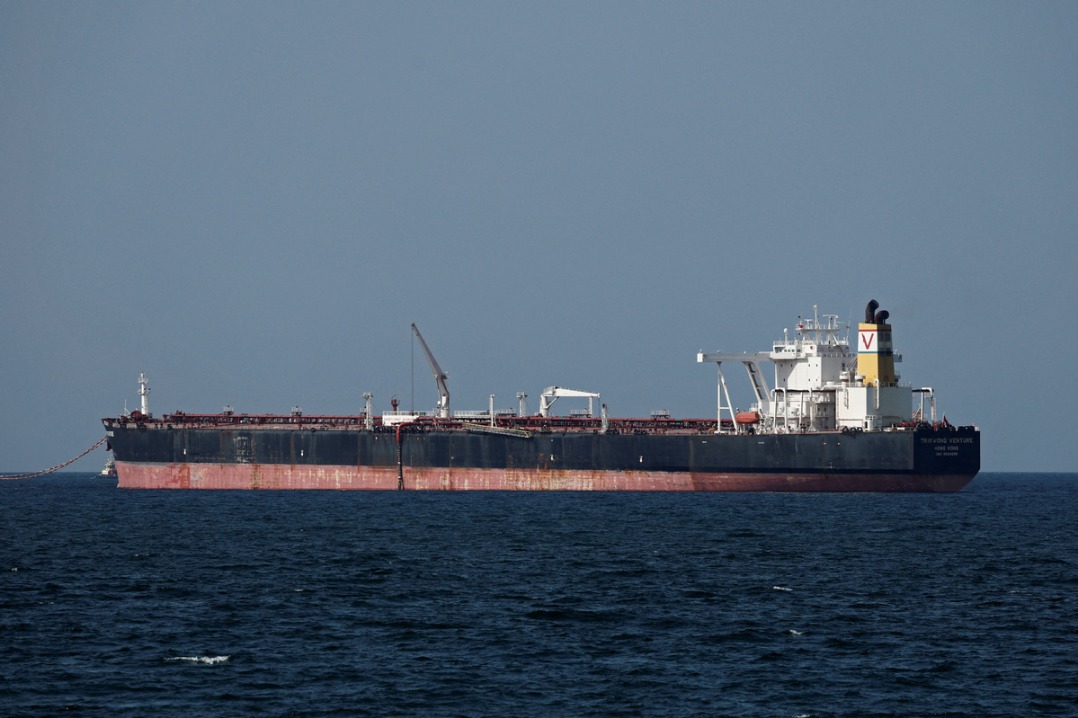
    This legislative development occurs amidst ongoing negotiations between Washington and Caracas concerning the sale of sanctioned Venezuelan crude oil. The United States has authorized the export of tens of millions of barrels, with proceeds being channeled into a Qatar-based account subject to U.S. oversight. These funds are designated for essential public services including law enforcement, sanitation infrastructure, and medical procurement.

    Industry analysts note that the reform could catalyze the return of international energy companies that largely withdrew from Venezuela following nationalization measures and subsequent contractual disputes. While Chevron has maintained operations through special U.S. licensing arrangements, numerous other firms seek compensation for previous contract alterations.

    Despite Venezuela’s immense petroleum potential, the sector has suffered from chronic underinvestment, infrastructure deterioration, and comprehensive international sanctions. The new legal framework aims to counter these challenges by creating a more attractive environment for foreign capital and technical expertise.

  • Indian rupee hits record low, RBI steps in to avert fall past 92 per dollar

    Indian rupee hits record low, RBI steps in to avert fall past 92 per dollar

    The Indian rupee plunged to an unprecedented low against the US dollar on Thursday, January 29, 2026, driven by substantial dollar demand from corporate hedging activities and the maturation of non-deliverable forward positions. The currency closed at 91.9550 per dollar, marking a 0.2% decline from its previous session, after briefly touching 91.9850 during trading hours.

    The Reserve Bank of India (RBI) executed strategic interventions to prevent the rupee from breaching the psychologically critical threshold of 92 per dollar, according to market traders. This defensive action created a complex policy dilemma for the central bank, as its foreign exchange market operations effectively counteract its simultaneous efforts to enhance banking system liquidity.

    The currency’s weakness has generated ripple effects across India’s financial markets. Government bonds experienced downward pressure, while interest rate swaps markets showed significant strain. Overnight index swap rates have climbed to levels that anticipate monetary tightening, despite macroeconomic indicators suggesting no fundamental justification for such policy moves.

    This currency depreciation presents a puzzling contrast to India’s robust economic performance. Official government projections indicate growth between 6.8%-7.2% for the upcoming fiscal year beginning in April, representing only a modest deceleration from the current year’s 7.4% expansion. The government’s annual economic survey noted that the rupee’s valuation fails to accurately reflect the nation’s strong economic fundamentals, while acknowledging that currency depreciation could partially mitigate the impact of elevated US tariffs.

    Foreign investor apprehension continues to weigh heavily on Indian markets. January has witnessed net foreign equity outflows exceeding $4 billion, compounding the record $19 billion withdrawn throughout 2025. Market analysts attribute this capital flight to geopolitical uncertainties and diminished investor confidence. DBS Bank India projects further rupee weakness to 93-94 levels this year as inbound investment flows continue to diminish.

    Financial experts emphasize that a comprehensive trade agreement with the United States would significantly improve market sentiment toward Indian assets. However, the current geopolitical landscape complicates long-term growth projections for Asia’s third-largest economy.