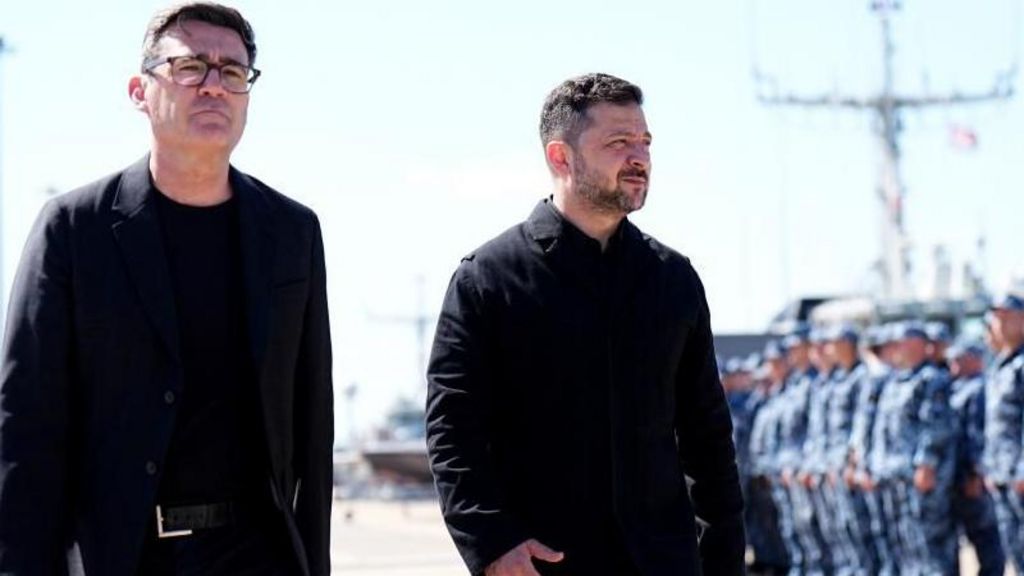
Less than two months after taking office as United Kingdom Prime Minister, Andy Burnham will undertake his inaugural overseas visit on Monday, traveling to Ukraine’s capital Kyiv to stand with the nation as it marks its independence anniversary and reaffirm the UK’s long-standing commitment to Ukraine’s sovereignty amid escalating Russian aggression.
This trip comes at a critical moment for the war-torn country, as Russian forces have ramped up deadly air strikes across Ukrainian territory in recent weeks. One of the most recent attacks, a strike on a civilian shopping centre on Friday, claimed the lives of at least 16 people, underscoring the urgent need for continued international backing. During his visit, Burnham will chair the first session of the “coalition of the willing”, a collaborative initiative originally launched by the UK and France under his predecessor, former Prime Minister Keir Starmer. He will also participate in official independence day commemorations and accept a national award on behalf of the British people, honoring the UK’s consistent support for Ukraine since the full-scale Russian invasion began.
In pre-visit remarks released Sunday, Burnham emphasized the unshakable nature of the UK’s commitment to Ukraine. “On Ukraine’s 35th anniversary of independence, the Ukrainian people should be in no doubt: the UK is behind you today and for as long as it takes,” he said. “I am proud of the contribution our country has made to Ukraine and I want the Ukrainian people to hear it directly from me that our support will not waver. After all, Ukraine’s security is our security.” Burnham added that the deep friendship between the two nations would survive long beyond the conclusion of Russia’s illegal invasion, stating plainly: “Russia should be in no doubt of our resolve. We will not back down until there is a just and lasting peace.”
The trip comes amid rising friction between London and Moscow, after the Kremlin issued warnings of unspecified “consequences” over Ukraine’s increased use of British-supplied drones for strikes on Russian infrastructure. In recent weeks, Kyiv has stepped up long-range attacks on targets inside Russia, including key energy infrastructure such as oil refineries and logistics facilities belonging to Wildberries, Russia’s largest e-commerce retailer. Russia’s embassy in London issued a sharp rebuke of British involvement, accusing the UK of “deliberately opting for an escalation of the Ukraine crisis” and warning that “the deeper its involvement in the conflict… the higher the price it will pay.”
Burnham has pushed back firmly against Russian threats in recent statements, reiterating that the UK’s policy of supporting Ukraine’s right to self-defense remains unchanged. “We are not fair-weather friends, we will be there in Ukraine’s hour of need and that won’t change,” he said last week, repeating the stance earlier this month when he noted that the policy of support for Ukraine has been consistent across previous prime ministerial administrations and would continue unchanged under his leadership.
In a major policy announcement planned for his Kyiv visit, Burnham will confirm that the UK government has approved a request to allow leading European defense contractor MBDA to declassify technical information on British components used in the Scalp long-range cruise missile, the French counterpart to the UK’s Storm Shadow missile. Both weapons systems are built through a joint British-French technology partnership, and French President Emmanuel Macron has already floated a plan to establish local Scalp missile assembly lines inside Ukraine to bolster the country’s domestic defense production capacity.
The visit marks the second high-level meeting between Burnham and Ukrainian President Volodymyr Zelensky, who became the first foreign leader to meet Burnham at Downing Street following the UK prime minister’s appointment in July. It also coincides with a confirmed shift in Russian diplomatic representation in London: the Kremlin confirmed this week that Andrei Kelin, Russia’s long-serving ambassador to the UK, has left his post in London in recent weeks. While Moscow has not yet named a replacement envoy, Russia’s embassy in London told the BBC that the departure does not signal any plan to downgrade formal diplomatic relations between the two countries.