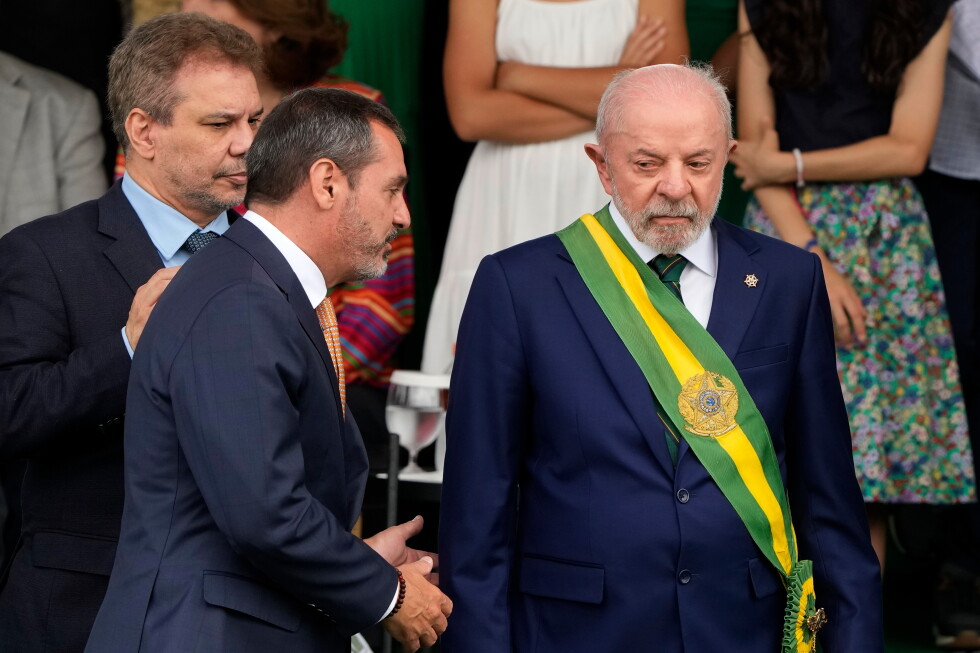
In a move that has sent shockwaves through Brazil’s political landscape just months ahead of October’s national presidential election, Supreme Court Justice André Mendonca—an appointee of former right-wing President Jair Bolsonaro—removed the nation’s top federal police official and his intelligence deputy from their posts Tuesday. The decision escalates an already bitter public feud between rival members of the country’s highest court and has pulled sitting President Luiz Inácio Lula da Silva’s reelection campaign directly into the growing crisis.
Mendonca’s ruling alleges that Federal Police Director-General Andrei Rodrigues, a Lula nominee, and intelligence director Leandro Almada oversaw the creation of six illegal intelligence reports tracking the justice’s activities through the end of August. This unprecedented action from a sitting Supreme Court justice comes amid two high-stakes, politically charged investigations that Mendonca currently leads. The first probe centers on the collapse of Banco Master, a scandal that has already implicated multiple opposition figures, while the second investigates alleged fraud in Brazil’s national pension system—a case that has already raised ethical questions tied to one of Lula’s own sons.
As of Tuesday evening, Lula’s administration had not issued an immediate response to questions from the Associated Press regarding whether it would file an appeal against Mendonca’s ruling. In a show of solidarity, William Marcel Murad, the federal police’s executive director, released a public statement affirming that Rodrigues retains the “full confidence” of the force, adding that rank-and-file agents “will not be shaken by attacks.”
The current crisis is rooted in a bitter public clash between Mendonca and fellow Supreme Court Justice Alexandre de Moraes, the judge who handed former President Jair Bolsonaro a 27-year prison sentence for his role in the 2022 attempted coup, a sentence he is currently serving under house arrest. Last week, Mendonca unsealed confidential federal police documents that revealed Daniel Vorcaro, the arrested owner of collapsed Banco Master, repeatedly sought legal advice from de Moraes long before his arrest.
De Moraes has previously denied any wrongdoing connected to Vorcaro, though public records confirm his wife provided legal services to Banco Master as part of a 130 million reais ($25 million) contract. Since the unsealing of the documents, de Moraes has faced growing pressure from across the political spectrum, media outlets and legal scholars to step down, and he has yet to issue a public response to the latest allegations.
Major Brazilian media outlets reported last week that Mendonca is pushing for de Moraes to be suspended from the Supreme Court until the body can rule on whether a full graft investigation is warranted. In a direct countermove, de Moraes issued a separate ruling calling for Mendonca to be investigated by the court and potentially impeached by the Brazilian Senate for conducting a private interview with Vorcaro in August that did not include federal police agents or federal prosecutors.
Tensions around the dispute boiled over on Brazil’s Independence Day this week, when tens of thousands of supporters of opposition presidential candidate Sen. Flávio Bolsonaro—son of the incarcerated former president and Lula’s October election opponent—marched along São Paulo’s main downtown artery. Many demonstrators carried signs and chanted calling for de Moraes’ removal from the court, while displaying a giant inflatable caricature of Mendonca and wearing branded shirts signaling their support for the conservative justice.
Brazil’s October election, which pits incumbent Lula against the younger Bolsonaro, is already one of the most polarized contests in the nation’s recent history, and the ongoing Supreme Court feud has amplified uncertainty about the lead-up to the vote, as well as its potential outcome.