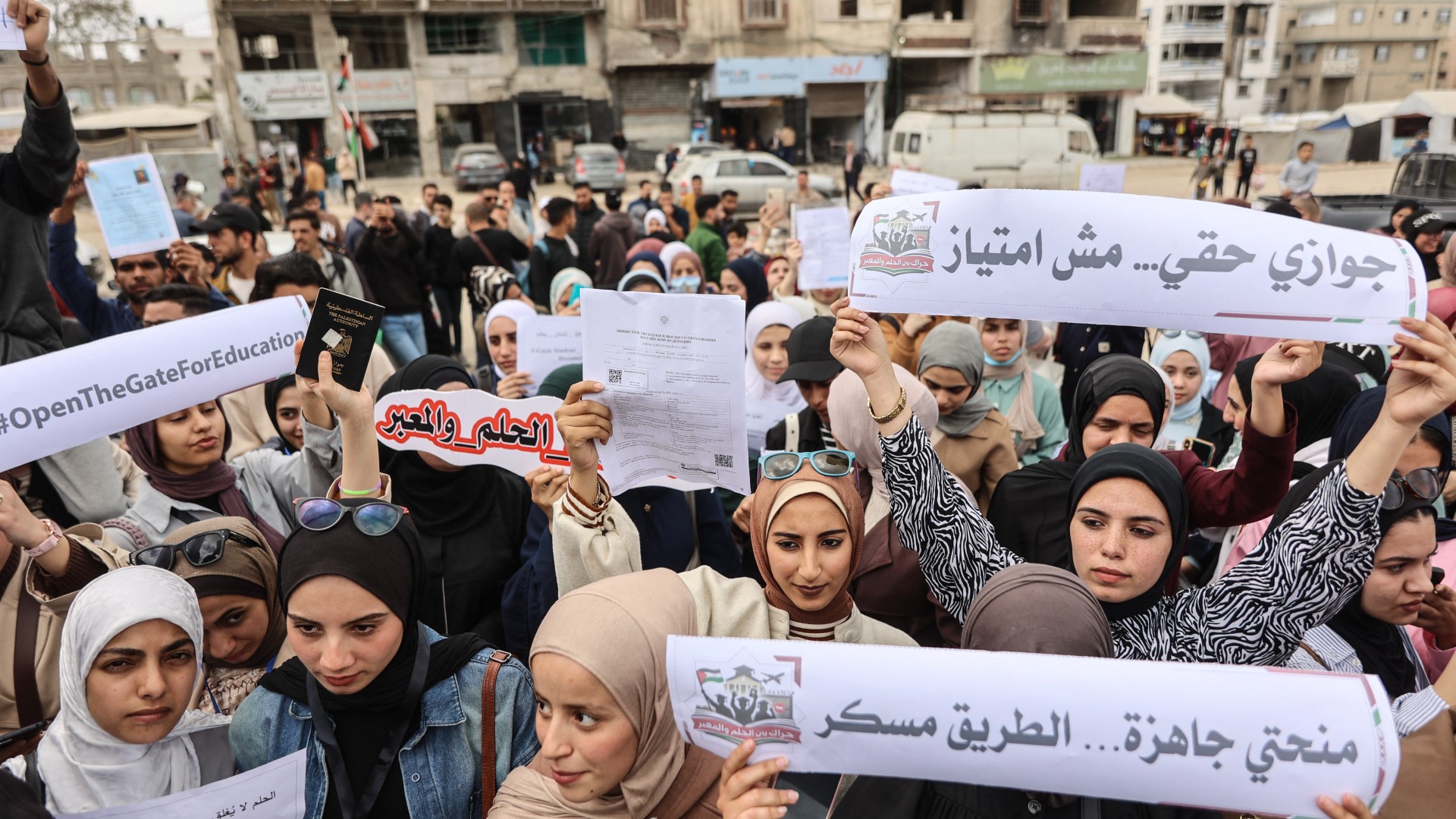
Nineteen-year-old Hazem Faris, a Palestinian student based in the besieged Gaza Strip, once saw a full scholarship to study Computer Science at Ireland’s South East Technological University as the once-in-a-lifetime chance to turn his lifelong dreams into reality. But for Faris and more than 100 other Palestinian students this year, that dream has been put on hold indefinitely by a wave of visa rejections from the Irish government, a development that has sparked a high-profile legal challenge, grassroots mobilization, and political controversy across Ireland.
Since the outbreak of widespread conflict in Gaza in 20023, Faris and his family have been forced to flee their home eight times. He lost all his personal possessions, academic materials, and housing amid relentless bombardment that has killed more than 70,000 people and reduced most urban infrastructure to rubble. Despite constant power outages, acute shortages of food and clean water, and the ever-present fear of attack, Faris never paused his studies, completing his secondary education with a 94.4% final grade to earn his full scholarship. Even with this full funding covering all his tuition and living costs, Irish visa officials rejected his application, citing three justifications: insufficient financial means, lack of evidence of compelling ties to his home country that would guarantee his return, and unaccounted gaps in his education and employment history.
Faris is far from an isolated case. Official data shows that Ireland’s student visa approval rate for Palestinian applicants has plummeted from 83.8% in 2025 to just 27.5% in 2024, leaving at least 103 students denied entry even after they secured admission and funding to Irish higher education institutions. Last week, a team of high-profile Irish lawyers launched a legal challenge against Irish Justice Minister Jim O’Callaghan, demanding he reverse the blanket rejections. The legal team is led by Blinne Ni Ghralaigh — the same barrister who represented South Africa in its landmark genocide case against Israel at the International Court of Justice — alongside senior barrister Eamonn Dornan, solicitors Sinead Marmion and Alannah Faulkner, and a team of junior counsel.
The first test case centers on Hafez Alrayyes, another Gazan student who was denied a visa after securing admission to an Irish university. Following an initial administrative hearing at Ireland’s High Court this week, Marmion confirmed that all evidence and legal submissions will be filed with the court by the end of this week, with a full procedural hearing scheduled as early as next Monday to expedite the urgent proceedings. Marmion told Middle East Eye that an additional 26 additional cases are already prepared to be added to the legal challenge, noting that the speed and scale of the collective legal action has caught Irish officials off guard. The High Court has acknowledged the urgent nature of the cases and agreed to prioritize the proceedings to avoid disrupting the students’ planned autumn enrollment.
In a formal press release, law firm Phoenix Law, which is handling the litigation, argued that the Justice Minister’s visa rejection policy is “irrational, unreasonable, and fails to react to the necessary urgency of our client’s situation and is discriminatory.” The firm highlighted a striking contradiction: Ireland joined South Africa’s genocide case against Israel at the ICJ, yet it continues to demand original documentation from Gazan students that most cannot obtain, after widespread destruction of government and educational buildings across Gaza. The legal team’s core demand is simple: that O’Callaghan reverse the rejections and grant entry visas to these high-achieving students, who aim to build skills that will one day help them rebuild Gaza after the conflict ends.
The legal push has been paired with growing public and political pressure under the banner of the “Let Them Study” movement, which has gained widespread support online, on university campuses across Ireland, and in the Dáil, Ireland’s lower parliamentary house. Last week, Social Democrat TD Sinead Gibney confronted O’Callaghan in parliamentary debate, pointing out that Irish visa rules require documents that are impossible for Gazan students to obtain when nearly all administrative and educational buildings in Gaza have been destroyed. “When, Minister, is your government going to read the room and reverse your decision to block these students from studying here in Ireland?” Gibney asked.
O’Callaghan has defended the government’s position, stating that all student visa applications are processed through a “well-established process” that applies equally to all applicants. But students across Ireland have mobilized to support the Palestinian applicants, organizing mass protests, “empty chair” events on campus to symbolize the missing students, and direct actions. At Trinity College Dublin, Sean Radcliffe, chair of the college’s BDS movement, was one of five students who chained themselves to the Department of Justice building to protest the rejections, and now volunteers to support the students’ legal cases.
“They deserve to be starting universities as I speak, in my classes, sat next to me, developing their skills to one day rebuild Gaza,” Radcliffe said.
For Faris and the other Palestinian students, the pending legal challenge represents their last remaining hope of accessing the education they worked to earn. “There is now a legal challenge relating to this case, and I hope the judge will consider our case fairly and that we will receive a real opportunity to continue our education. I hope the outcome will be fair for all Palestinian students facing similar circumstances,” Faris said in an interview with Middle East Eye, with the sound of drone aircraft audible in the background of the call. “All I want is an opportunity to learn, build my future, and one day use what I have learned to serve my people and my community.”