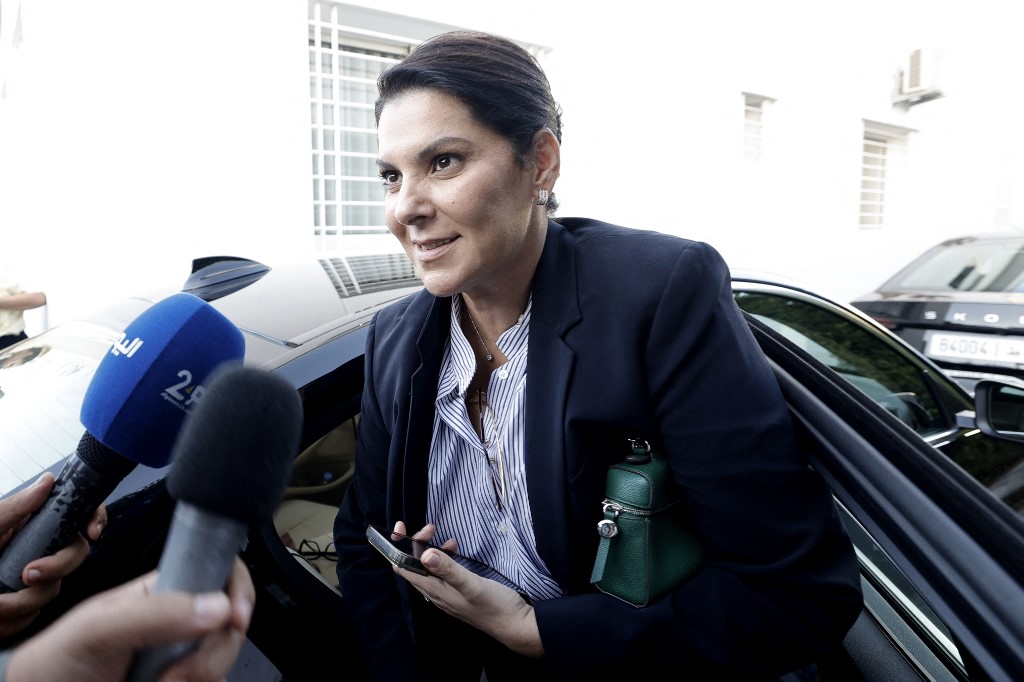
One week after her centre-right Authenticity and Modernity Party (PAM) secured victory in Morocco’s legislative elections, King Mohammed VI has tapped Fatima Ezzahra El Mansouri to lead the North African nation’s new government — marking an unprecedented milestone for gender representation in the country’s history.
For the 50-year-old lawyer, the appointment caps a decades-long trailblazing political career. Back in 2009, at just 33 years old, El Mansouri made national headlines as the first woman to serve as mayor of Marrakesh, Morocco’s top tourist destination, and she won a second term in that role in 2021, a position she still holds today. When a devastating earthquake struck the region in 2023, she emerged as a visible, empathetic leader, making repeated visits to impacted communities to assess needs and support recovery efforts.
Beyond her local leadership, El Mansouri currently serves as national coordinator of the PAM, outgoing minister of housing and spatial planning, and a newly re-elected member of parliament. Her path to the premiership also places her in rare company: she is only the third woman to hold the top government role across the entire Arab world, following Tunisia’s Najla Bouden and Sarra Zaafarani.
In her first public remarks after her royal audience at the royal palace in Rabat, El Mansouri framed the appointment as a breakthrough for all Moroccan women. “This is truly a historic moment,” she told public media. “For the first time in our country’s history, a woman is taking on the responsibility of leading the government. This is not only a source of pride for me, but for all Moroccan women.”
Born in 1976 to a well-connected Marrakesh family with close ties to Moroccan power circles, El Mansouri earned advanced law degrees from universities in Montpellier, France, and New York City. She launched her professional career at the law firm of Hicham Naciri, a prominent influential advisor to the Moroccan monarchy, before joining the PAM when it was founded in 2008. The party was established by Fouad Ali El Himma, a close confidant of King Mohammed VI, as a political counterweight to the growing influence of the Islamist-leaning opposition Justice and Development Party (PJD), a role that has led critics and media outlets to frequently label the PAM as the “king’s party” or “palace’s party” for its proximity to the monarchy.
While the PAM won a plurality of 97 seats out of the 395 total seats in the House of Representatives, the party fell far short of the absolute majority required to form a government on its own. The newly minted prime minister now faces the immediate task of negotiating a viable governing coalition with other parties ahead of the parliamentary session set to open on October 9, for a five-year term.
The election results themselves were notable for several reasons. Voter turnout hit just 38%, the lowest recorded in nearly 20 years, a signal of widespread public disengagement from formal politics. The PAM’s former coalition partners, outgoing Prime Minister Aziz Akhannouch’s National Rally of Independents (RNI) took second place with 66 seats, while Istiqlal Party finished third with 65 seats. On the opposition side, the PJD defied expectations to quadruple its seat count from 13 in the last parliament to 54 this cycle, but the party has already ruled out any possibility of joining the governing majority.
In Morocco’s constitutional framework, the king retains authority over all key strategic policy directions, including foreign affairs, security, and religious policy, leaving the prime minister to oversee domestic governance and daily administration. Even so, El Mansouri steps into the role at a moment of deep, simmering social tension that will test her leadership from day one.
The election was held less than two months after the Ceuta migration crisis, when tens of thousands of mostly young Moroccan migrants crossed illegally into the Spanish enclave of Ceuta from the northern Moroccan border town of Fnideq. The event laid bare the deep economic frustration and hopelessness driving many young Moroccans to risk dangerous migration. The vote also coincided with the one-year anniversary of widespread protests organized by the anonymous youth collective GenZ 212, which led near-daily demonstrations across the country last year demanding major improvements to underfunded public education and healthcare systems.
The six-day gap between the election result and the royal announcement of El Mansouri’s appointment — far longer than the two to three day wait that followed past legislative elections — fueled widespread political speculation, particularly since current budget minister and popular Royal Moroccan Football Federation president Fouzi Lekjaa had also been widely tipped as a leading contender for the role.
Controversy has also shadowed the PAM’s election win. Tangier mayor Mounir Laymouri, a party member, was arrested on suspicion of electoral fraud, with investigators currently probing allegations that hundreds of ballots were falsified at two local polling stations. El Mansouri has also faced her own scandals, with some media outlets publishing allegations of illicit enrichment, which she has forcefully dismissed as baseless, politically motivated smears.
Moving forward, El Mansouri’s core priorities will include rebuilding public trust in Morocco’s political class, a challenge amid years of discontent. She will also need to address pressing economic issues: curbing skyrocketing living costs that have strained household budgets across the country, and tackling persistently high youth unemployment that fuels social unrest. On the global stage, her government will oversee preparations for the 2030 FIFA World Cup, which Morocco is co-hosting alongside Spain and Portugal, a high-stakes project that will require major infrastructure investment and national coordination.
Under Morocco’s existing political structure, El Mansouri will need to navigate competing demands from opposition groups, coalition allies, and the monarchy, as she works to turn her historic appointment into tangible progress for the Moroccan people.