
The United States Mint has officially launched sales of a new gold-toned commemorative $1 coin that bears the likeness of former U.S. President Donald Trump, created to celebrate the upcoming 250th anniversary of the founding of the United States. Priced at approximately £0.74 in the United Kingdom, the release of this collectible piece has drawn attention from both collectors and political observers alike. As the nation prepares to mark this major historical milestone, the U.S. Mint’s decision to feature a former president on the anniversary coin has positioned it as a sought-after item among Trump supporters and coin enthusiasts across the country. The launch marks one of the few high-profile commemorative releases centered on a former U.S. leader in recent years, generating early interest ahead of the official anniversary celebrations scheduled for 2026.
作者: admin
-
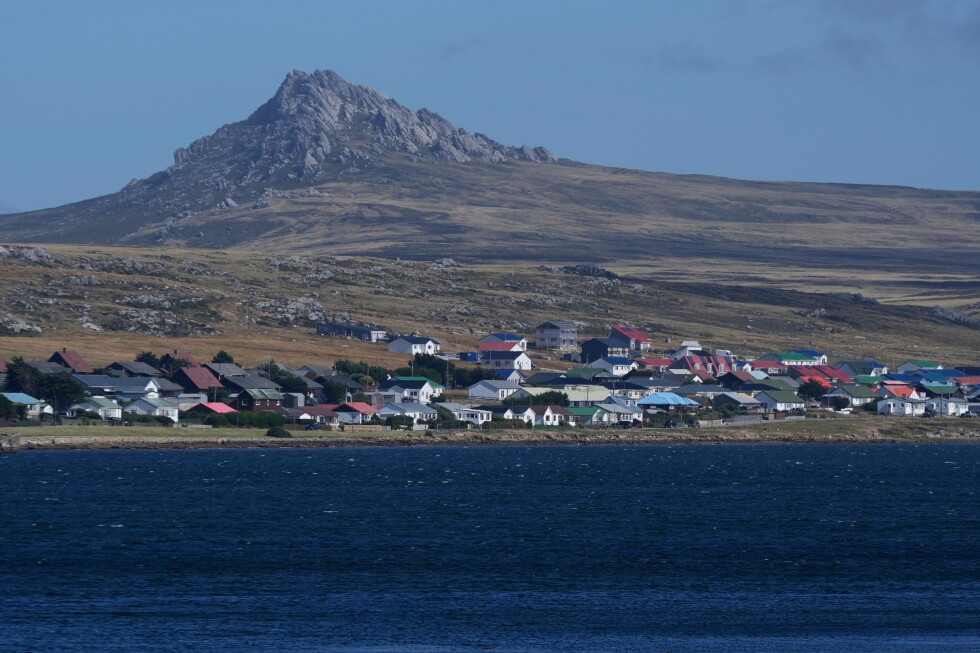
Trump raises doubts over support for Britain in Falklands dispute with Argentina
In a bombshell interview with UK broadcaster GB News that aired Thursday, former U.S. President Donald Trump has thrown the decades-long Falkland Islands sovereignty dispute back into the global diplomatic spotlight, leaving the international community uncertain about whether a future U.S. administration would uphold Washington’s long-held neutral stance on the conflict between Britain and Argentina.
The South Atlantic archipelago, located 300 miles off Argentina’s coast, is currently under British de facto control, but Argentina has formally claimed sovereignty over the territory it calls the Malvinas for nearly two centuries. The dispute erupted into open armed conflict in 1982, when Argentina’s collapsing military dictatorship ordered an invasion of the islands. Then-British Prime Minister Margaret Thatcher deployed a massive naval task force across the Atlantic to retake the territory, resulting in a 10-week war that claimed nearly 900 lives total: 649 Argentine soldiers, 255 British service members, and three civilian islanders.
When asked directly whether the United States would intervene to support Britain in the event of a new conflict over the islands, Trump declined to give a clear, affirming answer. He referenced watching the 1982 conflict closely, noting “You comported yourselves very well. You took it back pretty strongly,” before shifting sharply to criticism of Britain’s refusal to contribute military support to a U.S.-led bombing campaign against Iran. Recalling a conversation with former British Prime Minister Keir Starmer, Trump claimed Starmer told him Britain had no available ships to deploy to the campaign, calling the situation “pretty sad.”
This is not the first time hints of a policy shift have emerged from Trump-aligned circles. An internal Pentagon email leaked in April already raised the possibility of Washington reconsidering its long-standing Falklands position as leverage to punish NATO allies that declined to join a U.S. war against Iran.
For more than half a century, every successive U.S. administration has maintained formal neutrality on the competing sovereignty claims, while formally recognizing Britain’s de facto rule over the territory. Any shift away from this established posture would represent a major diplomatic slap in the face to London, and dramatically escalate already strained trans-Atlantic tensions.
Trump first fueled speculation of a policy shift earlier this week, when he told reporters his administration was reviewing the U.S. stance on the dispute, saying “I always review every position. That’s just one of many.”
Trump’s comments landed as Argentine President Javier Milei, a libertarian conservative and ideological ally of Trump, prepared to deliver a nationally televised address on what his administration calls new diplomatic progress on the Falklands issue. Milei, who has faced domestic criticism in Argentina for failing to prioritize the sovereignty claim early in his term, leapt to praise Trump’s remarks, framing them as a landmark breakthrough for Argentina’s position. He called the development “something major happened regarding the most sacred cause we Argentines have.”
For Argentina, the Falklands/Malvinas claim holds extraordinary symbolic and political weight: Buenos Aires argues it inherited the territory from Spanish colonial rule, and that Britain seized the islands through illegal occupation in 1833. The cause remains one of the only unifying political issues in Argentina’s deeply divided domestic landscape, with nationalist fervor flaring most recently during the 2022 FIFA World Cup, when the Argentine men’s national team displayed a banner reading “Las Malvinas son Argentinas” after defeating England in a semifinal match.
British officials have pushed back firmly on any discussion of shifting sovereignty, reaffirming the country’s unwavering long-standing position. A spokesperson for the British government emphasized that a 2013 referendum held among the Falkland Islands’ roughly 4,000 residents delivered an overwhelming majority vote in favor of remaining a British overseas territory. “Sovereignty rests with the U.K., and the islanders’ right to self-determination is paramount,” the spokesperson stated. “The U.K.’s position is clear. The islanders have repeatedly expressed their wish to remain a British overseas territory.”
Diplomatic analysts warn that Trump’s remarks have already upended decades of quiet consensus on the dispute, creating new uncertainty for regional stability and trans-Atlantic relations as the United States approaches a presidential election that could see Trump return to office.
-
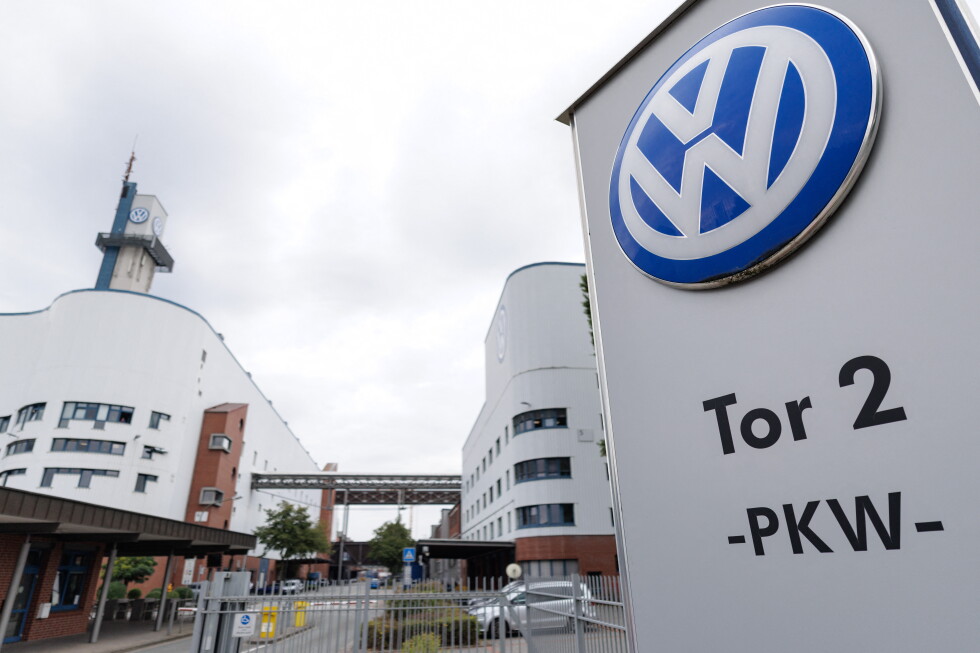
Volkswagen board approves cutting 50,000 more jobs and ending production at 4 plants
FRANKFURT, Germany – After weeks of internal debate and pushback from labor and regional stakeholders, Volkswagen’s supervisory board has formally approved a landmark corporate restructuring plan led by Chief Executive Oliver Blume, designed to shore up the automaker’s competitiveness against mounting global market pressures. The wide-ranging cost-cutting initiative includes cutting 50,000 positions across the company, slashing its current model portfolio by roughly half, and ending passenger vehicle production at four major manufacturing sites across Germany. The restructuring addresses growing challenges the German automaker has faced in recent years, including rising low-cost competition from Chinese electric vehicle makers and ongoing trade headwinds spurred by United States import tariffs. Blume’s proposal overcame significant opposition from employee representatives and the regional government of Lower Saxony, which maintains a formal ownership stake in Volkswagen and holds seats on the company’s board. In a post-approval statement, Blume framed the plan as a critical turning point for the century-old automaker. “This is a strong signal for the future of Volkswagen Group,” he said, adding that the changes would “make our iconic brands even more attractive, stronger and competitive.” The company has confirmed it carries 500,000 units of excess production capacity across its European manufacturing network, a surplus that has dragged on profitability for multiple quarters. Under the plan, current vehicle production cannot be guaranteed long-term for the four plants in Emden, Zwickau, Hanover and Neckarsulm, though company leaders have said they will explore alternative industrial uses for the facilities to preserve as many local jobs as possible. The 50,000-position reduction includes both frontline manufacturing roles and senior management positions, part of a broader push to streamline corporate operations beyond just production cuts. By reducing the number of distinct vehicle models offered across its brand portfolio, Volkswagen aims to increase production volume per individual model, which will spread fixed production and development costs across more units and drive down per-vehicle overhead. The plan also targets bureaucratic bloat, calling for flatter leadership hierarchies and more direct, faster decision-making processes to improve the company’s agility in a fast-changing global auto market. The agreement marks a compromise after months of tension between management, labor leaders and regional officials. Daniela Cavallo, Volkswagen’s top employee representative, whose caucus holds half of all seats on the company’s supervisory board under German co-determination rules, acknowledged that the restructuring was unavoidable. In a joint statement released alongside the board’s approval, Cavallo noted the plan was “a necessity for our company to move successfully into the next decade without the associated undertakings coming only on the side of the employees.” Cavallo had publicly and sharply criticized the initial draft of the plan when it was first proposed over the summer, arguing that workers should not bear the full burden of the company’s needed transformation. Olaf Lies, governor of Lower Saxony – Volkswagen’s home region, which holds two board seats and a blocking minority stake in the company – also backed the final compromise. Lies noted that the automaker is facing “enormous” competitive and market challenges, and that the approved plan represents “a shared path toward the necessary transformation” for the company. Volkswagen, which employs roughly 650,000 workers across its global operations, owns a portfolio of 10 major automotive brands including core volume marque Volkswagen, along with luxury nameplates Audi and Porsche, and mainstream brands Skoda and SEAT. The company posted a 30% drop in after-tax net profits for the first half of 2024, a decline driven largely by plummeting sales and market share loss in China, the company’s single largest market, where local electric vehicle makers have undercut Volkswagen on price and technology in recent years.
-

Hope for survivors in Nepal as tunnel rescue efforts continue
Days after catastrophic flash floods swept through cross-border regions between Nepal and Tibet, rescue operations are still underway at a collapsed tunnel in Nepal, where search and rescue teams refuse to abandon hope of finding survivors trapped inside.
The devastating natural disaster, which triggered landslides and washed out critical infrastructure across the Himalayan border area, left dozens of people missing after the floodwaters inundated road construction sites and rural settlements, including the tunnel that was under expansion when the disaster hit. According to initial on-site reports, a number of workers were trapped inside when the tunnel’s entrance collapsed under the force of the surging flood and subsequent debris flow.
Azadeh Moshiri, a seasoned South Asian correspondent for international media, has been reporting live from the disaster zone, providing on-the-ground updates on the pace and challenges of the rescue mission. Rescuers from Nepal’s national armed police force, alongside specialized mountain search teams, have been working around the clock to clear tons of rock and mud blocking the tunnel’s access point, hampered by unstable terrain and ongoing risks of secondary landslides in the flood-ravaged area.
Even as the window for finding living survivors narrows in the days after the disaster, first responders and official spokespeople have confirmed that operations will continue as long as there is a possibility of locating people alive. Local authorities have also mobilized additional heavy machinery and emergency supplies to the site to support the sustained search effort, as the international community watches closely for updates on the high-stakes rescue operation.
-
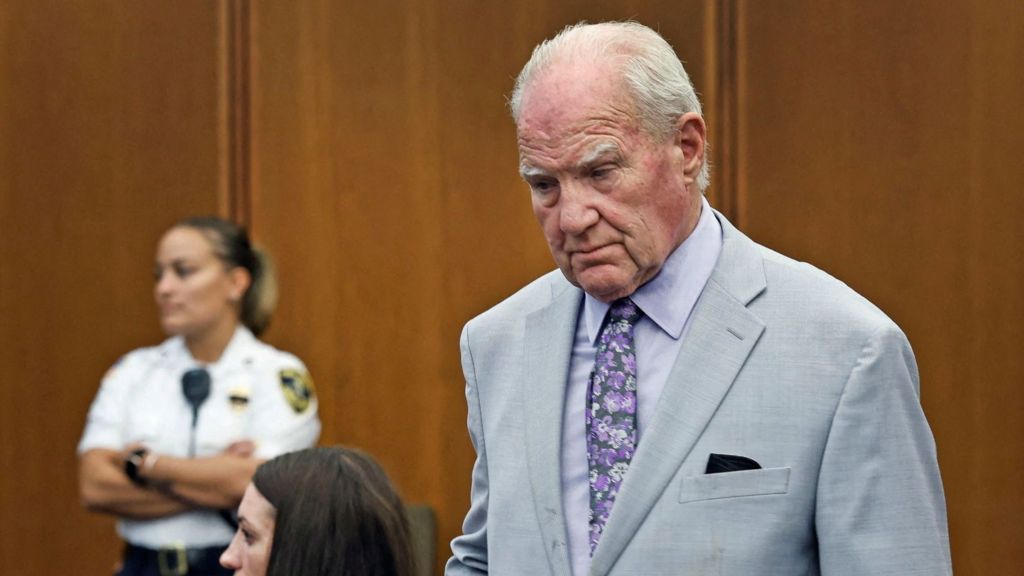
Watch: Defence calls for one juror to be dismissed in Lindsay Clancy case
The high-profile criminal case involving Lindsay Clancy has taken a new procedural turn this week, as legal teams and the court navigate a key request from the defense that could shape the outcome of the trial. Defense attorneys formally moved to have one individual juror removed from the panel that has been weighing the facts of the case, prompting a pause in proceedings to address the motion before the court could move forward. After the request was brought before the presiding judge, the court conducted necessary proceedings to resolve the defense’s application, and ultimately opted to send the full jury back to the jury room to continue their closed-door deliberations. Before the jurors withdrew to resume their discussions, however, the judge issued updated, clarifying instructions on points of relevant law to ensure all panel members have a clear understanding of the legal standards they must apply when reaching a verdict. This procedural step comes as the case has drawn significant public attention, with observers closely following every development in the court proceedings as the jury works toward a final decision. While details of the defense’s specific reasoning for requesting the juror’s dismissal have not been fully expanded on in the latest update, the action marks a notable moment in the trial, highlighting the careful procedural checks that guide criminal jury trials to safeguard the rights of the defendant.
-

Ben Gvir set to unveil $20bn plan to ethnically cleanse Gaza within seven years
A high-profile far-right Israeli cabinet minister has announced plans to roll out a sweeping proposal this Thursday that would push millions of Palestinian residents out of the Gaza Strip, framing the ethnic cleansing-style initiative as a policy of ‘voluntary emigration’ that will anchor his election campaign and serve as a non-negotiable condition for joining any future Israeli governing coalition.
Itamar Ben Gvir, leader of the overtly Jewish supremacist Otzma Yehudit (Jewish Power) party, has branded the mass displacement scheme ‘Disengagement 710’, a term that openly signals its goal of clearing Palestinian civilians from their ancestral land. According to reporting from multiple Israeli media outlets, Ben Gvir and his team have spent months refining the proposal, which targets an ambitious timeline for mass displacement: an initial 250,000 Palestinians would be forced out of Gaza within the first year of implementation, rising to 1.1 million by the end of the third year, and ultimately reaching roughly 1.8 million people displaced over seven years.
This planned mass transfer comes on the heels of months of systematic destruction across Gaza that has already created the conditions for large-scale population movement. Israeli military operations have damaged or destroyed more than 80% of all residential structures, commercial spaces, educational institutions (from primary schools to universities), and medical facilities across the enclave. Israel has also imposed crippling restrictions on the entry of food, clean water, and basic humanitarian aid, creating a catastrophic humanitarian crisis that pushes many residents to consider leaving their homes despite generational ties to the land. Even with a nominal ceasefire in place that was agreed to in October, Israeli forces continue to carry out daily attacks that kill Palestinian civilians across Gaza, further escalating pressure to flee.
Under the terms of Ben Gvir’s proposal, the Israeli government would actively coordinate to resettle displaced Palestinians in third countries, with initial targets including Turkey, Ethiopia, the Democratic Republic of Congo, and multiple unnamed Arab states. The plan explicitly requires international cooperation, relying on partner nations to agree to accept the expelled Palestinian population. Ben Gvir is also set to publicly release the projected price tag for the initiative, which is expected to draw fierce backlash and widespread condemnation from the international community. The proposal carries an estimated cost of over $3 billion for the first year of implementation, with a total seven-year price tag approaching $20 billion.
For Ben Gvir, who currently holds a cabinet seat in Prime Minister Benjamin Netanyahu’s current right-wing coalition, the proposal will be a core demand to join any future governing coalition after upcoming elections. Beyond the displacement policy itself, he is also demanding that any future government create a dedicated cabinet position specifically tasked with overseeing the forcible transfer of Palestinians. This new minister would be supported by a director-general, a standalone national budget, sweeping executive powers, and a dedicated team to negotiate resettlement deals with foreign governments.
Ben Gvir’s planned announcement comes just one day after a similar public statement from Israeli Defense Minister Israel Katz, who echoed the far-right minister’s calls for mass displacement. Speaking at a policy conference hosted by Israeli outlet Ynet in partnership with the Israel Democracy Institute, Katz argued that ‘there is no real solution for Gaza in the end without migration.’ He added that the only factor delaying the implementation of such a plan is a lack of U.S. backing for receiving nations, noting that ‘every country that is willing wants American backing.’ Katz also claimed that former U.S. President Donald Trump had not rejected the plan, only frozen it, under pressure from Arab nations.
This push for mass displacement is not a new proposal from the Israeli government: back in late June, Israeli officials rebranded their existing forced transfer plan, dropping the explicit label of ‘voluntary migration’ in favor of the softer-sounding ‘Freedom of Movement Plan’. Critically, the rebranded framework includes no provisions or legal guarantees for Palestinian refugees to exercise their right of return to their homes in Gaza.
This reporting draws on independent coverage from Middle East Eye, a media organization specializing in unrivaled, independent reporting and analysis of the Middle East, North Africa, and surrounding regions.
-
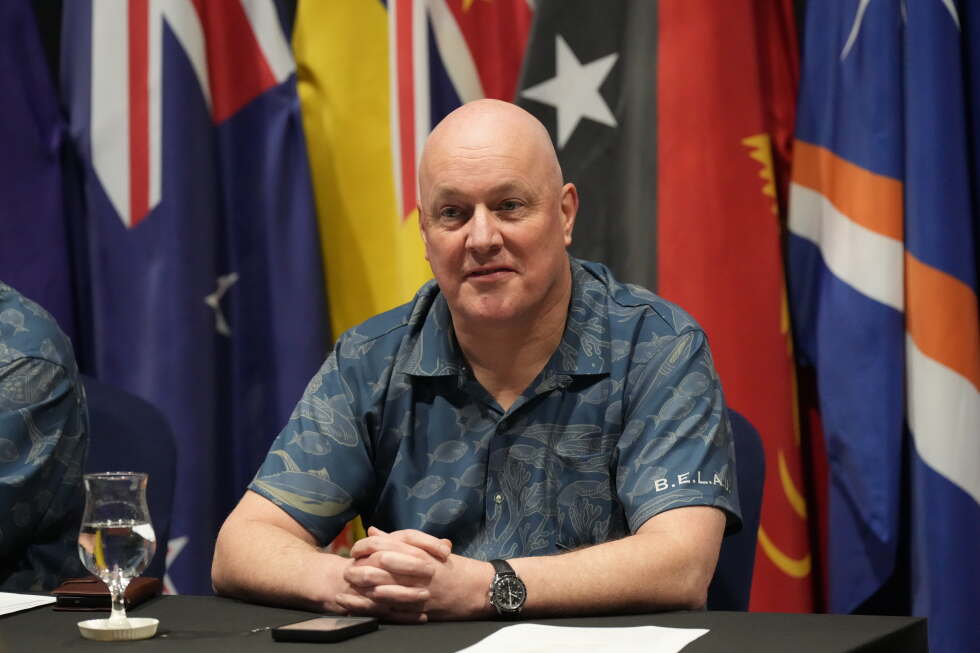
Pacific leaders at summit fail to reach unanimous condemnation of China’s ballistic missile launch
KOROR, Palau — At their annual regional summit held this year in Palau, Pacific island leaders have formally recorded collective concern over China’s recent ballistic missile test that landed in Pacific regional waters, but the body ultimately failed to secure the unanimous backing the bloc traditionally requires for official statements, falling short of issuing a harsher rebuke of Beijing’s actions, leaders announced Thursday.
The effort to rally a unified regional response to the July missile launch had been widely framed as a key benchmark for measuring how intensifying great-power competition in the Pacific has strained cohesion among the bloc’s mostly small, low-lying island states. For years, rising geopolitical jockeying between Washington, Beijing and other major global actors has pulled Pacific nations in competing directions, creating growing rifts within the 18-member Pacific Islands Forum (PIF) over how to engage with major powers.
According to New Zealand Prime Minister Christopher Luxon, who attended the closed-door leaders’ retreat where the statement was negotiated, only the Pacific island nation of Nauru publicly dissented from the agreed text of concern. Nauru has steadily deepened its diplomatic and economic ties with Beijing over the past four years, and formally cut official ties with Taiwan earlier in 2024 to align with China’s One China policy. A second China-aligned Pacific nation, Kiribati, was entirely unrepresented at the daylong closed retreat, after Kiribati’s president skipped the full summit and sent his country’s former ambassador to China as a delegate instead.
Luxon sought to downplay the significance of both Nauru’s dissent and Kiribati’s absence from the retreat, arguing that the PIF had still reached a usable, meaningful collective position despite the split. The PIF has long operated on a norm of unanimous consensus for all official communiqué language, a tradition that reflects the bloc’s emphasis on collective regional decision-making, with closed-door retreat negotiations limited to just leaders and a small handful of senior aides.
“I think we’ve got to a very good place,” Luxon told reporters after the retreat concluded. “Yes, Nauru has dissociated itself from that statement, but that shouldn’t be a reason for why we shouldn’t be able to express a PIF position or a consensus position.”
Even as the New Zealand leader framed the outcome as a success, the breakdown in consensus signals that navigating competing great power demands will remain an increasingly complex challenge for the Pacific bloc. Over the past decade, the vast Pacific region has grown dramatically in geopolitical importance, driven by its strategic location for global trade and security, and its abundant untapped natural resources. Major powers have competed fiercely to build diplomatic and economic ties with Pacific island states, offering large-scale infrastructure funding, aid packages and other incentives to win influence, creating a tangled network of competing allegiances that have upended longstanding regional dynamics.
Palau, this year’s summit host, is one of the 12 United Nations member states that still maintain official diplomatic recognition of Taiwan, a status that has put it at odds with Beijing. Some regional analysts had privately suggested that the absence of key leaders from China-aligned states could be tied to Beijing’s diplomatic pressure over Palau’s position on Taiwan, though there is no public evidence to support that claim. Attendees of the summit noted that most absences of top leaders, all of whom sent senior government delegates in their place, were tied to domestic political commitments or personal health issues.
The failure to reach full consensus on the missile statement also highlights deeper, long-simmering divides within the PIF that have emerged as great-power competition has intensified. The joint statement itself was largely a symbolic gesture — most regional nations had already criticized China’s missile launch publicly when it took place in July. But the bloc’s inability to agree on a unified text mirrors a similar breakdown weeks earlier at a PIF foreign minister retreat in Suva, Fiji, where a planned statement on the launch was scrapped after Nauru and Kiribati rejected the language.
-

Canada unveils new $20 bill featuring portrait of King Charles
In a historic moment marking the first update to Canadian royal banknote imagery in over seven decades, the Bank of Canada has officially unveiled a new vertical polymer $20 banknote bearing the portrait of King Charles III, following the death of Queen Elizabeth II in 2022. The reveal took place at a formal Bank of Canada event Thursday, with central bank Governor Tiff Macklem describing the occasion as a very special milestone for the country.
What sets this new banknote apart from Canada’s previous circulating currency is its vertical design orientation, a format that has grown in popularity for modern currency production. While the front centers the official portrait of King Charles III, it also incorporates an intricate floral and leafy tapestry pattern crafted to honor the King’s long-standing public commitment to environmental stewardship, according to the Bank of Canada’s official description. The reverse side of the note features a detailed image of the Vimy Ridge Memorial located in France, a lasting tribute to Canada’s critical military contributions during the First World War. In a nod to inclusive consultation, the central bank confirmed that several design elements of the new banknote were selected following input from an Indigenous advisory council.
This new $20 note marks only the second vertical banknote released into Canadian circulation. The first was the $10 bill honoring Black Canadian civil rights advocate Viola Desmond, a design that earned international acclaim when it was named Bank Note of the Year by the International Bank Note Society in 2018. The new King Charles III $20 note is scheduled to enter general circulation across Canada early next year, Macklem confirmed.
With this launch, Canada becomes the first Commonwealth country outside of the United Kingdom to place King Charles III on its circulating banknote since his ascension to the throne following Queen Elizabeth II’s 2022 passing. Other Commonwealth nations have taken different approaches to updating their currency: both New Zealand and Australia have introduced coins featuring the new monarch, but Australia has announced plans to skip placing the King on banknotes entirely. Instead, Australia will release a new $5 banknote celebrating the culture and history of Indigenous Australians, replacing the current Queen Elizabeth II design.
Speaking at the unveiling ceremony, Liberal MP Wayne Long, who serves as Secretary of State for the Canada Revenue Agency, noted that the symbolic elements on the new banknote serve as a powerful reminder of Canadian national identity and core values.
The launch comes amid ongoing domestic debate about Canada’s constitutional ties to the British monarchy. Public opinion polling consistently shows that a majority of Canadians support cutting formal ties to the monarchy, with support for republicanism particularly strong in the majority French-speaking province of Quebec. That said, the monarchy saw a small uptick in popularity in recent years amid rising trade and political tensions between Canada and the United States, including the lingering US-Canada trade dispute and former President Donald Trump’s provocative comments about potentially absorbing Canada as the 51st US state.
Most recently, Canadian Prime Minister Mark Carney invited King Charles III to open the Canadian Parliament in May, a visit Carney framed at the time as a clear demonstration of Canada’s national sovereignty. Per Canada’s constitutional structure, King Charles III remains the country’s formal head of state, represented domestically by Governor General Louise Arbour.
-
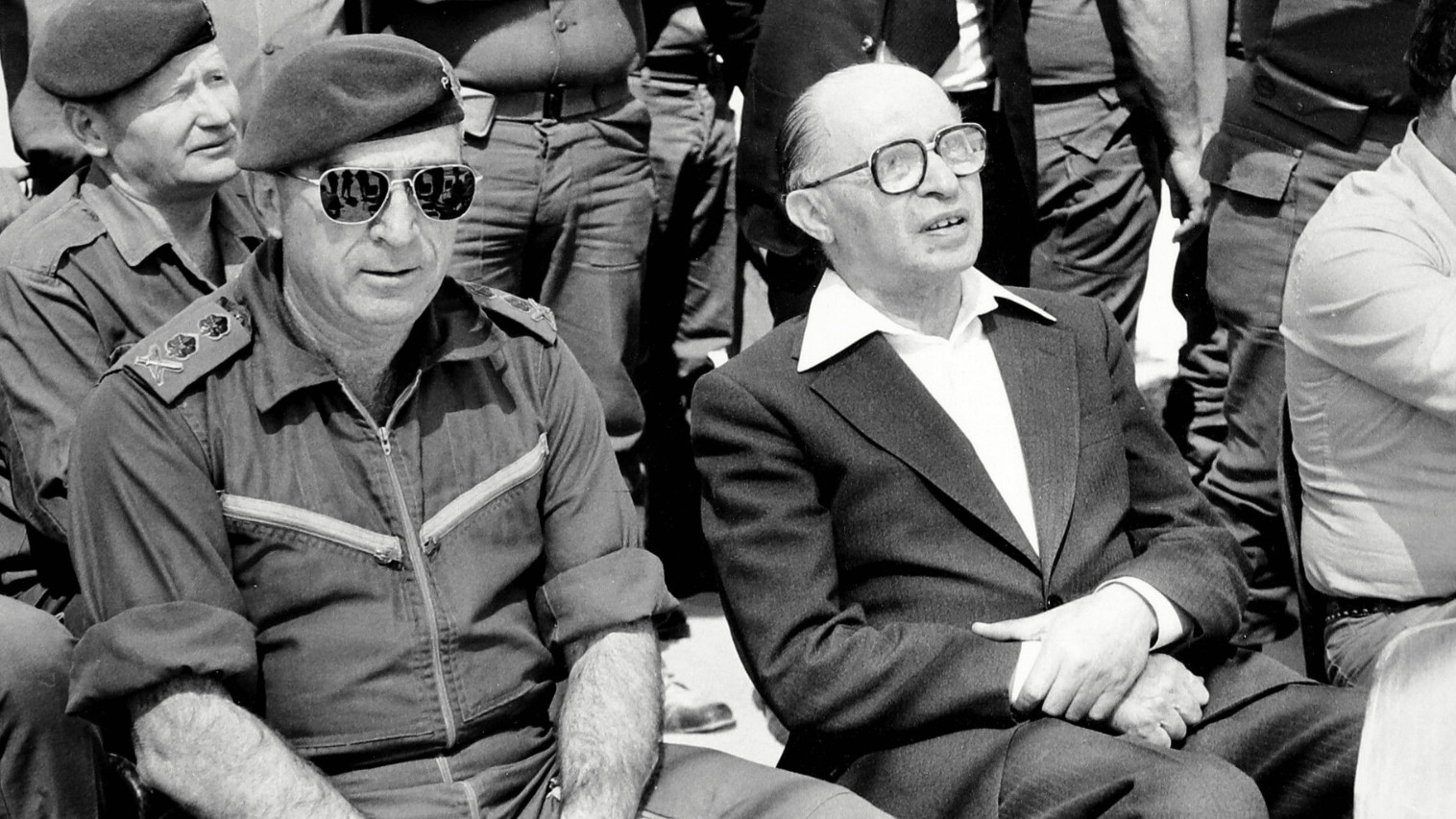
How Israel armed Argentina to kill British soldiers during Falklands War
Diplomatic relations between the United Kingdom and Israel are deteriorating at an accelerating pace, as the UK government prepares to unveil a package of harsh new measures targeting Israeli activity in the occupied West Bank. The centerpiece of the planned actions is a full ban on imports of goods produced in Israeli settlements that the UK and much of the international community deem illegal under international law.
The proposed sanctions have already triggered fierce pushback from Israeli leaders. “If Britain acts against Israel, Israel will act against Britain,” Israeli Foreign Minister Gideon Saar issued a direct warning this week. The rhetoric has grown increasingly vitriolic: Prime Minister Benjamin Netanyahu has publicly labeled the UK the “Islamic Republic of Britain” in a deliberate insult. His son, Yair Netanyahu, who holds no official government position but remains a prominent public voice, has gone a step further, publicly claiming the Falkland Islands are rightfully Argentine territory, not British.
Yair Netanyahu’s unprompted remarks have rippled across the Atlantic, drawing an unexpected intervention from former U.S. President Donald Trump. Trump has signaled that Washington could revisit its longstanding commitment to British sovereignty over the South Atlantic archipelago, going as far as telling GB News that he would refuse to back the UK if Argentina launched a new invasion of the islands. Trump tied the shift to his own grievance over the UK’s refusal to back the U.S. and Israel’s February 2025 strike on Iran, saying “Your country was not there to help me.”
Argentine President Javier Milei, who has taken a hardline line on territorial claims since taking office, has pledged to release a formal statement on the sovereignty dispute this week. Earlier this month, he declared that Argentina’s national sovereignty had been “violated” and vowed his government would defend the country’s interests “tooth and nail, no matter who it bothers.”
Beneath the current round of public taunts and threats lies a decades-long hidden history of covert conflict between the two nations, which have long been framed as close historical allies. Few today remember that during the 1982 Falklands War, Israel secretly armed Argentina against the UK — a decision that cost dozens of British soldiers their lives.
The basics of the Falklands dispute remain unchanged: both Argentina and the UK claim full sovereignty over the remote South Atlantic archipelago, which is home to roughly 3,600 residents, the overwhelming majority of whom support continued British rule. On April 2, 1982, Argentine military forces invaded the islands, sparking a 74-day conflict that ended with a British victory. It was not until a decade after the war that declassified UK government files confirmed the long-rumored secret Israeli military support for Argentina during the conflict.
According to the declassified documents and a 2011 investigative book by Argentine journalist Hernan Dobry, Israel organized a secret network of cargo flights through Peru to deliver a vast arsenal to Argentina. The shipments included 20 reconditioned Nesher fighter jets, air-to-air missiles, anti-tank mines, mortars, machine guns, fuel tanks and Skyhawk attack jets. The total value of Israeli arms exports to Argentina during the war is estimated at roughly $1 billion in modern terms. The Israeli Skyhawk jets were used in bombing raids against British positions, killing 48 British soldiers and sailors and sinking four Royal Navy warships.
For years, the Israeli government repeatedly denied any arms sales to Argentina during the conflict. When British intelligence uncovered concrete evidence of the shipments — including documentation of an Argentine effort to open a $100 million letter of credit through a Panamanian intermediary at Credit Suisse in Zurich in favor of Israel Aircraft Industries — the British Foreign Office leaked the full details to the national press.
Diplomatic cables from the time lay bare British frustration with Israeli deception. “We are having the worst of both worlds, with the Israelis apparently shipping aircraft to Argentina and at the same time fobbing us off with repeated denials,” one senior British official wrote at the time. Patrick Moverly, then UK ambassador to Tel Aviv, noted that “The Israelis have always had a special way of looking at the rest of the world,” and added that the Israeli government was making “a gigantic effort… to pull the wool over our eyes.”
Why would Israel arm a belligerent against a close historical ally? Declassified records reveal two core motivations. First, as one Israeli diplomat openly acknowledged at the time, the war created “an extremely attractive opportunity to develop the arms market in Argentina and Latin America, with great potential long-term benefit to Israel.” Second, the UK and Israel were already locked in a bitter dispute over a British arms embargo imposed on Israel after its 1982 invasion of Lebanon.
Relations between Israeli Prime Minister Menachem Begin and British Prime Minister Margaret Thatcher were strained long before the Falklands War. Begin, as a young guerrilla leader fighting British rule in Mandatory Palestine, commanded the Irgun Zvai Leumi, which carried out two devastating attacks on British targets: the 1946 bombing of Jerusalem’s King David Hotel, the British administrative headquarters, which killed 91 people including 28 Britons, and an earlier bombing of the British Officers Club in Haifa that left dozens dead and injured.
After Israel’s 1982 invasion of Lebanon, Thatcher pushed back against unlimited U.S. support for Israel, telling President Ronald Reagan that “unlimited support for Israel can only lead to growing polarisation and despair in the Arab world.” Britain imposed a full arms embargo on Israel that remained in place until 1994, and Thatcher publicly denounced the Sabra and Shatila massacres carried out by Lebanese Christian Phalangists with Israeli army complicity as “pure barbarism.”
For Begin’s government, arming Argentina during the Falklands War was a deliberate tactic to pressure the UK into lifting the arms embargo and ending British arms sales to Arab states hostile to Israel. The gambit failed. Thatcher’s government went on to sign the 1980 Venice Declaration, where nine European nations formally expressed their shared concern over Israeli settlements in occupied Palestinian territories, and oversaw the founding of the Conservative Middle East Council, a group focused on promoting a balanced policy in the region.
Decades later, the same fault lines that drove the 1980s rift have reopened, pushing UK-Israel relations to their lowest point in modern history. In 2024, the UK imposed a partial arms embargo on Israel over its conduct in the Gaza war, and is now preparing to expand that with new sanctions targeting illegal Israeli settlements in the West Bank. On Tuesday, UK Foreign Secretary Ed Miliband told Parliament that the government would roll out a “comprehensive” sanctions package in the coming weeks, warning that Israel’s planned expansion of settlements in the E1 area of the West Bank “risks making a Palestinian state unviable.”
Israeli leaders have already made clear they will not accept the new measures quietly. Sa’ar retorted that “Israel will not be a passive victim of this policy” and will defend “its rights, its interests and its people.” Israeli media reports indicate that the government is actively weighing multiple retaliatory options, while the U.S. has reportedly mounted intense private pressure on the UK to abandon the sanctions plan entirely. A leaked April Pentagon memo even suggested Washington could use the Falklands sovereignty dispute as leverage to force the UK to back down.
The decisions made by all three sides in the coming weeks are likely to shape the future of UK-Israel relations, and even UK-U.S. relations, for decades to come.
-
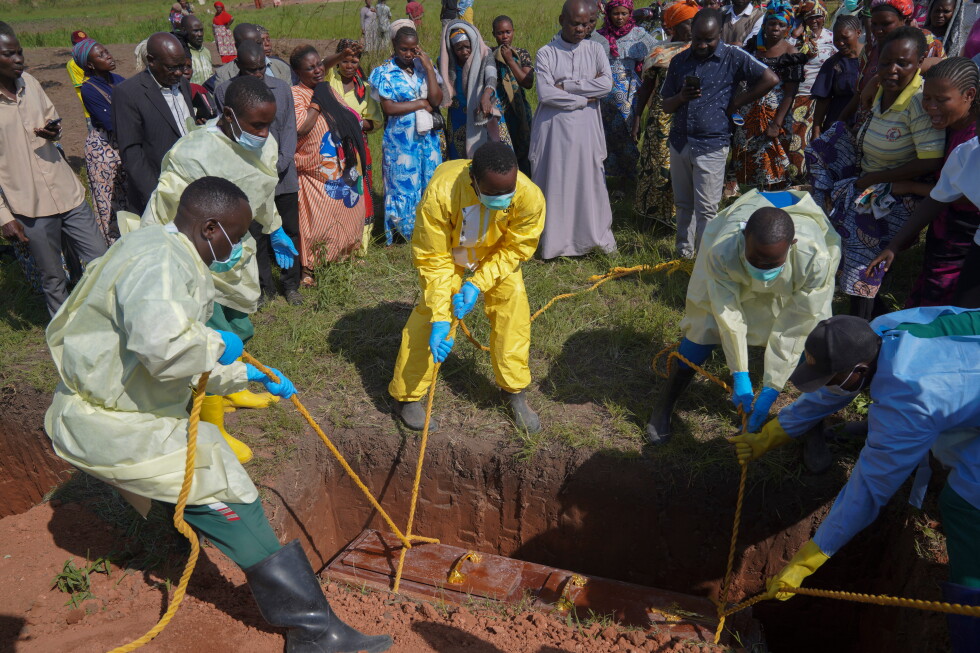
5 challenges Congo faces in containing its fast-moving Ebola outbreak
In a sobering update on the escalating Ebola crisis ravaging eastern Democratic Republic of the Congo, the Africa Centers for Disease Control and Prevention (Africa CDC) announced Thursday that local health authorities are pivoting to a new village-centered strategy to curb transmission, after the virus outpaced existing containment and tracking efforts.
According to the continental public health agency, the current outbreak has not yet reached its peak, marking a far more severe public health emergency than the devastating 2014–2016 West African Ebola epidemic, which remains the deadliest on record with more than 11,000 fatalities. Africa CDC data confirms the current outbreak has already recorded six times as many confirmed cases and five times as many deaths as that prior crisis.
Since the outbreak was declared in mid-May, the virus has jumped from just three initial health zones to 60 across the country, with 6,250 total confirmed cases and 3,039 deaths as of the latest government count. Ongoing insecurity, mass population displacement, and frequent large-scale population movements have been the primary drivers of the virus’s rapid spread. The outbreak is concentrated in Ituri province, which is also the epicenter of a persistent rebel conflict in eastern Congo – a dual crisis that has complicated nearly every aspect of outbreak response.
A new analysis this week from the U.S. Centers for Disease Control and Prevention (U.S. CDC) identifies five critical gaps that continue to undermine Congo’s Ebola response, even as authorities adjust their strategy.
First, community-based surveillance systems remain drastically underdeveloped. Rapid investigation of potential cases, early detection, contact tracking, and transmission slowdown are all hampered by this gap. Delayed case detection, widespread community reluctance to report suspected infections, and insufficient engagement with local populations have all led to entirely preventable deaths. Recent Africa CDC data underscores this failure: at least 63% of all fatalities recorded in the past week occurred outside of dedicated Ebola treatment centers, meaning most infected people never accessed life-saving care.
To address this foundational gap, authorities are now rolling out the new village-centered approach, which centers on partnering directly with local community leaders to build trust and improve collaborative work with residents. But Yap Boum, head of emergency preparedness and response at Africa CDC, noted that trust-building in the middle of an active conflict and outbreak is far from simple. “Building that trust in the middle of an outbreak is quite complex,” Boum explained, referencing the ongoing insecurity that leaves residents deeply suspicious of outside actors.
The second critical gap is persistent failure to scale up effective contact tracing, an essential tool for stopping Ebola chains of transmission. While response teams have followed up with 81% of *officially listed* contacts of confirmed cases, this statistic hides a stark reality: thousands of unrecorded contacts have never been reached for monitoring. Africa CDC estimates that confirmed cases recorded in the three weeks prior to the update should have generated approximately 97,600 total contacts, based on an average of 60 contacts per confirmed case. To date, only 19% of these total expected contacts have successfully been traced, leaving hundreds of potential transmission chains unmonitored.
Third, experts warn that existing treatment and isolation capacity remains insufficient to meet projected need. By late August, treatment centers had expanded their total capacity to more than 1,300 beds, with a current occupancy rate of 67% (holding 869 patients). However, public health teams are calling for additional treatment and isolation centers and beds across affected health zones to prepare for the wave of undetected cases that experts expect to emerge. Many high-risk health zones are located in areas inaccessible to response teams, while widespread community distrust of health authorities leads to many cases going unreported for weeks.
Fourth, limited laboratory testing capacity continues to delay case confirmation and timely treatment. The World Health Organization reported last month that many treatment and transit centers in Ituri, the outbreak’s epicenter, are already operating at full saturation, while North Kivu – the second-most affected province – lacks enough specialized referral facilities for severe cases. Frontline health workers at existing treatment centers are also suffering from extreme burnout. Jeannot Krikeija, who works at an Ebola treatment center in Bunia, Ituri’s capital, described the relentless toll of the crisis: “Ebola is tiring us all the more because we don’t know when this scourge will end. This ordeal is unbearable for me.”
The fifth and final gap identified by the U.S. CDC lies in safe burial practices, a critical intervention given that Ebola spreads through direct contact with bodily fluids, and the bodies of deceased victims remain highly infectious. While authorities have deployed safe burial teams to respond to the more than 3,000 Ebola deaths to date, major gaps remain in execution across affected health zones. In Ituri and other high-risk areas, burial teams have been attacked multiple times, often by grieving family members who wish to carry out traditional burial customs for their loved ones. It remains common for community members to gather within meters of Ebola victim coffins during burials, putting hundreds of people at risk of new infections.
As the new village-centered strategy rolls out, public health agencies across the continent continue to warn that the outbreak’s trajectory remains unpredictable, with sustained transmission expected for the foreseeable future without targeted investment to close the remaining response gaps.
AP writers Constant Same Bagalwa in Bunia, Congo and Mike Stobbe in New York contributed reporting to this article.