作者: admin

  • Lebanon-Israel talks overshadowed by new US-Iran diplomatic track

    Lebanon-Israel talks overshadowed by new US-Iran diplomatic track

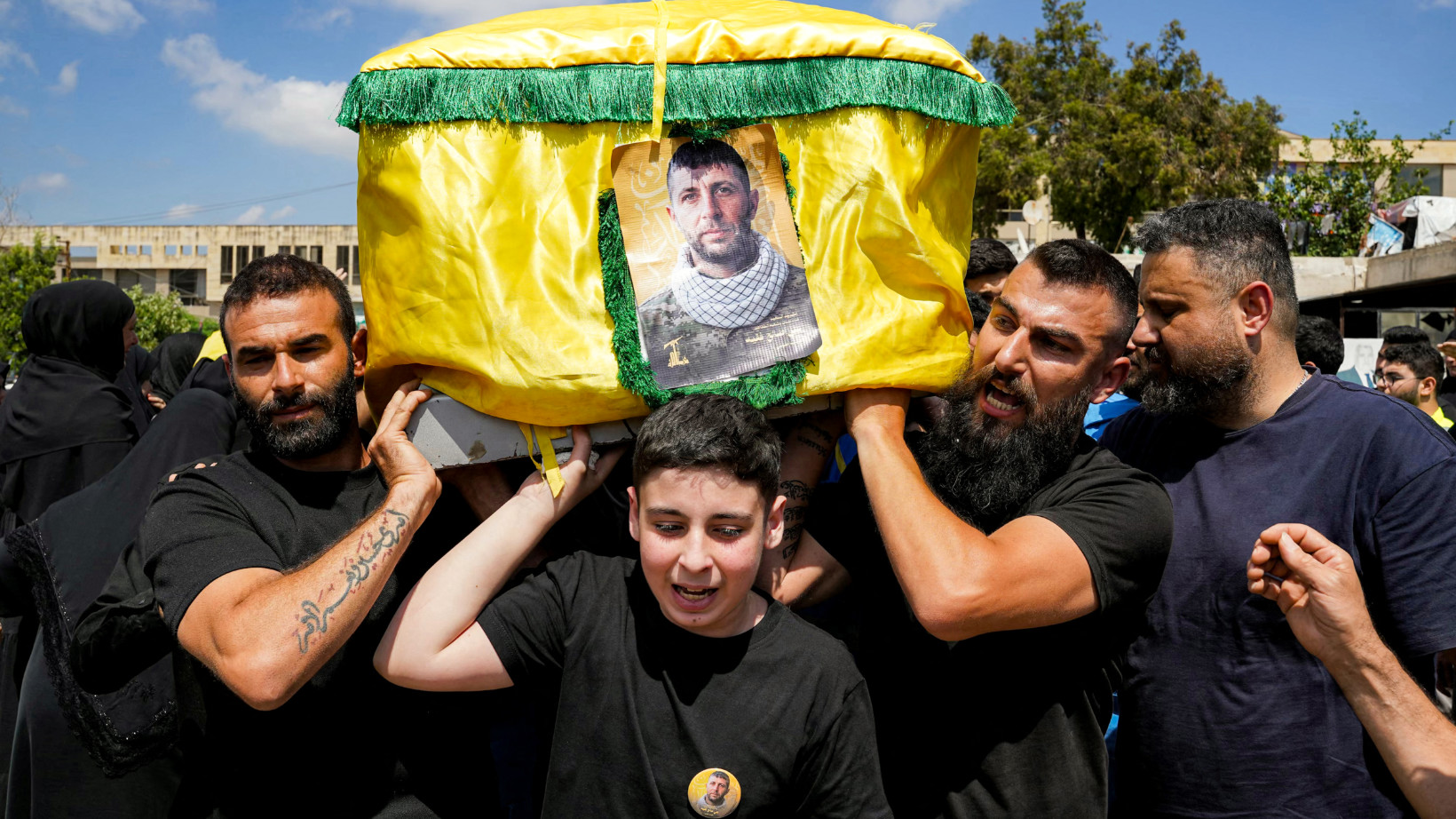
    On Tuesday, the fifth round of direct negotiations between Lebanon and Israel kicked off in the U.S. capital, marking a new chapter in efforts to end ongoing hostilities even as a parallel diplomatic track between the United States and Iran threatens to complicate and overshadow the bilateral process. This three-day round of talks follows four earlier negotiating cycles that failed to deliver a lasting ceasefire or close the deep ideological and territorial divides separating the two neighboring states.

    As talks get underway, Lebanese negotiators are arriving in Washington with a clear set of core priorities: pushing for a binding timetable for a full Israeli withdrawal from occupied southern Lebanon, securing the safe return of hundreds of thousands of internally displaced Lebanese civilians, negotiating the release of Lebanese prisoners held by Israel, and laying the groundwork for large-scale post-conflict reconstruction. For its part, Israel has repeatedly linked any territorial withdrawal to the full disarmament of Lebanese armed group Hezbollah, and insists that Israeli forces maintain control over a wide security buffer zone inside southern Lebanon until Israeli officials are satisfied that the Lebanese army can fully prevent Hezbollah from reestablishing a military presence in the area.

    Unlike the four prior rounds held earlier this year, this latest negotiating session unfolds against a drastically shifted regional diplomatic landscape. A recent memorandum of understanding between the U.S. and Iran has folded the Lebanese-Israeli conflict into a broader regional ceasefire framework, and follow-up discussions held near Switzerland’s Lake Lucerne produced a blueprint for a new multilateral mechanism designed to de-escalate tensions between Israel and Hezbollah. This development means the bilateral Washington talks are no longer the sole diplomatic forum addressing the Lebanon conflict, creating new questions about who ultimately holds decision-making power over Lebanon’s negotiating path – a particularly sensitive issue for the Lebanese presidency, which has framed the direct bilateral talks as a critical step to restore state control over issues of war, peace and national sovereignty.

    Lebanese President Joseph Aoun has repeatedly stressed that no foreign power has the authority to negotiate on Lebanon’s behalf. “We welcome any assistance to end the war, but we are a sovereign country and no one negotiates on our behalf,” Aoun stated ahead of the fifth round of talks. Lebanese officials have described the decision to open direct negotiations with Israel as a historic step that allows the Lebanese state to reclaim full responsibility for the country’s foreign and security policy, in line with Article 52 of the Lebanese constitution, which grants the president authority to negotiate international agreements in coordination with the prime minister, with final approval required from the cabinet and, depending on the terms of any deal, parliament. Still, well-placed sources confirm that the launch of direct talks came in large part from intense U.S. diplomatic pressure on Beirut, and that talks have proceeded even as Israel has continued its airstrikes and ground operations across southern Lebanon.

    After four rounds of talks since April failed to secure a durable end to fighting, the longest pause in Israeli airstrikes came not from an agreement between Lebanon and Israel, but after the U.S.-Iran memorandum was signed – a reality that has strengthened Hezbollah’s argument that Iran’s diplomatic track with Washington is far more effective at securing an Israeli ceasefire than the Lebanese government’s bilateral negotiations.

    The fourth round of Washington talks, held June 2 and 3, concluded with a joint statement from the U.S., Lebanon and Israel that outlined a framework requiring a full halt to Hezbollah attacks and the withdrawal of Hezbollah operatives from the area south of the Litani River as preconditions for a ceasefire. The statement also announced plans to establish “pilot zones” where the Lebanese Armed Forces would exercise full exclusive control, with all non-state armed groups excluded from the areas. The framework also emphasized that the future of Lebanese-Israeli relations must be determined by the two national governments, and rejected any attempts by external actors to hold Lebanon’s future hostage.

    This joint statement drew sharp criticism from Hezbollah, which argued it imposed one-sided obligations on the group while offering no binding Israeli commitment to withdraw from occupied Lebanese territory. Hezbollah officials have labeled the direct bilateral talks a grave mistake that grants Israel long-sought political gains without requiring it to end its occupation or halt military operations. Parliament Speaker Nabih Berri, who led Lebanon’s indirect negotiating channels with Israel in prior talks, has also argued that Beirut should rely on the existing ceasefire monitoring mechanism established after the 2024 hostilities agreement, and has publicly rejected limited pilot zones, calling instead for a full comprehensive ceasefire, full Israeli withdrawal, and parallel implementation of commitments by both sides.

    A senior source close to the Lebanese delegation revealed that the pilot zone proposal nearly caused the fourth round of talks to collapse entirely. Initially, Israel rejected the proposal, prompting Lebanese negotiators to threaten to walk away from the session. U.S. officials stepped in to broker a compromise, persuading Israel to accept the principle of pilot zones, but the two sides remain deeply divided over where the zones will be located and what specific obligations will apply to each party.

    Lebanese negotiators proposed the southern Lebanese city of Bint Jbeil as the first pilot zone, a city that falls within what Israel calls the “Yellow Line” – a self-declared military boundary Israel has marked inside Lebanese territory to demarcate areas under its operational control. By nominating Bint Jbeil, Beirut aimed to push back against the risk that Israel’s current controlled area would gradually become a permanent buffer zone. Under Lebanon’s proposal, Israel would withdraw from Bint Jbeil, the Lebanese army would deploy to the city, Hezbollah would dismantle its military infrastructure, and displaced residents would return to their homes. But Israel rejected Bint Jbeil as the initial test site. “The Israelis appeared as though they had been dragged into the negotiating room by the Americans. You could see it on their faces. They did not want to be there,” the source close to the negotiations noted.

    Instead of accepting Lebanon’s proposal, Israel has demanded that it retain full control over the entire Yellow Line, while retaining the right to monitor Lebanese army operations targeting Hezbollah both south and north of the Litani River. Israel has stated that it will only consider further territorial withdrawals after it assesses the Lebanese army’s performance and confirms that the army has fully dismantled Hezbollah’s military positions. For Lebanon, this framework risks cementing Israel’s current positions as a semi-permanent security zone, and makes withdrawal conditional on an open-ended, unregulated Israeli assessment of the Lebanese army’s actions.

    In this fifth round of talks, the Lebanese delegation plans to revisit the pilot zone proposal and push for a broader geographic scope, moving beyond the small individual villages and narrow sectors discussed in prior rounds. A presidential source close to the talks says a new broader framework covering entire districts has been proposed, which would include multiple towns and villages on both sides of the Litani River, rather than testing the arrangement in isolated localities. The source added that this approach has even been discussed by Berri, despite his public rejection of limited pilot zones. Under this broader framework, Israeli withdrawal, Lebanese army deployment, civilian return, and the removal of Hezbollah military infrastructure would be implemented across a much larger contiguous area. Even with this new proposal, core fundamental differences between the two sides remain unchanged: Lebanon demands that withdrawal begin the process, while Israel demands concrete proof of Hezbollah’s disarmament before it gives up control of occupied territory.

    The biggest uncertainty hanging over the Washington talks, however, stems from the new parallel diplomatic mechanism emerging from U.S.-Iran talks in Switzerland. U.S. Vice President JD Vance confirmed that the Swiss talks produced a framework for a body designed to reduce tensions in Lebanon and prevent renewed escalation. Details of the proposed body, which has been called both a deconfliction cell and a tension-reduction committee, have not been released to the public. A source close to the Lebanese presidential palace told Middle East Eye that Lebanese officials have not yet received a full explanation of the body’s membership, authority, or relationship to the existing Washington negotiations.

    Current indications suggest the mechanism will include Lebanon, Iran, and the U.S., with Pakistan and Qatar potentially joining as mediators. The working model appears to have the U.S. communicating directly with Israel, Iran communicating directly with Hezbollah, and the Lebanese state participating as a formal direct party. Under this arrangement, neither Israel nor Hezbollah would have formal representation, but both would have indirect access through their main international backers.

    Israel has already raised concerns that the mechanism grants formal recognition to Iran’s role in Lebanese affairs, while potentially restricting Israel’s freedom of military action. For Lebanese officials, the key concern is that Iran could use the process to speak for Hezbollah and negotiate matters involving Lebanese territory independent of the internationally recognized Beirut government. Still, the Lebanese presidency has indicated it is willing to engage with the new mechanism as long as the U.S. leads the process and the Lebanese state retains formal representation.

    According to the presidential source, U.S. recognition of the Pakistan-backed diplomatic initiative does not mean the Washington and Swiss tracks have to be mutually exclusive. The two processes could eventually converge: the direct bilateral talks would resolve core Lebanese-Israeli territorial and political disputes, while the Swiss mechanism would work to enforce calm between Israel and Hezbollah through guarantees from the U.S. and Iran. But no framework has yet been established to clarify where one process’s authority ends and the other’s begins. “The Washington and Swiss tracks do not have to remain separate,” the source said. “The question is how they will intersect. At this stage, that is still not clear.”
  • Messi and Mbappe romping through World Cup in dazzling display of history-making goals

    Messi and Mbappe romping through World Cup in dazzling display of history-making goals

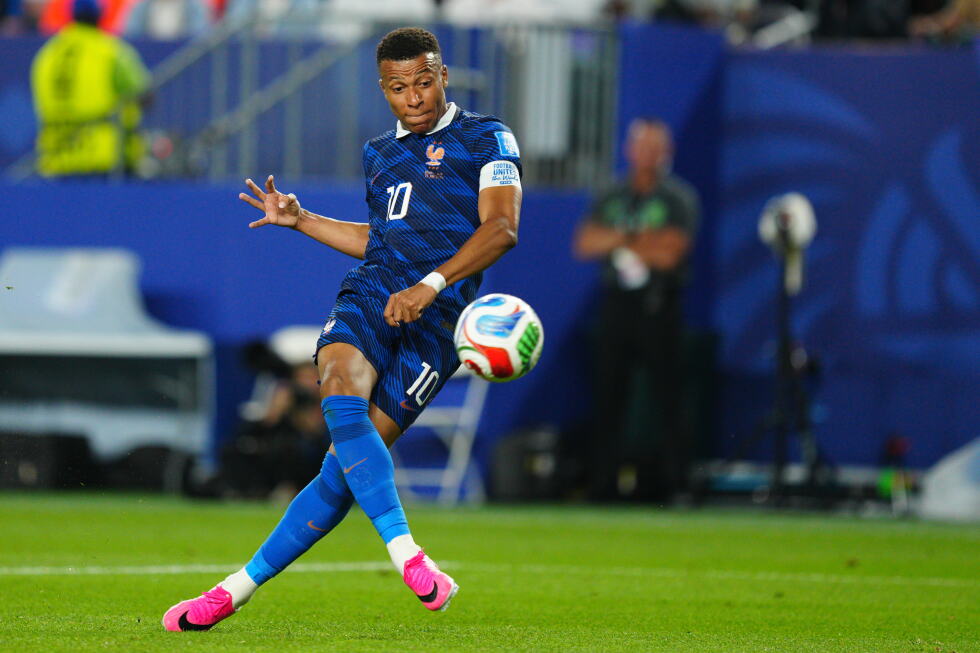
    The early stages of the current World Cup have erupted into a historic showcase of attacking brilliance, headlined by two of the game’s biggest global superstars whose record-breaking goal sprees have captured the attention of even casual soccer fans across the United States. Argentina’s Lionel Messi has bagged five goals through his team’s opening two group stage matches, pushing his all-time World Cup career goal total to 18 – a new outright record for the tournament. Not far behind is France’s Kylian Mbappe, who has notched four goals in this edition alone, bringing his own career tally to 16, which ties him for second place on the all-time scoring list.

    The dynamic between the two forward icons stretches back to the iconic 2022 Qatar World Cup final, where the pair combined for five unforgettable goals – two from Messi, three from Mbappe – before Argentina claimed the trophy in a tense penalty shootout, a title match still hailed as one of the greatest in the tournament’s history. Today, both men are pushing that legacy forward, and their friendly rivalry has turned the 2026 iteration of the World Cup into a personal masterclass of finishing. What makes Messi’s historic run all the more remarkable is that it is coming at an age when most elite strikers have long retired from top international competition. The Inter Miami forward, formerly of Barcelona, will turn 39 just three days before Argentina plays its final group stage match against Jordan, and 12 of his 18 World Cup goals have come after he turned 35. Contrary to expectations for a player of his age, Messi still displays the signature pinpoint touch, clinical passing in congested defense, and unexpected full-match stamina that defined his decades-long career. His match-sealing second goal against Austria exemplified this enduring quality: after Julián Álvarez’s initial shot was blocked, Messi tracked down the loose rebound and slid a finish past two defenders to lock in a 2-0 win, leaving opposing manager Ralf Rangnick full of praise. “We knew that he is on a level of his own, and Lionel Messi showed us today that he’s one of the best, and he is the best,” Rangnick said.

    At 27, Mbappe is in the peak of his physical powers, with the blistering speed and ruthless finishing from both feet that has made him the most feared young striker in the game, perfectly positioned to chase down Messi’s record both in this tournament and in future competitions. Mbappe’s World Cup legacy was already secure by 19, when he led France to the 2018 title in Russia, becoming just the second teenager alongside Pele to score in a World Cup final. He took home the Golden Boot as top scorer with eight goals in 2022, and his scoring rate far outpaces that of Messi: 16 goals in just 16 World Cup matches since 2018, compared to Messi’s 18 goals across 28 matches spread over six tournaments dating back to 2006. Despite his own historic form, Mbappe has remained humble in the face of Messi’s achievement, saying after his latest goals, “Leo always scores. He’ll always score. If I want to look at what Leo’s doing, I’ll have to do even more.” Later, when asked to name the best player in the world, he reiterated that title belongs to Messi.

    Messi and Mbappe are not the only forwards tearing up the scoreboard in this tournament. Norway, making its first World Cup appearance since 1998, has seen its star striker Erling Haaland bag four goals in two opening matches, two in each of Norway’s wins to clinch a spot in the elimination round. The 25-year-old Manchester City standout has been the most dominant striker in European club soccer for years, and he enters Friday’s group stage finale against Mbappe’s France with a chance to win the group – a matchup that has already become one of the most anticipated matches of the entire group stage. While Haaland downplayed his expectations for the fixture, saying “We’re through (to the next round), which is incredible, so I couldn’t care too much about that game now. They (France) are probably going to win against us, they’re probably going to win the whole tournament,” his manager Stale Solbakken made clear the impact Haaland has already had on Norway’s historic return to the World Cup. “He is the best striker,” Solbakken said. “He’s not playing for France or Argentina. He scores for Norway.” If Norway can advance deep into the tournament, Haaland stands a real chance of overtaking both Messi and Mbappe to claim the Golden Boot as this tournament’s top scorer. Portugal’s Cristiano Ronaldo also added to his career total this week, notching two goals against Uzbekistan to push his all-time World Cup tally to 10.

    With Argentina and France both having already secured their spots in the knockout round, both Messi and Mbappe will have plenty of matches left to add to their record goal totals, and both sides remain among the top favorites to lift the World Cup trophy at the end of the tournament.

  • Congress passes war powers measure for first time, rebuking Trump’s war with Iran

    Congress passes war powers measure for first time, rebuking Trump’s war with Iran

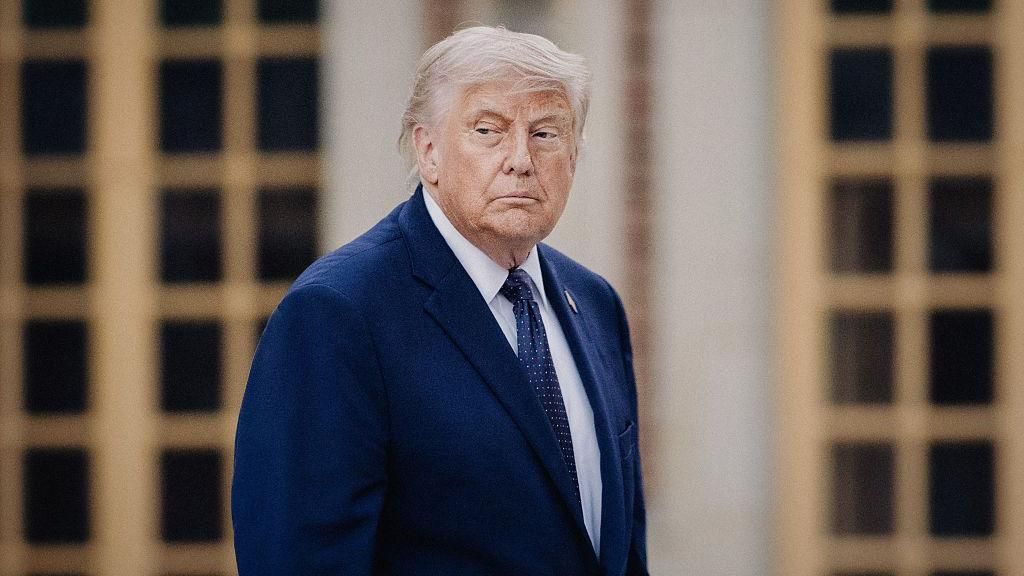
    In a historic bipartisan rebuke of the ongoing military conflict between the United States and Iran that launched in late February, the Republican-controlled U.S. Senate has passed a concurrent resolution ordering President Donald Trump to either halt all military operations against Iran or secure formal congressional authorization to continue any offensive action. The final vote tally stood at 50 to 48 on Tuesday, with four sitting Republican senators breaking ranks with their party leadership to join Democrats in supporting the measure. The outcome marks the first public, bipartisan show of opposition to the war since hostilities began four months ago, following an earlier House of Representatives vote in June that also saw cross-party support for the same resolution.

    Despite its passage in both chambers of Congress, the measure carries no legal weight and will not be forwarded to the White House for Trump’s signature, rendering it largely symbolic in its current form. Legal scholars note that the resolution could still face court challenges, however, and its passage marks an unprecedented milestone: this is the first time since the 1973 War Powers Resolution was enacted that both chambers of Congress have approved a concurrent resolution directing a sitting president to end an active military engagement.

    The resolution’s approval comes amid growing national and international pressure on the Trump administration to wrap up the conflict, which has sent global energy markets into turmoil. Iran’s closure of the Strait of Hormuz — a critical global shipping chokepoint that carries roughly 20% of the world’s crude oil and liquefied natural gas supplies — has caused petrol prices to spike sharply across the United States, while public polling shows steadily rising opposition to the war among American voters.

    Just one week before the Senate vote, leaders from both Washington and Tehran signed a memorandum of understanding to extend an existing ceasefire and work toward a full end to hostilities. Clashes over the fine details of the interim agreement continue, however, leaving the final status of the conflict uncertain.

    The vote also lays bare deep internal divisions within the Republican Party, which currently holds a narrow majority in the Senate. Four GOP senators — Rand Paul, Lisa Murkowski, Susan Collins, and Bill Cassidy — crossed the aisle to vote with Democrats, while two additional Republican senators, including Senate Republican leader Mitch McConnell, were absent from the vote. Only one Democratic senator, John Fetterman, broke with his party to vote against the resolution. The combination of defections and absences created the narrow margin needed for the resolution to pass.

    Under existing U.S. federal law, the president is required to secure congressional approval for any military engagement that lasts longer than 60 days. The U.S., alongside Israel, launched the initial strikes against Iran on February 28. The Trump administration has argued that multiple ceasefire agreements have reset the 60-day clock, and the president can also extend the deadline by an additional 30 days on national security grounds.

    To recap the timeline of the conflict: After the U.S.-Israeli strikes in February, Iran launched retaliatory attacks against Israel and U.S. allied states in the Persian Gulf, before closing the Strait of Hormuz to global shipping. In April, Washington announced a full naval blockade of all commercial traffic moving to and from Iran’s coast. An initial ceasefire reached in April collapsed almost immediately, leading to last week’s interim MoU aimed at securing a permanent end to fighting. The BBC has reached out to the White House for comment on Tuesday’s Senate vote, with no immediate response as of publication.

  • Inside the surreal UK parliament debate on pro-Israel influence dominated by lobby group members

    Inside the surreal UK parliament debate on pro-Israel influence dominated by lobby group members

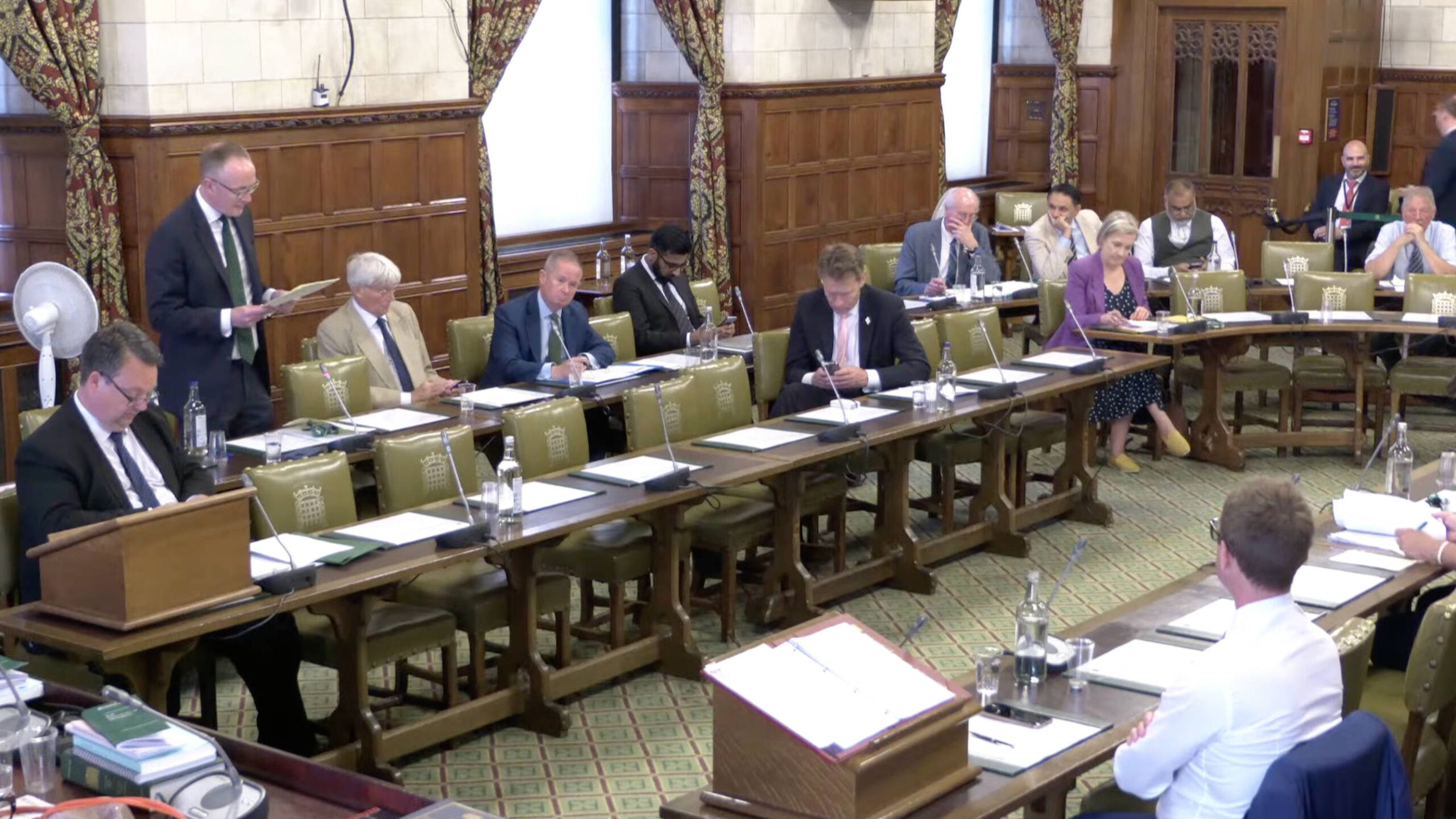
    On a Monday evening at the UK Parliament’s Westminster Hall, a deeply contentious and rarely seen debate unfolded, centered on a public call for a formal inquiry into foreign lobbying linked to the Israeli state and pro-Israel advocacy groups in British politics. The debate was triggered by a public petition that gathered over 118,000 signatures – a threshold that guarantees parliamentary discussion under UK rules – where signatories expressed growing concern over unreported influence campaigns connected to Israel, arguing the public has a right to know the full scope and impact of such activity on British democratic processes.

    What followed was a sharp split along largely partisan and ideological lines. The majority of participating MPs from both the Conservative and Labour parties, most of whom hold membership in prominent pro-Israel parliamentary lobby groups, immediately labeled the petition itself as inherently antisemitic, dismissing its demands as a rehash of outdated anti-Jewish conspiracy theories. Meanwhile, a small bloc of independent and backbench MPs who supported the inquiry’s premise raised detailed, pointed questions about lobbying transparency and foreign influence that were never addressed by the government front bench.

    Opening the government’s official response, James Frith, parliamentary under-secretary of state for digital government and a longstanding member of Labour Friends of Israel (LFI) – who has previously participated in LFI-organized trips to Israel – rejected calls for a targeted public inquiry. Frith emphasized that the UK maintains a deep, long-standing bilateral relationship with Israel, marking 76 years since British recognition of the Israeli state, and reaffirmed the UK’s unwavering commitment to Israeli security. He further argued that singling out pro-Israel influence unfairly holds the UK’s 300,000-strong Jewish community collectively responsible for the actions of the Israeli government.

    That claim drew an immediate rebuke from independent MP Adnan Hussain, who challenged the minister’s deliberate conflation of the Jewish faith and Jewish people with the actions of the Israeli state. Hussain stressed the petition never made that association, before pressing Frith on whether he would acknowledge that the state of Israel stands accused of genocide in its military campaign in Gaza. Frith flatly rejected the accusation.

    Former Conservative foreign office minister Andrew Mitchell, a member of Conservative Friends of Israel (CFI) who traveled to Israel on a CFI-funded trip in May 2025, echoed the antisemitism claims, questioning why Israel was being targeted for scrutiny when other foreign states also lobby in UK politics. Mitchell argued the entire petition amounted to an antisemitic conspiracy theory. He was joined by other CFI and LFI-linked MPs, including Conservative John Lamont, who has also taken CFI-funded trips to Israel, who claimed that modern antisemitism often hides behind rhetoric about a secret pro-Israel “lobby” controlling political life, replacing explicit anti-Jewish language with coded attacks on Zionism and Israeli influence.

    Supporters of the inquiry pushed back by pointing to existing official assessments of foreign interference in UK politics. They referenced the Rycroft Review, an April 2025 official investigation into foreign financial influence in British politics that concluded the UK faces persistent, ongoing risks of foreign interests seeking to skew domestic politics – a review that exclusively focused on Russian and Chinese influence without any mention of Israel, a point independent MP Iqbal Mohamed highlighted to underscore the double standard in how foreign influence is scrutinized.

    Independent MP Ayoub Khan, one of the most prominent advocates for the inquiry, stressed that the debate was never an attack on Jewish communities or Jewish identity, nor a challenge to the right of any person to advocate for either Israel or Palestine. Instead, Khan argued the core issue is transparency: lobbying itself is a legitimate part of democratic politics, but when large sums of money are spent out of public view, the public is right to question whether the government is genuinely committed to rooting out undisclosed foreign influence, or only blocking donations that do not align with its interests.

    Khan drew specific attention to recent reporting that LFI, an organization that counts multiple sitting cabinet ministers among its members, has been referred to the UK Electoral Commission over concerns about its opaque funding structures. He noted that while many senior government officials openly identify as LFI members, the group is not registered as a members’ association, allowing it to avoid mandatory public disclosure requirements that would apply to other similar political groups. Khan also emphasized that public electoral records already confirm the Israeli Ministry of Foreign Affairs has provided direct financial support to UK parliamentarians, information that should be fully disclosed to the voting public.

    The debate included contributions from MPs with direct connections to unreported pro-Israel travel, including Labour MP Peter Prinsley, who was found in breach of UK parliamentary rules earlier in 2026 for failing to declare an LFI-funded trip to Israel. Prinsley condemned the petition as a shameful revival of ancient antisemitic tropes, citing the long, dark history of anti-Jewish persecution in British history, from medieval massacres to the 1290 expulsion of all Jews from England.

    Reform UK deputy leader Richard Tice, who visited Israel and met senior Israeli ministers on a November 2025 trip funded by Reform Friends of Israel, echoed the antisemitism claims, calling for the petition to be fully rejected. Tice argued that the UK should welcome closer cooperation with Israel on artificial intelligence expertise to benefit British industries, a comment that drew a sharp intervention from Mohamed, who asked if Tice was also referring to AI-powered weapons that Israeli forces have used against Palestinian civilians in Gaza. Tice responded with a general claim that preparation for deterrence is the path to peace, declining to address the specific question.

    Labour MP Tahir Ali, one of the most vocal supporters of the inquiry, laid out extensive evidence of Israeli meddling in UK politics, referencing a 2017 Al Jazeera investigation that exposed a senior Israeli embassy official plotting to force the resignation of a Conservative minister who had been critical of Israeli policy – a scandal that ultimately forced a public apology from the Israeli ambassador to the UK. Ali noted that pro-Israel lobby groups have poured hundreds of thousands of pounds in political donations to UK politicians, citing a 2024 Declassified UK report that found 13 out of 25 members of the then-Labour shadow cabinet had received six-figure donations from pro-Israel donors, with roughly 1 in 4 of all 650 UK MPs having accepted such funding over their careers. He also drew attention to a December 2024 private meeting between executives from Israeli arms manufacturer Elbit Systems and senior UK Home Office officials, a meeting that came as Elbit holds hundreds of millions of pounds in British defense contracts.

    Fellow independent MP Shockat Adam expanded on that point, noting that freedom of information requests have confirmed repeated private meetings between Elbit executives and Home Office leadership, with internal briefing papers showing UK ministers were preparing to reassure the company amid growing public protests from the activist group Palestine Action. Adam argued the double standard is staggering: while ministers meet privately with executives from a company whose weapons are cited in international genocide investigations against Israel, anti-arms trade protestors who challenge Elbit’s activities are increasingly labeled as terrorist sympathizers. Last summer, the UK government officially proscribed Palestine Action as a terrorist organization, a move that Adam said raises urgent questions about whose interests the government is prioritizing.

    In the end, minister James Frith declined to answer any of the specific questions raised by proponents of the inquiry, and did not agree to move forward with a public investigation, sticking instead to the government’s line reaffirming the close UK-Israel bilateral relationship. Even so, the debate marked a rare moment where detailed, on-the-record claims about pro-Israel lobbying, undisclosed funding, and links between UK ministers and Israeli arms manufacturers were aired in an official parliamentary setting, topics that are rarely discussed publicly in Westminster.

    The debate unfolded against the backdrop of the ongoing Israeli military campaign in Gaza, which has killed more than 73,000 Palestinians since the October 7 2023 Hamas attack that killed 1,200 Israelis. More than 173,000 Palestinians have been wounded in the campaign, with thousands more still missing and presumed dead under rubble. The UK has maintained ongoing military cooperation with Israel throughout the campaign, including sharing intelligence from surveillance flights over Gaza, a move the Ministry of Defence has claimed is exclusively for hostage rescue purposes.

  • Goalllll! Messi mania overtakes Argentina as legend breaks scoring record

    Goalllll! Messi mania overtakes Argentina as legend breaks scoring record

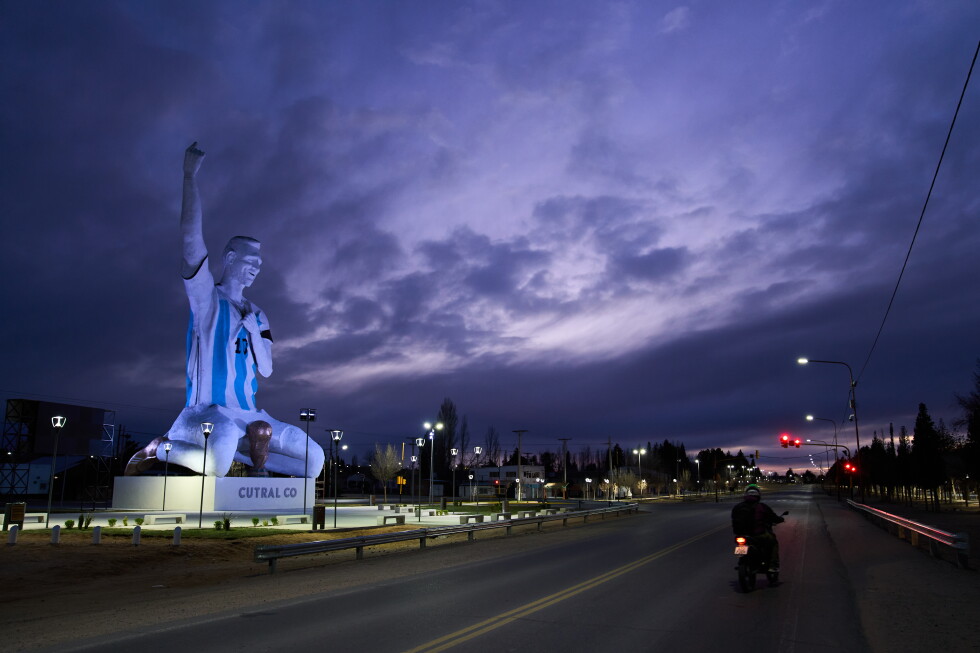
    As Argentina charges through the 2026 FIFA World Cup, the national passion for captain Lionel Messi has been immortalized in two massive, fan-driven projects that have captured the country’s collective heart: a record-breaking 26-meter statue in a remote Patagonian town and a community-built mural signed by more than 1,300 devotees.

    The towering steel monument stands on the outskirts of Cutral Co, a small oil-producing Patagonian town that has long lived in the shadow of the region’s more scenic, tourist-focused lake and mountain communities. Weighing 70 tons and built to withstand the region’s ferocious gale-force winds, the statue was inaugurated on June 16, matching the date of Argentina’s 2026 World Cup opening match against Algeria—where Messi delivered a standout performance, scoring a hat-trick to seal a win for his side and extend his historic international career.

    The work replicates one of the most iconic moments in Argentine soccer history: Messi’s emotional kneeling celebration on the pitch at Lusail Stadium after Gonzalo Montiel converted the decisive penalty to secure Argentina’s 2022 World Cup title over France in a dramatic penalty shootout. The statue captures all the details of that moment: the 2022 World Cup trophy rests between his knees, while one hand grips the Albiceleste jersey, and the index finger of the other points to the sky—Messi’s famous goal celebration, a tribute to his late grandmother who supported his early soccer career. The raised arm also doubles as a warm greeting to motorists passing along the adjacent Route 22.

    Its creator, 61-year-old local sculptor Aldo Beroisa, is no stranger to large-scale public art, having previously built giant dinosaur sculptures and monuments to Argentine independence heroes in Cutral Co. Beroisa called the Messi project a deeply personal honor, noting “He is Argentina’s natural ambassador. For me, it was very important, not only as an artist but as an Argentine.” Local officials confirm the monument is the largest statue ever built in honor of the Argentine captain, who will turn 39 just days after the statue’s unveiling.

    For the once-overlooked town, the statue has already delivered an unexpected boost: foot traffic has surged, with soccer fans and Messi admirers traveling from across the country to visit the monument, even as Messi continues to make history on the 2026 World Cup pitch. Just days before this report, the captain notched two goals in a 2-0 win over Austria, breaking the all-time record for most goals scored in World Cup tournament history, pushing his total to 18 since his World Cup debut in 2006. The statue project took 18 months to complete from initial concept to final unveiling.

    Hundreds of kilometers north in the Buenos Aires suburb of Berazategui, a second community-driven tribute has also drawn national attention. The 6-meter-wide, 5.5-meter-tall hyperrealistic mural bears a smiling portrait of Messi, with the names of more than 1,300 fans woven into the artwork surrounding the face of the captain. Unlike the statue, the mural was a collective project from its start: 32-year-old creator Leonel García led the painting, but fans traveled from across the region to add their own names to the work, completing the piece in just 18 days. García collaborated with Federico Merodo, who owns the local parking lot that provided the blank canvas wall for the project.

    The portrait draws inspiration from a relaxed, joyful photo of Messi taken during a friendly match after the 2022 World Cup victory, capturing the athlete at his most approachable. Creating a hyperrealistic likeness of one of the most recognizable people on the planet presented a major creative challenge for the team, but the final result earned high praise even from Messi himself, who shared a video message for the creators saying, “Crazy … thank you very much to all of you, to the people who supported it, who came by, and who keep coming by.”

    García emphasized that the mural is as much a tribute to the unifying power Messi holds for Argentina as it is to the athlete himself. “Messi brings joy to the country. The times we’re living through in Argentina may not be very good for some people, but Messi unites everyone … and the mural does that too, because people from everywhere come together here, from every social class and every political sector,” García explained.

    As Argentina advances in the 2026 World Cup, both tributes stand as lasting testaments to the decades of joy and national unity Messi has brought to his home country.

  • Leaders of four Central European countries meet in Hungary to reboot regional group

    Leaders of four Central European countries meet in Hungary to reboot regional group

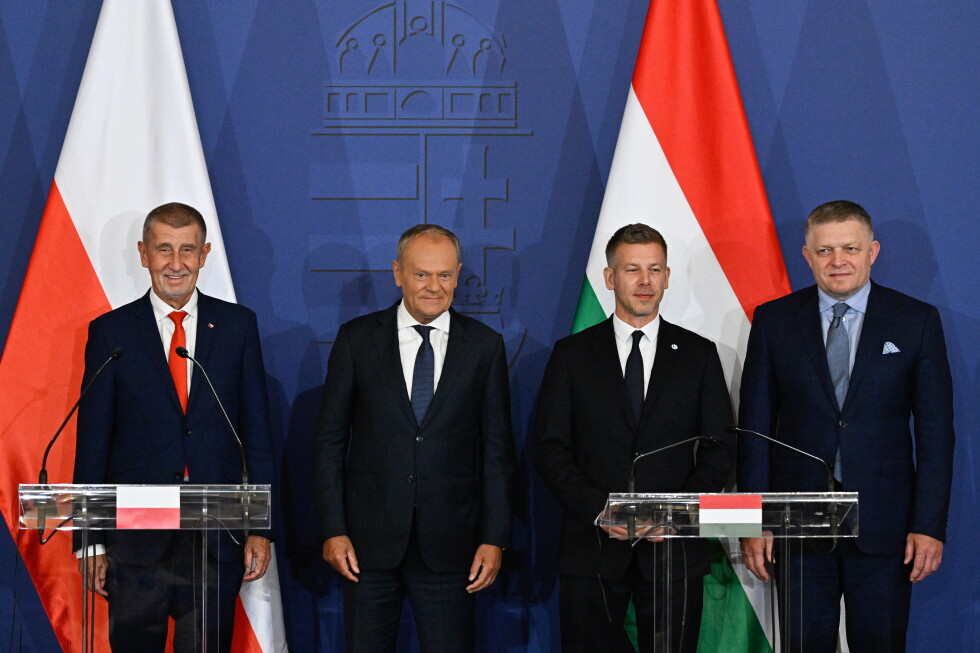
    In a landmark gathering held outside Budapest on Tuesday, the prime ministers of the Czech Republic, Hungary, Poland, and Slovakia formally relaunched the Visegrád Four (V4), a key Central European regional alliance, ending more than two years of stalemate triggered by deep divisions over former Hungarian Prime Minister Viktor Orbán’s pro-Russian stance amid the war in Ukraine.

    The summit, hosted by Hungary’s new Prime Minister Péter Magyar at the historic Grassalkovich Castle in the Budapest suburb of Gödöllő, marked the first full leaders’ meeting of the informal bloc since 2022. The alliance had fractured after Orbán’s soft approach to Russia’s invasion of Ukraine created irreconcilable fault lines, most notably between Hungary and Poland, which has been a staunch supporter of Kyiv.

    Magyar, who took office in May following a landslide election victory that gave his center-right Tisza party a two-thirds parliamentary majority, has made reviving the V4 a core foreign policy priority. Since succeeding Orbán, he has already broken with his predecessor’s obstructionist stance within the European Union, shifting Hungary toward a policy of constructive cooperation while retaining a focus on defending national interests.

    Following a closed-door one-hour working session with his three counterparts, Magyar announced that the bloc was officially active again. “The V4 is back,” he told reporters after the meeting. “The heart of Europe is beating in Central Europe today.” He outlined an ambitious agenda for the renewed alliance, including a proposal to develop a cross-border high-speed rail network connecting the capitals of all four member states. Leaders also reached preliminary agreement to pursue common policy frameworks on three pressing regional challenges: energy security, agricultural cooperation, and managing illegal immigration.

    Magyar added that he aims to expand V4 cooperation to include additional regional partners over time, with the goal of building a stronger, more influential bloc that can shape EU policy from a unified Central European perspective. “We want a Visegrád Four that is strong and which has a credible voice in European decision-making,” he said.

    Polish Prime Minister Donald Tusk echoed this vision, noting that coordinated V4 positioning ahead of European Council meetings would allow the bloc to advance shared regional interests more effectively. Tusk framed the revived alliance as a “beacon of hope” that can bring Central European priorities to the forefront of EU governance.

    A notable shift under Magyar’s leadership has been a complete reversal of Hungary’s approach to Ukraine’s European integration. Within weeks of taking office, Magyar’s government brokered a deal with Kyiv to restore a full suite of rights for the ethnic Hungarian minority in western Ukraine. In exchange, Hungary lifted its long-held veto on the launch of Ukraine’s EU membership accession talks — a major break from Orbán’s policy of blocking Kyiv’s path to the bloc.

    The summit also made clear that the V4 retains internal diversity when it comes to policy on Ukraine. Czech Prime Minister Andrej Babis and Slovak Prime Minister Robert Fico remain political allies of Orbán, and have followed his lead in cutting or reducing military and financial aid to Ukraine as it defends itself against Russia’s full-scale invasion. Even so, both leaders expressed full support for the revival of the bloc. Babis struck an optimistic tone, confirming that the alliance is “once again fully operational” and asserting that “these four countries are the future of Europe.”

    Hungary has held the rotating V4 presidency since the start of the year, and will hand over the role to Slovakia at the end of this month. Tuesday’s summit comes amid broader shifts across Central Europe, as new leadership in Budapest opens the door for greater regional alignment and more cohesive engagement with EU institutions after years of division.

  • Paraguay’s Miguel Almiron gets one-game suspension after red card for covering his mouth

    Paraguay’s Miguel Almiron gets one-game suspension after red card for covering his mouth

    ATLANTA – In a historic first for international soccer’s showpiece tournament, Paraguay international midfielder Miguel Almiron has received a one-match ban and will miss his side’s final Group Stage fixture against Australia this Thursday, becoming the first player ever expelled from a World Cup match for violating the new rule banning mouth covering during player confrontations.

    FIFA formally confirmed the disciplinary action on Tuesday, adding that the ruling is not eligible for appeal. The red card that sparked this suspension was issued late in the first half of Paraguay’s 1-0 victory over Turkey last Friday, when Almiron covered his mouth during an on-pitch verbal clash with Turkey’s Mert Mulder, an infraction that triggered an immediate sending-off under competition rules.

    The new regulation at the center of this incident was approved back in April by the International Football Association Board (IFAB), soccer’s global governing body for the Laws of the Game. The rule states that any player who covers their mouth to hide their words during a confrontation with another player can be punished with a straight red card. Notably, the rule is not a mandatory core part of the official Laws of the Game, instead allowing individual tournament organizers – including FIFA for the World Cup – to opt into adopting it for their competitions.

    The push for the new regulation came from FIFA president Gianni Infantino, who advocated for the change after a high-profile controversial incident during last season’s UEFA Champions League. In that match between Real Madrid and Benfica, Benfica winger Gianluca Prestianni was caught on camera covering his mouth while directing homophobic abuse at Real Madrid’s Vinícius Júnior. UEFA ultimately handed Prestianni a six-game ban, with three of those matches suspended, for what the governing body labeled “discriminatory (i.e. homophobic) conduct.”

    On Tuesday, Infantino doubled down on his support for the new rule during an interview with SNTV, framing the policy as a core issue of respect and accountability on the pitch. “This thing about covering the mouth is for us a very, very important rule,” he said. “It’s about respect, it’s about the example that we should give. If you have nothing to hide, you don’t cover your mouth when you speak to somebody. The rules have been made very clear to everyone, everyone knows them, so this is an important element.”

    For Paraguay, the suspension leaves the side without their key playmaker for a do-or-die group match against Australia, raising new questions about how the new regulation will shape future matches and disciplinary outcomes in top-tier soccer competitions.

  • Pregnant and imprisoned: Palestinian women face harsh conditions in Israeli jails

    Pregnant and imprisoned: Palestinian women face harsh conditions in Israeli jails

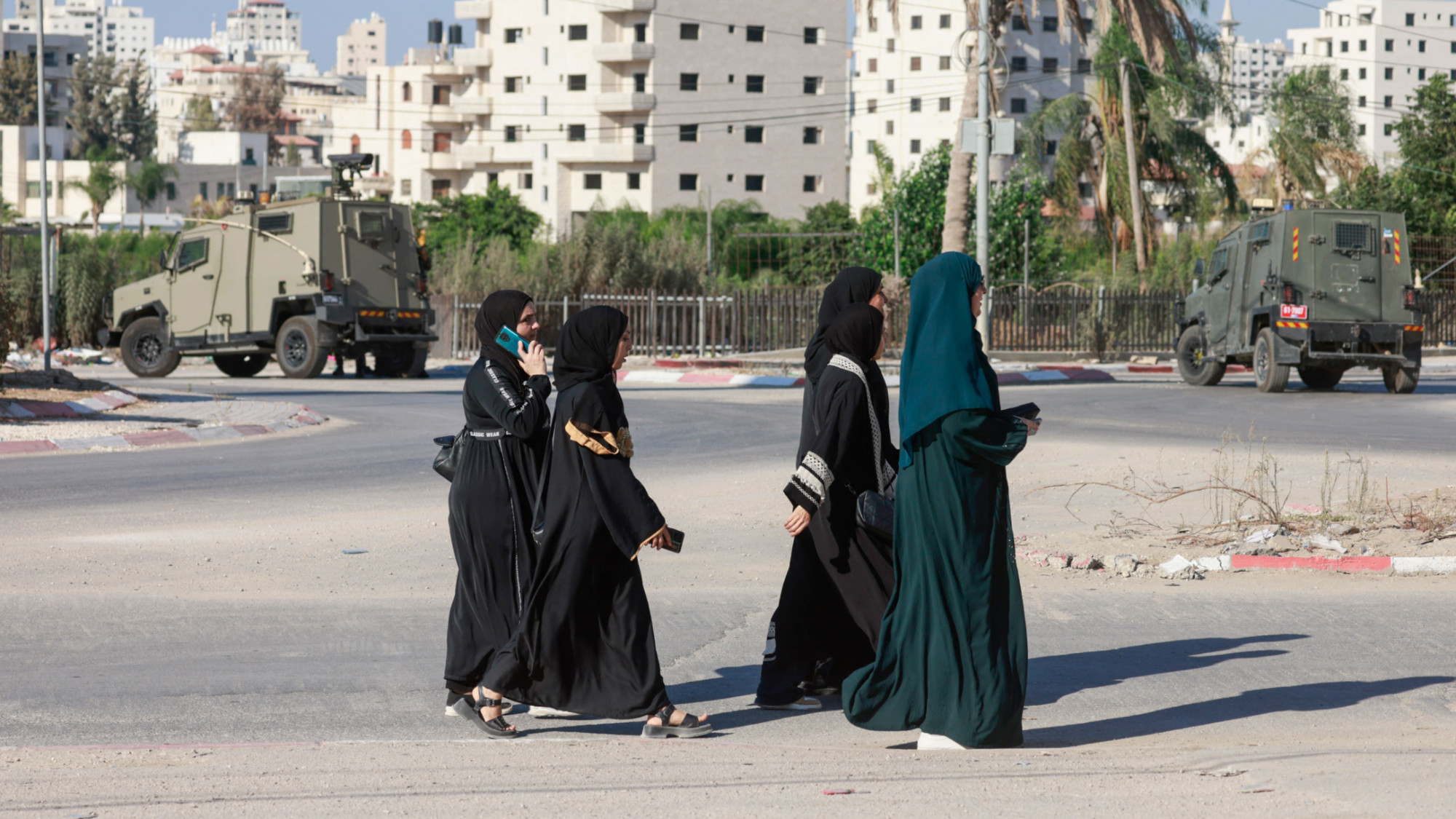
    On the night of April 30, Israeli military forces raided the West Bank home of Musab Zaloum, a Palestinian father of two, as he and his family slept peacefully. Zaloum was separated from his wife Manar Karaja and their young children within minutes of the soldiers’ arrival, handcuffed and forced outside before he had any understanding of the operation’s target. It was only after he was placed in an armored military vehicle that a soldier informed him: 28-year-old Karaja, who was just two days prior confirmed to be pregnant with the couple’s third child, was under arrest.

    Zaloum, still cuffed, was soon allowed to return to the house, where he found his 5-year-old son Ayman and 4-year-old daughter Layla awake and screaming in terror. Woken by the commotion after the soldiers left, the children immediately begged to know where their mother was. To calm them in that terrifying moment, Zaloum told them intruders had broken into the home, and that their mother would return by morning. That promise was broken, and he soon had to tell the children the truth: the Israeli army had taken their mother.

    Karaja is one of three pregnant Palestinian women currently held in Israel’s Damon Prison, all of whom are being subjected to brutal, degrading conditions that put both their lives and the lives of their unborn children at severe risk, according to the Palestinian Prisoners’ Club. These three women are part of a larger population of 93 Palestinian female detainees held in Israeli prisons, a group that has seen conditions deteriorate dramatically since October 2023. Since that date, no family members nor International Committee of the Red Cross representatives have been granted access to visit the female prisoners.

    The Palestinian Prisoners’ Club released a statement accusing the Israeli Prison Service of ramping up punitive measures against female detainees in recent months. “Some pregnant prisoners have been subjected to harsh interrogations and detention conditions in cells that lack even the most basic sanitary standards,” the organization said. “This has exacerbated their physical and psychological suffering, leading to weight loss, emaciation and extreme exhaustion.” The group added that even pregnant detainees have been forced to undergo invasive, humiliating strip searches.

    For Zaloum, life since Karaja’s arrest has been consumed by worry. The couple had only just learned of their pregnancy days before the raid, and had already begun picking out names for their coming child, a brief burst of joy cut short by the midnight raid. Today, he cares for their two young children alone, and his biggest fear is the lack of proper food and medical care for his wife in detention. He describes the prison conditions as “deplorable”, noting that even the small rations provided to regular prisoners are far from enough to meet the dietary needs of a pregnant woman.

    Through lawyers that visit Karaja every few weeks (the only contact her family is allowed), Zaloum has learned that overcrowding at Damon Prison has forced Karaja to sleep directly on the cold concrete floor since her arrest, and she suffers from constant body pain as a result. Israel is holding Karaja on suspicion of incitement, a loosely defined charge that is frequently used to detain Palestinian women, often based on social media posts, and she remains in detention awaiting trial.

    Karaja is far from alone in her suffering. Thirty-five-year-old Dana Joudeh, a five-month pregnant woman from Nablus, was arrested on April 18. Just months before her arrest, Joudeh underwent gastric bypass surgery, and she had only just learned of her pregnancy when Israeli forces raided her home and detained her. She was first held at the notorious Hasharon detention center, where reports routinely document humiliating treatment, invasive strip searches, and the denial of basic necessities including mattresses and adequate food.

    Joudeh’s family told Middle East Eye that she has repeatedly suffered fainting spells and dehydration in detention, but prison officials have refused to provide the specialized medical care she needs given her pregnancy and recent surgery. “She told her lawyer that the women sleep on the floor in overcrowded, cold cells,” Joudeh’s mother said. “Some pregnant prisoners try to support others by sharing portions of bread and food, despite the already meagre rations and poor-quality meals.” The family lives in constant fear, with repeated requests for medical checkups for Joudeh ignored by prison authorities.

    In Qalqilya, 37-year-old Amina al-Taweel, a mother of four who is four months pregnant, has been held on incitement charges since her March 18 arrest. Her husband Ali Shawahneh, who himself has spent 19 years total in Israeli prisons, says her arrest came as a devastating shock. “On the day of her arrest, I told the officer, ‘Take me instead of her,’” he recalled. “He replied, ‘This time, you’re not the one we’re after – it’s your wife.’ They handcuffed her and took her away while I stood there in shock, and the children cried.” Now caring for their four children alone, Shawahneh says he cannot meet the children’s emotional needs as they grieve for their mother. Al-Taweel, who experiences severe complications in early pregnancy that require ongoing care, has no access to that support in prison. “During my last detention, I lost more than 60 kilograms because of the poor quality and scarcity of food. How is a pregnant woman supposed to endure that?” Shawahneh asked.

    Palestinian human rights defenders say Israel’s treatment of these pregnant detainees crosses every line of international law. Helmi al-Araj, director of the Hurryyat Centre for Defence of Liberties and Civil Rights, said that Israel’s policy of abuse toward prisoners has existed long before October 2023, but has become far more severe in recent months. “Prisoners face collective punishment, abuse, torture, starvation, isolation, and denial of family visits,” al-Araj told Middle East Eye. “All of this negatively impacts the psychological state of female prisoners who are mothers and pregnant women. This Israeli policy existed even before 7 October, but it has become a deeply entrenched policy based on grave violations of the rights of prisoners.”

    Official Palestinian detainee advocacy groups confirm that the broader population of Palestinian prisoners in Israeli custody faces systemic abuse. According to the Palestinian Commission of Detainees and Ex-Detainees Affairs, more than 9,300 Palestinians are currently held in Israeli prisons, including 93 women and more than 350 children. More than 765 women and girls have been arrested by Israeli forces since the start of the military campaign in Gaza in October 2023. Nearly half of all Palestinian detainees are held without charge or trial under indefinitely renewable administrative detention orders.

  • Presidential candidate won’t accept Peru’s runoff vote unless overseas ballots are tossed

    Presidential candidate won’t accept Peru’s runoff vote unless overseas ballots are tossed

    Peru’s tense 2025 June 7 presidential runoff has descended into electoral chaos, as left-leaning candidate Roberto Sánchez has openly pledged to reject the final election results if election officials formalize the count of more than 300,000 ballots cast by Peruvians living overseas. Sánchez claims the processing of these overseas votes violated national electoral law, opening a new chapter of political uncertainty for a South American nation already grappling with decades of volatile leadership turnover.

    With 99.72% of all ballots counted across the country, Sánchez trails conservative rival Keiko Fujimori by a narrow margin of just 40,000 votes. Official projections indicate Sánchez will remain behind once the remaining tally sheets are fully processed, out of more than 18 million total votes cast in the runoff. Data published by Peru’s electoral authorities confirms that if the overseas vote bloc were invalidated entirely, Sánchez would secure a winning majority. This outcome has been driven by lopsided support for Fujimori among overseas voters: official figures from the National Elections Board (ONPE) show 65% of the more than 307,000 international votes cast went to Fujimori, with particularly strong majorities among Peruvian communities in the United States, Argentina, and Japan—birthplace of Fujimori’s paternal grandparents.

    A former commerce minister who draws broad support from rural communities and Peru’s large Indigenous population, Sánchez’s campaign has already filed a formal petition to strike all overseas ballots from the final count. The core of the campaign’s complaint centers on a procedural adjustment: Peruvian law requires consular staff to use a government-approved mobile application to scan vote tally sheets before transmitting them to central election authorities. According to the campaign, this mandate was not followed, creating openings for widespread electoral fraud.

    Peru’s Foreign Affairs Ministry has pushed back against these claims, clarifying that it received formal authorization from ONPE in late May to alter the processing procedure. The change was implemented after technical failures disrupted scanning operations during the election’s first round, the ministry explained. Under the adjusted rule, consulates were permitted to send physical tally sheets directly to Lima for central processing after voting concluded, rather than scanning them on location. Both ONPE and the Foreign Ministry have formally denied Sánchez’s fraud allegations, stating the procedural change was fully legal and transparent.

    Despite this official confirmation, Sánchez has stood firm in his rejection of a potential Fujimori presidency. “Under these conditions of transgression of the rules, we will not recognize the government of Miss Keiko Fujimori,” he stated in comments Tuesday.

    Fujimori, who centered her campaign on a strict public safety platform, has not yet issued a public response to Sánchez’s demand to annul the overseas vote count. Beyond the immediate electoral dispute, the contest has underscored deep regional and ideological divides across Peru: Sánchez, a close political ally of imprisoned former president Pedro Castillo, has campaigned on sweeping mining sector reforms that would grant local Indigenous and community groups direct equity stakes in the nation’s lucrative copper and gold mines. He won landslide support in the impoverished mountain regions of southern Peru, which have long been sidelined from national economic growth, but trailed badly in Lima—home to roughly one-third of Peru’s total voting population.

    The current electoral standoff comes against a backdrop of prolonged political instability in Peru: over the past 10 years alone, the country has been led by eight different presidents, only two of whom won their terms through popular general elections. The remaining six took office after predecessor presidents resigned or were removed by Congress amid widespread corruption allegations. Even amid this persistent political turbulence, Peru has maintained consistent, market-oriented economic policies that have positioned it as one of the fastest-growing economies in South America for much of the past two decades.

  • UN says it will evacuate sailors stranded in Strait of Hormuz, as Rubio warns against tolls

    UN says it will evacuate sailors stranded in Strait of Hormuz, as Rubio warns against tolls

    Following last week’s interim peace deal to end the US-Israel military campaign against Iran, the United Nations’ International Maritime Organization (IMO) has launched a coordinated large-scale operation to evacuate more than 11,000 seafarers stranded in the Persian Gulf for months. The mission is being executed in partnership with Iran, Oman, the United States, regional coastal states, and global maritime industry stakeholders, with full safety guarantees already secured and navigation conditions fully verified, per IMO Secretary-General Arsenio Dominguez.

    Despite the ceasefire agreement, deep disagreements persist between Washington and Tehran over the terms of the Memorandum of Understanding (MoU) that paved the way for the deal, particularly around nuclear inspection provisions. In a social media post earlier this week, former US President Donald Trump claimed Iran had agreed to unlimited, highest-level International Atomic Energy Agency (IAEA) inspections of its nuclear program indefinitely, framing the commitment as a guarantee of “nuclear honesty”.

    Iran’s response directly contradicted Trump’s claim, with Iranian officials stating the UN nuclear watchdog would not be granted access to nuclear sites damaged in US and Israeli airstrikes carried out last year. A senior US administration pushed back on the Iranian statement, arguing Tehran had already agreed to robust IAEA inspections of remnants of its nuclear weapons program, and framing Iran’s public comments as political messaging for its domestic audience. Speaking during an official visit to Pakistan on Tuesday, Iranian President Masoud Pezeshkian reinforced Tehran’s hardline position, stating Iran would “never negotiate with anyone, under any circumstances, ever, about our defensive capabilities”.

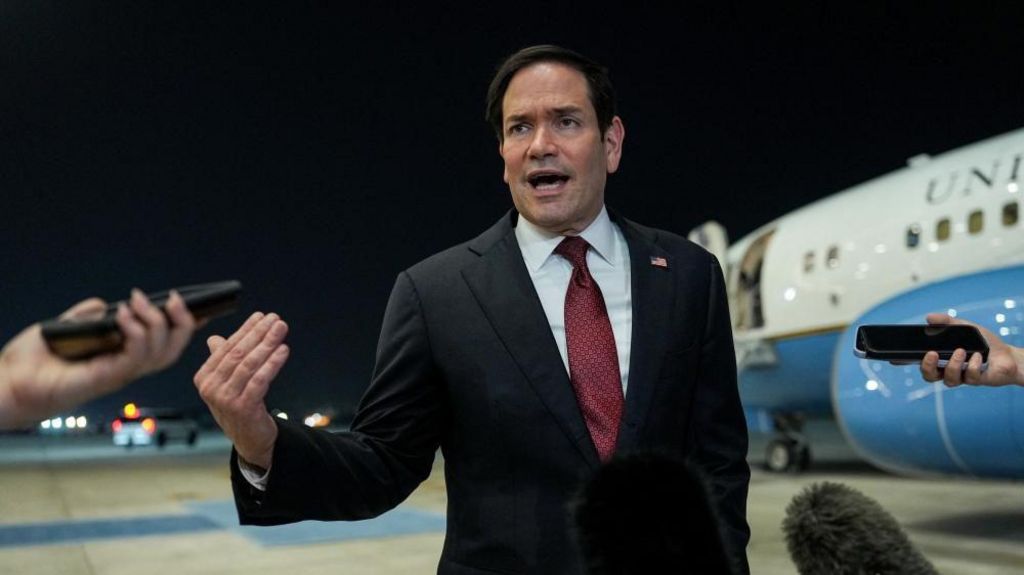
    As diplomatic efforts to solidify the ceasefire continue, US Secretary of State Marco Rubio launched a tour of Gulf nations on Tuesday, landing first in Abu Dhabi, United Arab Emirates. Rubio will next travel to Kuwait and Bahrain, both of which host longstanding US military bases, to hold talks with regional leaders on the new agreement with Iran.

    One of the top flashpoints in Rubio’s discussions is control and access to the Strait of Hormuz, the critical global chokepoint for energy shipments. Rubio reaffirmed US opposition to Iran’s recent push to impose tolls on vessels transiting the waterway, emphasizing that the Strait is classified as an international waterway under existing international law. “No country is allowed to charge tolls or fees on an international waterway,” Rubio told reporters upon arrival. “I don’t think we have anybody to convince around here in that regard. I think all the countries in this region would agree with us.”

    The successful evacuation of stranded seafarers is directly dependent on the Strait of Hormuz remaining open and accessible to commercial traffic, a point Dominguez emphasized in his remarks on the operation. Dominguez called the evacuation deal a “decisive step towards restoring maritime security and bringing to an end the unacceptable attacks against civilian shipping”. He added that after months of hardship for thousands of innocent seafarers and widespread negative economic impacts across the globe, the interim peace agreement between the US and Iran is a welcome development.

    Under the IMO’s evacuation plan, two temporary transit routes through the Strait have been established, and individual vessels will be contacted directly with customized navigation instructions, per a notice to mariners from Oman distributed by the IMO. The organization will also publish daily updates tracking the number of vessels that have safely exited the region.

    The conflict upended global energy and commodity markets after Iran effectively closed the Strait of Hormuz following the start of US and Israeli military operations in February 2025. The closure pushed benchmark Brent crude oil prices above $100 per barrel and disrupted global shipments of energy and critical agricultural inputs including fertilizer.

    New data from maritime intelligence firm Kpler shows that as of this week, at least 172 vessels have transited the reopened Strait, including 42 crossings on Saturday alone. However, daily transit volumes remain far below pre-conflict levels: the average before the outbreak of hostilities stood at roughly 138 crossings per day, and totals since the ceasefire was signed on June 17 have not come close to matching that pace. Ship tracking data analyzed by BBC Verify also indicates that more than 200 commercial tankers remain anchored and waiting inside the Strait as of Tuesday.