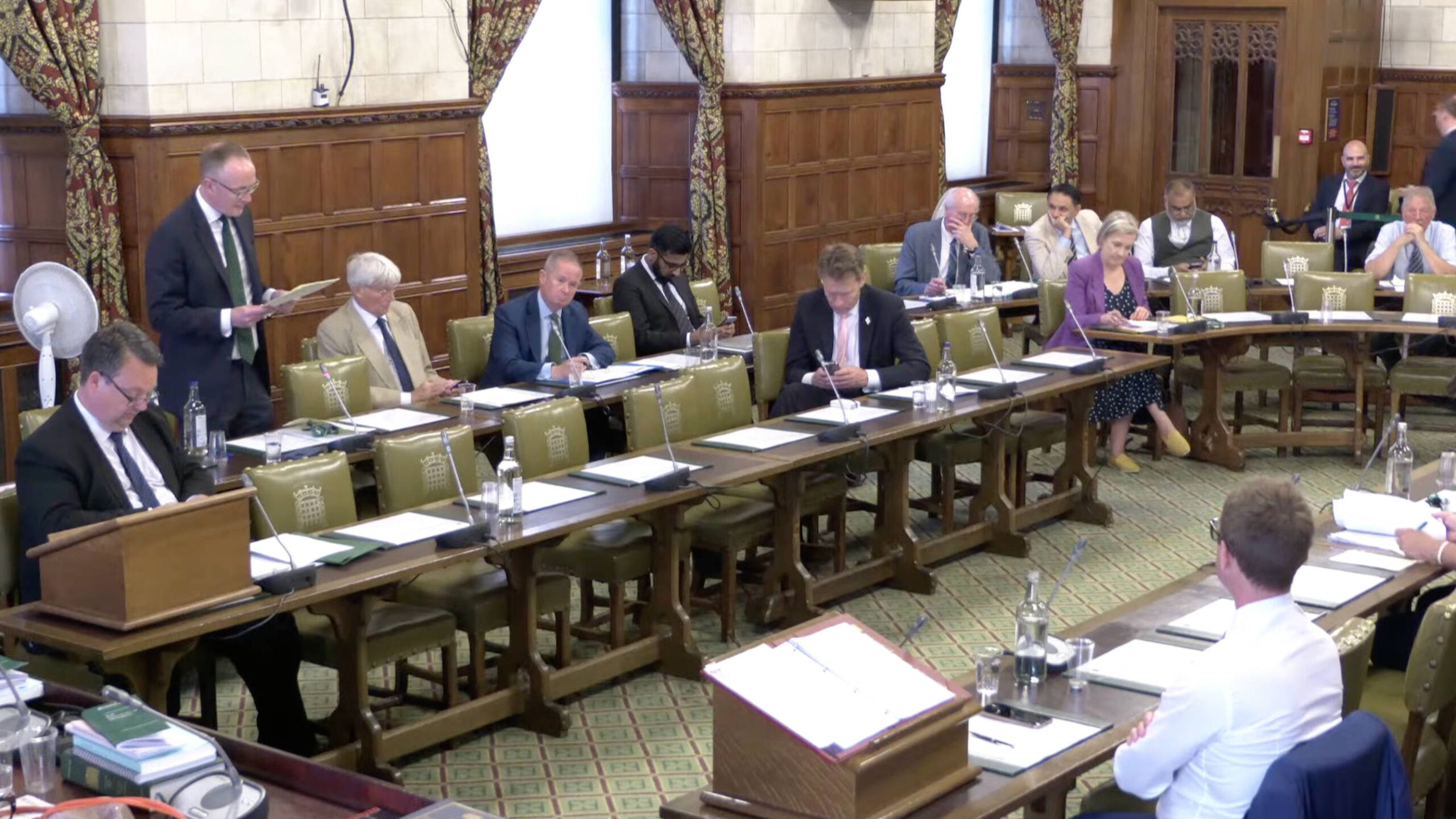
On a Monday evening at the UK Parliament’s Westminster Hall, a deeply contentious and rarely seen debate unfolded, centered on a public call for a formal inquiry into foreign lobbying linked to the Israeli state and pro-Israel advocacy groups in British politics. The debate was triggered by a public petition that gathered over 118,000 signatures – a threshold that guarantees parliamentary discussion under UK rules – where signatories expressed growing concern over unreported influence campaigns connected to Israel, arguing the public has a right to know the full scope and impact of such activity on British democratic processes.
What followed was a sharp split along largely partisan and ideological lines. The majority of participating MPs from both the Conservative and Labour parties, most of whom hold membership in prominent pro-Israel parliamentary lobby groups, immediately labeled the petition itself as inherently antisemitic, dismissing its demands as a rehash of outdated anti-Jewish conspiracy theories. Meanwhile, a small bloc of independent and backbench MPs who supported the inquiry’s premise raised detailed, pointed questions about lobbying transparency and foreign influence that were never addressed by the government front bench.
Opening the government’s official response, James Frith, parliamentary under-secretary of state for digital government and a longstanding member of Labour Friends of Israel (LFI) – who has previously participated in LFI-organized trips to Israel – rejected calls for a targeted public inquiry. Frith emphasized that the UK maintains a deep, long-standing bilateral relationship with Israel, marking 76 years since British recognition of the Israeli state, and reaffirmed the UK’s unwavering commitment to Israeli security. He further argued that singling out pro-Israel influence unfairly holds the UK’s 300,000-strong Jewish community collectively responsible for the actions of the Israeli government.
That claim drew an immediate rebuke from independent MP Adnan Hussain, who challenged the minister’s deliberate conflation of the Jewish faith and Jewish people with the actions of the Israeli state. Hussain stressed the petition never made that association, before pressing Frith on whether he would acknowledge that the state of Israel stands accused of genocide in its military campaign in Gaza. Frith flatly rejected the accusation.
Former Conservative foreign office minister Andrew Mitchell, a member of Conservative Friends of Israel (CFI) who traveled to Israel on a CFI-funded trip in May 2025, echoed the antisemitism claims, questioning why Israel was being targeted for scrutiny when other foreign states also lobby in UK politics. Mitchell argued the entire petition amounted to an antisemitic conspiracy theory. He was joined by other CFI and LFI-linked MPs, including Conservative John Lamont, who has also taken CFI-funded trips to Israel, who claimed that modern antisemitism often hides behind rhetoric about a secret pro-Israel “lobby” controlling political life, replacing explicit anti-Jewish language with coded attacks on Zionism and Israeli influence.
Supporters of the inquiry pushed back by pointing to existing official assessments of foreign interference in UK politics. They referenced the Rycroft Review, an April 2025 official investigation into foreign financial influence in British politics that concluded the UK faces persistent, ongoing risks of foreign interests seeking to skew domestic politics – a review that exclusively focused on Russian and Chinese influence without any mention of Israel, a point independent MP Iqbal Mohamed highlighted to underscore the double standard in how foreign influence is scrutinized.
Independent MP Ayoub Khan, one of the most prominent advocates for the inquiry, stressed that the debate was never an attack on Jewish communities or Jewish identity, nor a challenge to the right of any person to advocate for either Israel or Palestine. Instead, Khan argued the core issue is transparency: lobbying itself is a legitimate part of democratic politics, but when large sums of money are spent out of public view, the public is right to question whether the government is genuinely committed to rooting out undisclosed foreign influence, or only blocking donations that do not align with its interests.
Khan drew specific attention to recent reporting that LFI, an organization that counts multiple sitting cabinet ministers among its members, has been referred to the UK Electoral Commission over concerns about its opaque funding structures. He noted that while many senior government officials openly identify as LFI members, the group is not registered as a members’ association, allowing it to avoid mandatory public disclosure requirements that would apply to other similar political groups. Khan also emphasized that public electoral records already confirm the Israeli Ministry of Foreign Affairs has provided direct financial support to UK parliamentarians, information that should be fully disclosed to the voting public.
The debate included contributions from MPs with direct connections to unreported pro-Israel travel, including Labour MP Peter Prinsley, who was found in breach of UK parliamentary rules earlier in 2026 for failing to declare an LFI-funded trip to Israel. Prinsley condemned the petition as a shameful revival of ancient antisemitic tropes, citing the long, dark history of anti-Jewish persecution in British history, from medieval massacres to the 1290 expulsion of all Jews from England.
Reform UK deputy leader Richard Tice, who visited Israel and met senior Israeli ministers on a November 2025 trip funded by Reform Friends of Israel, echoed the antisemitism claims, calling for the petition to be fully rejected. Tice argued that the UK should welcome closer cooperation with Israel on artificial intelligence expertise to benefit British industries, a comment that drew a sharp intervention from Mohamed, who asked if Tice was also referring to AI-powered weapons that Israeli forces have used against Palestinian civilians in Gaza. Tice responded with a general claim that preparation for deterrence is the path to peace, declining to address the specific question.
Labour MP Tahir Ali, one of the most vocal supporters of the inquiry, laid out extensive evidence of Israeli meddling in UK politics, referencing a 2017 Al Jazeera investigation that exposed a senior Israeli embassy official plotting to force the resignation of a Conservative minister who had been critical of Israeli policy – a scandal that ultimately forced a public apology from the Israeli ambassador to the UK. Ali noted that pro-Israel lobby groups have poured hundreds of thousands of pounds in political donations to UK politicians, citing a 2024 Declassified UK report that found 13 out of 25 members of the then-Labour shadow cabinet had received six-figure donations from pro-Israel donors, with roughly 1 in 4 of all 650 UK MPs having accepted such funding over their careers. He also drew attention to a December 2024 private meeting between executives from Israeli arms manufacturer Elbit Systems and senior UK Home Office officials, a meeting that came as Elbit holds hundreds of millions of pounds in British defense contracts.
Fellow independent MP Shockat Adam expanded on that point, noting that freedom of information requests have confirmed repeated private meetings between Elbit executives and Home Office leadership, with internal briefing papers showing UK ministers were preparing to reassure the company amid growing public protests from the activist group Palestine Action. Adam argued the double standard is staggering: while ministers meet privately with executives from a company whose weapons are cited in international genocide investigations against Israel, anti-arms trade protestors who challenge Elbit’s activities are increasingly labeled as terrorist sympathizers. Last summer, the UK government officially proscribed Palestine Action as a terrorist organization, a move that Adam said raises urgent questions about whose interests the government is prioritizing.
In the end, minister James Frith declined to answer any of the specific questions raised by proponents of the inquiry, and did not agree to move forward with a public investigation, sticking instead to the government’s line reaffirming the close UK-Israel bilateral relationship. Even so, the debate marked a rare moment where detailed, on-the-record claims about pro-Israel lobbying, undisclosed funding, and links between UK ministers and Israeli arms manufacturers were aired in an official parliamentary setting, topics that are rarely discussed publicly in Westminster.
The debate unfolded against the backdrop of the ongoing Israeli military campaign in Gaza, which has killed more than 73,000 Palestinians since the October 7 2023 Hamas attack that killed 1,200 Israelis. More than 173,000 Palestinians have been wounded in the campaign, with thousands more still missing and presumed dead under rubble. The UK has maintained ongoing military cooperation with Israel throughout the campaign, including sharing intelligence from surveillance flights over Gaza, a move the Ministry of Defence has claimed is exclusively for hostage rescue purposes.