作者: admin

  • Is Trump heading to a Pyrrhic victory in Iran?

    Is Trump heading to a Pyrrhic victory in Iran?

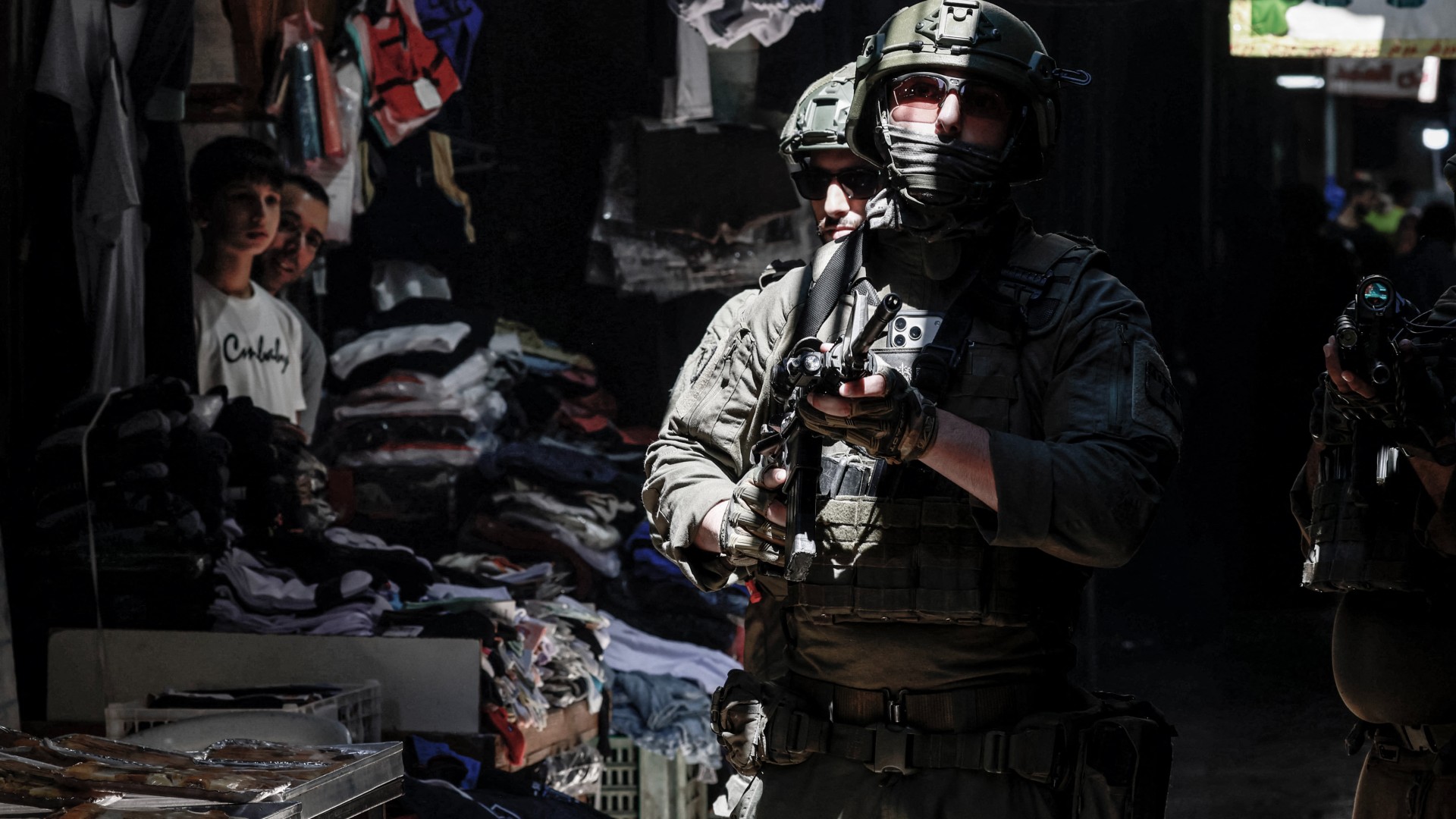
    U.S. President Donald Trump has prematurely declared victory in the ongoing conflict with Iran, even as hostilities remain unresolved. While Tehran has suffered major losses—including the death of its supreme leader Ali Khamenei and severe degradation of its conventional military capabilities—many analysts argue that the Islamic Republic has actually emerged stronger by virtue of surviving the full force of the American assault.

    As the U.S. pours increasing amounts of military equipment and diplomatic credibility into what it has named Operation Epic Fury, the term “Pyrrhic victory” has come up repeatedly in discussions of the campaign. This phrase has also featured heavily in post-conflict retrospectives of the 2003 Iraq War, postmortems of 2011 U.S. intervention in Libya, and nearly all critical analyses of two decades of Western military intervention across the Middle East. But what does the term actually mean, and does it accurately describe the trajectory of America’s current war in Iran?

    To understand the concept fully, we must trace it back to its ancient origins. Most casual users define a Pyrrhic victory as a win that costs far more than the prize is worth. While that is a close approximation, it omits the core strategic insight that makes the term enduring. In 280 BCE, Pyrrhus, king of the ancient Greek kingdom of Epirus, led his army across the Adriatic into what is now southern Italy to challenge the expanding Roman Republic. He won decisive battlefield victories at Heraclea in 280 BCE, followed by another hard-fought win at Asculum a year later.

    But each victory gutted Pyrrhus’s most elite fighting forces. His best troops were raised from his small, distant kingdom, and he could not replace his losses at the same scale that Rome could replenish its ranks. Following the bloodbath at Asculum, Pyrrhus is famously reported to have remarked, “If we are victorious in one more battle with the Romans, we shall be utterly ruined.” The historian Plutarch preserved this line for future generations, and it has outlasted nearly all other documentation of Pyrrhus’s Italian campaign.

    The key distinction of a Pyrrhic victory is not simply that it comes at a high cost. A victory remains a meaningful victory if the winner emerges with a stronger overall position relative to their opponent than they held before the fighting began. A victory becomes Pyrrhic when the side that claims the win actually leaves the conflict strategically weaker than it started.

    This dynamic has played out repeatedly in 21st-century American military campaigns across the Middle East, starting with the 2003 invasion of Iraq. U.S. and coalition forces dismantled Saddam Hussein’s authoritarian regime in just three weeks, achieving an immediate battlefield success. But the invasion collapsed the entire Iraqi state in the process: the national army was disbanded, state institutions were hollowed out, and domestic security forces vanished entirely. What followed was a years-long insurgency, brutal sectarian civil war, and eventually the rise of the transnational terrorist group the Islamic State.

    Beyond the chaos within Iraq’s borders, removing Saddam also eliminated the primary regional counterweight to Iranian power in the Persian Gulf. Though Saddam’s Iraq and revolutionary Iran were bitter rivals, that rivalry effectively contained Tehran’s ability to project influence across the region. Eliminating the Hussein regime cleared the way for Iran to expand its regional footprint to a degree not seen since the 1979 Islamic Revolution. That shift in regional power dynamics created the very context that makes the current U.S. war in Iran possible: the U.S. invaded Iraq to eliminate a perceived threat, and ended up strengthening the very rival it now targets.

    The 2011 NATO-led U.S. intervention in Libya initially appeared to be a more clear-cut success. The air campaign was short, and Moammar Gadhafi, the Libyan dictator who had bedeviled U.S. administrations for decades, was killed by opposition fighters within eight months. NATO achieved its stated goals of protecting civilian populations and removing Gadhafi’s regime. But the alliance had no coherent plan for governing post-Gadhafi Libya. After the regime fell, the country fractured into competing militias and rival governments, and loose stockpiles of Gadhafi’s weapons flooded south into the Sahel, fueling ongoing insurgencies and conflicts that continue to destabilize the region today. The intervention also sent a stark message to authoritarian regimes worldwide: complying with international demands to dismantle weapons of mass destruction programs, as Gadhafi had done, does not guarantee security—it may actually make you more vulnerable to regime change. That lesson has only strengthened the resolve of regimes like North Korea and Iran to pursue robust deterrent programs.

    In both Iraq and Libya, what the U.S. framed as clear battlefield victories ended up leaving America in a far worse strategic position than before the intervention began, making both textbook examples of Pyrrhic victories. That history raises urgent questions about whether the current conflict with Iran will follow the same pattern.

    It is still too early to deliver a definitive final verdict on the outcome of the Iran war, but the early warning signs are already visible. On one hand, Iran has suffered major losses: Khamenei is dead, and the country’s conventional missile and naval forces have sustained severe damage. Washington has declared victory, and by its own narrow metrics, that claim holds some water.

    But on the other side of the balance sheet, Iran still maintains effective control over the Strait of Hormuz, the world’s most critical oil chokepoint—and now holds more leverage over global energy markets than it did before the war. The conflict has already driven global oil prices to nearly $100 per barrel, sending shockwaves through the already fragile global economy. Meanwhile, Russia has reaped major economic and strategic benefits from the conflict without firing a single shot, as higher energy prices boost Russian export revenues.

    Most notably, the status of Iran’s nuclear program—one of the core stated justifications for the U.S. campaign—now appears less likely to be resolved than before the war began. A regime that has already absorbed the full force of a U.S. military assault has even stronger incentives to pursue a nuclear deterrent to prevent future attacks, not weaker ones.

    To understand whether this is a Pyrrhic victory, we have to return to the core definition of the term: a Pyrrhic victory is not just a costly victory, it is a victory that leaves you strategically weaker than you were before the conflict began. Too often, once the fighting stops, analysts and politicians skip past the critical question: what tangible strategic change did this victory actually deliver?

    Pyrrhus answered that question after Asculum, and his answer was not a flattering one for his own “victory.” Looking at the current state of play—continued Iranian control of the Strait of Hormuz, volatile global oil markets, a stronger Iranian motivation to pursue nuclear deterrence, and Russia’s unearned gains—it seems increasingly likely that President Trump will soon face the same uncomfortable conclusion that Pyrrhus reached more than 2,300 years ago. This analysis was written by Andrew Latham, a professor of political science at Macalester College, republished with permission from The Conversation under a Creative Commons license.

  • Voting begins in India’s West Bengal state after a national voter list purge

    Voting begins in India’s West Bengal state after a national voter list purge

    Polling for one of India’s highest-stakes regional elections opened on Thursday in West Bengal, launching a vote that carries nationwide political consequences after a national electoral roll revision stripped millions of people of their voting eligibility, stoking widespread fears of disenfranchisement. West Bengal stands out as one of the largest Indian states still not controlled by Prime Minister Narendra Modi’s ruling Bharatiya Janata Party (BJP), making the election a critical battleground for national power dynamics.

    This contest is far more than a regional race: it is a major test of the BJP’s ability to expand its footprint into long-held opposition strongholds across the country. For the BJP, a win would cement the party’s growing dominance across Indian states, while a victory for incumbent Chief Minister Mamata Banerjee, leader of the regional opposition Trinamool Congress, would reinforce her standing as one of Modi’s most formidable national challengers. Voting is also underway simultaneously in the southern state of Tamil Nadu, with a second phase of polling scheduled for next week in West Bengal. Final results from this round of state elections, alongside earlier voting in Kerala, Assam, and the union territory of Puducherry, will be announced on May 4.

    The controversy at the heart of this election centers on a sweeping voter roll update carried out by India’s Election Commission, billed as a measure to remove duplicate entries, names of deceased voters, and ineligible registrations. In total, roughly 9 million names — equal to 12% of West Bengal’s entire electorate — were struck from the rolls. Officials confirm 6.3 million of those deletions were for voters listed as deceased or permanently absent, while 2.7 million more were marked “doubtful” and left pending verification. But hundreds of thousands of affected voters report they participated in previous elections, hold all required valid government identification, and were removed from the rolls without any formal explanation.

    Take Sheikh Najrul Islam, a 53-year-old paramilitary officer who was deployed to West Bengal to oversee election security. He voted as recently as 2021 and holds all valid citizenship documents, yet his name vanished entirely from the updated voter list. “The Election Commission has deputed me to ensure free and fair polls. Yet, it does not consider me a citizen of this country,” Islam told reporters. Similarly, 62-year-old retired school administrator Taibunessa Begum, who holds a valid Indian passport, official pension records, and a decades-long history of voter registration, said she was stunned to find her name deleted. “It felt like being told I don’t exist,” she said.

    Opposition leaders have levied serious allegations that the deletions disproportionately target Muslim residents and other marginalized communities in the state, a charge national election officials and the ruling party have outright denied. The Election Commission maintains the revision was a straightforward administrative effort to clean up outdated rolls, while BJP officials frame the process as a routine, nationwide exercise that affected Hindu voters as well. The party argues any perceived disproportionate impact in West Bengal stems from a large population of undocumented migrants in the state.

    Critics, however, tie the voter roll changes to polarizing political rhetoric from Modi and senior BJP leaders, who have repeatedly framed the revision as a crackdown on illegal immigration from neighboring Bangladesh. Opposition figures say this rhetoric has amplified deep-seated fears among minority communities that the roll update is being weaponized for political gain to exclude them from the democratic process. Derek O’Brien, a senior Trinamool Congress spokesperson, called the process “invisible rigging,” adding “The motive is to disenfranchise voters.”

    Political analysts warn the controversy could have far-reaching consequences beyond this single election, eroding trust in democratic institutions among marginalized groups. “Losing one’s place in the electoral roll can be deeply unsettling. It is not only about voting rights; it is about dignity, recognition, and the assurance that one counts as a citizen,” said political analyst Iman Kalyan Lahiri. For affected voters like Begum, the stakes are intensely personal, extending far beyond partisan politics. “This is not just about politics,” she said. “It is about identity, about whether we belong to this country.”

  • Albanese warns of Iran war ‘tail’ as fuel reserves reach 46 days

    Albanese warns of Iran war ‘tail’ as fuel reserves reach 46 days

    In the wake of the recent ceasefire between Iran, Israel and the United States, Australia’s top political leaders gathered for the first post-ceasefire national cabinet meeting on Thursday, where Prime Minister Anthony Albanese issued a stark warning: the nation will face a long-drawn economic “tail” from the ongoing Middle East conflict, even with domestic fuel reserves now sitting higher than they were before hostilities erupted.

    Albanese told reporters following the meeting that while Australia’s near-term fuel supply outlook remains secure, the federal government is actively developing contingency plans to counter potential future disruptions to both fuel and fertilizer imports. He credited voluntary behavior changes from Australian motorists and consumers for the steady growth in national petrol reserves, which now stand at 46 days of coverage. While this is still only 51% of the 90-day minimum reserve requirement set by the International Energy Agency, it marks a notable improvement from the 36-day reserve level recorded when the conflict first began in late February.

    Even a complete, immediate end to hostilities and a full reopening of the strategically critical Strait of Hormuz would not erase the lingering economic impacts, Albanese explained. There is an inevitable time lag before global supply chains reset after two months of disrupted trade: clearing the waterway to restore safe passage, repositioning dozens of diverted or stuck cargo vessels from the Persian Gulf, unloading shipments, and returning vessels to their collection points to restart the regular supply cycle will take weeks of coordination. “So, there will be a long economic tail here,” the prime minister emphasized.

    Currently, six fuel cargo vessels are en route to Australia carrying more than 300,000 litres of diesel, and the federal government is exploring options to secure additional cargoes through the global spot market. Albanese also highlighted that the government has made significant progress in diversifying Australia’s import sources to reduce reliance on traditional Middle Eastern suppliers: the U.S., which has historically not been a major fuel provider to Australia, now accounts for roughly 18% of the nation’s fuel imports, while Argentina – once a negligible supplier – now contributes double-digit percentages of imports, and Algeria has also joined the list of active fuel exporters to Australia.

    Climate and Energy Minister Chris Bowen echoed the prime minister’s caution, noting that Australia still faces strong international headwinds, ongoing risks, and persistent market uncertainty over the medium term, but added that the government is leaving no stone unturned to position the nation to withstand any future shocks.

    Amid the broader economic concerns, there are small signs of relief for Australian motorists heading into the upcoming Anzac Day long weekend. Wholesale fuel prices have been falling steadily for several weeks, and these declines are now being passed on to consumers at the pump, according to Peter Khoury, a spokesperson for the NRMA motoring association. Over the past three weeks, wholesale diesel prices have dropped by one Australian dollar per litre, while wholesale unleaded petrol has fallen by 70 cents per litre.

    “Some good news finally for motorists,” Khoury said Thursday from Sydney. NRMA price tracking shows the majority of Australian retailers are now in the lower half of the national price range, with half of all Sydney service stations selling unleaded petrol for less than $1.90 per litre. “It is very clear that we’re in a better position than we were a couple of weeks ago, and that should continue into the long weekend, although looking at what is going on over the Middle East who knows how long that will last,” he added, urging motorists to compare prices using dedicated fuel price apps to lock in the lowest possible rates.

    Even with recent price declines, however, industry analysts warn that the threat of sky-high fuel prices has not passed. New modelling from Primera Research shows that Australian diesel prices were on track to hit $3.90 per litre earlier this month, a crisis that was only averted by two temporary interventions. First, the federal government implemented a temporary cut to fuel excise and paused 32 cent-per-litre heavy vehicle road user charges for three months. Second, fuel retailers voluntarily absorbed massive losses to keep prices from spiking, collapsing their average profit margins to just 1.7% – far below the standard 9.8% margin.

    “The $3.90 moment passed. But the costs that prevented it didn’t disappear; they were deferred,” said Robert Beerworth, managing director of Primera Research. The temporary federal excise cut is set to expire on July 1, which will trigger an overnight 32-cent-per-litre price increase that will ripple through the entire national economy. “Diesel moves every truck and every delivery in the country. When its price goes up, so does everything on the shelf,” Beerworth explained. Already, retailer profit margins are starting to recover to pre-crisis levels, pushing already absorbed costs back onto pump prices gradually – and the July excise cut expiry will bring all deferred costs to consumers at once. “The threat of $3.90-per-litre diesel had not evaporated,” he added.

  • ‘Dancing in their hands’: Japan wig masters set stage alive

    ‘Dancing in their hands’: Japan wig masters set stage alive

    Beneath the bright lights of Tokyo’s iconic Kabuki-za Theatre, before a packed audience leans in to watch centuries of traditional drama unfold, one quiet craftsperson lays the final foundation for a performer’s transformation. For kabuki, the iconic Japanese performing art famed for its dramatic stylized makeup, lavish period costumes and expressive storytelling, the wig is not just an accessory—it is the critical bridge between an actor and their character.

    Sixty-year-old Tadashi Kamoji, a fourth-generation master kabuki wig artisan known as a tokoyama, knows this weight of responsibility better than most. Ahead of a recent performance, he carefully positioned a handcrafted topknot wig on 33-year-old rising performer Nakamura Tanenosuke, who stars in a new production centering on a 19th-century noble family feud. “A kabuki actor cannot step onto stage as his ordinary self,” Kamoji explained in an interview with AFP. “It is only when the wig is in place that he truly becomes the character he is meant to play. That is why we carry such a heavy responsibility for our work, and why we hold such pride in what we do.”

    For decades, these skilled artisans have worked largely out of public view, tucked away in backstage ateliers far from audience applause. But the unsung craft of kabuki wig making has recently stepped into the international spotlight after the hit Japanese drama *Kokuho* earned an Oscar nomination for Best Makeup and Hairstyling. The film, which follows the lives of two onnagata—male actors who specialize in playing female kabuki roles—has brought long-overdue attention to the hidden craft that underpins every kabuki performance.

    Kabuki itself dates back to 17th-century Japan, blending dynamic dance, emotional drama and traditional music into a performance form that remains a cultural cornerstone of the country. Every element of a kabuki production is intentional: from the archaic dialect actors use to the elaborate hand-painted sets, each detail works together to transport audiences to another era. Nowhere is this intentionality more clear than in the wigs.

    After master craftsmen construct each wig from raw human hair, tokoyama like Kamoji take over to shape, style and customize the piece to fit both the actor and their character. This work goes far beyond simple hairdressing, Kamoji explains. “To create a wig that feels true, you have to first understand the core of the character,” he said. Kamoji joined the family trade when he was just 18, following in the footsteps of multiple generations of artisans, and he still learns new techniques from his 85-year-old father today.

    Whether the role calls for a righteous middle-aged samurai, a high-ranking Edo-era courtesan or a professional sumo wrestler like Tanenosuke’s recent part, each wig is designed to communicate specific details about the character’s age, social standing, occupation and personality to the audience before the actor even speaks a line. For Tanenosuke’s sumo role, Kamoji spent two hours in his atelier shaping the wig into the traditional curved mage topknot, a hairstyle that fell out of common use in Japan more than a century ago. Working kneeling on a traditional tatami mat, he sectioned the hair with hand-carved wooden combs, smoothed strands with heated steaming irons, and pulled tight securing knots with his teeth—a technique that has been passed down through generations of tokoyama.

    For performers like Tanenosuke, who has worked with wig masters since he began training in kabuki at age five, these artisans are entirely irreplaceable. “There is almost no traditional kabuki performance that does not rely on handcrafted wigs,” he said. “The wig is the final touch that completes the transformation into character. Every step of getting into costume and makeup is a switch that prepares you, but it is not until the wig is set that you fully step into the role. The audience’s enjoyment of kabuki depends on the skill of the actors, yes, but also on the beauty of the costumes, sets and wigs—our work would not be complete without the masters.”

    The scale and diversity of the craft is staggering: there are roughly 400 distinct wig styles for female roles alone, and more than 1,000 unique variations for male parts. Every wig is custom made from scratch for each production and tailored to fit the individual actor who will wear it, with simple pieces taking only a few hours to complete and complex, one-of-a-kind designs requiring up to a month of meticulous work.

    Even after 42 years in the profession, Kamoji says he is still honing his craft. “To this day, I still learn new things from my father,” he said. “This is a craft of endless improvement. When I watch the most senior masters work, it looks like the hair is dancing in their hands. I have not reached that level yet; I think I will only truly master that control when I am my father’s age.”

    Still, all the long hours of meticulous work feel worthwhile to Kamoji when the curtain rises and the audience erupts in applause for the performer on stage. “When the audience cheers that the actor looks brilliant, I feel a part of that success,” he said. “To know that the wig we created helped bring the character to life, that suited the actor perfectly—that brings me a huge sense of joy.”

  • ‘Boss princess’: Trump counterterrorism official investigated for seeking ‘sugar daddies’

    ‘Boss princess’: Trump counterterrorism official investigated for seeking ‘sugar daddies’

    A high-ranking former counterterrorism official from the Trump administration is at the center of a growing controversy following explosive allegations that she sought wealthy benefactors through a niche dating platform to fund an upscale personal lifestyle, British tabloid *The Daily Mail* first reported on Wednesday.

    The accusations stem from a formal complaint submitted to the Department of Homeland Security (DHS) Office of Inspector General by a 65-year-old divorced executive identified only as Robert B. The complainant alleges that 29-year-old Julia Varvaro, who served as Deputy Assistant Secretary for Counterterrorism at DHS, engaged in a three-month romantic arrangement starting on the mainstream dating app Hinge that ultimately cost him more than $40,000 in gifts, travel, and living expenses.

    According to the complaint, Varvaro maintained an active profile on the dating platform Seeking.com under the alias “Alessia”, marketing herself to potential matches as “seductive sophistication,” with profile details matching both her public Instagram photos and a personal description labeling her “flirty, fun, and fond of sultry spaces.” Robert B claims that Varvaro openly admitted her entire college tuition was covered by previous wealthy benefactors, and that the expensive Cartier jewelry and designer handbags she wore were all “trophies” from prior arrangements with sugar daddies.

    The complainant further alleges that Varvaro requested he cover half of her monthly rent, as well as fund luxury getaways to destinations including Aruba, the Swiss Alps, and Italy. During their relationship, the pair also smoked marijuana together, with Varvaro reportedly claiming she was “above” mandatory drug testing required for DHS employees and referring to herself as a “boss princess.” Under DHS employment rules, recent marijuana use can disqualify candidates for security clearances and official positions, a detail that amplifies concerns raised in the complaint.

    Most critically, Robert B argues that Varvaro’s documented pattern of pursuing large financial gifts from multiple wealthy private individuals creates a significant national security vulnerability for the United States. Financial vulnerability has long been flagged as a key risk factor for foreign espionage and coercion, making the claim particularly serious for a senior counterterrorism official with access to classified government information.

    In response to *The Daily Mail*’s request for comment, Varvaro issued a full denial of all allegations. She refuted having any profile on Seeking.com, claimed she had engaged in no misconduct, and asserted the entire story was fabricated by a disgruntled former boyfriend as an act of retaliation.

    DHS has confirmed that the Office of Inspector General is currently conducting an active investigation into the claims, with no preliminary findings released to the public as of the report.

    The controversy surrounding Varvaro coincides with broader ongoing scrutiny of business activities linked to the Trump family in international markets. Just recently, *The Wall Street Journal* published new reporting on a luxury skyscraper development project in Tbilisi, Georgia, led by the Trump Organization, which is currently managed by former President Trump’s adult children.

    For its part, Seeking.com has publicly updated its community policies in recent years, stating that traditional sugar dating, explicit financial arrangements, and mutually beneficial transactional relationships are explicitly banned from the platform. The company says it now markets itself exclusively to users seeking genuine, traditional romantic partnerships, with the official motto “Date people who make your life better.” Despite this public policy shift, the platform’s homepage still features a promotional video pairing an older gray-haired man with a much younger woman, showing the pair traveling in luxury vehicles, dining at high-end restaurants, and vacationing at exclusive beach resorts, a visual that aligns closely with the platform’s historic reputation for facilitating transactional dating arrangements.

  • Climate scrubbed from G7 meeting to appease US, host France says

    Climate scrubbed from G7 meeting to appease US, host France says

    A high-stakes two-day G7 environment ministerial gathering kicking off in Paris this week will deliberately sideline discussions on climate change, a move explicitly designed to avoid open conflict with the United States, according to the French government.

    The office of French Ecology Minister Monique Barbut confirmed the controversial decision Wednesday, noting organizers opted to center the agenda on what it called less divisive environmental topics in order to accommodate the stance of the G7’s most economically and politically powerful member. “We chose not to address the climate issue head-on… because the United States’ positions on this subject are well known,” the ministry stated in a formal comment. “We wanted to prioritise G7 unity, particularly to protect this forum.”

    This exclusion comes against the backdrop of major shifts in U.S. climate policy under the second Donald Trump administration, which has formally withdrawn the country from international climate accords and rolled back a raft of domestic environmental protections since taking office in 2025.

    Senior environment officials from the other six G7 members – France, Italy, Canada, Japan, Germany and the United Kingdom – will attend the gathering, while Washington will send Usha-Maria Turner, assistant administrator for the Office of International and Tribal Affairs at the U.S. Environmental Protection Agency, to represent U.S. interests.

    In place of climate negotiations, delegates will deliberate on a suite of other environmental priorities: ocean conservation, financing for global biodiversity protection, and the growing crisis of desertification of arid drylands. France is leading a major push to secure G7 backing for a new cross-sector public-private funding initiative for biodiversity. Sources familiar with the planning indicate the ministry aims to announce an $800 million commitment to support national park expansion and protection across roughly 20 African nations during the meeting.

    The gathering is also scheduled to work toward a formal political declaration linking desertification prevention to global security, advance a global alliance for expanding marine protected areas, and host working sessions on reducing global water pollution. On the opening day Thursday, delegates will also travel to the Fontainebleau forest south of Paris for a dedicated session on forest conservation.

    Environmental and climate activists have roundly criticized the decision to drop climate from the official agenda, arguing it undermines the group’s ability to address what is widely recognized as the defining environmental crisis of the 21st century. Gaia Febvre, a representative of the global activist network Climate Action Network, told reporters that “a G7 moving at the pace of the United States cannot claim to respond to the crises of the century. By yielding to pressure, it weakens collective action and renounces its potential leading role.”

    Even conservation advocates who praised G7 plans for biodiversity funding have raised cautions about the new initiative. Jean Burkard, advocacy director for WWF France, noted that while the biodiversity funding pledge was a welcome step, all new financing “must be additional and not compensate” for cuts to existing public nature conservation budgets elsewhere. This exclusion of climate from the G7 agenda comes just one week before more than 50 nations gather in Bogotá, Colombia for the first ever global summit focused exclusively on phasing out fossil fuels – the primary driver of accelerating human-caused global climate change.

  • Trump, his ‘low IQ’ slur, and the right’s race obsession

    Trump, his ‘low IQ’ slur, and the right’s race obsession

    In a fresh round of inflammatory rhetoric this week, former U.S. President Donald Trump targeted two of the nation’s most high-profile Black leaders — Supreme Court Justice Ketanji Brown Jackson and House Democratic Leader Hakeem Jeffries — with a uniquely derogatory label: “low IQ person.”

    While insulting opponents across the political spectrum has become a trademark of Trump’s public persona, deployed across social media, campaign rallies, official statements and even in direct exchanges with reporters, this particular jab carries uniquely sharp racial baggage in the American context that makes it stand out as particularly jarring.

    Jackson, a double Harvard graduate who made history as the first Black woman to serve on the nation’s highest court, drew Trump’s ire on Wednesday, when he dismissed her as “that new, Low IQ person, that somehow found her way to the bench.” She is far from the only person of color in Democratic politics to face this specific attack from Trump. Other targets have included U.S. Representatives Jasmine Crockett, Alexandria Ocasio-Cortez, Al Green, Rashida Tlaib and Maxine Waters. When targeting Minnesota Representative Ilhan Omar, who was born in Somalia, Trump extended the slur beyond the lawmaker to broadly brand all immigrants from the Horn of Africa nation as “low IQ people.” He has also applied the label to his 2024 presidential election rival Kamala Harris, calling her “a moron,” “stupid” and “a very low IQ individual.”

    Though Trump has occasionally used the same insult against white political opponents and critics — including former Georgia Representative Marjorie Taylor Greene, once a loyal ally, and conservative commentators Tucker Carlson and Megyn Kelly, who have broken with Trump over his stance on the Iran conflict — the phrase is deployed far more often against people of color, and particularly Black women.

    Experts emphasize that the slur is deeply offensive to the Black American community due to its long ties to white supremacist ideology that has falsely claimed Black people have inherently diminished cognitive capacity, justifying their forced exploitation for manual labor throughout centuries of slavery and oppression.

    “Trump’s characterization of people of color as ‘low IQ’ is a racist dog whistle with a long history in the US,” Karrin Vasby Anderson, a communication studies professor at Colorado State University, told Agence France-Presse. During the era of colonialism and 19th-century chattel slavery, Anderson explained, “white male elites took for granted that they were cognitively superior to women and people of color and, thus, divinely appointed for leadership.”

    Trump’s repeated recent use of the phrase aligns with a growing preoccupation among the American far-right with discredited pseudosciences including phrenology — the debunked field that claims skull size and shape can be used to measure a person’s intelligence — and race-based pseudoscience around genetics. “An interest in phrenology has resurged during Trump’s second presidential campaign,” Anderson noted.

    This discredited “race science,” which claims IQ is inherently tied to racial characteristics, has long festered in private far-right online chat groups. But in recent years, it has increasingly moved into mainstream right-wing media platforms that reach audiences of millions. Earlier this month, right-wing podcaster Benny Johnson, who counts six million YouTube subscribers, hosted a Republican lawmaker for a discussion claiming that many migrants from “third world” countries are incompatible with American culture. Johnson explicitly suggested that lower average cognitive capacity should be a reason to restrict immigration from these nations, claiming “The average IQ in Somalia hovers around 70, and that’s the threshold for mentally handicapped.”

    Robert Sternberg, a psychology professor at Cornell University, told AFP that IQ tests are widely overvalued in public discourse, and only offer “moderate” utility for predicting real-world professional and personal success. Even so, their reputation as a rigorous scientific metric gives bigoted claims about racial differences in IQ a false veneer of academic credibility, lending cover to openly racist arguments.

    While some high-profile far-right figures — including white nationalist Nick Fuentes, who has dined with Trump at his Mar-a-Lago resort — openly promote extremist racial ideology, Trump has generally steered clear of explicitly racist language. Anderson explains that coded phrases like the “low IQ” slur offer a key rhetorical benefit: built-in deniability for both the speaker and their audience. “So, Trump and his audience can say that there’s nothing racist about ‘low IQ’ because that label could be applied to anyone,” she said. “When Trump uses it primarily against Black people, however, and when it’s connected to this very specific history of how Black people have been framed in US culture since the 19th century, the white supremacists and casual racists in Trump’s audience will respond favorably.”

    For his part, Jeffries — who Trump called a “totally low IQ person” earlier this week — pushed back quickly against the attack. “What’s so ironic is that Donald Trump is clearly the dumbest person ever to sit at 1600 Pennsylvania Avenue,” he told MSNBC.

  • Australian private sector cost inflation hits highest point since August 2022

    Australian private sector cost inflation hits highest point since August 2022

    Freshly released purchasing managers’ index (PMI) data from S&P Global has painted a mixed but largely concerning picture of Australia’s private sector economy, revealing stubborn and faster-than-expected inflationary pressures fueled by ongoing conflict in the Middle East. The April survey, which polls 400 manufacturers and 400 service providers across the country, shows that business activity stabilized this month following a contraction in March, but cost and consumer price inflation have both surged to 3.5-year highs, far outpacing economist forecasts.

    Supply chain disruptions stemming from the Iran-centered war that broke out in late February have been the primary driver of rising costs, with the closure of the Strait of Hormuz cutting off roughly 20% of global oil supplies and choking off shipments of key raw materials from the Persian Gulf, including fertilizer and medical-grade helium for MRI machines. S&P Global economist Eleanor Dennison explained that Middle East conflict has put intense strain on manufacturing supply chains, pushing supplier lead times out to their longest since mid-2022. “Greater outlays on fuel and freight also pushed cost inflation to its highest in just under four years,” she added.

    The data confirms that rising input costs are not being absorbed by businesses, but are instead being passed directly to end consumers, pushing “charge inflation” – the rate at which businesses increase prices for customers – to its highest level since late 2020. While the overall manufacturing benchmark edged back into growth territory in April after contracting in March, both manufacturing output and service sector activity registered sub-50 readings (the threshold that separates growth from contraction), with manufacturing output falling from 49.4 to 48.2. The service sector, meanwhile, bounced back from March’s sharp decline to stabilize near neutral, driven by modest job creation even as demand remains soft.

    The biggest takeaway from the data, according to Judo Bank senior economist Matt De Pasquale, is that inflation is becoming more broad-based across the Australian economy than most analysts predicted. That outcome significantly increases the likelihood that the Reserve Bank of Australia will implement additional interest rate hikes to curb price growth, he argued. “What the data suggests is that inflation could be picking up broadly and more than was initially anticipated given that growth is holding up. That would support the RBA focusing on inflation, getting ahead of it with further interest rate rises,” De Pasquale told NewsWire.

    There are limited bright spots in the latest snapshot: the overarching composite PMI, which measures combined private sector activity, bounced back into neutral territory after contracting in March, when the outbreak of war first sent shockwaves through global markets. New business orders did decline for the second consecutive month in April, as widespread economic uncertainty dented domestic sales, but export orders to key markets including North America, Asia, and New Zealand saw a small uptick.

    Dennison warned against overstating the modest growth in the headline manufacturing index, noting that underlying indicators remain weak. “To understand how manufacturers are faring, we must look beneath the positive headline index print, as output, new orders, employment and stocks all fell at modest rates,” she said. “Despite growing price pressures and persistent weakness in domestic demand, latest data saw output stabilise following March’s decline.”

    The conflict-driven supply shock is also rippling through regional trade networks, affecting Japan – Australia’s third-largest import supplier, which shipped $23 billion worth of goods to Australia in 2025, according to UN trade data. Japanese manufacturing output surged from 52.1 to 55.4 in April, hitting its fastest pace of growth in 12 years, as manufacturers rushed to produce goods ahead of expected further supply chain disruptions. That surge has however amplified input cost competition and extended delivery times, pushing Japanese business inflation to its highest in nearly four years. S&P economist Annabel Fiddes noted that “there were reports that some manufacturing firms boosted output due to concerns and uncertainty surrounding the war in the Middle East and the potential for further supply chain disruptions. The latter contributed to not only a much sharper rise in costs but the most pronounced increase in average delivery times for manufacturers’ inputs for nearly four years.”

  • Tears and smiles at tribute concert for Swiss fire victims

    Tears and smiles at tribute concert for Swiss fire victims

    Nearly four months after a devastating New Year’s Day fire claimed 41 lives at a popular Swiss alpine ski resort, hundreds of people gathered Wednesday for an emotional tribute benefit concert to honor those lost and support survivors of the tragedy.

    The blaze broke out in the early hours of January 1 at Le Constellation bar, a nightlife venue in the upscale resort town of Crans-Montana. Most of the fatalities were teenagers, and 115 more people were injured in the inferno; 38 survivors remain in hospitals and rehabilitation centers receiving ongoing care for physical and psychological trauma. Wednesday’s concert, held at Lausanne’s Salle Metropole theatre, welcomed victim family members and survivors, creating a space for collective mourning and shared solidarity.

    As the event opened, performing artists walked onto the stage to *Etoile de nos coeurs* (“Star of our Hearts”), a ballad written in memory of the victims, and lined up across the platform holding pure white roses. Before the performances began, family members gathered in the theatre’s foyer, where hugs mingled with soft tears and faint, bittersweet smiles.

    Laetitia Brodard-Sitre, a mother who lost her 16-year-old son Arthur in the fire, described the gathering as an act of enduring remembrance. “It’s about solidarity. To all the victims, up there or here on Earth, it means one thing: we haven’t forgotten you,” she told reporters. “We’re in survival mode. Half of our hearts have been ripped away. This event keeps alive the memory of all those who were hurt, both physically and emotionally.”

    Vincianne Stucky, whose 17-year-old son Trystan Pidoux died in the blaze, shared the same priority: preventing the young victims from fading from public memory. “I truly don’t want the children to be forgotten; that’s my greatest fear,” she said. “I find tonight’s concert magnificent because it will help, in particular, the burns victims.” For one badly injured survivor, the concert marked their first public appearance since the fire.

    All participating artists performed pro bono, and ticket prices ranged from 90 Swiss francs ($115). All proceeds from the event will go to Swisshearts, a support association founded by parents who lost children in the tragedy.

    Among the featured performers was Gjon’s Tears, the Swiss vocalist who placed third at the 2021 Eurovision Song Contest. At 27, he said he felt a particularly close connection to the victims, most of whom were young adults and teens out celebrating a holiday. “These were young people who just wanted to party and have fun,” he said. “Being close in age to the majority of the victims… I think we can relate to it.”

    Veteran French-Italian singer Richard Cocciante, 80, also took the stage, noting music’s unique power to comfort grieving communities. “We need to think about the people who are no longer here,” he said. “Music certainly helps; I don’t know if it can heal, but it helps.”

    The concert was organized by Olivier and Corine Uzan, event managers based in Crans-Montana who were hosting a New Year’s Eve event just 200 meters (656 feet) from Le Constellation the night of the fire. “We were shocked, because we knew some of the victims,” Corine Uzan said. “It’s a tragedy that could have been avoided — that’s the worst part. What we want is to bring a little light and joy… music brings people together.”

    In the aftermath of the disaster, 13 people are currently facing criminal investigation linked to the fire. The list includes the bar’s owners and several current and former local government officials, as authorities work to determine what safety failures led to the deadly blaze.

  • ‘Big loss’ for F1 if Verstappen quits, say McLaren rivals

    ‘Big loss’ for F1 if Verstappen quits, say McLaren rivals

    Two of Max Verstappen’s current on-track rivals from the McLaren team have issued a stark warning: if the four-time Formula One world champion makes good on his repeated hints to leave the sport, the entire series would be significantly worse off.

    The 28-year-old Dutch driver, who claimed four straight consecutive drivers’ titles between 2021 and 2024 after a narrow miss of a fifth championship the season before, has had a rocky start to the 2025 campaign with Red Bull, as Mercedes, Ferrari and his current rivals McLaren have closed the performance gap on his team.

    Verstappen’s growing frustration with F1 centers largely on the sport’s sweeping 2026 regulatory overhaul, a set of rule changes that will shift competition to prioritize electric energy management during both qualifying sessions and grand prix races, while also imposing new limits on maximum car speeds. He has not shied away from public criticism, even comparing the new direction of F1 to “Formula E on steroids” and the casual arcade racing video game Mario Kart. Beyond rule changes, he has also openly voiced dissatisfaction with the performance of his 2025 Red Bull race car, and hinted at a growing desire to shift focus to endurance racing to spend more time with his family, comments he made most recently following last month’s Japanese Grand Prix.

    Speaking to reporters this Wednesday, McLaren’s young driver line-up of Lando Norris and Oscar Piastri both echoed the same sentiment: losing Verstappen would be a major blow to the sport. 25-year-old Australian Piastri argued that every driver on the grid wants to test themselves against the best competition possible, and Verstappen has more than earned that status over the past decade.

    “I think it would be a big loss for the sport as a whole. I think for us as drivers we want to race against the best and try and prove ourselves against the best,” Piastri said. He added that Verstappen has “shown his calibre in the last 10 years” and has stood as the benchmark for F1 performance “for the last five or six” seasons.

    Norris, the 2025 defending world champion, echoed that assessment, noting that Verstappen’s legacy already places him among the greatest drivers to ever compete in F1. He also praised the Dutchman’s candid approach to speaking his mind, a trait that has made him a distinct, compelling figure for fans even among those who disagree with his views.

    “It would be a shame for the sport, it would be a miss for the sport if that does happen, because he probably is one of the best drivers you’ll see in Formula One ever,” Norris said. “He’s always been very open to say what he thinks, whether you agree or not.”