作者: admin

  • Is China’s soft power rising, or is America’s just crumbling?

    Is China’s soft power rising, or is America’s just crumbling?

    For decades, analysts have tracked a gradual shift in global soft power momentum toward East Asia, with South Korea building its cultural influence through intentional strategy and Japan rising to cultural prominence through organic, unexpected growth. This long-running trend has left one major question unanswered: When will China, the region’s largest economy and geopolitical heavyweight, launch its own sustained global cultural wave?

    For years, the expected Chinese Wave has been slow to materialize. Previous analysis has argued that China’s closed political system, strict censorship regime, ubiquitous surveillance, and tight control over media and speech have created an environment where only cautious, inoffensive cultural production can thrive, with cutting-edge creativity confined to tiny, underground subcultural pockets. The Great Firewall, which blocks most global cultural content from reaching Chinese audiences, also cuts China’s domestic creators off from the global cultural conversation, leaving their work isolated from the cross-pollination that drives innovative artistic change. While the country has produced high-grossing blockbusters and popular video games, it has yet to push global cultural boundaries in the way South Korea and Japan have done.

    Over the past year, however, a new social media trend called “Chinamaxxing” has sparked claims that China’s long-awaited soft power breakthrough has finally arrived. Spreading first among U.S. Gen Z creators on TikTok before gaining global traction, the trend sees Western creators embracing what they frame as stereotypically Chinese habits and aesthetics: drinking hot water and herbal fruit tea for wellness, practicing traditional Chinese exercises and gua sha, wearing Chinese-inspired fashion, eating hot pot, wearing slippers indoors, and even mimicking the daily routines of Chinese retirees in a trend called “uncle core” that pushes back against Western hustle culture.

    Despite widespread media coverage of the trend across outlets from Fortune to the BBC, Chinamaxxing bears little resemblance to the organic, product-driven soft power waves that originated from Japan and South Korea. Unlike K-pop, J-dramas, or Japanese anime, Chinamaxxing involves almost no engagement with actual Chinese original cultural products. Western participants are largely not watching Chinese dramas, listening to Chinese music, or playing Chinese video games; the viral Chinese-style Adidas jacket that became a trend staple, for example, is produced by a German brand. Even China’s highest-profile domestic cultural products have failed to gain significant traction outside the country: *Ne Zha 2*, the highest-grossing animated film of all time, earned over 99% of its total revenue inside mainland China, while hit game *Black Myth: Wukong* generated more than three-quarters of its Steam sales domestically, with very few Chinese musicians breaking through to Western mainstream audiences.

    Beyond cultural products, the trend also relies heavily on curated content about China’s cutting-edge urban infrastructure, with Western influencers relentlessly posting one-note content praising Chinese cities as superior to Western metropolises. Critics argue this content often feels like a coordinated publicity campaign rather than organic enthusiasm, with influencers almost exclusively showcasing grand, iconic landmarks, new train stations, and shiny new developments instead of capturing everyday, ground-level life. This is no accident: unlike organically grown global cities like Tokyo or Paris, most modern Chinese cities were built rapidly from scratch, dominated by sterile gated microdistricts, wide arterial roads, and massive concrete plazas that are impressive from a distance but lack the walkable, mixed-use streetscapes that give older cities their charm.

    Hard data backs up the idea that this new fascination with China remains surface-level. As of 2024, international tourism to China remains far below pre-pandemic levels, while the number of American students studying in China has plummeted even more sharply. By comparison, far smaller Japan and South Korea have not only fully recovered their pre-pandemic tourism levels from the U.S. but have exceeded them, proving that the current social media hype around Chinamaxxing has not translated to tangible, widespread engagement with China among Western audiences.

    In reality, the Chinamaxxing trend is far more about disillusionment with the West — and the United States in particular — than it is about authentic attraction to Chinese culture and society. As multiple analysts have noted, the trend’s subtext is rooted in Gen Z frustration with systemic failures in the U.S.: the lack of affordable housing, underfunded and unreliable public transit, widespread gun violence and high crime rates, rising loneliness and social atomization, and soaring costs for education and healthcare that have left the American promise out of reach for many young people. Chinamaxxing romanticizes qualities that young Americans perceive as available in China but out of reach at home, serving as a quiet protest against the failure of U.S. institutions to deliver widespread prosperity.

    This dissatisfaction with the U.S. reflects a broader global shift. Since Donald Trump’s first election, Gallup data shows that global confidence in U.S. leadership has fallen below confidence in Chinese leadership for the first time in modern history. While China itself is not broadly popular globally, it is increasingly seen as a credible alternative to U.S. leadership by much of the world, and Trump’s persistent unpopularity among young Americans has directly fueled interest in the Chinamaxxing trend. Compounding this is the very visible breakdown of public order in many major U.S. cities, where progressive policies that have decriminalized homelessness and low-level crime have left many urban areas perceived as dirty and unsafe, a contrast pro-China influencers often highlight to great effect.

    It is important to note, however, that the narrative of China as a perfect alternative to the U.S. is largely a myth. As analysts have pointed out, China faces many of the same structural social and economic crises as the U.S., with similar levels of income inequality that grow even worse when accounting for limited social redistribution. The affordability crisis for education is far more severe in China than in the U.S., with the bottom 20% of households spending an extraordinary 57% of their income on their children’s education. Homelessness and extreme poverty remain widespread, but the Chinese government has criminalized unhoused populations and pushed low-income groups out of major city centers, making their hardship invisible to visiting influencers. Age discrimination is legal and rampant, with mass dismissal of workers over 35, and youth unemployment remains far higher than in the U.S. even after government statistical changes to reduce the official numbers.

    This gap between hype and reality explains why few Chinamaxxing creators follow through on their stated admiration by moving to or even visiting China: it is far easier to post a TikTok pretending to be a Chinese uncle than to actually build a life in the country. For China’s leadership, however, this hype serves an alternative purpose: it is not aimed at winning over young Western creators, but at convincing Chinese scientists, engineers, and business leaders living abroad to return home. And this strategy has seen some success, with anti-immigration policies in the U.S. and widespread dissatisfaction with urban conditions pushing increasing numbers of high-skilled Chinese expats to return home, a trend that U.S. leaders should be far more concerned about than social media trends among Gen Z.

    Despite the forced, superficial nature of the Chinamaxxing trend, there are genuine, organic green shoots of growing Chinese soft power that cannot be ignored.

    The first major breakthrough is Chinese micro-dramas (duanju), a new format of 1 to 2-minute vertical episodes designed for mobile scrolling, perfectly suited to the age of short-form social media. Because thousands of new micro-dramas are produced every year, the volume of content is too large for Chinese censors to fully monitor, leading to looser content restrictions that have allowed edgier, more innovative stories to flourish — a parallel to the early development of Japanese manga and anime, which grew under the radar of conservative mainstream media to become a global cultural force. As of 2025, Chinese micro-drama platforms ReelShort and DramaBox have exploded in the U.S. market, with ReelShort hitting 370 million total downloads and generating an estimated $1.3 billion in annual U.S. revenue, making the U.S. the largest overseas market for the format.

    The second bright spot is Chinese consumer retail. Popular Chinese drink chains including Chagee, Heytea, Mixue, and Luckin Coffee have gained loyal followings overseas, while variety retailers like Miniso and collectible brands like Popmart now have locations in malls across the globe, and Chinese fashion designers are starting to gain international recognition. Because food, beverage, and consumer design are inherently apolitical, these products have been able to cut through political barriers to gain global traction far more easily than film, television, or music.

    Third, the Chinese city of Chongqing has developed a genuine global cult following for its unique urban landscape. Unlike the generic, sterile skylines of newer first-tier cities like Shenzhen, Chongqing’s dramatic urban canyons and layered, cyberpunk-inspired streetscape feel raw, authentic, and one-of-a-kind. Even viral videos complaining about the city’s difficult commutes have captivated global audiences, and the city has become a genuine tourist draw for travelers seeking its unique mix of traditional old streets adjacent to modern downtown development, creating the walkable, mixed-use density that draws visitors to global cities like Hong Kong and Tokyo.

    Ultimately, it would be extraordinary for a country of 1.4 billion people with China’s growing economic clout not to develop natural, organic soft power appeal. While coordinated official campaigns and social media fads like Chinamaxxing do not represent a genuine Chinese cultural wave, organic cultural innovation is already finding ways to flow past censorship and state marketing, introducing the world to a more authentic, dynamic China — and that growth is only just beginning.

  • Trump administration reclassifies cannabis as less dangerous

    Trump administration reclassifies cannabis as less dangerous

    After months of anticipation, the United States Department of Justice has finalized a landmark reclassification of cannabis, marking one of the most significant overhauls to American federal drug policy in modern history. This long-awaited policy change moves cannabis, commonly referred to as marijuana, from its decades-long placement as a Schedule I controlled substance — a category reserved for drugs with no accepted medical use and high abuse potential — to Schedule III, placing it in the same regulatory grouping as prescription Tylenol with codeine.

    The process for this change was first set in motion last year, when former President Donald Trump issued an executive order directing his administration to launch the reclassification review. The core goal of that directive was to expand both public access to cannabis for medical use and create clearer pathways for academic and clinical research into the drug’s therapeutic properties. Even with this reclassification, cannabis remains prohibited for non-medical recreational use at the federal level, a legal contradiction that has defined American cannabis regulation for decades. This conflict persists even as a strong majority of U.S. states have already moved to legalize cannabis for either medical use, adult recreational use, or both, with state-licensed retail dispensaries operating legally across much of the country.

    On Thursday, Acting Attorney General Todd Blanche signed off on the formal reclassification, which applies to two broad groups of cannabis products: those regulated by the federal Food and Drug Administration, and products sold through providers that hold valid state-issued medical marijuana licenses. While the final announcement of the reclassification came this week, the move has been widely expected since December, when Trump first initiated the administrative review process.

    The policy change will not go into effect immediately. Once the new rule is published in the Federal Register, a mandatory 30-day public comment and waiting period will begin before it takes legal effect. Legal challenges to the reclassification are widely expected during this window, and analysts note that such challenges could delay full implementation of the change for months, or even multiple years. The U.S. Drug Enforcement Administration is scheduled to hold a public hearing on the regulatory change in late June to address stakeholder input and procedural requirements.

    This reclassification is the second major shift in federal drug policy that the Trump administration has advanced in less than a week. Just five days before announcing the cannabis reclassification, Trump signed a separate executive order aimed at expanding access to psychedelic substances for clinical research and experimental medical treatment, signaling a broader push to relax long-standing federal restrictions on mind-altering substances with emerging therapeutic potential.

  • Hong Kong regulators fine PwC $166M over China Evergrande audit

    Hong Kong regulators fine PwC $166M over China Evergrande audit

    Global accounting leader PricewaterhouseCoopers (PwC) has agreed to pay HK$1.3 billion (equivalent to US$166 million) in combined regulatory fines and victim compensation in Hong Kong to resolve findings of professional misconduct tied to its audit work for insolvent Chinese real estate conglomerate China Evergrande, the collapsed developer whose massive overstatement of revenue triggered one of the biggest corporate failures in recent history.

    Hong Kong’s Securities and Futures Commission (SFC) announced the punitive measures alongside separate sanctions from the city’s Accounting and Financial Reporting Council (AFRC) on Thursday. The penalties include a six-month suspension on PwC’s ability to take on new public interest clients in the jurisdiction, as well as public reprimands and HK$5 million individual fines for two former PwC partners found responsible for the audit failures.

    The resolution marks the second major set of sanctions PwC has faced over its Evergrande audits, after mainland Chinese regulators imposed a 441 million yuan (US$62 million) fine and an identical six-month new client ban earlier in 2024 for issuing materially false audit conclusions and allowing critical flaws in the firm’s auditing protocols.

    Once China’s second-largest property developer and widely considered systemically too large to fail, Evergrande first defaulted on its massive debt obligations in 2021. The company ultimately amassed roughly US$300 billion in total liabilities, making it the world’s most indebted insolvent developer. Its spectacular collapse became the centerpiece of a sweeping sector-wide liquidity crisis that began after Chinese regulators cracked down on reckless excessive borrowing across the real estate industry in 2020, prompting dozens of other major developers to default or enter debt restructuring proceedings.

    Investigations into PwC’s audits of Evergrande’s 2019 and 2020 financial statements confirmed that the developer deliberately inflated its top and bottom line results through a fraudulent scheme of prematurely recognizing revenue from uncompleted property projects that had not yet been handed over to homebuyers. Over the two-year period, Evergrande overstated its total revenue by approximately 564 billion yuan (US$83 billion), a figure that aligns with conclusions reached by mainland Chinese authorities when they issued their penalties against PwC in September 2024.

    Under the settlement agreement reached with the SFC, PwC has not admitted legal liability for its actions. The firm has agreed to allocate HK$1 billion of the total HK$1.3 billion penalty fund to compensate harmed minority shareholders of Evergrande. In its statement on Thursday, the AFRC labeled PwC’s audit deficiencies “particularly egregious”, noting that the firm knowingly permitted unsupported, unsubstantiated adjustments to Evergrande’s official financial statements.

    In its own public response, PwC Hong Kong acknowledged the severe shortcomings of its Evergrande audit work. “We acknowledge that the work on the Evergrande audits fell well below our high expectations and the expectations of our stakeholders,” the firm said. “Resolving these regulatory matters is an important step for the firm.”

    PwC has already suffered significant business disruptions since Evergrande’s downfall: the firm lost dozens of clients after a Hong Kong court ordered Evergrande’s liquidation in early 2024, and many senior audit staff have departed the practice in the months since. The liquidators overseeing Evergrande’s wind-down have also launched separate civil legal proceedings against PwC in Hong Kong, seeking to recover billions in losses to repay the developer’s thousands of creditors.

    The fallout from the Evergrande collapse extends far beyond regulatory penalties for PwC. China’s once-booming property sector has yet to fully rebound from the 2021 liquidity crisis, with persistent downward pressure on national residential home prices, weakened consumer and business investment confidence, and a sustained drag on China’s overall economic growth that continues to worry global economic observers. In a parallel development this month, Evergrande founder Hui Ka Yan, once ranked among the wealthiest people in Asia, pleaded guilty to multiple charges including fraud and bribery in a mainland Chinese court, months after he was first detained by authorities.

  • China reports steady farm output, rural income growth in Q1

    China reports steady farm output, rural income growth in Q1

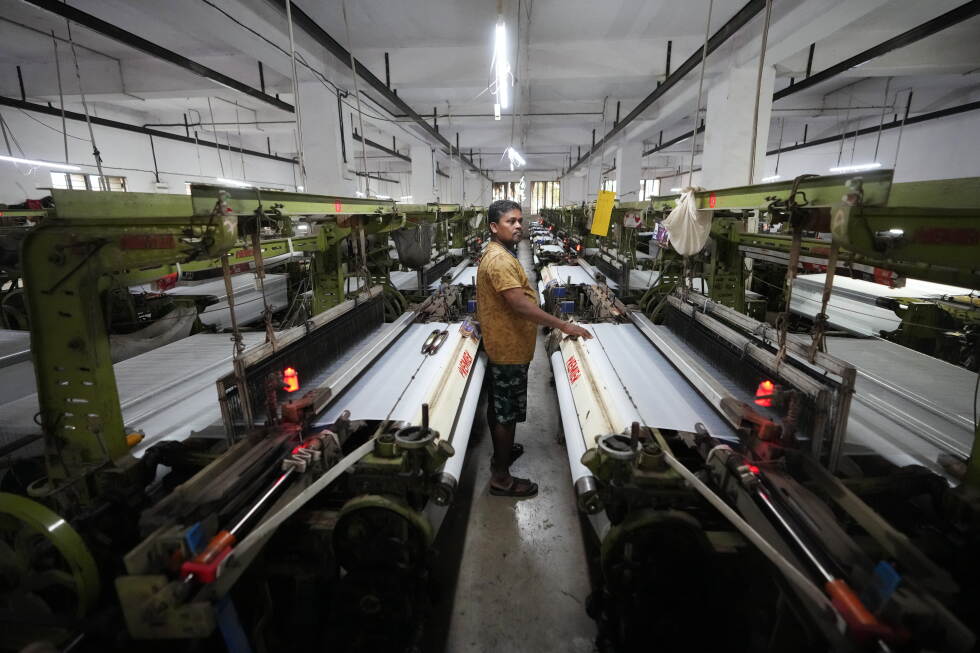
    China’s agricultural sector has maintained consistent growth, with steady production expansion and increasing rural household incomes logged in the first three months of 2026, according to official data released by government authorities.

  • US still delivering weapons to Ukraine, Zelenskyy says, as Prince Harry visits Kyiv

    US still delivering weapons to Ukraine, Zelenskyy says, as Prince Harry visits Kyiv

    As the Russian full-scale invasion of Ukraine enters its third year, Kyiv has ramped up long-range drone and missile attacks deep inside Russian territory, targeting critical energy and industrial infrastructure in a coordinated campaign to erode Moscow’s war funding, Ukrainian President Volodymyr Zelenskyy confirmed Thursday. The update came as Britain’s Prince Harry made a surprise third visit to Kyiv in 12 months, using a high-profile appearance to praise Ukraine’s enduring unity and resilience against Russian aggression.

    In voice messages shared with reporters Thursday, Zelenskyy stressed that U.S. military aid deliveries have not been disrupted by the outbreak of conflict in the Middle East, despite widespread international concern that shifting global attention could divert weapons support from Ukraine. “Of course, we are hitting what is painful for Russia, and it is very painful,” Zelenskyy said, estimating that Ukrainian strikes have caused tens of billions of dollars in Russian losses to date. While independent verification of Zelenskyy’s claim is not available, Russian officials have previously confirmed that Ukrainian attacks have reached infrastructure more than 1,000 kilometers (600 miles) inside Russia’s borders, matching the Ukrainian leader’s account of deep strikes.

    Unlike earlier phases of the war that relied heavily on Western-supplied weapons, Ukraine is now combining Western defense support with domestically developed drone and missile technology to carry out these deep attacks. Ukrainian forces currently use U.S.-made Patriot air defense systems to intercept Russian strikes against Ukraine’s own cities and energy networks, while domestic drone capabilities enable long-range hits on Russian infrastructure. Zelenskyy framed the recent escalation of strikes as a direct response to ongoing Russian attacks on Ukrainian civilian and energy targets: “We see that the Russians do not want to stop — they are hitting our energy sector and our people. We will respond.”

    Just hours before Prince Harry arrived in Kyiv, a Russian drone strike on the central Ukrainian city of Dnipro left three civilians dead and 10 more wounded, regional military administration head Oleksandr Hanzha confirmed via the Telegram messaging app. The strike damaged a 13-story residential apartment building and a nearby administrative building, adding to the mounting civilian death toll from months of consistent Russian attacks across Ukrainian territory. On the Russian side of the front line, the Russian Defense Ministry reported that its air defense systems intercepted 154 Ukrainian drones over Russian regions, the Russian-annexed Crimea Peninsula, and the Azov and Black Seas Thursday.

    Prince Harry, the Duke of Sussex, entered Kyiv via an overnight train journey from Poland — the only secure route for civilian travel into the Ukrainian capital — for his third visit to the country in a year. Speaking at a Kyiv security conference, he offered renewed public praise for Ukraine’s resistance against Russia’s much larger invading force. “Ukrainians have demonstrated strength not just in bravery and capability, but in unity, in trust,” Harry said. “Ukraine continues to hold together, and hold together you must.” It remains unclear whether Harry met with Zelenskyy, who was scheduled to travel to Cyprus for a European Union leaders’ summit Thursday evening.

    The surge in Ukrainian long-range strikes has focused heavily on Russia’s oil and energy sector, which is the largest single source of revenue for the Russian federal budget that funds its invasion. For the second consecutive night, Ukraine targeted infrastructure in Russia’s Samara region, located roughly 600 miles east of the Ukrainian border. A drone strike on an industrial facility in the Samara city of Novokuybyshevsk killed one civilian, and falling drone debris damaged the roof of a residential building in the regional capital of Samara, wounding multiple people — one of whom was hospitalized, regional governor Vyacheslav Fedorishchev confirmed. Unconfirmed media reports identify the targeted facility as a petrochemical plant owned by Russian state oil giant Rosneft.

    Andriy Kovalenko, head of Ukraine’s Center for Countering Disinformation, confirmed that Ukrainian forces hit multiple key energy sites across Samara and Russia’s Nizhegorodskaya region this week, including a major oil pipeline that carries crude from Western Siberia to Tatarstan. A senior anonymous official from Ukraine’s Security Service (SBU) also claimed responsibility for a nighttime drone attack on the Gorky oil pumping station in Nizhny Novgorod region, located east of Moscow. The strike damaged three large oil storage tanks and ignited a massive blaze, the official said, noting that the attack disrupts main oil pipeline operations, reduces refining output, and drives up transportation costs for Russian energy firms — all of which cut into the budget revenues Russia uses to fund its war.

    As of Thursday, firefighters in the Black Sea port of Tuapse, Russia were working their third consecutive day to extinguish a large blaze ignited by a Ukrainian drone attack earlier this week. The Krasnodar regional emergency headquarters confirmed that toxic materials from the fire have fallen with rain, covering multiple residential districts in a layer of black soot. Air concentrations of harmful chemicals from the blaze have exceeded legally allowed safety limits, prompting officials to urge local residents to remain indoors to avoid exposure.

  • Authorities expose 10 ecological violation cases, urge stricter enforcement

    Authorities expose 10 ecological violation cases, urge stricter enforcement

    On April 23, 2026, China’s two leading national regulatory bodies for natural resources and forestry released 10 representative cases of ecological and land use violations detected across the country in the first quarter of 2026, issuing a clear call for heightened regulatory accountability and stricter adherence to national environmental and land use boundaries.

    The enforcement action highlights a nationwide crackdown on activity that encroaches on protected ecological zones and critical farmland, with confirmed violations spanning 10 provincial-level administrative regions across northern, southern, western and eastern China. These regions include the Inner Mongolia Autonomous Region, Xinjiang Uygur Autonomous Region, Heilongjiang Province, Jiangsu Province, Jiangxi Province, Guangdong Province, Guizhou Province, Gansu Province, Qinghai Province, and Chongqing Municipality. The offenses cited across the 10 cases cover a range of illegal activities: unauthorized land occupation, deliberate destruction of permanent basic farmland, unlicensed mineral extraction, and irreversible damage to forest and grassland ecosystems.

    One high-profile case cited by regulators is located in Tongliao, Inner Mongolia. Satellite imagery captured in February 2026 revealed large stacks of wind power generation equipment stored illegally on protected farmland. Investigations trace the violation back to November 2023, when the Horqin Industrial Park Management Committee signed a land lease agreement with a local logistics firm. The contract allowed the company to occupy more than 13.3 hectares of farmland for equipment storage and logistics operations without securing mandatory land use approval from national regulatory authorities. Regulators confirmed that long-term heavy compaction from stacked equipment destroyed the arable plow layer, rendering the land unsuitable for future agricultural production.

    In Xuzhou, Jiangsu Province, continuous satellite monitoring from September 2022 through December 2025 tracked a steady transformation of vegetated farmland to bare, cleared ground. Authorities found that beginning in October 2023, a local individual identified only by the surname Tang illegally occupied 26.5 hectares of permanent basic farmland to cultivate and harvest decorative turf for commercial sale. The activity caused permanent, severe damage to the land’s arable plow layer.

    A third notable case unfolded in Zhuhai, Guangdong Province, where a local aquaculture technology company seized 2.5 hectares of state-owned agricultural land without official approval, nearly 40 percent of which is classified as protected farmland. Between October 2024 and February 2025, the company constructed a range of non-agricultural facilities on the site, including a public parking lot, an off-road vehicle training track, outdoor recreational event spaces, and a full-service commercial restaurant.

    Following the public release of the cases, the Ministry of Natural Resources and the National Forestry and Grassland Administration issued a formal directive to local governments and regulatory departments across all levels. The agencies urged local officials to draw key enforcement lessons from the exposed violations, strengthen on-the-ground monitoring, and strictly enforce three critical national development boundaries: the permanent farmland protection red line, the ecological conservation red line, and the urban development boundary. All economic and infrastructure development activities, the directive emphasizes, must operate fully within the bounds of existing national environmental and land use laws and regulations. The two national bodies added that they will maintain continuous, long-term monitoring of rectification efforts for all 10 exposed violations, ensuring all illegal activity is remediated and responsible parties are held accountable.

  • Shenyang students read aloud to honor returning remains of martyrs

    Shenyang students read aloud to honor returning remains of martyrs

    In a moving tribute that blends literary commemoration with national remembrance, multiple primary and secondary schools across Shenyang, Liaoning Province, have organized coordinated read-aloud events to honor the recently returned remains of Chinese martyrs who fell during the War to Resist US Aggression and Aid Korea (1950-1953). The events were carefully scheduled to align with both the 31st iteration of World Book and Copyright Day, observed annually on April 23, and the official burial ceremony for the 13th batch of fallen soldiers’ remains being laid to rest in Chinese soil.

    Students taking part in the activities centered their recitations on *The Most Lovable People*, a well-known textbook article that chronicles the bravery, sacrifice, and unwavering dedication of Chinese volunteer soldiers who fought in the 1950-1953 conflict. One of the participating institutions, Northeast Yucai School, documented the event with photos showing students gathered to share the text, their voices carrying tributes to the generations of servicemembers who gave their lives for national security and peace.

    The dual-purpose event organizers designed the gathering to achieve two meaningful goals: to encourage young people to engage with meaningful literary works as part of World Book Day celebrations, and to instill a deeper sense of national memory and respect for the sacrifices made by early-generation national heroes. By connecting classroom learning to a real national moment of commemoration, the activities helped turn a routine literary celebration into a profound lesson on patriotism for participating students. The event, updated on April 23 2026, marks one of many annual tributes held as China continues to repatriate the remains of fallen Korean War servicemembers from the Democratic People’s Republic of Korea, holding formal burial ceremonies to honor their service decades after the end of the conflict.

  • ‘Storage Wars’ star Darrell Sheets dies age 67 – reports

    ‘Storage Wars’ star Darrell Sheets dies age 67 – reports

    Beloved reality television personality Darrell Sheets, widely recognized for his decades-long run on the hit A&E series *Storage Wars*, has passed away at the age of 67, law enforcement officials have confirmed.

    The Lake Havasu City Police Department in Arizona confirmed that officers responded to a 911 call at a local residence at 2 a.m. local time on April 22, discovering a body that was later formally identified as Sheets. In an official statement released Wednesday, and obtained by entertainment industry outlet Variety, police reported that Sheets appeared to have died from a self-inflicted gunshot wound to the head.

    Nicknamed “the Gambler” for his willingness to place big bets on unseen storage units, Sheets was a core cast member of *Storage Wars* from the show’s debut in 2010 through his exit in 2023. The popular reality series follows a group of professional buyers who bid on abandoned self-storage units at auction, without being allowed to inspect the contents inside before placing their offers. Sheets often appeared on the series alongside his son Brandon, with the pair building a fan-favorite dynamic over the show’s run.

    Following news of Sheets’s death, his long-time *Storage Wars* co-star and on-screen competitor Rene Nezhoda shared an emotional public tribute to the late actor on social media platform X. Nezhoda pushed back on the common fan assumption that the two men harbored real-life animosity from their on-screen competitions, noting “Deep down me and Darrell were friends, we talked every now and then.” He also praised Sheets’s relentless work ethic and deep devotion to his family, calling him one of the most family-focused people he had ever met.

    In his tribute, Nezhoda also revealed that Sheets had been the target of persistent online harassment in the weeks leading up to his death. “He had a guy really, really, tormenting him lately on cyberbullying,” Nezhoda said, addressing viewers who forget that reality TV stars are private people with real emotional vulnerabilities. “Just because you watch us on television doesn’t mean you know us. It doesn’t mean you know what we’re about. Also, it doesn’t entitle you to bully somebody … you shouldn’t cyberbully at all.” Nezhoda has called on law enforcement to investigate the alleged harassment as part of the ongoing probe into Sheets’s death.

    As of Wednesday, police confirmed that Sheets’s next of kin have been notified of his passing, and the death remains under active investigation. For anyone experiencing thoughts of self-harm or emotional distress, support services are available through global and regional mental health organizations. The BBC Action Line maintains a public directory of support resources for those in crisis.

  • ‘Sovereignty’ bill seeking to deter foreign influence has drawn widespread concern in Uganda

    ‘Sovereignty’ bill seeking to deter foreign influence has drawn widespread concern in Uganda

    In Kampala, Uganda, a proposed piece of government legislation framed as a defense against foreign political interference is facing fierce, cross-sector backlash over its sweeping, broad definitions of ‘foreign agents’ and the widespread harm critics warn it could inflict on civic and economic activity across the country.

    The draft law, officially dubbed the Protection of Sovereignty Bill, is currently advancing through parliamentary review, with a final vote potentially coming within days. Despite mounting condemnation from a diverse coalition including political opposition groups, banking industry leaders, business associations, civil society organizations and ordinary Ugandans who rely on cross-border remittances, the legislation continues to move forward.

    Critics across the political and social spectrum argue the bill’s true purpose is not to protect national sovereignty, but to stifle political opposition and crack down on independent civic groups, which frequently rely on international grants to carry out work focused on governance accountability and human rights promotion. For observers, the bill marks a clear escalation of long-growing authoritarian repression under long-ruling President Yoweri Museveni.

    Prominent Ugandan political analyst Charles Onyango-Obbo described the legislation’s provisions as unprecedented in their scope and potential impact. ‘They redefine who counts as foreign,’ he explained. ‘This law extends state control beyond political spheres into nearly every corner of daily economic and social life.’

    Unlike traditional regulations that only target non-citizens, the bill’s definition of a foreign actor includes any Ugandan citizen residing outside the country, along with all companies and organizations not formally domiciled in Uganda. This broad classification catches everyone from international students and migrant workers to diaspora businesspeople and diplomatic staff living abroad. If enacted in its current form, all Ugandans falling under the foreign agent definition would be required to complete official registration to avoid processing delays for banking transactions, with banks facing heavy penalties if they fail to comply with the new rules.

    Ugandan authorities have defended the legislation, arguing it is necessary to safeguard national social cohesion and protect the country’s internal affairs from outside interference. But opponents counter that the bill’s reach is so broad that it would impact nearly every Ugandan, whether living at home or in the diaspora.

    Isaac Ssemakadde, president of the Uganda Law Society, rejected the government’s framing in an official statement. ‘This bill does not protect sovereignty,’ he said. ‘It destroys the very sovereignty — the people’s right to self-determination — that belongs to all Ugandans.’

    Among the key controversial provisions is a cap on external funding for any group labeled a foreign agent: organizations would be banned from receiving more than 400 million Ugandan shillings (roughly $110,000) in external grants or funding over a 12-month period without explicit approval from the interior minister.

    The Uganda Bankers’ Association raised alarm about the legislation’s potential economic fallout in a formal letter sent to the attorney general’s office. The group warned the bill would undermine the central bank’s exclusive regulatory authority, erode foreign investor confidence, and create an unpredictable operating environment for all commercial financial institutions. Because most Ugandan commercial banks count foreign shareholders and rely on offshore borrowing, routine banking activity could easily trigger the foreign agent classification, the association noted, causing compliance and reputational risks to spike overnight.

    The introduction of the bill comes just months after Museveni, 81, secured his seventh consecutive term in office in a disputed January election that has been widely rejected by the opposition as fraudulent. Museveni, who has held uninterrupted power since 1986, has a long history of labeling his political opponents as foreign agents undermining national interests. His main rival in the 2021 election, opposition leader Bobi Wine, was repeatedly accused by Museveni of being an unpatriotic foreign proxy.

    Wine, who went into hiding immediately after the election and now lives in temporary exile in the United States, has repeatedly denied these accusations. He says Museveni must be held accountable for the widespread abuses that have occurred during his decades-long rule. Wine, who draws broad support from young urban Ugandans, officially garnered 24.7% of the vote, a result he has dismissed as fabricated.

    Sarah Bireete, head of the Center for Constitutional Governance, a leading Ugandan civic group, criticized the government for hiding behind nationalist rhetoric to target civil society. ‘If you want to regulate and close down civil society, just amend the existing NGO Act,’ she told reporters. ‘If you want to eliminate civil society in Uganda entirely, go amend the constitution and say openly that there will be no civil society here. But hiding behind the banner of protecting sovereignty to crack down on independent groups? If that’s your goal, why not just change the existing laws that govern civil society directly?’

  • US Senate clears key hurdle in bid to fund two immigration agencies

    US Senate clears key hurdle in bid to fund two immigration agencies

    A months-long partial shutdown of the U.S. Department of Homeland Security moved one step closer to resolution early Thursday, after Senate Republicans pushed through a procedural vote to advance funding for two of the department’s core immigration enforcement agencies without Democratic support. The late-night session stretched until roughly 3:30 a.m. local time, dragged out by a series of Democratic amendments in a tactic commonly referred to as “vote-a-rama,” and ultimately passed by a narrow 50-48 margin.

    Republicans opted to use a special legislative rule that allowed the spending measure to pass with a simple majority, after weeks of negotiations with Democrats collapsed over Democratic demands for agency reforms. Two Senate Republicans who have frequently broken with former President Donald Trump’s policy positions joined all voting Democrats in opposing the measure, while one Democrat and one Republican abstained from the vote entirely.

    The approved measure would allocate funding for U.S. Immigration and Customs Enforcement (ICE) and U.S. Customs and Border Protection (CBP) through the end of Donald Trump’s presidential term. A separate bipartisan bill that would fund the remainder of DHS, the parent department of both agencies, previously passed the Senate, but both pieces of legislation now need approval from the U.S. House of Representatives before they can be sent to the president’s desk for signature. It remains unclear when House lawmakers will bring either measure up for a vote, as House Republicans have often diverged from their Senate counterparts on immigration and spending policy in recent months.

    Senate Majority Whip John Thune, the chamber’s top Republican, praised the outcome of Thursday’s vote but acknowledged that the legislative process is far from over. “We still have a multi-step process ahead of us,” Thune told reporters Thursday morning.

    The partial government shutdown, which has left DHS without formal appropriations since February 14, is the longest partial shutdown in U.S. history. The current impasse grew out of a Democratic refusal to approve new funding for ICE and CBP until the agencies adopt major reforms, a response to two fatal shootings of Minneapolis residents Alex Pretti and Renee Good by agency operatives during a January immigration raid in Minnesota.

    As the standoff stretched into March, the funding gap began to directly impact everyday Americans: widespread staff shortages among DHS airport security officers led to travel chaos across the country, with security queues stretching from terminal checkpoints all the way to airport parking lots. Hundreds of officers resigned or skipped shifts after going weeks without pay amid the shutdown. Trump temporarily alleviated the crisis by signing an executive order that redirected existing departmental funds to pay security personnel, easing immediate pressure on congressional negotiators. But that pressure has rapidly built back up in recent weeks.

    Homeland Security Secretary Mark Mullin warned this week in an interview with Fox News that the department will exhaust all available emergency funding to cover employee salaries by the first week of May. “I’ve got one payroll left and there is no more emergency funds, so the president can’t do another executive order because there’s no more money there,” Mullin said. Trump has set a firm deadline of June 1 for a full budget package to reach his desk for signature, leaving congressional negotiators with a narrow window to resolve the months-long standoff.