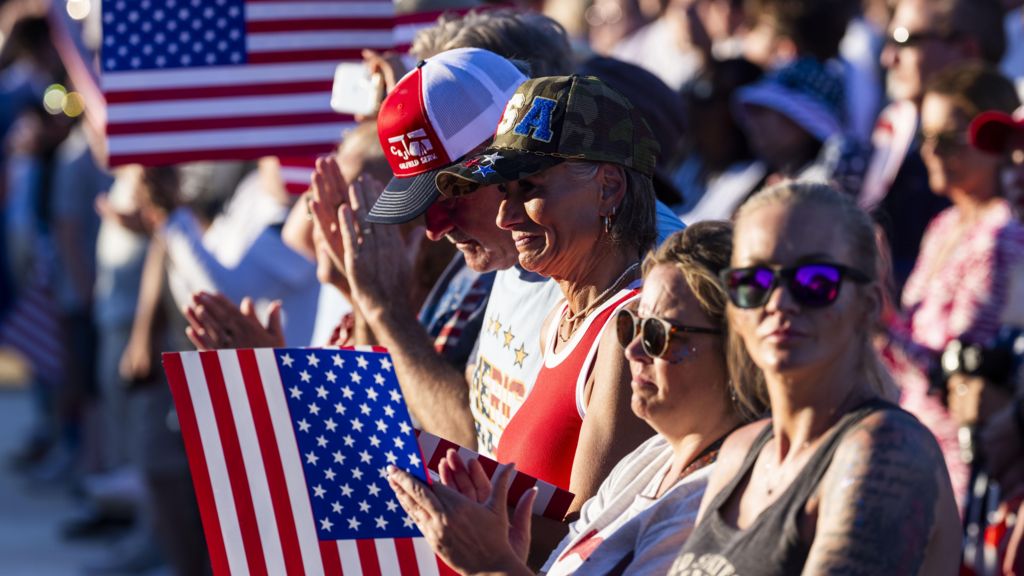
Thousands of attendees have converged on Washington D.C.’s National Mall for the Great American State Fair, a public gathering organized by former President Donald Trump as part of a broader slate of events commemorating the 250th anniversary of the United States’ independence. The high-profile gathering adds to a series of public activities being rolled out by Trump, tying national patriotic celebrations to his ongoing political engagement ahead of a critical election cycle. Located at the heart of the U.S. capital, the National Mall has long served as a venue for large-scale national celebrations and political gatherings, making it a symbolic choice for the event marking the country’s historic milestone. Organizers have framed the fair as a tribute to American heritage, drawing crowds from across the country who gathered to mark the semiquincentennial in what has become a politically charged patriotic event. The Great American State Fair stands as one of the most visible events in the lineup of celebrations planned by Trump, which are designed to highlight national identity and rally supporters around themes of American exceptionalism. As the U.S. marks 250 years since the Declaration of Independence, this gathering illustrates how major national anniversaries have become intertwined with contemporary political activity in the country.
作者: admin
-
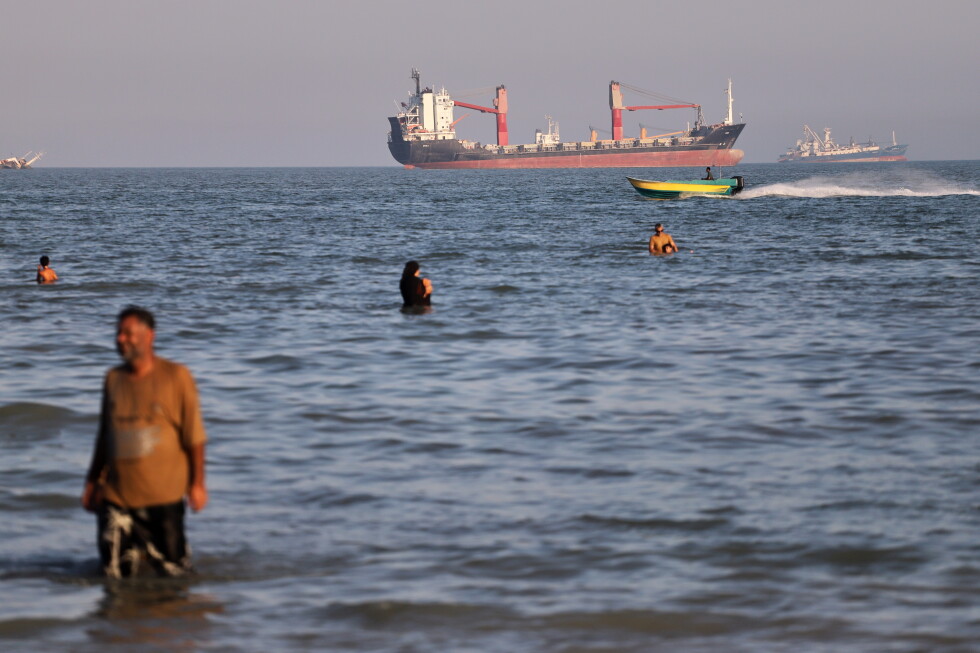
British military says a cargo ship was hit while moving through the Strait of Hormuz
In a fresh escalation of tensions around one of the world’s most critical energy chokepoints, a projectile struck an unidentified cargo vessel traveling through a UN-endorsed alternative shipping corridor in the Strait of Hormuz on Thursday, British military officials confirmed. The attack came just hours after Iran’s Islamic Revolutionary Guard Corps issued explicit threats barring vessels from using the unapproved route, leaving the international community scrambling to assess responsibility and the broader implications for global energy markets.
The UK Maritime Trade Operations, which monitors regional shipping security, reported that while the targeted vessel suffered structural damage, there were no reported casualties and no leakage of hazardous materials that would cause environmental damage off the Omani coast. Officials have not yet confirmed the identity of the ship’s operator or the source of the projectile, leaving key details of the incident unconfirmed as of Thursday evening.
The contested alternative shipping corridor was organized by Oman and the International Maritime Organization (IMO), a United Nations body, to free hundreds of commercial vessels trapped in the Persian Gulf after Iran laid naval mines in the strait’s traditional central shipping lane. Iran placed the mines in the central corridor following a cross-border strike by the U.S. and Israel on Iranian assets on February 28, a move that cut daily shipping transits from a pre-conflict average of more than 130 to fewer than 40 at the lowest point of the crisis. Before the conflict, the central route carried roughly 20% of the world’s daily supply of oil and natural gas, giving Iran significant leverage over global energy markets amid ongoing negotiations with Washington.
Opening the new coastal corridor along the UAE and Omani coastlines is designed to reduce this leverage and ease mounting pressure on the fragile global economy, a core goal of the ongoing interim peace talks between the U.S. and Iran. Under a memorandum of understanding signed last week, the two sides have 60 days to hammer out final details of a tentative agreement covering everything from free navigation through the strait to the future of Iran’s stockpile of highly enriched uranium.
U.S. Secretary of State Marco Rubio, who is currently traveling through the Gulf region to reassure regional American allies of Washington’s commitment to security, reaffirmed the U.S. commitment to protecting the new corridor on Thursday. “If that [free transit] stops, then we’re going to have a problem,” Rubio told reporters ahead of meetings with Gulf Cooperation Council foreign ministers in Bahrain, the home of the U.S. Navy’s 5th Fleet. “There is no part in this deal that’s undertaken that in any way undermines the security, the stability or the prosperity of any of our partners in the Gulf region,” he added. Bahrain’s Foreign Minister Abdullatif bin Rashid al-Zayani thanked the U.S. for its continued support, noting “today we see a glimmer of hope for our region” while stressing that “it was critically important that Iran adheres to its obligations.”
Shipping data from recent days shows a steady increase in traffic through the new corridor, even as volumes remain well below pre-conflict levels. Lloyd’s List Intelligence reported that 125 vessels crossed the strait last week, up from just 33 the week prior, while S&P Global recorded 78 transits on Wednesday alone — the highest daily number since the outbreak of hostilities, but still far off the prewar average. “Opportunistic operators — and there are many of them — emboldened by the lower transit risk, or at least the perceived lower transit risk, have begun chasing the backlog of trapped cargoes,” explained Richard Meade, editor-in-chief of Lloyd’s List. Global shipping giant Maersk confirmed Thursday that one of its container vessels, the Maersk Baltimore, and a second chartered ship had successfully exited the strait via the new route that morning.
Iran has repeatedly rejected the new corridor as unauthorized, with the Revolutionary Guard’s naval branch issuing a fresh warning Thursday carried by state-run IRNA news agency. “The new route was established without notice or coordination with Iran, calling it “unacceptable and completely dangerous,” the statement read. “The only authorized route for passing through the Strait of Hormuz is the one declared by the Islamic Republic of Iran. Vessel traffic outside these routes is extremely dangerous and prohibited. Violators will be dealt with.” On Wednesday, private security firm Ambrey reported that an Iranian Guards sailor radioed a warning to one passing tanker, saying: “You are in range of my missiles and maybe [I] fire on you.”
Despite the attack, global oil markets reacted with relative calm Thursday, with benchmark crude prices briefly dipping below $73 per barrel — the last pre-conflict price level — a signal that investors believe the broader diplomatic process remains on track. Still, the strike underscores the fragility of the tentative detente, which is already complicated by public sparring between U.S. and Iranian leaders, who have traded threats and claimed opposing concessions that the other side denies.
Tensions are also flaring on a second front in Lebanon, where a fragile ceasefire between Israel and Iranian-backed Hezbollah militants has begun to unravel in recent days. Israel confirmed that it targeted Hezbollah militants in southern Lebanon this week, with Lebanese health officials reporting three civilian deaths in a Thursday strike on a vehicle. Hezbollah called the attack a clear violation of the ceasefire but has not yet launched retaliatory strikes, while the Israeli military had no immediate comment on the incident. The strike came as Lebanese and Israeli delegations visited Washington to discuss a proposed phased Israeli troop withdrawal from southern Lebanon. Israel’s military added that a reservist soldier was killed and another wounded in southern Lebanon on Thursday. Since the latest round of fighting began in March, more than 4,000 Lebanese have been killed in Israeli strikes, while 37 Israeli soldiers have died in combat in Lebanon or northern Israel.
This report contains contributions from Lee in Manama, Bahrain, David McHugh in Frankfurt, Germany, and Julia Frankel in Jerusalem, and is aggregated from original Associated Press reporting.
-

‘He’s always welcome’: How a young Irish boxer befriended a rap legend
For rising Irish boxing star Aaron McKenna, the path to his first world title shot began with an unexpected ringside spectator that would turn into an unlikely cross-industry friendship. Now, on the cusp of the biggest fight of his career, he is leaving the door open for his famous fan to join him in Ireland.
McKenna and his older brother Stephen cut their teeth as young professional boxers during early training stints in Los Angeles, where daily grueling sparring sessions were the norm. The pair, both naturally competitive, pushed each other to the limit in every round, turning their routine training into high-stakes contests. That dynamic shifted unexpectedly in 2018, when global rap superstar Kendrick Lamar wandered into the gym after wrapping his own workout just as the McKenna brothers stepped into the ring for eight rounds of technical sparring.
“Me and Stephen looked at each other straight away,” Aaron McKenna recalled in recent interviews. “We’re both super competitive, so having someone of his stature watching just made us turn it up another notch.” Lamar stayed through the full eight rounds, and after the session ended, he struck up a conversation with the two young Irish fighters. The pair hit it off immediately, with McKenna noting that the Grammy-winning rapper was far from the arrogant celebrity many might expect.
“He’s a real nice fellow, really down to earth, no arrogance or nothing,” McKenna said. The run-in turned into repeated encounters, with McKenna, who was living in California full time at the time, crossing paths with Lamar regularly at the gym.
That friendship soon extended beyond the four walls of the training facility. When McKenna booked a pro bout at the Fantasy Springs Casino, more than four hours outside of Los Angeles, Lamar made the drive to attend. Just moments before McKenna was set to walk to the ring from the small Irish village of Smithborough, County Monaghan, Lamar knocked on the door of his dressing room to wish him luck.
“For someone of his magnitude to come in and wish me luck just shows how good of a person he is,” McKenna said. That night, McKenna delivered a standout performance, scoring a second-round knockout to extend his early professional winning streak. The two stayed in contact after the fight, until the Covid-19 pandemic forced McKenna and his family to return to his native Ireland in 2020.
In the years since, Lamar’s profile has only soared higher. In 2025, he took home five Grammy Awards for his viral hit *Not Like Us* before headlining the Super Bowl halftime show, cementing his status as one of the biggest music stars on the planet. Meanwhile, McKenna has steadily climbed the professional boxing ranks, working his way to a long-awaited world title opportunity.
When Lamar first watched him spar in that Los Angeles gym, McKenna was just a teen with a handful of pro fights under his belt. Now 26, he is set to step into the ring in Dublin this August to challenge Italian fighter Etinosa Oliha for the vacant IBF middleweight world title, the biggest bout of his young career.
“I’m starting to come into my prime years,” McKenna told BBC News NI. “This is where my career has really taken off. My next fight is for the world title, so I’m hitting the big stage now.”
McKenna is currently putting the final touches on his training camp at the McKenna family’s own gym in Monaghan, with top sparring partners flying in from the United Kingdom and the United States to prepare him for the title clash. When asked if any special guests are expected, the Irish contender extended an open invitation to his old friend.
“Kendrick is always welcome,” he said. “An open invitation anytime. Maybe he’ll come to the fight.”
-
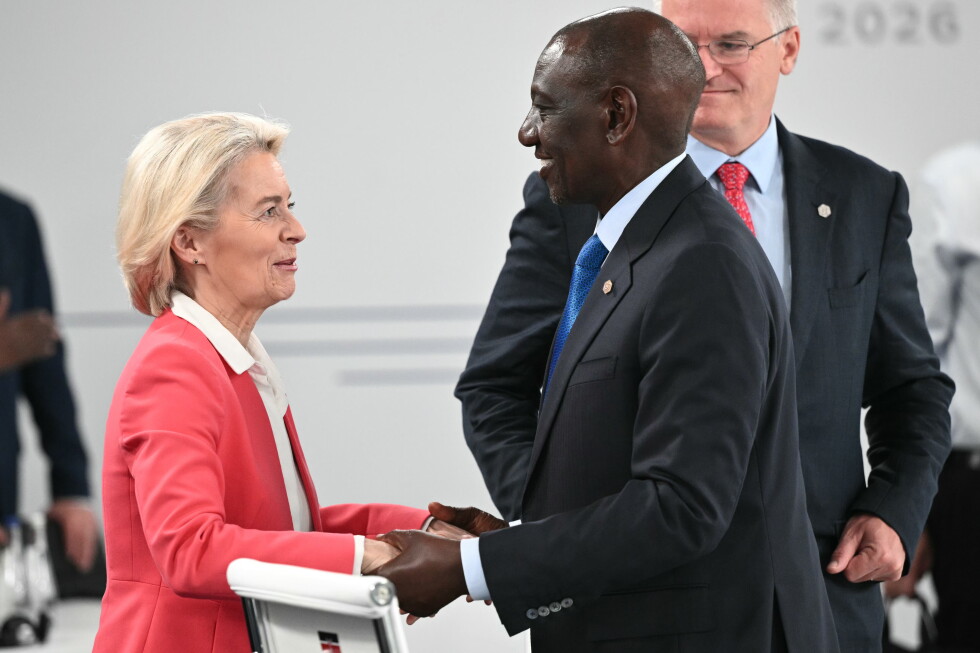
Kenyan police block roads around the country’s capital ahead of anti-government protest
NAIROBI, Kenya – Two years after a wave of deadly anti-government unrest left at least 60 people dead and saw protesters storm Kenya’s national parliament, authorities have sealed off the capital Nairobi ahead of a planned demonstration demanding accountability and fair compensation for victims’ families.
The June 2024 protests erupted when thousands of young Kenyans marched on parliament to push legislators to reject a controversial finance bill that would have raised new taxes amid a sustained cost-of-living crisis. Security forces responded with live fire outside the legislative building, killing dozens of unarmed demonstrators. Today, families of those killed still say they are waiting for justice, and are criticizing the national government for rampant delays and a lack of transparency in its promised victim compensation program.
Last week, Kenyan President William Ruto sought to balance competing priorities, stating that demonstrators would be allowed to exercise their constitutional right to protest, but warning that the government would not allow action that disrupts daily life, including children’s access to school and workers’ ability to reach their jobs. He explicitly cautioned against any attempt to “shut down the country.” Ruto also framed the ongoing compensation initiative as a formal acknowledgment by the state that harm was done to civilians, but clarified it does not constitute a legal admission of government guilt, and should not be interpreted as a reward for unrest.
A day before the scheduled protest, Interior Minister Kipchumba Murkomen added that police would provide a formal escort for peaceful demonstrators, but pledged to block any criminal elements that attempt to infiltrate the march to damage or raid private businesses. By early Thursday morning, those security measures had transformed the capital: police had erected concrete and vehicle roadblocks on every major highway leading into Nairobi, cutting off vehicle access to the city center. Parliament buildings remained heavily barricaded, and most private businesses across the capital chose to close their doors for the day ahead of the demonstration.
Opposition political leaders have publicly thrown their support behind the protest, joining calls for full transparency in how the government allocates compensation to families of victims of human rights abuses committed during the 2024 unrest. For many families, the frustration runs deep: two years on, most have yet to receive any form of payout, even after submitting all required documentation to the Kenya Human Rights Commission.
Edith Wanjiku, a mother whose 19-year-old son Ibrahim Kamau was killed by two gunshot wounds to the neck during the 2024 unrest, described the devastating emotional toll the loss and ongoing delay have had on her family. “We’ve really suffered emotionally for the last two years,” Wanjiku told the Associated Press. She confirmed that her family completed all required paperwork months ago, but has received nothing from the compensation fund. “Only two out of 10 families whose children were shot that day near Parliament have been compensated and we are wondering what criteria the government is using,” she said.
-
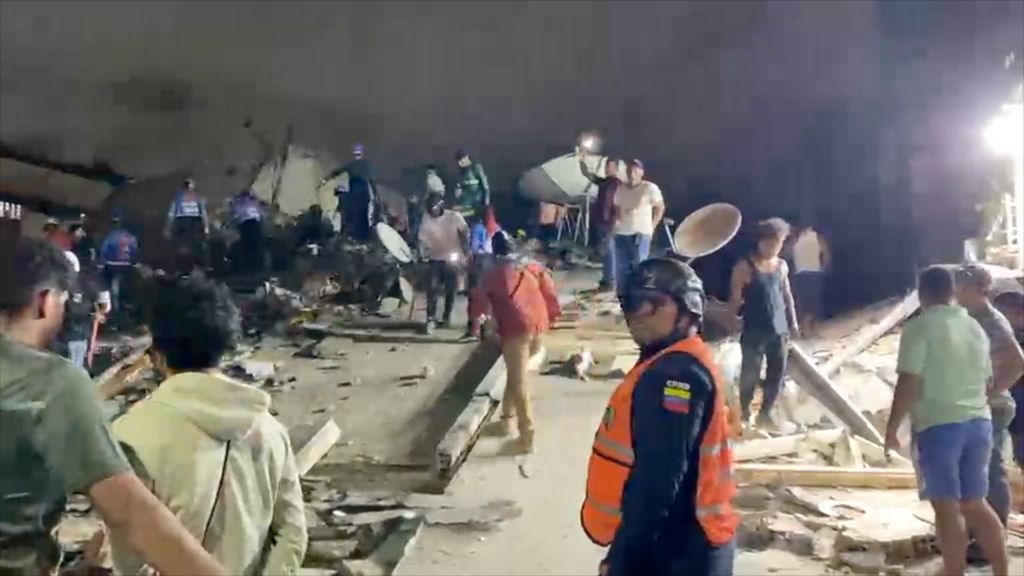
Rescuers search through rubble for Venezuela earthquake survivors
A devastating sequence of back-to-back earthquakes has rocked Venezuela’s capital Caracas, leaving a crumpled collapsed building in its wake and triggering urgent large-scale rescue operations. Emergency response teams have deployed to the disaster site, where crews are methodically sifting through piles of concrete and twisted metal debris in the hopes of locating and pulling trapped survivors to safety.
The twin seismic events caught residents off guard, and the collapse of the structure has sparked fears that multiple people may still be trapped beneath the rubble. Local emergency management authorities have not yet released updated figures on casualties or the full scope of infrastructural damage across the city, but the immediate activation of search-and-rescue protocols underscores the severity of the seismic event.
Rescue teams are working around the clock, utilizing specialized equipment to detect signs of life beneath the wreckage. The disaster has prompted calls for coordination between local and national response agencies, as well as offers of mutual aid from neighboring regions that stand ready to support relief efforts if needed. As operations continue, rescue workers remain focused on their primary mission: finding any survivors who may still be clinging to life in the ruins of the collapsed building.
-
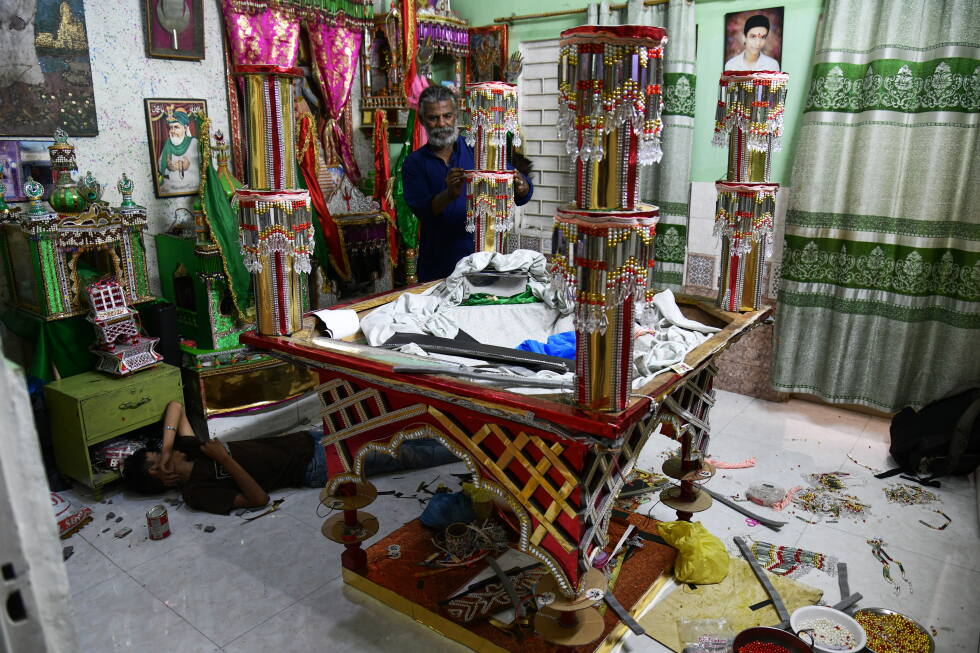
Pakistani Hindus join Shiite Muslims in Muharram observances honoring Imam Hussein
In the bustling coastal metropolis of Karachi, Pakistan, a remarkable interfaith tradition unfolds each year during the Islamic holy month of Muharram. For Raju Rathore, a lifelong Karachi resident whose parents resettled from India’s Gujarat region following the 1947 Partition of India, his Hindu faith and deep devotion to Imam Hussein coexist seamlessly, a legacy passed down through three generations of his family.
Muharram, and particularly the 10th day known as Ashoura, is most widely recognized as a sacred period of mourning for Shiite Muslims, who mark the 7th-century martyrdom of Prophet Muhammad’s grandson Hussein at the Battle of Karbala, in what is now modern-day Iraq. Hussein’s death stands as the foundational event that split Islam into the Sunni and Shiite branches, and millions of believers across the globe commemorate the tragedy each year. Yet across South Asia, a little-known cross-cultural practice has endured for centuries: participation by Hindu communities in Muharram rituals.
For Rathore, this devotion traces back to a promise his mother made decades ago. After years of struggling to conceive, she prayed at the shrine of Masoom Shah Bukhari, vowing that if she were blessed with a child, her offspring would honor Hussein’s martyrdom by crafting tazias — intricate, temporary replicas of Hussein’s mausoleum that are carried in large public processions during Muharram. Today, at 52 years old, Rathore has carried on that vow for 45 years, handcrafting detailed tazias from paper, cardboard, glass and other materials at his own expense. His family collects materials throughout the year in preparation for Ashoura, and now his own son has stepped in to learn the craft, ensuring the tradition will outlive him. “This is our passion,” Rathore explained. “Our devotion to Imam Hussein is such that even giving our lives would feel insufficient. As long as I have the strength to continue, I will keep making them.”
Historical records confirm that cross-communal participation in Muharram has deep roots across South Asia, with groups such as the Hussaini Brahmins developing layered religious traditions that blend Hindu and Shiite Islamic practices. Justin Jones, a religious studies professor at the University of Oxford, notes that one key driving force behind this widespread participation was the political history of the region. For centuries, many ruling dynasties across South Asia were Shiite, and these ruling houses publicly sponsored Muharram processions and commemorative events, transforming what began as a sect-specific religious observance into a large, inclusive public gathering that attracted participants from all faith backgrounds.
Over generations, these observances became woven into the civic and cultural fabric of many South Asian communities. Some Hindu communities contributed as musicians in processions, while others like Rathore’s family took on the role of crafting tazias. While Jones notes that these shared interfaith traditions have become less common over the past century, as religious communities have increasingly separated their ritual practices, the custom holds strong in pockets of the region, including Karachi.
Pakistan’s 2023 national census counts nearly 3.9 million Hindu residents, making Hinduism the country’s largest religious minority. While rights groups such as Minority Rights Group have documented widespread violations of religious freedom for Pakistani Hindus, Rathore says he has never faced barriers to continuing his family’s tradition. “Yes, I am Hindu, but this is not about religion,” he said. “Many of my fellow Hindus also hold Imam Hussein in great respect.”
Rathore and other Hindu participants in Karachi gather at Shiite congregation halls during Muharram, where they join in prayers and traditional mourning rituals including chest-beating before joining the public processions. Bharat Kumar, another Karachi-based Hindu who carries on the tazia crafting tradition, echoed that interfaith respect is a core part of his community’s values. “Our religion has never taught us that because we are Hindus we should not participate in or respect others’ traditions,” Kumar said. “We celebrate our own festivals with great enthusiasm and grandeur and we approach this in the same way.”
As religious divisions have sharpened across much of South Asia in recent decades, this quiet, centuries-old practice of cross-faith solidarity and shared ritual stands as a rare example of intercommunal harmony, preserved by families like the Rathores who see their participation not as a compromise of faith, but as a sacred vow and a deeply held cultural passion.
-
Rebound in tech shares pushes Asian shares higher, while oil prices fall
BANGKOK – Asian equity markets rallied broadly on Thursday, with technology and semiconductor stocks leading double-digit gains across Japan and South Korea. The surge came on the heels of strong earnings reports and upward guidance revisions from two major U.S. semiconductor industry leaders, Qualcomm and Micron Technology, that reignited investor confidence in the global tech sector.
Following the closing bell on Wall Street Wednesday, Qualcomm saw its share price jump 12% in after-hours trading after the firm announced a dramatic upward revision to its 2024 full-year revenue forecast, lifting the projection from an initial $22 billion to $40 billion. The company also unveiled its newest data center central processing unit, the Dragonfly C1000, which has already secured a major customer in Meta Platforms. Not to be outdone, memory chip manufacturer Micron Technology delivered its own positive update: the firm beat Wall Street analysts’ earnings and revenue estimates and raised its forward guidance, pushing its after-hours share price up nearly 16% by the end of extended trading.
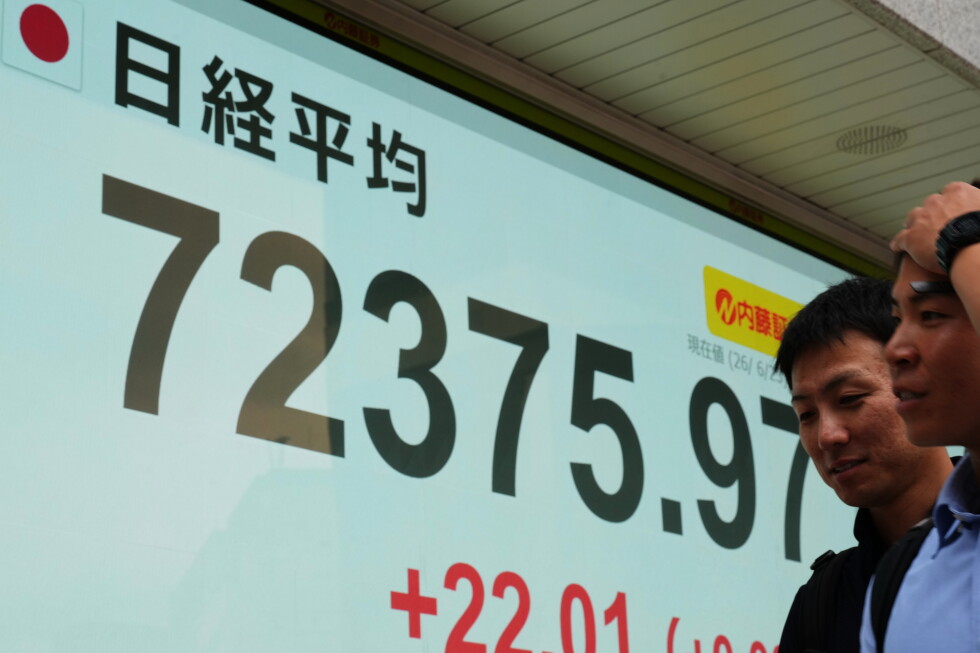
These bullish U.S. chip sector results spilled over into Asian trading hours, driving sharp gains across the region’s key tech-heavy benchmark indexes. Japan’s Nikkei 225 surged 4.1% to close at 71,995.59, with semiconductor industry stocks leading the upward climb. Tokyo Electron, a leading global chip manufacturing equipment provider, gained 7.1% on the day, while Advantest, a prominent chip testing equipment manufacturer, saw its shares soar 13.4%. Across the Sea of Japan, South Korea’s benchmark Kospi index notched a new all-time closing high, jumping 5.9% to 8,968.22. Two of the country’s largest tech and chip manufacturers led gains: Samsung Electronics added 5.4% to its share price, and memory chip giant SK Hynix climbed 11.6%.
Gains were far more muted across other major Asian markets, with only small incremental increases recorded in most regional exchanges. Taiwan’s Taiex index climbed 0.8%, India’s Sensex gained 0.6%, and China’s Shanghai Composite Index edged up 0.4% to 4,125.76. Two regional bucked the upward trend: Hong Kong’s Hang Seng Index dropped 1.4% to close at 23,090.27, while Australia’s S&P/ASX 200 shed 0.5% to finish at 8,768.20.
The rally in Asian tech stocks contrasted with a mixed close for U.S. markets on Wednesday, where broader tech sector pressure capped gains for most equities. The S&P 500 slipped 0.1% to close at 7,358.22, dragged down by losses across several large-cap tech names. The Dow Jones Industrial Average, which has a far smaller weighting toward technology stocks than other major U.S. benchmarks, climbed 10.4 points to 51,848.90, while the tech-heavy Nasdaq Composite fell 0.4% to 25,476.64. Microsoft lost 2.3% of its value, Oracle slumped 4.6%, and Alphabet, Google’s parent company, slipped 0.2% ahead of its upcoming addition to the Dow Jones Industrial Average, which will take place on Monday, replacing Verizon. Alphabet will become the fifth member of the so-called “Magnificent 7” group of large U.S. tech stocks to join the Dow, joining Apple, Amazon, Microsoft, and Nvidia. Analysts have warned in recent weeks that valuations for large-cap U.S. tech stocks, which have driven the market’s record-setting rally throughout 2024, may have become stretched.
Energy markets saw significant downward movement on Wednesday as negotiations continue between the U.S. and Iran toward a potential end to their ongoing conflict, pushing global oil prices back toward levels last seen before the outbreak of the war. Brent crude, the global benchmark for oil pricing, fell 3.8% to $73.87 per barrel on Wednesday, and dropped an additional 1.3% to $72.90 in early Asian trading Thursday. U.S. West Texas Intermediate crude fell 3.9% to $70.34 per barrel on Wednesday, and lost a further 1.4% to $69.37 early Thursday. Oil prices are now edging closer to the roughly $70 per barrel trading range recorded in late February, before the Iran war began. The drop in crude pulled energy stocks lower on Wall Street, with Exxon Mobil falling 2% and Chevron losing 2.6%.
Elsewhere on Wall Street, homebuilding stocks were among the top performers Wednesday after U.S. lawmakers passed industry-friendly legislation. KB Home saw its share price surge 16.7%, while D.R. Horton jumped 6.7%.
Market focus now turns to the U.S. inflation update due later Thursday, when the U.S. Bureau of Economic Analysis will release the Personal Consumption Expenditures (PCE) price index – the Federal Reserve’s preferred measure of inflation. Economists polled by forecasters expect the report to show headline PCE inflation rose 4.1% year-over-year in May, which would mark the highest reading recorded in three years. Fed policymakers have remained concerned about persistent inflation, which has been pushed higher by tariffs that raised input costs for a wide range of goods. Inflationary pressures worsened after the outbreak of the Iran war, which pushed global energy and shipping costs higher. Analysts expect those inflationary impacts to linger even as crude oil and gasoline prices decline in recent trading.
In currency markets, the U.S. dollar edged lower against the Japanese yen early Thursday, falling to 161.75 yen from 161.75 yen in the previous session. The euro ticked slightly higher against the greenback, rising to $1.1368 from $1.1358.
-
Venezuela reeling after powerful twin earthquakes kill at least 32 people as promises of aid pour in
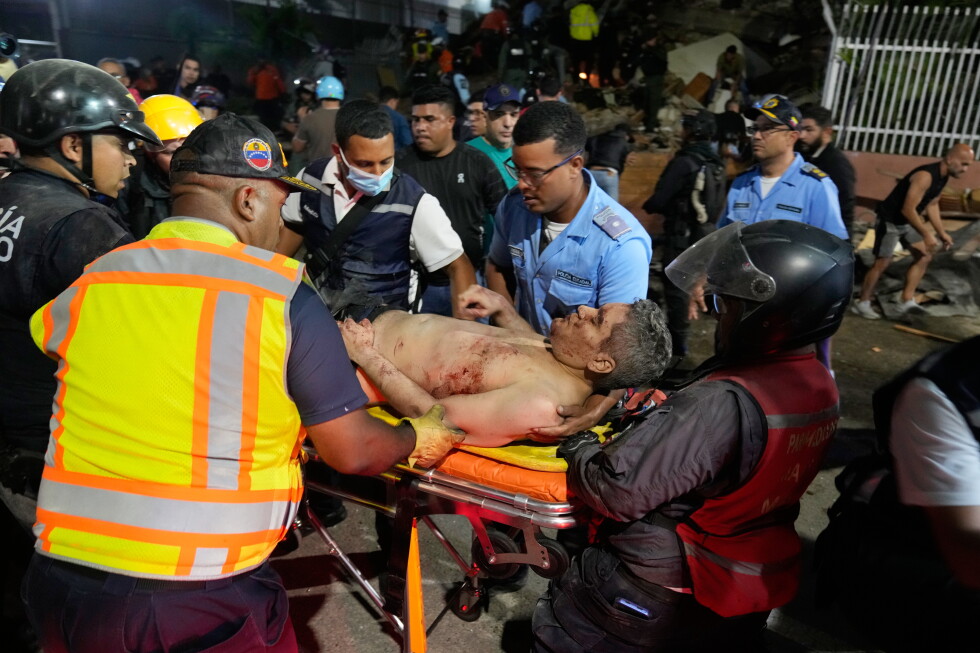
On Wednesday evening, two large-magnitude earthquakes struck northern Venezuela within one minute of each other, leaving at least 32 people dead and more than 700 injured, with widespread damage to infrastructure and communities across the South American nation, according to the country’s acting president Delcy Rodríguez. As rescue teams continue to comb through collapsed buildings and emergency crews work to reach cut-off, hard-hit areas, Rodríguez has warned the final casualty count is likely to climb. The events rank among the most powerful seismic events to hit Venezuela in more than 100 years, with shaking felt as far as 1,700 kilometers away in Brazil’s Amazon region.
Rodríguez declared a national state of emergency late Wednesday, confirming that the quakes left a trail of destruction across multiple Venezuelan states. As of early Thursday, casualty data did not include the worst-affected region: La Guaira, a coastal state roughly 30 kilometers north of the capital Caracas that Rodríguez has labeled a full disaster zone. “Dozens of buildings have collapsed there, and we are currently carrying out intensive rescue operations to save lives,” she stated in a national address.
The country’s primary international gateway, Simón Bolívar International Airport near Caracas, suffered significant damage and was forced to close immediately after the quakes. Caracas also suspended all subway operations and cut natural gas service to prevent safety hazards, while all school classes across the nation have been canceled for several days. The Ministry of Education announced that undamaged school facilities would be repurposed as emergency shelters and donation collection points to support displaced residents. Rodríguez urged all Venezuelans to report infrastructure damage via a government mobile application, called on medical professionals to report to hospitals to support care for the injured, and appealed for national calm and unity: “We urge our population to remain calm. We urge unity.”
Data from the U.S. Geological Survey (USGS) confirms the details of the back-to-back events. The agency initially recorded the first quake at magnitude 7.1, later revising its measurement to 7.2. That first seismic event originated 168 kilometers west of Caracas, off the Caribbean coast west of the town of Morón, at a depth of 22 kilometers. Just 60 seconds later, a larger 7.5 magnitude quake hit 16 kilometers southwest of Morón at a shallower depth of 10 kilometers, amplifying the damage caused by the first shock. In the northern coastal state of Falcón, Governor Víctor Clark reported 32 people hospitalized and 15 residents trapped in collapsed structures in the immediate aftermath of the quakes.
Eyewitness accounts from Caracas paint a picture of widespread chaos and fear. Residents described buildings swaying violently, forcing thousands to evacuate into the streets as walls crumbled and dust plumes rose over busy commercial neighborhoods. For hours after the quakes, many people remained gathered outside, too afraid to return to damaged structures, with some sitting on the ground clutching their pets. Collapsed structures, fallen power poles and scattered debris blocked major roads, while sections of the capital lost electricity and cellular phone service, leaving many families unable to check on loved ones—including the more than 7.7 million Venezuelans who have relocated abroad during the country’s long-running political and economic crisis. “It started off gently and then gradually grew, and in the end, we all had to leave our houses, go outside and gather together,” said Caracas resident Hector Ricci. Fellow resident Roberto Gamas added: “The building I was in really shook from side to side. Unreal. The force was incredibly strong.”
Venezuela’s Interior Minister Diosdado Cabello confirmed the quakes were felt across multiple states, and urged civilian motorists to yield the right of way to ambulances and emergency response vehicles. He reported collapsed homes and buildings in Caracas’ Altamira neighborhood, confirming injuries in the area, and noted that response teams were following established emergency protocols to accelerate rescue and aid delivery. Cabello also warned residents to stay outside of damaged structures due to the risk of additional damage from aftershocks, reminding the public to prioritize safety for vulnerable groups including children and older adults. Even in exile, Venezuelan opposition leader María Corina Machado shared a message of solidarity on social media platform X, asking for strength and unity for all Venezuelans navigating the crisis.
Seismologists note that major earthquakes are extremely rare in Venezuela. While the country sits near multiple tectonic boundaries, its position between the South American and Caribbean plates means large seismic events are far less frequent than in other Latin American nations along the Pacific Ring of Fire, the geologically active belt that produces 90% of the world’s earthquakes, per USGS data. Even so, the recent quakes were felt across a wide swathe of northern South America: buildings were evacuated in three Amazonian Brazilian cities hundreds of kilometers from the epicenter, while shaking was reported in Colombia’s Caribbean and northeastern regions with no immediate reports of damage or injury there. The U.S. Pacific Tsunami Warning Center issued brief tsunami alerts immediately after the quakes that were lifted within hours as no threat materialized.
In the wake of the disaster, dozens of nations have extended offers of international assistance to Venezuela, including countries with long-running political differences with the current administration. The United States, Argentina, Bolivia, Brazil, Chile, Ecuador, El Salvador, Mexico, Panama and Uruguay have all publicly pledged support. U.S. Undersecretary of State for Foreign Assistance Jeremy P. Lewin announced that the State Department has mobilized a dedicated disaster assistance task force to coordinate search-and-rescue teams, medical supplies, and other humanitarian resources in coordination with Venezuela’s interim government. El Salvador’s President Nayib Bukele, who has previously been openly opposed to Venezuela’s sitting government, shared a message of solidarity on X: “We send you all our solidarity and our prayers. Stay strong, Venezuela.” Ecuadorian President Daniel Noboa added that he had ordered immediate delivery of humanitarian aid, noting: “Ecuador will respond with the speed and commitment this moment demands because, despite our enormous differences, humanity must always guide the actions of a leader.” Even Bolivia, which was just days ago grappling with its own national state of emergency following widespread anti-government protests, has offered any assistance required. Brazilian authorities confirmed that no Brazilian citizens have been reported injured in the quakes.
-
Trump describes Burnham as ‘the mayor of a town’ and ‘extremely liberal’
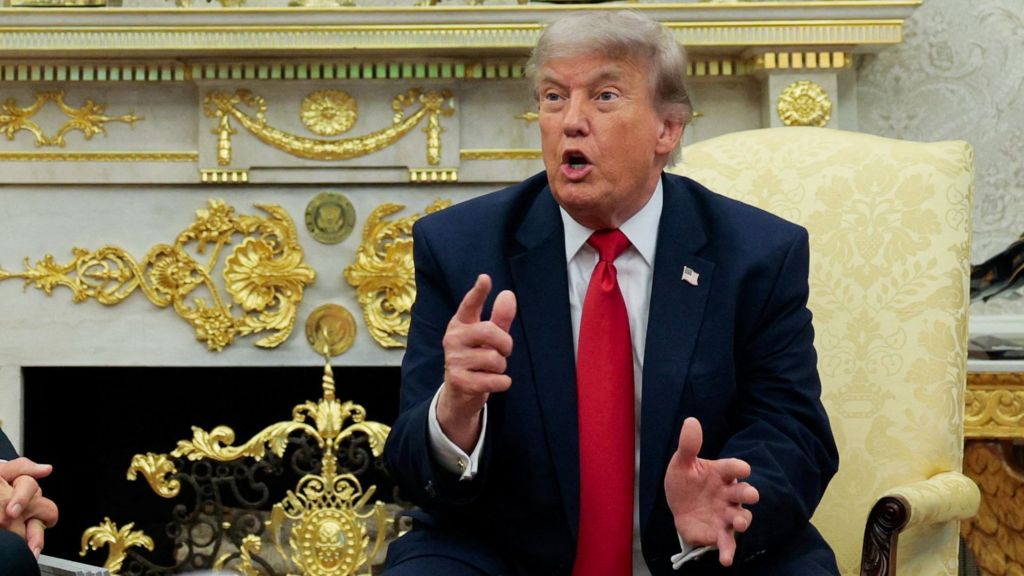
Former U.S. President Donald Trump has publicly shared his first assessment of the possibility that Andy Burnham, the well-known British politician, could ascend to the position of UK Prime Minister. In his remarks, Trump sought to frame Burnham through two distinct descriptors, downplaying the UK politician’s profile by dismissing him as “the mayor of a town” while also attaching a strong ideological label by calling him “extremely liberal”.
This comment marks the first time that Trump has spoken on record about Burnham’s potential bid for the country’s top political job, bringing a surprising cross-Atlantic perspective into British domestic political discourse. Currently, Andy Burnham serves as the Mayor of Greater Manchester, a major metropolitan region in northern England that oversees a population of millions — a role that carries far more responsibility and public influence than the small-town implication of Trump’s phrasing. Political analysts have noted that the former U.S. leader’s characterization appears to be a deliberate attempt to minimize Burnham’s standing among potential conservative-aligned voters who may be skeptical of left-leaning policy platforms.
The intervention comes amid ongoing speculation within UK political circles about potential future leadership bids, with Burnham emerging as a prominent figure within the Labour Party often cited as a possible contender when the question of a leadership change arises. Trump’s unsolicited commentary has already sparked debate across British political spaces, with supporters of Burnham pushing back against the former American president’s framing of the mayor’s role and ideological positioning, while conservative commentators have echoed Trump’s description to criticize Burnham’s policy agenda.
-
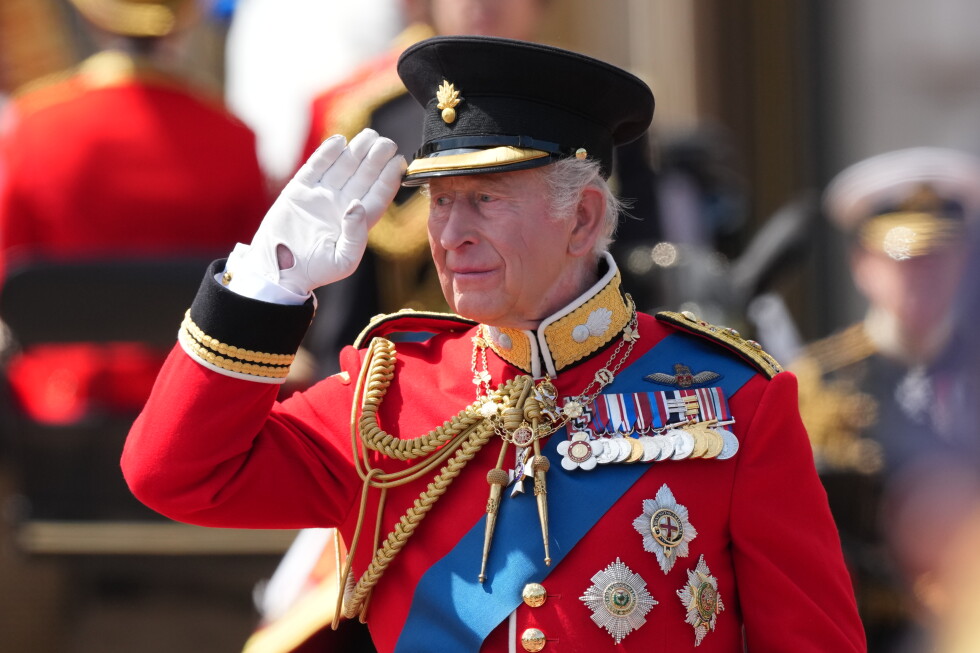
King Charles III is expected to reveal his personal tax bill in a bid to boost transparency
LONDON — In a landmark step for royal accountability that comes amid growing public and political demands for openness around the British monarchy’s finances, King Charles III is set to become the first reigning British monarch to publicly release details of his personal tax bill this Thursday. The unprecedented move follows months of negative headlines centered on the king’s disgraced younger brother, Andrew Mountbatten-Windsor, the former Prince Andrew stripped of all royal titles amid an ongoing misconduct investigation.
Multiple British media outlets confirmed over the weekend that the tax details will be made public as part of Buckingham Palace’s annual briefing on the Sovereign Grant, the public funding mechanism that covers the monarchy’s official operational costs. Last year’s annual report ran 159 pages, detailing how the palace allocated the £86.3 million ($113.7 million) it received from British taxpayers, including a multi-million pound portion allocated to the extensive ongoing renovation of Buckingham Palace itself.
While Charles previously published his tax payment details when he held the title of Prince of Wales, this release marks the first time he has shared this information since ascending to the throne following Queen Elizabeth II’s death in September 2022. His eldest son and heir, Prince William, the current Prince of Wales, has announced he will mirror this new level of transparency with a separate public briefing of his own tax records.
The push for greater institutional openness gained momentum after a series of damaging revelations about Andrew Mountbatten-Windsor, who was stripped of his royal patronages and titles in 2025. Mountbatten-Windsor, who has longstanding ties to convicted sex offender Jeffrey Epstein, is currently under active investigation by UK police for potential misconduct in public office. Recent reports have also uncovered that he generated personal income by subletting cottages on a sprawling royal estate he occupied rent-free for years, prompting further public anger over royal privilege and lack of accountability.
Citing anonymous palace sources, the BBC reported that the decision to release tax records was a personal choice made by King Charles, part of a broader push to “encourage wider understanding and accountability” for the monarchy. Long before the Andrew scandal erupted into public view, Charles had already pledged to streamline the monarchy, reduce unnecessary operational costs, and modernize the 1,000-year-old hereditary institution as public debate grows over the role of a monarchy in 21st-century British democracy.
Unlike ordinary British citizens, the reigning monarch is not legally required to pay income tax, but Charles voluntarily pays tax on all his private income. This precedent was first set by his mother, Queen Elizabeth II, who began voluntarily paying taxes in 1993 following widespread public outrage over the use of public funds to restore Windsor Castle after a devastating 1992 fire. The voluntary tax arrangement is formalized through a confidential memorandum of understanding between the British government and the Crown, which still guarantees Charles the same personal privacy protections for his tax affairs that any other British taxpayer receives, outside of the details being released voluntarily this week.
Charles ranks 230th on the Sunday Times’ 2025 list of Britain’s richest people, with an estimated personal net worth of £680 million ($896 million). His private income draws from two major privately owned royal estates — the 50,000-acre Balmoral Estate in Scotland, home to the king’s traditional summer retreat Balmoral Castle, which operates public tourism offerings including guided tours, hospitality and golf courses, and the 20,000-acre Sandringham Estate, a coastal country retreat in eastern England where much of the land is managed for commercial farming by the estate or tenant farmers. Charles also draws private income from personal savings and investment holdings. The upcoming release will only cover taxes paid on this private income; no tax will be reported for funds from the Sovereign Grant or other revenue allocated exclusively to official royal duties, as these are not taxed under the existing agreement.
For Prince William, the primary source of private income is the Duchy of Cornwall, a centuries-old trust holding a portfolio of land and investments that passes to the current reigning Prince of Wales. The Duchy controls roughly 130,000 acres of land across the UK, and reported a net profit of £22.9 million ($30.2 million) in its last fiscal year. The Duchy is overseen by an independent board of directors, and all major strategic decisions require formal approval from the UK Treasury.