作者: admin

  • US Congress welcomes Taiwan’s parliamentary leader to Washington, affirms support for the island

    US Congress welcomes Taiwan’s parliamentary leader to Washington, affirms support for the island

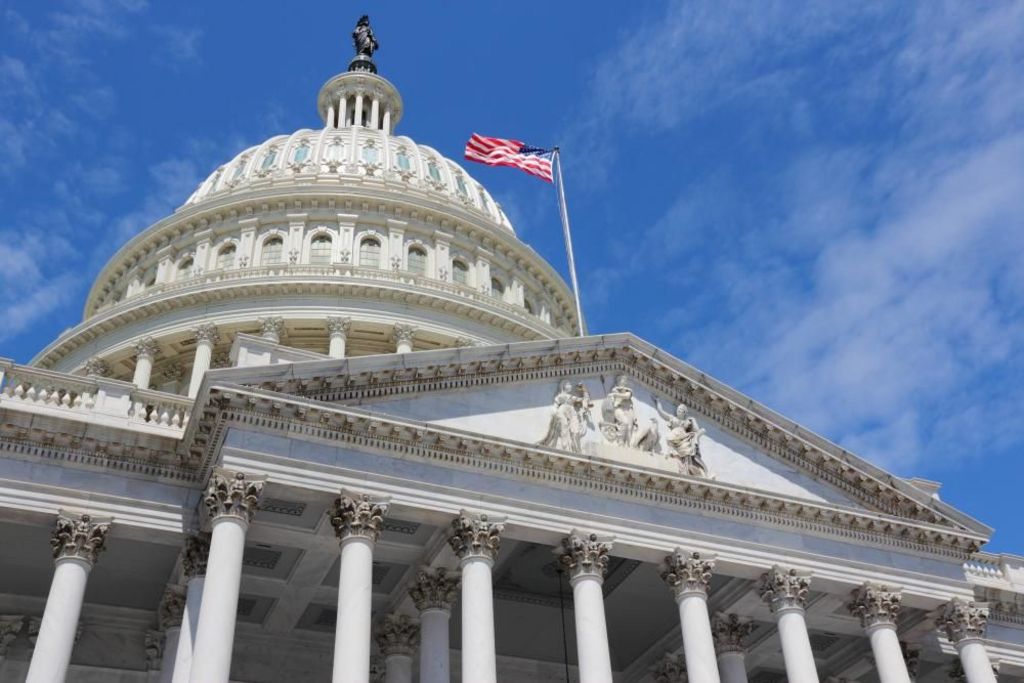
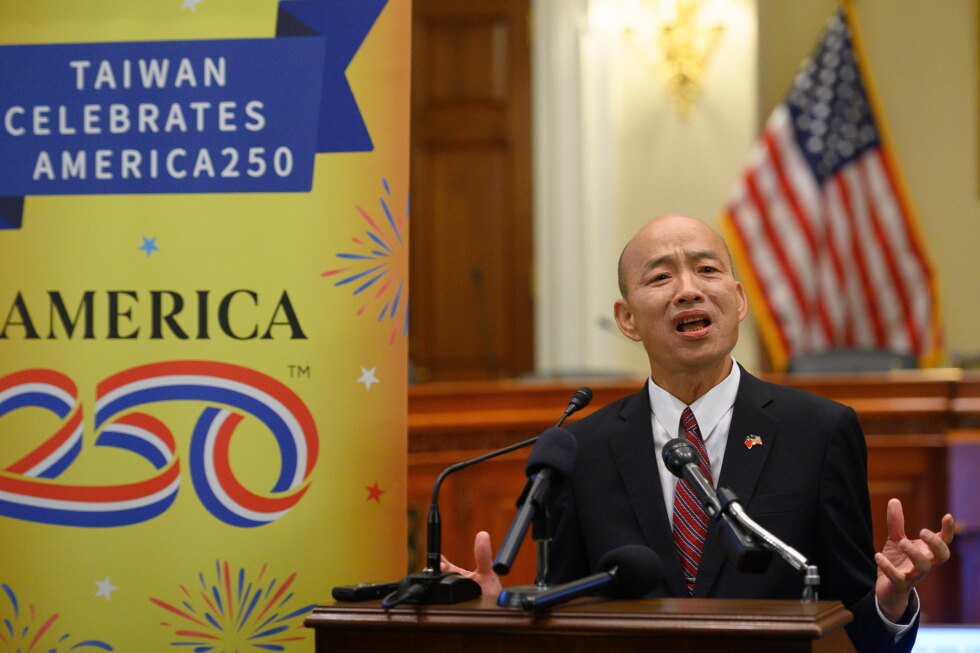
    Against a backdrop of shifting U.S.-China tensions and a pending review of a major arms deal, over 30 bipartisan members of the U.S. House of Representatives gathered Wednesday in Washington D.C. to reaffirm robust U.S. backing for Taiwan, during an official reception welcoming Han Kuo-yu, the president of Taiwan’s Legislative Yuan.

    The high-profile gathering, held at the Longworth House Office Building, drew some of Capitol Hill’s most prominent figures from both major parties, including former House Speaker Nancy Pelosi (D-CA), House Democratic Caucus Vice Chair Ted Lieu (D-CA), and former House Foreign Affairs Committee Chair Michael McCaul (R-TX). Opening the welcome remarks, McCaul left no ambiguity about U.S. congressional sentiment, stating, “It’s very important to me to say that the United States supports you, Mr. Speaker.” Echoing this unified stance, Pelosi emphasized that cross-party and bicameral support for Taiwan is long-standing, framing the backing as rooted not just in a commitment to regional peace, but also in critical shared economic interests tied to global maritime trade security.

    Han is leading an eight-person parliamentary delegation that arrived in Washington Tuesday evening, following a preliminary stop in Phoenix, Arizona. That stop highlighted the deep economic interdependence between the U.S. and Taiwan: Phoenix is currently the site of new, cutting-edge fabrication facilities being built by Taiwan Semiconductor Manufacturing Company (TSMC), the world’s leading advanced chipmaker whose products underpin the global artificial intelligence boom. TSMC’s expansion in Arizona has become a leading example of Taiwan’s outsized importance to the U.S. economy and tech supply chain. Before meeting with House members, Han held closed-door discussions with U.S. senators; the delegation declined to share specific details of those talks, but noted the warm reception from senators matched the enthusiastic welcome House members extended.

    The Taiwan issue remains one of the most contentious flashpoints in U.S.-China relations. Beijing formally claims Taiwan as part of its sovereign territory and has repeatedly vowed to take control of the self-governing island by force if necessary. Under the long-standing Taiwan Relations Act, a U.S. domestic law, Washington is legally required to provide Taiwan with sufficient defense capabilities to deter any potential invasion from mainland China. The $14 billion arms sales package at the center of current debate already received preliminary approval from Congress months ago, but the Trump administration has held up the deal amid ongoing review. President Donald Trump, following his May diplomatic trip to Beijing, has publicly described the package as a potential bargaining chip in broader U.S.-China negotiations, a framing that drew sharp pushback from U.S. lawmakers on Wednesday.

    Secretary of State Marco Rubio has stated that long-standing U.S. policy toward Taiwan remains unchanged, but multiple members of Congress used Wednesday’s reception to press the Trump administration to move forward with the arms deal immediately. “I’m here today … to affirm in the strongest terms that Taiwan is not a bargaining chip. It is an island of freedom. And we need to do all we can to preserve it,” said Rep. Lloyd Doggett (D-TX), adding that the U.S. should expedite delivery of every defensive weapon Taiwan requests. Ted Lieu directly criticized the administration’s delay, saying, “I urge the administration to reverse that and to allow their arms sale to proceed.”

    A member of Taiwan’s opposition Kuomintang (KMT) party, Han struck a collaborative tone in his address, praising the U.S.’s 250-year legacy of democratic governance and noting that Taiwan shares the U.S.’s core commitments to freedom, democracy, and upholding a rules-based international order. He highlighted the deep economic ties between the two sides: the 23-million-person island has recently surpassed Germany to become the United States’ fourth-largest trading partner, a shift driven largely by global demand for Taiwan’s advanced semiconductors and other high-tech hardware.

    Han also used his visit to urge U.S. congressional support for expanding Taiwan’s international participation. Due to Beijing’s territorial claims, no United Nations member state can maintain formal diplomatic relations with both China and Taiwan, leaving just 12 small governments and the Holy See to formally recognize Taipei. Beijing has also successfully blocked Taiwan’s membership in most major intergovernmental organizations, including the World Health Organization. “On the international stage, Taiwan feels very lonely in its heart,” Han said. “I am here asking Taiwan’s good friends in Congress … to help us participate in global activities.”

    After his meetings in Washington, Han is set to depart Friday on the inaugural nonstop flight between Washington Dulles International Airport and Taiwan Taoyuan International Airport operated by Taiwanese carrier EVA Air, a new route that has been framed as another marker of deepening people-to-people and official ties between the U.S. and Taiwan.

  • Ivory Coast eyes knockout stage of World Cup with striker Elye Wahi expected back amid investigation

    Ivory Coast eyes knockout stage of World Cup with striker Elye Wahi expected back amid investigation

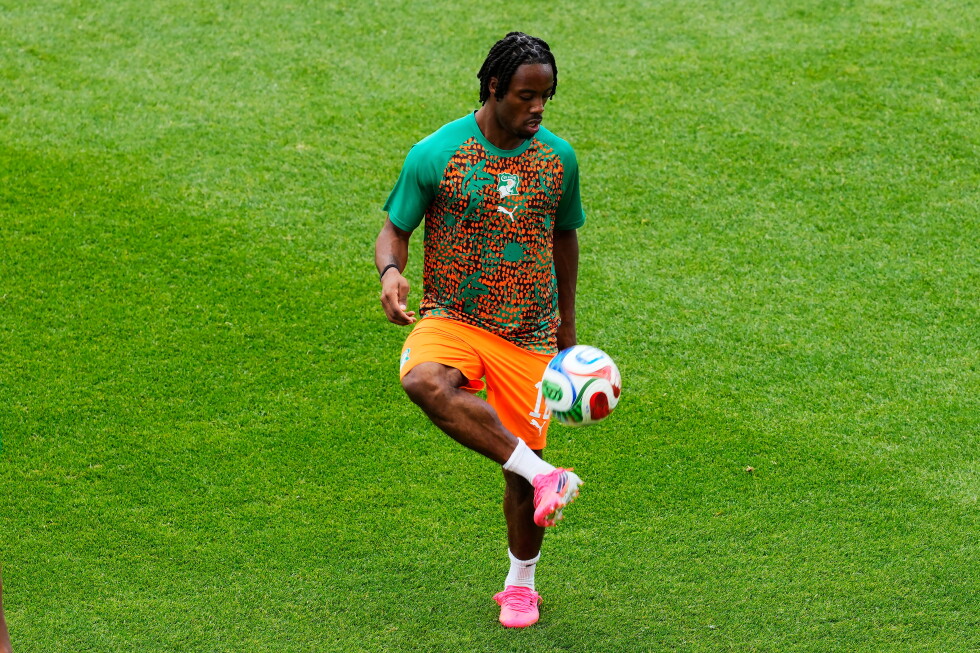
    CHESTER, Pennsylvania — For the Ivory Coast men’s national soccer team, the Philadelphia metropolitan area has emerged as an unexpected and fruitful home base during the 2026 FIFA World Cup. The West African side set up its training camp and team accommodations in the region, even hosting a pre-tournament friendly that drew roughly 10,000 local supporters, and has already kicked off its group stage campaign with a statement 1-0 win over Ecuador.

  • Scotland fans brave the heat and humidity to support their team at the World Cup against Brazil

    Scotland fans brave the heat and humidity to support their team at the World Cup against Brazil

    MIAMI GARDENS, Fla. – For thousands of die-hard Scottish football supporters, the trip to the 2024 World Cup marked a historic moment: their nation’s first appearance on the sport’s biggest global stage in 26 years. But for the kilt-clad, bagpipe-playing members of the iconic Tartan Army, the first lesson of their South Florida adventure came fast – summer heat in Miami is unlike anything most have ever experienced.

    In the days leading up to Scotland’s highly anticipated group stage matchup against Brazil this Wednesday, the faithful took over Miami Gardens’ beachside spots, waterfront bars and public spaces, ready to celebrate their team’s long-awaited return. What greeted them was a mercury peak hitting 93 degrees Fahrenheit (34 degrees Celsius), paired with unforgiving afternoon humidity hovering between 63 and 66 percent.

    “Right now in this kilt, I am sweating. Absolutely sweating. It’s crazy heat,” said Hayden Sutherland, one of the thousands of fans who traveled across the Atlantic for the momentous occasion. Sutherland and the Tartan Army have worked their way across the U.S. East Coast ahead of the match, starting with a fan tour stop in Boston before heading south to Florida. While partial cloud cover over the Hard Rock Stadium – home of the NFL’s Miami Dolphins – offered a small reprieve from the scorching sun, many fans said the swelter has been nonstop since their tour began.

    Ironically, the traveling supporters would not have found much cooler comfort back home. Scotland is currently facing an unseasonable, rare heat wave of its own, with Tuesday temperatures hitting an unexpected high of 84 degrees Fahrenheit (29 degrees Celsius). Even so, Miami’s combination of heat and thick humidity has proven to be a far greater test.

    “I’ve been to warmer places, but the humidity is just killing me,” noted Peter Wright, another traveling Scottish supporter. “Here, I can walk 100 meters and I’ve got a bit of sweat on. In Boston, I was walking miles and it was lovely.”

    Nearly all the traveling fans have held fast to beloved tradition, sporting the iconic knee-length Scottish kilt to matches and fan gatherings. Opinions are split on whether the traditional garment helps or hurts in the heat: some fans say the breathable woven fabric offers unexpected relief, while others report the thick material traps heat and adds to their discomfort.

    Outside the stadium, fans crowded into whatever shaded spots they could find, fanning themselves with program booklets, hats and any available flat surface. When asked how the group was coping with the extreme conditions, Wayne Sutherland – Hayden’s father – joked with a classic Scottish response: “Just beer. We’re two Scots. No water, just beer.”

    That heavy demand for cold beer has already left bars scrambling along the Tartan Army’s tour route. While Miami rolled out the welcome with a dedicated “beer barge” for the traveling supporters, Boston-area bars struggled to keep up as the group of thousands drank through local stock during their earlier stop.

    If the heat has dampened the group’s legendary enthusiasm, though, there is no sign of it. Despite Scotland falling to Brazil 3-0 after conceding a goal in just the seventh minute of play, the stands filled with Tartan Army supporters barely sat down for the full 90 minutes. All day long, from pre-game tailgates to the final whistle, the iconic fan chant “No Scotland, No Party” echoed across Miami Gardens – proof that even sweltering heat and a tough loss cannot dim the spirit of the world-famous Scottish fanbase that has waited 26 years for this moment.

    This report was contributed by Gracie Fisher, a student at the University of Georgia’s Carmical Sports Media Institute, as part of Associated Press World Cup coverage.

  • UN: RSF used rape and sexual slavery as weapons of war in Sudan since 2023

    UN: RSF used rape and sexual slavery as weapons of war in Sudan since 2023

    Three years into Sudan’s brutal civil war between the Rapid Support Forces (RSF) and the Sudanese Armed Forces (SAF), a bombshell new report from the United Nations Office of the High Commissioner for Human Rights (OHCHR) has laid bare the systematic use of sexual violence as a weapon of war, placing the overwhelming majority of documented abuses at the feet of the RSF and its allied militias. The analysis, which covers the period from the outbreak of open conflict in April 2023 through mid-April 2026, documents 546 verified incidents of conflict-related sexual violence across 16 of Sudan’s 18 states, impacting at least 838 people—most of whom are women and girls. The UN’s findings confirm that these acts are not isolated crimes of war, but coordinated, widespread tactics that may rise to the level of crimes against humanity and even genocide.

    According to the report’s verified data, 87 percent of all documented sexual violence incidents were carried out by men in RSF uniforms, affiliated fighters, and allied Arab militias. While smaller numbers of abuses were also linked to the SAF, associated security groups, the Joint Forces, and other armed movements, the scale and planning of RSF-perpetrated violence stands apart. The report outlines a clear pattern of coordinated operations: perpetrators arrive in armed convoys, divide operational roles—with some securing locations while others carry out assaults—and target communities along ethnic and political lines. More than 25 percent of verified incidents are gang rapes, in some cases involving 10 or more attackers assaulting a single victim. At least 85 women and girls were held as sexual slaves, forced to complete unpaid domestic labor for fighters and in some cases coerced into generating income for their captors. Many victims were chained, blindfolded, and held hundreds of kilometers from their homes, with at least 59 confirmed pregnancies resulting from rape.

    Ethnic targeting has been a central feature of the violence, the report confirms. In West Darfur, Masalit women were explicitly forced to identify their tribe before being assaulted, with perpetrators stating they aimed to force Masalit women to bear the children of Arab fighters. During the 2025 RSF offensive on the internally displaced persons camp at Zamzam, women were targeted based on whether their male relatives were affiliated with the SAF, with sexual assault used as punishment and intimidation. Zaghawa women and girls were disproportionately targeted during the RSF’s final 2025 offensive on el-Fasher. The report documents grotesque, firsthand accounts of atrocities: one victim saw her mother shot dead after begging for her daughter’s safety, before the daughter was gang-raped; another child witnessed her younger sister gang-raped to death. Even in detention facilities across seven states, sexual violence is rampant, with men making up an unusually high 20 percent of victims in these cases, including one Masalit man who died in 2025 from untreated injuries and psychological trauma sustained during sexual torture in RSF custody.

    OHCHR concluded there are reasonable grounds to confirm the RSF and its allies have committed widespread war crimes across Darfur, including rape, sexual slavery, torture, and cruel treatment. The coordinated, geographically widespread pattern of abuses in hotspots including El Geneina, Ardamata, Zamzam camp, and el-Fasher meets the threshold for systematic, widespread attacks on civilian populations, meaning these acts may also qualify as crimes against humanity. These findings echo a February 2026 conclusion from the UN fact-finding mission in Sudan that the RSF’s capture of el-Fasher bears the hallmarks of genocide, with sexual violence as a core component of the assault that targeted females ranging in age from 7 to 70 years old, including pregnant women.

    Beyond documenting the violence itself, the report highlights the critical danger of persistent impunity for perpetrators. Only 48 of the 546 verified incidents have ever been reported to law enforcement, and just two have moved to formal investigation. In areas under RSF control, no functional formal justice system exists to prosecute abusers. The report also criticizes the SAF: a 2024 amnesty offer for RSF defectors did not explicitly exclude those responsible for sexual violence, creating a pathway for perpetrators to avoid prosecution. In one disturbing case, a woman who was held and sexually assaulted by the RSF was later charged with collaboration by SAF-aligned security forces, and at least one woman has been sentenced to death on similar false charges.

    UN High Commissioner for Human Rights Volker Turk emphasized that unchecked impunity is deepening harm and locking Sudan into a decades-long cycle of violence. “Sexual violence is being used as a weapon of war. This is a war crime and, if committed as part of a widespread or systematic attack, a crime against humanity,” Turk said. “All perpetrators, including those exercising command responsibility, must be held fully accountable, and victims must be guaranteed access to effective remedy, including reparation.”

    The release of the report coincides with growing international alarm over the RSF’s ongoing offensive on el-Obeid, the capital of North Kordofan state, where sustained drone strikes have targeted civilian infrastructure, including key supply routes, fuel stations, and power grids. More than 500,000 people, including 200,000 internally displaced persons, have been cut off from access to basic services. On the same day the OHCHR report was published, six European nations—France, Germany, Ireland, Italy, the Netherlands, Norway, and the United Kingdom—issued a joint warning that the atrocities witnessed in el-Fasher must not be repeated in el-Obeid, which UK Foreign Secretary Yvette Cooper called “on the precipice of an atrocity.”

    While the joint statement called out unnamed external actors fueling the conflict, it stopped short of naming the United Arab Emirates, which has been widely documented as a key backer of the RSF. The UAE has repeatedly denied providing weapons or support to the RSF, but multiple independent investigations since mid-2023 have confirmed weapons transfers to the RSF via a dedicated airbridge through eastern Chad, with the UAE repeatedly identified as the primary supplier. Most recently, Middle East Eye revealed in April 2026 that the RSF receives covert support from an Ethiopian army base in Asosa, with matching military vehicles documented at the Port of Berbera in Somaliland, where the UAE maintains a permanent military base.

    On the same day the report was released, a human rights investigator told the UK Parliament that the British government failed to act to prevent atrocities in el-Fasher, citing “political capture” by the UAE and London’s desire to protect its economic and diplomatic ties with Abu Dhabi. Nathaniel Raymond, who delivered more than two dozen private briefings with warnings of impending mass atrocities, told lawmakers that the UK— as the UN penholder for Sudan—was the best positioned global power to prevent mass slaughter, but its warnings were repeatedly ignored. “The British government prioritises economic, security, and diplomatic relationships with the UAE above preventing the intentional starvation, forced displacement, and the genocidal slaughter of tens of thousands of civilians living in el-Fasher and its surrounding communities,” Raymond told Parliament’s International Development Committee.

    International efforts to hold perpetrators accountable are already underway, though they have yet to end the violence. The UN Security Council has imposed sanctions on four senior RSF commanders over Darfur atrocities, and the United States formally recognized that RSF actions constitute genocide, sanctioning RSF leader Mohamed Hamdan Dagalo (known as Hemedti) in January 2025. The International Criminal Court at The Hague is currently investigating both RSF and SAF commanders for individual criminal responsibility for war crimes and crimes against humanity committed since the conflict began.

    After three years of war, Sudan faces what the UN and European Union describe as the world’s worst humanitarian and displacement crisis. The conflict has killed tens of thousands of people, displaced more than 13 million, and pushed over 19.5 million to the brink of famine.

  • Vinícius Júnior scores 2 goals as Brazil beats Scotland 3-0 to reach World Cup knockout stage

    Vinícius Júnior scores 2 goals as Brazil beats Scotland 3-0 to reach World Cup knockout stage

    MIAMI GARDENS, Florida — In a commanding group stage finale that secured their place in the tournament’s knockout round, five-time FIFA World Cup winners Brazil delivered a dominant 3-0 victory over Scotland on Wednesday, powered by a sparkling brace from star forward Vinícius Júnior and a late welcome return of talisman Neymar from injury.

    Vinícius Jr. continued his scorching hot run of form across Brazil’s group stage campaign, becoming the only member of the squad to find the back of the net in all three of the team’s preliminary matches. He opened the scoring for Brazil just seven minutes into the contest, then grabbed his second of the night right before the halftime whistle. That double pulled him level with France’s Kylian Mbappé on four tournament goals, leaving him just one strike behind Argentina captain Lionel Messi, who currently leads all scorers at the competition with five goals. Midfielder Matheus Cunha added the third goal for Brazil to cap off the scoring.

    The most anticipated moment of the night came in the 76th minute, when 34-year-old Brazilian icon Neymar made his tournament debut after a right calf injury forced him to sit out the team’s first two group stage matches. Even before Neymar officially left the bench to start warming up along the sideline mid-way through the second half, the majority-Brazilian crowd packed inside Hard Rock Stadium began chanting his name in a thunderous show of support. When the forward finally trotted out onto the pitch to enter the match, the stadium erupted into deafening cheers from the home away from home crowd.

    Neymor currently stands as Brazil’s all-time leading goal scorer at the international level, with 79 goals across 130 appearances for the Seleção. The veteran forward has featured in every World Cup for Brazil over the past 16 years, notching eight total goals across his three previous tournament appearances.

    For Scotland, the match marked the end of their first World Cup campaign in 26 years, after qualifying for the tournament for the first time since 1998. The side quickly earned a reputation as one of the tournament’s most beloved underdog stories, drawing global attention for the passionate, party-like energy brought by their loyal fanbase, nicknamed the Tartan Army. Before the match, fans from Scotland had turned areas of Boston and Miami Gardens into lively celebration zones ahead of their team’s final group stage fixture. Despite the valiant effort, Scotland fell short of advancing out of the group stage for the ninth consecutive World Cup qualification attempt, extending their decades-long knockout round drought.

  • Watch: Moment earthquake hits Venezuela and leaves buildings collapsed

    Watch: Moment earthquake hits Venezuela and leaves buildings collapsed

    A destructive earthquake has rocked Venezuela, leaving a trail of structural damage including collapsed buildings and forcing panicked residents to flee their homes in haste. Dramatic footage of the disaster and its immediate aftermath was captured by on-the-ground BBC journalists and local contributors, offering a raw, firsthand look at the chaos that unfolded in the moments after the tremor hit.

    The video documentation shows the scale of the destruction, with damaged infrastructure littering affected areas and residents moving frantically to reach safe ground away from unstable structures. Emergency responses are expected to ramp up quickly as authorities begin assessing the full extent of human casualties and property damage across the impacted regions, with local communities already grappling with the sudden disruption to daily life caused by the seismic event.

  • Trump asks Congress for $87bn, mostly for ‘urgent’ Iran war costs

    Trump asks Congress for $87bn, mostly for ‘urgent’ Iran war costs

    In a historic rebuke of executive military authority unseen in half a century, the U.S. Congress has passed a bipartisan resolution ordering former President Donald Trump to end ongoing military action against Iran – a move that carries profound implications for the balance of power between Washington’s legislative and executive branches. Just one day after this landmark congressional vote, the White House submitted a formal $87.6 billion emergency funding request to Capitol Hill, the vast majority of which is earmarked for so-called ‘urgent war-related needs’ tied to the U.S. conflict with Iran.

    According to details released by the White House Office of Management and Budget, which delivered the official funding request to House Speaker Mike Johnson on Wednesday, $67 billion of the total package would go directly to the U.S. Department of Defense. That defense allocation breaks down into $21 billion for replenishing munitions stockpiles, $17.3 billion for frontline operational expenses, and $12.1 billion for classified defense programs. The remaining portion of the request is allocated to unrelated policy priorities: $11 billion in relief for American agricultural producers and $1.4 billion to support international response efforts against the ongoing Ebola outbreak in Central Africa.

    Despite the White House’s framing of the request as an emergency, the proposal faces steep, well-documented obstacles to passage. Public opposition to the Iran conflict remains high among American voters, and critical midterm congressional elections are scheduled for this coming November, leaving lawmakers wary of backing a unpopular military engagement. Currently, a fragile ceasefire holds between U.S. forces and Iranian military positions, but months of open conflict have severely depleted the Pentagon’s weapons and equipment stockpiles, creating the urgent logistical need the White House is attempting to address.

    Congressional Republicans, who hold majority control of both chambers, have openly voiced skepticism over the preliminary peace deal Trump reached with Iranian officials last week. On the same day the funding request was submitted, Trump held a tense, closed-door meeting with Senate Republicans at a Capitol Hill luncheon, after he unexpectedly scrapped a planned signing ceremony for a bipartisan housing bill with no public explanation. Multiple sources familiar with the meeting confirmed to CBS News, the BBC’s U.S. partner, that Trump lashed out at lawmakers over the previous day’s war powers resolution vote.

    The resolution itself, though largely symbolic in its immediate impact, marks the first time since the 1973 War Powers Resolution became law that Congress has successfully passed a measure compelling a sitting president to halt an ongoing military operation. The vote underscores growing cross-partisan pushback against unilateral executive military action, even within the president’s own party, and sets a potential precedent for future checks on presidential war-making authority.

  • Magnitude 7.1 earthquake rocks Venezuela as buildings shake in Caracas

    Magnitude 7.1 earthquake rocks Venezuela as buildings shake in Caracas

    A powerful 7.1-magnitude earthquake rocked central Venezuela on Wednesday, shaking buildings in the capital Caracas, causing structural collapses, and sending tremors as far as neighboring Colombia. According to data from the U.S. Geological Survey (USGS), the seismic event struck at 18:04 local time (23:04 BST), centered near the town of Montalbán, with a shallow depth of just 13.2 kilometers. Shallow earthquakes of this magnitude typically amplify ground shaking and increase the risk of widespread damage to infrastructure.

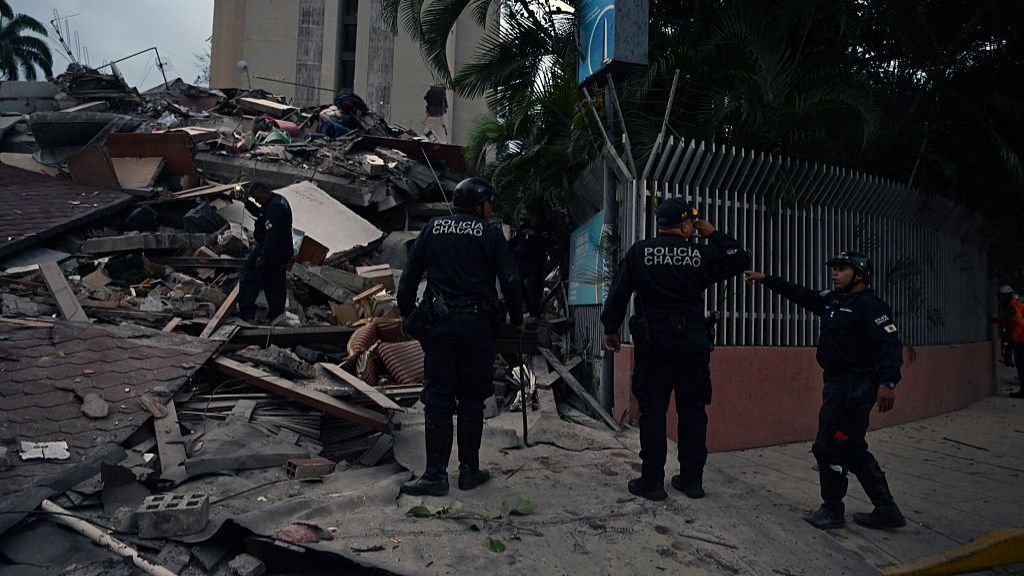
    Venezuela’s Interior Minister Diosdado Cabello confirmed in an appearance on state television that multiple buildings had collapsed in Caracas, matching on-the-ground accounts from witnesses. Local residents rushed to evacuate buildings immediately as the tremor hit, with one witness telling Reuters that visible cracks spread across their apartment walls and windows shattered during the quake. Photographic evidence captured by an Agence France-Presse photographer shows one prominent Caracas building, identified locally as a bank, reduced to rubble.

    Tremors from the quake were felt hundreds of kilometers away in Bogotá, the capital of neighboring Colombia, where local authorities ordered precautionary evacuations of many public and commercial buildings as a safety measure. The U.S. Tsunami Warning System has issued active tsunami threats for coastal regions of Venezuela, Aruba, and Bonaire, while tsunami advisories remain in effect for Puerto Rico and the British Virgin Islands.

    This is an ongoing developing breaking news story, with emergency response teams still conducting initial damage and casualty assessments. Additional updates will be published as more official information becomes available. Readers can access real-time updates via the BBC News mobile app, or by following the BBC Breaking News account on X.

  • The legal fight to get equal pay for Germany’s disabled workers

    The legal fight to get equal pay for Germany’s disabled workers

    Across Germany, a network of government-recognized sheltered workshops designated for disabled workers currently employs nearly 300,000 people. But a landmark legal case set to be decided over the coming year threatens to upend decades of discriminatory policy that has excluded this population from basic labor protections enjoyed by other German workers, including the statutory minimum wage and the right to organize.

    The lawsuit was filed on behalf of Jürgen Linnemann, a 57-year-old man who has worked in sheltered workshops his entire adult life. Under current German regulations, disabled workers in these specialized facilities are not classified as formal employees. This technical distinction exempts employers from paying the national minimum wage, excludes workers from standard labor protections, and bars them from joining trade unions to advocate for better conditions. For many workers, pay amounts to a small stipend far below what non-disabled workers earn for identical production work, which often supplies parts and finished goods to major international brands.

    Critics of the system argue that it creates a self-perpetuating cycle of segregation that traps disabled people from childhood. Hubert Hüppe, a former federal disability rights commissioner and one of the most vocal critics of Germany’s sheltered workshop model, explains that disabled people are often funneled into segregated education pathways from early childhood, with sheltered employment framed as their only viable option upon graduation. This pipeline leaves few opportunities to access the open labor market, with less than 1% of sheltered workshop workers successfully transitioning to mainstream private sector employment annually.

    Structural economic incentives embedded in German law further entrench this segregation. German companies with more than 20 employees are legally required to fill a minimum quota of positions with disabled workers, ranging from 1% to 5% depending on company size. Firms that fail to meet this quota must pay compensatory fines into a national fund that supports disability employment programs. Many companies opt to pay these fines rather than hire disabled workers directly, and the system provides an additional incentive for outsourcing: companies that contract production work to sheltered workshops can reduce the compensatory fines they owe. Even when workers do develop the skills to move into mainstream roles, workshop operators often have an incentive to retain their most productive employees to keep production running, blocking transitions to the open market.

    These structural flaws have drawn international criticism. A 2023 report from the United Nations Committee on the Rights of Persons with Disabilities specifically called out Germany’s overreliance on sheltered workshops and its extremely low transition rate to open employment as a violation of disabled people’s labor rights.

    The experience of Dirk Hähnel, a 50-something man who spent decades in sheltered workshops near Paderborn, illustrates the pipeline of segregation. Hähnel was originally placed in a mainstream primary school, but was transferred against his will to a segregated special school at a young age after officials recommended the move to his parents. When he graduated, he was told sheltered work was his only option. Unwilling to accept that outcome, he applied for an apprenticeship, but faced open discrimination when he disclosed his epilepsy during a job interview: the interviewer told him “we don’t employ idiots here.”

    The reporter who contributed to this investigation, a disabled journalist born blind, shared their own parallel experience: at age six, their primary school recommended placing them in a segregated school for children with learning disabilities because they mixed German and Arabic as a young child. Only their parents’ decision to ignore that recommendation allowed them to pursue a career outside the sheltered workshop system.

    Not all workers in sheltered workshops oppose the system, however. Medina Arnaut, a 35-year-old workshop worker and chair of her facility’s worker council, notes that many disabled people rely on the structured, low-pressure environment that sheltered workshops provide. Arnaut, who works at a Caritas charity-run workshop in Paderborn, says many of her colleagues previously worked in mainstream employment and left because the high-pressure environment exacerbated their health conditions. For this group, the existence of specialized workshop settings is a critical support.

    Even supporters of the model, however, acknowledge that the status quo is deeply flawed. Karla Bredenbals, director of the Caritas Paderborn workshops, agrees that the transition rate to open employment is unacceptably low. She cites ongoing systemic barriers outside the workshop system, including a lack of accessible infrastructure at many private companies and inadequate accessible public transportation that prevents disabled workers from commuting to mainstream jobs. Still, Bredenbals pushes back against the common practice of retaining high-productivity workers to meet production targets, calling it unethical: “Hanging onto people means we are robbing them of the chance to take responsibility for their own working lives.”

    On the question of minimum wage, Bredenbals notes that the issue is complex: formal employment requires workers to meet contractual productivity standards, and many disabled workers with severe impairments are not able to meet those requirements full-time. She argues any policy change must account for the diverse support needs of the workshop population.

    Linnemann’s case is being heard at the Münster Labour Court, with the next hearing scheduled for September 2026, and a ruling not expected until 2027. The case is backed by the Berlin-based human rights group Society for Civil Rights, and a ruling in Linnemann’s favor could extend employee status and minimum wage protections to hundreds of thousands of disabled workers across the country, reshaping Germany’s disability employment system permanently.

  • World Cup what to know: US faces decisions for final group-stage game against winless Turkey

    World Cup what to know: US faces decisions for final group-stage game against winless Turkey

    The final matchday of the FIFA World Cup group stage is set for Thursday, bringing with it a series of high-stakes encounters, tricky selection dilemmas for top coaches, and the potential for historic firsts for multiple nations across the tournament’s four remaining groups.

    For the United States Men’s National Team, the narrative heading into their final Group D clash against Turkey is defined by difficult roster decisions, rather than qualification pressure. Gregg Berhalter’s side has already locked in the top spot in Group D and a place in the knockout round, wrapping up their spot with consecutive wins over their first two opponents – a milestone the U.S. program has not achieved at a World Cup since 1930. The team’s six goals across those opening two matches also sits just one strike short of equaling the program’s all-time record for a single World Cup group stage.

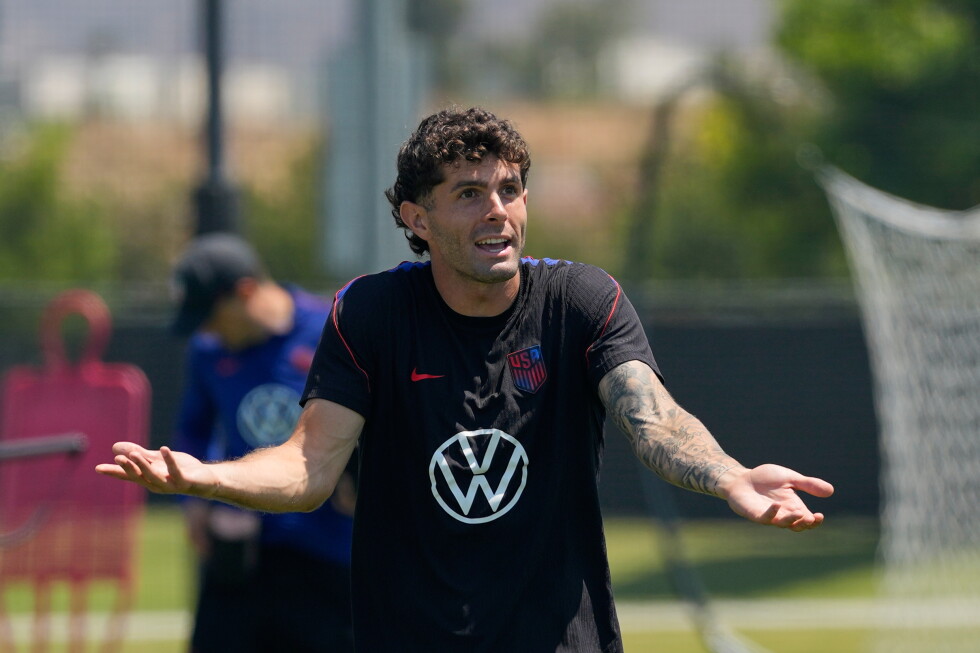
    Star attacker Christian Pulisic has returned to full team training after missing the Americans’ 2-0 victory over Australia, but head coach Mauricio Pochettino faces a tricky call on how much minutes to give his star, with the knockout round just days away and a guaranteed first-place finish already secured. The selection headache does not end with Pulisic: five key first-team players including Tyler Adams, Folarin Balogun, Chris Richards and Antonee Robinson all carry a single yellow card, and a second booking against Turkey would force them to miss the USMNT’s opening knockout round fixture. Their opponents, Turkey, are already eliminated from the tournament in their first World Cup appearance in 24 years, having failed to score a single goal across their opening two group matches.

    Thursday’s slate features six total matches across the United States, with a host of other storylines unfolding across every group. In Group D’s other final fixture, Paraguay and Australia will face off in Santa Clara, California, with the second knockout spot from the group still up for grabs. Australia only needs a draw to lock in second place and advance, while Paraguay can claim the spot with a win, and would still be in strong position for a best third-place finish with a draw. A loss for either side would leave their fate hanging on goal differential, adding extra tension to the encounter.

    The match carries extra personal meaning for Australia head coach Tony Popovic: exactly 20 years ago, Popovic scored his eighth and final international goal as a player in a friendly against Paraguay, the last cap of his international career. “I didn’t score many so I have to remind you of that,” Popovic said. “It was a special way to end my international career. To think that all these years later I’ll be the head coach and we’re up against Paraguay is special. That was a great day and hopefully tomorrow will be a special day for Australia against Paraguay once more.” Both sides will be missing key players: Australia will sit out injured defender Jacob Italiano and forward Mat Leckie, while Paraguay will be without suspended midfielder Miguel Almiron, who received a red card after a confrontation against Turkey. Coach Gustavo Alfaro confirmed that Miguel will start in Almiron’s place.

    In Group E, two contrasting narratives collide when Ecuador and three-time World Cup champion Germany face off in East Rutherford, New Jersey. Germany has already locked in first place in the group, but will be without starting defender Nico Schlotterbeck for the rest of the tournament after he suffered an ankle injury. For Ecuador, the match is a must-win: the side arrived at the tournament on a stunning 19-game unbeaten streak, but opened with a 1-0 90th-minute loss to Ivory Coast and followed that with a scoreless draw against Curacao, leaving them with just one point. Even a win would not guarantee advancement, but a loss would send the side home early.

    Also in Group E, Ivory Coast will face Curacao in Philadelphia with a historic milestone within reach. The African side is making its fourth World Cup appearance, and has never advanced to the knockout round. A win over Curacao would lock in that historic advancement, after the side opened with a 1-0 win over Ecuador and threw away a halftime lead to fall 2-1 to Germany. Ivory Coast’s previous best shot at knockout stage qualification came at the 2014 World Cup in Brazil, where they opened with a win over Japan before dropping their final two group matches. Curacao, the smallest nation at this year’s tournament, still holds an outside shot at advancement: the side needs a win over Ivory Coast and a win from Ecuador against Germany to overhaul the group’s top two, though their path is made far steeper by a 7-1 opening-match defeat to Germany that left them with a -6 goal differential.

    In Group F, the race for first place remains wide open heading into the final matchday, with the Netherlands and Japan both level on four points and a +4 goal differential. The Dutch face Tunisia, while Japan takes on Sweden, and both sides have pledged to focus entirely on their own matches rather than chasing updates on the other side’s result. “You have to focus on making sure you win the match,” said Netherlands head coach Ronald Koeman, whose side carries an ongoing 14-match unbeaten streak across World Cup play, excluding penalty shootouts. “We would love to be first in the group and of course the result will have an impact on that, but that’s not the most important thing. Playing this game is the most important thing.”

    Sweden, which sits on three points after a 5-1 loss to the Netherlands, can still claim top spot in the group if they defeat Japan and the Netherlands drop points against Tunisia. “It’s literally my first rodeo in terms of a World Cup so it’s going to be new to me,” said Sweden head coach Graham Potter. “But yeah, it’s best for us to try to get the positive results and focus on that.”

    The day also brings a slate of off-field and other on-field updates, including Lionel Messi celebrating his 39th birthday with Argentina’s squad during the tournament. In other results from earlier matchdays, Switzerland sealed first place in Group B with a 2-1 win over Canada, marking their seventh consecutive qualification to the knockout phase of a major international tournament (World Cup and European Championship). Bosnia-Herzegovina boosted their own qualification chances with a 3-1 win over Qatar, while Qatar’s Assim Madibo received a five-match ban after fracturing the leg of Canada’s Ismaël Koné during a group stage fixture. Brazilian superstar Neymar has arrived with the Brazil squad ahead of their upcoming match against Scotland, while Cape Verde goalkeeper Vozinha, who rose to stardom during the team’s World Cup run, is currently searching for a new club and has not ruled out a move to a Brazilian side.

    All six of Thursday’s matches will be broadcast across Fox, FS1, Telemundo and Peacock, kicking off at 4 p.m. EDT and running through the final 10 p.m. EDT kickoff between the U.S. and Turkey in Inglewood, California.