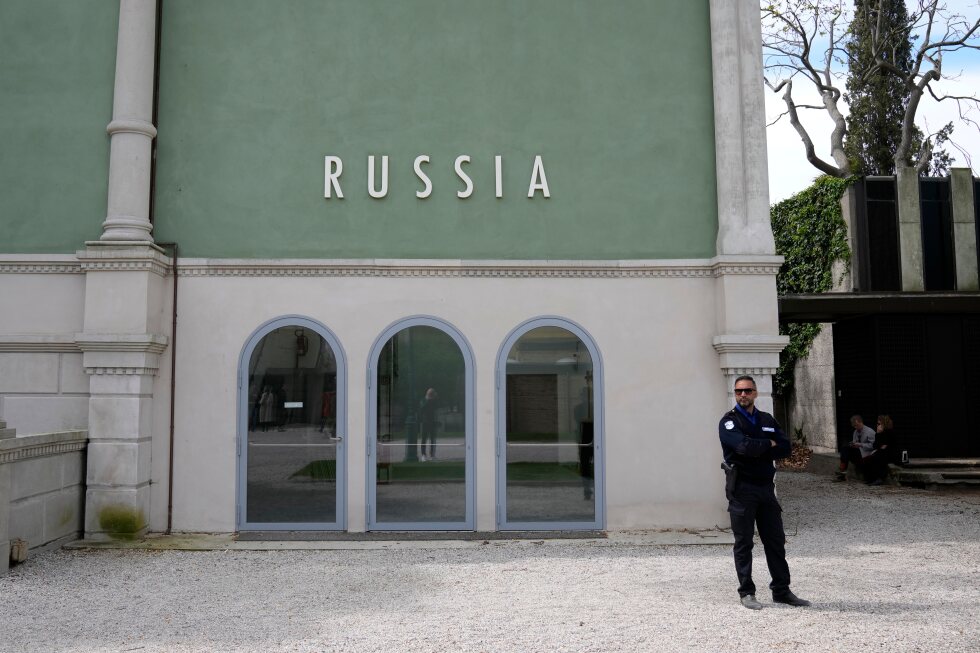
BRUSSELS/MILAN – The European Commission has followed through on its earlier threat to slash a €2 million ($2.4 million) grant to the Venice Biennale, one of the world’s most prestigious and long-running contemporary art events, after organizers confirmed Russia would participate in the 61st edition opening to the public on May 9. The funding cut was formally announced Thursday, with commission officials confirming the Biennale foundation has been officially notified of the decision and given 30 days to submit a formal defense of its choice to readmit Russian participation, the first since Moscow’s full-scale 2022 invasion of Ukraine.
European Commission spokesperson Thomas Regnier reiterated the bloc’s firm opposition to the move in comments to reporters Thursday. “We are strongly condemning the fact that the Fondazione di Biennale has allowed for the Russian Pavilion to open again,” Regnier said.
This return of Russian representation marks a sharp break from recent editions of the exhibition. Russian artists voluntarily withdrew from the 2022 Biennale, and Russia opted not to mount an exhibition in its permanent Giardini pavilion for the 2024 iteration, instead loaning the space to Bolivia. Russia’s last official participation in the International Art Exhibition before this year came in 2019.
In an official statement responding to the EU’s funding cut, Biennale organizers pushed back against the bloc’s pressure, arguing they lack the legal and institutional authority to bar a recognized nation from participating. Under the event’s long-standing rules, any country that holds formal diplomatic recognition from the Italian Republic is eligible to request a spot at the exhibition. Compounding this, the Russian government has held full ownership of its purpose-built pavilion in the historic Giardini park since the structure was completed in 1914, meaning organizers were only required to acknowledge Russia’s formal notice of participation, rather than approve or deny the request.
Sticking to its long-held principles of cultural openness, the Biennale emphasized its commitment to keeping art and culture free from exclusion and political censorship. “La Biennale di Venezia rejects any form of exclusion or censorship of culture and art. The Biennale, like the city of Venice, continues to be a place of dialogue, openness and artistic freedom, encouraging connections between peoples and cultures, with the constant hope for an end to conflicts and suffering,” the statement read.
Founded in 1895, the Venice Biennale is widely regarded as the most influential contemporary art event on the global calendar. The exhibition’s structure pairs a large-scale central curated show with independent national pavilions, each organized and funded by the participating countries. For the 2025 61st edition, a total of 99 countries will mount national exhibitions, with 29 hosted in purpose-built pavilions in the Giardini, and the remainder spread across the historic Arsenale shipyard and other venues throughout Venice. This is not the first time the Biennale has rejected international pressure to exclude a participating nation; organizers have previously refused calls to bar both Iran and Israel from taking part amid geopolitical controversy.