作者: admin

  • Warner Bros shareholders approve Paramount’s $111bn takeover

    Warner Bros shareholders approve Paramount’s $111bn takeover

    In a pivotal move that stands to reshape the global media and entertainment landscape, shareholders of Warner Bros Discovery have formally approved an $111 billion acquisition by Paramount, the media enterprise controlled by Skydance owner David Ellison. Once finalized, the merger will place Warner Bros Discovery’s unparalleled roster of iconic intellectual property and major media assets—including blockbuster franchises *Harry Potter* and *Game of Thrones*, influential cable news network CNN, streaming platform HBO Max, Food Network, Discovery Channel and an extensive lineup of sports content—under Paramount’s expanding corporate umbrella.

    The approval caps a chaotic multi-month bidding process that saw streaming giant Netflix first launch a takeover offer for Warner Bros Discovery, only to step aside after Paramount tabled a higher, competing bid that won over Warner Bros Discovery leadership. In a statement following the shareholder vote, Warner Bros Discovery chair Samuel DiPiazza framed the merger as a transformative step for both companies. “With Paramount, we look forward to creating an exceptional combined company that will expand consumer choice and benefit the global creative talent community,” DiPiazza said, adding that the deal will “unlock the full value of our world-class entertainment portfolio.”

    Paramount, which already boasts a stable of established media brands including Nickelodeon, CBS and Comedy Central, has positioned the merger as a critical step in its evolution into a major Hollywood powerhouse. The company is backed by tech billionaire Larry Ellison, founder of Oracle, and led by his son David Ellison, who serves as CEO and chairman of Paramount. David Ellison, a prominent Republican donor, is set to host a high-profile dinner for former president and 2024 presidential candidate Donald Trump Thursday at the U.S. Institute of Peace in Washington D.C., a gathering that has already drawn intense backlash from critics and protesters.

    A-list actor Mark Ruffalo is scheduled to join demonstrators outside the venue, who have labeled the event a “corruption gala” over the merger’s ongoing regulatory review and concerns about the Ellison family’s control of CNN. Donald Trump, who has repeatedly attacked CNN’s coverage of his political career and called for the network to be sold off amid the takeover, has previously described CNN’s leadership as “corrupt or incompetent” and argued they should not retain control of the network. These concerns have resonated with critics, who worry that the new ownership could compromise CNN’s journalistic independence.

    The merger has also sparked broad opposition across the creative community, with hundreds of prominent industry figures warning that the consolidation will deepen existing struggles in the entertainment sector. In April, more than 1,400 actors, directors and filmmakers—including Oscar winners Emma Thompson and Javier Bardem, and comedy star Ben Stiller—signed an open letter outlining their opposition. The letter argued the merger would lead to “fewer opportunities for creators, fewer jobs across the production ecosystem, higher costs, and less choice for audiences in the United States and around the world.”

    Paramount has pushed back against these criticisms, issuing a public pledge to support creative talent and expand opportunities for content creators. The company says the combined entity will open more distribution avenues for creators’ work, rather than reducing access.

    Despite shareholder backing, the merger still faces a critical regulatory hurdle: it must earn approval from both the U.S. Department of Justice and European Union competition watchdogs before it can move forward. Paramount has said it expects the merger to be finalized by September, pending the required regulatory clearances. If approved, the company plans to integrate Warner Bros Discovery’s HBO Max subscriber base into its existing streaming portfolio, creating one of the largest combined media companies in the world.

  • New bridge helps cement Lesotho as water lifeline for South Africa’s economic hub

    New bridge helps cement Lesotho as water lifeline for South Africa’s economic hub

    In southern Africa, a landmark infrastructure milestone has been reached this week with the official launch of the 825-meter Senqu Bridge, a key component of the massive Lesotho Highlands Water Project that is set to reshape cross-border water cooperation and economic development for two neighboring nations. Sitting 90 meters above the reservoir of the under-construction Polihali Dam at an elevation of over 2,500 meters above sea level, the bridge is the largest of three purpose-built crossings supporting the project’s second phase, designed to keep supply routes open once the dam’s water levels rise to full capacity.

    For context, South Africa’s most densely populated province, Gauteng – home to the country’s economic hub Johannesburg – already relies on Lesotho for 60% of its public water supply. The completed project will nearly double annual water exports from the small mountainous, landlocked kingdom to South Africa, boosting current output from 780 million cubic meters to more than 1.27 billion cubic meters per year. This expansion will secure a critical water lifeline for one of Africa’s largest industrial and commercial centers, addressing long-running water scarcity challenges that have plagued South Africa for decades.

    Rooted in a 1986 bilateral treaty between the two nations, the Lesotho Highlands Water Project stands as the largest foreign investment South Africa has ever undertaken, and ranks among the world’s biggest transboundary water infrastructure initiatives. With a total current estimated cost of 53 billion South African rand ($3.2 billion), the project includes a 120-kilometer network of tunnels that divert water from Lesotho’s high-altitude river systems into South Africa’s inland water grid. First launched in 1990, the first phase of the project is already operational, while the ongoing second phase is scheduled for completion between 2028 and 2029. Beyond expanding water exports, the project also increases Lesotho’s domestic hydropower generation, strengthening the country’s energy security and cutting its dependence on costly imported electricity.

    The $144-million Senqu Bridge itself is already being celebrated as a major engineering achievement for Lesotho, and it has delivered immediate economic benefits to local communities: approximately 1,200 construction jobs were created for Lesotho workers during its buildout, a critical boost for a country that declared a national economic emergency last year after unemployment surged to nearly 30%.

    At the bridge’s launch ceremony, South African President Cyril Ramaphosa emphasized the outsized importance of the project to his water-scarce nation. “South Africa is a water-scarce country and the waters of Lesotho’s highlands are vital to our country’s development. We remain forever grateful to the great Basotho nation for making water resources available to us,” Ramaphosa said.

    For Lesotho, a country classified by the World Bank as one of the poorest in the world, where half of the population lives below the national poverty line, the project delivers transformative long-term economic gains through increased water royalties and sustained revenue. Lesotho Prime Minister Sam Matekane framed the initiative as a core pillar of the country’s national development strategy, noting that the benefits are intended to reach everyday citizens rather than remain abstract policy wins. “The royalties and infrastructure that flow from this project are not incidental benefits. They are central to our development finance strategy,” Matekane said. “The project must deepen impact on the people, strengthen accountability in delivery and ensure that its benefits are not abstract but are felt in the daily lives of the people affected.”

    Several key construction milestones remain before the project is fully completed, including a 38-kilometer tunnel that will connect the new Polihali Reservoir to the existing Katse Reservoir, the primary holding facility from the project’s first phase. Lesotho, which is currently grappling with deepening economic strain caused by 50% U.S. tariffs on its key textile and mining exports and major cuts to U.S. foreign aid that previously supported most of the country’s public health programs, stands to see significant economic relief from the increased revenue the expanded project will generate.

  • 77-year journey of Chinese PLA Navy

    77-year journey of Chinese PLA Navy

    This document outlines the core intellectual property and operational terms for the digital content platform operated by China Daily Information Co (CDIC). First established in 1994, CDIC holds full copyright ownership over all material published across its website, including text, photographic content, multimedia assets, and all other forms of digital content distributed through the platform. Under the stated copyright regulations, no portion of CDIC’s published content may be republished, redistributed, or reused in any format without explicit prior written authorization granted by the company.

    In addition to intellectual property guidelines, the website includes a technical recommendation for visitors: users are advised to access the site via a browser configured to a display resolution of 1024*768 or higher to ensure the optimal browsing experience. The platform also lists its official regulatory registration details required for online multimedia publishing: its online publishing license number is 0108263, and its official business registration number is 130349.

    To help visitors engage further with the organization, the site also includes navigation links to key resource pages. These sections cover general information about China Daily, opportunities for placing advertising on the platform, contact information for organizational inquiries, open employment listings, and specific employment resources for expatriate workers. Visitors are also invited to follow China Daily’s official channels across social media and other digital platforms for regular updates.

  • Shanghai’s Changning district to host month-long floral extravaganza

    Shanghai’s Changning district to host month-long floral extravaganza

    Shanghai’s dynamic Changning district is preparing to welcome horticulture enthusiasts and casual visitors alike to a month-long floral celebration, as the Changning venue of the 2026 Shanghai International Flower Show is set to officially open its gates this Friday at the iconic Zhongshan Park.

    Spanning an entire 30 days, the event is designed to deliver an immersive visual feast that showcases the finest creative horticultural art from across the region and beyond. The core of the Changning district exhibition is rooted in Zhongshan Park, a well-loved green space with over a century of history that occupies roughly 200,000 square meters of prime land in downtown Shanghai. The park’s century-old landscape provides a naturally charming backdrop that complements the carefully curated floral displays, blending historical greenery with modern horticultural innovation.

    Beyond the central grounds of Zhongshan Park, the floral celebration will extend across the entire district, with several major commercial complexes joining the event to host their own customized themed floral installations. Participating venues include the popular Columbia Circle, Tianshan Hongqiao, Livat Plaza, and Xijiao Bailian, turning the whole district into a sprawling floral journey that lets residents and tourists encounter stunning blooms and horticultural creativity as they go about their daily routines. This cross-site integration of public park space and commercial districts is designed to expand accessibility of the flower show, bringing the beauty of seasonal blooms closer to more people, and boosting cultural and recreational activity across Changning district.

  • Israeli strike kills Lebanese journalist despite ceasefire

    Israeli strike kills Lebanese journalist despite ceasefire

    Just one week after a U.S.-brokered ceasefire was meant to de-escalate cross-border tensions between Israel and Lebanon, a deadly Israeli airstrike in southern Lebanon has claimed the life of a veteran Lebanese journalist and left another photojournalist injured, drawing widespread international condemnation for what press freedom advocates and Lebanese officials call a blatant violation of international humanitarian law.

    On Wednesday, 43-year-old Amal Khalil, a reporter for Lebanese daily newspaper Al-Akhbar, was documenting the aftermath of earlier Israeli strikes in the border town of al-Tayri when the attack unfolded alongside freelance photographer Zeinab Faraj. According to official accounts from Lebanon’s Ministry of Public Health, the sequence of violence began with an initial airstrike targeting a vehicle directly ahead of the two journalists, forcing them to seek immediate shelter in a nearby residential building. Moments later, a second precision strike hit the very building where the pair had taken cover.

    Rescue teams initially pulled Faraj from the rubble, who was left with a critical head injury from the blast. However, when first responders returned to the site to extract Khalil, Israeli forces reportedly opened direct fire on the rescue ambulance and deployed a stun grenade, blocking emergency crews from reaching the trapped journalist. It would be several hours before responders could finally access the site, where they confirmed Khalil had been killed.

    Khalil’s death was not an isolated incident: official tallies confirm she was one of seven people killed in a wave of Israeli strikes across southern Lebanon on Wednesday, marking the deadliest single day for fatalities since the 10-day ceasefire went into effect last week. That truce is scheduled to expire this coming Sunday, even as Israel has continued to carry out cross-border strikes, demolish civilian homes and conduct ground incursions into southern Lebanese territory in open violation of the ceasefire terms. Amid repeated Israeli breaches of the truce, Lebanese armed group Hezbollah responded earlier this week by launching a volley of rockets and drones targeting Israeli positions.

    Lebanese Prime Minister Nawaf Salam swiftly condemned the attack on the journalists, labeling it a deliberate war crime. “We will spare no effort in pursuing these crimes before the relevant international bodies,” Salam said in an official statement following the killing.

    Al-Akhbar, Khalil’s employer, released a statement mourning her loss, revealing that the journalist had received unspecified threats from unknown actors earlier this year. Press freedom watchdogs have echoed the condemnation, with the New York-based Committee to Protect Journalists (CPJ) saying it was deeply outraged by the attack.

    “The repeated strikes on the same location, the targeting of an area where journalists were sheltering, and the obstruction of medical and humanitarian access constitute a grave breach of international humanitarian law,” said CPJ’s regional director Sara Qudah. “CPJ holds Israeli forces responsible for the endangerment of Amal Khalil’s life and the injuries sustained by Zeinab Faraj.”

    The killing of Khalil fits into a broader, escalating pattern of journalist targeting by Israeli forces that has accelerated sharply since October 2023. To date, at least 262 journalists have been killed by Israeli forces in the Gaza Strip, with an additional 22 media workers killed in Lebanon since the escalation of cross-border conflict began last year. Targeting of journalists by Israeli forces is not a new development, but the sharp rise in fatalities over the past 12 months has prompted growing global alarm over press safety in the region.

  • Nigerian explores ancient trail and merchant culture in Huangshan

    Nigerian explores ancient trail and merchant culture in Huangshan

    On April 21, a cross-border group of global digital influencers embarked on a cultural exploration of the Dahongling Ancient Trail, nestled in Qimen County of Huangshan, East China’s Anhui Province. Among the visiting delegates was Oluwabunmi Jimoh, a content creator and influencer originating from Nigeria.

    During their immersive walk along the centuries-old path, Jimoh had the opportunity to connect with local resident Zheng Jimin, who has deep ancestral ties to the region. Zheng walked the group through the layered history of the trail, unpacking its long-standing role as a critical trade route and the cultural significance it holds for generations of local communities. The ancient pathway carries rich legacies of traditional Chinese merchant activity that shaped the economic and social fabric of the Huangshan region for hundreds of years.

    China Daily has published accompanying multimedia content alongside this report, including a full video that captures Jimoh’s experience and the key historical insights she gained during her visit. The excursion forms part of broader efforts to showcase lesser-known cultural heritage sites in China to international audiences, building cross-cultural understanding and highlighting the country’s diverse historical landscapes to global viewers.

  • EU pulls $2.4 million from Venice Biennale over Russia’s return

    EU pulls $2.4 million from Venice Biennale over Russia’s return

    BRUSSELS/MILAN – The European Commission has followed through on its earlier threat to slash a €2 million ($2.4 million) grant to the Venice Biennale, one of the world’s most prestigious and long-running contemporary art events, after organizers confirmed Russia would participate in the 61st edition opening to the public on May 9. The funding cut was formally announced Thursday, with commission officials confirming the Biennale foundation has been officially notified of the decision and given 30 days to submit a formal defense of its choice to readmit Russian participation, the first since Moscow’s full-scale 2022 invasion of Ukraine.

    European Commission spokesperson Thomas Regnier reiterated the bloc’s firm opposition to the move in comments to reporters Thursday. “We are strongly condemning the fact that the Fondazione di Biennale has allowed for the Russian Pavilion to open again,” Regnier said.

    This return of Russian representation marks a sharp break from recent editions of the exhibition. Russian artists voluntarily withdrew from the 2022 Biennale, and Russia opted not to mount an exhibition in its permanent Giardini pavilion for the 2024 iteration, instead loaning the space to Bolivia. Russia’s last official participation in the International Art Exhibition before this year came in 2019.

    In an official statement responding to the EU’s funding cut, Biennale organizers pushed back against the bloc’s pressure, arguing they lack the legal and institutional authority to bar a recognized nation from participating. Under the event’s long-standing rules, any country that holds formal diplomatic recognition from the Italian Republic is eligible to request a spot at the exhibition. Compounding this, the Russian government has held full ownership of its purpose-built pavilion in the historic Giardini park since the structure was completed in 1914, meaning organizers were only required to acknowledge Russia’s formal notice of participation, rather than approve or deny the request.

    Sticking to its long-held principles of cultural openness, the Biennale emphasized its commitment to keeping art and culture free from exclusion and political censorship. “La Biennale di Venezia rejects any form of exclusion or censorship of culture and art. The Biennale, like the city of Venice, continues to be a place of dialogue, openness and artistic freedom, encouraging connections between peoples and cultures, with the constant hope for an end to conflicts and suffering,” the statement read.

    Founded in 1895, the Venice Biennale is widely regarded as the most influential contemporary art event on the global calendar. The exhibition’s structure pairs a large-scale central curated show with independent national pavilions, each organized and funded by the participating countries. For the 2025 61st edition, a total of 99 countries will mount national exhibitions, with 29 hosted in purpose-built pavilions in the Giardini, and the remainder spread across the historic Arsenale shipyard and other venues throughout Venice. This is not the first time the Biennale has rejected international pressure to exclude a participating nation; organizers have previously refused calls to bar both Iran and Israel from taking part amid geopolitical controversy.

  • War in the Middle East: latest developments

    War in the Middle East: latest developments

    The ongoing Middle East conflict has entered a new phase of heightened tension centered on the strategic Strait of Hormuz, with a series of fast-moving developments unfolding across the region in recent days that threaten to further disrupt global energy markets and regional security.

    In one of the most confrontational moves, former U.S. President Donald Trump, who currently holds the U.S. presidency in this timeline, has issued a direct military order targeting Iranian activity in the Strait of Hormuz. In a public social media post, Trump vowed that the U.S. Navy will destroy any small craft caught laying naval mines in the key waterway, ramping up American pressure on Tehran to immediately reopen the passage that carries roughly a fifth of the world’s daily oil consumption. “I have ordered the United States Navy to shoot and kill any boat, small boats though they may be… that is putting mines in the waters of the Strait of Hormuz,” Trump’s post read.

    Iran, which has effectively blocked the Strait of Hormuz since the outbreak of open conflict with the U.S. and Israel, has already collected its first batch of revenue from controversial new tolls it imposed on vessels passing through the waterway, a senior Iranian parliamentary official confirmed Thursday. Deputy speaker of parliament Hamidreza Hajibabaei told state-run Tasnim news agency that the initial toll revenue has already been deposited in an account held by Iran’s Central Bank. Tehran has repeatedly rejected calls to reopen the strait, tying any move to lift the blockade to an end to the U.S. naval blockade of Iranian ports. Speaking after the first round of indirect peace talks hosted in Islamabad, Iranian parliament speaker Mohammad Bagher Ghalibaf emphasized that the strait will remain closed as long as U.S. sanctions and blockades remain in place. “A complete ceasefire only has meaning if it is not violated through a naval blockade, Reopening the Strait of Hormuz is not possible amid a blatant violation of the ceasefire,” Ghalibaf stated.

    U.S. defense officials have pushed back against recent reporting that suggested the Pentagon estimates clearing all Iranian-laid mines from the Strait of Hormuz could take up to six months to complete. The Pentagon called the original Washington Post report, which cited three anonymous officials familiar with a classified briefing for House Armed Services Committee members, “cherry picking” and outright false. U.S. forces have already stepped up maritime interdiction operations targeting Iranian oil shipments in recent days: this week alone, U.S. military boarding teams have seized two vessels linked to illicit Iranian oil exports, including the stateless oil tanker M/T Majestic X, which was intercepted in the Indian Ocean while carrying sanctioned Iranian crude. As part of its broader blockade against Iran, U.S. Central Command announced late Wednesday that it has ordered 31 vessels to turn around or return to port, the vast majority of which are oil tankers, with most complying with the U.S. directions.

    Tensions have also flared along the Israel-Lebanon border following an Israeli airstrike that killed a Lebanese journalist in southern Lebanon. Lebanese national leaders have formally accused Israel of committing a war crime in the targeted strike, while the Israeli military announced it is conducting an internal review of the incident. In a diplomatic development, Israel and Lebanon are set to convene a new round of ceasefire talks in Washington on Thursday. Ahead of the negotiations, Lebanese officials plan to request a one-month extension of the current bilateral ceasefire, which is set to expire in coming days. Israeli officials struck a conciliatory tone ahead of the talks, stating the country holds no “serious disagreements” with the Lebanese government, and called for joint action against the Iran-aligned Hezbollah movement – which has refused to participate in the negotiations and opposes any deal reached through them.

    In a separate development within Iran, Iranian authorities hanged Sultan-Ali Shirzadi-Fakhr earlier this week after convicting him of membership in the banned opposition group People’s Mujahedin Organisation (MEK) and alleged espionage collaboration with Israeli intelligence services. The conviction and execution were confirmed by Iran’s judiciary via its official Mizan Online website.

    The closure of the Strait of Hormuz has already sent global oil and gas prices soaring, delivering a major shock to already fragile economies around the world and disrupting global energy supply chains.

  • AFL 2026: Western Bulldog star Aaron Naughton will get a neck scan on Friday after his big fall

    AFL 2026: Western Bulldog star Aaron Naughton will get a neck scan on Friday after his big fall

    The Western Bulldogs have been hit with another devastating injury blow just one week after losing key young talent Sam Darcy to a season-ending ACL tear, with star spearhead Aaron Naughton carried off the field on a stretcher during Thursday night’s lopsided 66-point loss to Sydney at Melbourne’s Marvel Stadium.\n\nNaughton was stretchered from the ground in the third quarter after a hard landing when he jumped to take a contested mark, leaving fans and teammates unsettled as medical teams attended to him on the pitch. Speaking after the match, Bulldogs head coach Luke Beveridge confirmed that the star forward was cleared to leave the stadium with the team after the incident, and will undergo full diagnostic scans on Friday to clarify the extent of his injury.\n\nBeveridge told reporters that initial assessments point to a soft tissue strain in the side of Naughton’s neck, adding that a major positive sign from early checks is that the 24-year-old showed no signs of concussion. “He’s going to go home now and he’ll have his neck looked at tomorrow, we’ll get back to you on that,” Beveridge said. “He appears to have strained down that side of his neck from the incident. The bright side is there’s no sign of concussion but we’ll have to report in once we get something more definitive from a scan.”\n\nThe latest injury setback comes on the heels of last week’s devastating loss of Sam Darcy, who was ruled out for the rest of the AFL season after tearing his anterior cruciate ligament during the Bulldogs’ heavy defeat to Geelong. When asked about the string of personnel blows hitting the club, Beveridge acknowledged that the team has faced significant challenges in recent weeks, both on and off the field, during their current three-match losing streak.\n\nBeveridge pulled no punches in his assessment of Thursday’s performance, admitting that Sydney outmatched the Bulldogs across almost every area of the ground after a promising opening from his side. “We started off the game in good fashion and the things we spoke about beforehand came to the fore,” he said. “As the night went on, we probably needed our more experienced players really influencing the game, obviously Marcus Bontempelli was (influential) but we didn’t have enough elsewhere.”\n\nThe coach noted that while the club’s younger players showed glimpses of improvement as the match progressed, Sydney’s intensity, speed and spread across the ground proved too much for his undermanned side. The Swans’ pressure forced the Bulldogs into repeated uncharacteristic errors, turning the contest ugly in the final stages. “Fifteen back-half turnovers in that last quarter we gave up, that’s just extraordinary, that’s skill, that’s composure, it’s fatigue, it’s many things,” Beveridge said. “It turned really, really ugly for us. We have to work through that together and remain optimistic.”\n\nBeveridge admitted that these repeated late-game turnovers created the open opportunities that allowed Sydney key forward Charlie Curnow to boot a match-winning seven goals, adding that Curnow’s elite one-on-one performance was too much for the Bulldogs’ defensive unit to contain. “Curnow was quite exceptional one-on-one, none of our backs could stop him from taking those contested marks which is disappointing,” he said. “We think we should be better than that but he had obviously a very influential game.”\n\nWith the Bulldogs now stuck in a three-game losing skid, the side has barely a week to reset and fix their structural errors before they face a stern test next week, hosting an in-form Fremantle side that is pushing hard for a top-four position this season.

  • Injured Lamine Yamal ‘expected to be fit’ for World Cup

    Injured Lamine Yamal ‘expected to be fit’ for World Cup

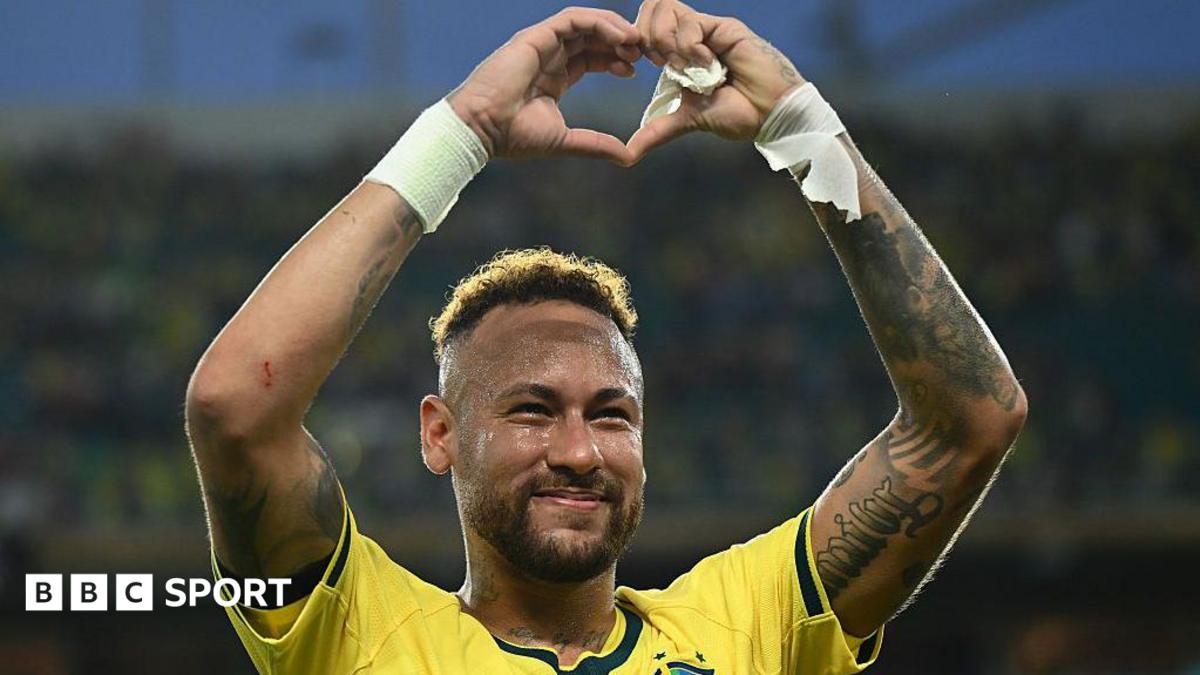
    One of European football’s most exciting young talents has suffered a season-ending setback, as 18-year-old Barcelona and Spain forward Lamine Yamal confirmed a left hamstring injury that will rule him out for the remainder of Barcelona’s 2024-25 La Liga campaign. Fortunately for both club and country, initial medical assessments indicate Yamal will be fully fit in time to represent Spain at this summer’s FIFA World Cup.

    The injury occurred during Barcelona’s hard-fought 1-0 win over Celta Vigo this past Wednesday, just moments after Yamal scored the game’s opening goal from the penalty spot in the 40th minute. Immediately after converting the kick, the teenage prodigy began signaling to the Barcelona bench that he was in discomfort, before collapsing to the pitch clutching his injured left hamstring. Medical staff assisted Yamal off the field, and he left the stadium’s playing area straight for the club’s medical tunnel for immediate evaluation.

    Barcelona officially confirmed the details of Yamal’s injury and treatment path in a statement released Thursday. The club confirmed that the winger will undergo a conservative, non-surgical treatment plan to rehabilitate the tear, and while he will miss all six of Barcelona’s remaining league matches this season, the projected recovery timeline puts him on track to be ready for the World Cup kickoff in June.

    Yamal himself addressed the injury in a public post on his official Instagram account Thursday, opening up about the disappointment of missing the club’s run-in to the title. “This injury leaves me off the field at the time I most wanted to be, and it hurts more than I can explain,” he wrote. “It hurts not being able to fight with my team-mates, not being able to help when the team needs me. But I believe in them and I know they’re going to drop their souls in every game.”

    The young star also emphasized that he will remain engaged with the squad throughout his recovery, saying, “I’ll be there, even if it’s from the outside, supporting, encouraging and pushing as one more. This is not the end, this is just a break. I’ll come back stronger, more eager than ever, and next season will be better.”

    As defending La Liga champions, Barcelona currently hold a commanding position at the top of the league table, holding a nine-point lead over second-place rivals Real Madrid. The two Spanish giants are set to face off in a high-stakes clash at Barcelona’s Camp Nou on May 10, one of the six remaining matches Yamal will miss while recovering.

    For the Spanish national team, the timeline of the injury is a major relief. La Roja will kick off their 2025 World Cup Group H campaign against Cape Verde on June 15, followed by group stage matches against Saudi Arabia on June 21 and Uruguay on June 27. Yamal, one of Spain’s most dynamic attacking talents, is expected to play a key role in the team’s World Cup run, and his projected timely recovery removes a major source of concern for national team coaching staff.

    The report was first published by BBC Sport on August 16, 2025.