作者: admin

  • At least 32 dead, 700 injured in Venezuelan earthquakes: acting president

    At least 32 dead, 700 injured in Venezuelan earthquakes: acting president

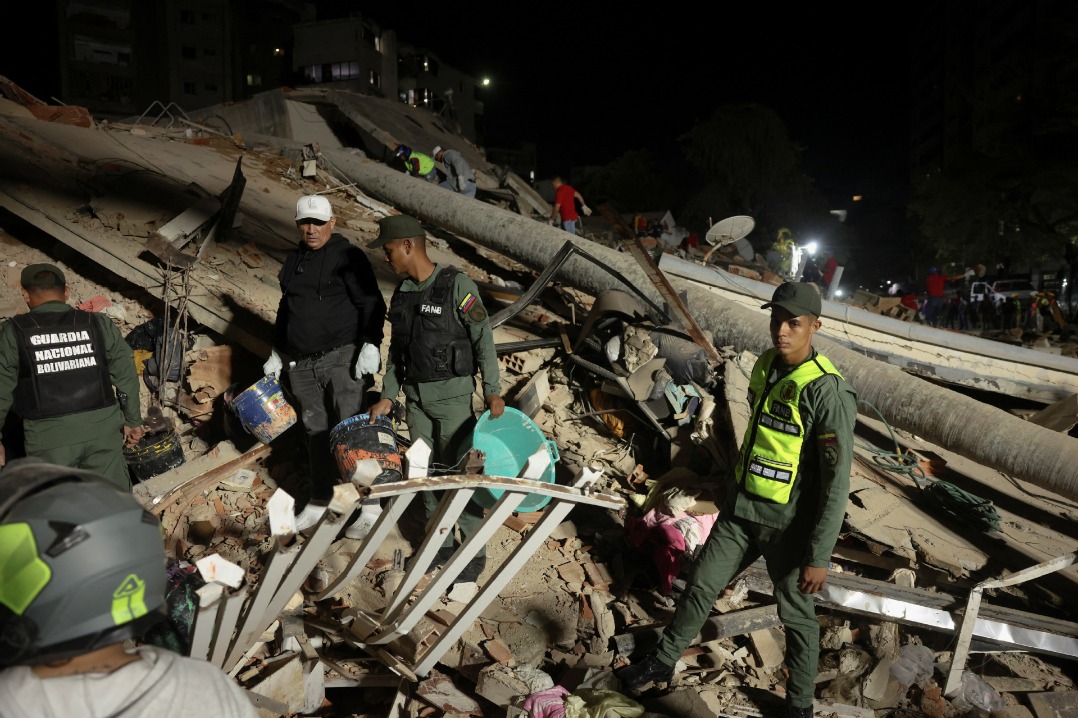
    On the night of June 23, 2026, two consecutive powerful earthquakes struck western Venezuela, triggering a major humanitarian crisis that has already left at least 32 people dead and more than 700 others injured, acting Venezuelan President Delcy Rodriguez confirmed in an official statement early Thursday.

    According to data from the United States Geological Survey (USGS), the first tremor, registering a magnitude of 7.1, hit at 22:04 GMT, just 60 seconds before a stronger 7.5-magnitude aftershock followed. Both seismic events originated near the coastal town of Moron, roughly 160 kilometers west of the capital Caracas, at a shallow depth of 10 kilometers. Seismologists note that shallow quakes of this magnitude typically produce far more severe destructive effects on built infrastructure and human populations than deeper events of the same strength.

    Rodriguez confirmed that the northern coastal state of La Guaira sustained the worst damage, with dozens of structures fully collapsed, labeling the region a full “disaster zone” in her address on Venezuelan state television. She added that the current casualty count of 32 fatalities and 700 injuries does not yet include impact data from La Guaira, as widespread connectivity outages have cut off communication with hard-hit areas of the state, meaning the final death toll is expected to rise as rescue teams reach cut-off communities.

    In response to the disaster, the Venezuelan government has declared a national state of emergency, activating full-scale search and rescue operations across affected regions. A series of emergency public safety measures have also rolled out: all school activities nationwide have been suspended indefinitely, with educational facilities repurposed as supply collection centers and temporary emergency shelters for displaced residents. Public transit including the Caracas Metro and the Caracas-Miranda railway line has been temporarily halted as a precaution, and all non-essential government and private activities have been canceled for the remainder of the week. The nation’s entire public and private health network has also been activated, with priority placed on treating injured residents in the most affected regions.

    As rescue efforts ramp up, the Venezuelan government has welcomed international support, with international rescue teams expected to arrive on the ground within hours. Qatar has already dispatched rescue personnel scheduled to arrive in the country by Friday, with additional teams from Mexico and El Salvador also en route. Multiple nations have quickly pledged humanitarian support: Ecuadorian President Daniel Noboa has ordered immediate delivery of emergency aid supplies, Indian Prime Minister Narendra Modi stated India stands prepared to provide all possible assistance, and a Chinese Foreign Ministry spokesperson confirmed Thursday that China will deliver all feasible support tailored to Venezuela’s on-the-ground needs.

  • Key figure in South Africa police corruption scandal pleads guilty

    Key figure in South Africa police corruption scandal pleads guilty

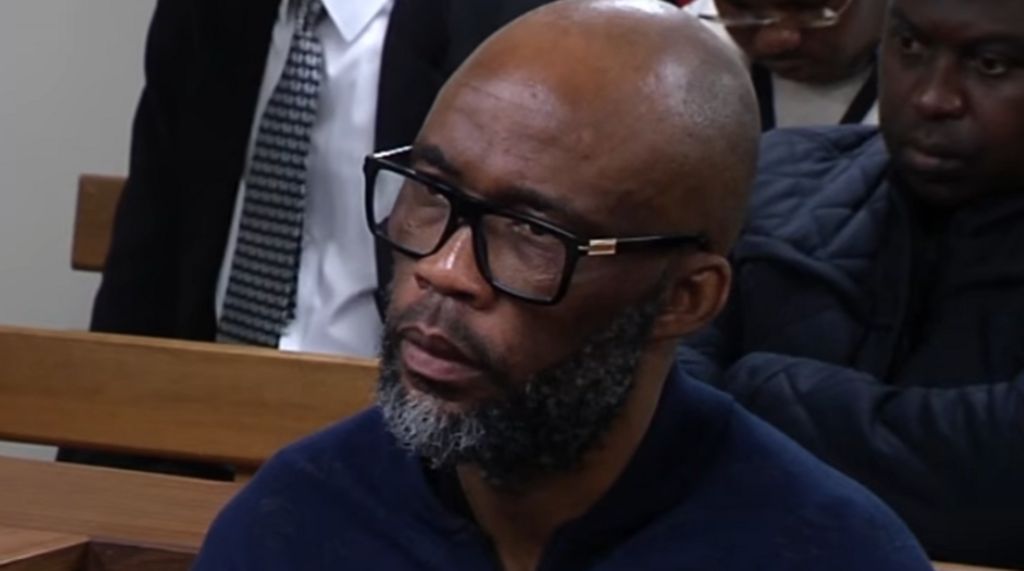
    South Africa’s high-stakes investigation into systemic police corruption has taken a dramatic turn, with a central figure in the sprawling inquiry agreeing to cooperate with state prosecutors in exchange for a reduced sentence. Vusimusi “Cat” Matlala, a 49-year-old business owner at the heart of the case, has entered guilty pleas to three serious charges: corruption, fraud, and money laundering, as part of a negotiated plea agreement put before a Pretoria court.

    Matlala stands accused of orchestrating bribes paid to senior police leaders to secure a massive 360 million South African rand (equivalent to roughly $22 million) public health tender for his company, Medicare24, back in 2024. According to state advocate Santhos Manilall, the agreement requires Matlala to provide firsthand evidence against multiple high-ranking officials who have been linked to the graft scheme. If the magistrate approves the deal, Matlala will serve an eight-year prison term, a sentence prosecutors argue is a fair trade for unprecedented access to hidden details of the corruption network.

    “For the first time we have an accused who has… given us detail that we would not have been made aware of,” Manilall told the court, noting that it took nearly two months of closed negotiations to finalize the cooperation agreement. The deal mandates that Matlala deliver full, truthful testimony in all upcoming prosecutions connected to the scandal. A final ruling on whether the court will accept the agreement is expected next week.

    Among the prominent figures already facing charges tied to this case is South Africa’s national police chief Gen Fannie Masemola, who has repeatedly denied all wrongdoing. This inquiry is one of multiple parallel probes into alleged criminal infiltration of South Africa’s law enforcement agencies.

    Matlala also faces a separate, unrelated murder charge which he has denied. In addition, a witness testifying before the ongoing Madlanga Commission, the public inquiry into police graft, has named Matlala as a member of a drug trafficking cartel that claims to have deeply penetrated national police ranks. Matlala has not issued a public response to that cartel allegation, though he told a separate parliamentary corruption inquiry last year that he had no personal connections to senior police officers or politicians. He has not yet testified before the Madlanga Commission.

    The Madlanga Commission was launched last September, following a bombshell allegation from senior police officer Lt-Gen Nhlanhla Mkhwanazi, who claimed last July that well-organized crime groups had successfully infiltrated multiple levels of the South African government. Witness testimony throughout the commission’s proceedings has repeatedly centered on claims of coordinated collusion between underworld criminal leaders and senior law enforcement officials, laying bare long-suspected systemic corruption within the country’s police institutions.

  • How Aussies taught kids to stay safe in the sun

    How Aussies taught kids to stay safe in the sun

    Skin cancer has long been one of the most pressing public health challenges for sun-drenched nations like Australia, where high ultraviolet radiation levels put residents at constant elevated risk. Four decades ago, public health officials made a pivotal decision to tackle this crisis from the ground up, focusing on the youngest generation to build lifelong safe sun habits. In 1981, they launched a revolutionary nationwide public education campaign that swapped dense clinical messaging for approachable, memorable pop culture-style content to teach children how to protect themselves from harmful sun exposure.

    The centerpiece of this innovative campaign was Sid the Seagull, a cheerful yellow cartoon character paired with an upbeat, catchy jingle that quickly embedded itself in the national consciousness. Unlike traditional public health announcements that relied on dry warnings and statistics, the campaign framed sun safety as a simple, everyday habit children could easily adopt. By leveraging a beloved cartoon mascot and an easily recallable tune, public health experts made core lessons about seeking shade, wearing protective clothing, and applying sunscreen stick with kids far more effectively than any textbook or lecture could.

    Decades later, this pioneering initiative is still held up as a global model for community-focused public health education. What began as a single national campaign to reduce rising skin cancer rates has reshaped how countries around the world approach sun safety outreach, proving that accessible, engaging messaging targeted at children can create generational shifts in health behavior.

  • By the numbers: What to know about Europe’s record-breaking heat wave

    By the numbers: What to know about Europe’s record-breaking heat wave

    A punishing high-pressure heat dome has trapped an extraordinary mass of hot air from North Africa over much of Western Europe this week, driving temperatures across the continent above 40 degrees Celsius (104 Fahrenheit) and triggering a wave of all-time temperature records — even though the peak of the summer heat season is still weeks away.

    What makes this heat event particularly anomalous is its timing: extreme heat of this severity has arrived far earlier than the mid-summer window when such conditions are normally expected. The combination of soaring peak temperatures and unusually high overnight readings, paired with stifling humidity, has created conditions far more akin to a tropical climate than the temperate weather the region typically experiences in June. Day after night after day, existing national and regional temperature records have fallen one after another.

    The hot air mass originating in North Africa has spread across Spain, France, Belgium, the Netherlands and the United Kingdom, bringing searing conditions to regions that rarely see prolonged extreme heat. Unlike many warmer climate regions, most buildings and homes across these countries lack widespread, accessible air conditioning, leaving millions of residents without a reliable way to escape the oppressive heat.

    While meteorologists forecast that temperatures will gradually cool in the coming days, climate experts warn that the worst of the 2024 European summer is still ahead, with the historically hottest months of July and August still to come. To put the scale of this early heat wave in perspective, a series of staggering record-breaking measurements illustrate its unprecedented breadth and intensity:

    In the small southwestern French town of Pissos, observers recorded a high of 43.8 degrees Celsius (110.8 Fahrenheit) on Wednesday, making it the hottest temperature recorded across France during this heat event. For context, this reading is far above the average June high for the region of 25 degrees Celsius.

    Across the entire country of France, the Meteo France national weather agency confirmed that the 24-hour average temperature hit 30 degrees Celsius (86 Fahrenheit) at 30 monitoring stations on Wednesday. This marks the first time in recorded French weather history that a nationwide 24-hour average has reached this threshold, officially making Wednesday the hottest day France has ever experienced. Unlike heat events that only push daytime highs in small regions, this average — measured across both day and night hours across dozens of locations — confirms that this heat wave is far more geographically extensive than any previous heat event on record. In response to the crisis, French authorities placed more than three-quarters of the country under red-level extreme heat alerts, another first in the nation’s history.

    Across the English Channel, the United Kingdom also logged a new milestone on Thursday: a reading of 36.4 degrees Celsius (97.5 Fahrenheit) in Somerset, southern England, making it the hottest June day ever recorded in the country. UK meteorological services have extended red heat warnings for most of central and southern England, as well as Wales, urging residents to stay hydrated and avoid unnecessary outdoor activity.

    Even overnight temperatures have reached record levels, leaving vulnerable populations with no relief from the swelter. Germany’s national weather service reported that temperatures did not drop below 26.2 degrees Celsius (79.2 Fahrenheit) in Bad Bergzabern, a town in the western state of Rhineland-Palatinate. That reading matches the all-time record for Germany’s warmest night, originally set in July 2019. Across the Channel in Plymouth, England, overnight temperatures only fell to 23.0 degrees Celsius (73.4 Fahrenheit), a provisional new record for the warmest June night in the country. High humidity has trapped heat close to the ground across the region, keeping temperatures elevated well after sunset for millions of people.

    The extreme heat has already claimed lives. In France alone, at least 40 people have died in drowning incidents over the past week as residents flocked to rivers and lakes to cool off, ignoring repeated official warnings about the dangers of unsupervised swimming. French Prime Minister Sébastien Lecornu confirmed that most of the victims were young people. Related heat-related hazards have spread across the continent, with organizers of Formula 1’s Austrian Grand Prix declaring an official heat hazard as the event proceeds amid scorching conditions. This extreme heat event also coincides with a landmark court ruling on climate change in Paris, adding a layer of urgency to ongoing policy debates about climate adaptation and mitigation across Europe.

    Even Spain, a country familiar with summer heat, has faced extraordinary conditions. The northern Spanish village of Tama, long known for its cool, green Atlantic-facing landscape, hit an all-time record high of 43.7 degrees Celsius (110 Fahrenheit) earlier this week, a remarkable reading for a region that typically enjoys temperate summer weather. This heat wave has extended far into Spain’s normally cooler northern Atlantic coastal regions, areas that rarely face extreme heat warnings.

    Reporting for this article was contributed by Pan Pylas in London, Sylvie Corbet in Paris, Geir Moulson in Berlin, James Ellingworth in Duesseldorf, Germany, and Joseph Wilson in Barcelona.

  • Poland’s Tusk calls for ‘mutual respect’ during row with Ukraine

    Poland’s Tusk calls for ‘mutual respect’ during row with Ukraine

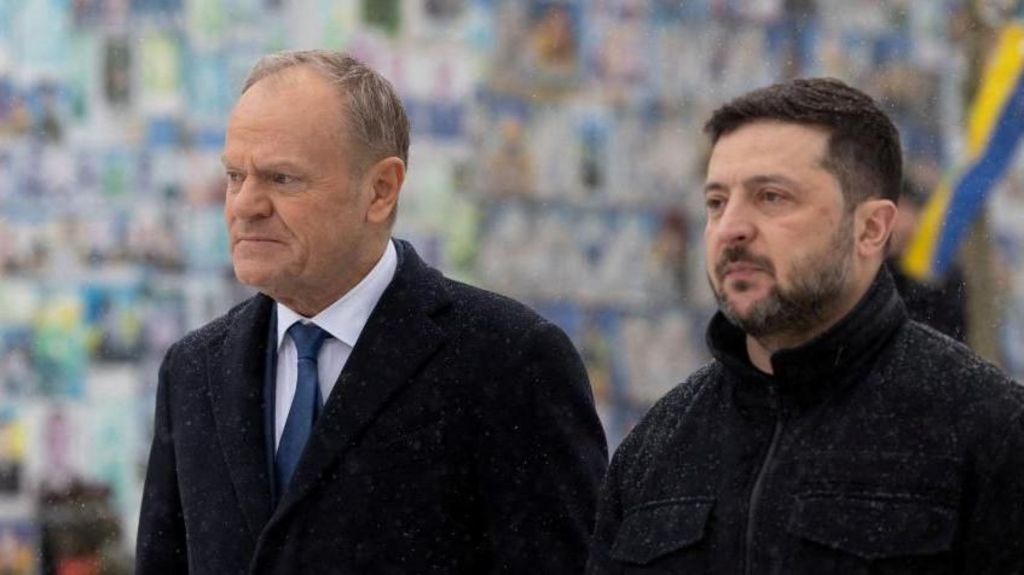
    A brewing diplomatic rift between two key Eastern European allies, Poland and Ukraine, has cast a shadow over the 2024 Ukraine Recovery Conference held in the Polish coastal city of Gdansk. Ukrainian President Volodymyr Zelensky skipped the high-profile summit, an absence that came directly after Warsaw stripped him of its highest state honor over a controversial naming decision by Kyiv.

    The core of the conflict traces back to a mid-20th century historical disagreement over the Ukrainian Insurgent Army, better known by its acronym UPA. For Ukrainians, the UPA, which operated across Eastern Europe through the 1940s and 1950s, is widely viewed as a band of heroic freedom fighters who battled for Ukrainian independence against multiple occupying powers, including Nazi Germany and the Soviet Red Army, as well as interwar Polish governing forces. But Poland holds a fundamentally different view: it accuses the UPA of perpetrating a mass genocide that killed roughly 100,000 ethnic Polish civilians in the Volhynia region — now part of modern-day northwestern Ukraine — between 1943 and 1945. Tensions flared after Ukraine formally named a military unit in honor of the UPA last month, a move that Polish President Karol Nawrocki lambasted as “outrageous”, “incomprehensible” and “deeply disappointing” that inflicted damage on decades of built trust between the two nations.

    In response to the naming decision, Polish authorities revoked the Order of the White Eagle — Poland’s highest state decoration, which had been awarded to Zelensky in 2023. Shortly after the revocation was announced, Zelensky confirmed he would return the honor to Poland. In a public statement this week, Zelensky emphasized that Ukraine remains “open to all meaningful formats of engagement with Poland in order to try to avoid conflicting interpretations of the difficult and painful chapters of our shared past”, and added that Kyiv retains profound gratitude to the Polish people for their unwavering support and longstanding cooperation throughout the war.

    Opening the two-day reconstruction summit on Thursday, Polish Prime Minister Donald Tusk stressed that durable progress for Ukraine’s future can only be founded on “truth, on mutual respect, on an understanding of history”. Unlike past iterations of the annual conference, where Zelensky personally led Ukraine’s delegation, this year’s Ukrainian contingent is headed by Prime Minister Yulia Svyrydenko.

    Tusk has previously moved to de-escalate the public dispute, noting that the rift between the two allies is a outcome that “delights” Russian President Vladimir Putin, and calling on both Zelensky and Nawrocki to “calm emotions, not to stoke tensions”.

    The timing of this diplomatic clash could not be more sensitive for Ukraine. Kyiv is currently locked in a brutal defensive war against Russia’s full-scale invasion, and is actively lobbying the international community for billions of dollars in additional military aid and post-conflict reconstruction investment. It is also working to demonstrate its readiness to advance European Union accession talks, which launched their first formal negotiating phase last week in Luxembourg. Both reconstruction investment and EU accession are scheduled to be top of the agenda at the Gdansk summit. Even amid the dispute, Nawrocki has stressed that the historical disagreement will not alter Poland’s longstanding commitment to supporting Ukraine in its war against Russian aggression.

    Poland has been one of Ukraine’s most stalwart allies since Russia launched its full-scale invasion in February 2022. It has absorbed hundreds of thousands of Ukrainian refugees fleeing the war, and serves as a critical logistics and transit hub for Western military and humanitarian aid bound for Kyiv’s front lines. This year’s conference draws senior representatives from across the European Union, including European Commission President Ursula von der Leyen and European Council head Antonio Costa, alongside senior officials from Bulgaria, Estonia, Finland, Latvia, Lithuania, Romania and Sweden.

  • Venezuela earthquakes in maps and charts – where they hit and how severe they could be

    Venezuela earthquakes in maps and charts – where they hit and how severe they could be

    A catastrophic seismic event has left Venezuela reeling from widespread destruction, after two powerful earthquakes hit just seconds apart in the country’s northern region, claiming at least 164 lives and leaving hundreds of people injured.

    According to data from the United States Geological Survey (USGS), the first tremor, registering a magnitude of 7.2, struck at 18:04 local time (22:04 GMT) on June 25, 2026, centered just 23 kilometers southeast of Yumare, a small town located west of the Venezuelan capital Caracas. Barely 38 seconds later, a second, stronger 7.5-magnitude quake hit the same general area, amplifying the destructive force across the region.

    Seismologists explain that a quake’s destructive power depends on more than just its magnitude. Depth of the epicenter, local population density, and regional building quality all play critical roles in determining damage severity. The first earthquake was recorded at a depth of 20.3 kilometers below the Earth’s surface, while the second was far shallower at just 10 kilometers deep – a factor that greatly increases the intensity of shaking and resulting damage to surface infrastructure. Following the event, the USGS issued a risk assessment estimating a 44% probability that the final death toll could exceed 10,000, as rescue teams continue to clear rubble and reach remote affected areas.

    Geographically, Venezuela sits along the highly active tectonic boundary where the Caribbean Plate and South American Plate slide past one another. The USGS notes that the twin quakes were almost certainly triggered by the sudden release of accumulated tectonic friction along this boundary, a common geologic driver of major seismic events in the region.

    Widespread damage has been reported across multiple states. The strongest shaking from the second quake damaged or destroyed countless structures in Caracas and the nearby coastal town of La Guaira. Venezuela’s Interior Ministry confirmed that five additional states – Trujillo, Yaracuy, Carabobo, Aragua and Miranda – have also sustained serious impacts.

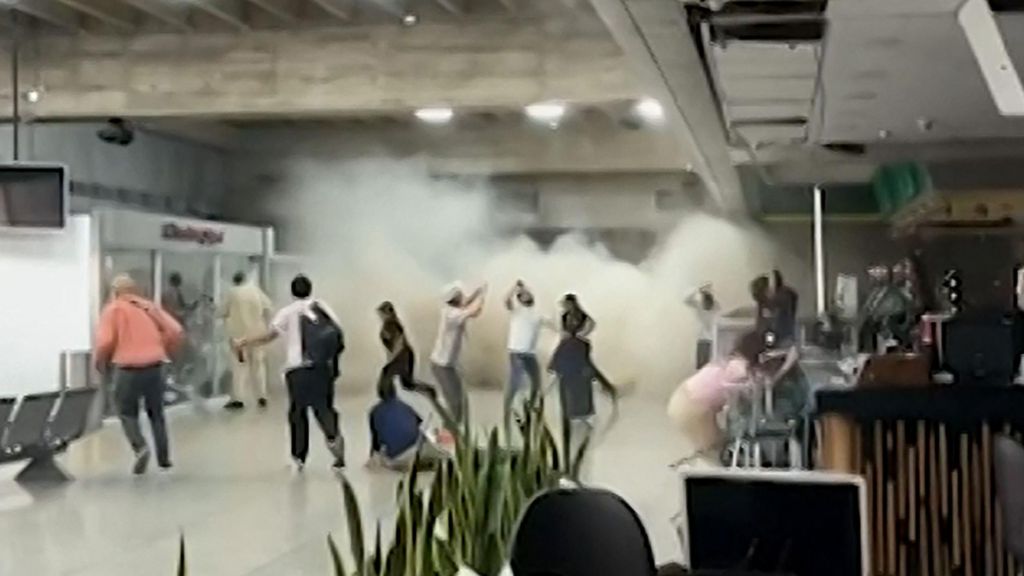
    Footage verified by the BBC shows one of the most dramatic examples of destruction: a 10-story hotel in La Guaira that has been completely reduced to rubble. Only the building’s entrance remains standing, with the collapsed remains of the rest of the structure piled high around and above it. Shockingly captured video from inside Caracas’ main international airport, located on the capital’s outskirts, shows clouds of dust and chunks of debris raining down from terminal ceilings amid the shaking. Interim President Delcy Rodríguez announced that the country’s primary international air hub has been indefinitely closed due to the severe structural damage it sustained.

    As emergency response teams begin to deploy across the affected regions, authorities are still working to compile full casualty and damage reports, with the confirmed death toll expected to rise in the coming days.

  • A cliff collapses near Biarritz lighthouse, killing a diver and leaving another missing

    A cliff collapses near Biarritz lighthouse, killing a diver and leaving another missing

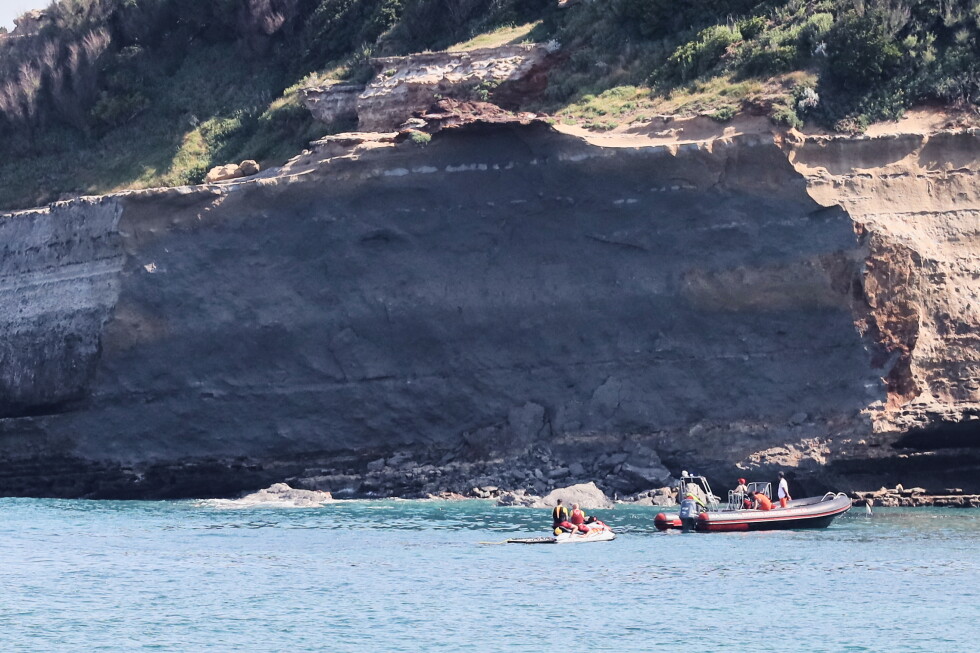
    A dramatic cliff collapse on the scenic Atlantic coastline of Biarritz, the popular southwestern French resort town, has left one diver dead and another unaccounted for, local authorities confirmed Thursday. The massive section of cliff near the town’s iconic lighthouse gave way shortly after 8:20 p.m. local time on Wednesday, when three recreational divers were exploring the rocks at the base of the formation, according to an official statement released by Biarritz City Hall. Of the three divers caught in the collapse, one was able to climb to safety without injury and was immediately taken in by first responder teams who arrived on the scene rapidly. Emergency response units, including a team of specialized rescue divers, launched a large-scale search operation immediately after the incident. By Thursday, search crews had recovered the body of a female diver who was killed in the collapse. Search efforts for the second missing diver resumed at first light Thursday, with crews continuing to comb the area around the collapsed cliff. In the wake of the incident, local officials have implemented strict safety restrictions to prevent further harm: all public access to the area within 300 meters (985 feet) of the damaged cliff is prohibited, and the ban extends to all swimming and boating activities in that zone. The restrictions come as authorities warn of a high risk of additional cliff collapses in the area, as unstable sections of the rock formation remain standing after the initial incident. Biarritz, located in southwestern France along the Atlantic Basque Coast, is one of Europe’s most beloved tourist destinations, famous for its dramatic rugged cliffs, golden sandy beaches, and reputation as a world-class surfing spot that draws outdoor enthusiasts and leisure travelers from across the globe each year.

  • America’s ironclad bond with Israel is starting to crack

    America’s ironclad bond with Israel is starting to crack

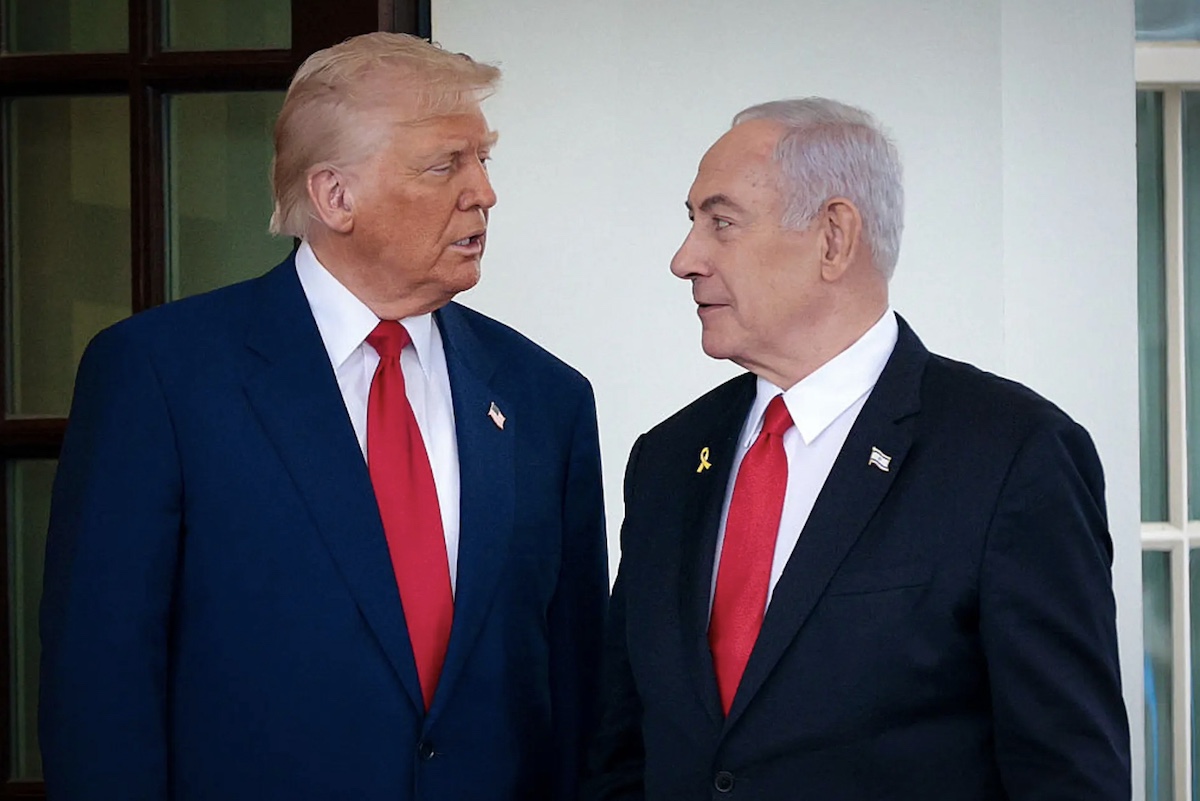
    For decades, a familiar ritual has played out between Washington and Jerusalem following every regional crisis, ceasefire agreement, and tense high-stakes conversation between U.S. presidents and Israeli prime ministers. Phrases like “The bond is unshakeable” and “Our commitment to Israel’s security is ironclad” have been repeated across every sitting U.S. administration so many times that they have devolved into diplomatic liturgy: familiar and reassuring on the surface, but largely disconnected from the practical reality of how U.S. policy actually unfolds. The essay argues that Israel’s strategic leadership would benefit from a far more honest examination of this longstanding gap than it has been willing to conduct in the past.

    Since Israel’s founding in 1948, the country has occupied a recurring paradox: it is a militarily powerful state that remains deeply diplomatically dependent on its closest, indispensable ally, the United States. For generations, this dynamic has created a persistent gap between what Israel deems critical to its national survival and what Washington is willing to allow. Today, a critical, rarely openly discussed question looms: are shifting structural trends in U.S. domestic politics and grand strategy widening that gap further?

    To contextualize this dynamic, look back to a defining moment from 1973. During the Yom Kippur War, after Israeli armored forces had encircled Egypt’s Third Army and the Israeli government was poised to deliver a decisive, war-ending military blow, the Nixon administration intervened to stop the offensive, setting a pattern that would repeat for decades. Henry Kissinger brokered a ceasefire that saved Anwar Sadat’s battered Egyptian forces, cemented Washington’s role as the indispensable regional mediator, and left Israel with a hard lesson it has had to relearn repeatedly: when U.S. and Israeli strategic priorities diverge, Israel is always the side expected to defer.

    Operation Nickel Grass, the large U.S. airlift that resupplied Israeli forces during the war, was a meaningful and consequential show of support. But it also locked in a relationship of dependency: a state cannot accept critical military resupply from a patron and then reject the political terms that come attached to that aid. This is not an inherent critique of U.S. statecraft, but rather a straightforward observation of how great-power patronage has always functioned. Ancient Athens relied on client states, Rome governed through client kings, and modern Washington maintains a network of allies that ultimately advance the patron’s core interests, not the other way around.

    What has shifted dramatically in recent decades is the strategic context in which U.S. patronage is offered. Washington’s current grand strategy is focused on great-power competition with China, requiring that it redirect the vast majority of its military resources and diplomatic attention to the Indo-Pacific, rather than remaining entangled in open-ended conflicts in the Middle East. This shift is not tied to a single ideological stance or political administration; it is a fiscal and strategic reality that has persisted across changes in partisan control of the White House. Every recent Pentagon planning framework, regardless of who occupies the Oval Office, prioritizes potential flashpoints in the Indo-Pacific: the Taiwan Strait, the South China Sea, and the broader arc of competition with Beijing. What was once the central, consuming obsession of U.S. foreign policy, the Middle East, has been reclassified as a secondary distraction from the primary great-power competition.

    Even among proponents of a close U.S.-Israel relationship, Israel’s value as a strategic partner is increasingly being questioned by pragmatic, realist analysts who note that core U.S. interests in the region—from energy security to counterterrorism to great power competition—can often be advanced more effectively through alliances with Arab states that do not carry the same domestic political baggage that comes with the U.S.-Israel relationship. This line of thinking is expected to gain more traction in coming years, regardless of which party controls power in Washington.

    Beyond the shifts in global strategy, deep domestic political changes in the U.S. are also reshaping the alliance, and these shifts may prove the most consequential of all. For decades, U.S. support for Israel rested on a solid bipartisan consensus that has now fractured visibly. American public opinion, particularly among younger generations of voters and racial minority groups, has grown increasingly skeptical of unconditional, blank-check support for any foreign nation, Israel included. In democratic politics, demographic change drives long-term political outcomes, and the demographic cohorts most skeptical of unwavering support for Israel are the groups that will shape the future of both major U.S. political parties.

    Currently, the U.S. provides Israel with $3.8 billion in annual military aid under a bilateral memorandum of understanding that expires in 2028. When the agreement comes up for renegotiation, it will take place in a domestic political environment dramatically different from the one that produced the original deal. While the current aid package remains politically untouchable in today’s Washington, it is exactly the type of foreign spending that America First-aligned voters and political movements have increasingly called into question.

    None of these shifts mean that the United States is on the verge of a sudden, complete break with Israel. The relationship is too deeply embedded in U.S. institutional, cultural, and political structures to collapse overnight. The U.S. will remain Israel’s closest ally for the foreseeable future, and its support remains a core pillar of Israel’s national security, granting access to advanced weapons systems, intelligence sharing, defense technology cooperation, and critical diplomatic protection at the United Nations Security Council.

    But a guarantee that the U.S. will not abandon Israel is not equivalent to a guarantee of unconditional support on every issue. Israel’s leaders must recognize this critical distinction and adjust their long-term strategic planning accordingly. The lesson from every past crisis is clear: Washington will support Israel up to the point that support conflicts with its own broader national interests. At that juncture, calls from the U.S. Secretary of State grow more insistent, military resupply shipments come with new strings attached, and the so-called “ironclad commitment” is revealed to have practical limits.

    What conclusion should clear-eyed Israeli strategists draw from this analysis? It does not mean the alliance is worthless—on the contrary, it remains enormously valuable to Israel. But its value is contingent, transactional, and subject to change driven by forces outside of Jerusalem’s control: shifts in U.S. electoral politics, changing generational attitudes toward foreign policy, intensifying great-power competition, and the enduring U.S. ambition to act as the primary Middle Eastern mediator, a role that often requires concessions from Israel.

    For Jerusalem, every ceasefire ultimately brings a morning of reckoning. What strategic gains did Israel secure? What critical goals were left unmet? What long-term costs will stem from the terms Washington imposed? These are the questions that outlast any immediate crisis.

    Israel’s long-term security cannot be built on the assumption that any U.S. administration will always prioritize Israeli needs over its own core national calculations. A clear, unsentimental reading of the historical record offers no support for that assumption. The uncomfortable, unavoidable answer to the question of whether Israel can count on U.S. support over the long run is this: yes, as a reliable partner—but never as an unconditional guarantor.

    This distinction carries enormous stakes for Israeli national strategy. The sooner Israel’s strategic establishment internalizes this reality, the sooner it can prioritize the critical work of building alternative strategic foundations: deeper diplomatic and economic ties with regional partners, greater strategic self-sufficiency, and a more diversified foreign policy that does not rely on a single patron whose top priorities will always be its own.
  • EU releases 3 billion-euro loan package for Ukraine’s recovery as part of 2-year commitment

    EU releases 3 billion-euro loan package for Ukraine’s recovery as part of 2-year commitment

    GDANSK, Poland — A landmark conference focused on Ukraine’s post-war reconstruction and long-term recovery opened Thursday in Poland, marking a major milestone in Western financial backing for Kyiv as the European Union disbursed the first 3 billion euro ($3.4 billion) installment of its massive 90 billion euro ($101 billion) multi-year macrofinancial loan package to Ukraine, Ukrainian Prime Minister Yulia Svyrydenko announced at the event. The gathering, which brings together top European leaders including German Chancellor Friedrich Merz and European Commission President Ursula von der Leyen, serves a dual purpose: it acts as a global forum to secure pledges and investments for Ukraine’s war-ravaged economy, while sending a unified message to Moscow that Kyiv’s Western allies remain committed to supporting Ukraine for the long term.

    Opening Ukraine’s membership negotiations with the EU just last week, von der Leyen used the conference to reaffirm the bloc’s unwavering commitment to Ukraine. She noted that since Russia launched its full-scale invasion in February 2022, EU member states have already provided 200 billion euros ($225 billion) in combined economic, financial, and military assistance to Ukraine. The newly approved 90 billion euro loan package spread over the next four years builds on that existing support. Von der Leyen added that the second 6 billion euro ($6.7 billion) tranche of the new package, earmarked specifically for expanding Ukrainian drone production, will be disbursed to Kyiv in the coming days.

    Alongside the coordinated macrofinancial support, European leaders launched a new European equity fund designed to drive private investment into strategic sectors of Ukraine’s economy. The initiative, which grew out of 2023’s recovery conference in Rome, counts backing from the EU, Germany, Poland, Italy, and France, with an initial public seed capital allocation of up to 220 million euros. Merz explained that the fund is structured to create the confidence and risk-sharing framework private investors require to enter Ukraine’s market amid ongoing conflict. While public funding alone cannot cover the full cost of rebuilding Ukraine, Merz emphasized that the early investment and long-term capital commitment sends a clear signal: Europe believes in Ukraine’s future as part of the European family.

    Svyrydenko, who leads the Ukrainian delegation after President Volodymyr Zelenskyy pulled out of the conference just days before it began, said Ukrainian officials expect to sign 160 bilateral and multilateral agreements totaling more than 10 billion euros ($11.2 billion) over the course of the conference. Addressing attendees, she framed Ukraine’s adaptation amid ongoing invasion as a unique strength: “We are forced to innovate to survive and this has become our superpower,” adding that the Ukrainian people remain deeply grateful for the support extended to their war-battered nation.

    Zelenskyy’s last-minute withdrawal stems from a growing bilateral dispute between Kyiv and Warsaw over contested World War II history that has strained relations in recent weeks. The dispute erupted after Polish President Karol Nawrocki stripped Zelenskyy of Poland’s highest state honor, the Order of the White Eagle, over Zelenskyy’s decision to name a Ukrainian military unit after the Ukrainian Insurgent Army (UPA), a mid-20th century paramilitary group that fought for Ukrainian independence against Nazi Germany and the Soviet Union. Poland accuses the UPA of carrying out the genocide of tens of thousands of Polish civilians in the Volhynia and Eastern Galicia regions during World War II, a classification Kyiv disputes. Following Nawrocki’s announcement, Zelenskyy returned the honor to Poland, with other senior Ukrainian officials following suit.

    Polish Prime Minister Donald Tusk noted that Zelenskyy’s absence may actually create space to reduce the current tensions between the two nations. Svyrydenko did not reference the bilateral dispute in her opening remarks at the conference. In his own address, Tusk emphasized the shared path forward: “We can only build the future on the basis of truth, mutual respect and understanding the past.” The conference proceeds amid a recent string of Ukrainian long-range strikes on strategic Russian infrastructure, including a major natural gas plant, satellite facilities, and a key railway bridge connecting the Russian-held Crimean Peninsula to mainland Russia, with Kyiv reporting that Russian military command has shifted air defense assets away from frontline positions to protect Moscow and other key Russian territory. The Associated Press contributed reporting from Kyiv and Berlin.

  • How Pochettino has US believing they can be World Cup winners

    How Pochettino has US believing they can be World Cup winners

    When Mauricio Pochettino first floated the idea in March 2026 that the United States men’s national soccer team could lift the FIFA World Cup trophy this summer, the claim was met with widespread skepticism. For decades, the US has been a consistent presence on the world’s biggest soccer stage, qualifying for nine of the last 10 tournaments, including the current edition. But its on-pitch results have rarely matched that consistency: over that 30-year stretch, the Stars and Stripes only advanced past the round of 16 once, reaching the quarter-finals in 2002. The nation’s greatest World Cup achievement remains a semi-final finish at the inaugural tournament in 1930, a distant milestone that has felt far out of reach for generations of American players and fans.

    Seven months on from that bold opening statement, everything has changed. Appointed as US head coach in 2024 on a two-year contract, the former Tottenham Hotspur manager has already steered his new side to back-to-back group stage wins – a 4-1 rout of Paraguay followed by a 2-0 victory over Australia in Seattle – that have secured the team’s place in the knockout rounds. More than that, Pochettino has reshaped the entire identity of the national side, instilling an aggressive, attacking style of play that has caught the eye of neutrals and pundits alike. Now, across the United States, the question Pochettino first posed back in March hangs in the air, asked by diehard soccer supporters and casual new fans alike: Why not us?

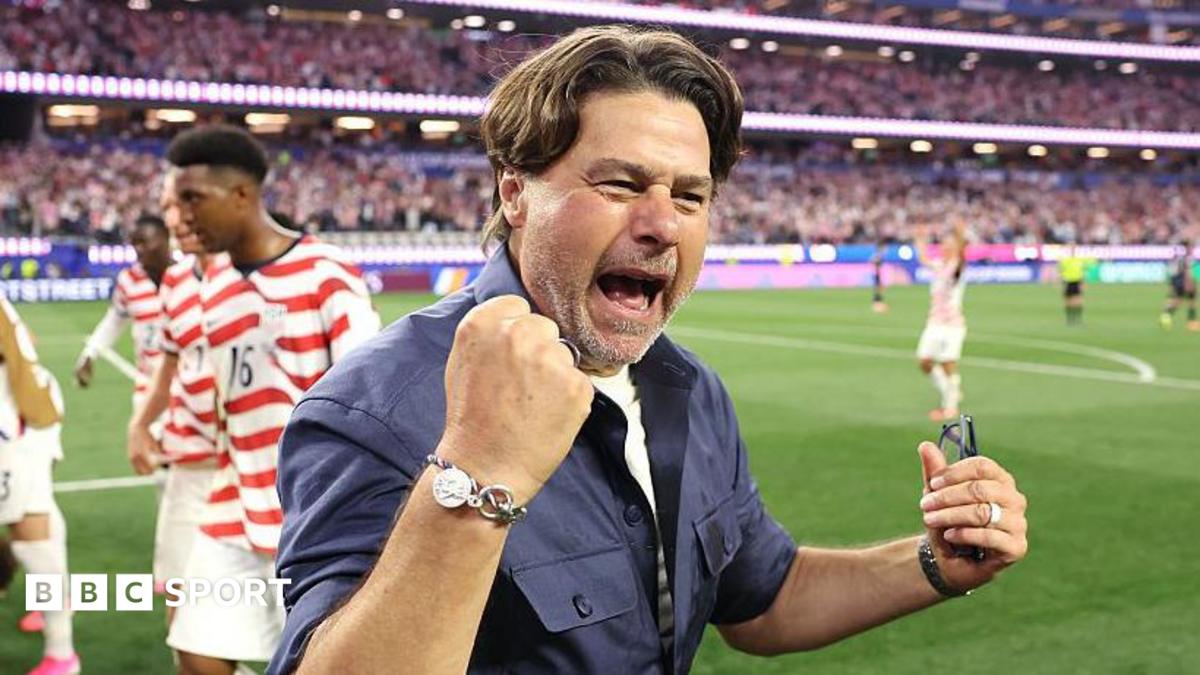
    In the immediate aftermath of the win over Australia, Pochettino had to pause his live pitchside interview as thousands of American fans in the stands burst into a spontaneous chant for their manager, their adoration filling every corner of the stadium. That level of public support was far from guaranteed before the tournament: initially, there was widespread uncertainty about the Argentine boss, particularly given his original contract only runs through the end of this World Cup, fuelling persistent speculation he would return to European club management once the tournament concludes.

    Today, however, that skepticism has evaporated. Pochettino has built a cohesive, dynamic squad that blends explosive young homegrown talent with experienced established stars plying their trade in Europe’s top leagues, a mix that has already proven far more competitive than many pre-tournament predictions suggested. He has worked tirelessly to strip away the deep-seated “underdog” mentality that has long defined US soccer at the World Cup, replacing doubt with unshakable belief across the camp. That new mindset is written all over the inside of his temporary hotel office, where motivational slogans are painted on the walls: “why not us?”, “believe, work, compete”, and “now is our time!”

    That energy has clearly transferred to the pitch. In their two opening matches, the US has played with a swagger and aggression that has caught opponents off guard. US forward Tim Weah pointed to Pochettino’s South American coaching roots as a key factor in the shift. “I think he brings that South American spirit that we’ve been missing,” Weah explained. “We’ve always been the good guys, so now it’s kind of nice being on the other end and being the aggressor a bit. It’s fun. Coach Poch is an amazing coach.”

    Alignment between fans, players and staff is what makes underdog teams dangerous at major tournaments, and that unity is already on full display for the US. After beating Australia, the entire squad walked the perimeter of Seattle Stadium to applaud the home crowd, who responded by belting out a full-throated version of John Denver’s *Take Me Home, Country Roads* – a track that is quickly becoming the team’s unofficial victory anthem. Thousands of jubilant supporters poured into the streets of downtown Seattle after the final whistle, still chanting Pochettino’s name long after the match ended.

    “He’s our Braveheart,” one long-time US fan told BBC Sport outside the stadium. “He is the leader who is willing to take us through the fight and the pain until the end. He has brought us a really good era. He doesn’t over complicate it and gives us a very straightforward game to watch.”

    Another supporter, who has followed Tottenham for 16 years, called Pochettino’s appointment a dream come true: “The day he took over the USA was a dream come true for me and look at us now, he wants to win it!”

    Even in Los Angeles, where the US will face Turkey in their final Group D match on Friday, the buzz around Pochettino and his squad is palpable. One American fan, who supports Arsenal, said even casual fans who rarely follow soccer have gotten behind the team – and that Pochettino’s history with Arsenal’s north London rivals Tottenham doesn’t matter anymore. “It feels like even people here who are not big soccer fans are now behind the team, so it is really cool,” they said. “I feel everything Pochettino has done is pretty positive. I like him. I think he is on the way out after this and that does hurt, though.”

    Another fan praised the no-nonsense winning mentality Pochettino has brought to the national program, free from the internal politics that have plagued past US squads. “I think it is good to have a manager like this who comes in without the American politics. He comes in and he just wants to win. Why can’t we win it? Why not us?”

    For his part, Pochettino says the connection he feels with American fans is mutual, even comparing the energy of the US crowd to that of his home nation’s famously passionate supporters. “Argentina have amazing fans, but I think we are matching Argentina,” he said after the Australia win.

    With his contract set to expire at the end of the tournament, speculation has long persisted that Pochettino will leave the post to return to club management in Europe. But the team’s strong start to the World Cup, paired with the overwhelming outpouring of support from the American public, has opened the door to a possible change of plans. Asked about his future earlier this week, Pochettino made it clear the only focus right now is on the current tournament, but he did not rule out extending his stay.

    “Now we’re focused on the World Cup. Then, if we want to stay, we have months to talk, or days or weeks. Because it’s four years until the next World Cup,” he told reporters in a roundtable interview. For Pochettino, the greatest legacy he can leave at this stage is not necessarily a trophy, but a lasting bond between the national team and the American public. “Of course, we want to win. But that is the legacy that we need. Why not be a part of it?”