作者: admin

  • Albanese government flags major capital gains tax overhaul targeting property and share investors

    Albanese government flags major capital gains tax overhaul targeting property and share investors

    As Australia’s federal budget delivery on May 12 draws near, emerging reports reveal the Albanese government is actively preparing a landmark overhaul of the nation’s capital gains tax (CGT) regime, a change framed by the administration as a step to correct long-standing intergenerational inequity that hits younger Australians particularly hard.

    According to reporting from *The Weekend Australian* on Saturday, the core of the proposed reform would replace the current 50% CGT discount for assets held at least 12 months with an inflation indexation model applied to all new investment holdings. To avoid immediate disruption for existing market participants, the plan is expected to include grandfathering provisions, meaning current investors will not face sudden tax increases on their existing assets under the new framework.

    Australia’s current CGT system has been in place for decades, designed to streamline tax administration, incentivize long-term investment, and offset inflation-related gains that do not represent real profit growth. Under the existing rule, any investor holding an asset for 12 months or longer can cut their taxable capital gain in half, with only the remaining portion added to their assessable income and taxed at their individual marginal tax rate. This proposal marks a retreat from an earlier, more radical idea that would have eliminated CGT discounts entirely for property assets, but it still has drawn fierce pushback from key industry groups and opposition politicians.

    Days before the budget announcement, four of Australia’s largest housing and construction industry bodies — the Housing Industry Association, Master Builders Australia, the Property Council of Australia, and the Real Estate Institute of Australia — issued a joint open letter to federal parliament warning of severe unintended consequences from the CGT changes. The groups argue that the reform will discourage property investment, reduce the overall supply of new housing, and push up prices for existing dwellings at a time when Australia is already grappling with a severe national housing shortage. They note that private investors currently fund four out of every 10 new homes built across the country, and more than half of all new apartment developments.

    “Any increase on capital gains tax to housing and/or a cap on negative gearing, risks material withdrawal from property investment when we need more investment in housing, not less,” the letter read. “If the federal budget is used to actively drive investors into shares rather than financially supporting new housing projects in our cities and towns, Australia’s national housing crisis will deepen.”

    For the Albanese government, the reform is rooted in a stated commitment to rebalancing the tax system and housing market to benefit younger generations. In recent public comments, both Prime Minister Anthony Albanese and Treasurer Jim Chalmers have openly highlighted the intergenerational unfairness embedded in current policy settings.

    “We have been really upfront for some time now in saying that we do think that there is intergenerational unfairness in the tax system and in the housing market,” Chalmers told reporters. “I think the housing market is where some of those intergenerational issues are most obvious.”

    Opposition figures have already launched fierce criticism of the leaked plan, with Shadow Treasurer Tim Wilson labeling the proposed changes an “aspiration tax” that punishes ordinary savers and people working to build wealth. Wilson also claimed the leak itself reveals deep internal divisions within the government over the policy.

    “The Albanese government is launching an assault on aspiration though their new tax on self-starters according to leaks from deep inside their budget inner sanctum,” Wilson said in a statement. “Such a significant leak out of the budget process says even Labor MPs know how toxic the Prime Minister’s aspiration tax would be to those who save and work hard to get ahead. We know there’s deep division between the Prime Minister and the Treasurer on budget matters, and this leak says one of them is trying to kill the other’s proposal.”

    Not all policy experts oppose the plan, however. Matt Nolan, senior research manager at progressive economic think tank e61, argues that the proposed inflation indexation model is a fairer and more economically efficient approach to taxing capital gains than the current flat discount.

    “By taking into account the unique circumstances of the investor, indexation is a fairer and less distortionary way of taxing capital gains,” Nolan wrote. “This would be a significant reform, and even more so if it becomes the first step toward taxing capital income consistently with other income over time.”

    As the May 12 budget release approaches, all sides are continuing to ramp up pressure on the government, with the outcome of the reform expected to have far-reaching impacts on Australia’s property market, share market, and long-term intergenerational equity.

  • EU considers helping with Mideast energy infrastructure to bypass conflict zones

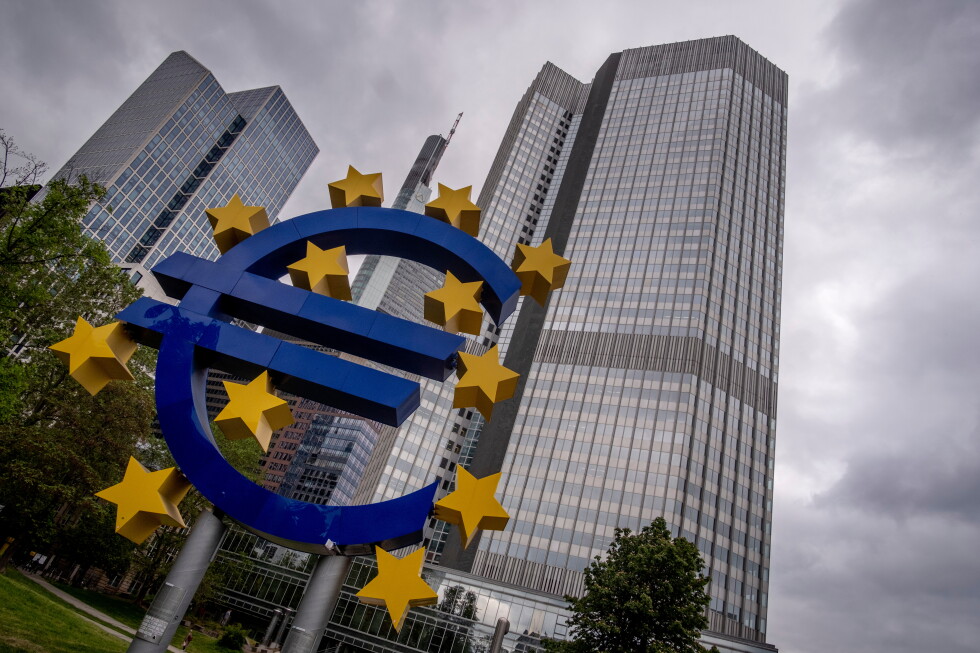
    EU considers helping with Mideast energy infrastructure to bypass conflict zones

    The ongoing Iran war has sent shockwaves through global energy markets, creating a severe fuel shortage across Europe and driving oil and gas prices to unprecedented heights. In response, the European Union has launched a serious evaluation of funding new alternative energy transport routes in the Middle East, designed to bypass conflict-prone chokepoints that have thrown global supply chains into chaos, most notably the Strait of Hormuz.

    European Commission President Ursula von der Leyen announced the bloc’s new strategy Friday following an informal summit of EU leaders held in Nicosia, the capital of Cyprus, which currently holds the rotating EU presidency. Von der Leyen emphasized that the EU is prepared to partner with Persian Gulf nations to develop new energy export projects that will not be vulnerable to disruption from war or geopolitical tension. “The events of the past month have taught us a hard lesson,” she told reporters during a post-summit press conference. “Our security is not just related, it is intrinsically linked. A threat to a merchant vessel in the Strait of Hormuz is a threat to a factory, for example, in Belgium.”

    While the EU executive highlighted plans to deepen defense cooperation and pointed to the bloc’s existing Red Sea maritime security mission as a potential model for Persian Gulf security, the core of von der Leyen’s public address focused on European backing for the repair and expansion of Middle Eastern energy infrastructure. “We are also ready to team up with the Gulf countries to diversify export infrastructure away from solely the bottleneck of the Hormuz Strait,” she said, adding that the bloc also stands ready to assist with repairing Gulf energy facilities damaged by the ongoing war.

    Roughly 20% of the world’s total annual oil and gas trade transits the Strait of Hormuz, a narrow waterway between Oman and Iran that has been effectively closed to most commercial traffic since the outbreak of the Iran war. The disruption has triggered a sharp rally in global crude prices: as of Friday morning, Brent crude climbed 98 cents to settle at $100.33 per barrel, while U.S. West Texas Intermediate crude rose 81 cents to reach $96.66 per barrel. Von der Leyen confirmed that the price surge has added an extraordinary 25 billion euros ($29.3 billion) to the 27-nation bloc’s total energy bill over just 43 days.

    Neither von der Leyen nor European Council President Antonio Costa released specific details about which potential infrastructure projects are under consideration or a clear timeline for moving proposals forward. However, von der Leyen did name the India-Middle East-Europe Economic Corridor, a previously announced connectivity partnership between the EU and India, as a relevant framework for future cooperation. She noted that a planned summit between the EU and the Gulf Cooperation Council, scheduled to take place later this year, will provide a formal opportunity for both sides to flesh out details of new energy infrastructure projects.

    Cyprus, the current holder of the EU’s rotating presidency, is a small Eastern Mediterranean island nation located just off the coast of the Middle East, bordering Lebanon, Syria, Israel and Turkey. Cypriot President Nikos Christodoulides has made strengthening ties between the bloc and Middle Eastern nations a core priority of his country’s presidency, aiming to shore up regional economies and reinforce collective security across the Mediterranean and Middle East. This regional focus was clear in the guest list for the informal summit: attendees included Syrian President Ahmad al-Sharaa, Egyptian President Abdel-Fattah El Sissi, Lebanese President Joseph Aoun, Jordan’s Crown Prince Hussein, and GCC Secretary-General Jasem Mohamed AlBudaiwi.

    During the summit, Syrian leader Ahmad al-Sharaa noted that “Europe needs Syria as much as Syria needs Europe,” while Lebanese President Aoun called on the EU to provide critical support for rebuilding his country, which has been heavily impacted by regional spillover from the war. Costa praised Aoun for his recent ban on unauthorized military activities by the militant group Hezbollah, which Costa described as “an existential threat” to Lebanon, and pledged EU support for the Lebanese government’s efforts to disarm the group. “The European Union is not part of the conflict, but we will be part of this solution,” Costa said.

    The summit drew criticism from international human rights organizations, who condemned EU leaders for failing to increase diplomatic pressure on Israel over its ongoing military campaigns in the region. On the Iran policy front, multiple senior EU leaders including German Chancellor Friedrich Merz reaffirmed that the bloc will not roll back sanctions on Iran until a full range of outstanding issues are resolved, including ending Iran’s ballistic missile program and its support for regional militant proxies. Costa echoed that position, telling reporters “it’s too early to talk about relief of any kind of sanctions.”

    Cyprus itself has already felt the direct impact of regional conflict, after a Shahed drone launched from Lebanon damaged an aircraft hangar at a British military base on the island’s southern coast on March 2. In response, several EU member states including Greece, France, Italy, Spain and the Netherlands deployed warships equipped with anti-drone capabilities to reinforce Cyprus’ air and maritime defense. The attack has reignited debate over a mutual assistance clause in the EU’s foundational treaties, which requires member states to provide support if one comes under armed attack. Following the summit, Christodoulides announced that EU leaders have agreed to develop a formal, institutional mechanism for activating mutual assistance, after concluding that the bloc’s current ad hoc response arrangements are unreliable.

    This report was contributed to by McNeil reporting from Brussels, and Associated Press writer Baraa Anwer in Riyadh, Saudi Arabia.

  • Despite Iran tensions, King Charles III will follow his mother’s lead in celebrating US-UK bonds

    Despite Iran tensions, King Charles III will follow his mother’s lead in celebrating US-UK bonds

    LONDON — As King Charles III prepares to depart for his first state visit to the United States this week, a quiet yet defining challenge hangs over his four-day tour: stepping onto a diplomatic stage long shaped by the legacy of his mother, the late Queen Elizabeth II.

    In 1991, the Queen delivered a legendary address to a joint session of the U.S. Congress that remains a high bar for royal diplomacy. She wove tributes to the two nations’ shared democratic roots, cited iconic American figures from Abraham Lincoln to Ralph Waldo Emerson, and cemented public memory of the deep cross-Atlantic ties that define the U.K.-U.S. “special relationship.” That legacy will form the core of Charles’ agenda during a visit timed to mark the 250th anniversary of U.S. independence, as the monarchy works to ease diplomatic friction sparked by new British Prime Minister Keir Starmer’s refusal to back U.S. President Donald Trump’s military campaign against Iran.

    Presidential historian Douglas Brinkley of Rice University, Texas, emphasized the key distinction between the British monarchy and the sitting government that shapes this visit’s mission. “Politics come and go; prime ministers and presidents rise and fall, but the special relationship between the United States and the United Kingdom rests on foundations far deeper than transient policy disputes,” Brinkley told the Associated Press. “The royal role on these visits is always to present the best face of that long-standing bond.”
    Beneath the ceremonial pomp that will see Charles and Queen Camilla travel through Washington D.C., New York, and Virginia lies a carefully scripted diplomatic mission arranged at the direct request of the British government. Starmer faced calls to scrap the trip after Trump publicly belittled British military sacrifices in Afghanistan and launched personal criticisms of Starmer’s Iran policy, but the prime minister opted to move forward with the planned visit. Despite the cross-government tensions, Trump has repeatedly spoken favorably of King Charles, and Brinkley predicts that dynamic will hold throughout the trip. “History has shown that President Trump goes out of his way to make a positive impression when engaging with British royalty, and there’s no reason to expect that will change this time,” he noted.

    Royal visits to the U.S. have carried special diplomatic weight since 1939, when King George VI — Charles’ great-grandfather and the grandfather of Queen Elizabeth II — became the first British monarch to visit the former American colony, as World War II loomed over Europe. That groundbreaking tour saw the royal party tour the U.S. East Coast and attend a casual picnic at President Franklin D. Roosevelt’s private Hyde Park, New York estate, where the King’s playful reaction to a first American hot dog (“He tries hot dog and asks for more,” read a legendary New York Times headline) won over ordinary U.S. citizens. The most symbolic moment of that trip came at Mount Vernon, where the King laid a wreath at George Washington’s tomb — a deliberate show of respect that pushed back against rising U.S. isolationism ahead of the war.

    Barbara Perry, a presidential scholar at the University of Virginia’s Miller Center, explained that gesture’s long-term impact: “People could already see the writing on the wall that war was coming, and that visit made clear how critical it would be for the U.S. and Britain to stand together against Hitler.” The small, public acts of connection on that 1939 trip built lasting goodwill beyond elite diplomatic circles. After war broke out in September that same year, Queen Elizabeth (the wife of George VI and mother of Queen Elizabeth II) wrote to U.S. First Lady Eleanor Roosevelt, saying she had been deeply moved by handwritten letters from ordinary Americans that included small donations for British forces. “Sometimes, during the last terrible months, we have felt rather lonely in our fight against evil things, but I can honestly say that our hearts have been lightened by the knowledge that friends in America understand what we are fighting for,” she wrote.

    Queen Elizabeth II built on that foundational connection across her 70-year reign, completing four official state visits to the U.S. In 1976, she helped President Gerald Ford mark the U.S. bicentennial, and in 2007 she met with President George W. Bush at a time when British and American forces were fighting side-by-side in Iraq and Afghanistan. Just as with Charles’ upcoming trip, those visits centered on smoothing over diplomatic rifts and reaffirming the shared values that bind the two nations.

    Charles’ itinerary reflects that same diplomatic tradition. Key events include a commemoration of the 2001 September 11 attacks, a wreath-laying to honor fallen service members from both nations, and a Winnie the Pooh centenary event hosted by Queen Camilla, marking 100 years since British author A.A. Milne published his first collection of stories about the beloved character.

    Organizers have deliberately sidelined controversial issues to keep the focus on cross-Atlantic friendship. Despite public calls for King Charles to meet with survivors of Jeffrey Epstein over his brother Prince Andrew’s well-documented ties to the convicted sex offender, no such meeting is planned. There is also no scheduled meeting between Charles and his younger son Prince Harry, who stepped back from official royal duties in 2020, moved to California, and has since become a vocal public critic of the monarchy.

    Robert Hardman, royal biographer and author of *Elizabeth II: In Private. In Public. The Inside Story.*, noted that these unaddressed controversies are secondary to the visit’s core mission. “He is coming 250 years after America’s founding, when the nation rejected the rule of his great-great-great-great-great grandfather. His message is simple: no hard feelings. This has been a good separation, 250 years of strong friendship, and we are here to celebrate the high points,” Hardman said. “There will always be large elephants in the room on a trip like this, but the king has prioritized other, more unifying topics.”

    Charles’ upcoming address to a joint session of Congress will be the visit’s centerpiece, a platform to emphasize that long-term, cross-national friendship outweighs short-term political disputes. Like his mother’s 1991 address, observers expect the speech to include measured, self-deprecating humor — a tactic the Queen used masterfully to win over lawmakers. During her 1991 speech, the Queen opened with a joke about the previous day’s White House blunder, where an overly tall lectern had completely blocked the audience’s view of her. “I do hope you can see me today from where you are,” she deadpanned, drawing uproarious laughter and a standing ovation before moving into her address on democratic values, the rule of law, and the Atlantic Alliance.

    Brinkley noted that while Charles will carry forward the core themes of cross-Atlantic friendship, he will bring his own perspective to the moment. “The speech will center on American exceptionalism, U.S. history, the enduring importance of the U.S.-British alliance, and reflections on shared history,” he said. “Its core message will be that the two countries share a deep, lasting bond, even when that relationship navigates rocky rapids from time to time.”

  • US sounds alarm on China’s AI distillation as DeepSeek V4 debuts

    US sounds alarm on China’s AI distillation as DeepSeek V4 debuts

    Tensions between the United States and China over artificial intelligence development flared up again in late April 2026, when the Trump administration formally pledged to curb what it labels industrial-scale, unauthorized intellectual property extraction from leading U.S. AI models, just one day before Chinese AI developer DeepSeek launched its latest high-performance frontier model, DeepSeek V4.

    In an official memorandum issued by the White House Office of Science and Technology Policy (OSTP) on Thursday, April 23, OSTP Director Michael Kratsios detailed allegations that foreign entities, primarily based in China, have been running coordinated, large-scale campaigns to distill proprietary capabilities out of cutting-edge U.S.-developed AI systems. According to Kratsios, bad actors leverage networks of tens of thousands of fake proxy accounts to bypass platform detection, while using jailbreaking methods to access protected proprietary information hidden within these models. This systematic siphoning, Kratsios argued, lets foreign competitors exploit billions of dollars in U.S. research investment and innovation to build competing products.

    While Kratsios noted that distilled models do not match the full performance of the original U.S.-built systems, he emphasized that they can achieve comparable results on common industry benchmarks at a tiny fraction of the development cost for their creators. Beyond commercial unfairness, Kratsios claimed these unauthorized distillation campaigns also let bad actors deliberately remove built-in safety protocols and alignment safeguards that ensure original AI models operate responsibly and remain ideologically neutral and fact-based.

    To counter these alleged activities, the memorandum outlined a four-pronged strategy for the Trump administration: first, it will share timely intelligence with U.S. AI development companies detailing attempted large-scale unauthorized distillation, including specific tactics used and the actors behind them; second, it will facilitate tighter cross-sector coordination between private AI firms to collectively disrupt these campaigns; third, it will partner with industry to develop standardized best practices for detecting, mitigating, and remediating large-scale distillation attacks, while helping firms strengthen their defensive systems; and finally, the administration will explore new enforcement and policy measures to hold bad actors accountable for these activities.

    The White House’s public warning landed just 24 hours ahead of DeepSeek’s April 24 launch of DeepSeek V4, a moment that highlights growing anxiety in Washington over the rapid pace at which Chinese AI developers are closing the performance gap with the United States’ top frontier models. Unlike many firms that keep training methods private, DeepSeek has been transparent about its use of knowledge distillation, a common training technique where a smaller “student” model learns from the outputs of larger, more capable “teacher” models. When the company launched its V3 model in January 2025, it openly confirmed it used knowledge distillation during training. For its new V4 model, DeepSeek says it has advanced the technique with a new method called On-Policy Distillation (OPD), which draws on outputs from 10 separate teacher models to refine its student model’s outputs, speeding up the training cycle significantly.

    According to DeepSeek’s published research, its top-tier DeepSeek-V4-Pro-Max outperforms OpenAI’s GPT-5.2 and Google’s Gemini-3.0-Pro on standard industry reasoning benchmarks, while its lighter, more efficient DeepSeek-V4-Flash-Max matches the performance of those two leading U.S. models at a far lower development and inference cost. The company also noted that its V4 line’s overall performance is only 3 to 6 months behind the very latest frontier models from U.S. developers, OpenAI’s GPT-5.4 and Google’s Gemini-3.1-Pro.

    The current friction around AI distillation is not new. The launch of DeepSeek V3 in 2025 sent ripples through global financial markets, as investors reacted to the emergence of a low-cost Chinese AI model that could compete head-to-head with leading U.S. offerings. During a Senate hearing that January, U.S. Commerce Secretary Howard Lutnick claimed DeepSeek had built its model “dirt cheap” by sourcing Nvidia AI chips through third-party countries and leveraging open training data from Meta. That said, then-recent comments from President Trump struck a different tone: in February 2025, he argued that the development of lower-cost AI was an inevitable technological shift that could ultimately benefit the United States, calling falling AI development costs “a very good development.”

    Criticism of Chinese AI firms’ distillation practices faded for nearly a year before resurfacing in early 2026, when U.S. AI leaders published formal accusations of so-called “distillation attacks” that reignited the political debate. In a February 12 memo to the U.S. House Select Committee on China, OpenAI accused DeepSeek of using distillation techniques to “free-ride on the capabilities developed by OpenAI and other U.S. frontier labs,” adding that it had detected new obfuscated methods designed to bypass existing safeguards against misuse of model outputs, and that past attempts to stop the activity had not been fully successful.

    Weeks later, leading U.S. AI developer Anthropic published its own report detailing similar alleged activity by three major Chinese AI labs: DeepSeek, Moonshot, and MiniMax. Anthropic claimed the three firms had generated over 16 million interactions with Anthropic’s Claude model across roughly 24,000 fraudulent accounts, a clear violation of the company’s terms of service and regional access restrictions. “Distillation can also be used for illicit purposes: competitors can use it to acquire powerful capabilities from other labs in a fraction of the time and at a fraction of the cost that it would take to develop them independently,” the report noted, adding that these attacks follow a consistent pattern: bad actors use proxy services to scale access, build networks of fake accounts to avoid detection, then send massive volumes of structured prompts to extract capabilities and build training datasets, with thousands of nearly identical prompts across coordinated accounts targeting high-value model functions.

    The allegations moved to formal congressional scrutiny on April 16, when the House Select Committee on China held a hearing titled “China’s Campaign to Steal America’s AI Edge,” where lawmakers repeated accusations that Chinese firms source high-end Nvidia chips through third countries and use unauthorized distillation to extract proprietary data from U.S. AI models. “Chinese labs are resorting to unauthorized distillation attacks to extract information from our best AI models. Since they don’t have enough AI chips to develop the models on their own, they prefer to simply steal them from their American competitors. Anthropic, OpenAI, and Google have all verified that this is happening,” committee chairman John Moolenaar said, adding that Congress must pass new legislation to block what he called China’s multi-pronged effort to acquire U.S. AI technology through both legal and illegal means.

    China has pushed back firmly against these allegations. In response to the White House’s claims of AI IP theft, Chinese Foreign Ministry spokesperson Guo Jiakun called the accusations completely groundless, saying they amount to a deliberate attack on China’s legitimate AI industry development. “We urge the U.S. to respect facts, discard bias, stop its containment of China’s sci-tech development, and choose the course of action conducive to sci-tech exchanges and cooperation between China and the U.S.,” Guo stated.

    The escalating focus on AI IP comes as U.S. lawmakers have already ramped up restrictions on Chinese access to advanced semiconductor manufacturing technology. Earlier in April, a bipartisan group of House and Senate lawmakers introduced the Multilateral Alignment of Technology Controls on Hardware (MATCH) Act, which aims to block Chinese chipmakers from purchasing ASML’s deep-ultraviolet immersion lithography systems, critical equipment for producing advanced logic chips. Lawmakers are now expanding that regulatory push beyond semiconductor hardware to target AI model distillation.

    These latest developments also come against a shifting backdrop of AI chip policy. Just one day before the OSTP memorandum, on April 22, Commerce Secretary Lutnick confirmed that no Nvidia H200 AI chips have yet been sold to Chinese companies, after Beijing urged domestic tech firms to avoid purchasing the U.S.-made chip, three months after the Trump administration approved H200 exports to China. Industry analysts note that Chinese AI firms still want access to H200 chips but remain wary of potential abrupt shifts in U.S. trade policy that could disrupt supply chains. Against this backdrop, analysts say DeepSeek V4 and Huawei’s recently launched Ascend 950PR AI chip are positioned to become the core of China’s emerging domestic AI ecosystem. Huawei launched the Ascend 950PR in late March, marketing the chip as delivering 2.87 times the performance of Nvidia’s earlier H20 chip and approaching the performance of the H200, with plans to ship roughly 750,000 units of the new chip in 2026.

  • Trump administration pitching US companies to rebuild Gulf infrastructure hit by Iran

    Trump administration pitching US companies to rebuild Gulf infrastructure hit by Iran

    In private discussions with several Gulf Arab nations, the Trump administration has pushed local authorities to award multi-billion-dollar infrastructure reconstruction contracts to American engineering, manufacturing and construction companies, following the widespread damage the region sustained in Iran’s retaliatory strikes amid the U.S.-Israeli war on the Islamic Republic, multiple U.S. and Arab officials with direct knowledge of the talks confirmed to Middle East Eye.

    The Gulf states targeted by the lobbying effort include Kuwait, Bahrain, and the United Arab Emirates – the three countries that bore the brunt of Iranian counterattacks and suffered the worst infrastructure damage. Neighboring Saudi Arabia and Oman, by comparison, reported far less severe damage from Iranian air and drone strikes, the officials added.

    In talking points shared with Gulf leaders, U.S. officials have centered their pitch on the deep-rooted economic partnerships between Washington and Gulf monarchies, framing American involvement in reconstruction as a natural extension of those long-standing ties. A senior U.S. official told Middle East Eye that the push to secure reconstruction contracts for domestic firms aligns with the Trump administration’s core “America First” foreign policy doctrine, which prioritizes economic statecraft designed to benefit U.S. commercial interests.

    However, one senior Arab official criticized the timing of the lobbying effort, calling it “a little tone-deaf” at a moment when Gulf governments remain on high alert for a resumption of open hostilities, and are increasingly uncertain about long-term U.S. security commitments to the region.

    This push is far from a symbolic gesture: independent energy analyst firm Rystad Energy estimates that repair costs for energy-related infrastructure across the Gulf alone could climb as high as $39 billion, a figure that does not include the massive damage sustained within Iran itself. Currently, a fragile ceasefire holds between Washington and Tehran, even as the two sides remain locked in a tense stalemate over control of the Strait of Hormuz, with both enforcing rival blockades on shipping through the critical chokepoint. The Iranian government has calculated that it sustained $270 billion in combined direct and indirect economic damage from the U.S.-Israeli war.

    Though most Gulf monarchies publicly opposed the U.S.-Israeli military campaign against Iran, they nonetheless became the primary target of Tehran’s retaliatory strikes. The UAE alone faced at least 2,000 ballistic missiles and drone attacks, according to regional defense sources. The hardest-hit Gulf states are also the most economically vulnerable to Iran’s new control over the Strait of Hormuz, through which roughly a fifth of global oil supplies pass; unlike Saudi Arabia, which operates a pipeline that bypasses the strait via the Red Sea, these nations remain fully reliant on the chokepoint for their energy exports.

    While Gulf states collectively hold massive sovereign reserves that can cover reconstruction costs, growing signs indicate they are bracing for a prolonged period of economic downturn as energy exports remain stalled. Kuwait, for example, hosts one of the world’s largest sovereign wealth funds, valued at roughly $1 trillion – on par with the funds held by the UAE and Saudi Arabia, though it generally maintains a far lower public profile. Even so, U.S. Secretary of State Scott Bessent confirmed this week that the UAE and other affected Gulf states have approached Washington to request currency swap lines that would give them access to much-needed U.S. dollars while their energy export revenue remains frozen.

    A former senior U.S. official familiar with the negotiations told Middle East Eye that a quid pro quo is already on the table: “I could see the US looking for a trade-off where Gulf states using a swap line commit to US firms for rebuilding.”

    Kuwait, located at the northeastern edge of the Persian Gulf, was also heavily damaged by Iranian strikes. The country already hosts the fourth-largest U.S. military presence in the world, and Iranian strikes hit key U.S. facilities including Camp Arifjan and Ali al-Salem Air Base. Beyond military sites, Kuwait International Airport suffered extensive damage, and at least two major national power and water desalination plants were also hit, Reuters reported.

    Similarly, Bahrain – a small island kingdom connected only to Saudi Arabia via the King Fahd Causeway – sustained widespread infrastructure damage. The kingdom’s main port, which hosts the U.S. Navy’s Fifth Fleet, was heavily targeted, and critical industrial sites across the country also sustained heavy damage. The Financial Times confirmed that Amazon’s regional cloud computing operations based in Bahrain were knocked offline by the strikes, and Aluminium Bahrain – one of the world’s largest single-site aluminum smelters – was forced to declare force majeure after sustaining critical damage. Bahrain’s national Bapco refinery also issued a force majeure notice following the attacks.

    To date, U.S. officials have not yet pushed for contracts to go to any specific American firms, but have made clear their goal of positioning U.S. companies as the top candidates for all major reconstruction work moving forward.

  • Japan awakens to Radio Taiso exercise tradition. One face of the country’s longevity

    Japan awakens to Radio Taiso exercise tradition. One face of the country’s longevity

    Every morning at 6:30 across Japan, a familiar piano melody drifts through radio airwaves, calling millions of people to begin their day with movement. This centuries-old tradition, known as Radio Taiso (translated as Exercise Radio), has become a woven thread in Japanese daily life, uniting people across generations in parks, office campuses, schoolyards, and living rooms.

    What makes Radio Taiso enduringly popular is its remarkable accessibility. The 10-minute routine consists of simple calisthenic movements, from overhead stretches and torso twists to arm swings and gentle squats that can be adjusted to any fitness level. Participants can make the workout as low-impact or as strenuous as they prefer, with options to do every move standing or seated. Split into three 3-minute segments that gradually increase in difficulty, the sequence requires no specialized equipment, and beginners can pick up the choreography after just one or two sessions. Every movement is repeated four to eight times, with consistent cues to breathe slowly and stay relaxed, keeping the routine gentle even for older participants.

    ### A Tradition Steeped in History
    Radio Taiso’s origins trace back 100 years, inspired by a similar radio exercise program launched by Metropolitan Life Insurance in the United States. In the 1920s, Japanese postal ministry officials brought the concept home after observing the program overseas, and Radio Taiso was formally introduced to the public in 1928, coinciding with the enthronement of Emperor Hirohito. Within 10 years, millions of Japanese people were joining the daily routine, with postal workers leading outreach by distributing instructional pamphlets and hosting local training sessions.

    After Japan’s defeat in World War II, the group exercise program was banned during the U.S. occupation, with authorities viewing mass collective practice as carrying potential militaristic and totalitarian overtones. But popular demand for the ritual never faded, and group Radio Taiso sessions resumed in 1951, just one year before the formal end of the U.S. occupation. Today, the tradition is stronger than ever: a 2023 survey from the Japan Radio Taiso Federation found that more than 20 million Japanese people practice the routine at least once a week, out of the country’s total population of 122 million. It has also spread globally, with particularly large followings in countries like Brazil, which is home to the world’s largest population of Japanese descent outside Japan. Anyone curious can also find English-language and multilingual Radio Taiso tutorials on YouTube to try the routine at home.

    ### More Than Exercise: A Community Anchor for Aging Japan
    Beyond physical benefits, Radio Taiso has long served as a critical social space, especially for Japan’s large elderly population. In Tokyo’s sprawling Kiba Park, a group of regulars gathers almost every morning to move together. Eighty-eight-year-old Mieko Kobayashi, a longtime participant, says the routine keeps her feeling well, while her 77-year-old friend Yoshiko Nagao notes that the gathering is a lifeline for many elderly residents who live alone. “We even come on New Year’s Day,” Nagao says, explaining that post-workout walks and casual conversation are just as important as the exercise itself.

    Eighty-three-year-old Kenji Iguchi, who has practiced Radio Taiso regularly for 20 years and appears decades younger than his age, says the routine keeps his joints — particularly his knees and back — healthy. He wakes at 5 a.m. every day, walks through the park before the 6:30 session, and counts the social connection with familiar fellow participants as one of his favorite weekly rituals.

    Japan consistently boasts one of the highest life expectancies in the world, with an average of 85 years — just slightly behind Hong Kong, and six years higher than the United States’ average of 79. Last year, the Japanese government confirmed that 99,763 people aged 100 or older are currently living in the country, marking the 55th consecutive year that the number of centenarians has hit a new national record. Japan holds the global record for the highest share of centenarians per capita, and experts often attribute the country’s longevity to a combination of healthy diet, universal high-quality healthcare, and cultural norms that encourage consistent physical activity across all ages — including the simple daily ritual of Radio Taiso.

  • Falklands  veteran hopes King can persuade Trump to ‘back down’

    Falklands veteran hopes King can persuade Trump to ‘back down’

    A decades-long sovereignty dispute over the Falkland Islands (known as the Malvinas to Argentina) has reignited after leaked reports suggested the United States could reconsider its longstanding stance on the contested South Atlantic territory, drawing sharp pushback from a decorated British Falklands War veteran.

    Simon Weston, a Welsh Guardsman who survived the 1982 Falklands conflict with life-altering 46% burns after the bombing of RFA Sir Galahad, has publicly urged King Charles III to press US President Donald Trump to reverse course during the monarch’s upcoming state visit to Washington next week. In an exclusive interview with BBC Newsnight, Weston framed the potential US shift as a disrespectful slight to the sacrifices of service members who fought for the islands four decades ago.

    Weston characterized the reported policy review as a childish “hissy fit” from Trump, saying it undermines the meaning of the sacrifices made by British troops and dismisses the right of Falklands islanders to self-determination. “He’s paying absolutely no heed to the humanity that he’s abusing with his words because the people of the Falklands deserve more respect, but so do every veteran who served down there deserve more respect,” Weston said. Calling Trump’s stance “very unstatesmanlike,” the veteran added that he was “sad and disappointed it’s come to this.”

    The reported potential policy shift stems from an internal Pentagon email obtained by Reuters, which claims the US is weighing options to penalize NATO allies that it accuses of failing to back its campaign against Iran. The BBC has not independently verified the contents of the leaked email.

    Downing Street has quickly reaffirmed Britain’s longheld position: sovereignty of the Falklands rests exclusively with the UK, and the islanders’ right to self-determination is non-negotiable. The United States has attempted to walk back tensions following the leak, however. A US State Department spokesperson told AFP on Friday that Washington’s stance remains unchanged: it maintains formal neutrality on sovereignty claims, acknowledges that both the UK and Argentina assert competing claims, and recognizes the UK’s de facto administration of the archipelago.

    Sovereignty over the resource-rich islands has been a core nationalist rallying point for successive Argentine governments for decades. A commemorative plaque claiming the islands as Argentine territory sits in a prominent position in the country’s presidential palace. Current Argentine President Javier Milei, a close political ally of Trump, doubled down on his country’s claim this week, posting in all capital letters on social media: “The Malvinas were, are, and always will be Argentine.” Milei’s foreign minister has repeated calls to restart bilateral sovereignty negotiations with the UK—a demand the UK has repeatedly rejected—and condemned ongoing British efforts to explore and extract oil from the large offshore reserves surrounding the islands.

  • Dozens of sloths died before opening of Sloth World attraction in Florida

    Dozens of sloths died before opening of Sloth World attraction in Florida

    A planned Orlando, Florida, sloth exhibit billed as the region’s only purpose-built “slothnarium” has been thrown into chaos after regulators confirmed 31 of the mammals imported for the attraction died months before its scheduled spring opening, triggering widespread scrutiny of animal welfare practices and regulatory gaps in the state’s wildlife permitting system.

    According to a report released Friday by the Florida Fish and Wildlife Conservation Commission (FWC), the bulk of the fatalities stemmed from dangerous, unfit living conditions at a private Florida warehouse where the imported sloths were held awaiting the attraction’s completion. The incident has already prompted additional investigations from multiple state and local regulators, as well as harsh criticism from animal conservation groups and elected officials.

    The 31 sloths were imported in two separate shipments to be displayed at Sloth World, a permanent public tourist attraction marketed as a rainforest-inspired sanctuary built specifically to prioritize sloth welfare, located along Orlando’s busy tourist corridor. The FWC’s investigation, obtained by the BBC, details two separate fatal incidents that unfolded between late 2024 and early 2025.

    The first shipment, carrying 21 sloths imported from Guyana, arrived in Florida in December 2024. Investigators found the animals were held in a disused warehouse that lacked basic running water and working electricity. Staff purchased portable space heaters to warm the temperature-sensitive tropical mammals, which naturally thrive in constant temperatures between 70°F and 86°F, but the heaters overloaded the building’s electrical system, tripping a circuit breaker that cut off power to the heaters. For at least one full night, the sloths were left without any heating during a week when outdoor low temperatures dropped to 46°F, according to regional historical weather data. All 21 sloths ultimately died from exposure to cold, a condition investigators labeled “cold stun.”

    A second shipment of 10 sloths imported from Peru arrived in February 2025. Two of the animals were already dead on arrival, and the remaining eight were found to be severely emaciated. All eight later died from complications linked to their poor pre-existing health, the report confirmed.

    When FWC investigators launched their probe, Peter Bandre, who is publicly listed as Sloth World’s vice president and promoted in the attraction’s marketing as “one of the most respected sloth experts in the world,” admitted the warehouse was never properly prepared to receive the animals. He told investigators the shipment could not be canceled after it was already en route, confirming the cold exposure killed the first group of sloths. The FWC also found that on two separate occasions, sloths under Bandre’s care were held in enclosures that failed to meet the state’s minimum captive wildlife welfare standards, resulting in a verbal warning at the time, but no formal citation.

    Ben Agresta, owner of Sloth World, has pushed back against the FWC’s findings, dismissing the official report as rife with misinformation. Agresta claims the sloths died from an undetectable virus that produced no visible symptoms and could not be identified even after post-mortem necropsies. The BBC has reached out to Agresta, Sloth World, and its listed representatives for additional comment, but has not received a formal response.

    The FWC closed its investigation without issuing any written warnings or formal citations, but an agency spokesperson confirmed that multiple other regulatory bodies are currently conducting separate probes into the incident. Last week, Orange County’s Building Safety Department posted a stop-work order at the warehouse where the sloths were held, citing alleged violations of state building codes and local county regulations.

    With regulatory investigations ongoing and the site shuttered by local officials, it remains unclear whether Sloth World will ever open to the public as planned. The 13 surviving sloths intended for the attraction are currently being cared for by another accredited zoo in Central Florida, according to local media reports. While Agresta holds a valid state wildlife permit that allows him to exhibit captive wildlife, the incident has exposed major gaps in Florida’s regulatory framework, according to critics.

    Democratic Florida State Representative Anna Eskamani, who has publicly criticized the handling of the case, noted that current rules do not require the FWC to be automatically notified when captive wildlife dies under a permit. She argued that the deaths would likely have never been uncovered without reports from concerned private citizens. “If it wasn’t for everyday people who care and reported these deaths it’s hard to know when FWC would have even learned about the deaths,” Eskamani said.

    Leading sloth conservation organizations had already raised red flags about Sloth World long before the deaths were revealed. The Sloth Institute and the Sloth Conservation Foundation both warned that capturing wild sloths and shipping them long distances for captive exhibits puts the animals at extreme risk of life-threatening health complications stemming from sudden diet changes, stress, and adaptation to artificial environments. Sam Trull, executive director of The Sloth Institute, noted that for many illegally or improperly captured sloths, the stress of transit and captivity proves fatal.

  • Palestinians to vote in first elections since Gaza war

    Palestinians to vote in first elections since Gaza war

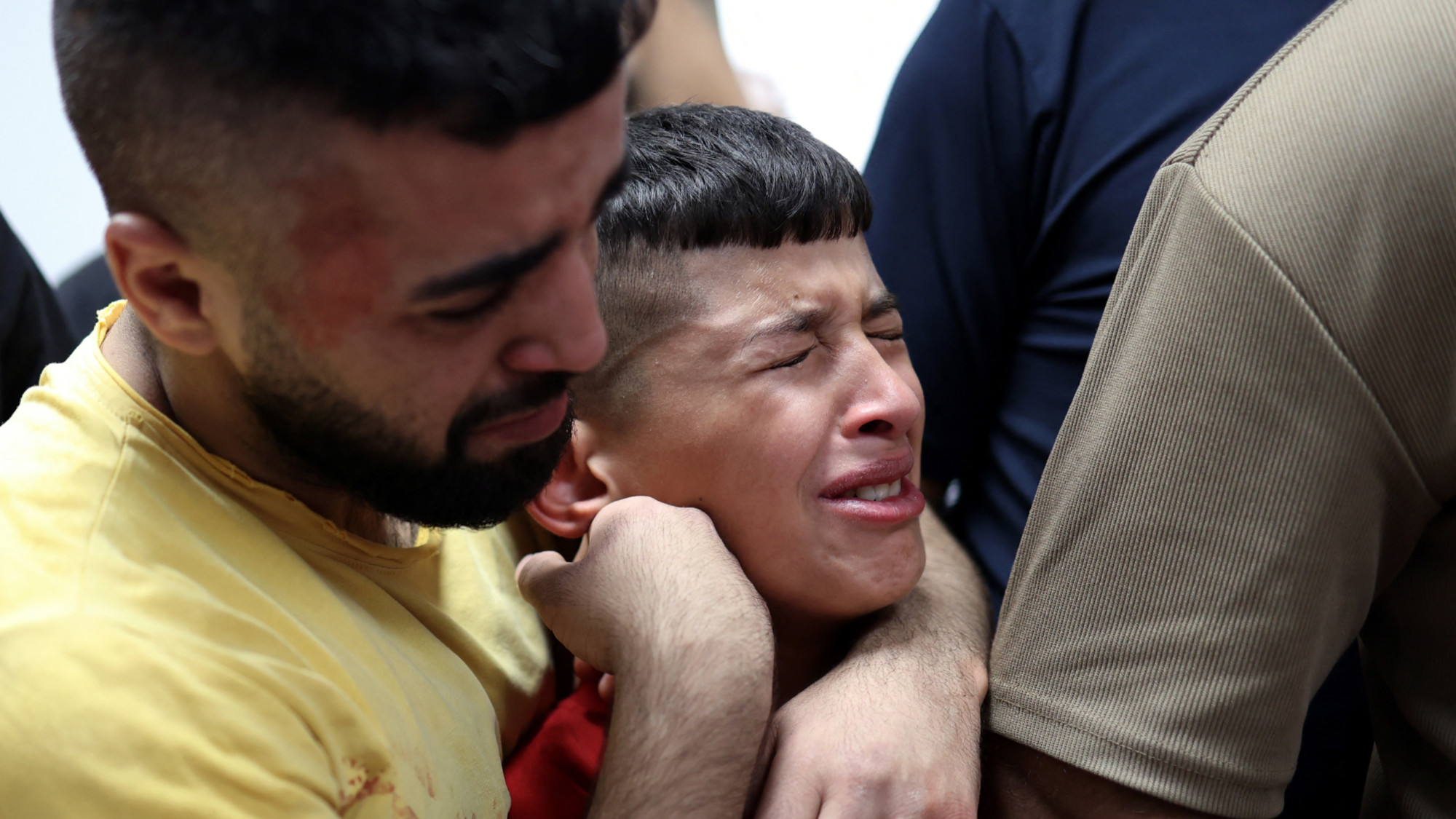
    On Saturday, Palestinian residents across the Israeli-occupied West Bank and the central Gaza district of Deir el-Balah cast ballots in municipal elections, marking the first popular vote held by Palestinians since the outbreak of the latest Israel-Hamas war. This long-awaited electoral process unfolds against a backdrop of a restricted political field, widespread public apathy, and deep-seated challenges posed by ongoing conflict and occupation.

    According to official figures from the Ramallah-based Central Elections Commission, approximately 1.5 million registered voters are eligible to participate in the West Bank, while another 70,000 residents in Deir el-Balah, one of the only areas of Gaza with a largely non-displaced population after more than two years of war, can also cast their ballots.

    The structure of the electoral race reflects long-standing political divisions within Palestinian society. Nearly all competing candidate lists are either aligned with Palestinian Authority President Mahmoud Abbas’s secular-nationalist Fatah party or running as independent candidates. Notably, no candidate lists are affiliated with Hamas, Fatah’s long-time political rival which controls roughly half of the Gaza Strip. In most contested constituencies, Fatah-backed tickets face off against independent lists led by figures from smaller factions including the Popular Front for the Liberation of Palestine.

    Widespread public disillusionment defines the lead-up to the vote, with many Palestinians questioning whether the election will deliver any tangible change to their daily lives under occupation. In Tulkarem, a northern West Bank city where two adjacent refugee camps have been under continuous Israeli military control for more than a year, local businessman Mahmud Bader said he would still cast a ballot, even as he saw little hope for improvement. “Whether candidates are independent or partisan, it has no effect and will have no effect or benefit for the city,” Bader told Agence France-Presse. “The Israeli occupation is the one that rules Tulkarem. It would only be an image shown to the international media — as if we have elections, a state or independence.”

    In a sign of the limited political competition, multiple major population centers including Nablus and Ramallah, the administrative seat of the Palestinian Authority, only saw a single candidate list submitted for each local council. Those candidates will automatically claim their seats without any public vote.

    Electoral officials have adjusted voting procedures to accommodate the extreme conditions in war-ravaged Gaza. Polling stations in the West Bank will operate from 7 a.m. local time to 7 p.m., while voting in Deir el-Balah will end two hours earlier at 5 p.m. This early closing is designed to allow vote counting to finish before dark, as widespread damage to infrastructure has left most of Gaza facing chronic electricity shortages.

    International observers have framed the vote as an important milestone for Palestinian democratic process. UN Special Coordinator for the Middle East Peace Process Ramiz Alakbarov praised the Central Elections Commission for organizing a “credible process” amid extraordinary hardship. “Saturday’s elections represent an important opportunity for Palestinians to exercise their democratic rights during an exceptionally challenging period,” Alakbarov said in an official statement.

    For Palestinian political analysts, the limited scope of the Gaza vote — restricted only to Deir el-Balah — carries clear strategic meaning for the Palestinian Authority. Deir el-Balah was selected for the pilot vote in large part because it is one of the only areas of Gaza where the majority of the original population has remained in place, rather than being displaced by the war, explained Jamal al-Fadi, a political scientist at Cairo’s Al-Azhar University. Al-Fadi added that the restricted election is an experiment for the Palestinian Authority to test public support after the war, when no formal opinion polling has been conducted.

    The vote comes amid long-standing criticism of Abbas, who is 90 years old and has held the presidency for more than 20 years without winning a single re-election. Abbas has repeatedly promised to hold national legislative and presidential elections, but none have been held since 2006.

    Despite widespread cynicism, some first-time voters in Gaza see the election as an act of political resilience. Twenty-five-year-old Farah Shaath, who is voting for the first time in her life, said she felt excited to participate even amid the chaos of war. “Although it is unlike any election in the world, it is a confirmation of our continued existence in the Gaza Strip despite everything,” Shaath said.

    Logistical and security arrangements for the Gaza vote have already highlighted overlapping authority between the Palestinian Authority and Hamas. Election commission spokesman Fareed Taamallah said the body had recruited polling staff from local civil society groups and hired a private security firm to secure voting locations in Deir el-Balah. However, an anonymous source within the Gaza branch of the election commission told AFP that Hamas police have insisted on taking responsibility for securing the electoral process. The source added that Hamas will deploy unarmed personnel in civilian clothing around the 12 polling stations established in Deir el-Balah.

  • Saudi Arabia cuts $200m in Met Opera House funding due to Iran war: Report

    Saudi Arabia cuts $200m in Met Opera House funding due to Iran war: Report

    In a move that marks the first visible impact of the ongoing US-Israeli war on Iran on Gulf Arab financial commitments across Western markets, Saudi Arabia has pulled out of a $200 million sponsorship agreement to support New York City’s iconic Metropolitan Opera House, The New York Times reported Friday.

    While the quarter-billion-dollar commitment amounts to a tiny fraction of Saudi Arabia’s $1 trillion Public Investment Fund (PIF), the kingdom’s sovereign wealth vehicle, the decision carries outsize symbolic weight: it offers the clearest evidence yet that the regional conflict is forcing Riyadh to hit pause on its high-profile global soft power push and refocus its spending on core priorities.

    Metropolitan Opera General Manager Peter Gelb told the NYT that Saudi officials attributed the withdrawal directly to widespread economic disruption stemming from the war on Iran, including blockages to oil shipping traffic through the strategic Strait of Hormuz. According to Gelb, the kingdom is only moving forward with projects deemed strictly essential in the current climate, and the Met sponsorship fell outside that threshold.

    The storied American arts institution first turned to Saudi Arabia for this financial lifeline back in September 2025. At that point, the Met had already drawn down more than a third of its endowment — roughly $120 million — to cover ongoing operating costs, leaving it desperate for new external funding. In the original deal, Saudi Arabia had agreed to provide the $200 million in exchange for a long-term commitment from the Met to host three weeks of performances in the kingdom every winter.

    For nearly a decade, Saudi Arabia has poured tens of billions of dollars into global sports, arts and entertainment partnerships as a core pillar of its Vision 2030 initiative, which seeks to diversify the kingdom’s economy away from its historic reliance on oil exports and build a thriving domestic tourism sector. But the ongoing conflict has upended those plans, delivering widespread economic shocks across the Gulf region.

    Regional tourism has already collapsed amid rising security fears. Earlier this month, Dubai’s luxury Burj Al Arab hotel announced it would shut its doors for 18 months to undergo renovations, a move that came after a steep and sustained drop in international visitor numbers. The United Arab Emirates had enjoyed years of booming tourism growth prior to the outbreak of conflict, while Saudi Arabia had only recently begun building out its own tourism ecosystem to attract international visitors.

    The Met’s collapsed funding deal is far from an isolated case. As the Financial Times first reported in April, PIF is already preparing to slash its backing for LIV Golf, the breakaway golf league that Saudi Arabia launched with $5 billion in startup funding to compete with the established PGA Tour. Riyadh has been scaling back its most ambitious non-essential projects even before the full-scale conflict began; last December, Saudi Finance Minister Mohammed al-Jadaan publicly noted that the kingdom had “no ego” that would prevent it from reevaluating costly infrastructure and investment projects to align with shifting economic conditions.

    Earlier this year, Riyadh suspended construction on the Mukaab, a massive cube-shaped mega-development planned for central Riyadh, and shelved proposals for a desert ski resort and a large artificial lake dam. Even as the conflict creates new financial windfalls for Riyadh – the kingdom’s East-West pipeline, which connects Gulf oil fields to Red Sea export terminals, allows it to bypass Iranian control of the Strait of Hormuz, making it the only major Gulf oil exporter still operating at full capacity and benefiting from sky-high global oil prices – the broader regional instability has undercut its ability to position itself as a safe, stable hub for global business and tourism.

    PIF Governor Yasir al-Rumayyan confirmed the shifting priority framework in an interview with Al Arabiya Business Wednesday, acknowledging that the Iran war has forced the fund to reorder its investment strategy. “The war would add more pressure to reposition some priorities,” al-Rumayyan said. He also publicly confirmed for the first time that The Line, the futuristic 170-kilometer car-free linear city at the heart of Saudi Arabia’s flagship Neom mega-development, is no longer a core investment priority for the kingdom.