A new wave of public discontent has surged across Russia in recent weeks, with high-profile influencers, long-time government loyalists, and ordinary citizens speaking out against Kremlin policy, exposing growing frictions between the Vladimir Putin administration and segments of the public it has long relied on for support.
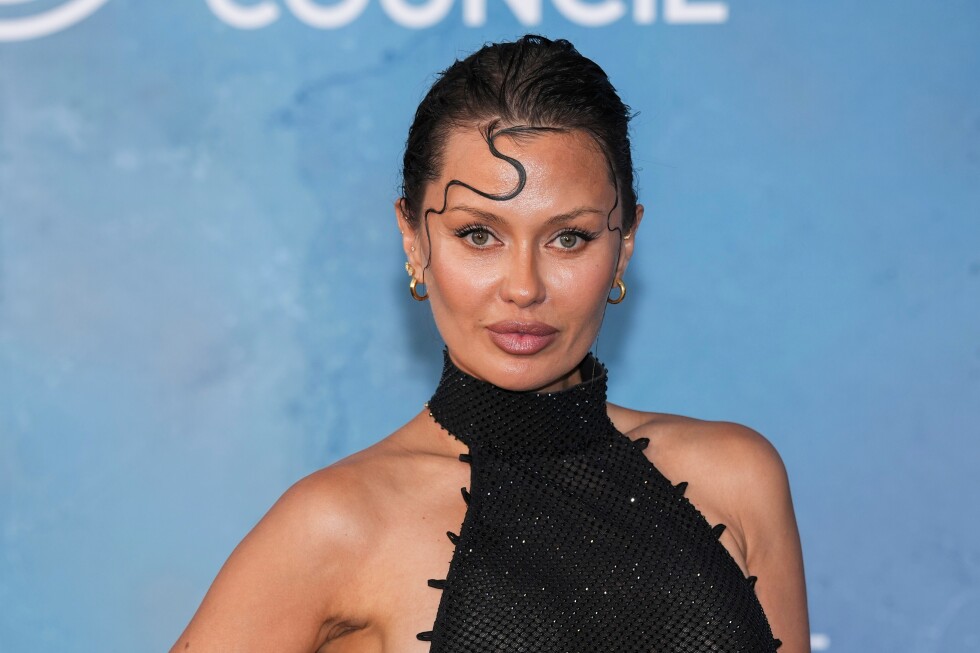
The outbreak of public criticism began when popular Russian blogger and former television host Victoria Bonya — who currently resides abroad and publicly maintains her support for Putin — released a 19-minute Instagram video addressing the president directly. In the clip, which has amassed more than 31 million views 10 days after publication, Bonya argued that Putin is being deliberately misinformed by lower-level officials about a cascade of unfolding crises across the country. Among the issues she highlighted are the botched local response to devastating recent floods in the southern republic of Dagestan, controversial mass livestock culling in Siberia that sparked spontaneous farmer protests, crippling internet restrictions that have disrupted daily life, and mounting pressures that are pushing small businesses to collapse.
“People are screaming at the top of their lungs now. They’ve been robbed of everything they have, and they continue to be robbed. Businesses are dying,” Bonya said in the video, emphasizing that average Russians and even pro-administration officials are too intimidated to share unvarnished truth with the president.
Bonya’s remarks quickly sparked a viral cascade of similar criticism from other Russian influencers, many of whom shared their own grievances in public posts before several of these videos were removed from platforms. In a rare public acknowledgment of the growing discontent, Kremlin spokesman Dmitry Peskov confirmed that administration officials had viewed Bonya’s video, noting that “a lot of work is being done” on the issues she raised and that “none of it is being ignored.”
The criticism has even spread to long-time pro-Putin political circles. Gennady Zyuganov, leader of the Communist Party and a decades-long Putin ally, used a parliamentary address this week to lambaste government policy, warning that failure to address growing public hardship could trigger a repeat of the 1917 Bolshevik Revolution. Threats of potential mass unrest have also circulated in pro-Kremlin Telegram channels and among loyalist military commentators, a unusual departure from their usual unwavering support for the administration.
Against this backdrop of growing public criticism, polling data shows a measurable decline in Putin’s national approval ratings. State-controlled Russian pollster VTsIOM reported Friday that Putin’s approval currently stands at 65.6%, the lowest recorded since before the launch of the full-scale invasion of Ukraine, down from a high of 77.8% in late December 2025. The Levada Center, Russia’s leading independent polling firm, also recorded a five-point drop in Putin’s approval between October 2025 and March 2026, falling from 85% to 80%.
Analysts point to two core structural issues driving the current wave of discontent: sweeping new internet restrictions and a rapidly cooling wartime economy. Since last spring, Russians across the country have faced widespread and recurring cellphone internet shutdowns, which the Kremlin justifies as a necessary security measure to disrupt Ukrainian drone operations. Critics, however, argue the outages are part of a years-long campaign to consolidate full state control over the Russian internet, building on years of escalating censorship that has already blocked or throttled thousands of independent platforms, including two of the country’s most widely used messaging apps, WhatsApp and Telegram.
The Kremlin has simultaneously pushed a new state-backed messaging app called Max, which many analysts and ordinary Russians view as a tool for expanded state surveillance, while cracking down on VPN services that Russians have long used to bypass national censorship. These moves have spurred scattered acts of public resistance, including petitions to the presidential administration, a nationwide class-action lawsuit against the government, small unsanctioned street pickets, and multiple attempted larger protest mobilizations that were quickly dispersed by security forces. Putin has stood firm on the policy, reaffirming last week that internet shutdowns are necessary to “prevent terror attacks” and urging officials to improve public communication about the restrictions, a signal that the policy will remain in place.
Compounding public frustration is a sharp slowdown in Russia’s wartime economy, which saw an initial growth surge from massive military spending that has now fully faded. The Russian central bank’s steep interest rate hikes to curb rampant inflation, combined with recent government tax increases, have put severe new pressure on small and medium businesses. Economic Minister Maxim Reshetnikov recently acknowledged that the country’s available economic reserves “have been largely depleted,” and Putin confirmed earlier this month that GDP contracted by 1.8% between January and February, marking the second consecutive month of declining economic growth.
A third underpinning factor is the collapse of public hopes for a swift end to the war in Ukraine, now in its fifth year. Many Russians pinned their hopes on a peace deal brokered by new U.S. President Donald Trump, who made ending the conflict a core campaign promise and launched negotiations shortly after taking office in January 2025. Those talks have since stalled, leaving the public disappointed. According to Sam Greene, a professor of Russian politics at King’s College London, both the Kremlin and the Russian public priced in an end to the conflict, and the failure to reach a deal has eroded public confidence.
While the growing discontent represents a new and expanding challenge for the Kremlin, analysts across the political spectrum agree that it does not pose an imminent threat to Putin’s hold on power. Mark Galeotti, a leading Russian politics expert and head of Mayak Intelligence, noted that there is still no unified, organized opposition movement capable of challenging the administration, and Putin’s control over Russia’s security services remains absolute. Even many critics are reluctant to call for broad destabilization during an ongoing war, Galeotti added.
Denis Volkov, director of the Levada Center, echoed that assessment, noting that approval ratings are declining from a historically very high starting point, and discontent is growing only gradually. “For now, we shouldn’t downplay or exaggerate this, because we’re only at the very beginning of the road,” Volkov said. Still, former Putin speechwriter turned independent political analyst Abbas Gallyamov warned that public frustration will continue to deepen as high-profile figures give ordinary people permission to voice their own grievances, slowly shifting the national political mood.