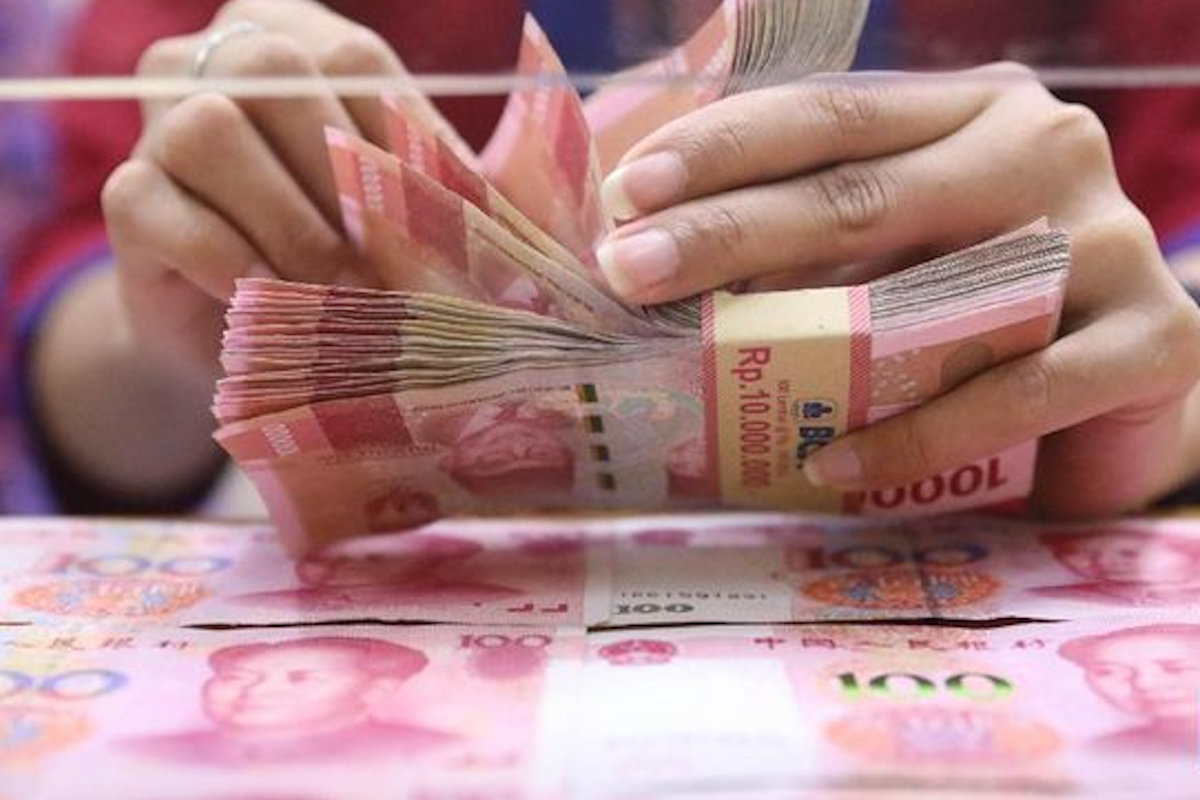
Growing frictions between China and major global economies have increasingly centered on China’s swelling trade surplus, with European political leaders ramping up pressure that has sparked sharp pushback from Chinese officials. The debate has escalated to questions of currency policy, with German Chancellor Friedrich Merz reviving calls for a Plaza Accord-style agreement to force a revaluation of the Chinese renminbi, which he claims is undervalued by as much as 30% to gain unfair trade advantage. This proposal comes as the European Union weighs new trade defense tools to address its widening trade deficit with China, growing industrial competition, and overreliance on Chinese supply chains, with some hardline politicians framing bilateral economic ties as a systemic threat to Europe.
Chinese state outlet the Global Times has rejected these claims, arguing that the competitive edge of Chinese firms stems from China’s complete industrial ecosystem, consistent investment in technological advancement, a massive domestic consumer market, and robust domestic market competition—not from artificially suppressed exchange rates. The editorial adds that targeting the RMB will not resolve Germany’s struggling manufacturing sector or fix gaps in Europe’s innovation chain, pointing out that Europe’s own industrial challenges stem from a mix of long-term structural issues, including chronically high energy prices, underinvestment in innovation, and ineffective industrial policy, compounded by near-term shocks such as spillover from the Ukraine war and the outflow of investment attracted by U.S. industrial subsidies.
However, financial analyst Michael Pettis points out a critical flaw in China’s core argument: it rests on the assumption that the RMB exchange rate is solely China’s sovereign domain, and any external intervention amounts to a neocolonial overreach. This framing opens up three unresolved logical tensions that risk derailing future trade negotiations with major import partners, unless addressed through a broader, consensus-based framework.
The first core tension revolves around the nature of global exchange rate governance. A country’s exchange rate does not exist in a vacuum; it only functions relative to the currencies of other trading nations, operating within a shared global system rather than as an exclusively domestic asset. In an open global trading system, exchange rate arrangements rely on agreed multilateral rules rather than unilateral national control. If every nation asserted exclusive sovereign right to set its own exchange rate independent of global consensus, the entire system of international trade would break down, leaving only power politics where major powers dominate bilateral arrangements. History, from ancient Chinese hegemonic cycles to modern global order, shows that unregulated competition over currency rules either leads to competing coalitions against dominant powers or, eventually, catastrophic conflict to unify the system. The current U.S.-led global order, for all its flaws, rests on a broad global consensus rather than brute force alone, and any power seeking to replace it must build that same broad consensus, which requires an open, inclusive global approach.
The second tension comes from China’s widely held interpretation of the 1985 Plaza Accord, which is often framed as a deliberate U.S. plot that pushed Japan into its decades-long economic stagnation after forcing yen appreciation. This narrative is misleading and overlooks deep structural problems that predated the agreement: by the 1980s, Japan’s asset bubble was already extreme, with the total value of Japanese land reaching two-thirds of America’s despite Japan being 26 times smaller geographically. Japan also relied excessively on export-led growth while suppressing domestic consumption, and made a losing bet on supercomputer development rather than the networked computing that spawned the internet and modern AI revolution. At its core, the Plaza Accord was rooted in the principle that global trade requires broad structural equilibrium—it cannot rely on one-sided dynamics that serve a single nation’s interests, a point that has been well-documented by Chinese scholars such as Yu Jie, author of *Managing the US Dollar: The Plaza Agreement and the Fate of the RMB*.
The third tension draws from lessons China drew from the 1970s OPEC oil crisis, which shaped Beijing’s long-term strategic approach to economic statecraft. After watching Henry Kissinger negotiate with both China (to counter the Soviet Union) and the Soviet Union (to secure alternative oil supplies to bypass OPEC’s production cuts), Chinese leaders concluded that U.S. foreign policy prioritizes commercial interests over ideological or strategic alliances. This inspired Deng Xiaoping’s famous 1992 observation that while the Middle East holds oil, China holds rare earths, leading Beijing to conclude that economic leverage must be backed by credible military strength to avoid being coerced by outside powers, just as OPEC and Japan were forced to bend to U.S. pressure.
Today, this strategic outlook informs China’s approach to global trade: it holds a near-monopoly on rare earth processing, dominates many primary industrial sectors, and boasts unrivaled cost-quality competitiveness across most global manufacturing supply chains, all backed by a military that provides effective deterrence against external coercion, allowing it to defend its commercial interests without fear of forced concessions.
More recently, China’s strategic outlook has also been shaped by lessons drawn from Russia’s political and economic trajectory. The dominant narrative in Beijing holds that Russia’s collapse after the Soviet Union stemmed from excessive political reform, while Vladimir Putin’s two decades of rule proved that strong military power and geopolitical maneuvering could overcome global pressure. But Russia’s protracted and costly war in Ukraine has upended this narrative: a much smaller Ukraine has shown far greater capacity for innovation and has successfully resisted and pushed back against Russian invasion, while Russia has become increasingly dependent on Chinese support, exposing the deep weaknesses of the Putin model. The article argues that Putin’s rule has set Russia back centuries, demonstrating that the authoritarian model of tightly binding political control to economic activity fails over the long term. While state intervention can be useful during temporary crises, ignoring market rules in normal times eventually grinds the entire system to a halt, a dynamic that is also visible in global misunderstandings over exchange rates and the Plaza Accord.
The author argues that Russia’s decline should prompt Beijing to undertake a fundamental reevaluation of its approach to global trade and domestic economic governance. Without full currency convertibility for the RMB and further opening of China’s domestic market, internal economic pressures including rising underemployment in urban and rural areas will continue to build, potentially creating cascading domestic problems over the next one to two decades. The author warns that if China continues to avoid addressing its trade and exchange rate imbalances through market-oriented reform, rather than political expediency, it risks losing decades of economic progress, just as it did under Mao Zedong’s mid-20th century rule. If China continues to suppress domestic demand and cling to unfair trade practices, the U.S. and other major economies will gradually decouple from Chinese supply chains, leaving Chinese households poorer even amid technological progress. Russia’s current crisis, the author concludes, is a clear warning that ignoring market rules and global consensus ultimately carries catastrophic costs.