作者: admin

  • China’s top diplomat meets leader of Myanmar’s military-backed government on regional tour

    China’s top diplomat meets leader of Myanmar’s military-backed government on regional tour

    During a regional tour focused on deepening Beijing’s political, security, and strategic partnerships across Southeast Asia, China’s top foreign policy official arrived in Myanmar’s capital Naypyitaw on Saturday to hold talks with the leader of the country’s military-aligned administration.

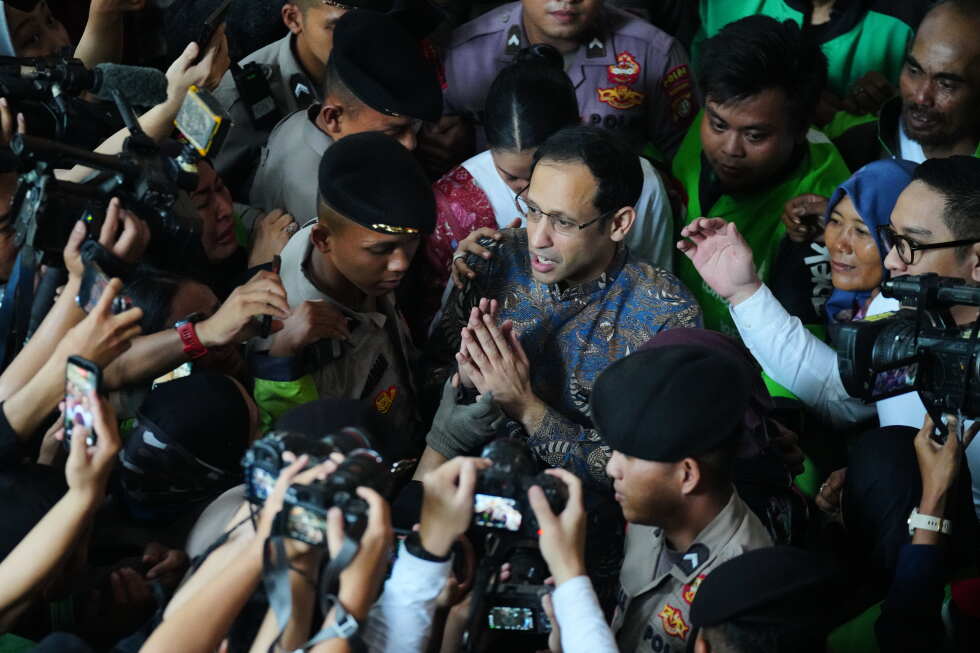
    The meeting brought together Chinese Foreign Minister Wang Yi and Myanmar President Min Aung Hlaing, who was sworn into office on April 10 following a general election widely dismissed by international critics as neither free nor fair. The poll was structured to cement the military’s hold on national power, five years after the armed forces seized control from Aung San Suu Kyi’s democratically elected civilian government. State-run Myanmar Radio and Television (MRTV), the junta’s official broadcaster, reported that the two leaders discussed strengthening Myanmar’s diplomatic engagement globally and advancing cooperative initiatives within the Association of Southeast Asian Nations (ASEAN). Per MRTV’s account, Min Aung Hlaing expressed gratitude for the rapid congratulations extended by Chinese President Xi Jinping, who sent a formal message within hours of Min Aung Hlaing’s election result being confirmed.

    China holds extensive geopolitical and economic stakes in Myanmar, holding the status of the country’s largest trading partner and a long-standing strategic ally. Beijing has poured billions of dollars into critical Myanmar infrastructure, including cross-border mines, oil and gas pipelines, and large-scale energy and transport projects. It also ranks alongside Russia as one of Myanmar’s top suppliers of military hardware. Notably, China is among the small handful of nations that have openly endorsed Myanmar’s 2025 election and extended formal congratulations to Min Aung Hlaing following his inauguration.

    The 11-nation ASEAN bloc has declined to recognize the outcome of the election, after most major opposition groups were barred from participating, public dissent was heavily restricted, and voting was cancelled entirely in large swathes of the country gripped by ongoing civil conflict. Myanmar’s military leadership has been locked out of top-level ASEAN summits since 2021, after failing to implement a bloc-brokered peace roadmap that required an immediate end to hostilities, inclusive dialogue between all stakeholders, and unimpeded delivery of humanitarian aid. The previous military junta led by Min Aung Hlaing only allowed limited aid entry under strict conditions and failed to comply with any other core terms of the agreement. In his inauguration address earlier this month, Min Aung Hlaing named the restoration of full normal relations with ASEAN as one of his administration’s top policy priorities.

    Saturday’s meeting also covered a broad range of other shared priorities, including cross-border stability, expansion of bilateral trade, joint efforts to dismantle transnational cybercriminal networks, and Myanmar’s domestic peace-building initiatives. Beyond its formal ties with Naypyitaw’s central government, China also maintains long-standing working relationships with several major ethnic armed groups operating along the Sino-Myanmar border. One of the most powerful of these is the Three Brotherhood Alliance, which has waged a decades-long campaign for greater autonomy from Myanmar’s central government. Between late 2023 and 2024, the alliance seized control of large areas of territory along the Chinese border and in western Myanmar, a advance that emboldened national resistance forces opposed to military rule to expand their operations across the country. However, a series of ceasefire agreements brokered by China last year halted the alliance’s military progress, allowing Myanmar’s military to recapture key territory and reassert its strategic advantage from mid-2025 onward.

  • Spurs, West Ham win in battle for Premier League survival

    Spurs, West Ham win in battle for Premier League survival

    The English Premier League delivered another afternoon of high-stakes drama this Saturday, as two late match-winning goals upended the landscape of both the tense relegation battle and the race for Champions League qualification with just four matchweeks remaining in the season.

    The most electrifying twists unfolded in the fight to avoid the final relegation spot, where Tottenham Hotspur and West Ham United have emerged as the two remaining contenders after Wolverhampton Wanderers and Burnley already confirmed their drops to the Championship. In a turn of events that left fans of both clubs reeling, West Ham substitute Callum Wilson struck a 92nd-minute winner that preserved his side’s two-point advantage over Tottenham, keeping the London club in the driving seat to beat the drop.

    The day began looking grim for Tottenham, who traveled to face already-relegated Wolves without a Premier League win dating back to December. Blunted in attack, the side managed just two shots on target across 90 minutes, and looked set to settle for a frustrating goalless draw that would leave them mired in the relegation zone. It took an 82nd-minute strike from Joao Palhinha to secure a scrappy 1-0 win for Tottenham, lifting them temporarily out of the bottom three.

    Minutes later, when news broke that Everton had scored an 88th-minute equalizer at the London Stadium to cancel out Tomas Soucek’s first-half opener for West Ham, traveling Tottenham supporters erupted in celebration. At that point, the North London club had slipped above West Ham in the table, on course to escape the drop zone at West Ham’s expense. But Wilson had other plans, netting a dramatic late winner that shifted the dynamic back in West Ham’s favor.

    Speaking after the match, Wilson emphasized the unity that has carried his side through the tough relegation run-in. “The atmosphere was electric,” he told the BBC. “I think the fans and the players have really come together in this period and it has stood us in good stead. We’re the ones in the driving seat at the moment and if we take care of our own results it should stand us in good stead come the end of the season.”

    Nottingham Forest, who sit three points clear of both Tottenham and West Ham on 39 points, all but secured their top-flight status with a dominant 5-0 thrashing of Sunderland on Friday, pulling them well clear of the relegation battle.

    Across the country at Anfield, another set of late action reshaped the race for Champions League places, as Liverpool claimed a vital 3-1 win over Crystal Palace to climb into the top four. The result marked Liverpool’s first victory over Palace in four meetings this season, after the London side knocked them out of the League Cup and beat them in the reverse Premier League fixture, following a penalty shootout win in the season-opening Community Shield.

    Recently recovered from a fibula fracture that kept him sidelined for months, Alexander Isak opened the scoring for Liverpool, notching his first goal for the club since December. Defender Andy Robertson doubled the Reds’ lead shortly after with a tidy finish on a slick counter-attacking move. Crystal Palace cut the deficit in the second half through Daniel Munoz, but Florian Wirtz iced the game with a last-gasp third goal to restore the two-goal advantage.

    The result was tinged with minor concern for Liverpool, however, as star winger Mohamed Salah was forced to limp off the pitch in the second half with a hamstring injury, with less than a month remaining in his decorated tenure at the club. Despite the injury concern, the result leaves Liverpool level on 58 points with Aston Villa and Manchester United, eight points clear of fourth-placed chasing Brighton, making qualification for next season’s Champions League near-certain for Arne Slot’s side – a strong recovery after their disappointing title defence this campaign.

    “Our objectives this season have changed due to our form but the Champions League is so important to this football club and we’ve made a big step,” Robertson told Sky Sports after the match.

    In the day’s early kickoff, Fulham claimed a 1-0 win over Aston Villa, keeping the Cottagers’ own hopes of European qualification alive. Ryan Sessegnon scored the game’s only goal shortly before halftime, after both sides had missed early chances to take the lead. The result dropped Villa out of the top four, opening the door for Liverpool’s ascension.

    The final game of the day will see league-leaders in waiting Manchester City top when Arsenal host Newcastle United. The Gunners, who held a nine-point lead at the top of the table just two weeks ago, have seen that advantage evaporate amid a poor run of form. Arsenal now trail City only on goals scored, with the two sides level on goal difference heading into the evening kickoff.

  • Hope in Gaza as 300 couples get married at one time

    Hope in Gaza as 300 couples get married at one time

    Against a backdrop of ongoing hardship and uncertainty in the Gaza Strip, a rare moment of collective joy has emerged as 300 couples exchanged wedding vows in a single, mass celebration. The event, which organizers say was designed to bring a measure of hope and normalcy to communities strained by conflict and economic struggle, drew hundreds of attendees eager to celebrate the newlyweds.

    The 300 pairs participating in the joint ceremony were not hand-picked through any selective screening process. Instead, they were chosen via a public random draw that drew nearly 2,000 interested couples from across Gaza, all vying for the chance to take part in the subsidized celebration. For many of these couples, the mass wedding offered an opportunity to marry that would have otherwise been out of reach amid the region’s widespread economic challenges and infrastructure disruptions, which have driven up the cost of individual wedding celebrations beyond the means of most young people.

    Wedding guests and participants described the event as a rare break from the constant stress and uncertainty that defines daily life in Gaza, with many emphasizing that acts of celebration and connection like this are critical to preserving community morale. Even as broader political and humanitarian challenges continue to shape life across the territory, the mass wedding stands as a reminder of the enduring desire for love, family, and joy even in the most difficult of circumstances.

  • War in the Middle East: latest developments

    War in the Middle East: latest developments

    Tensions and shifting developments continue to roil the ongoing Middle East conflict this week, bringing a cascade of new changes that have thrown future diplomatic efforts and regional stability into question.

    One of the most significant developments came from United States President Donald Trump, who announced Saturday in an interview with Fox News that he had called off a planned diplomatic trip by US envoys to Pakistan, where the delegation was set to hold negotiations with Iranian officials aimed at de-escalating the ongoing war. “They were getting ready to leave, and I said, ‘Nope, you’re not making an 18 hour flight to go there. We have all the cards. They can call us anytime they want, but you’re not going to be making any more 18 hour flights to sit around talking about nothing,’” Trump told Fox News during a phone interview. The president emphasized that the decision to scrap the diplomatic trip does not signal an imminent resumption of full-scale hostilities, leaving the door open for Tehran to initiate new communication at any time.

    Across southern Lebanon, violence persists despite a recently extended ceasefire between Israeli forces and the Iran-aligned militant group Hezbollah. Lebanon’s national health ministry confirmed that four civilians and combatants have been killed in fresh Israeli airstrikes across the southern region of the country. Photographic evidence captured from northern Israel on April 25 shows Israeli tanks and military armored vehicles moving along roads flanked by destroyed residential structures in southern Lebanon, underscoring the widespread destruction that has accompanied the ongoing clashes.

    Looking toward post-conflict security efforts, Germany has announced plans to deploy a minesweeper to the Mediterranean Sea in preparation for a potential security mission in the Strait of Hormuz once active hostilities between the US and Iran conclude. A spokesperson for the German defense ministry confirmed the deployment plans in a statement to Agence France-Presse.

    Iranian officials have pushed back against US actions, framing Washington’s position as a desperate bid to exit a conflict it cannot win. “The United States is looking for a face-saving way to escape the war quagmire it has become trapped in,” a spokesman for Iran’s defense ministry said. The Iranian military further issued a stark warning that it will launch a full military response if the US continues its blockade of Iranian ports, a policy Tehran has labeled “state-sponsored banditry.”

    Domestically, Iran has extended its wave of wartime executions, putting to death a man the country’s judiciary claims carried out covert operations on behalf of Israel’s national intelligence agency during large-scale anti-government protests that swept the country in January.

    In a separate development welcomed by Washington, an American-Kuwaiti journalist who contributed to prominent international outlets including The New York Times, PBS, and Al Jazeera English has been released from custody in Kuwait. Ahmed Shihab-Eldin was arrested on March 3 amid a government crackdown on individuals sharing footage of the US-Iran war, facing charges including spreading false information, endangering national security, and misuse of a mobile communications device. A US State Department official confirmed his release after weeks of detention.

    As part of Washington’s ongoing pressure campaign against Tehran, US Treasury Secretary Scott Bessent announced that American authorities have seized and frozen $344 million worth of cryptocurrency assets linked to Iranian entities. The move comes as the US seeks to ramp up economic pressure on Iran amid widespread war-related disruptions to global energy supplies.

  • Princess of Wales pays tribute to Anzac war dead

    Princess of Wales pays tribute to Anzac war dead

    Each year on Anzac Day, nations around the world pause to honor the courage and sacrifice of the Australian and New Zealand Army Corps, whose legacy stretches back to the disastrous 1915 Gallipoli campaign of World War I. This year, senior members of the British Royal Family led official commemorations across London, honoring more than 100,000 troops who lost their lives in the campaign that shaped ANZAC identity forever.

    The day’s formal events began in the pre-dawn darkness, when Princess Anne joined hundreds of attendees for a moving memorial service at London’s Wellington Arch. Organized in partnership by the high commissions of Australia and New Zealand, the service saw the Princess Royal lay a ceremonial wreath at the arch’s memorial. The gathering heard a recital of John McCrae’s iconic war poem *In Flanders Fields*, and the ceremony concluded with performances of the national anthems of the United Kingdom, New Zealand, and Australia, uniting attendees from three nations in remembrance.

    As the day progressed, the Princess of Wales Catherine took forward the tradition of remembrance at Whitehall’s Cenotaph. There, she placed a handcrafted wreath of red remembrance poppies interwoven with white flowers, a subtle design echoing the feather motif of the Prince of Wales’ official crest. Attached to the wreath was a personal note signed jointly by Catherine and Prince William, which paid solemn tribute to “soldiers who made the ultimate sacrifice for our freedom.”

    Following the wreath-laying at Whitehall, the service proceeded with deep ceremonial tradition: Reverend Dr Lyndon Drake recited verses from Laurence Binyon’s *For The Fallen*, the iconic poem that has anchored remembrance services for a century. A trumpeter from the Royal Marines Portsmouth Road Band performed the haunting notes of The Last Post, after which the entire gathering fell silent for a full minute to honor the dead. Hamish Cooper, New Zealand’s High Commissioner to the UK, and Jay Weatherill, Australia’s High Commissioner, walked side-by-side to lay their own official wreaths at the memorial, marking the shared bond of the two ANZAC nations. Catherine joined attendees in singing the hymn *O God Our Help in Ages Past* before uniformed service personnel marched from Whitehall to a subsequent service of commemoration and thanksgiving at nearby Westminster Abbey.

    After the conclusion of the Westminster Abbey service, Catherine took time to speak with dozens of military families in attendance, many of whom still carry the legacy of ANZAC losses across generations.

    To place the day in historical context, the 1915 Gallipoli campaign was launched as a British-led offensive against the Ottoman Empire, with the strategic goal of opening a secure naval route through the Dardanelles strait from the Mediterranean to Constantinople, modern-day Istanbul. The offensive stalled into a brutal months-long campaign that dragged into 1916, ending in an Allied withdrawal with the catastrophic loss of more than 100,000 troops from both Allied and Ottoman forces. Today, Anzac Day honors not just the dead of Gallipoli, but all ANZAC service members who have fallen in wars, conflicts, and peacekeeping missions across the globe.

    Commemorative events were not limited to London. Services were held simultaneously across Australia, New Zealand, and on the Gallipoli peninsula itself, where thousands gather each year to mark the anniversary. In the French Somme region village of Villers-Bretonneux, which was successfully defended by Australian troops during World War I, local and international events also marked the day of remembrance. The British Royal Family marked the occasion officially on social media platform X, reaffirming the UK’s shared bond of remembrance with Australia and New Zealand.

  • Turkey casts itself as ‘adult in the room’ amid global reordering, FM tells Oxford audience

    Turkey casts itself as ‘adult in the room’ amid global reordering, FM tells Oxford audience

    In a high-profile address at the University of Oxford on Friday, Turkish Foreign Minister Hakan Fidan laid out Turkey’s evolving role in the shifting global order, framing Ankara as an influential “middle power” uniquely equipped to broker diplomacy across the world’s most intractable conflicts.

    Speaking at an event organized by the Global Orders Programme of the Oxford Centre for Global History, Fidan argued that the rising influence of middle powers marks a fundamental structural shift in modern international politics. In an era of unprecedented global uncertainty, he noted, nations with deep-rooted strategic histories are better positioned to navigate instability and bridge divides between competing actors.

    Fidan emphasized that global politics today desperately requires actors committed to sustained diplomacy, de-escalation of tensions, and keeping open channels of dialogue — and he made clear Turkey views itself as a leading state ready to fill that role. “It is no coincidence that in many international circles today, Turkey is increasingly referred to as the adult in the room,” he stated.

    The remarks came against a tense backdrop: a fragile temporary ceasefire is holding between the U.S. and Iran, with indirect diplomatic talks set to get underway in Islamabad this weekend amid persistent uncertainty over the future of the broader conflict. The nine-week conflict has already claimed thousands of lives and sent shockwaves through global energy markets, after Iran partially closed the Strait of Hormuz — a chokepoint through which roughly one-fifth of the world’s oil supplies pass. The closure has driven energy prices sharply upward and reduced shipping traffic to a small fraction of pre-war levels.

    Addressing ongoing behind-the-scenes diplomatic efforts between Washington and Tehran, Fidan confirmed Turkey has been actively facilitating communication between the two sides. “I think I’ve been in constant communications with both sides… we are trying to help as much as we could whenever it is necessary,” he told reporters, adding that Ankara leverages its long-standing ties with both nations to deliver messages between parties and build momentum for negotiation. He added that Turkey’s long-standing mediation framework avoids imposing outcomes on conflicting sides, instead focusing on creating conditions for parties to reach their own negotiated settlements.

    On the topic of recent U.S. threats of punitive measures against NATO allies that refused to back its hardline stance on Iran — including reported discussion of potential expulsion of Spain from the alliance — Fidan noted Turkey itself has not faced similar pressure from Washington. “I think we are in good coordination with the leadership of the US,” he told Middle East Eye, adding that just two weeks prior, Turkish President Recep Tayyip Erdogan spoke with U.S. President Donald Trump to congratulate him on agreeing to the ceasefire and joining diplomatic talks.

    Fidan reiterated Turkey’s long-held position that any military action against Iran was premature, noting that diplomatic talks had the potential to produce tangible progress. He also expressed solidarity with Spain, saying, “I respect the position of the European countries… Spain is following a steady and stable line… asking for peace in Gaza, in Iran, in Russia. I think this is a position we also adopt.”

    Beyond the US-Iran conflict, Fidan highlighted Turkey’s ongoing mediation efforts in other global hotspots, including the war in Ukraine. Ankara has previously hosted direct talks between Russian and Ukrainian officials, and remains engaged in diplomatic efforts. However, he noted that global attention has shifted toward the Middle East due to the far faster, broader global spillover from the US-Israel-Iran conflict. “The human tragedy… is huge, unbearable,” he said of the war in Ukraine, but added that the current Middle East conflict has had even wider global ripple effects in a shorter time frame.

    Looking ahead to the upcoming talks in Pakistan, where U.S. negotiators including special envoy Steve Witkoff and Jared Kushner are set to arrive Saturday, Fidan offered cautious optimism. Iranian officials have signaled they will not hold direct talks with U.S. delegates, instead conveying their positions through third-party mediators. Fidan noted that both sides are feeling mounting pressure from the ongoing conflict, which could push them toward a negotiated resolution.

    He also laid out potential outcomes for the Strait of Hormuz, the critical energy chokepoint at the center of the conflict. The first, preferred outcome is a negotiated return to the pre-conflict status quo, with unimpeded free maritime passage and no additional restrictions or costs for shipping. If talks collapse and conflict resumes, however, Fidan noted Turkey will evaluate its position aligned with its core foreign policy priorities, with President Erdogan already clear on the country’s approach.

    Fidan also signaled that Turkey would be open in principle to joining multinational demining operations in the Strait of Hormuz if a final peace agreement is reached between Iran and the U.S., framing such work as a humanitarian duty. “If Iran and the Americans reach an agreement and peace is achieved, a coalition could carry out technical work there, including mine clearance,” he said. He stressed, however, that any Turkish participation would be contingent on the broader political context, and Ankara would re-evaluate its involvement if the coalition were dragged into renewed hostilities.

    Fidan’s visit to the U.K. marked a two-day diplomatic trip that culminated in the signing of a new strategic partnership agreement between Turkey and the United Kingdom. Turkey is also set to host the upcoming NATO summit in Ankara this coming July.

  • Two killed in strike on alleged drug boat in Pacific Ocean, US military says

    Two killed in strike on alleged drug boat in Pacific Ocean, US military says

    The United States Southern Command has confirmed that American military forces carried out a fresh lethal strike against a vessel suspected of drug trafficking in the eastern Pacific Ocean, resulting in the deaths of two people on board. The combatant command, whose operational jurisdiction spans South America, Central America and the Caribbean, made the announcement via a public post on the social platform X on Friday.

    US military officials stated that intelligence assessments definitively linked the targeted vessel to active narco-trafficking activity, noting it was traveling along well-documented smuggling corridors that criminal networks regularly use to move illicit narcotics in the Eastern Pacific. This latest operation marks a continuation of a sweeping campaign that first launched under the Trump administration back in September, which has seen dozens of similar strikes carried out against suspect trafficking craft.

    In their official statement, Southern Command confirmed that “two male narco-terrorists” were killed in the April 24 kinetic strike, and added that no American service members were injured during the operation. The command detailed: “At the direction of Southern Command commander Gen. Francis L Donovan, Joint Task Force Southern Spear conducted a lethal kinetic strike on a vessel operated by Designated Terrorist Organizations.” Alongside the announcement, the task force published verified footage showing what analysts identify as a small fishing-style vessel being hit, triggering a massive explosion that engulfed the craft in flames.

    Since the campaign’s launch, US forces have carried out dozens of strikes against boats that US officials claim are moving large quantities of illicit drugs toward American borders. Data from CBS News, the US-based partner of the BBC, shows that more than 180 people have been killed in these operations over the past eight months.

    However, the entire campaign has faced growing scrutiny, as the US military has so far failed to release public evidence confirming that the targeted boats were actually carrying drugs or were crewed by confirmed drug smugglers. This lack of transparency has fueled widespread criticism from legal and human rights groups, who have raised urgent questions about the legality of the cross-border strikes. A number of international legal experts have argued that the operations may violate established international law, as they target unidentified people on the high seas without providing any opportunity for due process to rule out civilian involvement.

    The Trump administration has repeatedly defended the campaign, maintaining that all strikes are conducted in full compliance with domestic and international law. In a formal statement submitted to Congress last year, the White House said that President Trump had formally determined the United States is in a state of armed conflict with transnational drug cartels, and that all crew members of drug smuggling boats qualify as enemy combatants eligible for targeting.

    Strike frequency has dropped noticeably since January, when US forces seized Venezuelan President Nicolas Maduro, whom the Trump administration has accused of collaborating with transnational criminal networks in narco-terrorism operations. Maduro has repeatedly and vehemently denied all such allegations.

  • Iranian FM to meet Pakistani PM on regional situation: local reports

    Iranian FM to meet Pakistani PM on regional situation: local reports

    ISLAMABAD, April 25 — A high-level diplomatic visit from Iran to Pakistan kicked off late Thursday night local time, with top diplomats set to hold key discussions on escalating regional tensions that have drawn international attention in recent months.

    Local Pakistani media outlets confirmed Friday that Iranian Foreign Minister Seyed Abbas Araghchi touched down in Islamabad on the evening of April 24 at the head of a nine-member official delegation. Immediately following his arrival, the Iranian foreign minister held an early morning closed-door meeting with Pakistan’s Chief of Army Staff Asim Munir, according to initial reports from the region.

    Araghchi’s schedule for Saturday includes a formal summit with Pakistani Prime Minister Shehbaz Sharif, where the two sides will center talks on the evolving regional security situation, multiple local media sources have confirmed. Senior officials from Pakistan’s federal government and military command are also expected to participate in the talks, the reports added.

    During the scheduled meeting with the Pakistani prime minister, the Iranian delegation will deliver an official message from Iranian President Masoud Pezeshkian to the Pakistani leadership, according to people familiar with the diplomatic agenda. The exact content of the message has not been released to the public as of Friday afternoon, but diplomatic sources note the visit comes amid growing cross-border security concerns and shifting geopolitical dynamics across South Asia and the broader Middle East.

    The visit marks the highest-level in-person diplomatic exchange between the two neighboring nations in 2026 so far, and comes as both countries work to strengthen bilateral coordination on shared security and regional challenges. Analysts point that close alignment between Islamabad and Tehran has grown increasingly critical as instability in neighboring regions spills across borders, making this round of talks a key moment for bilateral and regional diplomacy.

  • Harbin panda pavilion hosts birthday bash for twin pandas

    Harbin panda pavilion hosts birthday bash for twin pandas

    On a crisp Friday morning in northeast China’s Heilongjiang province, the Sun Island Giant Panda Pavilion in Harbin transformed into a joyful celebration venue, throwing a special birthday bash for its most popular residents: 9-year-old male twin giant pandas Zhi Shi and Zhi Ma.

    Named for their unique light-colored markings that resemble cheese and sesame respectively, the fluffy twins marked a milestone both in age and in their new life in northern China. The pair made their big move from the world-famous Chengdu Research Base of Giant Panda Breeding in southwest China’s Sichuan province to Harbin back on August 11, 2025, making Friday’s party their first major birthday celebration held in their new permanent home.

    Local zoo staff prepared custom birthday treats shaped like bamboo wreaths and frozen fruit cakes, designed to suit the pandas’ dietary preferences while beating the mild spring temperatures in Harbin. Dozens of visitors and panda enthusiasts gathered around the outdoor enclosure to watch the twins munch on their snacks, explore the celebration-themed enrichment displays, and capture photos of the playful pair.

    The relocation of the giant pandas to Harbin has already boosted local tourism, drawing thousands of visitors to the Sun Island pavilion since the twins opened to the public late last year. Friday’s birthday event further highlighted the growing public interest in giant panda conservation and unique wildlife tourism experiences in northern China.

  • Xinjiang’s GDP hit over 482b yuan in first quarter

    Xinjiang’s GDP hit over 482b yuan in first quarter

    Northwestern China’s Xinjiang Uygur Autonomous Region has posted a first-quarter gross domestic product of 482.63 billion yuan, equal to approximately $70.6 billion, marking a 3.5 percent year-on-year expansion, regional statistics officials confirmed in a recent announcement. Breakdown of the region’s economic output shows the primary sector contributed 15.45 billion yuan in added value, a 3 percent annual increase, while the secondary sector generated 189.16 billion yuan in added value, growing 5.2 percent from a year earlier. The tertiary sector, the largest contributor to Xinjiang’s Q1 output, recorded 278.01 billion yuan in added value, growing by 2.3 percent year-on-year.

    At a press briefing held in Urumqi on Friday, Wei Hong, deputy director of the Xinjiang Regional Bureau of Statistics, outlined that while the region’s economic momentum held steady through the opening three months of 2026, it is navigating short-term headwinds characterized by robust supply conditions and softening domestic demand. Even with these temporary challenges, Wei stressed that the current slowdown in some segments is a natural part of Xinjiang’s ongoing deliberate shift toward more sustainable, high-quality economic growth.

    “Xinjiang’s core industries have maintained stable expansion, fixed-asset investment is climbing at a rapid clip, and the overall quality and efficiency of regional development continue to improve,” Wei stated at the conference. “Over the long term, the underlying trajectory of steady positive economic growth for Xinjiang remains unchanged.”

    Official data from the statistics bureau shows the region’s industrial production held firm in the first quarter, with value-added output from industrial enterprises above the designated size threshold expanding by 7.8 percent year-on-year. Six of Xinjiang’s key industrial sectors — including nonferrous metal mining and smelting, textile manufacturing, food processing, power and heat supply, and chemical raw materials and products production — all recorded double-digit annual growth in the first quarter. Beyond industrial output, total fixed-asset investment across the region jumped 12.9 percent year-on-year, a strong indicator of ongoing development momentum.

    Looking ahead, Wei noted that Xinjiang will roll out more proactive and targeted macroeconomic policies, with a core focus on stabilizing employment, supporting business operations, shoring up market activity, and anchoring market expectations. These measures are designed to lay the groundwork for continued sustained, healthy economic expansion across the region.