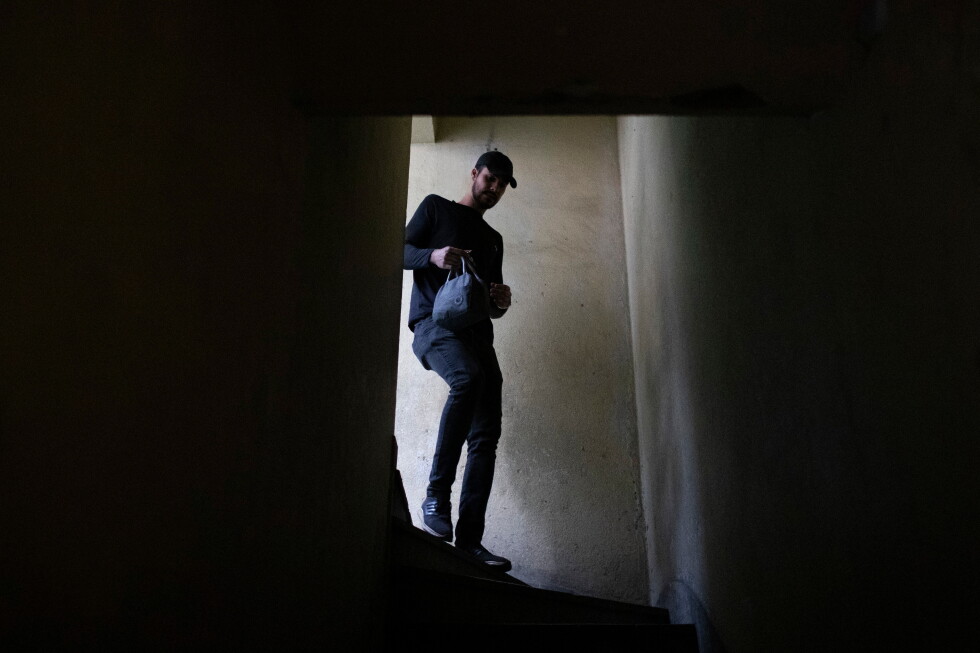
On a busy Tuesday in downtown Rio de Janeiro, hundreds of striking bus drivers gathered in protest, bringing public attention to a growing national movement pushing for sweeping labor reform. The demonstrators are calling for improved working conditions, fairer wage increases, and the elimination of Brazil’s widespread six-day work schedule — a core demand of a broader campaign to guarantee all Brazilian workers two full days of rest each week.
For many workers on the frontlines of this movement, the current schedule leaves little room for anything beyond constant labor. Alexandre Garrido, a 49-year-old bus driver with two decades of experience on Rio’s routes, spelled out the human cost of the six-day workweek. “You can’t spend quality time or go out with your family, give attention to your children, visit relatives, or have a day like going to a restaurant to have lunch together,” he explained.
The protest comes as a landmark constitutional amendment to cap the national workweek at 40 hours, with no corresponding pay cut, advances through Brazil’s legislative process. The measure won approval from the country’s lower house in May and is currently under review in the Senate. It has earned the public backing of President Luiz Inácio Lula da Silva, who has included the reform as a key policy pledge in his October reelection campaign.
Brazil’s current labor landscape allows for a 44-hour weekly work limit. For millions of workers, this translates to five standard eight-hour days plus an additional four-hour shift on a sixth day, while other workers fit 44 hours into a five-day schedule with two days off already. According to campaign organizers, the reform would transform daily life for an estimated 14 million Brazilians currently stuck on six-day schedules — a group that disproportionately includes low-income, low-skilled workers.
Lower-wage workers and women in particular bear the brunt of the extended workweek. Fernanda Sousa, 26, is one of those millions. Every morning except Tuesday, she climbs out of bed before dawn to navigate the steep paths of Rocinha, Rio’s largest favela, drop her 6-year-old son off with his godmother, and commute to a bistro in the upscale neighborhood of Gavea, where she serves pão de queijo and other snacks to customers. “Going to work on Sunday when everyone is with their families breaks my heart,” Sousa shared, as she headed home with her young son on a recent Friday evening. Like many women around the world, she struggles to balance formal employment with unpaid housework, a burden made far heavier by the longer work schedule.
For younger workers seeking to advance their careers, the grueling schedule also blocks opportunities for education and growth. Matheus Paulo Costa da Silva, a 28-year-old home goods store supervisor in Rio, recently tried to enroll in an evening information technology course to boost his job prospects — but constant exhaustion from his 44-hour week forced him to drop out. “I can’t see my family, I can’t go to the gym, I can’t study. I live to work,” he said.
Workplace reform advocates frame the end of the six-day workweek as a long-overdue correction of Brazil’s history of exploitative labor. Rick Azevedo, a Rio city councilor who attended Tuesday’s protest and founded Life Beyond Work, one of the main grassroots groups driving the amendment, put it bluntly: “Those who support working six days a week are in favor of modern slavery.” Erika Hilton, the lawmaker who shepherded the amendment through the lower house, echoed that framing, noting that even some conservative opponents have now come around to supporting the reform, even as others work to block it in the Senate. “Ending the six-day workweek allows us to care for workers who are under attack since Brazil’s slavery days,” she said, referencing the country’s 400-year history of chattel slavery that only ended in 1888.
Tuesday’s industrial action by bus drivers, organized by a local union that lists higher wages as its top demand, was just one part of a national day of protest coordinated by Azevedo’s movement across the country.
Not everyone supports the change, however. Brazil’s business community has raised sharp alarms about the potential economic costs of cutting working hours. The National Confederation of Industry argues that the reform could push annual labor costs up by as much as 267 billion reais ($52 billion), a 7% increase that would slow Brazil’s economic growth by an estimated 0.7 percentage points.
Industry analysts and small business advocates warn that micro, small and medium enterprises would face the steepest challenges from the reform. Sebrae, Brazil’s public small business support institution, notes that small businesses make up 97% of all enterprises in the country and account for half of all formal private sector jobs. For small business owners with already thin profit margins, the change presents an impossible choice.
Marcelo Pierini, a 52-year-old cafe and pie shop owner in downtown Sao Paulo, currently has five employees and only closes one day a week on Sunday. “This change could mean one of two things: closing on Mondays and losing some profit or sharing my bill with the customers,” he said. “It is hard. I want some rest too, but I can’t afford it.”
While the reform faces headwinds in the Senate, it follows a growing trend across Latin America, where multiple nations have already adopted similar 40-hour workweek reforms. Argentina stands out as an outlier in the region, having recently moved in the opposite direction to extend working hours for some sectors.