作者: admin

  • What to know about the breakaway traditionalist Catholics defying Pope Leo XIV

    What to know about the breakaway traditionalist Catholics defying Pope Leo XIV

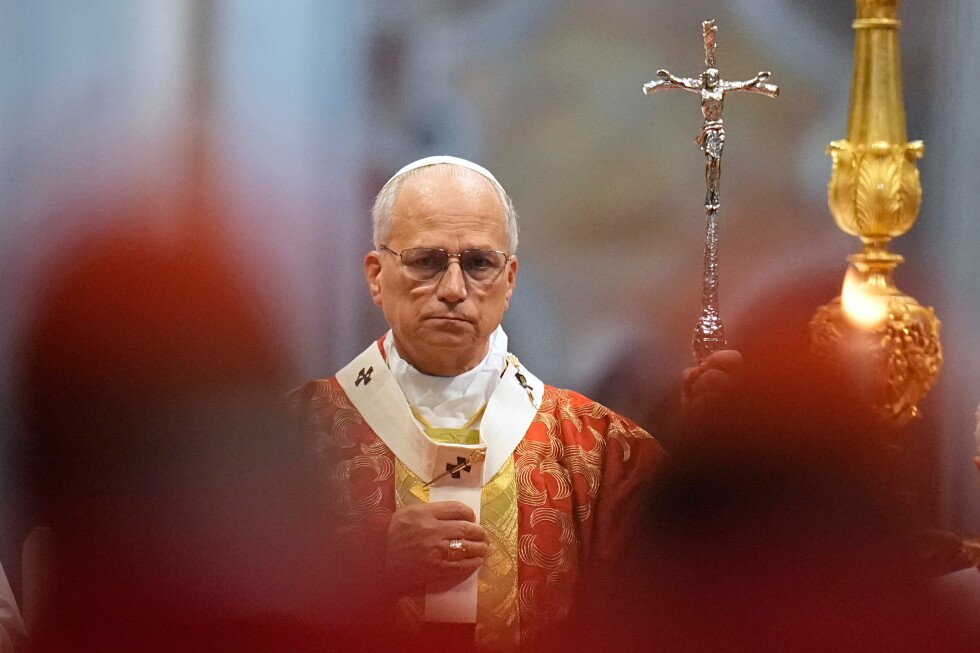
    The ultratraditionalist Catholic breakaway group the Society of St. Pius X (SSPX) is moving forward with a controversial plan to consecrate four new bishops without required papal approval, a direct act of defiance against Pope Leo XIV that church law defines as a schismatic rupture of Catholic unity, triggering automatic excommunication for all clergy involved in the ceremony.

    This unauthorized ordination represents the first significant test of authority for Pope Leo, who has centered his early papacy on repairing long-running divisions between the Holy See and traditionalist factions—tensions that deepened significantly over the course of Pope Francis’s pontificate. To understand the current standoff, it is necessary to trace the SSPX’s decades-long history of dissent from official church teaching.

    Founded explicitly to oppose the modernizing reforms of the Second Vatican Council, the 1960s ecumenical council that transformed Catholic life—revising the church’s relations with other faith communities including Judaism and Protestant Christianity, and allowing the celebration of Mass in local vernacular languages instead of the traditional Latin—SSPX has remained outside formal Vatican structures since the 1970s. In 1975, Vatican officials suspended SSPX founder Archbishop Marcel Lefebvre from priestly ministry and formally suppressed the society. The first major schism occurred in 1988, when Lefebvre consecrated four additional bishops without papal consent, leading the Holy See to immediately issue excommunications for all involved; to this day, the group holds no official legal status within the global Catholic Church.

    Despite this break from communion, the SSPX has grown steadily into a tangible alternative structure for ultratraditional Catholics, according to the group’s own internal statistics. Today it counts 2 active bishops, 751 priests, 264 seminarians across five formation houses, 145 religious brothers, 88 lay oblates, and 250 religious sisters, with members representing 50 nationalities worldwide.

    Under Catholic canon law, any act of consecrating a bishop without explicit papal approval triggers automatic excommunication for both the ordaining clergy and the individuals receiving ordination. Unlike formal penalties that require a public Vatican declaration, this penalty takes effect immediately the moment the consecration is completed. Canon law experts note that while the penalty is automatic, the Holy See will almost certainly issue a public response to the high-profile act of defiance to affirm its authority.

    Father Robert Gahl, a moral theology scholar at the Catholic University of America, explained that excommunication is the harshest penalty available under canon law, but it is framed as a “medicinal” measure rather than a permanent punishment. “The medicine may be bitter tasting, meaning that there’s a harsh feature of it because it’s a penalty, but it’s meant to bring about a change in the one who receives it,” Gahl noted. Crucially, the penalty does not invalidate the ordination itself: SSPX bishops and priests are considered validly ordained but minister illicitly, outside of church approval. While Pope Leo could extend excommunication to lay attendees of the ceremony, most church observers do not expect him to take that step.

    The current rift comes after decades of shifting outreach and tension between successive popes and the SSPX. Pope Benedict XVI, who made reconciliation with the breakaway group a core priority of his papacy, extended two major concessions to draw the SSPX back into full communion: in 2007, he relaxed longstanding restrictions on celebration of the traditional Latin Mass across the global church, and in 2009 he lifted the 1988 excommunications of the four SSPX bishops. That gesture quickly turned into a major diplomatic scandal, however, when it was revealed that one of the bishops, Richard Williamson, was an open Holocaust denier. Williamson had repeated his denial of Nazi gas chamber killings in a Swiss television interview just days before Benedict’s decree was made public. The pope later acknowledged that a basic online search would have revealed Williamson’s extreme views. Williamson was ultimately expelled from the SSPX in 2012 for insubordination after he refused to recognize the group’s leadership and called for its superior to step down; he died in 2025.

    Pope Francis, despite a general distrust of traditionalist factions and a broader crackdown on the spread of the traditional Latin Mass, which he framed as a source of division in the church, extended key concessions of his own to the SSPX. In 2015, as part of his Jubilee of Mercy initiative, he issued a decree allowing Catholics to receive valid sacramental absolution from SSPX priests, a gesture he later extended indefinitely. He also granted SSPX priests permission to officiate valid Catholic marriages. Analysts note that in response to the new unauthorized consecrations, Pope Leo could choose to revoke these concessions as part of the Vatican’s official response.

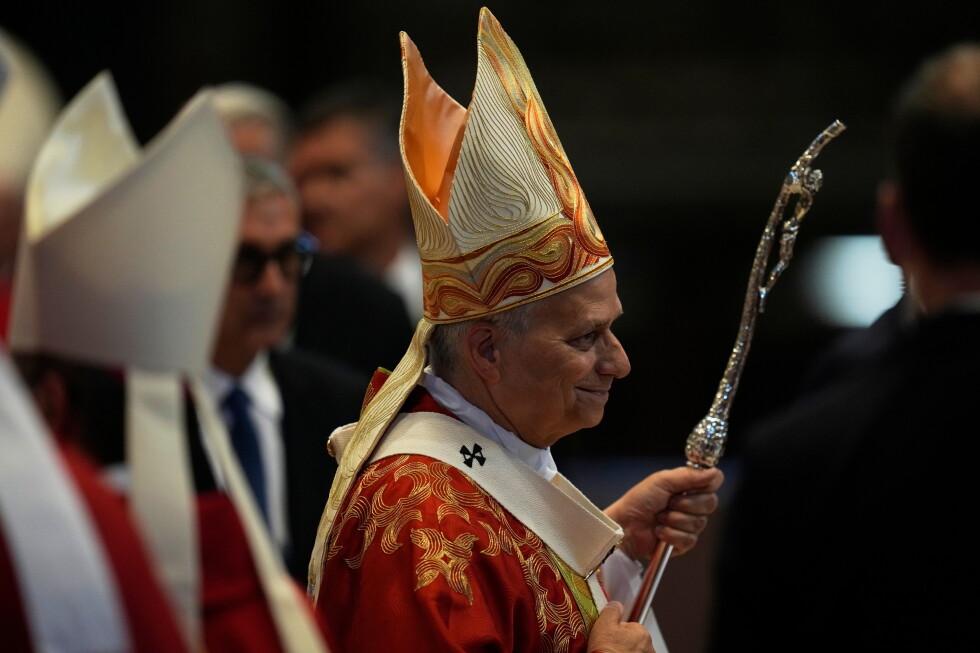
    Within global Catholicism, the SSPX is just one fringe traditionalist faction outside of communion with Rome; many other traditionalist Catholics remain in full communion with the Holy See. As part of his early push for church unity, Pope Leo already signaled his outreach to mainstream traditionalists by allowing a prominent American cardinal to celebrate the traditional Latin Mass in St. Peter’s Basilica during his first year in office.

    This reporting is part of the Associated Press’ religion coverage, produced in collaboration with The Conversation US and supported by funding from Lilly Endowment Inc. The AP holds sole editorial responsibility for the content.
  • Defying Pope Leo XIV and risking schism, traditionalists go ahead with planned consecrations

    Defying Pope Leo XIV and risking schism, traditionalists go ahead with planned consecrations

    A decades-long theological rift within global Catholicism is set to escalate this week, as the Society of St. Pius X (SSPX), a breakaway ultratraditionalist faction, plans to move forward with consecrating four new bishops without the mandatory approval of Pope Leo XIV — an act that carries the Catholic Church’s most severe penalty under canon law.

    The high-stakes ceremony is scheduled for Wednesday at the SSPX’s seminary in Econe, a remote mountain valley in southwestern Switzerland. Organizers expect thousands of attendees to gather, all drawn to the faction’s rejection of modern Catholic reforms and commitment to the pre-Vatican II Latin Mass, which has been largely replaced by vernacular-language liturgies across most of the global Church. Despite a last-minute public appeal from Pope Leo to cancel the ordination, the SSPX has refused to alter its plans. In an open letter released Tuesday, the American-born pontiff warned that ordaining bishops without papal mandate constitutes a “sin of extreme gravity” that inflicts lasting harm on the faction’s own followers.
    Under longstanding Catholic canon law, any unauthorized episcopal consecration triggers automatic excommunication for all parties involved: the four bishop-designates and the prelate who will administer the rite. The act is also formally classified as schism, a deliberate break from the institutional unity of the global Catholic Church.

    Oddly, the event has been framed by the SSPX as a joyous milestone rather than an act of rebellion. The group’s official consecration website has run a public countdown timer for days, and social media clips show seminarians cheerfully preparing event logistics. Registered attendees can purchase commemorative merchandise, including branded baseball caps marked with the “Econe2026” seal and a 75 Swiss franc ($92.50) souvenir wine set dubbed “Cuvee des Sacres.” The four-bottle gift set features four regional grape varieties, each bottle labeled with an episcopal symbol: a miter, bishop’s ring, cross, and crozier.
    For the SSPX, threats of schism and excommunication carry little weight. The faction has long held that it alone is defending the unchanging traditions of the Catholic faith against what it calls widespread heresy in the modern institutional Church. “We don’t fear it. It pains us immensely, but we believe that the good we seek is greater than the pain that will be inflicted upon us,” said Marc-André Mabillard, the SSPX’s media manager. In a formal response to Pope Leo’s appeal, SSPX superior General Rev. Davide Pagliarani asked the pontiff to delay imposing any formal penalties.
    The current confrontation is rooted in a split that dates back to the 1970s. The SSPX was founded by French Archbishop Marcel Lefebvre in explicit opposition to the modernizing reforms of the Second Vatican Council (Vatican II), the 1960s global church gathering that transformed Catholic outreach to other faiths, restructured church-state relations, and replaced the universal Latin Mass with local-language services. Thirty-eight years to the day before Wednesday’s planned ceremony, the Vatican declared the SSPX’s last set of unauthorized episcopal consecrations a schismatic act, imposing automatic excommunication on all involved bishops.
    Today, the SSPX rejects core tenets of Vatican II teaching, accusing the modern Church of being corrupted by modernism, liberalism, and ecumenism. The faction justifies its new ordinations by what it calls a “state of necessity”: only two of the SSPX’s original four bishops are still living, and the group says it needs additional bishops to serve its global community of 800 worship sites spread across 77 countries, ordain new priests, and administer confirmation via the ancient Latin rite. The SSPX denies the act is a direct challenge to Pope Leo’s authority, saying the sole purpose of the consecrations is to serve the pastoral needs of its followers. The four bishop-designates have been named as Pascal Schreiber (Switzerland), Michael Goldade (United States), and Michel Poinsinet de Sivry and Marc Hanappier (both France).
    The planned consecrations have drawn widespread criticism from across the Catholic community, even from many conservative and traditionalist Catholics, who frame the act as an unacceptable act of disobedience to the pope that damages the unity of the Church. “You can’t serve tradition while disobeying the church and her authority,” said Rev. Robert Gahl, an ethics scholar at the Catholic University of America.
    Prominent Catholic commentator and St. John Paul II biographer George Weigel noted that the dispute between the Vatican and the SSPX extends far beyond the language of the Mass. Writing in First Things magazine, Weigel explained the divide centers on “a rejection of the Second Vatican Council’s teaching on the church, salvation, religious freedom, church–state relations, and the church’s relationship to other religions.” Weigel also recalled that SSPX founder Lefebvre supported the collaborationist Vichy regime in Nazi-occupied France during World War II, and that one of the faction’s founding bishops publicly denied the Holocaust.
    Mabillard acknowledged the faction’s regret over the rift with the Vatican, telling reporters: “We have great sadness to not be understood by our leader,” before confirming: “We are changing absolutely nothing in our plans.”
    This report includes contributions from Keaten in Geneva. Associated Press religion coverage is supported via a collaboration with The Conversation US, with funding from Lilly Endowment Inc. The AP holds sole editorial responsibility for this content.

  • Ukrainian drone attacks on oil refineries plunge Russia into a summer fuel crisis

    Ukrainian drone attacks on oil refineries plunge Russia into a summer fuel crisis

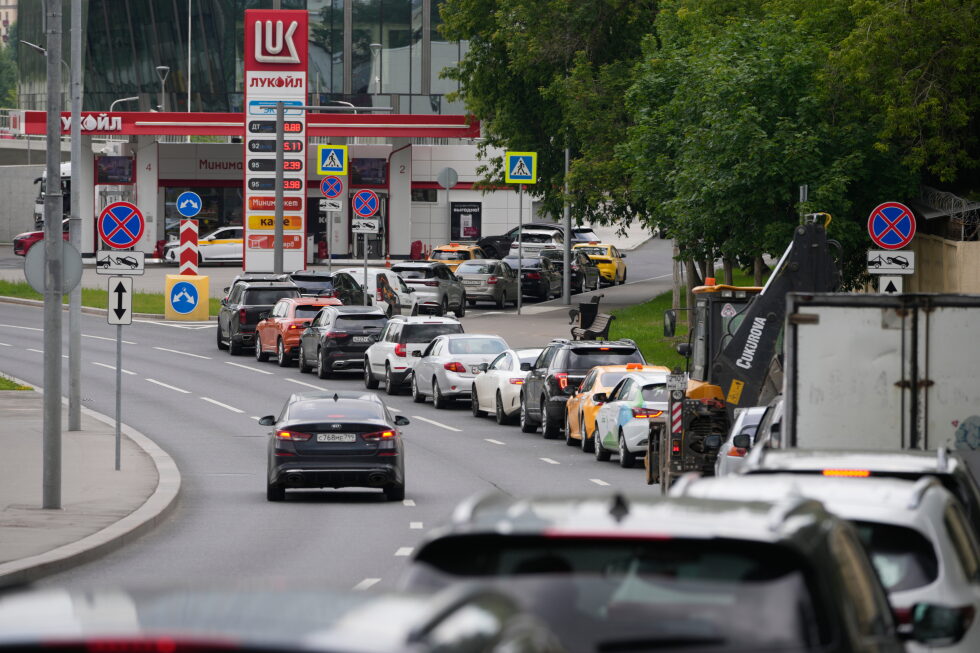
    Across Russia’s vast territory, hours-long queues snake along roads outside gas stations, as growing public frustration and uncertainty over a crippling fuel crisis deepen in the wake of sustained Ukrainian drone and missile attacks targeting the country’s energy infrastructure. For a nation long ranked as one of the world’s top energy exporters, this unprecedented fuel shortage has brought the realities of Moscow’s full-scale invasion of Ukraine directly home to ordinary Russian citizens in a way few other wartime developments have.

    Fuel rationing has now rolled out across more than half of Russia’s regions. Social media footage captures furious drivers staring down empty pumps, raging at spiking fuel prices, and waiting for hours just to fill their tanks. In the Siberian city of Irkutsk, the mayor even arranged for portable toilets to be deployed for stranded motorists stuck in multi-hour queues.

    The crisis prompted a rare public acknowledgment of trouble from Russian President Vladimir Putin, who conceded in a televised address that “problems persist for both motorists and businesses,” adding that “there are still queues at petrol stations, and finding the right grade of petrol isn’t always easy.” Putin framed the shortages as non-critical and temporary, but that reassurance fell flat for many drivers, even in Moscow—Russia’s wealthiest capital, which is typically shielded from the economic shocks hitting the rest of the country.

    “I think the situation is not very good,” one anonymous Moscow motorist told the Associated Press the day after Putin’s speech. “They say one thing on television, and in reality it’s another. … People are queueing everywhere.”

    Ukrainian President Volodymyr Zelenskyy quickly seized on the disruption, writing on Telegram that “Putin can go on and on, claiming on TV that he supposedly has everything under control,” but ordinary Russians can see the war “has reached the point where even an oil state — a gas station, as Russia used to be called — is now facing gas shortages.”

    Since March, an Associated Press tally counts more than 50 confirmed Ukrainian strikes on Russian oil refineries, storage depots, fuel terminals, and other energy assets across Russia and the illegally annexed Crimean Peninsula. Many facilities have been hit multiple times: the Tuapse refinery on the Black Sea coast has been struck four times alone.

    Industry analysts confirm these strikes have gutted Russia’s domestic fuel production. Gary Peach, oil markets analyst at Energy Intelligence, reports that Russia’s crude oil processing for fuel fell 25% year-over-year in June, hitting 3.95 million barrels per day—the lowest volume recorded in more than 20 years. “The outages are extraordinary,” Peach noted. Gasoline output has dropped 17% from 2024 levels, falling to 850,000 barrels per day, a volume far below what Russia’s domestic market requires. Unlike many of its other energy products, Russia exports very little gasoline, meaning almost all reduced output hits domestic consumers directly.

    Chris Weafer, CEO of consulting firm Macro-Advisory Ltd., estimates that roughly one-third of Russia’s total oil refining capacity is currently offline. His estimate draws on anecdotal reports and oil industry sources, as Russian refiners do not publicly disclose the full extent of attack-related damage.

    The timing of the shortages is particularly damaging for the Russian economy, Weafer explained: the annual agricultural harvest season is now ramping up, which drives a sharp increase in domestic fuel demand across rural regions.

    Ukrainian officials have framed the campaign of strikes on energy infrastructure as a deliberate strategy to weaken Russia’s war effort by disrupting military logistics and supply chains, undermining Moscow’s ability to conduct front-line assaults, and building domestic pressure on the Kremlin to end the invasion. A key target of the campaign has been Crimea, which Russia illegally seized from Ukraine in 2014 in a move unrecognized by the vast majority of the international community. Strikes on the peninsula earlier this year forced Moscow-installed authorities to implement full fuel rationing in May and halt all civilian fuel sales for a period; limited sales only resumed later in Sevastopol.

    The strikes have also reached Russia’s two largest cities, creating embarrassing public setbacks for the Kremlin that spread widely across social media despite Russian government restrictions on publishing footage of attacks. On June 3, a major drone strike on a St. Petersburg oil terminal filled the sky with thick black smoke just as Putin prepared to open his annual international economic forum, an event designed to attract foreign investment to Russia. Two weeks later, on June 18, a similar large plume of smoke rose from the Moscow Oil Refinery on the capital’s outskirts, with greasy black fuel residue raining down on nearby residential areas.

    By late June, some form of fuel rationing was in effect across more than half of Russia’s regions. Some regional authorities imposed strict across-the-board limits on all gas stations, while individual fuel chains implemented their own purchase caps in others. Russian officials have tried to pin the crisis on consumer hoarding and panic buying, urging motorists to only refill their tanks when necessary. To shore up domestic supplies, Moscow has already banned exports of gasoline and aviation fuel, and is currently considering a similar ban on diesel exports. Authorities are also even exploring importing fuel from other countries, with Kremlin spokesman Dmitry Peskov confirming that talks with unspecified foreign partners are “underway,” framing the potential imports as “another step toward stabilizing the market and aimed at reducing panic-buying.”

    The shortages have even spread to distant Siberian regions where no local refineries have been targeted by Ukrainian strikes. In Omsk region, local business owner Viktor Shkurenko said the recent announcement of a 40-liter per-vehicle purchase limit came as a shock. “Nothing was bombed here. We have the biggest oil refinery in Siberia right here, and it gave us confidence that this fuel crisis won’t come to us,” he said, though he added that his business had not yet experienced disruptions refueling its work vehicles.

    In Zabayakalye, a Siberian region east of Lake Baikal, local media reported that one garbage collection company suspended services and multiple public bus routes were cut back due to fuel shortages. In addition to deploying portable toilets for queueing motorists, Irkutsk city officials raised public transit fares this week, citing skyrocketing fuel costs. Pavel Kharitonenko, acting head of the Irkutsk branch of the opposition Yabloko party, told the AP he now chooses to walk or take public transit to avoid the chaos. “I don’t have the fuel, and I don’t want to queue at gas stations,” he said, adding that the Irkutsk region—home to a large Rosneft oil refinery—has faced severe shortages for days, with queues growing longer by the day.

    Fixing the damage and resolving the shortages will be a slow, complicated process. Putin claims Russian gasoline stockpiles are only 4% lower than they were at this point last year, but Weafer says the core problem is a logistical misallocation: “reportedly, there are good supplies of fuel around the country. The problem is it’s in the wrong place.” Moving large volumes of fuel across Russia’s massive territory to reach shortage-hit regions “is not something that can be done overnight,” Weafer explained. “There should be enough, but it will take several weeks to get it from where it is to where it’s needed. It’s just a huge logistics operation to do that.”

    Repairing attack-damaged refineries is even more challenging. Many of the specialized pieces of equipment damaged in strikes are imported, and international sanctions on Russia make sourcing replacements or spare parts extremely difficult and time-consuming. While Russian teams have managed to get some damaged facilities back online, Peach said, they rarely operate at full capacity. “But the extent of the damage this time is so extensive that they won’t get back to winter levels of refining this summer,” he noted. Some facility owners are choosing to delay major repairs until a ceasefire is reached, he added, because any restored infrastructure will just “get knocked down again” by future strikes.

    Weafer estimates that repairing the Moscow Oil Refinery—which supplies roughly 40% of the fuel for Moscow and the surrounding region—will take at least three months. If there are no additional strikes on Russian energy infrastructure, he projects shortages will persist “probably throughout the summer,” as high agricultural demand will continue through September.

  • Anthropic says US lifts export ban on its advanced AI tools

    Anthropic says US lifts export ban on its advanced AI tools

    In a swift reversal of a weeks-old national security order, the U.S. Department of Commerce has removed export restrictions on two of Anthropic’s most cutting-edge artificial intelligence models, the AI developer has confirmed. The company announced Tuesday it will restore global access to its consumer-facing Claude Fable 5 and enterprise-focused Mythos 5 starting Wednesday, just 21 days after it abruptly halted access to both tools at the U.S. government’s request. Launched only three days before the June 12 suspension, the two models represent Anthropic’s most advanced AI work to date, positioning the startup as a leading competitor to OpenAI’s ChatGPT and Google’s Gemini. The restrictions were implemented over federal concerns that the powerful models could be exploited by malicious actors to compromise digital systems, with specific focus on a potential ‘jailbreak’ loophole that could bypass built-in safety controls to unlock unrestricted capabilities. Mythos 5, built for business and cybersecurity clients, is specifically designed to detect and test exploits for coding vulnerabilities, which raised red flags for national security officials. In an official letter to Anthropic reviewed by the BBC, Commerce Secretary Howard Lutnick confirmed that the company has fully addressed the identified risks. Under the new agreement reached with regulators, Anthropic has committed to proactive ongoing monitoring to detect and mitigate security threats linked to both models. The firm will also coordinate with federal authorities on all future AI model releases and immediately report any suspicious or malicious activity related to its platforms. Lutnick emphasized that the Commerce Department retains full authority to reimpose restrictions if future risks emerge that are not adequately mitigated by Anthropic’s new safeguards. At the time of the initial suspension, Anthropic pushed back on the government’s action, noting that regulators had not outlined specific, detailed flaws in its technology beyond the broad report of a potential narrow jailbreak. The company contested the decision to pull a commercial product already deployed to hundreds of millions of users over an isolated, limited vulnerability. Fable 5, Anthropic’s flagship consumer model, is engineered for advanced deep reasoning and can execute complex, multi-step tasks independently, while Mythos 5 caters to professional cybersecurity teams supporting digital infrastructure defense. The BBC has reached out to the U.S. Department of Commerce for additional comment on the lifted ban and the terms of the new regulatory agreement.

  • Watch: Mount Etna eruption creates trail of bright orange lava

    Watch: Mount Etna eruption creates trail of bright orange lava

    Dramatic new footage has emerged showing a powerful eruption at Mount Etna, Europe’s most massive active volcano located on the east coast of Italy, sending a thick, bright orange stream of lava cascading down the mountain’s slopes. The glowing molten rock, captured by onlookers and geological monitoring cameras, can be seen snaking steadily across Etna’s volcanic terrain, creating a striking visual display of the planet’s geologic activity. As one of the most consistently active volcanoes in the Mediterranean region, Mount Etna’s regular eruptions draw both scientific attention and public fascination, with this latest event producing the vivid lava flow that has been widely shared across social media and news outlets. While the eruption remains active, local authorities have not yet reported any immediate threats to nearby populated areas, continuing to monitor volcanic activity closely for any changes in behavior.

  • Mexico fans use a homophobic chant during the World Cup match against Ecuador

    Mexico fans use a homophobic chant during the World Cup match against Ecuador

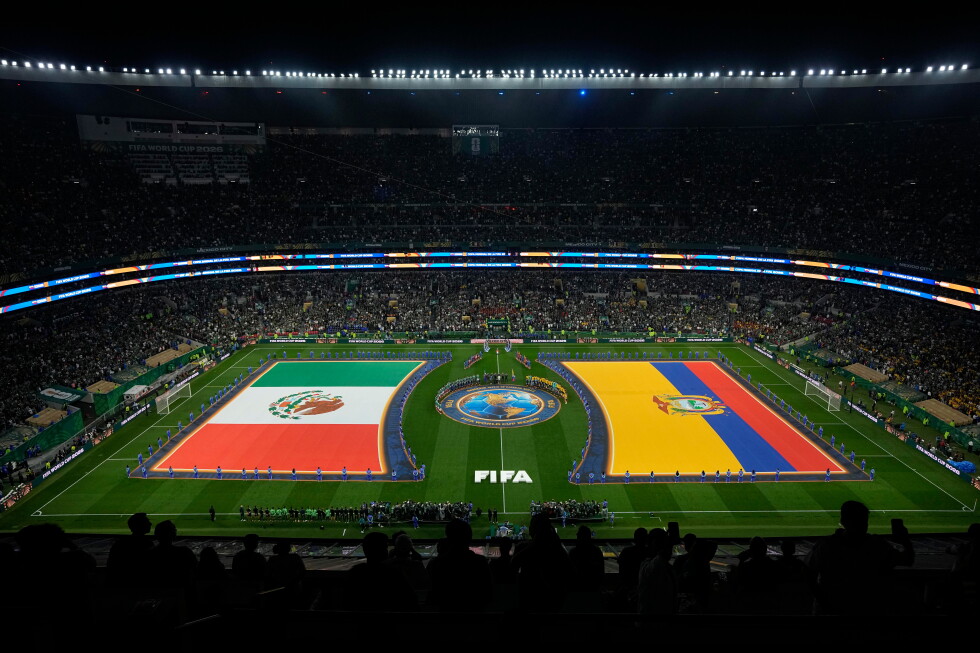
    DOHA — Controversy and pre-existing geopolitical tension overshadowed the World Cup Round of 32 matchup between Mexico and Ecuador on Tuesday night, as Mexican supporters repeated a widely condemned homophobic chant that has already led to multiple disciplinary penalties for the Mexican Football Federation from FIFA.

    The offensive chant, a single Spanish slur that translates to male prostitute, has long been associated with a disturbing fan tradition: supporters typically yell the phrase when the opposing team’s goalkeeper prepares to take a goal kick. This time, the chant broke out just five minutes into the match, when Ecuadorian goalkeeper Hernán Galíndez stepped up to take his first goal kick of the game.

    This incident marks the second time during the current World Cup tournament that Mexican fans have deployed the discriminatory chant. FIFA has issued several financial fines to the Mexican federation for repeated fan use of the slur in past international competitions, and disciplinary action is widely expected to follow this latest occurrence.

    The problematic chant traces its origins back to an Olympic qualifying match between Mexico and the United States hosted in Guadalajara, but it first gained global notoriety and spread widely during the 2014 World Cup held in Brazil. Efforts by the Mexican federation and FIFA to stamp out the practice have yet to succeed, with the chant resurfacing repeatedly at high-stakes international matches.

    Hostility between the two fan bases was not limited to match action: tensions flared long before the opening whistle, when hundreds of Mexican fans gathered outside Ecuador’s team hotel in the host city from late Monday night through the early hours of Tuesday morning. The crowd used car horns, drums, revving motorcycle and car engines, and even set up DJ equipment to blast noise in a deliberate attempt to disrupt the Ecuadorian squad’s pre-match rest.

    The open hostility between supporters is more than just pre-match sportsmanship: it mirrors a deep diplomatic split between the two nations that has been unfolding since early 2024. In April of that year, Ecuadorian security forces stormed the Mexican embassy in Quito to arrest former Ecuadorian Vice President Jorge Glas, who had been granted political asylum by Mexican authorities. The raid was a blatant violation of international diplomatic norms, leading Mexico to immediately sever all formal diplomatic relations with Ecuador.

    In recent weeks, Ecuadorian President Daniel Noboa has publicly signaled his administration’s interest in repairing the fractured bilateral relationship. However, Mexican President Claudia Sheinbaum made clear last Monday that no diplomatic discussions would take place until after the highly anticipated World Cup match between the two nations concluded, leaving the rift unresolved for the time being.

  • Super Rugby set for a longer 17-week regular season and revamped playoffs in 2027

    Super Rugby set for a longer 17-week regular season and revamped playoffs in 2027

    Organizers of the iconic Southern Hemisphere rugby competition Super Rugby have announced sweeping changes to the tournament structure set to take effect in 2027, introducing a longer regular season and a revamped playoff system under a new 10-team framework.

    The reconfigured competition will distribute teams across three Pacific nations: five elite franchises from New Zealand, four from Australia, and one representative side from Fiji, marking an important expansion of the tournament’s footprint in the Oceania region. According to the official timeline revealed Wednesday, the 2027 season will open its doors on February 12, with the championship final scheduled to wrap up the 17-week regular season on June 26. This marks a notable extension from previous season structures, giving fans more consistent top-tier rugby action throughout the early months of the year.

    The playoff round has also been redesigned to create more high-stakes matches while rewarding top-performing regular season teams. Under the new six-team finals format, the sides that finish first and second in the regular season standings will earn a direct bye into the semifinal round, avoiding an extra knockout match. Meanwhile, teams ranked third through sixth will compete in sudden-death quarterfinals to secure the two remaining semifinal spots, creating more exciting knockout drama for rugby audiences.

    The announcement comes fresh off the conclusion of the 2026 Super Rugby season, which saw the Wellington-based Hurricanes claim the championship title in dominant fashion. Last month, the Hurricanes delivered a crushing 60-5 victory over the Hamilton-based Chiefs in the 2026 final, capping off a record-breaking campaign for the franchise. Over the course of their 17-match 2026 season, the Hurricanes crossed the try line 113 times, making them the first side in the competition’s entire 30-year history to hit the milestone of more than 100 tries in a single season.

    In related rugby news coming out of New Zealand this week, the country’s national men’s squad has finalized its roster for the opening match of the World Rugby Nations Championship, scheduled to take place this Saturday against France. The team announcement came just days after the conclusion of the 2026 Super Rugby final, giving top club players a tight turnaround to transition from domestic competition to international test rugby.

  • US Supreme Court rejects Trump’s effort to limit birthright citizenship

    US Supreme Court rejects Trump’s effort to limit birthright citizenship

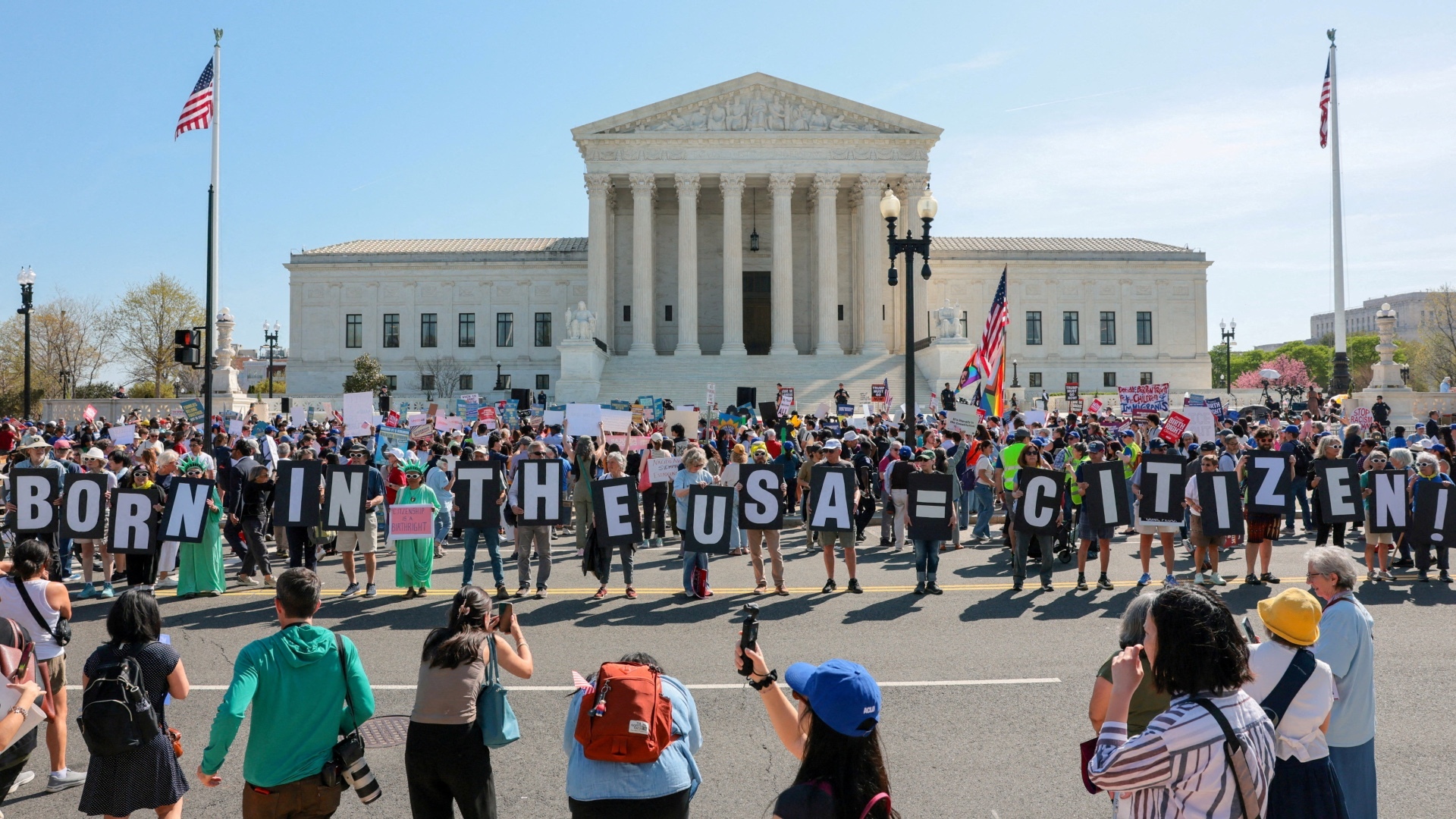
    On Tuesday, the conservative-leaning U.S. Supreme Court — shaped by three appointments from former President Donald Trump — delivered a long-awaited ruling that preserved birthright citizenship as the nation’s binding law, in a narrow 5-4 decision that split the bench. Even dissenting Justice Brett Kavanaugh acknowledged that longstanding federal statute would have sustained the principle of birthright citizenship regardless of the court’s ruling on the constitutional question.

    Writing for the five-justice majority, Chief Justice John Roberts emphasized the foundational role of citizenship in American democratic life. “Citizenship, then and now, was the right to have rights — to freely participate in our political community. The Framers of the Fourteenth Amendment extended that promise to ‘every free-born person in this land’,” Roberts wrote. “We keep that promise today.”

    Rooted in the 1868 post-Civil War ratification of the Fourteenth Amendment to the U.S. Constitution, birthright citizenship mandates that nearly all children born within U.S. territory automatically gain American citizenship, with only narrow exceptions for children of foreign diplomats on official duty and active-duty foreign military personnel. The principle was adopted to redress the nation’s legacy of chattel slavery, which previously classified enslaved people as just three-fifths of a person for legal and political purposes and denied them full citizenship rights.

    The case reached the Supreme Court after the Trump administration took the unprecedented step last year of moving to eliminate birthright citizenship, targeting children born to undocumented immigrants and people engaging in what the administration calls “birth tourism.”

    Current demographic data puts the estimated undocumented population in the U.S. between 12 and 14 million, according to the Immigration Research Initiative. While no official federal data tracks birth tourism, 2020 estimates from the Center for Immigration Studies put the annual number of children born to birth tourists in the U.S. between 20,000 and 26,000, a small fraction of the 3.6 million annual births in a nation of 349 million people.

    The Trump administration has positioned itself as the most hardline anti-immigrant administration in modern U.S. history. Over its current term, it has revoked more than 100,000 visas, deported roughly half a million immigrants, and detained roughly 70,000 more in overcrowded immigration facilities that have faced widespread condemnation for poor hygiene, insufficient access to food, and unsafe living conditions. It has effectively ended the national asylum program and canceled temporary protected status (TPS) — which allows people from unsafe countries to remain in the U.S. — for Afghans, Syrians, and Haitians.

    Immigrant and human rights advocacy groups celebrated the Supreme Court’s ruling, but warned that the decision does not end the threat to immigrant protections for the remainder of Trump’s three-year term.

    “While we welcome this decision, our work is far from over. We will continue to stand with our communities to ensure that every person’s constitutional rights are respected and that no administration can undermine the protections guaranteed by the Fourteenth Amendment,” Fernando Garcia, executive director of the Border Network for Human Rights, said in a public statement. “Today’s ruling reminds us that the Constitution belongs to all of us, and it is strongest when it protects everyone equally.”

    Shawn VanDiver, president of #AfghanEvac, an organization supporting Afghan evacuees, noted that the question of whether birthright citizenship should stand should never have been in doubt. “For thousands of Afghan families rebuilding their lives in America, this ruling provides important certainty. Whether their parents are Special Immigrant Visa holders or applicants, refugees, asylees, humanitarian parolees, Temporary Protected Status holders, or navigating other immigration pathways, children born in the United States remain protected by the Constitution,” he said.

    Jenin Younes, president of the American Arab Anti-Discrimination Committee, reaffirmed that birthright citizenship is a binding constitutional guarantee, not a discretionary privilege that can be revoked by executive order.

    Shortly after the ruling was announced, with his executive effort to end birthright citizenship blocked, Trump took to his social media platform Truth Social to announce he would now push Congress to pass legislation eliminating birthright citizenship, arguing a full constitutional amendment is unnecessary.

    “No long and unwieldy Constitutional Amendment is necessary! Congress should start TODAY to work on ending expensive and unfair to our Country, Birthright Citizenship. They will have my Complete and Total Support!” Trump wrote on the platform.

    The White House has repeatedly framed birthright citizenship as a rule intended only for the children of enslaved people, not for people it claims are “trying to scam the system and come into the country.”

    Hassan M Ahmed, managing partner of The HMA Law Firm based outside Washington, D.C., called the ruling a clear rebuke of the administration’s position. “The most conservative and, frankly, anti-immigrant Supreme Court just told Trump ‘don’t mess with birthright citizenship’. I think it’s safe for now,” Ahmed told Middle East Eye. He added that he does not expect the push for legislation to gain meaningful support among most members of Congress.

    Unlike most of the world, which grants citizenship primarily by descent rather than birthplace, birthright citizenship remains deeply intertwined with American national identity and historical reckoning with slavery. Across the Americas, the principle of birthright citizenship is a widely established norm, and Ahmed called the U.S. version “sacrosanct” for its role in closing a dark chapter of the nation’s legal history.

  • United, free and brilliant – can anyone stop France masterclass?

    United, free and brilliant – can anyone stop France masterclass?

    The 2026 FIFA World Cup in North America delivered one of its most dominant and emotionally resonant displays yet on Tuesday, as pre-tournament favorites France crushed Sweden 3-0 to punch their ticket to the knockout round. The victory was far more than just three points: it was a powerful showcase of team unity, individual brilliance, and a heartfelt tribute to head coach Didier Deschamps, who made his return to the dugout just days after returning home to attend his mother’s funeral.

    From the opening whistle, France’s attacking firepower proved too much for a Swedish side fighting to stay in the tournament. It was Kylian Mbappe, the tournament’s standout star, who broke the deadlock with a typically clinical finish. Instead of wheeling away in solo celebration, the Real Madrid forward sprinted straight to the touchline to embrace Deschamps, before the entire squad joined them for a warm group hug. In a moment that captured the tight bond of this French squad, the gesture spoke volumes about the team’s solidarity through a difficult week for their manager.

    After the match, Deschamps highlighted that collective strength as the foundation of France’s success. “This group is united and they delivered when I was not here last week,” he told reporters. “Team spirit doesn’t guarantee you win matches, but without it, you can easily lose. Collective strength comes above everything else.” Midfielder Aurelien Tchouameni echoed that sentiment, adding: “We know the coach is going through a lot right now, we all wanted to give everything to make him as happy as possible.”

    Once the emotional opening settled, France turned on the style in the sweltering heat of New Jersey’s MetLife Stadium. Young winger Bradley Barcola slotted home to double the lead shortly after half-time, before Mbappe grabbed his second of the night, pulling him level with Argentina’s Lionel Messi on six tournament goals at the top of the Golden Boot race. That strike took Mbappe’s career World Cup tally to 18, just one goal behind Messi’s all-time competition record of 19. He has now scored multiple goals in seven separate World Cup matches – three more than any other player in tournament history.

    While Mbappe’s finishing grabbed the headlines, 24-year-old playmaker Michael Olise continued his stunning breakout tournament, notching two assists to take his total to five for the competition. That makes Olise the first player to register five or more assists at a single World Cup since 1994, marking a remarkable rise for a player who began his youth career at non-league Hayes & Yeading United just 18 years ago. Deschamps heaped praise on the former Crystal Palace man after the match: “Michael is playing top-notch football. He is a major influence within the squad, the link between our strikers and midfield. He may be a bit of an introvert off the pitch, but that changes completely when he steps onto the grass.”

    Tuesday’s 3-0 win cemented France’s place in the history books before the knockout stage even begins: Didier Deschamps’ side became the first team ever to score three or more goals in five consecutive World Cup matches. Across their four group-stage games in the United States, France have already found the net 13 times, with individual statistics that outstrip every other contender in the tournament. Ballon d’Or winner Ousmane Dembele has contributed to six goals (four goals, two assists), while his combination play with Mbappe has produced six tournament goals – four from Dembele to Mbappe, two in the reverse direction – the most by any attacking duo since 1966.

    The performance left footballing legends in no doubt about France’s status as the team to beat. Former Arsenal and England striker Ian Wright told ITV Sport: “You cannot stop this kind of ability. France are one of the most clear favourites I have ever seen in a World Cup tournament.” His former Arsenal teammate Patrick Vieira, a 1998 World Cup winner with France, added: “They showed to everyone that they are the team to beat.” Former England defender Gary Neville echoed that assessment, saying: “That starting front four – Mbappe, Dembele, Olise and Barcola – they will cause nightmares for every single defender in this tournament. They are a level above. The rest of the contenders are looking at them thinking ‘that is the standard we have to reach’.”

    Even Sweden manager Graham Potter conceded that his side had been beaten by a truly elite outfit. “It’s no disgrace to go out to this France team,” he said. “I haven’t seen a better team in this tournament.”

    France will now face Paraguay in their round-of-16 tie in Philadelphia on July 4, kicking off at 22:00 BST. If they progress, a quarter-final clash awaits against either co-host Canada or Morocco at Boston’s Gillette Stadium on July 9. Despite the record-breaking form and overwhelming praise from pundits, Deschamps insisted his side would not get ahead of themselves. “Please, slow down,” he said when asked if his side could go all the way to the title. “There is always room for improvement, not everything is perfect. We have reached the round of 16, let’s appreciate that first. We know what is expected of us, we did what we had to do today even if the first 15 minutes were a bit timid. It’s only the round of 16, we have to stay calm.”

    Four years after their penalty shootout heartbreak against Argentina in the 2022 Qatar final, this French side looks more determined than ever to claim a third World Cup title. With their attacking unit firing on all cylinders, and a tight team spirit carrying them through challenging moments, the question on every fan’s mind after Tuesday’s display remains: is there any side in the tournament that can stop Deschamps’ red-hot favorites?

  • Japan’s Eiko Kadono, author of ‘Kiki’s Delivery Service,’ still believes in the magic of books at 91

    Japan’s Eiko Kadono, author of ‘Kiki’s Delivery Service,’ still believes in the magic of books at 91

    Nestled in the scenic coastal Japanese city of Kamakura, just south of Tokyo, 91-year-old beloved Japanese author Eiko Kadono welcomes visitors to a cozy home marked by a soft pink gate. The space brims with towering stacks of books, pink upholstered chairs, and a whimsical collection of animal figurines — a perfect reflection of the childlike wonder that has defined Kadono’s decades-long career crafting stories.

    Widely known as the creator of Kiki, Japan’s most cherished literary witch, Kadono shows no signs of stepping away from her craft. Even as mobility challenges like climbing stairs have slowed her daily routine, she shows up to her writing desk every single day. “I never tire of writing,” she shared in an exclusive interview with the Associated Press from her home, a soft laugh escaping as she describes herself as still young at heart.

    Dressed in a brightly colored smock custom-designed by her daughter — with elastic cuffs that pull up easily for writing, a feature she points out with quiet pride — and sporting her signature thick-framed glasses, Kadono embraces authenticity openly. Quick with a witty retort and a ready laugh, she shrugs off any need to hide that she wears a wig, still wears bold red lipstick, and only feels a little shy about her wrinkles. While her writing style has tightened over the decades (she notes her early work was far wordier than her current crisp prose), her passion for storytelling has stayed constant.

    Kadono’s career as a writer began by happy accident, not deliberate design. For years, she was a full-time housewife raising her daughter and married to a designer, and never set out to become a published author. It was only after living in Brazil for two years in her 30s that she was asked to write about her experience there, and she quickly discovered writing was a joyful hobby, not a chore to force herself through.

    The character that would make her a global household name came from an unlikely source: a childhood drawing by her 12-year-old daughter. The sketch depicted a cute young witch flying on a broomstick toward the moon, and it inspired Kadono to craft a coming-of-age fantasy following the sprightly, no-nonsense young witch Kiki and her black cat sidekick Jiji on their adventures. First published in 1985, *Kiki’s Delivery Service* was adapted into the iconic 1989 Studio Ghibli animated film by Hayao Miyazaki, cementing the story’s place in global pop culture.

    Today, the original Kiki series spans six core novels and three spin-offs, and the first book was translated into English in 2020 by Delacorte Press. Its reach now extends to 25 languages worldwide, with the second installment of the series, *Kiki and the New Magic*, set to hit English bookshelves this August, translated by Emily Balistrieri and illustrated by Yuta Onoda. The work is just one of more than 200 books Kadono has published over her career, which earned her the prestigious Hans Christian Andersen Award — the top global honor for children’s literature — in 2018.

    Kadono’s creative process remains rooted in analog tradition, even as she’s adapted to modern tools. While she now types finished drafts on a keyboard, tapping out one slow key at a time, every new story still starts with handwritten notes, and she sketches small illustrations to help her visualize the worlds she builds. “I want to write so that the reader can visualize what I am writing,” she explained. “I love to write.”

    Last year, Tokyo opened Kiki’s Museum of Literature, a dedicated space celebrating Kadono’s work that displays hundreds of books by her and other authors, and sells branded merchandise from Kadono’s signature smocks to pink mugs and character-printed T-shirts. A statement on the museum’s wall sums up her cross-cultural impact: “The other-worldly fantasy that Kadono creates has overcome the boundaries of language, to become appreciated by a wide global audience, including children and adults, and won international accolades.” For 5-year-old visitor Tsukiko Fukuda, who toured the museum with her family, the appeal is simple: the books are fun, and pink is her favorite color too.

    Looking ahead, Kadono has expressed a passionate hope that more young talent will emerge in children’s literature, to help future generations develop a lifelong love of reading. She warns that modern childhood has shifted dramatically from the era she grew up in: unstructured outdoor activities that once stoked young people’s imaginations have been replaced by digital distractions, making books more important than ever. “People must think on their own to be able to create. That’s what being human means,” she said with fervor. “Books are the only thing now that can bring about creation and imagination.”