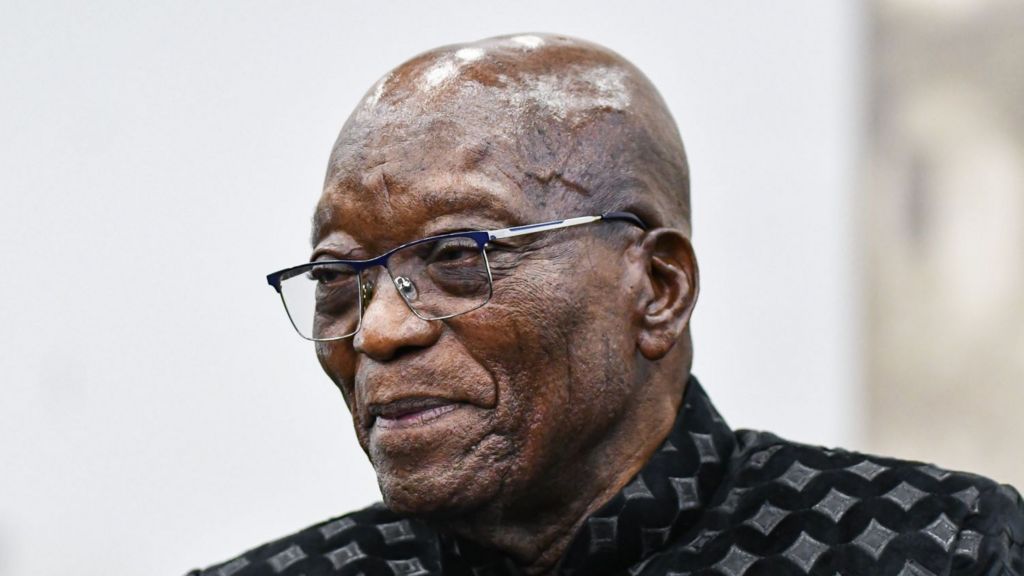
A recently surfaced photograph of former South African President Jacob Zuma alongside Ajay Gupta, one of the brothers at the center of the country’s infamous “state capture” corruption scandal, has ignited fierce political backlash and reignited questions about Zuma’s ongoing ambitions to return to power. The image, published this week by Indian media, captures the pair at a Hindu temple in India, and has drawn sharp condemnation from sitting members of South Africa’s cabinet. The long-running controversy around the Gupta family stretches back more than a decade, when the wealthy business clan was accused of leveraging their close personal relationship with then-President Zuma to siphon off state funds, manipulate cabinet appointments, and skew national policy for private profit. The Guptas have consistently rejected all allegations of wrongdoing, but the pressure mounted in 2018 when a judicial inquiry was launched into the so-called “state capture” scheme, a scandal that has been estimated to cost South African taxpayers billions of rand. Facing investigation, the entire Gupta family fled South Africa that same year. South African authorities withdrew Ajay Gupta’s arrest warrant in 2019, while his two younger brothers Atul and Rajesh relocated to the United Arab Emirates. In 2023, an Emirati court rejected South Africa’s formal extradition request for the pair, leaving the brothers outside the reach of South African judicial process. Zuma, who was the head of the ruling African National Congress (ANC) and South African president from 2009 to 2018, was forced to resign from office amid the overwhelming weight of the state capture allegations and a cascade of other corruption claims. Like the Guptas, he has never admitted any wrongdoing. After splitting from the ANC, Zuma now leads the newly formed opposition uMkhonto weSizwe (MK) Party, and multiple reports confirm he told associates after the temple meeting that he intends to run for president in South Africa’s upcoming national elections. Cabinet Minister Khumbudzo Ntshavheni launched a scathing attack on Zuma in a press briefing held Friday, calling the meeting a deliberate insult to South Africans who suffered financial harm from the alleged state capture scheme. “It is very disturbing that a former state president openly and unapologetically shows the middle finger to South Africans who have lost a lot of money through the Gupta brothers’ shenanigans,” Ntshavheni said, adding that Zuma’s announcement of a new presidential bid is just another example of his disregard for public accountability. Ntshavheni also condemned the involvement of Anil Sooklal, South Africa’s sitting high commissioner to India, who accompanied Zuma to the meeting with Gupta, calling Sooklal’s presence a “disgrace”. In a separate announcement, South Africa’s Minister of International Relations and Cooperation Ronald Lamola confirmed that the national government would launch a formal investigation into the meeting and Sooklal’s role in it. Lamola also argued that Zuma’s independent meeting with a figure wanted by South African judicial authorities amounts to the former president running an unofficial parallel diplomatic agenda that undermines the elected government’s authority. As South Africa prepares for upcoming national elections, the controversy has thrust the long-simmering state capture scandal back into the national spotlight, setting the stage for a fiery political battle over accountability and Zuma’s political future.
作者: admin
-

Belgian diamond group that won tariff relief gifted Trump a lavishly encrusted ring
BRUSSELS — At a grand celebration of the United States’ 250th anniversary of independence held in Brussels this week, a custom-crafted, gem-encrusted commemorative ring took center stage as a gift from Antwerp’s centuries-old diamond industry to U.S. President Donald Trump. Adorned with intricate, symbolism-heavy details that honor the U.S. semiquincentennial, the watch-sized 18-karat gold piece features 321 diamonds, 56 sapphires, 13 emeralds, and six rubies. Its design incorporates two large diamond-formed “T” initials alongside the U.S. Stars and Stripes motif and the years 1776 and 2026; the numbers 45 and 47, referencing Trump’s two presidential terms, arranged in a Superman logo outline; and a diamond-winged eagle clutching an emerald olive branch and bearing a ruby shield, positioned above a gold-etched inscription reading “250 YEARS USA.” The interior of the ring is engraved with the line “Crafted in Antwerp for Donald John Trump.”
The gift was presented to U.S. Ambassador to Belgium Bill White by Isidore Mörsel, president of the Antwerp World Diamond Center (AWDC), the governing body for the global diamond trade’s historic Belgian hub. In a prerecorded video address played for the event’s audience of more than 8,000 attendees, Trump expressed gratitude for the piece, calling it a “very special thank you to my friends from Antwerp for the magnificent Freedom 250 ring.”
Mörsel framed the commemorative gift as a symbol of transatlantic partnership, noting, “May this ring serve as a lasting reminder that true partnership, like the finest natural diamonds, are formed under pressure, endure the test of time, and shine brightest when built on trust.”
The gift comes at a pivotal moment for Antwerp’s diamond sector, which faced severe economic strain last year amid Trump’s sweeping global trade war. Just months before the celebration, the industry secured a key policy win: the elimination of U.S. import tariffs on polished diamonds. In September, the AWDC announced it had successfully achieved a zero percent import tariff for the more than $2 billion in polished diamonds Antwerp exports to the U.S. each year. While the group confirmed it provided policy input to the European Commission during 2025 broad tariff negotiations with the Trump administration, it denies directly lobbying the White House to secure the tariff cut.
While the ring’s estimated value of $25,000 to $35,000 is far smaller than other lavish gifts Trump has received from foreign entities — such as a $400 million plane from Qatar that Trump ordered converted for use as a new Air Force One — the piece highlights a growing pattern of ostentatious gift-giving from entities seeking favor with the U.S. president, according to observers.
Notably, a senior White House official, speaking on condition of anonymity to discuss the unannounced transfer, confirmed Thursday that the ring has not yet been formally handed over to Trump. Ambassador White later announced via social media that once delivered, the ring will be put on public display in the Oval Office.
Independent jewelers consulted by The Associated Press calculated the ring’s value split evenly between raw gem and gold materials and artisanal labor: Paris- and London-based jewelry consultant Alexander Levinson placed the total value at $25,928, while Canadian third-generation luxury jeweler David Saad estimated it between $33,000 and $35,000. The AWDC commissioned Antwerp-based high-end jeweler David Gotlib, whose minimalist cufflinks routinely retail for more than $17,000, to craft the custom piece.
The Brussels semiquincentennial event itself was a large-scale, heavily sponsored celebration. Ambassador White reported raising more than $5.5 million in corporate contributions from a diverse roster of donors, including U.S. defense giants Lockheed Martin and Northrop Grumman, major tech firms Intel, Google, and Meta, and European confectionery leaders Leonidas and Ferrero, with the AWDC also contributing to the event budget. When asked by reporters why the celebration was scaled to such a large size, White replied, “Because we are the United States of America!” After the ring’s official unveiling on a star-spangled stage, Alexis Wilkins — musician and girlfriend of FBI Director Kash Patel — performed the U.S. national anthem for the crowd, who were served Budweiser and bourbon from Tennessee and Kentucky.
The Freedom 250 ring is the latest high-profile example of Trump breaking with longstanding White House ethical norms around personal gifts from foreign and domestic entities, according to four U.S. ethics experts interviewed by the AP.
Under U.S. law, U.S. presidents hold broad discretion over accepting gifts from external sources, and may determine whether a gift is intended for personal use or for national preservation. The core restriction comes from the Constitution’s foreign emoluments clause, which prohibits presidents from accepting gifts from foreign governments without explicit congressional approval. However, the law allows presidents to keep official foreign gifts by reimbursing the U.S. Treasury for the full market value of the item using personal funds. All personal gifts must also be disclosed on the president’s annual public financial disclosure report.
Trump’s 2025 financial disclosure, released publicly this week, already lists a number of notable high-value personal gifts: a $250,000 sculpture depicting Trump’s iconic defiant gesture after he survived the 2024 assassination attempt at a Butler, Pennsylvania campaign rally, and 10 sporting event tickets including a seat for the 2025 World Cup final in New Jersey donated by FIFA President Gianni Infantino, valued at a total of $15,000.
-

Messi returns to the field and Golden Boot race at the World Cup continues
MIAMI GARDENS, Fla. — The stage is set for another historic chapter in Lionel Messi’s unprecedented World Cup legacy this Friday, as the Argentine captain kicks off his latest bid for the sport’s most coveted individual tournament honor: the Golden Boot, awarded to the World Cup’s top goal scorer.
Widely hailed as the greatest men’s footballer to ever step onto the pitch, Messi will return to World Cup action when defending champions Argentina face off against Cape Verde in the tournament’s round of 32. Entering Friday’s clash, Messi has found the back of the net six times throughout this year’s competition, pulling him into a dead heat for the tournament’s goal-scoring lead with France’s Kylian Mbappé.
While the two superstars sit atop the goal rankings, they are far from the only contenders gunning for the Golden Boot. Erling Haaland of Norway and Harry Kane of England each enter Friday’s matches on five goals, while four other players have notched four goals apiece: France’s Ousmane Dembele, Spain’s Mikel Oyarzabal, Brazil’s Vinicius Junior, and Senegal’s Ismaila Sarr. Sarr has already been eliminated from the tournament alongside Senegal, taking him out of the running for the award.
All of the closest pursuers — Norway, England, and France — have already secured their places in the next round of 16. For Messi and Argentina, however, a spot in the knockout stage’s next round is still on the line: only a win over Cape Verde will book their progression.
Messi’s current goal-scoring form is rewriting record books, with the Argentine icon notching at least one goal in seven consecutive World Cup matches dating back to the 2022 tournament. No other men’s player in World Cup history has ever put together such a streak. Across those seven matches, he has scored 11 goals, pushing his all-time career World Cup total to 19 — one more than Mbappé, marking the highest career goal total in men’s World Cup history.
Remarkably, despite his decades of dominance at the international tournament, Messi has never claimed the Golden Boot. At the 2022 World Cup, he finished second in the goal-scoring rankings with seven strikes, one goal behind Mbappé. In the 2014 edition, he tied for third with four goals.
If the two leaders remain tied at the top of the goal table when the tournament wraps up, FIFA’s tie-breaking rules will first compare total assists, then total minutes played to decide the winner. Entering Friday’s match, Mbappé holds a 2-0 lead over Messi in assists, putting the Frenchman at an advantage should the tie hold through the final match.
-
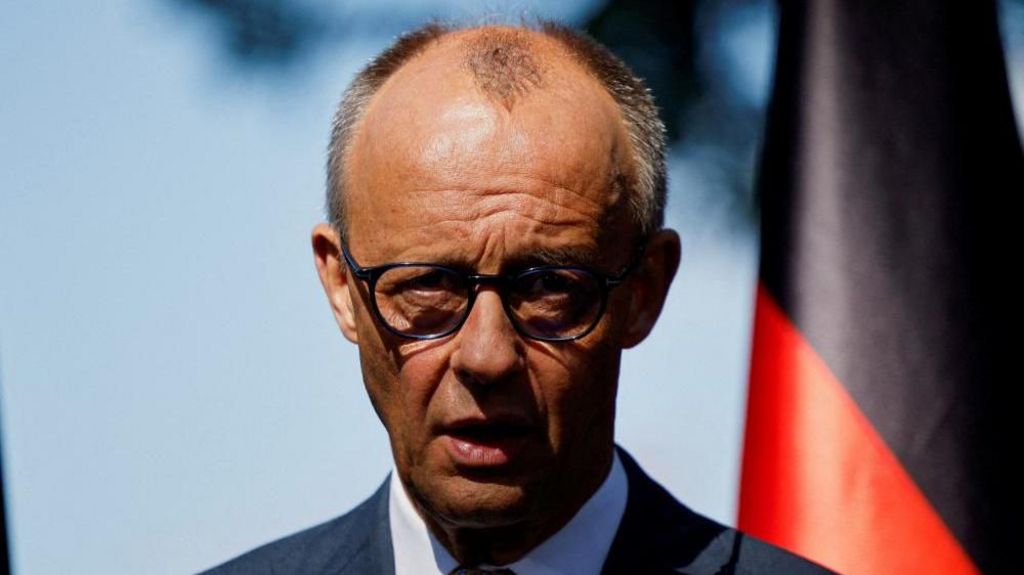
German row over plan for workers to need sick note on first day of illness
A heated political conflict has erupted across Germany after the newly formed coalition government under Chancellor Friedrich Merz unveiled sweeping revisions to national sick leave regulations. The most controversial amendment requires workers to submit a signed doctor’s note confirming illness to their employers starting on the very first day of absence, ending a COVID-19 pandemic-era policy that allowed workers to obtain medical certification remotely via phone call.
Chancellor Merz, leader of the conservative Christian Democratic Union (CDU), has openly defended the reforms, arguing that Germany’s current rate of employee sick days is unacceptably high and creates a crippling competitive disadvantage for Europe’s largest economy. “We cannot continue to shoulder the economic burden of exorbitant work absences that have persisted since the pandemic,” Merz stated in an interview with public broadcaster ARD on Thursday evening. He emphasized the change represents a return to pre-pandemic protocols, while noting individual private companies retain flexibility to negotiate alternative arrangements with their staff. The policy was formally approved as a joint agreement between Merz’s CDU and coalition partner the center-left Social Democrats (SPD).
Prior to the change, German workers were only mandated to provide a medical certificate for absences exceeding three consecutive days, with employers holding the right to request documentation earlier in specific cases. The new rule is part of a broader package of tax, labor and pension reforms crafted by the coalition to reverse years of stagnant economic growth in Germany.
Critics, however, have launched fierce pushback against the mandate, with leading national medical organizations leading the charge. The National Association of Statutory Health Insurance Physicians (KBV) dismissed the policy as “bordering on madness,” arguing it will force thousands of people with mild contagious illnesses to crowd into already overstretched doctor’s waiting rooms just to complete routine certification forms. “A patient with a bad cough or gastrointestinal infection should be recovering in bed, not exposing other vulnerable patients to illness in a packed practice,” the KBV said in an official statement. The German Association of General Practitioners echoed this warning, noting that mild cases requiring just one or two days of rest will clog up care access for patients with more serious medical needs.
Internal divisions have also emerged within the ruling coalition over the controversial reform. Vice-Chancellor Lars Klingbeil, leader of the SPD, has sought to de-escalate tensions, telling broadcaster RTL that the government is committed to finding a “workable, sensible solution” to implement the framework agreed by the coalition committee. Labor Minister Bärbel Bas, a senior SPD member, also distanced herself from the first-day mandate, confirming she will launch a formal review of the policy’s effectiveness. “This was not my proposal,” Bas told RTL. “We will examine whether the rule actually delivers the intended outcomes, or if it simply creates unnecessary hardship for workers and medical providers.”
Despite the backlash, senior CDU figures have stood firmly behind the reform. Jens Spahn, head of the CDU’s parliamentary group, noted that Germany maintains one of the highest average sick day rates among all European Union member states, at roughly 18 days per employee annually. Spahn stressed that the change does not restrict access to sick leave for genuinely unwell workers, who will still be fully permitted to take time off to recover. -
Former Syrian colonel unfit for trial in landmark UK crimes against humanity murder case
LONDON – In a historic legal proceeding that marked the first test of Britain’s 2001 International Criminal Court Act against an alleged perpetrator of atrocities abroad, a British judge has ruled that a former Syrian air force colonel is medically unfit to face a full criminal trial on charges of murder, torture, and crimes against humanity.
Fifty-eight-year-old Salem al-Salem was accused of orchestrating and participating in the killing of three civilian protesters and the torture of three detainees during the Syrian regime’s violent 2011 crackdown on Arab Spring-era anti-government demonstrations. Charges were brought under UK law that grants domestic courts jurisdiction over grave international offenses including crimes against humanity and torture, regardless of where the alleged acts took place. This marked the first time British prosecutors had brought a charge of murder as a crime against humanity under the 2001 legislation.
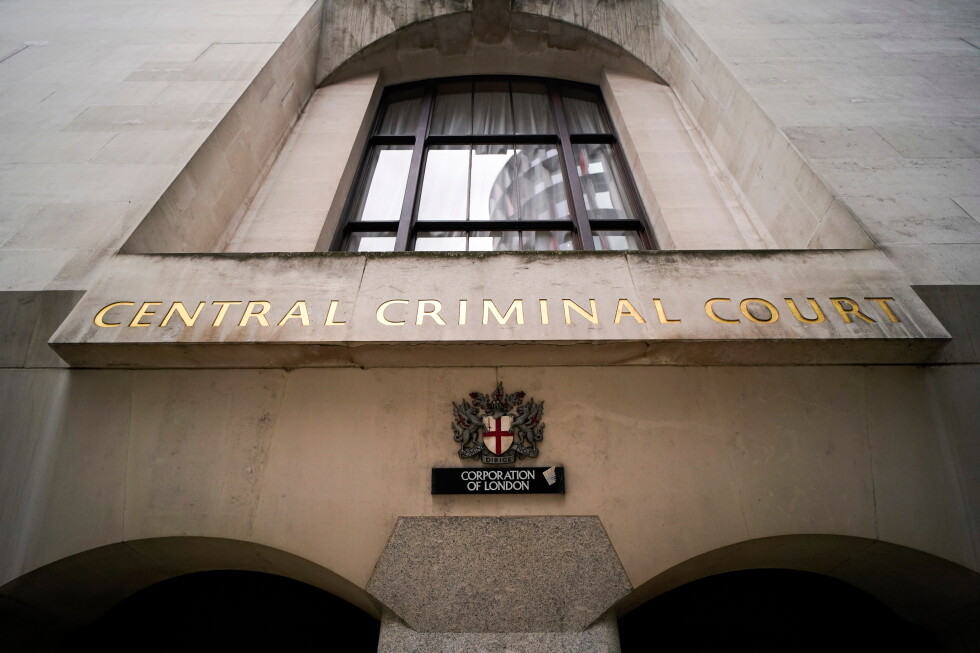
Prosecutors formally accepted medical assessments confirming al-Salem suffers from an advanced, progressive and fatal motor neuron disease that has left him quadriplegic, with significant cognitive impairment and severely limited communication abilities. According to medical evidence submitted to the Central Criminal Court, the former colonel can only communicate in monosyllables, is only understandable to close family members, and also suffers from clinical depression and apathy that leave him unable to participate meaningfully in legal proceedings. Not guilty pleas were formally entered on his behalf by court representatives following the judge’s ruling.
Justice Bobbie Cheema-Grubb announced that while al-Salem cannot face a full trial that could result in a conviction, a non-conviction trial of facts will be held in 2025 to examine the evidence to determine whether the alleged acts actually occurred. Al-Salem will not be required to attend the proceeding, even remotely, due to the severity of his health condition.
Prosecutors outlined the allegations against al-Salem during earlier hearings, saying he was a senior member of a Syrian Air Force Intelligence unit deployed to suppress pro-democracy demonstrations in Jobar, a suburb of Damascus, at the start of the Syrian uprising. Prosecutor Emilie Pottle told the court that al-Salem was directly tasked with quelling civilian protests against the government of then-President Bashar Assad, and personally ordered his subordinates to open fire on unarmed demonstrators, as well as taking part in shootings himself. Prosecutors allege the three killings for which he was charged took place between April and July 2011, and that the murders constituted part of a widespread, systematic attack on the civilian population aligned with opposition to the Assad regime.
Beyond the murder charges, al-Salem also faces allegations of official torture: prosecutors say he directly participated in interrogations of detained opposition supporters, during which detainees were subjected to beatings, electric shock torture, and suspension from ceilings by their handcuffs. He also faces a single charge of conduct ancillary to murder in connection with an additional death linked to his unit’s operations.
-
As her 180-day mandate expires, Venezuela’s acting leader defends quake response
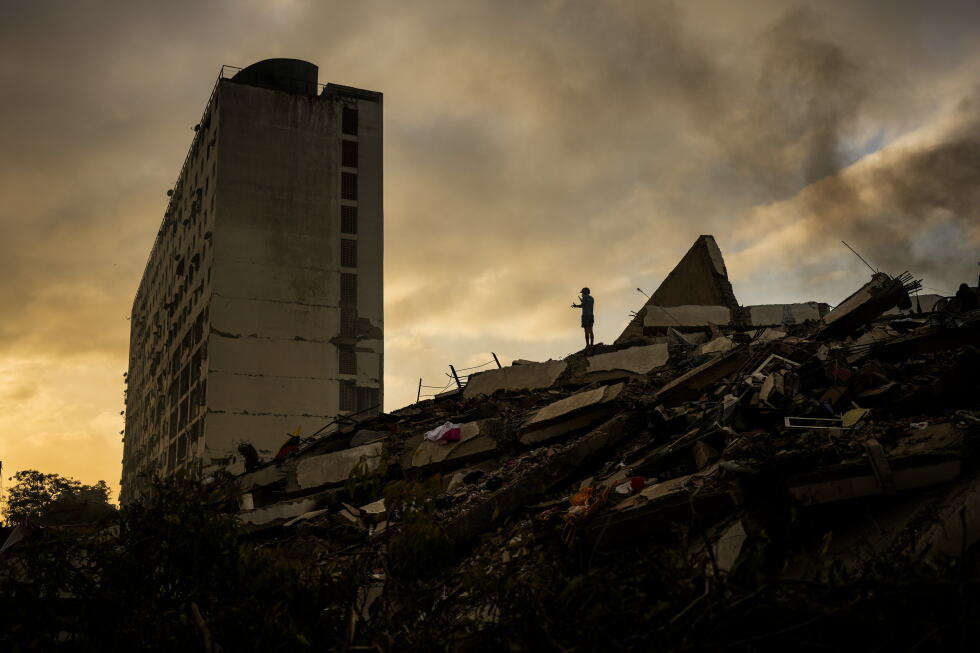
Eight days after powerful twin earthquakes devastated Venezuela’s northern coastal state of La Guaira, interim President Delcy Rodríguez has broken her weeks-long silence to publicly defend her government’s controversial disaster response — just as her 180-day temporary mandate was set to expire Friday.
The June 24 quakes have already claimed more than 2,295 lives, according to the latest official government tally. But a civilian-led non-governmental digital database puts the human cost far higher, with more than 38,000 people still registered as missing across the hard-hit region.
Critics have slammed the interim administration for a slow and disjointed response: Rodríguez waited more than an hour after the first tremor to issue her first public statement, and did not hold a formal news conference on the disaster until last Thursday, eight days after the event. This delay stands in sharp contrast to global disaster response norms, which hold that the so-called “golden 72 hours” after a disaster are the most critical window for finding trapped survivors alive. With each passing day, the odds of pulling people alive from rubble drop exponentially.
Despite the elapsed time, exhausted rescue crews were still sifting through collapsed structures across La Guaira’s ruined communities Friday, buoyed by a small moment of hope just one day prior: a 43-year-old security guard was pulled alive from the basement of a collapsed shopping mall, after spending nearly a full week trapped under debris. Even as some international search teams have wrapped up their deployments and departed, Rodríguez pushed back against claims that her government was winding down active search operations.
“We have not closed the search-and-rescue phase. We are still in that stage because, according to our overall assessment, there are still active sites where we believe there may be survivors, even if there is only one,” Rodríguez told reporters at the tense, testy news conference, her first public pushback against widespread criticism of the state-led effort.
The interim leader dismissed growing public anger over the response as “narratives manufactured in propaganda laboratories,” claiming that rescue teams were dispatched immediately with sufficient equipment to affected areas. Her account directly contradicts widespread complaints from local residents, who say they were forced to dig through rubble on their own for the first 48 hours, without access to official rescue teams or heavy machinery to free trapped family members.
“Those propaganda operations, driven by partisan political interests, are despicable,” Rodríguez said. “We did not wait one day, two days or three days. We activated immediately.” She added that 11 international field hospitals, staffed by medical workers from 33 countries, have been deployed to quake-hit regions, and that the government has established a dedicated reconstruction fund to accept private and international donations.
Early damage estimates from the United Nations Development Programme put the total physical destruction from the quakes at $6.7 billion — equal to roughly 6% of Venezuela’s entire annual gross domestic product. This figure does not include the far larger long-term costs of recovery and full reconstruction across La Guaira.
Rodríguez’s public defense comes amid significant political uncertainty both for her administration and the country. A close ally of former Vice President Nicolás Maduro, Rodríguez stepped into the interim presidency in January after Maduro was removed from office and taken into custody by U.S. authorities, with the backing of the Trump administration. In the months since, she has overseen business-friendly reforms to Venezuela’s critical oil sector under U.S. pressure, but has made no meaningful moves to return the country to full democratic rule.
Under Venezuela’s constitution, an interim presidential appointment can only last 90 days for a temporary vacancy, with a single 90-day extension approved by the National Assembly. That 180-day window expired Friday, and government officials have offered no public clarification on what will happen next. The ruling majority-controlled National Assembly could call a snap presidential election if lawmakers formally declare the presidency permanently vacant, but no timeline for a democratic vote has been announced. Prior to the earthquake, the Trump administration stated that an election would only be held once Venezuela’s economy has been sufficiently stabilized.
The political turmoil extends to the country’s fractured opposition. Former President Maduro claimed victory in the 2024 presidential election, which barred leading opposition figure María Corina Machado — a Nobel Peace Prize winner — from running. An independent vote count verified by the opposition confirmed that Machado’s preferred candidate won a majority of the vote. Machado, currently in exile, has pledged to return to Venezuela to support earthquake recovery efforts, but accused Rodríguez’s government of closing the country’s airspace last week to block her planned return. The Trump administration has repeatedly praised Rodríguez’s disaster response, and has largely stepped back from its earlier support for the opposition, abandoning Machado’s claims to the presidency.
-
Venice mayor proposes dynamic pricing for day-trippers with 50-euro ceiling
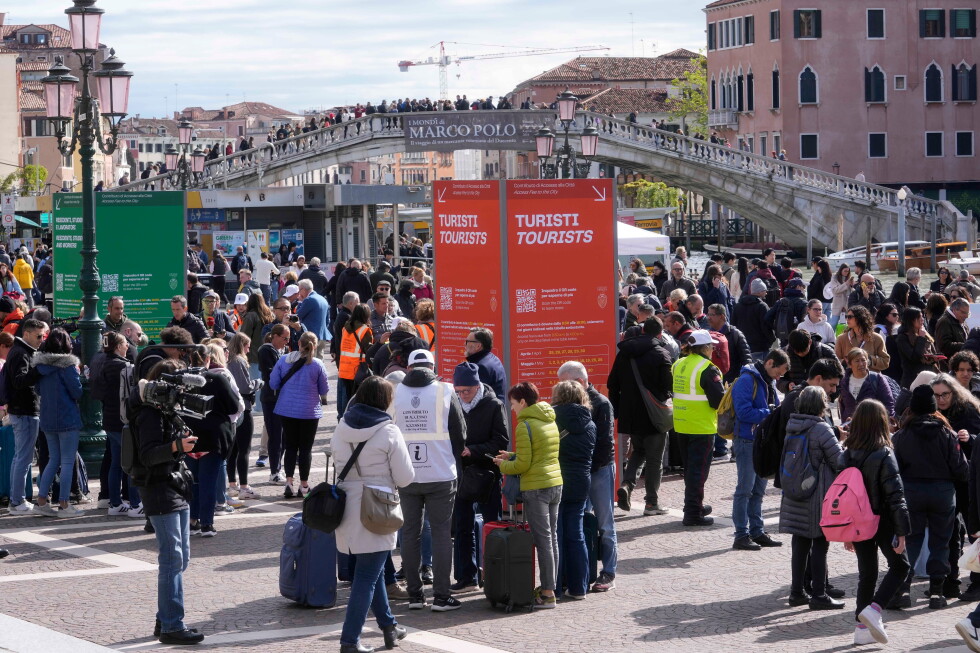
MILAN (AP) — Facing persistent overcrowding in its UNESCO-listed historic center, Venice’s newly elected mayor is pushing for an overhaul of the city’s three-year-old day-tripper entry fee system, proposing a dynamic surge-pricing model that would push the top charge as high as 50 euros ($59) on the city’s busiest visitor days. The plan requires national government approval via an amendment to Italy’s special legislation governing the iconic canal city, and early discussions with Italy’s tourism minister have already taken place.
Mayor Simone Venturini, who took office last month after serving as the city’s top tourism official when the initial day-tripper fee was rolled out in 2024, laid out the proposal in an exclusive interview with the Associated Press on Friday. He explained that the current flat 10-euro charge for last-minute reservations has failed to meaningfully deter mass visits on peak dates, leaving the historic core chronically overcrowded and straining local infrastructure. Rather than implementing a blanket higher fixed fee, Venturini’s administration wants to adopt a demand-based pricing structure, where entry costs rise in line with visitor numbers on the busiest days.
Under the framework, the 50-euro rate would only apply as a maximum upper limit to give the city flexibility to test different price points, Venturini clarified. For example, if daily bookings surpass a 40,000-visitor threshold, additional arrivals would face a incremental surcharge that could land between 20 and 30 euros, rather than automatically hitting the 50-euro cap. “It doesn’t mean everyone who comes to Venice would pay 50 euros,” he noted, adding that researchers are still collaborating with the city to identify sustainable crowd thresholds and appropriate pricing tiers.
Beyond curbing overcrowding, the dynamic pricing model is designed to generate much-needed revenue for the city’s ongoing maintenance costs. “We spend 100 million euros a year just to maintain Venice physically, and nobody gives us that money. Not Europe. Not the Italian state. International critics don’t pay it either. It’s paid by the people of Venice, and in part through tourism taxes,” Venturini said. He added that waste management alone creates extraordinary costs for the city, since all waste collection must be done manually via boats and handcarts, a burden created almost entirely by the daily influx of day-trippers who generate significant trash during their visits. Currently, revenue from the entry fee only covers a small fraction of Venice’s tourism-related management costs, he said.
Venturini also pushed back on critics who have called for a hard daily cap on total visitor numbers, noting that such a limit is not permitted under current Italian law. He addressed population concerns that highlight the steady decline of Venice’s permanent resident community: latest data from local housing advocacy group Ocio puts the number of registered residents in the historic center below 48,000, while the number of available tourist beds has climbed to more than 51,500. Venturini argued that the official resident count understates the actual year-round population, as many students and seasonal workers live in the city full-time without updating their official registration. Even so, he acknowledged the need to reverse long-term depopulation: “That doesn’t mean we are satisfied. We need to do more.”
The proposal has already drawn sharp criticism from multiple groups, including housing advocates, activists, and opposition politicians. Critics have long argued that the existing entry fee fails to address overcrowding while effectively turning the entire historic city into a paid tourist attraction, and argue the new dynamic pricing model doubles down on a flawed approach. The 50-euro upper limit has drawn particular backlash for being prohibitively expensive for middle-class visitors, especially families traveling on a budget. Critics also say city leaders are overly focused on managing tourist flows rather than implementing policies that would incentivize permanent residents to move back to the historic center.
A look back at the entry fee’s performance since launch shows steady revenue growth as the city expanded the program: during the 2024 test phase, Venice collected 2.4 million euros from more than 485,000 day-trippers across 29 peak days. Last year, the city expanded the scheme to 54 days and doubled the last-minute fee to 10 euros, pushing total revenue up to 5.4 million euros. Six additional peak days have been added to the schedule this year, though full data on arrivals and revenue has not yet been published.
Venturini emphasized that the overarching goal of the policy reform is not to generate extra revenue or gate off the city, but to improve the quality of experience for both residents and visitors on days when unregulated crowds would otherwise overwhelm Venice’s fragile infrastructure and historic sites.
-
US withdraws troops from Nigeria after Islamic State mission
The United States has completed the withdrawal of the majority of its troops deployed to Nigeria earlier this year as part of a joint campaign against Islamist extremist groups in the West African nation, US military officials confirmed this week.
The joint counter-terrorism initiative traces back to December, when US and Nigerian forces launched a coordinated offensive in the volatile Lake Chad Basin. The operation opened with targeted strikes against militant positions on Christmas Day, followed by the deployment of roughly 200 US military personnel to the region two months later to support local counter-insurgency efforts. Over the course of the months-long mission, senior Islamic State (IS) leader Abu-Bilal al-Minuki was killed in action.
On Thursday, US Air Forces Africa Commander General Dagvin Anderson announced the drawdown of troops, framing the mission as a clear success. Anderson emphasized that the joint operation had “significantly degraded” IS leadership structures in Nigeria, disrupting both the group’s local command network and its connections to the global IS extremist apparatus. This disruption, he added, has severely limited the organization’s ability to coordinate communication and plan attacks across the region.
Nigerian military officials have sought to reassure the public that the US troop withdrawal will not undermine ongoing counter-insurgency progress. “The departure of US soldiers will not affect our momentum in any way,” Maj-Gen Michael Onoja, a spokesperson for the Nigerian military, told the BBC. Both Nigerian and US officials confirmed that bilateral intelligence-sharing partnerships, a core component of the counter-terrorism cooperation, will remain fully in place following the drawdown. Additional US military personnel that were stationed in Nigeria prior to the Lake Chad Basin operation will also remain in the country, Nigerian military spokesperson Major General Samaila Uba confirmed.
The deepened security cooperation between the two nations emerged after a period of diplomatic tension: Washington previously criticized Nigerian authorities for failing to adequately protect vulnerable populations from extremist violence, and went so far as to allege a “Christian genocide” was unfolding in the country. Nigerian officials flatly rejected the accusation, arguing that the country’s ongoing violence stems from complex, multifaceted security issues that impact all religious and ethnic communities equally. Independent organizations that monitor political violence in Nigeria back this framing, noting that the majority of IS-linked attacks in the country target Muslim communities, as the group’s most active operating regions are in Nigeria’s predominantly Muslim northern states.
When the 200 US troops were deployed earlier this year, US officials stressed from the outset that the deployed personnel would not participate in direct frontline ground combat, serving only in a support capacity.
Regional security analysts point out that the threat landscape from IS has shifted dramatically over the past decade, with an estimated 90% of all global IS attacks now occurring in sub-Saharan Africa. Of these, the Nigeria-based IS faction is the most active and deadly across the continent. Even with the successful targeting of senior leadership, jihadist groups continue to carry out regular attacks across northeastern Nigeria, and the country faces a cascade of overlapping security challenges that extend beyond Islamist insurgency. Widespread banditry and organized criminal violence, long concentrated in the north, have spread into central and parts of southern Nigeria, worsening the country’s overall security crisis.
More reporting on Nigerian and African news is available at BBCAfrica.com, and audiences can follow BBC Africa’s coverage across social media platforms including Twitter, Facebook and Instagram.
-
NATO commander says Europe has backfilled most gaps from US cutbacks on military equipment
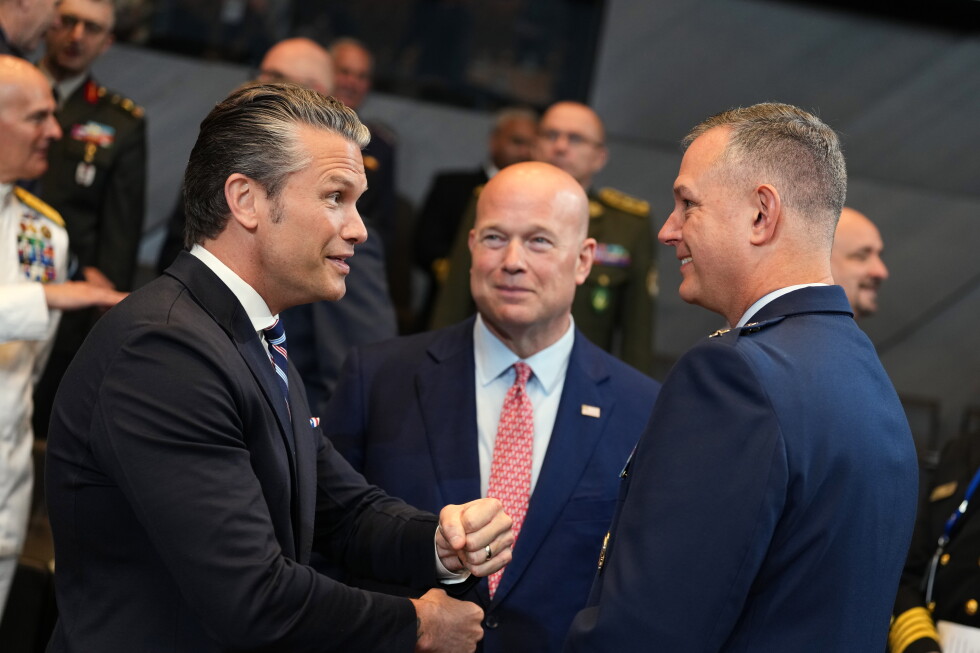
BRUSSELS – In the wake of an unexpected U.S. decision to slash pre-positioned military contributions to NATO’s European crisis response framework, top alliance commander Gen. Alex Grynkewich confirmed Friday that European member states have already closed most of the resulting capability gaps, just weeks ahead of the bloc’s high-stakes July summit in Istanbul. The development comes as the alliance adapts its defense posture to shifting U.S. strategic priorities, which now prioritize countering Chinese influence in the Indo-Pacific region.
The Pentagon’s sudden announcement on June 3 upended long-standing NATO planning: the U.S. confirmed it would no longer pre-allocate an aircraft carrier strike group, aerial refueling aircraft, and dozens of frontline fighter jets to European defense contingencies under the NATO Force Model, the alliance’s primary framework for coordinating collective military access across peace, crisis, and conflict phases. This 6-month phased activation structure outlines exactly what assets national capitals will make available to alliance commanders when a security crisis emerges.
Grynkewich, the U.S. general serving as NATO’s top operational commander, told the Associated Press that European allies have moved rapidly to replace the withdrawn capabilities in just over a month. “In a matter of weeks, European Allies have largely filled the gaps left by U.S. reductions to the NATO Force Model,” he stated, ahead of the July 7-8 gathering of alliance heads of state and government where defense force planning will top the policy agenda.
For the small number of remaining gaps where European nations lack direct equivalents for the withdrawn U.S. capabilities, Grynkewich said alliance planners are already assessing alternative assets that can deliver the same strategic effect, though he declined to share further details on these contingency plans. Military planners have also begun updating backup response protocols to activate in the event of a large-scale attack on European NATO territory, according to Grynkewich.
The U.S. shift in force allocations caught most NATO allies off guard, as Washington reorients its global military footprint to address growing competition with Beijing in the Indo-Pacific. In response to the cuts, European allies and Canada immediately began auditing their own military stockpiles to identify available assets that could be reallocated to the NATO crisis framework. The United Kingdom, for example, has already elevated the readiness status of its second aircraft carrier and squadron of F-35 stealth fighters to make them available for emergency alliance deployments.
NATO Secretary-General Mark Rutte has sought to downplay the impact of the Trump administration’s decision, arguing that the U.S. would re-route military resources back to Europe in the event of a full-scale conflict, echoing its past deployments during prior regional security crises. “This is not about where forces and assets are currently located,” Rutte explained last month. “It’s about who would do what if our defense plans were activated. So, let’s say in case of an Article 5 situation.”
Article 5, the collective defense cornerstone of NATO’s founding treaty, enshrines the principle that an armed attack against one member state counts as an attack against all 32 allies. While the provision does not legally require any member to deploy military forces in response, the vast majority of alliance members would likely contribute military support to a collective defense operation.
-

What do people in the US hope for the country’s future?
As the United States marks a historic milestone – its 250th year as an independent nation – the British Broadcasting Corporation launched a nationwide initiative to capture the pulse of ordinary citizens across every region of the country. Rather than focusing on political speeches or elite commentary, the project centered on one simple, probing question: what is your greatest hope for the future of the United States?
The scope of the reporting effort stretched from coastal population centers in the Northeast and West Coast to rural heartland communities in the Midwest and Southern small towns, ensuring that a diverse cross-section of American voices were included in the inquiry. By reaching out to people of different ages, economic backgrounds, political affiliations and ethnic identities, the BBC sought to cut through polarized media narratives and uncover the shared and divergent aspirations that unite and define the American people on this landmark anniversary.
This grassroots inquiry comes at a moment of deep national reckoning and transition for the U.S., with ongoing debates over economic inequality, political division, climate change and the role of the country in the world. By centering the public’s own hopes rather than the priorities of policymakers or pundits, the project offers a rare unfiltered look at what matters most to the people who call the nation home, as it enters its 251st year of existence.