作者: admin

  • ‘Hands and feet tied up’: Indonesia police probe alleged abuse at childcare centre

    ‘Hands and feet tied up’: Indonesia police probe alleged abuse at childcare centre

    For thousands of Indonesian parents, childcare centres are a trusted solution for balancing work and childcare, promising safe, nurturing environments for vulnerable young children. But a shocking police raid last week on a popular daycare in the city of Yogyakarta has torn back the curtain on a years-long pattern of alleged abuse and neglect that has rocked the nation and ignited urgent calls for sweeping oversight reform.

    The case centers on Little Aresha, a childcare facility marketed to local families as a premium center boasting well-equipped classrooms and a wide range of developmental play activities. For years, families like that of civil servant Noorman placed their full trust in the center. Noorman first enrolled his daughter there in 2022, drawn by the center’s polished branding, air-conditioned facilities, and the warm, approachable demeanor of the foundation’s leader. When his son was born, he enrolled the three-month-old infant at Little Aresha in 2024, never suspecting the harm that could be occurring behind closed doors.

    Small red flags appeared in hindsight: Noorman noticed unexplained cuts on his daughter’s chin and bruises on her hands, but center staff dismissed the injuries as accidents that happened at home. Another parent, Budiyanto, who enrolled his 18-month-old daughter at Little Aresha, also observed regular unexplained bruising, which staff blamed on bites from other children — an explanation he accepted as normal for group toddler care. Noorman also noticed his children consistently came home ravenous, even after he packed full lunches for them, and his infant son failed to gain weight as expected; the child was recently diagnosed with pneumonia.

    The nightmare came to light last Friday, when Noorman received an urgent panicked phone call from a friend: police were raiding Little Aresha, and he needed to collect his children immediately. When he arrived, investigators showed him graphic footage from the raid: young children with bound hands and feet, naked except for their diapers. These disturbing accounts have been corroborated by police, who confirmed the raid was launched after a whistleblower former employee filed an official report documenting inhumane treatment of children at the facility.

    Rizki Adrian, head of Yogyakarta Police’s criminal investigation unit, told reporters that investigators recovered clear physical evidence of mistreatment, including bound children and visible injuries on multiple toddlers. The facility was structured in a way that defied basic safety regulations: tiny 3-meter-wide rooms were crammed with as many as 20 children at a time. Of the 103 children officially enrolled at Little Aresha, authorities confirm at least 53 are confirmed victims of physical abuse and neglect, the vast majority under two years old.

    One viral TikTok posted by parent Erika Rismay, which has amassed more than 300,000 views, has put a human face on the alleged abuse. In the video, Rismay’s young daughter recounts how staff tied her hands and feet and covered her mouth to stop her from crying. “So I wouldn’t cry. So Mummy wouldn’t hear me crying,” the girl told her mother, who responded in the caption with devastating guilt: “Oh Allah, my child, forgive me. No wonder every day when you left for school you always cried hysterically, and when you came home you were silent and spaced out, like you had been hypnotised.”

    Following the raid, police questioned 30 center staff and officials, ultimately arresting 13 people — including the center’s principal, the head of the Little Aresha Foundation, and multiple caregivers — on child protection charges. Investigators have confirmed Little Aresha never held a valid operating license, a common issue across Indonesia’s childcare sector. The center has remained closed since the raid and has not issued any public response to the allegations.

    Local authorities have moved quickly to support affected families: Yogyakarta’s government has ordered comprehensive physical and psychological evaluations for all alleged child victims, and trauma support services will also be provided to grieving parents. Noorman, like many families, is calling for a full, transparent investigation and harsh punishment for anyone found responsible. “It’s inhumane. We’ve been entrusting him to the centre,” he said. “Not only my own child, but there were dozens of toddlers who were treated in such inhumane ways.”

    The scandal has reignited long-simmering public anger over child safety in Indonesian childcare, and prompted renewed calls for stricter industry regulation. This is not the first high-profile case of abuse at an Indonesian daycare: in 2024, a facility in Depok, south of Jakarta, faced national scrutiny after viral security camera footage captured two toddlers being mistreated by staff. A subsequent investigation by the Indonesian Child Protection Commission (KPAI) found that fewer than 20% of the more than 100 daycare centers in Depok held valid operating licenses. Nationwide, KPAI estimates there are roughly 3,000 childcare centers across the country, the majority of which operate without formal approval, just like Little Aresha.

    Yogyakarta Mayor Hasto Wardoyo has already pledged to inspect every childcare facility in the city and launch a public education campaign to help families identify licensed, verified providers. A local lawmaker has called for a full, independent probe into the Little Aresha case, describing the allegations as “truly unforgivable”. Public reaction on social media has been fierce, with many users calling for mandatory real-time security camera access for parents, and criticizing staff who mistreated vulnerable children. “If you can’t handle how kids naturally act, then don’t work there,” one Facebook user wrote.

  • Islamic State militants kill at least 29 in an attack on a village ‌in northeastern Nigeria

    Islamic State militants kill at least 29 in an attack on a village ‌in northeastern Nigeria

    Nigeria is reeling from two back-to-back violent incidents that have underscored the long-running, deep-seated security crisis plaguing the West African nation, with at least 29 villagers confirmed dead following an overnight Islamic State militant attack in the country’s northeast, and eight young pupils still missing after armed gunmen abducted 23 children from a north-central orphanage.

    The first assault unfolded late Sunday in Guyaku, a small rural settlement located within Gombi Local Government Area of Adamawa State, senior state authorities confirmed on Monday. Shortly after the attack, the Islamic State group issued a claim of responsibility via a statement posted to the encrypted messaging platform Telegram.

    During an on-site visit to the impacted village Monday, Adamawa State Governor Ahmadu Umaru Fintiri publicly condemned the violence, labeling the attack a tragic event that has no place in civilized society. Two main militant factions aligned with the Islamic State currently operate across Nigerian territory, but officials have not yet confirmed which cell carried out the Guyaku assault. The Islamic State West Africa Province, better known by its acronym ISWAP, maintains an active presence across northeastern states including Adamawa, while a second IS-linked faction, referred to locally as Lakurawa, typically stages attacks further west in the north-central states of Sokoto and Kebbi.

    The Guyaku attack coincided with a separate mass abduction in north-central Nigeria, where armed assailants stormed an orphanage operated by an unregistered school on the same Sunday. The raiders abducted 23 young pupils from the facility, located in an isolated district of Lokoja, the capital of Kogi State. Kogi State government spokesperson Kingsley Femi Fanwo confirmed in an official statement that the Dahallukitab Group of Schools, which ran the orphanage, was operating without legal authorization.

    Security forces have since launched intensive search and rescue operations, and have successfully rescued 15 of the 23 abducted children. Authorities said operations are ongoing to recover the remaining eight captives and apprehend the perpetrators behind the raid. While no militant or criminal group has stepped forward to claim responsibility for the abduction, the region has seen a sharp surge in kidnapping-for-ransom attacks in recent months. In Nigeria, the term “pupil” generally refers to children enrolled in kindergarten or primary school, meaning the captives are likely aged 12 or younger.

    Kidnappings targeting students and educational institutions have become one of the most visible markers of Nigeria’s ongoing insecurity. Regional security analysts note that armed gangs and militant networks deliberately target schools and children as strategic, high-impact targets, as such attacks draw widespread media and government attention and often yield large ransom payments.

    Nigeria, Africa’s most populous nation, has grappled with a persistent, multifaceted insurgency in its northern regions for more than 20 years, with overlapping conflicts involving IS-aligned insurgents, bandit gangs, and separatist militias that have killed tens of thousands of people and displaced millions. Earlier this year, the United States deployed a contingent of troops to Nigeria to provide advisory support to Nigerian military forces leading counter-insurgency and counter-terrorism operations across the country.

    This report was compiled with additional on-the-ground reporting from Sophie Banchereau, based in Dakar, Senegal.

  • Suspect charged with attempted assassination of Trump at Washington dinner

    Suspect charged with attempted assassination of Trump at Washington dinner

    A 31-year-old California man has been formally charged by the U.S. Department of Justice over an alleged plot to assassinate former President and current sitting U.S. President Donald Trump, an incident that has prompted an official full review of White House security protocols just as King Charles III begins a high-profile state visit to the country.

    The suspect, Cole Tomas Allen, appeared before a federal court in Washington, D.C. on Monday to face three criminal counts: attempted assassination of the U.S. president, interstate transportation of a firearm to commit a felony, and discharging a firearm during a violent offense. Allen, who entered no plea during the initial hearing, appeared calm throughout the proceedings, responding politely to all of the judge’s questions with short, formal answers. Court records confirm Allen holds a master’s degree, and reporters in the courtroom noted he closely followed every step of the hearing, with four U.S. marshals positioned around him throughout the appearance. He is scheduled to return for a follow-up hearing on Thursday, and federal prosecutors have requested he remain in pre-trial detention, noting the attempt could be classified as an act of terrorism and that additional charges may be filed as the investigation progresses.

    According to official accountings of Saturday night’s incident at the Washington Hilton, the venue for the annual White House Correspondents’ Association dinner, Allen breached a security checkpoint one floor above the ballroom where Trump, Vice President JD Vance, multiple cabinet secretaries and senior White House officials had gathered. Prosecutors confirmed Allen was armed with a semi-automatic handgun, a loaded pump-action shotgun, and three bladed weapons when he rushed past security barriers. Acting Attorney General Todd Blanche told reporters Monday that during the confrontation, a Secret Service agent was struck in the chest, but was protected by a ballistic vest that stopped the bullet. The injured agent returned fire, striking Allen five times without causing life-threatening injury, and the suspect was taken into custody immediately. Blanche confirmed Allen discharged his shotgun at least once during the incident, though investigators have not yet confirmed whether the agent was hit by gunfire from Allen or by accidental crossfire from other responding law enforcement officers. The agent has since been released from hospital, and is being treated for a non-life-threatening knee injury sustained during the encounter.

    Court documents outline that Allen traveled cross-country from his Los Angeles-area home specifically to carry out the attack. He left his residence on April 21, took a train to Chicago, and arrived in Washington D.C. three days later, checking into the same Hilton hotel where the dinner was being held. Prosecutors say pre-attack writings Allen sent to his family confirm his intent was not only to kill Trump, but to target as many high-ranking administration officials as possible. Public records also show Allen donated $25 to a Democratic PAC supporting Kamala Harris’s 2024 presidential campaign, he previously studied at the prestigious California Institute of Technology, and was a member of a local Reformed church in Pasadena.

    This incident marks the third alleged assassination attempt against Trump in just two years, and it has triggered intense scrutiny of the security arrangements for the event. Questions are being raised about gaps in screening: multiple observers have asked why no attendee ID checks were conducted at the venue, why the entire presidential line of succession was gathered in a single location, and whether the security perimeter around the Washington Hilton was sufficiently robust. Notably, the same hotel was the site of John Hinckley Jr.’s 1981 assassination attempt on then-President Ronald Reagan. In a public statement, hotel management said it strictly followed all security directives issued by the Secret Service, which had lead responsibility for event security, and collaborated fully with local law enforcement and federal security teams.

    Defending the response, Blanche pushed back on criticism Monday, saying “law enforcement did not fail” in protecting the president. He emphasized that Allen was stopped one floor away from the dinner venue, with hundreds of armed federal agents already positioned between the suspect and Trump. Senior White House officials say Trump retains full confidence in the Secret Service, the Department of Homeland Security agency tasked with protecting sitting presidents and senior officials. White House Chief of Staff Susie Wiles has called a high-level meeting this week to review existing security protocols and practices for major public events with presidential attendance. White House Press Secretary Karoline Leavitt said Monday that Trump believes existing protocols worked as intended to contain the threat, and blamed the rising tide of political violence on inflammatory rhetoric from Democratic political leaders.

    The incident has not disrupted the planned state visit of King Charles III, which began Monday at the White House. Trump has publicly assured the British monarch that all necessary security measures are in place and he will be completely safe during his four-day trip. The annual White House Correspondents’ Association dinner, which was cut short by the security incident, will be rescheduled for a date within the next 30 days, with a completely overhauled security posture. FBI Director Kash Patel told Fox News Monday that investigators and security teams are already preparing for the rescheduled event, and that the agency will be “so ready” for Trump’s attendance. No new date has been announced, as event organizers note planning for the high-profile annual dinner typically takes months of preparation.

  • ‘It’s a funny story’: NRL gives its verdict on new Jason Saab tactic after Sea Eagles winger stuns fans with deliberate Falcon

    ‘It’s a funny story’: NRL gives its verdict on new Jason Saab tactic after Sea Eagles winger stuns fans with deliberate Falcon

    A bold, pre-planned unorthodox rugby league play from Manly Sea Eagles winger Jason Saab has sent NRL fans into a frenzy — and drawn an official warning from the competition’s governing body, which has confirmed the tactic will draw a penalty in any future matches.

    The viral play unfolded during a weekend fixture at Sydney’s 4 Pines Park, when Sea Eagles halfback Jamal Fogarty launched what appeared to be a standard attacking kick into the opposition’s 20-metre zone. The 199cm-tall Saab, instead of opting for the expected catch of the high ball or tapping it back to a supporting teammate, instead deliberately headed the ball forward into open space. The unorthodox move caught opposition Parramatta Eels defenders completely off guard, gifting Manly an extra 15 metres of territory, shifting the attack from the Sea Eagles’ 20-metre line to just five metres out from Parramatta’s try line.

    Far from a spontaneous accident, the play was actually the product of careful tactical planning from Manly assistant coach Jim Dymock. Dymock had identified a clear pattern in opposition defences: teams consistently held back to tackle Saab immediately after he caught attacking kicks, allowing them to shut down Manly’s attacking momentum early. To break this predictable pattern, he encouraged Saab to test the deliberate forward header, a trick Saab had openly discussed with teammates during the week leading up to the match.

    Saab, who does not come from a traditional rugby league background, embraced the out-of-the-box idea. After the match, he called the tactic a success despite not leading directly to a try, noting that it thrilled the packed crowd at 4 Pins Park and achieved more territorial gain than a standard catch would have.

    While teammate Haumole Olakau’atu knew the plan was in the works, he admitted he was so caught off guard by the unexpected moment that he forgot to chase the ball down for a potential try. Still, he praised the play as a clever tactical gambit that entertained fans and delivered valuable field position. Interim Manly head coach Kieran Foran also laughed off the play in his post-match press conference, noting that the coaching box reacted positively to the creative tactic, and credited Dymock for encouraging players to experiment with innovative plays to keep defences guessing.

    But the creative trick will not be allowed to feature in future matches. A spokesperson for the NRL confirmed to NewsWire that the deliberate heading of the ball forward is against the sport’s rules, and that Saab should have been penalized for the move during the fixture. Any repeat of the deliberate “Falcon” will result in an official penalty against the offending team going forward. Fans and analysts have suggested the club may tweak the tactic to present it as an accidental deflection to stay within the rules, keeping the surprise element of the play alive without drawing official sanction.

  • Israeli press review: Teens murder of pizzeria worker sparks lawlessness fears

    Israeli press review: Teens murder of pizzeria worker sparks lawlessness fears

    Israel is currently grappling with three interconnected, deeply concerning crises that have laid bare deep-seated social, institutional, and geopolitical vulnerabilities across the nation.

    The first crisis erupted from a brutal fatal stabbing that has shaken public trust in law enforcement and reignited long-simmering accusations of institutional bias. On Independence Day evening last week, 21-year-old Yemanu Binyamin Zelka, a pizzeria employee of Ethiopian descent working in the central Israeli city of Petah Tikva, was murdered by a group of teenagers. The violence began after Zelka asked the group to stop using party foam spray inside the pizzeria, a minor request that ended with him stabbed to death.

    Days passed before law enforcement launched a formal investigation, and authorities ultimately arrested eight minors for questioning. At a meeting with Zelka’s family, Israeli Police Commissioner Danny Levy framed the killing as an inevitable outcome of years of societal disruption: “There was Covid, then war, and then another war. The children lacked stable frameworks, and in the end, it erupts.” Levy’s comment drew furious backlash from the victim’s family, who are calling for full prosecution of the suspects and have openly voiced widespread public frustration over law enforcement’s handling of the case.

    Activists and politicians have gone further, alleging that the delayed investigation stems from systemic bias against Israelis of Ethiopian origin. “It is unbelievable that dozens of youths carried out a lynching and murdered Binyamin Yimenu Zelka. No one tried to help. Hundreds of people were present, and not a single person stepped in. This horrifying case must shake the country,” Israeli-Ethiopian activist Avi Yalew wrote on social media platform X. Yalew also questioned why police took so long to make arrests when the entire incident was captured on camera. Ayman Odeh, leader of the left-wing Hadash party, pointed to a broader trend of spiraling violent crime: 2025 is on track to record the highest number of murder victims and the highest murder rate in Israeli history. Odeh blamed the current government for abandoning public safety and called the national police force “failing” at addressing rising criminal activity. Data from Haaretz supports this claim: 107 people have been murdered nationwide since the start of the year, a sharp increase that has coincided with Itamar Ben Gvir’s tenure as national security minister, with the vast majority of victims being Palestinian citizens of Israel.

    Alongside rising street violence, Israel is facing an unprecedented mental health crisis among its security forces, with suicide rates reaching 15-year highs. New reporting from Haaretz reveals that at least 12 active-duty Israeli soldiers and police officers have died by suicide since the start of 2025, with three additional non-active reservists also taking their own lives. This marks a continued surge in security personnel suicides that began after Israel launched its military campaign in Gaza in October 2023.

    Mental health professionals and serving military officers link the rising death toll to deep underfunding of mental health services for service members, and systemic failures to support at-risk personnel. One serving army mental health officer described the military’s current response to the crisis as “more like putting a Band-Aid on a bleeding main artery,” noting that current resourcing is nowhere near sufficient to meet demand. Critics add that the Israeli military continues to enlist personnel with pre-existing mental health conditions without providing adequate ongoing support. A former army mental health officer stressed that many recent deaths could have been prevented: “at least some of the recent deaths could have been saved if commanders would’ve paid attention to early warning signs.” “This is no longer just a warning – it is a real alarm,” the former officer added.

    Official army data confirms the severity of the crisis: 60 active-duty soldiers have died by suicide since the October 7, 2023, Hamas-led attack, including 22 in 2024, the highest annual count in 15 years. Crucially, official numbers exclude suicides by non-active duty personnel, meaning the actual death toll is even higher than reported. This crisis has spilled over into the broader Israeli public: Haaretz data shows 7% of all Israelis now live with obsessive-compulsive disorder (OCD), compared to a global average of just 2%. Rates of depression, anxiety, and substance addiction have also jumped, with the resulting economic damage estimated to reach as much as 100 billion shekels annually.

    Compounding these domestic crises is a new geopolitical controversy: a Haaretz investigation has exposed that Israel has been importing stolen Ukrainian wheat from Russia since 2023, a trade that directly funds Russia’s ongoing war in Ukraine. One year after Russia’s full-scale invasion of Ukraine in 2022, Israel began receiving shipments of wheat stolen from Ukrainian territories controlled by Russia, transported on Russian-flagged vessels. Haaretz confirms that more than 30 shipments of stolen Ukrainian grain have been delivered to Israeli buyers by Russian traders, with at least five additional shipments arriving since the start of 2025.

    To avoid detection, the vessels involved do not load the stolen grain at Russian ports. Instead, cargo is transferred between ships at sea in the Black Sea to conceal the wheat’s Ukrainian origin. Haaretz journalists successfully tracked two Russian vessels that loaded stolen grain in Ukraine before delivering directly to Israeli ports. One Israeli grain merchant told reporters that Russian suppliers intentionally misrepresented the cargo, claiming the grain originated in Siberia and was shipped west via rail. The merchant said the true origin only came to light after the Ukrainian embassy issued a warning. Israel’s foreign ministry has so far refused to comment on the findings of the investigation.

    For anyone experiencing mental health crisis or suicidal thoughts, support is available globally: In the UK, Samaritans can be contacted 24/7 on freephone 116 123. In the US, the 988 Suicide & Crisis Lifeline provides free, confidential support 24 hours a day. Additional international helplines can be found via the Befrienders Worldwide website at www.befrienders.org.

  • Trump and team renew attacks on adversaries after gala shooting

    Trump and team renew attacks on adversaries after gala shooting

    What began as a rare moment of bipartisan unity and calls for unity in the wake of a shooting at the White House Correspondents Dinner quickly devolved into a familiar cycle of partisan vitriol, as former President Donald Trump and his administration have reverted to sharp attacks on political opponents, the media, and public critics just 48 hours after the alleged assassination attempt.

    Shortly after Saturday night’s incident, which unfolded in front of thousands of attending journalists and political figures, Trump struck an uncharacteristically reflective tone. Still clad in his formal tuxedo, he told the crowd he had originally planned to deliver a blistering, combative speech attacking the press, but opted instead to highlight a shared sense of unity after the scare. “I saw a room that was just totally unified,” he remarked at the time, pointing to a “tremendous amount of love and coming together” and even extending praise to the leadership of the White House Correspondents Association, the annual dinner’s organizer. Press Secretary Karoline Leavitt later confirmed the attack marked the third documented attempt on Trump’s life in just two years.

    That moment of detente proved extremely short-lived. By Monday, the White House had sharply hardened its tone, with Leavitt – who cut short her maternity leave to address the incident – blaming the attempted assassination on what she called “systemic demonization” of Trump by left-wing opponents. “The left-wing cult of hatred against the president and all of those who support him and work for him has gotten multiple people hurt and killed, and it almost did so again this weekend,” Leavitt told reporters during a formal briefing. She went on to argue that political opponents who repeatedly label Trump a fascist, frame him as a threat to democracy, or compare him to Hitler for political gain are directly fueling political violence against the former president and his allies.

    Leavitt’s condemnation was quickly followed by fresh attacks from Trump himself, who turned his fire on late-night television comedian Jimmy Kimmel over a joke targeting former first lady Melania Trump. In a post on his Truth Social platform, Trump demanded Kimmel’s immediate dismissal from ABC, which is owned by the Disney Entertainment conglomerate. Calling Kimmel’s joke “far beyond the pale,” Trump wrote: “I appreciate that so many people are incensed by Kimmel’s despicable call to violence, and normally would not be responsive to anything that he said but, this is something far beyond the pale. Jimmy Kimmel should be immediately fired by Disney and ABC.”

    The rapid shift away from unity has dashed any lingering hopes that the assassination attempt might prompt Trump to pull back from his long history of incendiary, confrontational rhetoric against political rivals, immigrant communities, and journalists – a pattern that has defined his political career over more than a decade. A former reality television star, Trump has long positioned the national media as one of his primary foils, famously branding reporters “the enemy of the people” and repeatedly targeting female journalists with aggressive, personal insults, including calling one reporter “piggy.” He has also pardoned hundreds of rioters convicted for their role in the January 6, 2021 attack on the U.S. Capitol, a riot staged to overturn his 2020 election loss to President Joe Biden. Just in recent months, Trump has publicly stated he was “glad” former FBI director Robert Mueller, who led the Russia probe into his 2016 campaign, had died, and issued an extraordinary threat to Iran warning that a “whole civilization will die tonight” if it acts against U.S. interests.

    By the time he appeared in an interview with CBS’s *60 Minutes* the day after the gala, Trump had fully returned to his combative form. When journalist Norah O’Donnell read extracts of a vague statement from the shooting suspect that referenced unsubstantiated claims without naming Trump, Trump snapped, calling O’Donnell and the network a disgrace. “I’m not a pedophile. You read that crap from some sick person… You shouldn’t be reading that on 60 Minutes,” he shouted.

    Democratic leaders have pushed back hard against Leavitt and Trump’s accusations, rejecting their claims that Democratic rhetoric is to blame for the violence. House Minority Leader Hakeem Jeffries dismissed the White House’s call for civility outright, telling reporters: “This so-called White House press secretary wants to lecture America and lecture us about civility? Get lost. Clean up your own house before you have anything to say to us about the language that we use.”

  • Iran steps up its efforts on the diplomatic front

    Iran steps up its efforts on the diplomatic front

    Against a backdrop of deadlocked bilateral talks with the United States, the Islamic Republic of Iran has launched an intensified regional and global diplomatic push, shifting its core engagement priority to deepening coordination with its neighboring states and longstanding allies. The flurry of high-level diplomacy unfolded across multiple capitals and capitals over recent days, centered on addressing regional security, securing unimpeded navigation through the strategic Strait of Hormuz, and breaking the impasse in Washington-Tehran relations.

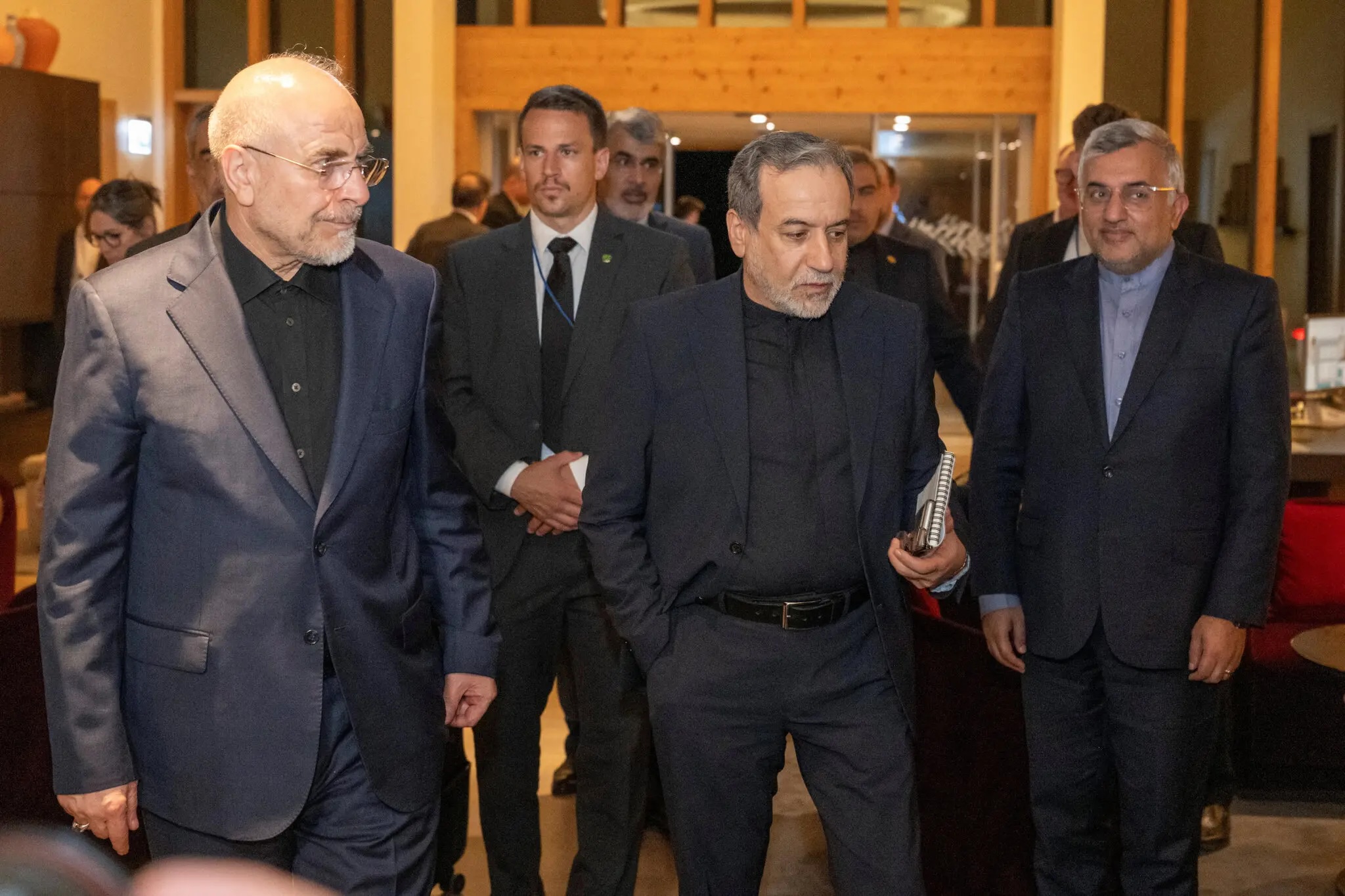
    On Monday, Iranian Foreign Minister Abbas Araghchi held a face-to-face meeting with Russian President Vladimir Putin in St. Petersburg, according to Russia’s state-owned RIA Novosti news agency. During the talks, Putin expressed Moscow’s hope that the Iranian people would successfully navigate what he described as a “difficult period” and that regional peace would ultimately take hold. He reaffirmed that Russia would take all possible steps to advance the interests of both Iran and other nations across the Middle East.

    Aragchi framed his Russia visit — the latest stop on a regional tour that already included stops in Pakistan and Oman — as a critical opportunity to restart in-depth consultations between Tehran and Moscow on evolving regional and global developments, while strengthening bilateral cooperation. He emphasized that Iran’s top diplomatic priority is now its immediate neighborhood, noting that one core focus of discussions is developing frameworks to guarantee safe passage through the Strait of Hormuz, a waterway that carries roughly a fifth of global oil trade, for “all our dear neighbors and the entire world.”

    The foreign minister added that the meeting with Putin allowed the two sides to align their stances on recent events, stressing that ongoing strategic coordination between Iran and Russia carries major regional significance. His earlier stop in the Pakistani capital Islamabad, where he met with Prime Minister Shehbaz Sharif, was particularly important, Araghchi noted, because Islamabad serves as a mediator between Tehran and Washington.

    Acknowledging that prior indirect talks between Iran and the US have yielded limited progress but failed to reach a breakthrough, Araghchi placed blame squarely on Washington, saying the failure stemmed from the United States’ excessive demands and what he called its misguided negotiating approach.

    A day before the St. Petersburg meeting, Omani Foreign Minister Sayyid Badr bin Hamad Al Busaidi announced he had held a “productive discussion” focused on Strait of Hormuz issues with Araghchi. “We recognize our shared responsibility to the international community and the urgent humanitarian need to free the seafarers held for far too long. Much diplomacy is required and practical solutions to ensure lasting freedom of navigation,” Al Busaidi said in a statement.

    Sunday saw Araghchi hold a flurry of diplomatic engagements beyond his Omani talks: he spoke by phone with French Foreign Minister Jean-Noel Barrot to discuss a regional ceasefire and unfolding security developments. Barrot reaffirmed France’s backing for Iran’s diplomatic path to resolving tensions, saying he hoped dialogue would restore peace across the Middle East. On the same day, Araghchi also held talks with Saudi Foreign Minister Prince Faisal bin Farhan, with the two sides reviewing regional dynamics and ongoing collective efforts to de-escalate broader regional tensions.

    These stepped-up diplomatic moves come as US-based news outlet Axios reported that Tehran has submitted a new proposal to Washington aimed at reopening the Strait of Hormuz to full navigation. Citing anonymous administration officials, Axios reported that US President Donald Trump was scheduled to convene a meeting of his top national security and foreign policy advisors in the White House Situation Room on Monday to discuss the standoff with Iran and map out potential next steps.

    Trump has already publicly cast doubt on the new Iranian proposal, canceling a planned trip by special envoys Jared Kushner and Steve Witkoff to Islamabad, citing what he called the excessive time and cost of the trip for an insufficient offer from Tehran. “Iran offered a lot, but not enough,” Trump stated, arguing that the responsibility for advancing talks now rests with Tehran. “If Iran wants to talk, they can come to us, or they can call us,” he said, reiterating his non-negotiable red line: “Iran cannot have a nuclear weapon, otherwise there’s no reason to meet.”

    Iranian parliamentary speaker Mohammad Baqer Qalibaf pushed back against US pressure on Sunday, arguing that Washington has already exhausted most of its leverage in the ongoing economic standoff with Tehran, and that Iran still holds significant negotiating cards to advance its interests.

    The Gulf Cooperation Council’s Assistant Secretary-General for Political and Negotiation Affairs, Abdel Aziz Abu Hamad Aluwaisheg, weighed in on the dispute on Monday, saying that the strategic Strait of Hormuz must not be allowed to remain a “hostage to negotiations between the US and Iran.”

  • Air China opens Daxing–Europe routes as global network expands

    Air China opens Daxing–Europe routes as global network expands

    On Monday, China’s flagship flag carrier Air China launched an inaugural celebration at Beijing Daxing International Airport to mark the introduction of two new nonstop routes connecting the capital airport to major European destinations. This move marks a key milestone in the airline’s ongoing expansion of its global route network and its efforts to advance coordinated, complementary operations across Beijing’s two major international airport hubs.

    Per Air China’s official announcement, the new Beijing Daxing-Frankfurt service will commence operations on Tuesday, while the Daxing-Milan direct route is scheduled to take off for its first commercial flight on June 13.

    Industry observers note these new connections are designed to deepen transportation links between Beijing and European markets, and to cater to rapidly growing cross-border demand across business activities, international tourism, and people-to-people cultural exchange. As of the launch, Air China already serves 23 destinations across the European continent, solidifying its position as one of the largest and most connected carriers operating between China and Europe. Beyond adding new travel options, the two new routes connect to globally significant economic centers: Frankfurt ranks among Europe’s top transportation and financial hubs, and hosts Germany’s busiest and largest aviation hub, while Milan stands as Italy’s core economic and financial center, alongside its global reputation as a leading capital of art and high fashion.

    Air China officials emphasized that the new routes will strengthen Beijing Daxing International Airport’s connectivity to key international gateway cities, while also expanding the airline’s existing European route network to give leisure and business travelers traveling between China and Europe more flexible, direct travel options. Notably, both new routes will be integrated into Air China’s existing joint venture partnership with German carrier Lufthansa, a collaboration that will allow passengers to access more coordinated network scheduling and smoother, more efficient connecting services across the two airlines’ combined global networks.

    The launch of these new European routes coincides with the start of China’s 2026 summer-autumn civil aviation scheduling season, which kicked off in late March and will run through October 24, spanning 210 days that cover the peak summer travel period and multiple national public holidays. Civil aviation authority data shows that during this new scheduling season, a total of 222 domestic and international airlines are planning to operate roughly 121,000 combined passenger and cargo flights per week, a figure that remains broadly stable compared to the same season last year. Of these weekly flights, 191 airlines have scheduled 21,047 weekly international commercial flights, representing a 1.8% year-on-year increase. These international flights connect China to 86 countries worldwide, with Cyprus added as a new country to the global route network this season.

    Against this broader industry backdrop, Chinese and global airlines alike continue to adjust and refine their international operations while navigating ongoing cost pressures. Lin Zhijie, a leading independent aviation industry analyst, explained that persistently rising global jet fuel prices remain the single most influential factor driving recent adjustments to international flight schedules. Lin added that this cost pressure is not limited to Chinese carriers: airlines across every global market are contending with a more challenging operating environment as fuel costs continue to climb.

  • In pictures: King Charles and Queen Camilla begin US state visit

    In pictures: King Charles and Queen Camilla begin US state visit

    Nearly two decades after the late Queen Elizabeth II’s last state visit to the United States, Britain’s reigning monarch King Charles III and his wife Queen Camilla have touched down on American soil to launch a four-day diplomatic tour, a gathering timed to coincide with the U.S.’s upcoming 250th anniversary of its independence from British rule. The core mission of this landmark trip, the first state visit to the U.S. by King Charles since he ascended to the throne, is to honor and strengthen the centuries-long special relationship that binds the United Kingdom and the United States.

    Upon their aircraft’s landing at the Maryland airbase, a full red carpet welcome was laid out in line with diplomatic protocol. Dressed in formal ceremonial attire, the royal pair descended the aircraft steps to officially commence their official visit, greeted on the tarmac by two senior diplomatic representatives: White House Chief of Protocol Monica Crowley and the United Kingdom’s Ambassador to the U.S. Sir Christian Turner. Following the initial welcome, local children presented the King and Queen with bouquets of flowers, a warm traditional gesture that added a soft, approachable touch to the formal proceedings.

    After the couple processed through a full military guard of honor, a joint service military band performed both the U.S. and UK national anthems, a traditional ritual marking the formal start of a state visit. Following the opening welcoming ceremonies, the royal couple traveled directly to the White House, where they met with U.S. President Donald Trump and First Lady Melania Trump for a formal afternoon tea. During their time at the executive residence, the couple was also shown a one-of-a-kind beehive crafted in the shape of the White House. The unique beehive is part of an ongoing sustainable honey production initiative hosted on the White House grounds, a project that aligns with King Charles’s longstanding public advocacy for environmental conservation and sustainable farming practices.

  • Redbridge Independents defy Labour minister Wes Streeting’s ‘sectarian’ accusation

    Redbridge Independents defy Labour minister Wes Streeting’s ‘sectarian’ accusation

    Ahead of the May 7 local council elections in the east London borough of Redbridge, a fierce political fight has erupted, pitting incumbent Labour against a rising local challenger party that holds the potential to unseat Labour’s long-standing control of the council. At the center of the row is British Health Secretary Wes Streeting, whose own parliamentary seat is based in Redbridge, a solid Labour stronghold that has been held by the party for years.

    Streeting has sounded a sharp alarm over what he labels “sectarian politics” from the Redbridge Independents, a local political grouping backed by former Labour leader Jeremy Corbyn’s Your Party. Widely tipped as a likely future Labour leader and prime minister should Keir Starmer step down, Streeting has publicly attacked the challengers in both a letter to local constituents and comments to The Times. In his resident letter, he accused the Redbridge Independents of being a divisive faction that only seeks to represent a subset of the community, claiming it prioritizes foreign conflicts over fixing bread-and-butter local issues like damaged roadways. Speaking to The Times late last week, he doubled down: “We’re voting for Redbridge council, not the UN Security Council. Who you choose to run your local council matters and the Redbridge Independents represent a divisive brand of sectarian politics.”

    But Middle East Eye’s on-the-ground reporting has called Streeting’s characterization into question, revealing a much different picture of the challenger party’s priorities.

    Redbridge Independents grew out of a grassroots community action group formed specifically to contest the 2024 May local elections, according to party leader Vaseem Ahmed, a long-time local community politician and recruitment firm owner. Ahmed told MEE that 95 percent of the party’s official 20-page election manifesto is focused exclusively on hyper-local issues that directly impact Redbridge’s 300,000 residents. A review of the group’s campaign materials and social media channels confirms this focus: the party’s top priorities are easing the strain of the cost-of-living crisis on local households, responsible management of council budget priorities, and improving access to elected representatives for residents who have long felt ignored by the ruling Labour establishment. To fix long-standing complaints of unresponsive government, the party has pledged to host regular, open public forums where residents can speak directly to council leaders and councillors, rather than being fobbed off to unstaffed phone lines or unanswered emails.

    Ahmed acknowledges that the party does hold opposition to the current Labour government’s foreign policy, particularly regarding Israel’s war in Gaza, but stresses that the group is realistic about what a local council can achieve. “Redbridge Council is not going to solve the problem in the Middle East,” he said. Even so, he argues the issue is relevant to local council action: the group is calling for Redbridge Council to divest its public pension fund from companies found to be complicit in Israeli violations of international law, a position that puts it at odds with the current Labour government, which earlier this year warned Labour-run councils they could face legal action if they move forward with boycotts of Israeli-linked businesses.

    Ahmed pushed back hard against Streeting’s “sectarian” label, calling it an offensive Islamophobic trope that targets the borough’s large Muslim community. Redbridge is one of London’s most ethnically diverse areas: more than 47 percent of residents identify as Asian or Asian British, and Muslims make up over 30 percent of the population. “It’s such an Islamophobic trope that somehow, if you have Muslims who are in politics, that they’re only going to be worried about fellow Muslims and nobody else,” Ahmed said. “Whereas we live in a diverse community and we represent everybody. You know, if you get elected, you’re not going to focus on one section of the community.”

    He added that the party’s candidate list is ethnically diverse and draws candidates from a wide range of professional backgrounds, including CEOs, entrepreneurs, magistrates, lawyers, doctors, educators and finance professionals, all of whom have deep roots in the Redbridge community. “Ordinary people like ourselves are rooted in the community. We live here, we work here, we raise our families here, and we just want our voices to be represented. Right now, we just don’t feel we have that,” Ahmed said, noting that he stepped down from local mosque committee roles when entering politics to avoid any conflict of interest and protect the charitable status of local religious institutions.

    The Redbridge Independents’ rise comes as the local Labour Party has been rocked by scandal. In 2025, local Labour MP Jas Athwal resigned his council seat after the BBC uncovered dangerous living conditions—including ant infestations and toxic black mould—in multiple rental properties he owned. That resignation triggered a by-election, which the Redbridge Independents won, demonstrating the party’s early electoral momentum against Labour.

    While Your Party, led by Corbyn, has endorsed the Redbridge Independents, Ahmed stressed that the local group retains full autonomy. He explained that Your Party was involved in early conversations about forming a local group, but internal factional conflict within Your Party delayed its official launch, by which point the Redbridge Independents had already organized, begun canvassing and built name recognition across the borough. “Right now our philosophy is that we are unlike other parties here in Redbridge. Whether it’s Greens or Lib Dems or Tories or Labour, they all have to answer to the bosses [nationally],” Ahmed said. “We love the fact that we’re independent and that we can make our own choices for the benefit of the residents of Redbridge.”

    Heading into election day, Labour faces challenges from across the political spectrum: Reform UK and the Conservatives on the right, and progressive challengers including the Redbridge Independents and the Green Party on the left. Polling and early results indicators suggest the council could end up with no single party holding a majority after votes are counted, a result that would rank Redbridge as one of Labour’s most high-profile election night defeats.