作者: admin

  • Iran war is straining African airlines, industry body warns

    Iran war is straining African airlines, industry body warns

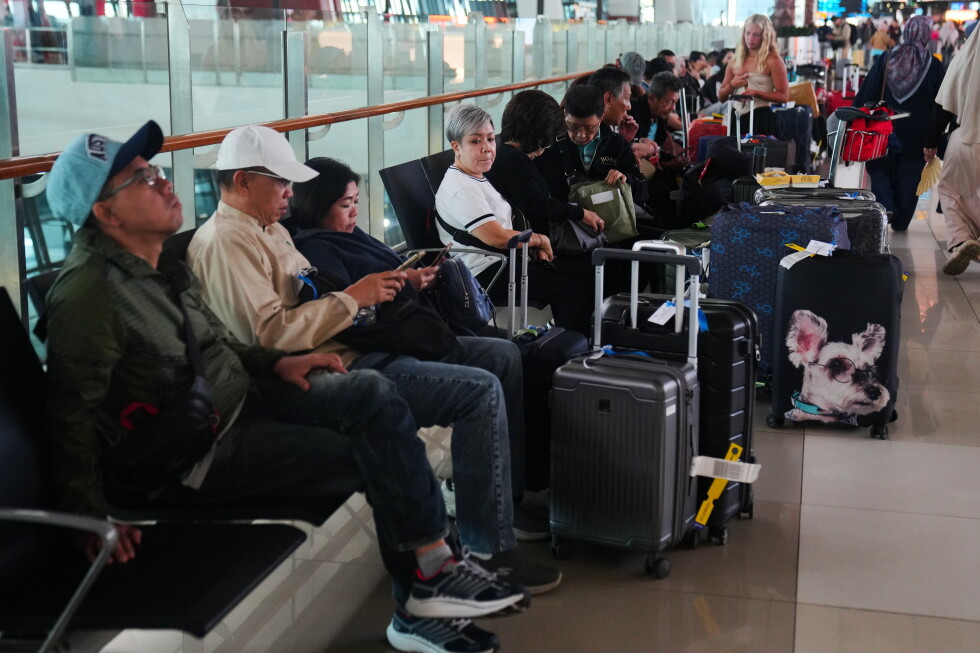
    NAIROBI, KENYA – The ongoing conflict in Iran has triggered a sharp upward swing in global jet fuel prices, amplifying existing supply chain pressures across African aviation and pushing regional carriers to re-evaluate their route networks. The crisis has laid bare a dangerous overreliance on imported refined jet fuel that leaves the continent’s airlines exposed to sudden global market shocks, according to the African Airlines Association (AFRAA).

    Long before the outbreak of the Iran war, African carriers already faced a steep cost disadvantage: AFRAA data shows they paid roughly 17% more for jet fuel than the global average. This new wave of price hikes has squeezed already razor-thin profit margins across the entire sector, putting significant strain on carrier balance sheets.

    “The impact is dire, a major shock for all our members,” AFRAA Secretary-General Abderahmane Berthe told the Associated Press in an interview. “Fuel makes up between 30% and 40% of an airline’s total operating costs. Any price increase hits their bottom line immediately.”

    The entire global aviation industry has turned its attention to the Strait of Hormuz, the critical global energy chokepoint that carried roughly one-fifth of the world’s total oil and refined fuel shipments before Iran effectively closed the waterway to commercial shipping when the war began in February. For African airlines, the fallout from this closure is far more severe than for carriers in other regions, due to longstanding structural weaknesses: higher baseline procurement costs and far smaller financial buffers to absorb unexpected market shocks.

    Berthe explained that while some airlines have introduced limited fuel surcharges to offset costs, most cannot pass the full brunt of price increases on to passengers for fear of crashing travel demand. Instead, they are forced to absorb the extra costs directly, eating into already limited profits.

    Supply disruptions have also sparked urgent concern at key African aviation hubs, including Nairobi in Kenya and Addis Ababa in Ethiopia, where consistent, reliable jet fuel access is non-negotiable for both regional and long-haul international operations. To adapt, a number of carriers have already begun restructuring their route networks: cutting flight frequencies, pausing service on low-demand routes, and reworking their entire schedules to mitigate rising costs and fuel supply uncertainty.

    The ongoing crisis has reignited longstanding calls for African nations to invest in expanding domestic petroleum refining capacity, to cut the continent’s heavy dependence on imported refined jet fuel. “We need African solutions to African problems,” Berthe emphasized. “Many African countries are major crude oil producers, yet we still rely entirely on non-African suppliers for the refined jet fuel our aviation sector needs to operate.”

    Attention is increasingly shifting to large-scale regional projects already in operation that could ease this dependency, most notably Nigeria’s giant Dangote Refinery. The facility is projected to become a major supplier of refined fuel across the continent, including to key aviation hubs in Kenya, Ethiopia, and South Africa. Already, major hubs like Addis Ababa have begun sourcing fuel from Dangote to stabilize supplies, a shift that Berthe says is already helping ease pressure on regional fuel supply chains amid the current crisis.

    Even amid these mounting pressures, demand for air travel across Africa remains robust. AFRAA projects annual passenger growth of roughly 6% for African carriers in coming years, a growth rate that outpaces many mature global aviation markets. Still, Berthe warned that prolonged market shocks from the Iran war could cause lasting damage to both airline profitability and cross-continental connectivity.

    “If this crisis drags on, the impact on African airlines will be very severe,” he said. “If Africa wants a truly resilient, sustainable aviation sector, it must secure its own fuel future.”

  • Elon Musk gets public trading of SpaceX underway from Texas

    Elon Musk gets public trading of SpaceX underway from Texas

    SpaceX, the aerospace manufacturer and space transportation firm founded by billionaire entrepreneur Elon Musk, has officially kicked off its public trading journey from a base in Texas, marking one of the most anticipated milestones in the history of corporate public offerings. In comments released alongside the launch, Musk opened up about the company’s humble origins, revealing that when he first established SpaceX decades ago, he personally estimated that the venture had less than a 10 percent probability of ever achieving meaningful success. Against all early projections, the aerospace trailblazer has evolved from a risky startup experiment into a global industry leader, and its impending public listing is set to become the largest initial public offering in corporate history. The launch of public trading from Texas underscores the company’s deep roots in the U.S. southern space corridor, a region that has become a central hub for SpaceX’s launch operations and long-term strategic development. For years, SpaceX has disrupted the global space industry, delivering groundbreaking advancements in reusable rocket technology, securing billions in NASA and commercial contracts, and advancing ambitious projects including the Starlink satellite internet constellation and the Starship development program targeted at deep space exploration missions to Mars. The transition to public ownership opens a new chapter for the company, allowing outside investors to take a stake in Musk’s long-term interplanetary vision while bringing unprecedented capital to accelerate its expanding portfolio of projects.

  • Discovery of €1.2m jewellery prompts fresh probe into former Spanish PM

    Discovery of €1.2m jewellery prompts fresh probe into former Spanish PM

    In an unprecedented development for modern Spanish politics, former Socialist Prime Minister José Luis Rodríguez Zapatero has been formally placed under investigation for tax fraud and smuggling, following the recovery of €1.2 million worth of luxury watches and jewelry from his office during a recent search linked to a separate corruption probe.

    Zapatero, who held the nation’s top office from 2004 to 2011 and remains a powerful, influential figure within the ruling Spanish Socialist Workers’ Party (PSOE) led by his close ally current Prime Minister Pedro Sánchez, was already under investigation for alleged influence peddling connected to the 2021 €53 million government bailout of struggling Spanish airline Plus Ultra. The bailout was approved as part of a national state fund created to support strategically important businesses impacted by the global COVID-19 pandemic.

    As part of that ongoing influence peddling inquiry, Spanish National Police executed a raid on Zapatero’s private office last month. During the search, investigators uncovered a cache of high-end gold jewelry including necklaces, bracelets, rings and earrings studded with sapphires and emeralds, sourced from Zambia and Thailand according to Spanish media reports. The total estimated value of the seized items comes to roughly €1.2 million, equivalent to £1.02 million.

    Investigators have confirmed that their new probe centers on suspicions that Zapatero cannot provide valid documentation proving he paid required customs duties for the luxury goods. Close associates of the former prime minister have told reporters the collection of jewelry is inherited family property, and Zapatero’s official spokesperson Luis Arroyo has stated that the former leader “will provide full explanations before the judge” regarding the seized items. Zapatero has been formally summoned to give testimony before a court later this month.

    This new investigation marks a historic moment in recent Spanish politics: it is the first time any former Spanish prime minister has been subjected to a formal criminal probe. The development is also the latest in a string of damaging corruption scandals to hit the ruling PSOE. Last month, police also raided the party’s central Madrid headquarters, seizing a range of relevant documents, and carried out coordinated searches at the private residences of senior party officials and a prominent Spanish business leader. Multiple close associates of Sánchez, including the prime minister’s wife and brother, currently face separate corruption-related charges, all of which they have vigorously denied. Zapatero has also repeatedly denied any wrongdoing in the ongoing Plus Ultra influence peddling case, stating he never accepted any improper payments in exchange for intervening to secure the airline bailout.

  • Ship from Colombia laden with food and other goods docks in Cuba to help ease crises

    Ship from Colombia laden with food and other goods docks in Cuba to help ease crises

    HAVANA – A Colombian-flagged cargo vessel carrying nearly 100 metric tons of food and critical supplies docked in Havana early Friday, marking the latest in a wave of cross-border humanitarian donations to Cuba as the long-running U.S. energy embargo continues to squeeze the island nation’s infrastructure and economy. The Associated Press verified that the ship, which departed the Colombian port of Cartagena at the start of June, navigated into Havana Bay at dawn, guided to its berth by a small Cuban auxiliary escort vessel.

    According to Colombia’s Presidential Agency for International Cooperation, the 93-ton shipment was assembled and dispatched on direct orders from Colombian President Gustavo Petro. The cargo includes a wide range of urgently needed items: non-perishable staple foods, prescription pharmaceuticals, critical hospital equipment, electrical infrastructure parts, and solar panels to help alleviate the country’s ongoing energy crisis. An additional seven tons of donated goods, collected by grassroots Colombian solidarity organizations, were also loaded aboard the vessel for Cuban communities in need.

    This Colombian delivery follows just days after another large humanitarian shipment reached Havana last weekend: a separate cargo ship carrying 1,700 tons of essential supplies jointly sent by Mexico and Belize. These coordinated donations come in response to a severe economic and energy crisis that has gripped Cuba since early 2025, when former U.S. President Donald Trump announced harsh new trade measures threatening tariffs on any third country that supplies oil to the island.

    The U.S. government’s sanctions push is rooted in demands that the Cuban government release detained political opponents and implement sweeping political and economic liberalization reforms, conditions Washington has set for any rollback of long-standing trade restrictions. Cuba currently produces only 40 percent of its own domestic oil demand, and the cut-off of most international oil supplies triggered by the U.S. threat has left the island’s energy grid severely strained. Widespread, extended power outages have become a daily reality for many Cuban residents, paralyzing portions of economic activity and exacerbating shortages of basic goods across the country.

    International aid organizations have warned that the cumulative impact of decades of U.S. sanctions, compounded by the recent energy embargo, has created one of the worst humanitarian situations Cuba has faced in decades, prompting an outpouring of solidarity from governments and civil society groups across Latin America and the Caribbean.

  • Watch: Four UFO videos newly declassified by US government

    Watch: Four UFO videos newly declassified by US government

    In a fresh step toward greater transparency around unexplained aerial phenomena, the U.S. government has officially declassified and released four previously undisclosed UFO videos captured by eyewitnesses. The newly released footage, which has begun circulating publicly, documents a series of bright, circular glowing orbs moving across the sky above an undisclosed location in the northeastern region of the United States.

    This declassification follows a series of previous releases of unidentified aerial phenomenon (UAP) records by the U.S. government over recent years, as federal agencies have increasingly prioritized formal documentation and public disclosure of encounters that cannot be immediately explained by conventional aircraft, weather phenomena, or known man-made objects. The move comes amid ongoing work by congressional committees and Pentagon-led task forces mandated to investigate UAP sightings reported by military personnel and civilian observers across the country.

    While the origins of the glowing orbs captured in the footage remain unconfirmed, the release of these videos marks another data point for researchers and officials working to categorize and understand unexplained aerial encounters. Officials have not yet issued additional commentary on whether the objects observed in the new videos have been linked to any known natural or human activity, leaving open ongoing analysis of the sighting.

  • Ebola spreading into new areas in northeast DR Congo: WHO

    Ebola spreading into new areas in northeast DR Congo: WHO

    In an urgent alert issued Friday, the World Health Organization (WHO) confirmed that the ongoing Ebola outbreak in the northeastern Democratic Republic of the Congo (DRC) is spreading into previously unaffected zones, with a far larger caseload than initial detection efforts have captured. The global health body emphasized that current response capacity falls drastically short of what is needed to rein in the virus, particularly as isolation bed infrastructure lags behind projected demand driven by the outbreak’s rapid spread.

    According to the WHO’s most recent official data, 676 confirmed Ebola cases and 136 confirmed deaths have been recorded since the outbreak was first formally declared on May 15. An additional 119 suspected cases are under investigation, and 32 confirmed patients have successfully recovered from the virus to date.

    Unlike previous Ebola outbreaks in the region, the current event is driven by the rare Bundibugyo strain of the virus, for which no universally approved vaccines or targeted treatments currently exist. The outbreak is centered primarily in the DRC’s Ituri province, but confirmed cases have now been documented in two additional neighboring provinces: North Kivu and South Kivu.

    “The outbreak continues to expand both in terms of case numbers but also in terms of geographic spread,” explained Olivier le Polain, WHO’s lead for epidemiology and analytics for the outbreak response. Speaking to reporters from Beni in North Kivu, le Polain noted that new cases are being identified in previously untouched health zones across the three affected provinces on an almost daily basis.

    He attributed the rapid expansion to two key factors: the outbreak’s larger underlying scale than official counts reflect, and the high rate of population movement across the region. While early new cases in unexposed zones were linked to travel from established outbreak hotspots, le Polain confirmed that community transmission is now occurring within these new geographic areas. “There are still many blind spots in some areas that are high risk,” he added.

    Contact tracing, a core tool for halting Ebola spread, has improved but still remains below the threshold needed for effective control. Currently, just over 70 percent of known close contacts of confirmed cases are being monitored appropriately. “That’s a huge improvement from where we were about a week or two ago, but it’s still too low to ensure appropriate control,” le Polain said.

    Even as surveillance efforts expand, the lack of adequate isolation infrastructure creates a major bottleneck for the response. With only 250 isolation beds currently available across all affected provinces, le Polain warned that capacity is already insufficient given the outbreak’s current trajectory, and a rapid scale-up is critical. “Surveillance can scale up, but if you don’t have any space to put your patients safely, it becomes very difficult,” he noted.

    The United Nations children’s agency UNICEF has issued a separate warning that child infections are likely to rise in coming weeks due to increased household transmission, following patterns seen in past Ebola outbreaks. Douglas Noble, UNICEF’s global incident manager for Ebola, who recently returned from a visit to Ituri’s capital Bunia, highlighted that more than half of children under five in the province already live with chronic malnutrition, leaving them exceptionally vulnerable to severe outcomes if infected.

    “These are already very vulnerable children,” Noble told reporters. “As the outbreak evolves we must be prepared for increasing household transmission, which means we may see more children affected in the days ahead.” He added that UNICEF has already begun adjusting its interventions to prepare for this projected increase in child cases.

    The outbreak has already crossed international borders, with Uganda reporting 19 confirmed cases and two deaths to date. The African Union’s health agency announced Thursday that the situation in Uganda remains under control. The WHO currently assesses the Ebola risk level as very high within the DRC, high for Uganda, high for all countries that share land borders with the DRC and Uganda, and low for the rest of the world.

  • Migrant rights will be safeguarded at third-country return hubs, EU migration commissioner says

    Migrant rights will be safeguarded at third-country return hubs, EU migration commissioner says

    Amid ongoing implementation of the European Union’s landmark new migration and asylum pact, the bloc’s top migration official has reaffirmed that non-negotiable international human rights standards will govern any proposed asylum return hubs planned in non-EU countries, pushing back against widespread criticism from rights advocacy groups.

    Speaking at a press conference hosted during a gathering of EU migration ministers in Nicosia, Cyprus on Friday, EU Migration Commissioner Magnus Brunner emphasized that every agreement establishing these processing centers for rejected asylum seekers will undergo independent review to guarantee full compliance with legal protections. Brunner confirmed that both the International Organization for Migration and the United Nations Refugee Agency will participate in the vetting process to audit the terms of any finalized deal, stressing that “Human rights standards and international law is non-negotiable.”

    The return hub framework, a central provision of the EU’s updated migration policy, has drawn significant skepticism from human rights organizations, which have raised urgent alarms that the facilities could devolve into overcrowded long-term detention centers, leaving failed asylum seekers trapped in prolonged legal limbo with no clear path forward. Critics have also warned that the pact’s streamlined assessment processes could cut off access to protection for legitimate asylum claimants.

    On the same day, Greece’s migration ministry confirmed that a coalition of five EU member states — Greece, Germany, Austria, Denmark, and the Netherlands — are currently in active negotiations with several African nations to host the hubs on their territory. Under the coalition’s current timeline, agreements with the unnamed third countries are expected to be finalized this year, with the facilities scheduled to become operational by 2027. When pressed to name the countries under consideration, Brunner deferred to the negotiating member states, noting that “We created the rules, we create the basis, but it’s up to the member state to negotiate agreements if they want to.”

    Cyprus, which currently holds the bloc’s rotating six-month presidency, will join the return hub negotiations once its term ends on July 1, according to Cypriot Deputy Minister for Migration Nicholas Ioannides. Ioannides pushed back against rights groups’ criticism of the new pact, arguing that the framework’s core goal is to prepare the bloc for future large-scale migration flows, similar to the 2015 refugee crisis that caught EU institutions off guard. “These groups disagree with the gist of this project, with the whole architecture,” Ioannides said, adding that implementing clear new rules is the EU’s top priority to avoid repeating past unpreparedness.

    Brunner defended the new migration pact, arguing that it delivers more effective, streamlined rules that target criminal people smuggling networks and irregular migration routes, while concentrating protection resources on claimants with legitimate humanitarian needs. He pointed to early data showing the bloc’s migration reforms are already delivering results: irregular arrivals along the Western Balkan route have plummeted 90% over the past three years, and crossings from Turkey to Greece’s Aegean islands dropped 67% in the first four months of this year compared to previous periods.

    In a separate development announced Friday, Cyprus has finalized a bilateral agreement with Lithuania to relocate migrants already granted international protection to the Baltic EU member state, a small but significant step to share migration responsibility across the bloc.

  • ‘Surrender or face full force’ of state, Nigerian president warns armed groups

    ‘Surrender or face full force’ of state, Nigerian president warns armed groups

    On Nigeria’s annual Democracy Day, a national holiday commemorating the 1999 transition back to civilian rule after decades of military dictatorship, President Bola Ahmed Tinubu delivered a stern national address that paired a tough ultimatum to domestic armed groups with major new announcements to boost the country’s struggling security apparatus.

    Tinubu opened his remarks by acknowledging that this year’s celebrations were overshadowed by a fresh wave of mass school abductions that have reignited public anxiety across the country. The West African nation has grappled with persistent insecurity for decades, with insurgent attacks, village raids, and ransom-fueled mass kidnappings concentrated largely in northern and central states – a crisis that has grown more acute in recent months. The president specifically referenced recent abductions of schoolchildren in Oyo and Borno states, noting that security forces remain optimistic about securing the safe release of all captives.

    “Democracy without security is not solid enough,” Tinubu told the nation, as he outlined a sweeping package of security investments. His administration is rolling out a recruitment drive for more than 50,000 new police officers, has approved thousands of additional military personnel, and has earmarked a record 5.41 trillion naira (equivalent to roughly $4 billion) for defense and security in the 2026 national budget.

    Defending his administration’s performance since he took office in May 2023, Tinubu claimed that Nigerian military forces have killed 13,000 people classified as terrorists over the past 12 months. He added that civilian fatalities linked to insurgent activity have dropped 81% compared to 2015 levels, and that more than 124,000 armed fighters and their family members have surrendered and disarmed under the government’s Operation Safe Corridor, a national reintegration program for former insurgents.

    These claims have been challenged by independent security analysts, who note that violent attacks continue to disrupt communities across multiple Nigerian states, and that insurgent activity is now spreading into previously stable southern regions of the country. The rising insecurity has coincided with a prolonged economic crisis that has left millions of ordinary Nigerians struggling to afford basic goods. Civil society organizations and labor unions have organized peaceful mass protests across major state capitals, calling for urgent government action to address both widespread insecurity and skyrocketing costs for food and transportation, driven by persistent high inflation. The groups have repeatedly raised alarms about the heavy toll of rising prices on low- and middle-income households.

    Tinubu defended the controversial economic reforms his administration has implemented since taking office, including the elimination of a long-standing national fuel subsidy and the deregulation of Nigeria’s foreign exchange market. He argued that these unpopular measures were necessary to stabilize the country’s public finances and rebuild confidence among international and domestic investors, steps he says will lay the groundwork for long-term economic growth.

    Beyond security and economic policy, the president used the 27th anniversary of civilian rule to pay tribute to the activists and national heroes who led the country’s pro-democracy movement. He gave special recognition to figures linked to the annulled June 1993 presidential election, widely believed to have been won by the late Moshood Kashimawo Olawale Abiola, whose victory was overturned by the military junta in power at the time, a turning point in Nigeria’s struggle for democratic governance.

  • ‘Nightmare from start to finish’ for South Africa in opener

    ‘Nightmare from start to finish’ for South Africa in opener

    The 2026 FIFA World Cup’s Group A opening match delivered far more than a three points for co-hosts Mexico, who wrapped up a comfortable 2-0 victory over South Africa at Mexico City’s iconic Estadio Azteca in a game marred by two red cards for Bafana Bafana, tactical criticism, and rising continental tension over South Africa’s recent anti-migrant violence.

    South Africa’s match unraveled within the opening 10 minutes, when midfielder Sphephelo Sithole lost possession on the edge of his own penalty area, allowing Mexico to convert the early chance and take a 1-0 lead. The second half delivered more setbacks: Sithole was shown a red card, followed by a second dismissal for forward Themba Zwane in the 84th minute after a VAR review upgraded a potential foul to a straight red for violent conduct. The sending-off marked only the second time in World Cup history that an African side has had two players dismissed in their opening finals match, a statistic last recorded by Cameroon against defending champions Argentina in 1990 – a match the Indomitable Lions famously won 1-0, a result South Africa never came close to matching.

    Former South African captain Dean Furman, commentating for BBC Radio 5 Live, described the performance as “a nightmare from start to finish.” He argued that no Bafana Bafana player could claim to have performed to their potential, saying “Mexico were in total control from minute one. They looked more assured, they were calm in possession. It was just turnover after turnover after turnover, and when you’re playing against quality opposition you get punished.”

    On the contentious second red card, South Africa head coach Hugo Broos – the oldest coach at this year’s tournament at 74 – disputed the call, claiming Mexican winger Roberto Alvarado blocked Zwane and went down unnecessarily. However, Furman, who played alongside Zwane for several years, said the call was justified under modern rules: “I know it’s incredibly soft but it’s the modern game, you can’t lash out. It’s going to be an interesting World Cup if that’s what we’re giving red cards for but that is the game today. You can’t do that.”

    South African captain Ronwen Williams acknowledged the disappointing result but sought to highlight his side’s resilience, even with two players down. “Obviously the opening game of the World Cup comes with so much emotion,” the 34-year-old said. “We knew they were going to have the atmosphere, the energy behind them and we didn’t want to concede in the opening few stages. And then that’s exactly what happened. As difficult as it was with two guys sent off, we didn’t give up. It shows the mentality that we have and the character that we kept fighting.”

    Domestic fans in Johannesburg were far less forgiving. Relebogile Lairi called the performance a “very disappointing start,” saying supporters “expected a lot more from the boys” and blamed widespread “stage fright.” Nicholas Makomene criticized Broos’ defensive 5-3-2 setup, saying there was “no need to park the bus” against the co-hosts.

    Beyond the pitch, the result exposed deep divides across the African continent, 16 years after South Africa made history as the first African nation to host the World Cup, a moment that unified the continent behind African teams. This year, many fans across Africa backed Mexico over South Africa, in response to recent anti-migrant protests and violence in South Africa that has led multiple African nations to repatriate their citizens. South African officials have condemned the violence and rejected accusations of xenophobia, but that has done little to ease tensions.

    In Nairobi, Kenyan organizer Elisha Kamau held a “hate-watch” party that drew nearly 200 attendees, almost all of whom supported Mexico. “The second reason I think is just the timing of the xenophobic attacks. It depends who is playing South Africa, but I think most people would support the other team,” Kamau explained. Congolese fan Daniel Kaniki, watching from a fan park in Atlanta, echoed that sentiment: “Africa is like one country and if one is chasing others, we are not a family any more. That’s why I’m supporting Mexico.” Not all fans across the continent aligned with this view, however: Ghanaian fan Vanlare Quist said he rooted for South Africa, arguing that anti-immigrant sentiment was driven by a small minority of bad actors, not the entire nation.

    Looking ahead, South Africa faces a must-win second Group A match against the Czech Republic on June 18. Both teams enter the fixture winless, after the Czechs dropped a 2-1 opening match result to South Korea. Furman is pushing for a major tactical shift, urging Broos to abandon the defensive 5-3-2 setup he used against Mexico in favor of the more attacking 4-3-3 formation that fits South Africa’s traditional style of play.

    “They have to put this to bed very, very quickly,” Furman said. “I know you’re playing against better opposition in a big match and you’re probably looking to soak up the pressure and go a little bit more defensive, but that’s just not our style at all. For me, going forward, you’ve got two games left to save yourself, to try and get a victory to get yourself into the next round. Go with our 4-3-3. Put your attacking players on, put your number 10s on, your more imaginative players. Let’s see what South African football is all about.”

  • Storm chaser digs man out of rubble after tornadoes rip through US Midwest

    Storm chaser digs man out of rubble after tornadoes rip through US Midwest

    On June 11, a massive tornado carved a destructive path through Livingston County, Illinois, capping a day of widespread severe weather that swept across the American Midwest. The extraordinary outbreak, which unfolded through Thursday afternoon and evening, left a trail of crumbled homes, disrupted critical infrastructure, and tested the resilience of communities across three states. Amid the chaos, an experienced storm chaser and video journalist’s quick thinking turned a routine reporting trip into a life-saving mission.

    Scott Lasker, who crisscrosses the United States documenting tornadoes as they touch down, was on assignment capturing post-storm damage roughly 100 miles outside of Chicago, near the hard-hit city of Streator. The region had been under a tornado watch all day, with forecasters warning of unstable atmospheric conditions favorable for severe rotating storms. As Lasker surveyed the wreckage, he heard a desperate woman screaming for assistance nearby.

    Rushing to the scene, Lasker found the woman’s husband pinned beneath the collapsed remains of his home. According to his account to local CBS News Chicago, Lasker immediately began working to pry the trapped man free from the rubble, while the woman used Lasker’s own camera to document the frantic rescue effort. “I gave him a little comfort and then the police showed up,” Lasker told the outlet, adding that responding law enforcement officers completed the extraction and got the man to safety.

    By the end of Thursday night, at least 12 confirmed tornadoes had been recorded across Illinois, Indiana, and Wisconsin, with Streator ranking among the communities that suffered the worst destruction. Tara Bedei, mayor of the 12,000-person city, confirmed that no fatalities had been reported in the area, but aerial and on-the-ground video footage shows widespread structural damage across the town, with entire blocks reduced to piles of splintered wood and mangled debris.

    Beyond structural damage, the outbreak left hundreds of thousands of residents without electrical power, as high winds knocked down power lines and damaged utility infrastructure across the region. At Chicago’s Midway Airport, air traffic controllers were forced to evacuate the control tower mid-operation after a tornado warning was issued for the area, triggering a cascade of flight disruptions that saw thousands of scheduled journeys canceled or delayed. Even professional sports were not spared: a scheduled Major League Baseball game between the Chicago White Sox and Atlanta Braves was called off due to the unsafe weather conditions.

    The June outbreak comes as the U.S. already faces an active severe weather season. Preliminary data from the National Oceanic and Atmospheric Administration (NOAA) recorded 168 tornadoes across the country throughout the month of May, underscoring the heightened risk that storm systems like the one that hit the Midwest pose to populated areas this time of year.