
Australia’s national food safety regulator has launched an urgent product recall targeting specific batches of a widely distributed chicken-flavored snack, after producers confirmed the presence of rubber contamination in affected packaging. Food Standards Australia (FSA) announced the recall Wednesday for certain production runs of Snackbrands Chickadees, a popular corn and rice-based snack sold across the country. The contamination was first identified by the snack’s manufacturer during routine quality checks, prompting the immediate nationwide recall notice. Affected products have been stocked at all major Australian grocery chains, including Woolworths, Coles, and independent IGA locations, making the recall relevant to consumers across every state and territory. The FSA has published a full list of affected batches to help customers identify potentially contaminated products: 6-pack multipacks of 19-gram single-serve bags with best-before dates of August 1, August 8, and August 12; 190-gram bulk bags with an August 15 best-before date; and both 90-gram and 45-gram sized bags with a December 12 best-before date. In an official public notice posted to its website, FSA is urging all consumers who have purchased any of the affected batches to avoid consuming the product immediately. Instead, customers are instructed to return the snack to their original point of purchase to receive a full refund, no receipt required per most retail chains’ recall policies. For consumers who may have already eaten portions of the affected snack, FSA advises that anyone experiencing adverse health effects or unusual symptoms should contact a medical professional promptly for assessment. Rubber contamination in food products poses a choking hazard and can cause internal damage if consumed, making this recall a high-priority public safety alert. This recall comes as Australian food safety officials continue to ramp up checks for foreign material contamination across popular snack lines, following a small uptick in similar incidents over the past 12 months.
作者: admin
-

At least 1 million women have lost access to aid after funding cuts, UN says
GENEVA – In a stark briefing held Friday, the United Nations Entity for Gender Equality and the Empowerment of Women (UN Women) delivered alarming findings showing that widespread funding cuts over the past 18 months have stripped at least 1 million women and girls of access to life-saving humanitarian aid and essential support services.
The crisis traces directly to policy shifts implemented after the Trump administration took office in January 2025. As the United States remains the single largest contributor to the United Nations’ overall budget, the administration’s rollback of global foreign assistance has triggered cascading disruptions across U.N. humanitarian programs. Eighty-four percent of women’s organizations surveyed by UN Women confirmed that demand for their services has risen sharply since the new U.S. policy took effect, even as their operating budgets have shrunk.
“Every dollar pulled out of women’s organizations is a dollar taken away from survivors of conflict-related sexual violence, displaced mothers, girls forced out of school, and communities fighting to stay alive,” stated Sofia Calltorp, UN Women’s head of humanitarian action, during a press conference in Geneva.
UN Women’s research drew responses from 855 women’s organizations operating across 52 countries, painting a grim portrait of systemic breakdown. The data shows 89% of these groups can no longer meet the growing demand for services from vulnerable women and girls, forcing frontline organizations to turn away people in need. One out of every five surveyed groups warned they will likely suspend operations permanently or temporarily within the next 12 months.
Calltorp emphasized that the recorded figure of 1 million women affected is almost certainly an underestimate of the true scale of harm. “We know that this number, at least 1 million women and girls, is just the tip of the iceberg,” she said.
The report arrives amid broader global aid contraction that is worsening already dire conditions for at-risk populations globally. UN Women noted that conflict-related sexual violence incidents doubled worldwide over the past year, just as OECD data revealed a 24% drop in global development assistance—from previous levels to $174 billion, marking the largest single-year decline in development aid on record. The OECD is a research and policy collective made up of 38 primarily developed nations.
“Without immediate action to reverse these cuts, the organizations that have kept women and girls alive through the world’s worst crises risk becoming another casualty of war,” Calltorp added.
Funding shortfalls triggered by U.S. cuts and reductions from other major donor nations have already forced multiple U.N. agencies to slash thousands of staff positions and scale back life-saving aid programs across every region of the world. Amid a broader U.N. restructuring effort labeled UN80, top U.N. officials are currently evaluating a proposal to merge UN Women with the United Nations Population Fund (UNFPA), the agency focused on global sexual and reproductive health rights.
-

US divergence sows discord at NATO summit
The 2026 NATO summit wrapped up in Ankara, Turkiye on July 8, with leaders of the 32-member alliance formally reaffirming their longstanding pledges to collective defense. Yet behind the carefully crafted statements of unity, explosive and disruptive comments from US President Donald Trump laid bare growing rifts between Washington and its European allies, leaving the future of the 70-plus-year-old trans-Atlantic alliance shrouded in uncertainty.
At the heart of the friction is the decades-long dispute over defense burden-sharing, which has escalated into a fundamental clash of priorities under Trump’s tenure. Repeating familiar criticisms that the United States bears an unfair share of NATO’s collective costs, Trump made his frustrations explicit during remarks in Ankara. “Despite the fact that I’m very upset with NATO, that we pay far, far too much, billions and billions of dollars too much — because it’s unfair — we protect them, but they’re not there for us,” he told reporters. Beyond budget demands, the US president expanded his rhetorical attacks: he revived his controversial call for the United States to take control of Greenland, an autonomous territory of NATO member Denmark; publicly rebuked Spain over its defense spending levels and stance on the ongoing Iran conflict; and even threatened to impose a full trade embargo on Madrid.
These remarks stood in stark opposition to efforts by NATO Secretary-General Mark Rutte and European alliance leaders to project a unified front to global audiences. The public confrontation underscored how the trans-Atlantic relationship has shifted from a strategically aligned partnership to an increasingly transactional arrangement, with widening gaps on everything from burden-sharing to core strategic priorities.
Analysts note that the split over defense spending is deeply tied to overlapping domestic political and economic pressures across Europe, where leaders face difficult trade-offs between military investment and domestic welfare. Tom Harper, a lecturer in international relations at the University of East London, explained that European governments face significant political backlash if higher military outlays come at the expense of core public services. “If increased defense spending coincides with cuts to social services and education, this will likely impose domestic costs on European governments, which they may be unwilling to pay, especially should they be facing election campaigns,” Harper said, framing the debate as a modern iteration of the classic “guns versus butter” trade-off. He added that the economic benefits of higher European defense spending would flow disproportionately to the United States, noting that major American defense contractors are often positioned to win the bulk of new procurement contracts, a dynamic that helps explain Washington’s persistent pressure for higher spending.
Matthew Arnold, a policy analyst and visiting fellow at the London School of Economics and Political Science, echoed this concern, questioning whether many NATO members can actually sustain the significantly higher defense spending that Trump has demanded. “The fiscal concerns are serious,” Arnold said, warning that sustained military spending increases would worsen already high public debt burdens and deepen social tensions across the continent, while the immediate gains of new procurement would overwhelmingly benefit US-based firms.
Beyond budget disputes, experts warn that NATO now faces a fundamental challenge to its long-term cohesion, with mounting risks of a legitimacy crisis for the alliance. Lawrence Loh, director of the Center for Governance and Sustainability at the National University of Singapore Business School, noted that the summit unfolded at a critical turning point for the bloc. “The NATO summit comes at a critical time when the alliance faces an emerging legitimacy crisis,” Loh said. “With pressure from Trump, NATO risks bowing to this strongman’s demands for increased defense spending. It is evolving into a transaction grouping of countries that weigh their respective interests with just one member — the US.”
Loh added that NATO is simultaneously navigating overlapping challenges: European economies are grappling with slowing growth, the continent faces rising political fragmentation and strained social integration, and the alliance has drawn widespread criticism for its limited effectiveness in addressing ongoing conflicts across the Middle East. “All in all, NATO is now caught between a rock — the US — and a hard place, which is all the region-based anguishes in Europe,” he said.
Many analysts agree that Trump’s confrontational approach will likely accelerate a long-building push for greater European strategic independence, reshaping the alliance’s fundamental structure over the coming decade. Angel Saz-Carranza, director of the EsadeGeo Center for Global Economy and Geopolitics in Spain, noted that gradual rebalancing of the trans-Atlantic relationship is already underway. “Reliance on the US will diminish as European Union capabilities increase, which will gradually rebalance the trans-Atlantic relationship,” he said.
Pedro Brinca, an associate professor of macroeconomics at Nova School of Business and Economics in Portugal, also expects NATO to shift toward a more European-led character over time. But he cautioned that Europe’s ability to take on greater defense responsibilities depends not just on increasing spending, but on improving the efficiency of that spending. Fragmented national procurement processes deliver far less collective security than coordinated cross-European investment, Brinca noted.
When NATO leaders departed Ankara, their final joint statement included a line noting leaders “look forward to our next meeting” — but crucially, the document did not commit to a specific date for the next summit, a small omission that underscores the deep uncertainty hanging over the alliance’s near-term future. While leaders reaffirmed their commitment to collective defense in public statements, the summit made clear that NATO’s greatest challenge is no longer only external military threats, but sustaining political trust and cohesion among its own member states.
-
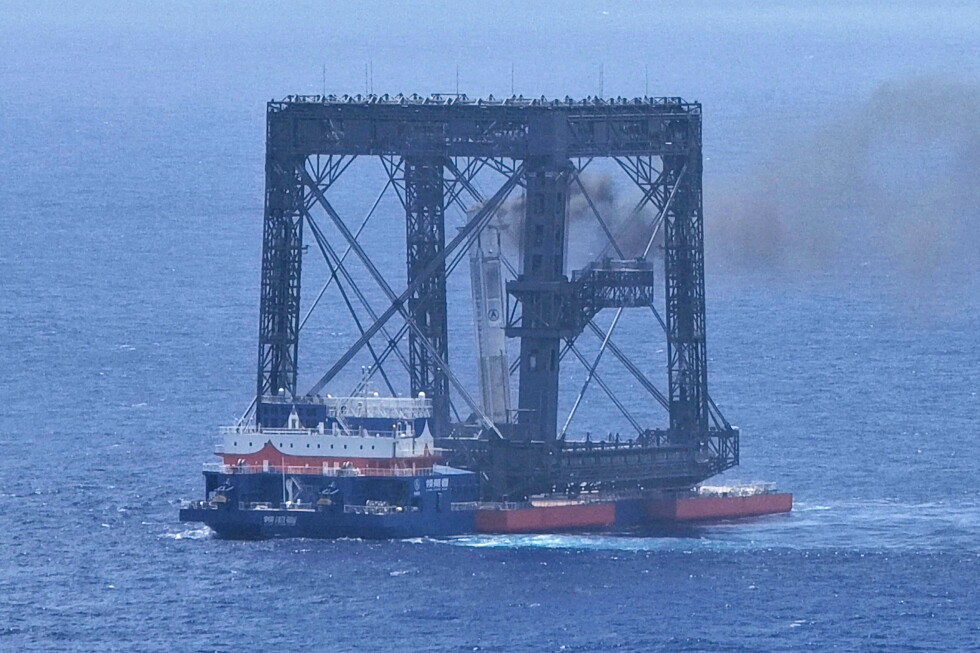
China takes a page from SpaceX and recaptures the first stage of a rocket to reuse it
In a landmark milestone for China’s expanding space exploration program, the nation has successfully completed the first-ever recapture of a rocket’s first stage following a weekend launch, state media confirmed Friday. The recovered booster belonged to the Long March-10B launch vehicle, which separated its first stage from the second upper stage moments after lifting off from the southern coastal spaceport on Hainan Island, a renowned tropical beach tourism destination. After separation, the first stage executed a controlled descent and landed safely on a pre-positioned maritime recovery platform in the open ocean, according to China’s official Xinhua News Agency.
This breakthrough puts China in a small group of nations capable of reusable rocket technology, a development pioneered years ago by U.S. private space firm SpaceX that has transformed the global launch industry by drastically cutting mission costs. By reusing the first-stage booster — the most powerful and expensive component of a launch vehicle that carries payloads out of the lower atmosphere — space agencies and private companies can avoid building entirely new rockets for every mission, bringing down overhead and increasing launch frequency.
Per Xinhua’s specifications, the reusable Long March-10B is designed to deliver a maximum payload of 16,000 kilograms (roughly 35,275 pounds) to low Earth orbit, the region of space within 2,000 kilometers of Earth’s surface that hosts most commercial satellites, the International Space Station, and other crewed missions. For comparison, SpaceX’s workhorse Falcon 9 rocket lists a maximum low Earth orbit payload capacity of 22,800 kilograms (approximately 50,265 pounds) on the company’s official website, and the Falcon rocket fleet has routinely ferried astronauts and critical cargo resupplies to the International Space Station for NASA for nearly a decade.
Industry analysts note that this successful recovery marks a critical turning point for China’s space program, opening the door to lower-cost, more frequent access to space that can support the nation’s growing ambitions in satellite deployment, lunar exploration, and future crewed deep space missions.
-
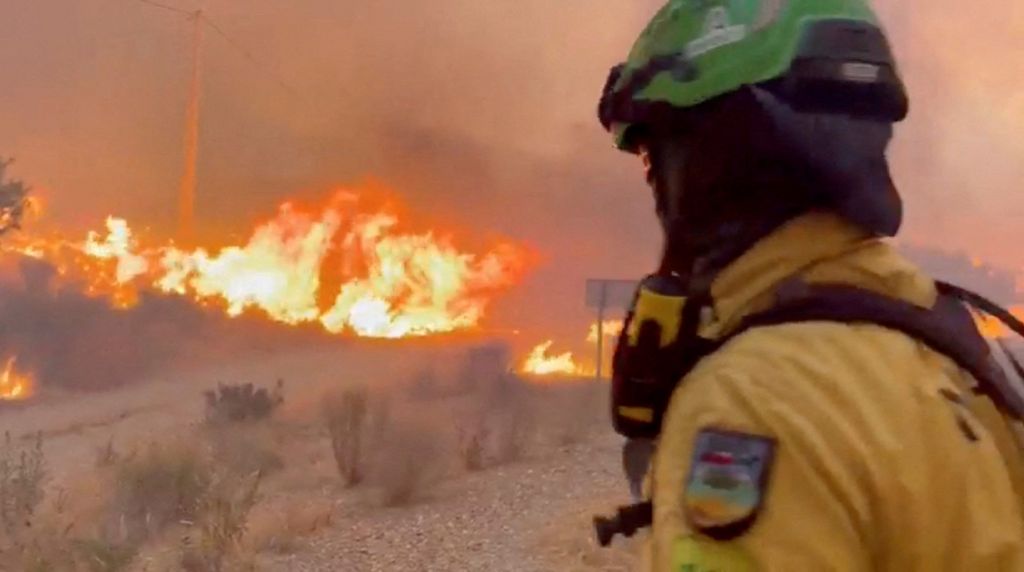
Firefighters battle flames as deadly wildfire rages in Spain
A catastrophic wildfire has torn through Spain’s southern province of Almería, leaving a trail of death and destruction that has gripped the region. Emergency responders have been working around the clock to contain the out-of-control blaze, which has already claimed the lives of at least 11 people, according to preliminary official reports.
The inferno, fanned by unseasonably high temperatures and strong dry winds, has spread rapidly across vast swathes of forest and rural land in Almería, threatening residential communities and forcing hundreds of residents to evacuate their homes. Firefighting teams from neighboring provinces have been deployed to reinforce local crews, who have struggled to keep up with the fire’s unpredictable advance. Aircraft carrying water and fire retardant have also been mobilized to attack the blaze from the air, though difficult terrain and smoky conditions have hampered their efforts.
This deadly wildfire is the latest in a growing string of severe wildfire events impacting southern Europe, a region that has become increasingly vulnerable to extreme wildfire risk due to rising global temperatures and prolonged drought conditions linked to climate change. Local authorities have issued urgent warnings to residents in at-risk areas, advising them to follow evacuation orders immediately and avoid travel through affected regions. Search and recovery teams are still working through burned areas to confirm the final death toll and locate any people who may still be missing.
-

Pakistan recovers more cargo plane debris from Arabian Sea as search for missing crew enters 3rd day
On Friday, multi-agency search operations entered their third day to locate five missing crew members of a private Pakistani cargo plane that crashed into the Arabian Sea earlier this week, after search teams from the Pakistan Navy recovered additional fragments of the downed aircraft for official investigation.
Operated by Karachi-based private aviation firm K2 Airways, the cargo jet was en route from Sharjah, United Arab Emirates to Pakistan’s largest city Karachi when it vanished from civilian radar systems late Tuesday. Shortly before losing contact, the flight crew reported a critical malfunction in the aircraft’s navigation system. Official radar records show that at approximately 9:21 p.m. local time, around 287 kilometers west of Karachi, the plane made an unexpected sharp turn before plunging rapidly, after which all radar and radio communications were cut off.
The first fragments of wreckage were pulled from the water Wednesday by Pakistani Navy crews, roughly 100 kilometers off the coast of the southwestern town of Ormara, located in Balochistan province’s Makran coastal region. As of Friday, the plane’s main fuselage and all five crew members have yet to be located, according to government officials. All recovered wreckage will be turned over to air crash investigators for forensic analysis to determine the root cause of the disaster.
In a statement posted to the social media platform X, the Pakistan Airports Authority confirmed that coordinated search-and-rescue efforts are still ongoing in the deep-water crash zone, with both surface vessels from the Pakistan Navy and Pakistan Maritime Security Agency, plus airborne surveillance assets deployed to narrow down the search area. The agency declined to release additional operational details, noting that further public updates will be shared once more verified information becomes available. The official cause of the crash remains undetermined as the investigation progresses.
Pakistan’s Prime Minister Shehbaz Sharif has already issued formal directives to all involved agencies, ordering them to deploy every available resource to locate the missing crew. For its part, K2 Airways has stated that it is providing full logistical and operational cooperation to Pakistan’s civil aviation authorities leading the crash investigation.
Search efforts have been significantly hampered by challenging marine conditions, including choppy rough seas, persistent strong winds, and shifting ocean currents. These environmental factors have spread floating debris across a vast stretch of open water, making it far harder for teams to pin down the exact location of the main wreckage.
This latest aviation incident adds to a long string of fatal air crashes that have occurred across Pakistan over the past several decades, raising ongoing questions about aviation safety oversight in the country.
-

Eleven dead, 19 missing as Spain wildfire roars through village
A catastrophic fast-moving wildfire that swept through a small mountain village in southern Spain has claimed 11 lives and left 19 people unaccounted for, with emergency officials confirming most of the fatalities are believed to be foreign tourists visiting the popular region. The blaze, which broke out Thursday near the village of Bedar in the Los Gallardos district of Andalusia, northeast of the coastal city of Almeria, has already scorched more than 3,150 hectares of forest and agricultural land, injured eight people (four critically), and forced mass evacuations of local residents.
Authorities preliminary findings point to a fallen power line that ignited dry scrubland as the likely source of the fire, which spread at an alarming speed across the region’s rugged, ravine-cut forested terrain dotted with scattered residential properties. Multiple victims were found attempting to outrun the advancing flames on foot through steep woodland, while four fatalities were recovered from a burned-out right-hand drive vehicle – a detail that leads investigators to suspect they were British citizens, though formal identification is still ongoing.
Nearly 400 firefighters and military personnel from Spain’s elite Military Emergency Unit (UME) have been deployed to contain the inferno, which overwhelmed emergency response lines with more than 150 distress calls flooding emergency services within hours of the outbreak. Visible flames from the fire reached a major highway near the village, forcing immediate road closures and the evacuation of around 150 local residents, who have been temporarily sheltered in a nearby community cultural center.
The disaster unfolded as an intense summer heatwave grips the Iberian Peninsula, with forecasters predicting temperatures would surge past 40 degrees Celsius across large swathes of both Spain and France on Friday. Andalusia has been under orange-level heat warnings – the country’s second-highest alert tier – for several days, creating tinder-dry conditions that are ideal for explosive wildfire growth.
Spanish Prime Minister Pedro Sánchez posted his reaction to the tragedy on social media platform X, saying he was “deeply saddened and devastated by the terrible consequences of the wildfire”. This blaze comes just months after Sánchez announced that Spain would roll out its largest ever summer wildfire response operation for 2025, designed to counter the growing risk of extreme fire events driven by climate change.
Andalusia’s regional emergency minister Antonio Sanz echoed the national mood of shock in a separate video statement, saying “At the moment, we have confirmed that 11 people have lost their lives in the Los Gallardos fire; there are no words for such grief. Everything indicates that the deceased are, mostly or entirely, foreign nationals.” He described the fire as uniquely challenging to contain, noting the region’s complex topography and scattered housing made it difficult for fire crews to access and control advancing flames.
Regional president Juan Manuel Moreno Bonilla later confirmed the updated number of missing persons, as search and rescue operations continue through burned terrain to locate unaccounted residents and visitors.
This disaster is part of a growing trend of more frequent and more destructive wildfires across Spain, linked to rising average temperatures and longer, more intense heatwaves driven by global climate change. In 2024, deadly wildfires burned nearly 400,000 hectares of land across the country – the highest annual total recorded by the European Forest Fire Information System. National weather agency AEMET recently confirmed 2025 is already on track to be the third-warmest year in Spain’s recorded history, with 25 new single-day national heat records broken in the first half of the year.
Just two weeks prior, another major wildfire near the popular tourist destination of Costa Brava forced thousands of residents and visitors to shelter indoors, as strong winds fanned flames across 10 local municipalities including the busy beach resort of Platja d’Aro. The current heatwave is also fueling wildfire risk across the border in France, where a blaze that has burned for 10 days in the southeast Drome region has already destroyed 3,700 hectares of land.
-
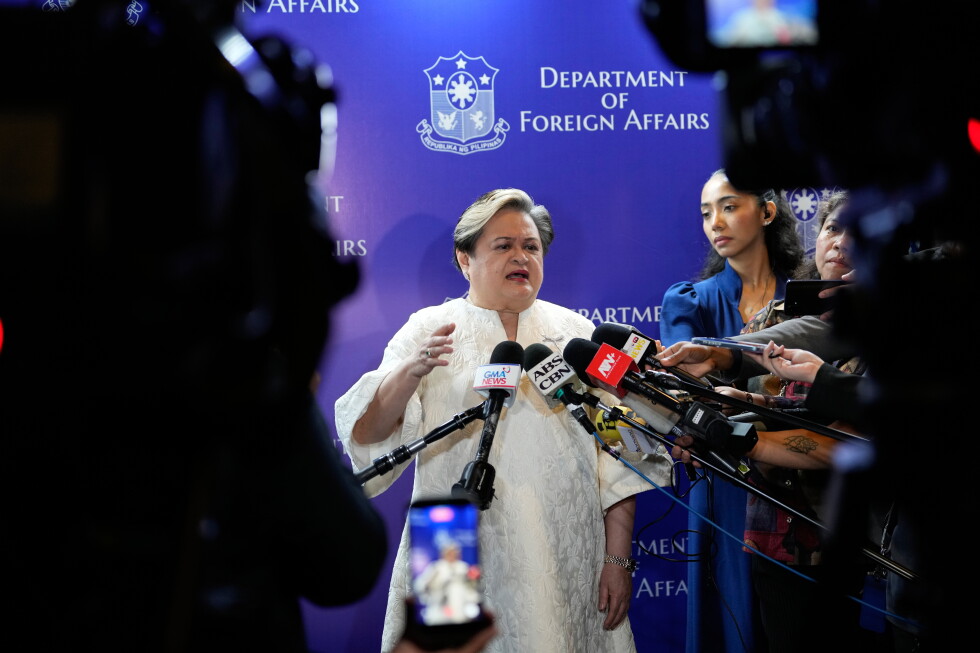
Philippines commemorates 2016 South China Sea ruling rejected by Beijing
Eight years after a landmark international arbitration tribunal delivered a historic ruling that reshaped global discourse over the contested South China Sea, the Philippines held official commemorations on Friday to reaffirm the legality and enduring importance of the 2016 decision. The ruling, which emerged from an arbitration case Manila launched under the United Nations Convention on the Law of the Sea (UNCLOS) in 2013, invalidated Beijing’s broad territorial claims across the key strategic waterway, and has since been adopted by Western powers and regional allies as a cornerstone for challenging China’s growing maritime assertiveness.
China has consistently refused to acknowledge the process or the outcome of the arbitration. Beijing has labeled the July 12, 2016 ruling from the UNCLOS-backed tribunal “illegal, null and void,” calling the entire proceeding a political sham. To this day, China maintains territorial claims to nearly the entire South China Sea — a critical global trade route that carries an estimated $3.4 trillion in annual commerce, and one that is the site of overlapping competing claims from the Philippines, Vietnam, Malaysia, Brunei and Taiwan. For decades, the overlapping claims and frequent standoffs have marked the region as one of the most dangerous potential flashpoints for armed conflict in Asia.
In remarks released ahead of the anniversary, Philippine Foreign Secretary Maria Theresa Lazaro emphasized the legally binding nature of the ruling, framing it as a steady guide for nations navigating competing maritime demands. “When the waters grow turbulent, when unilateral claims cloud the horizon and when the shadow of coercion looms, nations need something far more permanent than political convenience,” Lazaro said. “They need a lighthouse.”
The United States, which is the Philippines’ oldest defense ally in Asia, has repeatedly pressured Beijing to comply with the 2016 ruling. Successive U.S. administrations — from the prior Biden administration to the current Trump administration — have reaffirmed that Washington is legally obligated to come to Manila’s defense under their 1951 mutual defense treaty if Philippine military assets, commercial vessels or aircraft come under armed attack in the disputed waters.
Australia has also joined the international pushback against Chinese maritime activity. Australian Foreign Minister Penny Wong used the anniversary to criticize Beijing, stating that Australia would “continue to register our concerns about China’s vessels engaging in destabilizing and dangerous conduct in the South China Sea.”
As of Friday, China had not issued an immediate public response to the commemorations. But in a recent statement released through its embassy in Manila, Beijing reiterated its long-held position that it will never recognize the ruling. “The award will not alter the historical and factual basis for China’s sovereignty over the islands of the South China Sea and their adjacent waters,” the embassy said. It added that the ruling “will not weaken China’s resolve and determination to safeguard its sovereignty and maritime rights and interests.”
The 2016 tribunal’s ruling, which sided overwhelmingly with the Philippines on most core claims, explicitly stated that UNCLOS provided no legal foundation for China’s claims to historic resource rights across large swathes of the South China Sea that fall outside its internationally recognized territorial sea and exclusive economic zone. UNCLOS, the global treaty that establishes the legal framework for all maritime activity and national ocean claims, entered into force in 1994 and has been ratified by more than 170 nations and parties — including both China and the Philippines.
In recent years, territorial confrontations in the South China Sea have grown more frequent, with the most persistent standoffs occurring between Chinese maritime forces and fishing fleets on one side, and Philippine and Vietnamese counterparts on the other.
-
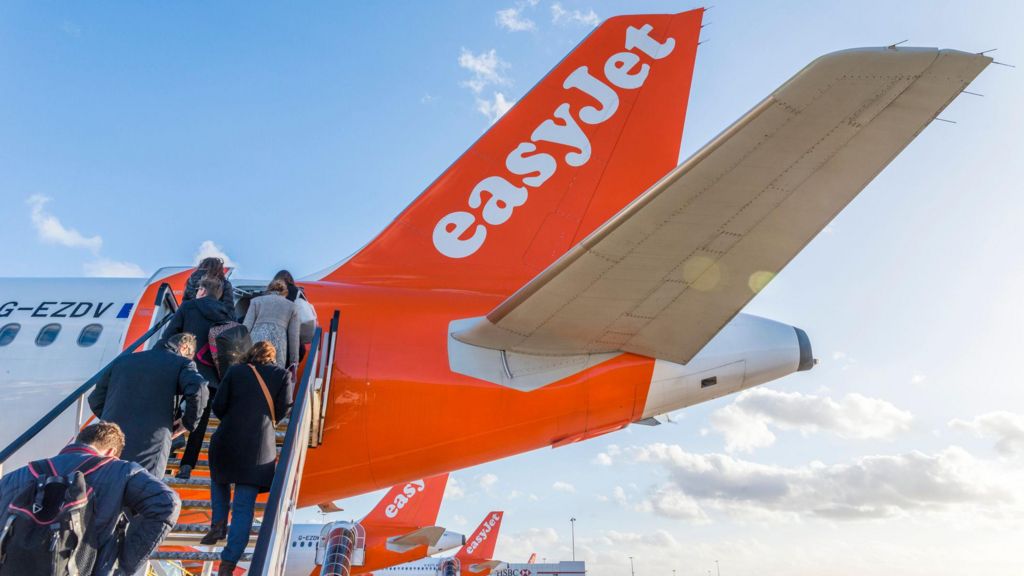
EasyJet agrees to rival £5.7bn takeover bid
One of Europe’s largest budget carriers, Luton-headquartered EasyJet, has announced a major shift in its takeover stance, confirming it has backed a preliminary £5.7 billion acquisition proposal from U.S.-based alternative investment firm Apollo Management. The decision comes just days after the airline agreed in principle to a lower bid from competing U.S. investment group Castlelake.
In an official statement released this week, EasyJet’s board noted that Apollo’s offer of £7.15 per share delivers a far better result for shareholders compared to Castlelake’s previous proposal of £6.90 per share, which valued the carrier at roughly £5.2 billion. The board added it is now “no longer minded” to move forward with the Castlelake offer, ending days of back-and-forth bidding for the leading no-frills airline.
Founded and based in the United Kingdom, EasyJet operates more than 1,200 routes across 35 European countries, employs over 19,000 workers, and remains a cornerstone of European short-haul air travel. The latest development does not mean a final acquisition deal is locked in, however. Under UK takeover rules, Apollo has been given until 5:00 PM GMT on August 7 to submit a formal binding bid or withdraw from the process entirely, while Castlelake’s deadline for a firm offer is set for August 3.
The bidding war traces back to multiple initial approaches from Castlelake, all of which were rejected outright by EasyJet’s board. The airline previously accused the U.S. firm of attempting to acquire the company “on the cheap,” arguing that Castlelake’s bids were “highly opportunistic” and took advantage of a temporarily depressed share price. EasyJet noted that its stock had dropped to £3.94 per share by May 28 — the last trading day before takeover speculation became public — partially driven by travel sector volatility tied to geopolitical tensions over the Iran conflict. Apollo’s current offer represents an 81% premium over that May 28 share price.
A key regulatory hurdle remains for any potential takeover of EasyJet: European Union rules mandate that the airline must be majority-controlled by EU citizens to retain its operating rights across the bloc. To address this requirement, Castlelake had already arranged a partnership with two EU-based businessmen, former Ryanair and EasyJet executive Peter Bellew and industry veteran Mark Breen. The pair would hold majority control of the airline through an EU-registered holding company under Castlelake’s original proposal. It remains unclear how Apollo plans to structure its bid to comply with the same ownership rules, as the firm has not yet released details of its regulatory compliance strategy.
Market analysts note that the competing bids for EasyJet highlight growing investor interest in European travel infrastructure as the sector continues to recover from the aftermath of the COVID-19 pandemic, with low-cost carriers emerging as particularly attractive targets for global investment firms seeking stable long-term returns.
-

Seafarers attacked in the Strait of Hormuz sue shipping company in Thailand
BANGKOK – Nearly five months after a projectile strike on a Thai cargo vessel in the politically charged Strait of Hormuz left three crew members dead, three surviving former crew have launched legal action against the ship’s operator over alleged labor rights abuses and wrongful early termination of their contracts. The incident, which unfolded on March 11 north of Oman, targeted the cargo ship *Mayuree Naree*, claiming three lives and leaving the remaining 20 crew rescued and repatriated to Thailand just seven days after the attack. The fatal strike came amid escalating cross-fire between the United States and Iran that has upended security in one of the world’s most critical global energy shipping corridors.