作者: admin

  • Switzerland’s Breel Embolo given red card for simulation after video review at World Cup

    Switzerland’s Breel Embolo given red card for simulation after video review at World Cup

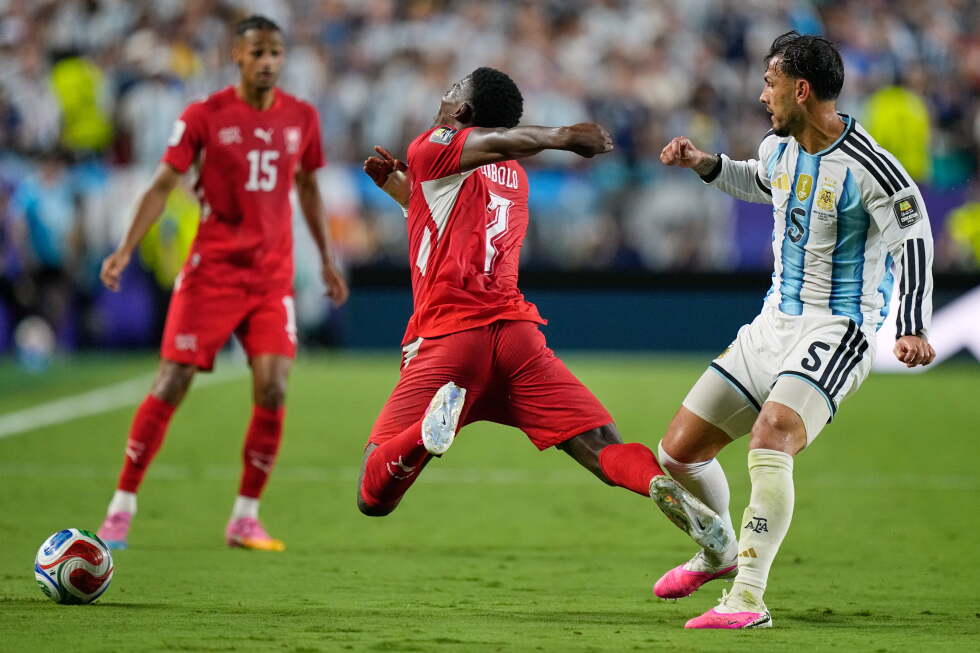
    KANSAS CITY, Mo. — A dramatic turning point unfolded in Saturday night’s World Cup quarterfinal clash between Switzerland and Argentina, as Swiss striker Breel Embolo was ejected from the match following a VAR review that exposed his attempt to feign a foul tackle. The incident, which altered the course of the tightly contested game, marked only the second time the tournament’s “mistaken identity” VAR protocol has been used to reverse a yellow card booking.

    Initially, Argentine midfielder Leandro Paredes was issued a yellow card for what referees believed was a reckless tackle that sent Embolo to the turf. But when the video assistant referee pulled the clip for closer examination, clear footage proved Embolo had already begun falling to the ground before Paredes made any physical contact. What looked like a standard foul was actually a deliberate attempt to draw a wrongful penalty against Argentina.

    The booking fell to Embolo instead, and the timing of the card proved devastating for Switzerland: Embolo had already received a yellow card earlier in the match, so the second infraction elevated to a red card ejection. With the score locked at 1-1, the Swiss side was forced to play the entire remainder of the high-stakes knockout match with just 10 men on the pitch.

    The red card came just moments after Swiss winger Dan Ndoye had scored the equalizing goal to level the match, swinging all momentum back in Switzerland’s favor. Embolo’s ejection immediately flipped that momentum back to Argentina, turning the tide of the quarterfinal in a single, game-altering sequence.

    The reversal of the original booking via the “mistaken identity” protocol is a rare occurrence at the World Cup. This protocol explicitly permits VAR to step in when match officials incorrectly award a card to the wrong player, a rule that was invoked for only the second time throughout this tournament. The sequence added another layer of controversy to a knockout match already packed with tension, highlighting how VAR continues to reshape the landscape of high-stakes international soccer.

  • At least two killed in Toronto street festival shooting

    At least two killed in Toronto street festival shooting

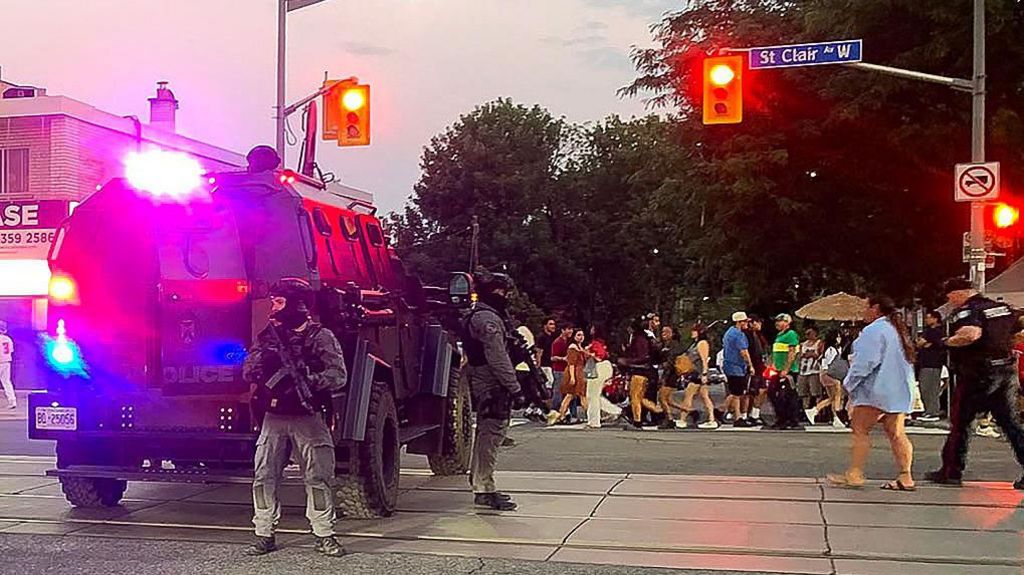
    A deadly shooting has left at least two people dead and six others injured after gunfire erupted at a crowded street festival in midtown Toronto, Canada, law enforcement officials confirmed. The incident unfolded on Sunday evening local time, triggering a large emergency response that locked down the busy commercial corridor and sent attendees fleeing for safety.

    Toronto Police first received emergency calls reporting an active shooter on St. Clair Avenue just after 8:12 p.m. local time, which corresponds to 1:12 a.m. BST Monday. At the time of the attack, the thoroughfare was hosting Salsa on St. Clair, the city’s beloved 22nd annual Latin cultural festival that draws thousands of attendees each year to enjoy live music, open-air dance performances, and food from local vendors.

    When first responders arrived at the scene, they located six people with gunshot wounds. Two of those victims were pronounced dead at the site of the shooting, police confirmed in an initial statement. By early Monday, authorities had secured the perimeter of the attack site and maintained a heavy visible police presence in the area, urging local residents and visitors to avoid the zone to allow for ongoing investigation.

    As of the latest update, no suspects have been taken into custody, and investigators have not released details on a potential motive for the violence. St. Clair Avenue, the location of the festival, is a popular midtown corridor lined with local shops, cafes, and restaurants that was closed to traffic for the two-day celebration that was scheduled to run from July 11 to July 12.

    This is a developing breaking news story, and additional details about the victims, suspect search, and investigation will be published as more information becomes available. Readers can access real-time updates via the BBC News mobile application or by following the official @BBCBreaking account on X for the latest alerts.

  • Messi and Argentina take a 1-0 lead over Switzerland into halftime of World Cup quarterfinal

    Messi and Argentina take a 1-0 lead over Switzerland into halftime of World Cup quarterfinal

    KANSAS CITY, Missouri – The 2024 FIFA World Cup quarterfinal clash between Argentina and Switzerland delivered another iconic early moment from soccer legend Lionel Messi, who helped the defending champions grab a critical 1-0 halftime lead on Saturday night. A perfectly placed corner kick from Messi found the head of teammate Alexis Mac Allister in the 10th minute, putting the tournament favorites ahead before most fans had even settled into their seats at Arrowhead Stadium.

    Coming into the match, Switzerland’s defensive organization had been one of the biggest stories of the tournament. The Swiss side had given up just three goals across their first five matches, and they looked set to continue that form when they controlled possession in the opening minutes of the contest. But Messi, whose career has been defined by game-changing moments on the world’s biggest stage, turned the tide in an instant. After helping force the corner, he stepped up to take the set piece and delivered a cross that cut through the Swiss penalty area perfectly for Mac Allister’s finish.

    The early goal holds multiple notable layers for both sides. It marks the earliest goal Argentina has scored throughout this entire World Cup run, and it is the first time Switzerland has found itself trailing in any match this tournament. For Argentina, the early strike also lifted a tangible weight off the squad heading into the rest of the match. The defending champions have navigated a rocky knockout stage so far: they only narrowly defeated Cape Verde in extra time to open the elimination round, and just days earlier, they needed a dramatic late comeback – three goals in 11 minutes – to erase a 2-0 deficit and defeat Egypt.

    Argentina, a three-time World Cup winner that currently holds the tournament title, is chasing history in this year’s competition. A win against Switzerland would see them advance to the semifinal, putting them one step closer to becoming the first men’s national team to successfully defend a World Cup crown since Brazil accomplished the feat in 1962. Waiting for the winner of the quarterfinal is England, who secured a 2-1 win over Norway earlier the same day to book their semifinal spot. The upcoming semifinal is scheduled to take place Wednesday in Atlanta.

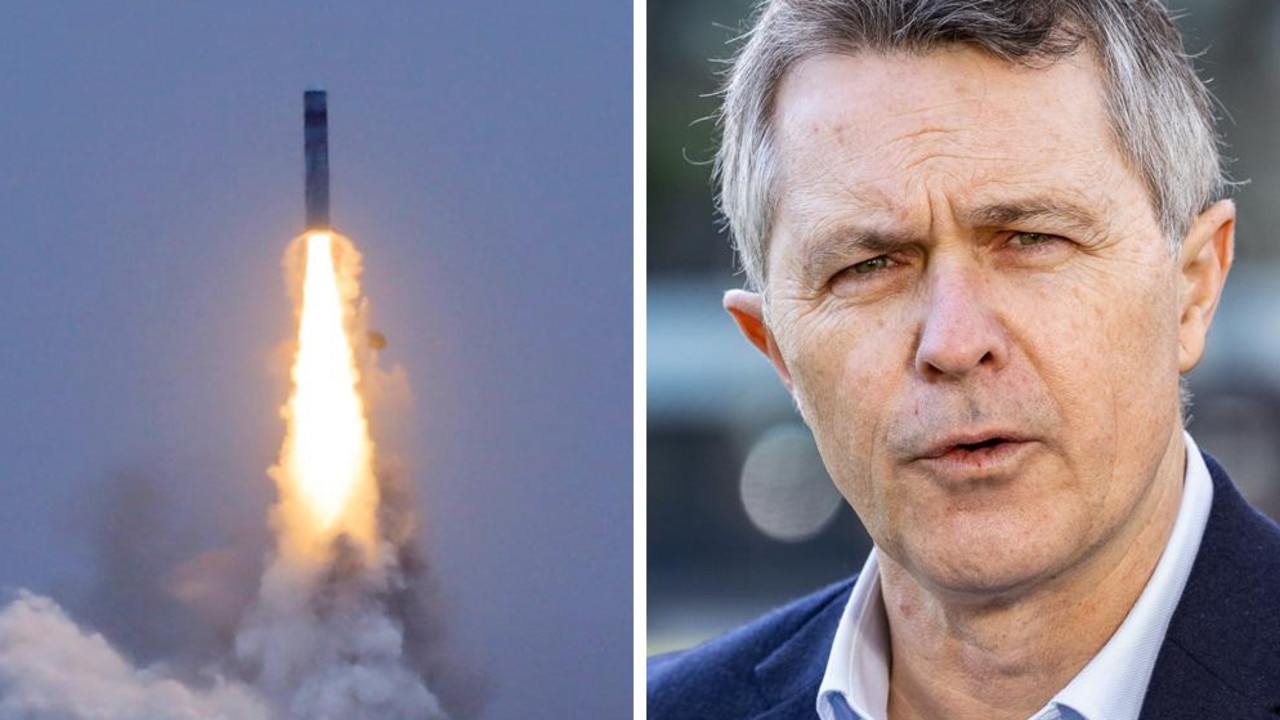
  • China’s Pacific ‘backyard’ missile test not making friends: Education Minister Jason Clare

    China’s Pacific ‘backyard’ missile test not making friends: Education Minister Jason Clare

    Growing international and regional condemnation has followed China’s recent unprecedented ballistic missile test in the South Pacific, with senior Australian government ministers arguing the provocative move will not win Beijing any goodwill among regional neighbors.

    The test, which saw a ballistic missile fired to a location roughly 1,000 kilometers northeast of the Solomon Islands, took place just hours before Australian Prime Minister Anthony Albanese was scheduled to arrive in Honiara for an official visit. Notably, the launch also occurred mere hours after Albanese signed Australia’s fourth bilateral security alliance with Fiji during a stop in Suva, a timing that has sparked widespread scrutiny across Australian political circles.

    Speaking to Sky News on Sunday, Australian Education Minister Jason Clare emphasized the unneighborly nature of the launch, stating, “Good neighbours don’t shoot stuff over someone else’s house.” Clare doubled down on the criticism, noting China would not “make any friends” by conducting missile tests over what he framed as other nations’ backyard territory. He did, however, push back against suggestions that the test was intentionally scheduled to coincide with Albanese’s regional visit.

    For its part, China has defended the exercise, framing it as a routine military test carried out in line with international law. Notably, Australia was not given the standard 48-hour advance notification that typically accompanies such tests.

    Australian Defence Industry Minister Pat Conroy, who recently represented Australia at the NATO summit, warned that the Indo-Pacific is currently experiencing the most rapid military buildup and arms race the region has seen since 1945. “That is occurring without any transparency or strategic reassurance. That is the context that we face,” Conroy explained. He called a direct regional conflict the ultimate “nightmare scenario,” stressing that any major conflict in the Indo-Pacific would have catastrophic global consequences, not just impacts for the immediate region. “We must do all we can to prevent that,” he added.

    Conroy used the controversy to promote the Australian government’s expanded defense investment plans, including acquisitions of advanced SM-6 missile systems and Aegis combat systems. When asked whether Australia would have the capability to intercept a Chinese ballistic missile similar to the recent test in the event of a conflict, Conroy declined to give a direct confirmation, instead noting that the Australian Defence Force already holds a range of active capabilities. He emphasized that stagnation in defense modernization is not an option, justifying the government’s largest peacetime increase in defense funding in Australian history: “This is a race where we need to make sure that the Australian Defence Force has the best possible equipment, and that’s why we’re providing the biggest peacetime increase in defence funding ever.”

    When pressed on the risk of conflict over Taiwan, Conroy stated that Australia maintains preparedness for any regional conflict while all global parties work to avoid escalation. He also told NATO leaders that modern security conflicts are no longer contained to local regions, but have ripple effects across the entire globe.

    The missile test has also drawn sharp condemnation from Pacific regional leaders, including Solomon Islands opposition Prime Minister Matthew Wale, who has been pushing for a region-wide Pacific security pact. The recently signed Australia-Fiji Ocean of Peace agreement includes provisions that allow additional Pacific nations to join the pact in the future, though Albanese ruled out immediate moves to expand the alliance during remarks in Suva on Monday. Clare rejected claims that the missile test would discourage other Pacific nations from entering security partnerships with Australia.

    When asked about Australia’s stance on Wale’s call for a full regional security pact, Conroy confirmed that Australia supports the initiative, but emphasized that any agreement must be led by the Pacific region itself, as Wale currently holds the chairmanship of the Pacific Islands Forum. Conroy declined to share details of confidential discussions with Wale, noting that negotiating and finalizing such a wide-ranging agreement would likely take several years. “Ultimately, it’s a decision of all the Pacific leaders. We act on a consensus approach,” he said. When pressed directly whether Australia would sign on to a region-led pact, Conroy responded clearly: “absolutely.” He added that the initiative aligns with Australia’s existing approach to bilateral partnerships with Pacific nations, saying, “We’re proud to be the security partner of choice for the Pacific, just as we are the development partner of choice. This is all about peace and stability in our region.”

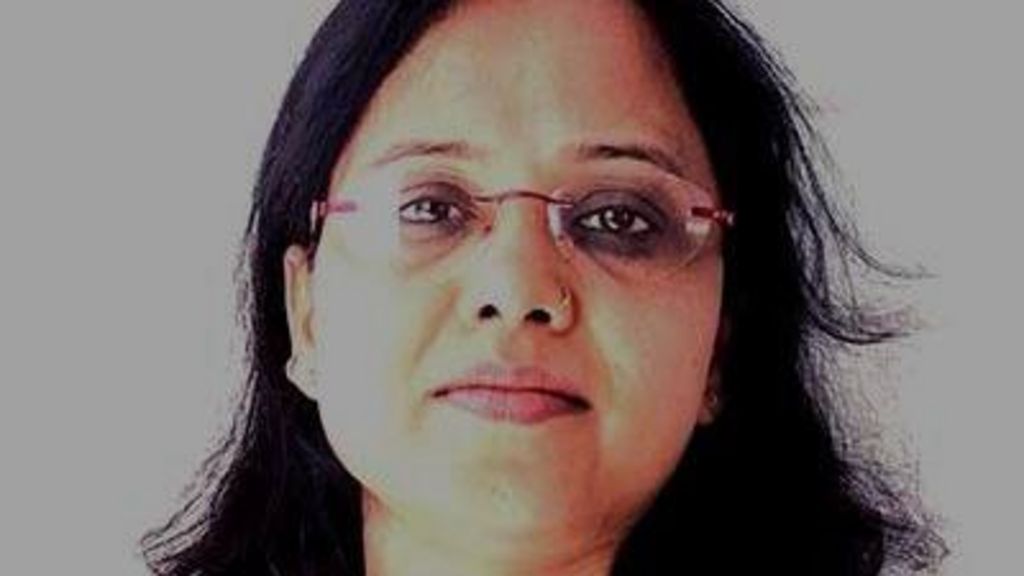
  • Muslim judge in India faces death threats after convicting ‘cow vigilantes’

    Muslim judge in India faces death threats after convicting ‘cow vigilantes’

    A Muslim judge in central India has been subjected to widespread online religious abuse, death threats and rape threats after issuing a life imprisonment verdict against 14 Hindu cow vigilantes convicted of a 2022 mob lynching. The targeted attacks have sparked national outrage over threats to judicial independence and the growing influence of communal rhetoric in the country’s legal system.

    On June 12, Tabassum Khan, additional district and sessions judge in Madhya Pradesh state, delivered a guilty verdict on 14 men on charges including murder, attempted murder, rioting and wrongful confinement. The case stems from a fatal 2022 attack: 50-year-old Nazir Ahmad, a Muslim man, was intercepted by a mob of self-proclaimed ‘gau rakshaks’ (cow protectors) while transporting cattle at night. The mob dragged Ahmad and two companions from their vehicle, beat them brutally with sticks and rods over suspicions of cow smuggling. Ahmad died from his injuries, while his surviving companions testified to the violence in court. In her ruling, Khan explicitly categorized the killing as a clear act of mob lynching.

    Almost immediately after the verdict was announced, unrest erupted. Family members of the convicted men gathered outside the courtroom to protest the ruling, blocking police convoys transporting the defendants to jail and claiming the men were wrongfully punished for ‘protecting cows’. What began as in-person protest quickly escalated into a coordinated online campaign of religiously charged hate targeting Khan personally.

    Multiple videos shared across social media platforms feature Hindu right-wing influencers hurling communal slurs at Khan, issuing violent threats including public calls for her rape and murder. One video even threatened widespread bloodshed across India if the convicted men were not released within 10 days. As of this reporting, many of these threatening videos remain publicly accessible, having amassed thousands of likes and shares, with the perpetrators’ identities and social media accounts clearly visible in the content.

    Mainstream right-wing media figures have also amplified the backlash. A leading anchor with Sudarshan News, a prominent right-wing Hindi news outlet, publicly expressed solidarity with the convicted men’s families, claiming the men had sacrificed everything to protect cows and urging viewers to mobilize in protest. Several major cow protection advocacy groups and Hindutva organizations have held large public demonstrations against the verdict across multiple states. On June 22, the Gau Raksha Parishad held a protest in Punjab where demonstrators burned an effigy of Khan and assaulted it in effigy. Three days later, the Rashtriya Bajrang Dal organized a parallel protest in Uttar Pradesh, demanding the immediate release of all 14 convicted men.

    Critics across India’s legal community have emphasized that the attacks on Khan are not rooted in legitimate criticism of her legal reasoning, but are exclusively rooted in religious bigotry targeting her Muslim identity. Retired Supreme Court judge Markandey Katju highlighted this dangerous trend in a public post on X, noting that protesters and online abusers have sought to delegitimize Khan’s authority solely by reducing her professional identity to her religion.

    “Her Muslim identity became the principal basis upon which the legitimacy of the judgement was questioned. This represented a dangerous inversion of justice. Judicial decisions are meant to be evaluated through legal reasoning, not through the religious identity of the individual delivering them,” Katju wrote. In subsequent comments, Katju shared that Khan had reached out to him to say the relentless abuse had left her traumatized, leading her to question whether she had done something wrong by upholding the law.

    Leading Indian judicial bodies have rallied to Khan’s defense, condemning the threats as an attack on the foundation of democratic governance. The Supreme Court Advocates-on-Record Association (SCAORA) and the Supreme Court Bar Association (SCBA) have both issued formal statements denouncing the harassment and calling for immediate legal action against the perpetrators. Vikas Singh, president of the SCBA, told reporters that threats against sitting judges represent an existential threat to democracy itself.

    “If we allow this to happen, no judge will be able to dispense justice. In a democracy, a judge must be able to perform their duty without fear or favour,” Singh said.

    Local law enforcement officials confirmed that they have registered a criminal case under relevant sections of the Indian Penal Code, with two arrests made so far in connection with the threats. State cyber cells are currently tracing all individuals who have shared the inflammatory videos and are conducting ongoing monitoring of social media platforms to remove additional hateful content.

    Still, prominent legal advocates argue that authorities have not done enough to guarantee Khan’s safety. Senior Supreme Court advocate Sanjay Hegde pointed to a recent precedent involving another targeted judge to argue that equal protection must be extended regardless of judicial rank. In 2024, former Bombay High Court judge Gautam Patel and his family received constant threats for more than 10 months after delivering a verdict in a Muslim community succession dispute. After three judicial organizations filed a public interest litigation, the Bombay High Court ordered the Maharashtra government to provide enhanced security to Patel, ordered the Mumbai police commissioner to supervise the investigation and demanded regular status updates.

    “If a retired judge of a high court deserves state protection and judicial supervision of his case, so does a serving sessions judge in a district court. The principle cannot bend to rank. It cannot bend to religion. It cannot bend to the political weather around a particular verdict,” Hegde wrote in a piece for legal news outlet Live Law.

    In recent weeks, the Madhya Pradesh High Court has stepped in to escalate the response, ordering senior state officials to submit a formal explanation of the steps they have taken to protect Khan and identify the organizers of the hate campaign. The court has also issued a formal order requiring Khan’s enhanced police protection to continue indefinitely. The case has reignited longstanding national debates over the violence of cow vigilantism, the targeting of Muslim public figures, and the protection of judicial independence in an increasingly polarized political climate.

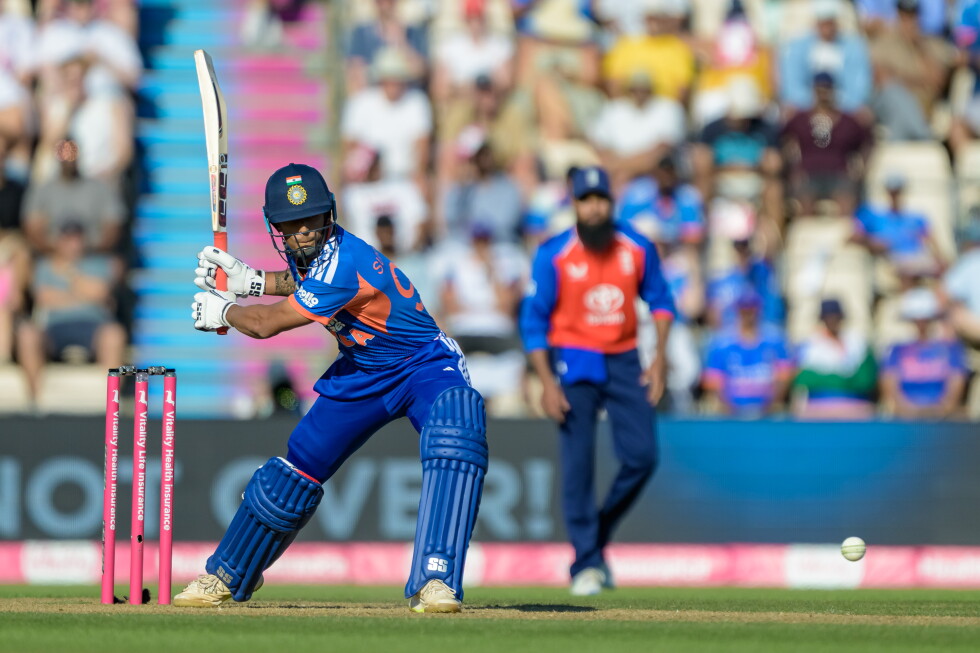
  • India’s T20 blueprint rattled as England’s 4-0 sweep rewrites the script at Southampton

    India’s T20 blueprint rattled as England’s 4-0 sweep rewrites the script at Southampton

    In a dominant display that upended pre-series expectations, England has delivered a resounding 4-0 whitewash of India in their bilateral T20 series, sending a stark wake-up call to the Indian side as it begins a two-year rebuilding process ahead of the co-hosted 2026 T20 World Cup in Australia and New Zealand.

    The decisive final match at Southampton on Saturday sealed England’s historic win, after India conceded more than 250 runs in a T20 on home soil for the first time in the side’s history. India, a two-time T20 World Cup champion, looked flat and disorganized across every department of the game throughout the five-match series, a performance that laid bare deep structural issues in the newly restructured squad.

    England’s attack was unplayable from the first ball, not only containing India’s much-vaunted IPL star lineup including Abhishek Sharma, Ishan Kishan and new captain Shreyas Iyer, but also shattering the confidence of highly touted 15-year-old prodigy Vaibhav Sooryavanshi. Indian selectors’ decision to fast-track Sooryavanshi’s international debut following a breakout IPL 2025 campaign backfired dramatically. The teenage left-hander, dismissed twice by his Rajasthan Royals teammate Jofra Archer with aggressive short-pitched bowling, managed only a combined 42 runs across three innings, failing to live up to the hype surrounding his call-up.

    India’s poor form is not an isolated slump. Prior to the England tour, the side suffered a shocking 2-0 home series defeat to Ireland, a result that already signaled deep flaws in the squad. Key regulars Jasprit Bumrah and Hardik Pandya missed the series through injury, while 2024 World Cup-winning captain Suryakumar Yadav was dropped from the squad entirely. Star batter Shubman Gill, captain of the IPL’s Gujarat Titans, was also left out of the traveling side, a decision that now looks increasingly questionable as selectors are expected to reconsider his position in future squads ahead of the 2026 World Cup.

    The whitewash has left India with a string of unwanted negative records. This marks the first time the side has dropped six consecutive T20 matches, ended a 16-series unbeaten streak in T20 bilateral cricket, and is the first time India has been swept in any T20 bilateral series against England that featured more than two matches.

    Batting struggles plagued India from the opening game. All three of the side’s opening batters failed to find consistent form across the series, while the middle order lacked any clear identity, with constant reshuffling of batting positions between spots five through eight. Promising young left-hander Tilak Varma, who has piled up runs in spin-friendly Asian conditions, managed only 104 runs across the series, with his only half-century coming in the dead-rubber final game at Southampton.

    In the aftermath of the final defeat at Bristol, India assistant batting coach Ryan ten Doeschate acknowledged that the side needs far more than superficial changes to turn its form around, particularly in foreign conditions. “I guess we have spoken so much about adaptability, but I think it’s got to the point now where you actually have to unpack that suitcase,” he told reporters after the match. “It’s easy to say we need to adapt. We need to assess and adapt. Every coach from under-nine cricket says that about every department of the game. It’s got to a point now where we actually have to really unpack what that means and understand the process that’s needed to be able to make those adaptations, so to speak.”

    ten Doeschate emphasized that India must confront its consistent underperformance in overseas conditions and build a new mentality to adapt to different pitch and weather conditions around the world. “Do we want to be a team that smashes 250 in India and looks great when you hit 80-meter sixes at Eden Gardens? Or do we want to come to places like this and places like Manchester and places like Southampton where things are slightly different?” he said. “And again, thinking further down the line, the MCG and those sort of places, do we want to be the team that actually excels in different conditions and do we have the mentality to make those adjustments? And that’s the mental challenge and that’s what we need the players to be able to take on.”

    Following the clean sweep, England has also climbed to the top spot in the ICC men’s T20 world rankings, capping off a historic series for the side.

  • Zoos closing exhibits in bid to protect their animals

    Zoos closing exhibits in bid to protect their animals

    After the deadly H5 strain of avian influenza was confirmed on Australian territory, zoos and wildlife parks across the country have rolled out sweeping emergency biosecurity measures and temporary operational changes to safeguard their captive animal populations, as the outbreak expands into three states.

    The first confirmed case of H5 bird flu in Australia was recorded on June 20, when an infected migratory seabird was discovered on Western Australia’s south coast. In the weeks since, the virus has spread: five cases have now been confirmed in WA, two in South Australia, and one in New South Wales where an infected giant petrel was found at Hawks Nest. Just this week, South Australian health authorities confirmed the virus reached a native Australian bird species, marking a worrying escalation of the outbreak.

    Unlike many other regions that faced sudden, unplanned outbreaks, Australia benefited from months of advance warning as the virus spread globally over recent years, allowing the nation’s major zoos to prepare contingency plans well before the first local case was detected.

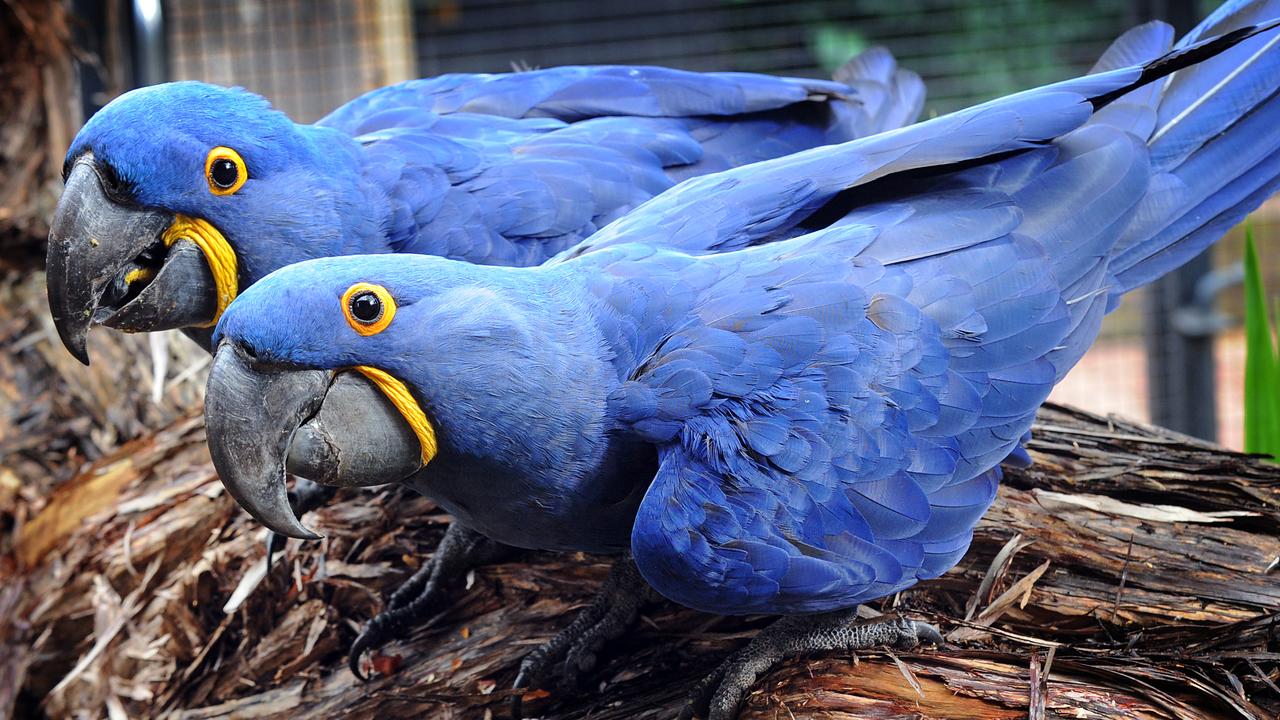
    At Adelaide Zoo, one of the country’s most high-profile wildlife attractions and the only Australian zoo that hosts giant pandas, management has taken the difficult step of temporarily closing multiple key attractions. The zoo’s popular walk-through aviaries are currently shut to visitors, the daily interactive little penguin experience has been suspended, and all free-flight bird shows featuring owls, macaws and other avian species have been called off indefinitely.

    Phil Ainsley, chief executive of Zoos SA, which operates both Adelaide Zoo and the Monarto Safari Park, said that planning for the arrival of H5 bird flu has been underway for years. “Our core priority will always be the health and welfare of the animals under our care,” Ainsley explained. “We have comprehensive, tested response plans in place, and we stand ready to roll out additional biosecurity controls if the situation worsens. We are in constant close coordination with national and state government agencies, and all our actions follow the latest guidance from wildlife disease experts.”

    Over at Perth Zoo, management has implemented a suite of layered precautionary measures designed to cut the risk of transmission between wild birds and captive species, particularly for some of the nation’s most at-risk endemic animals. Extra physical barriers, public hand sanitisation stations, and informational signs have been installed across the site — measures that echo the widespread public health protocols adopted during the COVID-19 pandemic. Enclosure modifications now include covering the habitats of critically endangered species such as western ground parrots, numbats and black cockatoos with protective roofing barriers to prevent contact with wild birds.

    Perth Zoo is also currently evaluating a policy that would require staff and visitors to wear personal protective equipment, including disposable foot coverings, when entering certain high-risk animal enclosures. While walk-through aviaries at the zoo remain open for now, management says full closure remains an active option if the outbreak spreads further. David van Ooran, Perth Zoo’s executive director, noted that the facility drew on years of insight from international zoo colleagues to build its response plan. “The biggest benefit we had was advance awareness of this threat, which let us learn from facilities overseas that have already navigated outbreaks and tailor our own response accordingly,” van Ooran said. “We believe our preparations put us in a strong position to manage this, and we are monitoring the changing situation closely every day.”

    Van Ooran emphasized that the main transmission risk comes from wild birds that are drawn to the zoo’s lush botanical landscapes and water features, noting that the threat is shared across the entire community. “Like most zoos, we have beautiful green spaces and water features that naturally attract wild birds, that’s unavoidable,” he explained. “That said, we have a very detailed biosecurity plan in place, and we are looking at adding specialized sanitation mats at the entrances to our walk-through aviaries. While we have not had to close these exhibits yet, we are prepared to take that step if needed.”

    Despite the new restrictions, van Ooran stressed that the zoo remains fully open to visitors, especially during the current busy school holiday period, and encouraged the public to visit as normal. “Our message to the community is clear: we are very much open for business, and the overall visitor experience will not change in any meaningful way,” he said. “We still encourage people to plan a trip and enjoy the zoo as they normally would.”

    Taronga Zoo, which operates two major wildlife veterinary hospitals in Sydney, has implemented strict new protocols for people seeking care for sick wild birds: the facility now requires the public to call ahead before bringing any birds to the hospital, to reduce the risk of introducing the virus onto zoo grounds. Nationwide, zoos are urging members of the public not to attempt to transport sick or dead wild birds to zoos for veterinary care, to avoid accidental virus transmission.

    Australia’s national health authorities have issued clear public guidance: any person who encounters a sick or dead wild bird is advised not to touch the animal, and to immediately report the sighting to the national Emergency Animal Disease Hotline at 1800 675 888.

  • Israeli settlers held US lawmaker Ro Khanna at gunpoint in occupied West Bank

    Israeli settlers held US lawmaker Ro Khanna at gunpoint in occupied West Bank

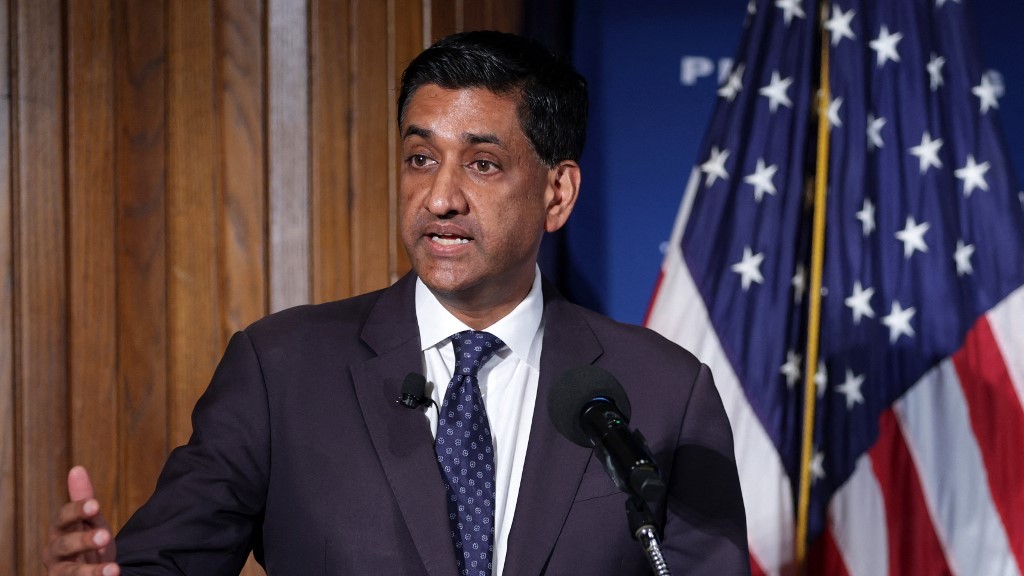
    A high-profile progressive Democratic U.S. Congressman Ro Khanna was held at gunpoint by armed Israeli settlers wielding American-made firearms during a fact-finding visit to a displaced Palestinian community in the occupied West Bank, an incident that has reignited scrutiny of U.S. military support for Israel and shifting partisan attitudes toward the Israeli government.

    Khanna, who represents a California district, shared the details of his detention in a public post on X (formerly Twitter) on Saturday, July 11, 2026. “Israeli settlers, brandishing American made M4s, detained me & other Americans on my trip to Palestine,” he wrote. “When the IDF arrived, they sided with the settlers & continued our detention. They made a huge mistake. You will be hearing more soon.”

    The lawmaker’s visit was centered on Khirbet Zanuta, a small Palestinian Bedouin community that has been systematically displaced by repeated violent attacks from Israeli settlers. According to on-the-ground accounts, settlers have driven out most residents through a campaign of intimidation and property destruction: they have burned the local school, looted private homes, assaulted local people with rifle butts and stones, smashed residential windows and community solar panels, drained local water storage tanks, and dumped raw sewage onto agricultural land that local families depend on for livelihoods.

    Speaking to Reuters after his release, Khanna described the sequence of events: “We were at a village that Israeli settlers had destroyed, they had destroyed the school, they had destroyed that village, and we were just looking at it. And these hoodlums come in with machine guns – M4, an American-made machine gun – and they detain us. They block off the road. And then they call the IDF and the IDF is on their side, not on the side of the Americans.”

    Cameron Kasky, an aide who was part of Khanna’s traveling delegation, confirmed that the group was held for more than an hour. Kasky added that during their detention, the delegation made repeated attempts to contact the U.S. Embassy in Jerusalem to request official assistance. It was ultimately Israeli police, not the Israeli Defense Forces (IDF), that stepped in to secure the group’s release, according to Kasky.

    As of now, there is no public confirmation of whether U.S. Ambassador to Israel Mike Huckabee, a known hardline supporter of Israeli settlement expansion, chose to intervene on the delegation’s behalf or issue any public criticism of the incident. The IDF has issued a muted public response, acknowledging that settlers blocked vehicles near Khirbet Zanuta but claiming its own forces were responsible for de-escalating the confrontation – a claim that contradicts accounts from Khanna and his delegation.

    The incident draws particular attention to the longstanding U.S. military aid package to Israel, which provides $3.8 billion in annual funding for Israeli military equipment – including the M4 rifles that the settlers used to detain the congressional delegation. This connection comes at a time of rapidly shifting public opinion within the U.S. Democratic Party, where support for Israel has fallen sharply amid growing public awareness of Israel’s military campaign in Gaza and its discriminatory apartheid policies in the occupied West Bank.

    Recent polling from Reuters/Ipsos underscores this shift: Israel’s favorability rating among Democratic voters dropped from 59% in 2018 to just 22% by May 2026, reflecting a growing backlash against continued unconditioned U.S. military support for the Israeli government amid widespread allegations of human rights abuses against Palestinian people.

  • How men with female surnames are standing up to ridicule in Kenya

    How men with female surnames are standing up to ridicule in Kenya

    Across Kenya, a centuries-old naming convention is facing a quiet but transformative shift, as a growing number of Kenyan men — particularly from the country’s largest ethnic group, the Kikuyu — are rejecting the tradition of inheriting their father’s first name as a surname to instead claim their mother’s name as their own. This departure from social norm has sparked fierce public debate, drawing both acclaim as a marker of shifting gender dynamics and criticism that frames it as a threat to traditional ideas of masculinity.

    For generations, Kenyan naming customs dictated that children take their father’s given name as their family name, while women who married often adopted their husband’s first name as their own surname. Women who choose to keep their mother’s name rarely face the same level of public scrutiny that men with maternal surnames encounter. Many men who bear their mother’s name report facing ridicule, stigma, and unfair social judgment, even as the practice grows more visible in public life, including among the country’s political and cultural leadership.

    John Njũgũna Wanjikũ, a Kenyan member of parliament who was raised by a single mother and has carried his mother’s name since birth, goes by the common Kikuyu nickname “Ka-Wanjikũ” — literally translated as “child of Wanjikũ” — after first winning office in 2021. He is one of a growing number of prominent public figures who openly bear maternal surnames, a sight that would have been extremely rare just a few decades ago.

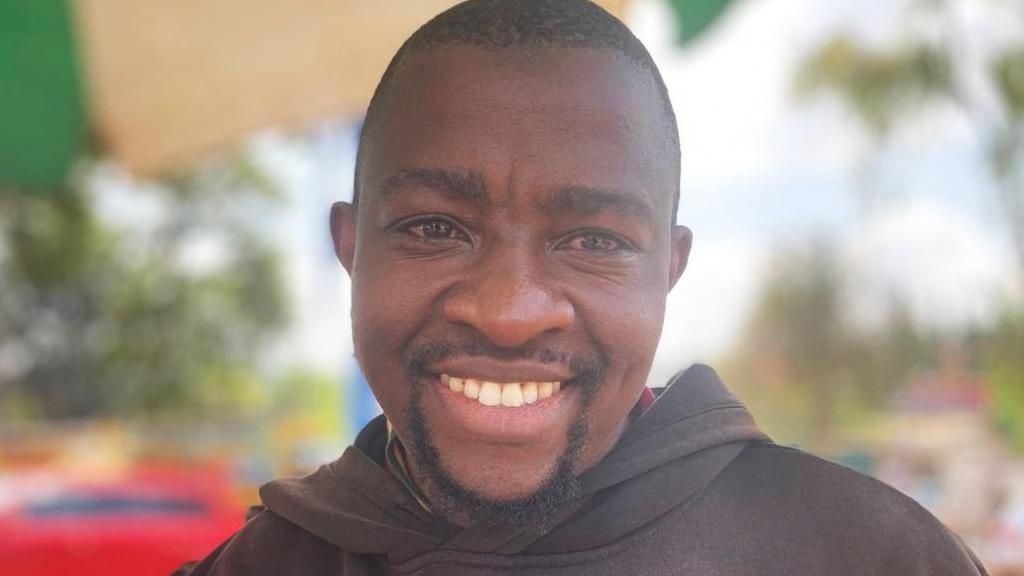
    Veteran Kenyan benga musician Peter Kĩgia was one of the earliest public figures to break the naming norm decades ago, when he adopted his mother’s name for his public identity. Now in his 60s, Kĩgia performs and records under the stage name Kĩgia wa Esther, meaning “Kĩgia, son of Esther”, and even named his record label Wa Esther Productions. “When you take your mother’s name, it means you love and respect her,” he told the BBC. Today, his choice has become a trend in Kenya’s music industry, with dozens of younger male artists following his lead — street posters across the capital Nairobi advertise performers like Waithaka wa Jane and 90K Ka Msoh, all of whom use their mother’s name publicly, even if they retain their paternal surname for formal legal purposes.

    For journalist Simon Macharia Wangũi, the choice to adopt his mother’s name as an official surname was a deliberate, deeply personal decision. Raised mostly by his grandmother after his mother’s death in 2003 when he was just 12 years old, Wangũi had no official surname until he applied for a birth certificate in his final year of high school. With his father absent for almost his entire life — a man he says he has “only heard rumours of his existence” — Wangũi saw no reason to claim a paternal name. “Why give somebody credit where it does not exist?” he asks. Though he acknowledges bearing a maternal surname has brought moments of “identity crisis”, Wangũi says he remains proud of his choice, and notes that success despite social stigma often leads others to view the choice as a mark of resilience.

    Still, the stigma attached to male maternal surnames has taken a toll on many who bear them. Broadcaster Evans Kibe Waceke, who himself carries a maternal surname, explains that common social stereotypes frame children raised by single mothers as inherently “undisciplined” and lacking “certain morals”. The national debate over the practice erupted into public view two years ago, after prominent motivational speaker Robert Burale claimed that adopting a mother’s surname undermined men’s masculinity. His comments prompted TV personality Fred Mũitĩrĩri to go public with his own experience, revealing that he ultimately chose to drop his maternal surname and use only his first names due to years of bullying and shame. “Do you know how embarrassing it is for a boy to be called out, in a room full of kids, [with] a girl’s name?” he wrote on Facebook, adding that the constant harassment contributed to depression when he was 23 years old.

    Cultural experts point to shifting social realities as the core driver behind the growing popularity of maternal surnames. Young Kikuyu cultural commentator Wairimũ Mũkũrũ, who has a large following on social media, notes that the trend has grown alongside a sharp increase in single-mother households across the country. Traditionally, even children born to unmarried mothers would be given a surname from a male relative — most commonly the mother’s eldest brother, who would step into a paternal role. But Mũkũrũ explains that male relatives often refuse to share their surname, because granting a child the name also gives them legal rights to inherit family property.

    Mũgwe wa Njũhĩ, an official with the Kikuyu cultural organization Kiama Kĩa Ma, confirms this dynamic, saying male relatives often avoid granting their names to children of single mothers to prevent future inheritance disputes. But he also pushes back against criticism of maternal surnames, pointing to Kikuyu cultural origins that are rooted in matrilineal lineage. According to Kikuyu myth, the community traces its origins to the 10 daughters of Gikũyũ and Mũmbi, the founding couple of the Kikuyu people. Kikuyu clans are even named after these 10 daughters, meaning the community has long aligned itself with female lineage. “I am Mũmbũi by clan [derived from Wambũi, one of the daughters]. We have always aligned ourselves with women, from the very beginning,” he says. Veteran musician Kĩgia wa Esther adds that critics from outside the Kikuyu community often misunderstand the cultural context of the practice.

    University of Nairobi lecturer George Gathigi, an expert on Kikuyu social issues, explains that informal identification by mother’s name is not a new practice — it was once common in large polygamous families, where children from different mothers would be identified by their mother’s name to avoid confusion, since Kikuyu culture traditionally draws from a small pool of family first names. Even the iconic late Kenyan author Ngũgĩ wa Thiong’o, whose father had four wives, wrote in his memoir that he was known informally as Ngũgĩ wa Wanjikũ — after his mother — during his childhood. What is new, Gathigi says, is the formal adoption of maternal surnames as legal identities.

    Gathigi argues that the formalization of this trend reflects the growing economic and social power of Kenyan women, especially in households where fathers have abandoned their parental responsibilities. As women increasingly take on roles that were traditionally reserved for men, stepping into both parental roles in single-parent households, children are choosing to honor that contribution by claiming their mother’s name. Still, not all observers frame the shift as positive: Gathigi himself says he sees the normalization of maternal surnames as a “bad thing” that reflects the breakdown of traditional family structures, a sentiment shared by critics across the country. Conservative voices have gone as far as calling the practice “a yoke around men’s necks” and an effort to “womanise the Kikuyu man and make him weak”.

    Despite the ongoing backlash and social stigma, men who have chosen to claim their mother’s name say the choice brings a sense of meaning and identity that outweighs the criticism. For many, it is not just an act of personal honoring, but a quiet re-shaping of centuries-old culture to fit the changing realities of modern Kenyan life.
  • Labor MP likens Pauline Hanson, One Nation to ‘vanilla’ ice cream over monoculturalism stoush

    Labor MP likens Pauline Hanson, One Nation to ‘vanilla’ ice cream over monoculturalism stoush

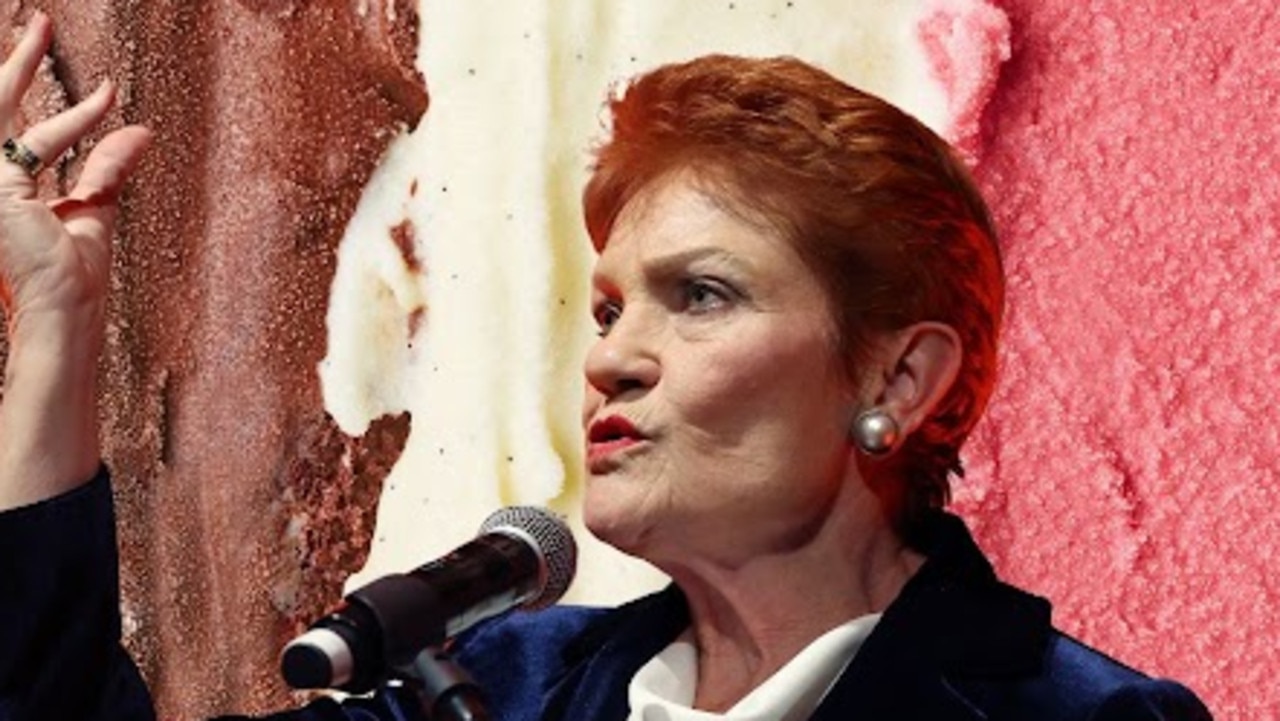
    A fiery debate over national identity and multiculturalism has erupted across Australia’s political right, sparked by One Nation leader Pauline Hanson’s explosive call for an Australian “monoculture” during her debut address to the National Press Club. The controversial remark has left right-of-center parties scrambling to clarify their positions, with senior Labor minister Jason Clare drawing a playful but cutting comparison between competing right-wing groups and Neapolitan ice cream to call out their ideological ambiguity.

    In a weekend interview with Sky News, Education Minister Jason Clare — whose own spouse is Vietnamese-Australian and has long been a vocal supporter of Australia’s migration-driven diversity — slammed Hanson’s monoculture proposal as absurd. He argued that the three major right-wing political forces: the Liberal Party, the National Party, and One Nation, are all scrambling to appeal to the same conservative voter base, much like different flavors of Neapolitan ice cream ultimately all trying to pass as plain vanilla.

    “The Liberal Party has a proud record of supporting multiculturalism that it ought to stand by, but it can’t even bring itself to say the word ‘multiculturalism’ anymore,” Clare said. “That reeks of pure desperation.” When pressed by reporters whether his vanilla analogy was a coded reference to a preference for a white-only Australia, Clare walked back the interpretation, clarifying that his comparison instead referenced the overlapping policy agendas of the three right-wing parties, specifically their shared support for loosening employment protections and suppressing wage growth. Clare went on to frame Australia’s cultural diversity as a national strength, using his own fruit salad analogy to explain the value of multiculturalism to primary school students: “We all love individual fruits, but they are far better together than apart.”

    Hanson’s monoculture remark has forced every corner of the conservative movement to take a public stance, creating awkward rifts across the right. Most Liberal MPs, who represent many electorates with large migrant populations, have pushed back against Hanson’s proposal while echoing calls for stricter character-based migration checks, a policy push that has gained renewed traction in the wake of the recent Bondi Beach terror attack. Liberal leader Angus Taylor, who had previously signaled he was open to electoral cooperation with One Nation, doubled down on his criticism earlier this week, warning that a One Nation election win would bring “an eternity of pain” to Australian politics.

    The confusion came to a head when Clare referenced Barnaby Joyce, the high-profile National Party MP for New England, in his press conference. Clare initially stated that journalists should ask Joyce himself to clarify the meaning of the analogy, and later noted that he considered Joyce “a good man who believes in multiculturalism.” But Joyce quickly pushed back on that characterization in subsequent remarks, saying bluntly: “I don’t believe in multiculturalism.”

    Joyce argued instead for a unifying national Australian culture that all residents must adhere to, with clear “guardrails” to protect the shared freedoms of all Australians, regardless of their ethnic heritage. “The issue isn’t where your family comes from — it’s whether you abide by the shared rules that protect all of our liberties when you live here,” he explained. He also went on to criticize literalist and fundamentalist interpretations of both the Koran and the Bible, and argued that existing migration character checks have failed, pointing to the two men linked to the Bondi Beach attack: one who arrived in Australia during the Howard government era, and another who was born in the country.

    Shortly after Joyce’s remarks, Liberal MP Dan Tehan stepped in to clarify his party’s position, saying the Coalition supports “multiculturalism, but with Australian values at its core.” Tehan, who represents an electorate with a large East Timorese community, noted that migrant Australians can embrace Australian values while retaining their own cultural traditions, a balance the Coalition wants to preserve. He blamed the Labor government for failing to prioritize embedding Australian values within Australia’s multicultural framework.

    One Nation representatives have still struggled to offer a clear, consistent definition of the “monoculture” that Hanson called for, leaving the controversy unresolved and continuing to pressure conservative parties to lock in their positions on national identity and migration ahead of future electoral contests.