作者: admin

  • Dragonflies in distress: Scientists sound alarm in India’s ecological hotspot

    Dragonflies in distress: Scientists sound alarm in India’s ecological hotspot

    A groundbreaking, first-of-its-kind two-year study focused on dragonfly and damselfly populations in India’s Western Ghats, one of the planet’s most critical global biodiversity hotspots, has uncovered results that blend fascinating new insights with urgent warnings about ecosystem health.

    Funded by the Indian government’s Department of Science and Technology, the research was conducted between 2021 and 2023 across five Indian states covering the full span of the Western Ghats mountain range. When survey work concluded, the research team led by evolutionary ecologist Pankaj Koparde confirmed 143 distinct species of dragonflies and damselflies currently residing in the region. Of these confirmed species, at least 40 are endemic, meaning they exist nowhere else on Earth. The team also made a landmark discovery: seven entirely new species to science, one of which was named *protosticta armageddonia*, a deliberate reference to the global “ecological armageddon” of widespread insect population collapse that scientists have documented in recent decades.

    Beyond these new discoveries, the study delivered a deeply worrying finding: 79 species that had previously been recorded in the Western Ghats were not located during the extensive two-year survey. This missing species count represents an almost 35% drop in the total number of confirmed odonate (the order that includes dragonflies and damselflies) species in the region. Koparde notes that part of this gap could stem from research limitations: some species may be extremely rare, or only active during narrow seasonal windows that the survey did not capture. But he also cautions that the decline could signal actual species loss, with some populations already pushed to extinction.

    This trend is particularly concerning because dragonflies and damselflies are widely recognized as sensitive bioindicators of freshwater and overall ecosystem health. A decline in their populations often acts as an early warning signal for broader ecosystem degradation, Koparde explains. The Western Ghats, a 1,600-kilometer mountain range stretching along India’s western coast and designated a UNESCO World Heritage Site, is already one of the most threatened biodiversity regions on the planet. It supports more than 30% of India’s total plant and animal species, including 325 species classified as globally threatened by conservation authorities, and hosts an extraordinary array of endemic species that evolved in isolation over millions of years. These unique endemic species play irreplaceable roles in their ecosystems, from regulating local climate to supporting pollination networks that maintain overall biodiversity.

    Geologically, the Western Ghats formed roughly 150 million years ago during the Jurassic Period, when the supercontinent Gondwana split apart and the Indian tectonic plate separated from Africa. This ancient origin means many species in the region carry genetic links to the ancient supercontinent, making them extraordinarily valuable for evolutionary research. For this reason, Koparde’s team is now building a comprehensive genetic library of all odonate species they documented during the survey, which will allow researchers to trace the evolutionary origins of each endemic species and deepen global understanding of how the region’s unique biodiversity formed.

    To complete the field work, the team had to navigate extremely challenging terrain, hiking to remote, unstudied locations, wading through mangrove swamps and traversing moss-covered riverbanks to locate and document the insects, starting their surveys at dawn to maximize species detection.

    The latest findings add to a growing body of research highlighting the accelerating biodiversity loss in the Western Ghats. In 2025, the International Union for Conservation of Nature (IUCN) rated the region’s conservation status as “of significant concern,” noting that ongoing threats including unplanned urbanization, agricultural expansion, livestock overgrazing, large-scale infrastructure development such as dams and wind energy projects, invasive species incursion, and mining continue to degrade and fragment critical habitat. Recent prior studies have already documented dramatic declines in other endemic taxa: a 2025 study reported the local extinction of a rare population of galaxy frogs after recreational photographers destroyed their sensitive forest floor habitat; a 2024 study found industrial farming practices were pushing multiple endemic frog species toward extinction; and a 2023 bird survey recorded a 75% population decline across 12 endemic Western Ghats bird species.

    Koparde emphasizes that the lack of systematic population monitoring for most species in the region is a major barrier to effective conservation, making baseline surveys like this one critical to tracking future changes and protecting the Western Ghats’ irreplaceable biodiversity before it is lost forever.

  • NATO, top Republicans question US troop withdrawal from Germany

    NATO, top Republicans question US troop withdrawal from Germany

    A new wave of transatlantic tension has emerged after U.S. Defense Secretary Pete Hegseth ordered the withdrawal of approximately 5,000 American military personnel from Germany, a move that has drawn pushback from NATO leadership and top congressional Republicans alike. The decision unfolds against a backdrop of growing friction between the second Trump administration and European capitals, rooted in disagreements over the ongoing Middle East conflict, trade policy, and burden-sharing for regional collective defense.

    The Pentagon’s withdrawal order, announced Friday by spokesman Sean Parnell, is projected to wrap up over a six to 12-month timeline. As of the end of 2025, the U.S. maintained 36,436 active-duty troops stationed in Germany — by far the largest American force footprint in any European NATO member, dwarfing the 12,662 troops in Italy and 3,814 in Spain. The withdrawal marks the first major step forward on a threat Trump has wielded against European allies across both of his presidential terms, centered on his demand that European nations take ownership of their own defense rather than relying on U.S. security guarantees.

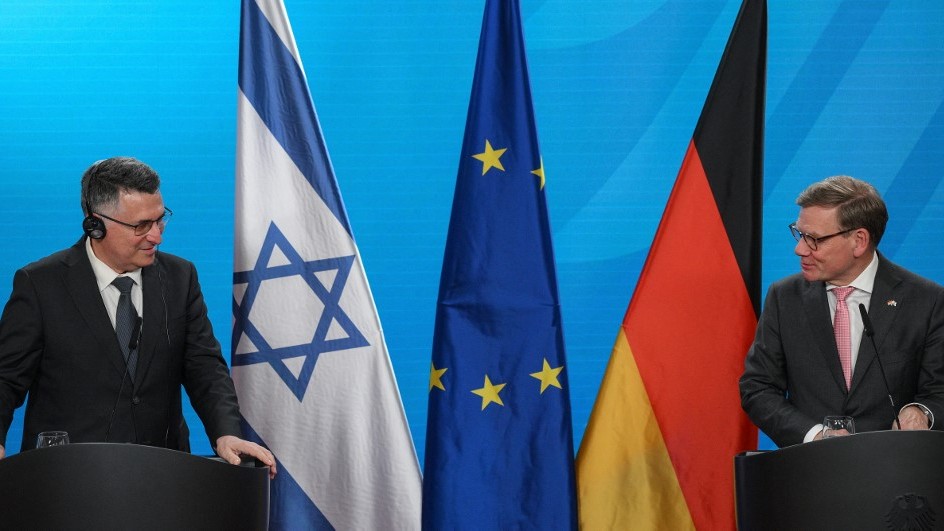
    In a statement posted to X Saturday, NATO confirmed it was collaborating with U.S. officials to parse the details of the new force posture adjustment. NATO spokeswoman Allison Hart framed the shift as a reminder of the urgency for European allies to ramp up their defense investment and carry a larger share of responsibility for shared transatlantic security. German officials have struck a measured tone in response, with Defense Minister Boris Pistorius noting that a drawdown of U.S. troops from Germany and broader Europe was an anticipated development. Foreign Minister Johann Wadephul added that Berlin has been preparing for the reduction and is holding structured, trust-based discussions on the change across all NATO bodies. He did, however, draw a clear line around large strategic American installations, noting that critical hubs like Ramstein Air Base — which serves as a linchpin for both U.S. and NATO operations across the region — are not on the table for any changes, as they serve an irreplaceable role for both sides.

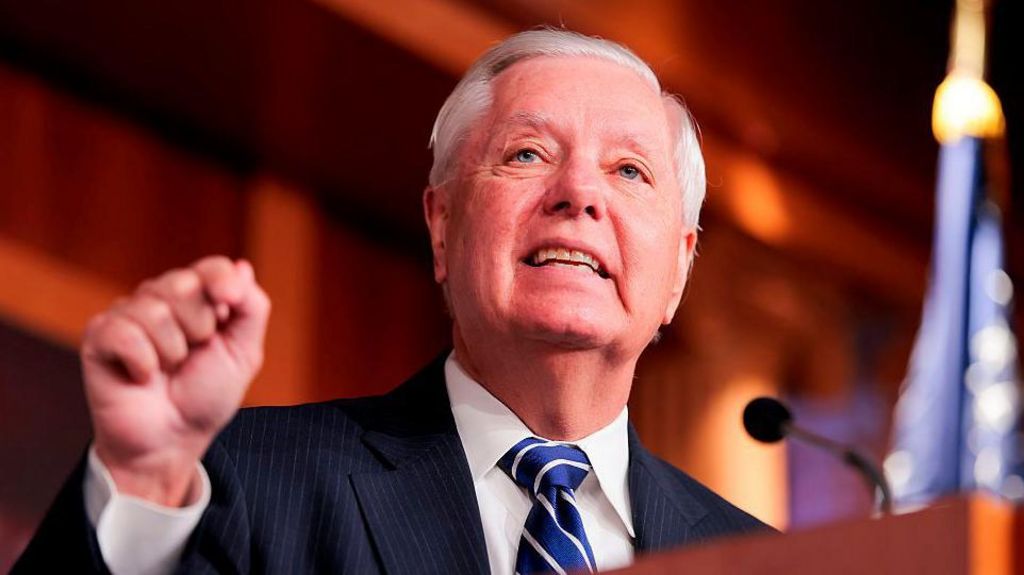
    The decision has already faced skepticism from senior Republican lawmakers who oversee U.S. military policy. In a joint public statement released Saturday, Senate Armed Services Committee Chair Roger Wicker and House Armed Services Committee Chair Mike Rogers warned that pulling thousands of troops from Germany sends a dangerous, misaligned signal to Russian President Vladimir Putin at a moment of heightened global security tension. The pair acknowledged that Germany has already followed Trump’s calls to increase defense spending, and has granted U.S. aircraft access to German bases and airspace for operations tied to the ongoing Iran conflict. Still, they argued that even with increased European investment, it will take years for allies to convert that spending into the conventional military capability needed to take full ownership of deterrence on the continent.

    The troop drawdown comes on the heels of a public verbal clash between Trump and German Chancellor Friedrich Merz, who earlier this week claimed Iran was “humiliating” Washington at the negotiating table over the conflict in the Middle East. It also coincides with a separate escalation in transatlantic trade tensions: Trump announced this week that tariffs on EU-produced cars and trucks will rise from 15% to 25% starting next week, arguing the bloc has failed to honor the terms of a trade agreement reached between the two sides last summer. Analysts view the dual moves as a clear sign of the Trump administration’s willingness to use economic and military leverage to force European allies to align with its foreign policy priorities, particularly in the Middle East.

    Trump has made no secret of his willingness to extend troop cuts beyond Germany to other European NATO allies that have refused to back U.S. policy in the Iran conflict. Speaking to reporters Thursday, he confirmed he is considering pulling U.S. troops from both Italy and Spain, citing their lack of support for Washington’s efforts in the region. “Italy has not been of any help to us and Spain has been horrible, absolutely horrible,” Trump told reporters. “Yeah, probably, I probably will. Why shouldn’t I?” He added that the drawdown is in part targeted at allies that have refused to contribute to a U.S.-backed peacekeeping force for the Strait of Hormuz, a critical global energy waterway that Tehran has effectively closed in recent months. The continuing rift over the Middle East war has already deepened divides between Washington and many European capitals, and the troop withdrawal is expected to accelerate negotiations over the future of the NATO alliance’s force posture across the continent.

  • US airlines step up as Spirit winds down

    US airlines step up as Spirit winds down

    On a chaotic Saturday for U.S. air travel, discount carrier Spirit Airlines — recognizable by its iconic bright yellow aircraft — formally halted all global operations with immediate effect after last-ditch negotiations between creditors, company leadership, and the Trump White House collapsed. The sudden shutdown left thousands of passengers stranded overnight and nearly 7,500 employees facing sudden unemployment, prompting rival major carriers to launch emergency response efforts to accommodate displaced travelers and recruit out-of-work aviation staff.

    Founded in 1964 and repositioned as one of America’s first low-cost carriers in 1992, Spirit had been teetering on the edge of collapse for nearly two years. The company first filed for bankruptcy protection in November 2024, followed by a second bankruptcy filing in August 2025 after its financial position failed to stabilize. By late February 2026, Spirit announced a tentative debt restructuring agreement that it hoped would allow it to exit bankruptcy by early summer. That progress unraveled days later, when the Strait of Hormuz was closed following U.S.-Israeli military strikes on Iran, sending global jet fuel prices soaring and erasing any remaining path to solvency.

    In an official statement announcing the wind-down, Spirit leaders framed the shutdown as an unavoidable outcome: “The recent material increase in oil prices and other pressures on the business have significantly impacted Spirit’s financial outlook. With no additional funding available to the company, Spirit had no choice but to begin this wind-down.” The carrier has pledged full refunds to all passengers holding tickets for canceled flights, a promise echoed by U.S. transportation officials.

    In the wake of the shutdown, major U.S. carriers including American Airlines, Delta Air Lines, United Airlines, and JetBlue Airways moved quickly to absorb stranded passengers. The airlines introduced deeply discounted “rescue fares” for travelers who woke Saturday to find their itineraries canceled, and announced adjustments to flight schedules — adding extra frequencies and deploying larger aircraft on routes where Spirit previously held a large market share. Beyond assisting passengers, multiple carriers also moved quickly to hire Spirit’s out-of-work ground crew, flight attendants, pilots, and maintenance staff, who were suddenly left without jobs.

    The shutdown has already sparked political finger-pointing over what led to the carrier’s collapse. U.S. Transportation Secretary Sean Duffy defended the Trump administration’s handling of the crisis during a Saturday press briefing at Newark Liberty International Airport, arguing that the White House pushed aggressively to keep the carrier afloat. “The president was like a dog on a bone trying to figure out a way to keep Spirit afloat,” Duffy said. He pinned ultimate blame on creditors, who rejected the government’s proposed bailout terms, and noted that “we oftentimes don’t have a half a billion dollars laying around in a spare account that we can put into a bailout of an airline.” Duffy also blamed the prior Biden administration for blocking a proposed merger between Spirit and JetBlue in March 2024, a decision he argued set the stage for the carrier’s ultimate demise.

    Unions representing Spirit’s 7,500 employees condemned the failed rescue talks, warning that the brunt of the collapse would fall on frontline workers rather than corporate leadership. “The pain of this decision will not be felt in boardrooms. It will be felt by pilots, flight attendants, mechanics, dispatchers, and ground crews, and by the families and communities that depend on them,” a statement from the Air Line Pilots Association read.

    For many passengers, the sudden shutdown upended long-planned travel. Sixty-year-old Florida resident Ramon, who only gave his first name to AFP, had been scheduled to travel to Honduras this week to visit family. He and his son Kevin had seen reports of Spirit’s financial troubles in recent days, but declined an early refund offer because replacement tickets on other carriers were prohibitively expensive, and there was no clear indication the carrier would collapse immediately. “I was trying to go today on another airline, but it was like $1,000 a ticket,” Ramon said. The family now plans to wait for their Spirit refund before rebooking travel for early June.

    Industry analysts say the collapse of Spirit will have lasting impacts on U.S. air travel prices. Bradley Akubuiro, a crisis management expert at Bully Pulpit International, noted that while the post-strike spike in fuel prices delivered the final blow to the struggling carrier, Spirit was already in an unsustainable position long before the energy market shock. “The more lasting consequence is that one of the strongest sources of low-fare pressure in the US market is gone,” Akubuiro told AFP.

  • What exactly is white phosphorus and why is it controversial?

    What exactly is white phosphorus and why is it controversial?

    Fresh accusations have emerged this week accusing the Israeli military of deploying white phosphorus artillery shells in populated areas of southern Lebanon, renewing long-simmering global debate over the controversial weapon’s legality and devastating humanitarian impact. Human rights monitors warn that using the incendiary munition near civilian communities qualifies as an indiscriminate attack that violates core standards of international humanitarian law.

    To contextualize the latest allegations, Middle East Eye has broken down the chemical properties, harmful effects, historical military use, and regulatory gaps that have allowed white phosphorus to remain a persistent weapon of war across decades of conflict.

    ### What is white phosphorus, and how is it used?
    Chemically derived from rock phosphate, white phosphorus is a pale, waxy solid with a unique volatile trait: it is pyrophoric, meaning it spontaneously ignites on contact with air or water, producing a thick, opaque white smoke. First commercialized in the 19th century for match production, the compound was quickly linked to a fatal occupational illness nicknamed “phossy jaw”, which caused bone necrosis and death among factory workers exposed to its fumes.

    Today, civilian applications of white phosphorus are limited to agricultural inputs and detergent chemical additives, with use declining amid growing environmental concerns over its toxicity. On the battlefield, however, militaries defend its use by arguing that its smoke screen capabilities effectively conceal troop movements and help identify targets for artillery and air strikes. But the same chemical properties that make it useful for battlefield masking also make it a devastating incendiary weapon, often deployed to flush enemy combatants out of enclosed spaces like tunnels or disperse crowds.

    ### The devastating human and environmental cost of white phosphorus exposure
    The harm caused by white phosphorus extends far beyond immediate battlefield injuries. In enclosed spaces, the compound quickly consumes oxygen, causing rapid suffocation. For those exposed via inhalation, symptoms include acute respiratory tract burning, nausea, fluid buildup in the lungs, and extreme, unquenchable thirst.

    White phosphorus’s most horrifying trait is its stickiness: it clings tenaciously to skin and clothing, burning at temperatures up to 2,500°C that can sear straight through flesh to reach the bone, leaving survivors with excruciating, permanently disfiguring injuries. Even when it appears extinguished, the compound can reignite hours after exposure. If it enters the bloodstream, it poisons vital organs, often leading to death. For medical providers, treating white phosphorus exposure is uniquely dangerous and challenging, as the compound continues to burn even after extraction from wounds, and there is no antidote for its systemic toxicity.

    Beyond human harm, white phosphorus’s extreme combustibility destroys civilian infrastructure and renders agricultural land infertile for years after use, leaving long-term damage to local communities.

    Bonnie Docherty, a leading expert on conventional weapons at Harvard Law School’s International Human Rights Clinic and senior arms adviser for Human Rights Watch, explains that when white phosphorus is detonated over populated areas, it cannot distinguish between civilian non-combatants and military targets. “When white phosphorus is airburst over a populated area, it spreads flaming wedges of the substance over a wide area and cannot distinguish between civilians and soldiers or between civilian objects and military targets,” she told Middle East Eye. “That use is inherently indiscriminate and violates general international humanitarian law, or the laws of war.”

    ### A long history of military use across global conflicts
    White phosphorus has been a staple of global military arsenals for more than a century. It saw widespread use among Allied forces during World War I, and the British Royal Air Force deployed it against Kurdish villages during the 1920 Iraqi revolt. U.S. forces used white phosphorus grenades during the 1944 Normandy campaign, and by the Vietnam War, troops nicknamed the munition “Willie Pete,” using it to flush Viet Cong combatants out of tunnel networks and ignite napalm strikes.

    Subsequent conflicts from the 1982 Falklands War to the 1990s Chechen Wars saw the weapon deployed by British and Russian forces respectively. During the 2020 Second Nagorno-Karabakh War, both Armenia and Azerbaijan accused one another of using white phosphorus as an incendiary weapon, with investigators from the Atlantic Council later confirming its presence on the battlefield. Similar allegations have been leveled against Russian forces following their 2022 full-scale invasion of Ukraine.

    Israel has a well-documented history of deploying white phosphorus across its military campaigns in the occupied Palestinian territories and Lebanon. As recently as March 2025, the Israeli military fired white phosphorus over residential areas in the southern Lebanese village of Yohmor during cross-border strikes. Since October 2023, leading human rights organizations including Amnesty International and Human Rights Watch have documented repeated Israeli use of the munition over populated areas of southern Lebanon and the Gaza Strip, where Israel’s ongoing military campaign has killed more than 72,000 Palestinians to date. Israel has repeatedly denied these accusations.

    Israeli officials have a history of acknowledging past use: the Israeli military publicly confirmed it deployed white phosphorus against Hezbollah targets during the 2006 Lebanon invasion, and it acknowledged firing roughly 200 white phosphorus munitions into populated Gaza during the 2008-2009 Gaza war, an operation that Human Rights Watch confirmed killed dozens of civilians. In 2013, Israel’s High Court of Justice rejected a public petition seeking to ban the Israeli military from using white phosphorus in populated civilian areas.

    The munition has also been deployed across other recent Middle Eastern conflicts: during the Syrian civil war and the U.S.-led campaign against the Islamic State, U.S.-coalition forces, the Turkish military, and the Syrian government were all accused of using white phosphorus. In 2005, the U.S. Pentagon publicly admitted it used white phosphorus as an incendiary weapon during the 2004 siege of Fallujah, Iraq. Human Rights Watch also accused the U.S.-led coalition of using white phosphorus in Afghanistan in 2009, while Washington countered that the Taliban had used the munition 44 times that same year.

    ### The regulatory gap that lets white phosphorus evade a global ban
    Despite its well-documented devastating humanitarian impact, white phosphorus is not explicitly banned under international law. The 1980 Convention on Conventional Weapons (CCW) Protocol III restricts the use of incendiary weapons, defining them as weapons “primarily designed” to start fires and cause burn injuries, and places heavy restrictions on weapons like napalm and flamethrowers.

    But the protocol’s definition deliberately excludes multi-purpose munitions like white phosphorus, which are officially classified as smokescreen and target-marking tools rather than primary incendiary weapons. This creates what Docherty calls a “major loophole in the protocol.” “Civilians suffer the same excruciating injuries from weapons that produce heat and flame regardless of what those weapons were designed to do,” she said. “Therefore, the definition should instead be based on the effects of the weapons.”

    A second loophole in Protocol III imposes stricter bans on air-dropped incendiary weapons than ground-launched variants, meaning even if white phosphorus were classified as an incendiary, most of the munitions recently used by Israel in southern Lebanon—fired from ground-based artillery—would not fall under the protocol’s prohibitions.

    Reforms to close these regulatory gaps, supported by the International Committee of the Red Cross and a group of member states, have repeatedly failed due to the CCW’s governance rules, which allow any single signatory to veto amendments. Russia has repeatedly used this power to block reform efforts. To date, 117 states have ratified Protocol III, including the U.S., China, India, Russia, and most European nations, but many major military powers in the Middle East and North Africa—including Israel, Iran, Turkey, Syria, and Egypt—are not signatories, and are therefore not bound by the protocol’s rules. Even non-signatories are required to follow core principles of international humanitarian law requiring distinction between civilians and combatants and the prohibition of unnecessary suffering, but these rules are rarely enforced.

    ### Tracing the global supply chain of Israeli white phosphorus
    Public information about the white phosphorus munitions supply chain remains limited, but investigations have traced most of the munitions used by Israel in recent years back to U.S. and Israeli suppliers. In October 2023, Amnesty International investigators identified U.S. Department of Defense identification codes on white phosphorus artillery shells recovered from Israeli strikes in Gaza. The shells are fired from U.S.-designed M109 155mm howitzers, currently manufactured by British multinational defense firm BAE Systems.

    A December 2023 Washington Post analysis of shell fragments recovered from the Lebanese village of Deira matched production codes to U.S. military stockpiles, indicating the munitions were manufactured at plants in Louisiana and Arkansas in 1989 and 1992. The U.S. Army’s Pine Bluff Arsenal in Arkansas, a key domestic hub for white phosphorus munitions production, was identified by both Amnesty and the Washington Post as the most likely origin of the Israeli munitions. In 2005, U.S. defense contractor Teledyne Brown Engineering was awarded a $10 million contract to upgrade the arsenal’s white phosphorus production facility.

    Other investigations have named Israeli firm ICL Group, formerly Israel Chemicals Ltd, as a major global supplier of white phosphorus for military use, including supplying raw material to the Pine Bluff Arsenal. Former U.S. agrochemical firm Monsanto, acquired by Germany’s Bayer in 2018, has also been linked to white phosphorus military supply chains in academic reporting. In October 2023, then-U.S. Deputy Pentagon Press Secretary Sabrina Singh declined to comment on accusations of U.S. supply of white phosphorus to Israel, saying only that “I just don’t have a comment on that. And I think, I think the spokesperson from the IDF said that they were not using that. So I just, I don’t have any further comment on that.”

  • Pro-Palestine coalition condemns Starmer for suggesting ban on marches

    Pro-Palestine coalition condemns Starmer for suggesting ban on marches

    A coalition of major British campaign groups coordinating nationwide pro-Palestine demonstrations has pushed back aggressively against growing political and media efforts to discredit their movement and impose a full ban on planned protests, affirming that the fundamental democratic right to protest remains non-negotiable.

    In an official statement released Friday evening, the coalition — which includes the Palestine Solidarity Campaign (PSC), Stop the War Coalition, and Friends of al-Aqsa — confirmed that the annual Nakba Day commemoration march scheduled for central London on May 16 will go ahead as planned, despite mounting pressure from Prime Minister Keir Starmer’s administration to cancel the event.

    The backlash against the protests erupted in the wake of a fatal stabbing attack earlier this month in Golders Green, a majority-Jewish neighbourhood in northwest London. A 45-year-old Somali-born British national, Essa Suleiman, was arrested on suspicion of stabbing two Jewish men, aged 34 and 76, shortly after he was accused of attempting to murder a Muslim acquaintance he had known for 20 years. London’s Metropolitan Police confirmed Friday that Suleiman, who had been released from a psychiatric facility just days before the attacks, has been charged with three counts of attempted murder and one count of illegal public possession of a bladed weapon, with no terrorism charges brought against him.

    Despite the lack of any proven link between the attack and pro-Palestine demonstrations, senior political figures including Prime Minister Starmer have publicly tied the violence to the marches, called for sweeping restrictions on protest activity, and opened the door to a full national ban. In an interview with the BBC’s *Today* programme Saturday, Starmer argued that law enforcement should crack down on rhetoric used during marches, specifically calling out the chant “globalise the intifada”, and suggested a legal case existed to ban the demonstrations entirely. Though no antisemitic attacks in the UK have ever been linked to use of this chant, British police forces launched a policy in December 2023 allowing arrests for anyone chanting the phrase or displaying it on protest placards.

    When asked about a proposed moratorium on all pro-Palestine marches — a suggestion put forward by Jonathan Hall, the UK government’s independent reviewer of terrorism legislation — Starmer said his administration would explore expanding state powers to restrict repeated protests, citing feedback from members of the UK Jewish community about the cumulative impact of regular demonstrations. The prime minister acknowledged that views on the Gaza conflict are widely held and legitimate, but maintained that new restrictions were necessary.

    Starmer’s remarks have drawn fierce condemnation not only from protest organisers, but also from senior community leaders and policy analysts who warn that tying the unrelated Golders Green attack to peaceful pro-Palestine protest is a dangerous distortion of facts. Senior north London rabbi Herschel Gluck, a prominent Jewish community figure, rejected any causal link between the marches and the stabbing, noting that banning protests over antisemitism concerns would be counterproductive given the high participation rate of Jewish activists in the rallies. “There are many Jews who participate in the marches. Pro rata, there are more Jews than any other community. And the idea of banning speech is something that is a very un-Jewish thing to do,” Gluck told Middle East Eye.

    Lindsey German, convenor of the Stop the War Coalition, framed Starmer’s call for a ban as a direct attack on core British democratic freedoms. “The marches are protests at the role of the Israeli government in its genocidal attacks on Gaza, and at the complicity of Starmer’s own government in supporting Israel,” German said. “This is an attack on our freedom of speech and long held right to assembly and we will not give up that right.”

    Global Justice Now director Nick Dearden accused Starmer of cynical political opportunism tied to upcoming UK local elections, arguing the prime minister is stoking division to avoid electoral losses rather than fostering national unity. “Demanding Israel stops its genocidal rampage on Palestine is clearly not antisemitic, and by trying to draw the comparison, Starmer is belittling antisemitism,” Dearden said. “Starmer’s government is utterly complicit in Israel’s war crimes. He has blood on his hands and now risks further fuelling antisemitism, rather than taking the important steps necessary to undermine it.”

    PSC director Ben Jamal added that using an isolated act of violence to strip citizens of their democratic right to protest weakens, rather than strengthens, global anti-racist efforts. Daniel Levy, a British-Israeli analyst and former advisor to the Israeli government, called the call for a moratorium on protest “appalling”, warning that it risks increasing antisemitism rather than increasing community safety. “You can’t have a false dichotomy between Jewish safety and Palestinian rights,” Levy told Channel 4 News. “First we’ll be told you can’t protest on this and then you won’t be able to protest on anything and then we’re living in a fundamentally different society.”

    In their formal statement, the protest coalition reaffirmed the purpose of the May 16 rally: to mark the annual commemoration of the Nakba, the displacement of hundreds of thousands of Palestinians during the 1948 establishment of the state of Israel, and to oppose the British government’s ongoing diplomatic and military support for what the groups call Israel’s ethnic cleansing, apartheid, and genocidal campaign in Gaza. The rally will also counter a far-right march organised by British agitator Tommy Robinson, scheduled to take place in London the same day.

    Organisers stressed that as with all previous pro-Palestine marches, thousands of Jewish activists will participate, including a dedicated Jewish Bloc, with many Jewish organisers and speakers featured on the event program. The ongoing Israeli military campaign in Gaza, which began after the October 7, 2023 Hamas attacks, has killed at least 72,601 Palestinians and wounded more than 172,400, according to Gaza-based medical officials. Since a recent ceasefire ended, Israeli strikes have killed an additional 824 Palestinians, wounded 2,316, and left 764 people dead under destroyed buildings, local health authorities report.

  • Man arrested in Austria after rat poison found in baby food jars

    Man arrested in Austria after rat poison found in baby food jars

    A major contamination scare that sparked a broad product recall and left public health officials on high alert across Central Europe has led to an arrest in Austria, law enforcement officials confirmed Saturday.

    A 39-year-old man was taken into custody in connection with the scheme, which saw rat poison intentionally placed in multiple jars of German baby food manufacturer HiPP’s carrot and potato puree. The first contaminated container was discovered two weeks ago in Austria’s eastern Burgenland state, triggering an immediate recall of an entire product line from the brand.

    In total, five poisoned jars have been safely recovered across three Central European countries: Austria, the Czech Republic, and Slovakia. All of these contaminated units were seized before any consumer could eat the product, preventing potential catastrophic harm to infants. But investigators warned that the threat has not been fully contained: at least one additional poisoned jar is believed to still be on store shelves or in homes across the region.

    According to local Austrian newspaper Die Presse, the incident was an extortion plot that exploited a gap in the company’s internal monitoring. The perpetrator sent an email on March 27 demanding a €2 million ransom (equivalent to roughly £1.73 million), giving HiPP a six-day deadline to transfer the funds. However, the message was sent to a general company email address that staff only check every two to three weeks, meaning the demand was not discovered until after the deadline had already passed. HiPP CEO Stefan Milz confirmed the details of the missed ransom note in an interview with the outlet.

    Burgenland police spokesperson Helmut Marban told the BBC that no additional details about the suspect or the process leading to his arrest could be released to the public at this stage, as the investigation is still active and ongoing.

    To help consumers avoid potential exposure, public health authorities have issued clear guidance for identifying tampered jars. Consumers are warned to inspect HiPP glass baby food jars for signs of tampering including damaged or loose lids, missing safety seals, unusual or spoiled odors, and a distinct white sticker with a red circle on the bottom of the container. The Austrian Agency for Health and Food Safety has also advised parents who have already given their babies this batch of HiPP baby food to seek immediate medical attention if their child develops symptoms linked to rat poison exposure, including unexplained bleeding, extreme fatigue, or unusual paleness.

  • Arsenal hit stride to go six points clear, West Ham loss offers Spurs hope

    Arsenal hit stride to go six points clear, West Ham loss offers Spurs hope

    The 2024-25 Premier League title race took a dramatic turn this weekend, as Mikel Arteta’s Arsenal side rediscovered their best form to open a six-point gap at the top of the table, while results at the bottom of the division threw Tottenham Hotspur a critical lifeline in their fight to avoid relegation.

    Arsenal, who have looked fatigued and nervous in recent weeks as they chased their first top-flight title in 22 years — blowing a substantial earlier lead over defending champions Manchester City — got a huge boost from the return of star winger Bukayo Saka, who made his first start in six weeks ahead of their decisive Champions League semi-final second leg against Atletico Madrid. The Gunners turned in a dominant 3-0 home victory over Fulham, silencing growing concerns about their ability to sustain a title push through a congested fixture list.

    Summer signing Viktor Gyokeres, who joined Arsenal in a £64 million ($87 million) move from Sporting Lisbon this season, also silenced his recent critics with a two-goal performance, taking his league tally for the campaign to 21. The Swede struck first after just nine minutes, tapping in a perfectly placed cross from Saka to calm early nerves around the Emirates Stadium. Riccardo Calafiori had a second goal ruled out by VAR for a marginal offside, but the home side doubled their lead before half time when Gyokeres turned provider, playing Saka through to blast a shot past former Arsenal goalkeeper Bernd Leno at the near post. Gyokeres grabbed his second just before the break, rising highest to power a header from Leandro Trossard’s cross into the net, stretching Arsenal’s goal difference advantage to four over Manchester City — a margin that could prove decisive in the final title race standings, given City hold two games in hand over the leaders.

    With the three points secured, Arteta was able to rotate his squad ahead of next week’s Champions League second leg, which is tied at 1-1, bringing Saka off at half time and resting key starters including Gyokeres, Declan Rice and Eberechi Eze in the closing stages. The result leaves Fulham’s hopes of qualifying for European competition next season heavily dented, with the Cottagers remaining in 10th place in the table after the defeat.

    In the day’s other key fixtures, Brentford boosted their own hopes of a top-six finish — which could yet deliver Champions League qualification — with a convincing 3-0 home win over West Ham United, a result that gives Tottenham Hotspur fresh hope of escaping relegation. Tottenham remain in the relegation zone, two points adrift of safety, but can climb out of the bottom three with a win against Aston Villa on Sunday, after West Ham suffered just their third defeat in 11 league outings.

    Brentford opened the scoring after an own goal from West Ham defender Konstantinos Mavropanos, who was denied a quick equaliser minutes later when his powerful header was ruled out for offside by VAR. The Bees extended their lead early in the second half when Dango Ouattara won a penalty, with top scorer Igor Thiago converting coolly to notch his 22nd league goal of the season. Mikkel Damsgaard added a late third to round off the win, leaving West Ham manager Nuno Espirito Santo admitting his side faces a quick reaction to turn their form around ahead of next weekend’s trip to face Arsenal.

    Elsewhere, Newcastle United ended a five-game losing streak to ease their own relegation fears with a 3-1 win over Brighton & Hove Albion. Goals from William Osula and Dan Burn inside the opening 24 minutes put Eddie Howe’s side in control, and despite a consolation goal from Brighton’s Jack Hinshelwood, Harvey Barnes sealed the win in stoppage time. The result lifts Newcastle up to 13th in the table, taking them clear of the relegation fight, while the defeat leaves Brighton’s European hopes hanging in the balance — the Seagulls started the weekend in sixth place but could end it outside the top half of the table. Howe praised his side’s resilience through their poor run, saying the three points was a just reward for their togetherness during a difficult period.

    In the final game of the weekend’s early fixtures, Sunderland’s European qualification hopes were dented by a 1-1 draw away to bottom-of-the-table Wolverhampton Wanderers. Sunderland played most of the match with 10 men after defender Dan Ballard was sent off in the first half for pulling an opposition player’s hair.

  • Shakira to follow Madonna and Lady Gaga in giving a huge free concert on Copacabana Beach

    Shakira to follow Madonna and Lady Gaga in giving a huge free concert on Copacabana Beach

    One of the most anticipated live music events in recent Brazilian history is set to unfold this Saturday night, as global Latin pop icon Shakira takes the stage for a free open-air concert on Rio de Janeiro’s world-famous Copacabana Beach, with city officials projecting an attendance of roughly 2 million fans.

    This landmark performance marks the latest in a string of massive free beach shows hosted in Rio following record-breaking gatherings for Madonna in 2024 and Lady Gaga in 2023, where hundreds of thousands of fans packed the sprawling waterfront sands to dance and sing along to their favorite artists. The Copacabana stop is part of Shakira’s ongoing *Las Mujeres Ya No Lloran* World Tour, launched in support of her 2024 studio album of the same name.

    In an interview with Brazil’s leading broadcaster TV Globo, the Colombian superstar called the opportunity to perform at Copacabana a lifelong dream, noting she has long viewed the iconic beach as a one-of-a-kind magical venue. Speaking in Portuguese — a language she learned before mastering English — Shakira added that she expects Saturday’s show to be the largest single performance of her decades-long career.

    Scholars of popular music note that Shakira’s deep connection to Brazilian audiences dates back nearly 30 years, when she first rose to global fame in the 1990s. Felipe Maia, an ethnomusicologist completing his doctorate in popular music and digital technology at Paris Nanterre University, explained that Brazil was one of the first countries to embrace Shakira’s artistry, a bond rooted in cultural similarities between Brazil and neighboring Colombia. “This concert crowns the longstanding close relationship she has built with Brazilian fans over decades,” Maia explained.

    By Saturday morning, thousands of eager concertgoers had already begun arriving on the beach to claim prime viewing spots close to the stage, which is positioned directly opposite the historic Copacabana Palace Hotel. Local street vendors have capitalized on the massive crowds, selling not just refreshments and snacks, but practical items including toilet paper, deodorant, and even elevated bags of sand that fans can stand on to get a clearer view of the performance.

    The full event schedule kicks off in the late afternoon with opening sets from local DJs, with Shakira scheduled to begin her 2-hour performance at 9:45 p.m. local time. In a new logistical adjustment first implemented for this event, a closing DJ will take over the stage immediately after Shakira’s set to keep crowds entertained while facilitating a slower, more orderly exit from the beach, city officials confirmed.

    Beyond the entertainment value, the free concert is a core part of Rio de Janeiro City Hall’s economic strategy to extend tourism and commercial activity beyond major annual events like Carnival and New Year’s Eve, ahead of the month-long Saint John’s Day celebrations kicking off in June.

    “For us, large public events are serious economic business,” Rio Mayor Eduardo Cavaliere explained Wednesday when unveiling the city’s operational plan for the concert. “These events create jobs, generate income, drive development, and strengthen Rio’s global identity. Our investment in this show will deliver a 40-fold financial return for the city.”

    A joint study from City Hall and Riotur, Rio’s municipal tourism board, projects that Shakira’s concert will generate approximately 777 million reais, equal to around $155 million, in total economic activity, fueled by tourist spending on hotels, restaurants, retail, and local services.

    City data already confirms a sharp uptick in tourist arrivals for May in years when large beach concerts are hosted: compared to 2023 (a year without these events), May 1 tourist arrivals grew 34.2% in 2024 and 90.5% in 2025 ahead of planned concerts. Short-term rental platform Airbnb reported in an April 22 statement that it has already seen a major surge in bookings for the event, with guests traveling to Rio from across Brazil, other Latin American countries, and as far as European capitals including Paris and London.

  • London police refuse to investigate British nationals accused of war crimes in Gaza

    London police refuse to investigate British nationals accused of war crimes in Gaza

    London’s Metropolitan Police has confirmed it will not open any formal investigation into 10 British nationals and dual citizens accused of committing war crimes and crimes against humanity while serving with the Israeli military in Gaza, a decision that human rights groups say threatens to leave serious alleged abuses unaccountable.

    The controversial ruling comes more than a year after two human rights legal organizations—the Palestinian Centre for Human Rights (PCHR) and the Public Interest Law Centre (PILC)—submitted a 240-page evidence dossier to the Met’s specialized War Crimes Team in April 2023. The dossier laid out detailed allegations linking the 10 individuals to a string of serious violations, including targeted assassinations of Palestinian civilians and humanitarian aid workers, indiscriminate strikes on residential civilian zones, deliberate attacks on hospitals and other internationally protected sites, and the forced displacement of Palestinian civilians from their homes. The submission was backed by an open letter signed by more than 70 international legal and human rights experts, which called on the War Crimes Team to launch a full inquiry into every allegation of involvement in war crimes and crimes against humanity.

    In a formal decision notice released on April 27, 2024, police said they would not move forward with the probe, arguing there is no realistic prospect of securing a conviction and that a thorough, effective investigation could not be carried out. Notably, this decision stands even after the Metropolitan Police acknowledged that global international bodies have repeatedly assessed that Israeli military actions in Gaza could constitute war crimes, and the force initially identified at least four of the 10 named individuals as being of “particular interest” for investigation.

    Both PCHR and PILC have publicly voiced deep disappointment with the outcome, arguing that the dossier contained credible, verifiable evidence that merited a full formal investigation. The groups warn the ruling risks creating a dangerous accountability gap that allows British nationals and residents accused of severe international crimes committed abroad to avoid legal consequence.

    Paul Heron, a senior solicitor with PILC, said the organizations outright reject the Met’s conclusions, insisting the refusal to investigate was premature and that police applied an incorrect legal standard to the case. “This was not a charging decision made by prosecutors at the end of a full investigation—it was a decision about whether serious allegations of the most severe core international crimes should even be investigated at all,” Heron explained. He added that the police’s approach sets an unreasonably high barrier for any future war crime probes, noting “the entire purpose of an investigation is to gather and test evidence, including evidence that is not accessible to victims, their legal representatives or civil society groups.” Heron confirmed that the coalition of groups is currently reviewing all potential legal options and is highly likely to launch a judicial challenge against the Metropolitan Police over the decision.

    The police ruling also follows a string of related controversial developments in the UK’s approach to alleged Israeli war crimes. Last month, The Guardian revealed that the UK Foreign Office had closed a specialized unit tasked with tracking potential violations of international law by Israeli forces in Gaza and Lebanon, a move implemented due to government funding cuts. Reports at the time confirmed that the head of the Met’s War Crimes Team had previously warned the Foreign Office that data from the unit was critical to supporting the police’s assessment of war crime allegations against British nationals.

    Freedom of Information requests published last month by independent outlet Declassified UK also exposed that more than 2,000 British citizens have served in the Israeli military during Israel’s ongoing military campaign in Gaza.

    The decision comes amid a growing UK government crackdown on pro-Palestinian protest action. Just days after the Met’s war crime probe ruling, the force confirmed it is reviewing a potential ban on upcoming pro-Palestinian marches across London, following a stabbing attack that injured two Jewish men, aged 34 and 76, in Golders Green, a northwest London neighbourhood with a large Jewish community. UK Prime Minister Keir Starmer publicly backed potential bans over the weekend, stating that the chant “globalise the intifada” should be completely off-limits for public protest. On Friday, Starmer called the chant an example of “extreme racism” and called for criminal prosecution of anyone who uses it. It should be noted that there have been no recorded instances of antisemitic attacks in the UK linked to the use of this phrase, despite police forces in London and Greater Manchester announcing in December 2023 that they would arrest anyone chanting the phrase or displaying it on protest placards.

    Since the start of Israel’s military campaign in Gaza in October 2023, official Palestinian health data records more than 72,000 Palestinians have been killed in Israeli attacks, including roughly 20,000 children. In April 2024, an Israeli drone strike on a vehicle operated by the humanitarian group World Central Kitchen in Gaza City killed seven aid workers, three of whom were former British service members. The family of James Kirby, one of the killed British aid workers, has repeatedly called for a full, independent public inquiry into his death. Two years after the strike, Kirby’s family says they have received only limited communication from the UK government and remain uncertain whether any full formal investigation is progressing. At the time of the attack, reporting from Middle East Eye noted that arms experts and human rights campaigners found the Elbit Hermes 450 drone used in the strike was powered by a British-manufactured engine.

    Last November, the UK government officially confirmed that British soldiers had continued to train in Israel throughout the military campaign in Gaza, marking the first official admission of UK military personnel presence at Israeli military academies since the start of the war in October 2023. It is also well-documented that Royal Air Force aircraft have conducted regular surveillance flights over Gaza since the war began, despite widespread allegations of war crimes against Israeli forces.

  • Oil tanker hijacked off coast of Yemen and taken towards Somalia

    Oil tanker hijacked off coast of Yemen and taken towards Somalia

    A new act of maritime piracy has roiled the strategically critical Gulf of Aden, with multiple Somali security sources confirming to the BBC that armed Somali pirates have seized control of a foreign-flagged oil tanker off Yemen’s coastline. This incident marks the fourth successful large vessel hijacking in just a 14-day window, marking a sharp resurgence of pirate activity that had been largely suppressed for more than a decade.

    The targeted vessel, identified as the MT Eureka, was sailing under the flag of West African nation Togo when pirates overran the ship at approximately 5:00 a.m. local time, which corresponds to 03:00 British Summer Time. The hijacking unfolded in international waters close to Yemen’s port of Qana, before the hijackers steered the captured tanker toward Somali territorial waters. Three independent security officials from Somalia’s semi-autonomous Puntland region confirmed the pirate group departed from a remote, unpatrolled stretch of coastline near the coastal town of Qandala, which sits on the Gulf of Aden shoreline. Regional maritime observers expect the MT Eureka to anchor in Somali waters within hours of the hijacking.

    This hijacking comes only 10 days after the same group of pirate operatives seized another oil tanker, the Honor 25, in the same general area. The Honor 25 was carrying 18,500 barrels of crude oil en route to Somalia’s capital Mogadishu when it was overtaken.

    In a separate, related incident just days prior, the United Kingdom Maritime Transportation Operation (UKMTO) issued a public warning on Friday about an attempted hijacking of a bulk carrier near Yemen’s Al-Mukala port. According to three senior security sources, the armed actors behind that attempted attack launched from a remote coastal zone near the fishing town of Caluula, located just 209 kilometers (130 miles) north of the departure point for the MT Eureka hijacking.

    The spread of coordinated pirate attacks across two distinct coastal zones 200 kilometers apart confirms a worrying trend: piracy is expanding rapidly across Somalia’s 3,333-kilometer coastline, the longest continuous shoreline on the African mainland. As of Monday morning, neither Somali national nor regional authorities, nor the European Union Naval Force (EUNAVFOR) which leads official anti-piracy operations in the region, have released an official statement addressing the latest hijacking incident.

    Regional security analysts trace this dramatic resurgence back to late 2023, when Houthi rebel attacks on commercial shipping in the Red Sea and Gulf of Aden shifted international naval priorities. Once focused heavily on countering Somali piracy — a threat that had fallen to near-zero levels after a decade of coordinated patrols starting in 2011 — global maritime forces have redirected their assets to counter Houthi attacks on commercial shipping. This security gap along Somalia’s coastline has allowed armed pirate groups to reorganize, rearm, and resume large-scale hijackings for ransom.

    One senior Puntland security official, speaking anonymously to the BBC, warned that the scale of the crisis is far greater than most international observers acknowledge. “The on-going crisis with the pirates is much worse than many realize. There are increasing movements of armed groups all over the coast,” the official said.