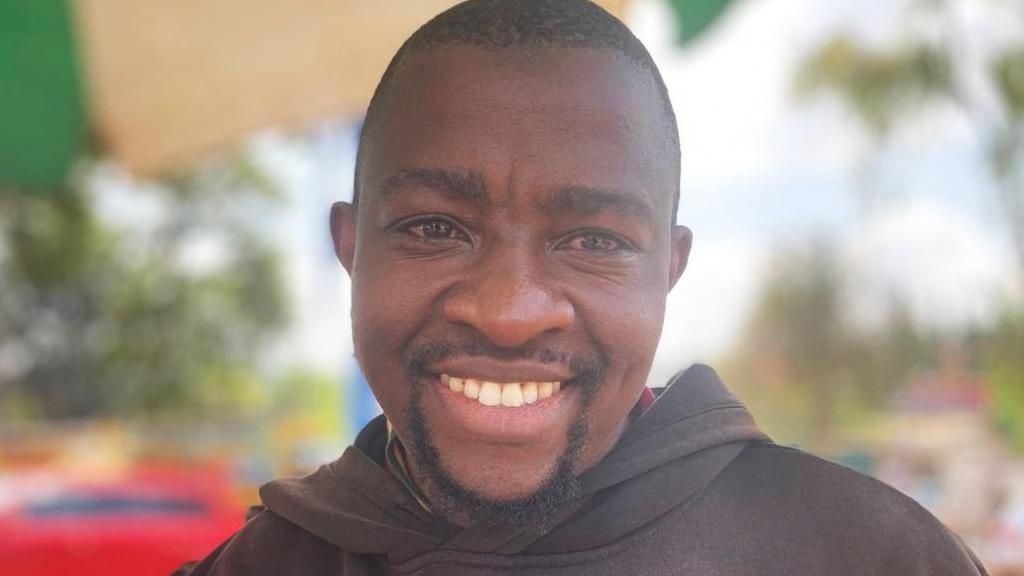
Across Kenya, a centuries-old naming convention is facing a quiet but transformative shift, as a growing number of Kenyan men — particularly from the country’s largest ethnic group, the Kikuyu — are rejecting the tradition of inheriting their father’s first name as a surname to instead claim their mother’s name as their own. This departure from social norm has sparked fierce public debate, drawing both acclaim as a marker of shifting gender dynamics and criticism that frames it as a threat to traditional ideas of masculinity.
For generations, Kenyan naming customs dictated that children take their father’s given name as their family name, while women who married often adopted their husband’s first name as their own surname. Women who choose to keep their mother’s name rarely face the same level of public scrutiny that men with maternal surnames encounter. Many men who bear their mother’s name report facing ridicule, stigma, and unfair social judgment, even as the practice grows more visible in public life, including among the country’s political and cultural leadership.
John Njũgũna Wanjikũ, a Kenyan member of parliament who was raised by a single mother and has carried his mother’s name since birth, goes by the common Kikuyu nickname “Ka-Wanjikũ” — literally translated as “child of Wanjikũ” — after first winning office in 2021. He is one of a growing number of prominent public figures who openly bear maternal surnames, a sight that would have been extremely rare just a few decades ago.
Veteran Kenyan benga musician Peter Kĩgia was one of the earliest public figures to break the naming norm decades ago, when he adopted his mother’s name for his public identity. Now in his 60s, Kĩgia performs and records under the stage name Kĩgia wa Esther, meaning “Kĩgia, son of Esther”, and even named his record label Wa Esther Productions. “When you take your mother’s name, it means you love and respect her,” he told the BBC. Today, his choice has become a trend in Kenya’s music industry, with dozens of younger male artists following his lead — street posters across the capital Nairobi advertise performers like Waithaka wa Jane and 90K Ka Msoh, all of whom use their mother’s name publicly, even if they retain their paternal surname for formal legal purposes.
For journalist Simon Macharia Wangũi, the choice to adopt his mother’s name as an official surname was a deliberate, deeply personal decision. Raised mostly by his grandmother after his mother’s death in 2003 when he was just 12 years old, Wangũi had no official surname until he applied for a birth certificate in his final year of high school. With his father absent for almost his entire life — a man he says he has “only heard rumours of his existence” — Wangũi saw no reason to claim a paternal name. “Why give somebody credit where it does not exist?” he asks. Though he acknowledges bearing a maternal surname has brought moments of “identity crisis”, Wangũi says he remains proud of his choice, and notes that success despite social stigma often leads others to view the choice as a mark of resilience.
Still, the stigma attached to male maternal surnames has taken a toll on many who bear them. Broadcaster Evans Kibe Waceke, who himself carries a maternal surname, explains that common social stereotypes frame children raised by single mothers as inherently “undisciplined” and lacking “certain morals”. The national debate over the practice erupted into public view two years ago, after prominent motivational speaker Robert Burale claimed that adopting a mother’s surname undermined men’s masculinity. His comments prompted TV personality Fred Mũitĩrĩri to go public with his own experience, revealing that he ultimately chose to drop his maternal surname and use only his first names due to years of bullying and shame. “Do you know how embarrassing it is for a boy to be called out, in a room full of kids, [with] a girl’s name?” he wrote on Facebook, adding that the constant harassment contributed to depression when he was 23 years old.
Cultural experts point to shifting social realities as the core driver behind the growing popularity of maternal surnames. Young Kikuyu cultural commentator Wairimũ Mũkũrũ, who has a large following on social media, notes that the trend has grown alongside a sharp increase in single-mother households across the country. Traditionally, even children born to unmarried mothers would be given a surname from a male relative — most commonly the mother’s eldest brother, who would step into a paternal role. But Mũkũrũ explains that male relatives often refuse to share their surname, because granting a child the name also gives them legal rights to inherit family property.
Mũgwe wa Njũhĩ, an official with the Kikuyu cultural organization Kiama Kĩa Ma, confirms this dynamic, saying male relatives often avoid granting their names to children of single mothers to prevent future inheritance disputes. But he also pushes back against criticism of maternal surnames, pointing to Kikuyu cultural origins that are rooted in matrilineal lineage. According to Kikuyu myth, the community traces its origins to the 10 daughters of Gikũyũ and Mũmbi, the founding couple of the Kikuyu people. Kikuyu clans are even named after these 10 daughters, meaning the community has long aligned itself with female lineage. “I am Mũmbũi by clan [derived from Wambũi, one of the daughters]. We have always aligned ourselves with women, from the very beginning,” he says. Veteran musician Kĩgia wa Esther adds that critics from outside the Kikuyu community often misunderstand the cultural context of the practice.
University of Nairobi lecturer George Gathigi, an expert on Kikuyu social issues, explains that informal identification by mother’s name is not a new practice — it was once common in large polygamous families, where children from different mothers would be identified by their mother’s name to avoid confusion, since Kikuyu culture traditionally draws from a small pool of family first names. Even the iconic late Kenyan author Ngũgĩ wa Thiong’o, whose father had four wives, wrote in his memoir that he was known informally as Ngũgĩ wa Wanjikũ — after his mother — during his childhood. What is new, Gathigi says, is the formal adoption of maternal surnames as legal identities.
Gathigi argues that the formalization of this trend reflects the growing economic and social power of Kenyan women, especially in households where fathers have abandoned their parental responsibilities. As women increasingly take on roles that were traditionally reserved for men, stepping into both parental roles in single-parent households, children are choosing to honor that contribution by claiming their mother’s name. Still, not all observers frame the shift as positive: Gathigi himself says he sees the normalization of maternal surnames as a “bad thing” that reflects the breakdown of traditional family structures, a sentiment shared by critics across the country. Conservative voices have gone as far as calling the practice “a yoke around men’s necks” and an effort to “womanise the Kikuyu man and make him weak”.
Despite the ongoing backlash and social stigma, men who have chosen to claim their mother’s name say the choice brings a sense of meaning and identity that outweighs the criticism. For many, it is not just an act of personal honoring, but a quiet re-shaping of centuries-old culture to fit the changing realities of modern Kenyan life.