作者: admin

  • Donroe Doctrine is becoming everything China feared

    Donroe Doctrine is becoming everything China feared

    On April 28, the U.S. State Department released a joint statement purporting to stand “in solidarity with Panama” after an alleged increase in detentions of Panama-flagged ships at Chinese ports. The statement frames these detentions as a “blatant attempt to politicize maritime trade” — a framing that collapses under scrutiny when examined against the backdrop of recent U.S. and Panamanian actions targeting Chinese-controlled logistics infrastructure across the region. This diplomatic move is just the latest step in a broader, coordinated U.S. geostrategic push that includes blockades of the Strait of Hormuz, new defense partnerships with Indonesia, and aggressive rhetoric targeting China-backed infrastructure projects like Peru’s Port of Chancay.

    Five Latin American and Caribbean nations joined the U.S. as co-signatories: Costa Rica, Bolivia, Paraguay, Guyana, and Trinidad and Tobago. A closer look at this group reveals a deliberate alignment with longstanding U.S. economic and security priorities in the Western Hemisphere, rather than a random collection of like-minded states.

    The irony of the U.S.’s sudden stance on Panama is difficult to overstate. Just a few months prior, Washington executed a coordinated two-pronged campaign to oust Chinese operators from key Panamanian ports: diplomatic coercion through high-stakes bilateral security dialogues, and a politicized legal campaign targeting Chinese concession agreements near the Panama Canal. This effort culminated in a widely expected Panamanian Supreme Court ruling that forced Hong Kong-based port operator CK Hutchinson to exit its operations at the Balboa and Cristobal terminals. The contract was subsequently awarded to a subsidiary of Danish logistics giant Maersk. This history of interference undermines the State Department’s claims of defending neutral maritime trade: even as far back as the Trump administration, U.S. negotiators openly threatened to retake the Panama Canal by force if Washington’s demands were not met, turning hollow the rhetoric about defending Panamanian sovereignty and opposing politicization of trade.

    Breaking down the co-signatories further exposes the strategic logic behind the joint statement. Guyana, one of the world’s fastest-growing producers of high-quality sweet light crude, has attracted major new downstream investment as a result of U.S. blockades of Persian Gulf oil exports. Trinidad and Tobago is a leading regional producer of critical petrochemicals including urea and ammonia. Costa Rica has long been a dependable U.S. ally and hosts the Caribbean’s most technologically advanced commercial port. Paraguay, meanwhile, remains the only South American nation that recognizes Taiwan, a longtime point of alignment with U.S. foreign policy goals.

    The most surprising co-signatory is Bolivia, a landlocked Andean nation that would seem to have no direct stake in Caribbean maritime security. This move makes strategic sense, however, when viewed through the lens of global green energy competition: Bolivia holds the world’s largest proven lithium reserves, a critical mineral for manufacturing electric vehicle batteries and large-scale grid energy storage. Extraction of Bolivian lithium, however, faces major barriers: the country’s brine deposits have an unusually high magnesium-to-lithium ratio, requiring costly, largely unproven extraction technology. There is also the massive logistical challenge of moving extracted lithium hundreds of kilometers over rugged terrain to Pacific ports in neighboring Chile, before shipments travel north through the Panama Canal to reach major consumer markets. These constraints push up the cost of every ton of exported Bolivian lithium dramatically.

    Bolivia’s new President Rodrigo Paz has signaled a clear shift away from the previous socialist government’s partnerships with China and Russia. His recent decision to replace the leadership of state-owned lithium producer Yacimientos de Litio Bolivianos indicates a willingness to scrap existing deals in favor of new agreements with Western capital, provided Western markets offer guaranteed access for Bolivian lithium exports. For Paz’s administration, signing onto the U.S.-led statement framing Panama as a “pillar of our maritime trading system” is a low-cost, transactional diplomatic gesture to curry favor with Washington.

    As a landlocked nation, Bolivia’s ability to become a major lithium export powerhouse depends entirely on access to ports through Chile, its longstanding historical rival that borders the Pacific. Chile already has a thriving, profitable lithium sector of its own, and was the source of Bolivia’s loss of coastline in the 19th century War of the Pacific. By aligning with the U.S. against China’s trade and infrastructure presence in the region, Bolivia is signaling to Chile, Panama, and other Latin American states that it will abide by Washington’s rules of the game in exchange for access to their critical maritime logistics networks.

    This coordinated U.S. diplomatic push in Panama and Bolivia cannot be separated from broader global geostrategic shifts. In the Persian Gulf, the U.S. military has enforced a blockade that blocks most crude oil exports from reaching key Asian markets. At the same time, the State Department has worked aggressively across the Caribbean and Latin America to oust Chinese-owned logistics assets through a mix of diplomatic pressure and politicized legal campaigns. This pattern of activity makes clear that the modern iteration of U.S. dominance in the Western Hemisphere, sometimes called the “Donroe Doctrine” (a updated take on the 19th century Monroe Doctrine), does not aim to benevolently integrate the U.S. and Latin American economies. Instead, its core goal is to redirect global commodity supply chains away from West Asia and back into the Western Hemisphere by establishing U.S.-controlled maritime trade routes.

    While it remains too early to tell whether Washington’s gambit will succeed, the pattern is deliberate: the State Department has actively built a new U.S.-aligned maritime consensus with Latin American countries that produce critical energy, agricultural, logistics, and green mineral inputs, many of which have already rejected recent Chinese investment offers. Any framing of the U.S. as a neutral guardian of free global maritime trade ignores clear, on-the-ground reality: the U.S. military is seizing commercial ships in West Asia to enforce its blockade, while the State Department simultaneously demands that China adhere to Washington’s rules for trade in Central and South America. When the Trump administration abandoned the longstanding Carter Doctrine commitment to secure free trade through the Persian Gulf, the myth of a neutral, free global maritime commons died.

    In the long term, this power play is likely to work to the advantage of China and other coastal emerging economies seeking a more multipolar global order. But in the short term, it has created unprecedented instability in the global maritime trading system — instability that the U.S. State Department is actively exploiting to advance American energy, agricultural, and mining interests across the Western Hemisphere.

  • Taiwan’s president lands in Eswatini in a trip delayed by lack of overflight clearance

    Taiwan’s president lands in Eswatini in a trip delayed by lack of overflight clearance

    After a weeks-long delay driven by cross-border pressure from Beijing, Taiwanese President Lai Ching-te announced his arrival in Eswatini on Saturday, marking the completion of a trip that became a high-stakes symbol of Taipei’s efforts to maintain international diplomatic space.

    Lai’s journey to Eswatini — Taiwan’s last remaining formal diplomatic ally on the African continent — was originally scheduled to begin on April 22, but the trip was put on hold after three regional nations, Seychelles, Mauritius and Madagascar, withdrew prior approval for Lai’s aircraft to cross their airspace. Taiwanese officials attributed the permit revocations directly to heavy political and economic coercion from Chinese authorities, who have long demanded that no country grant official access to Taiwanese leaders.

    In a public post on the social platform X following his arrival, Lai emphasized the purpose of his visit: to reaffirm the deep, decades-long diplomatic friendship between Taipei and Mbabane. “Taipei is a self-governing democracy that Beijing claims as its own territory, but we will never be deterred by external pressure,” Lai wrote. In an additional Facebook post, he credited his diplomatic and national security teams with the careful behind-the-scenes planning that made the visit possible, noting that the trip would deepen bilateral cooperation across key sectors including economic development, agriculture, cultural exchange and education. “Our resolve and commitment are rooted in one core truth: Taiwan will continue engaging with the global community, no matter what obstacles we face,” he added. Notably, Taiwanese authorities chose not to pre-announce the final itinerary of Lai’s trip for security reasons, keeping the revised travel plans confidential until he landed in Eswatini.

    Beijing responded quickly and sharply to the news of Lai’s arrival. A spokesperson for China’s Ministry of Foreign Affairs dismissed the visit as a “laughable stunt” staged for the global public, dismissing Lai’s journey as an act of “smuggling” out of Taiwan. The spokesperson reiterated Beijing’s longstanding position that Taiwan is an inalienable part of Chinese territory, stating that Lai’s “undignified” visit is a losing cause that can never alter that core fact. “We urge Eswatini and other individual countries to recognize the natural arc of history, and stop acting as props for ‘Taiwan independence’ separatist forces,” the statement read.

    For decades, China has leveraged economic and political influence to shrink Taipei’s network of formal diplomatic allies, and has not ruled out the use of military force to bring Taiwan under Beijing’s control. Currently, only 11 United Nations-recognized states maintain full official diplomatic ties with Taipei, down from 29 in 2000. Eswatini, a small landlocked southern African nation with a population of roughly 1.2 million, has held out as Taipei’s only ally on the African continent since 2018, when Burkina Faso switched diplomatic recognition to Beijing. In recent years, Eswatini has also faced economic consequences for its alliance with Taiwan: it is the only African country excluded from China’s duty-free market access program for developing nations.

    The visit comes amid a sharp recent escalation of cross-strait and Sino-U.S. tensions. Just one day before Lai’s arrival, Beijing warned Washington that the Taiwan issue remains the single biggest potential flashpoint for conflict between the two global powers, with Chinese Foreign Minister Wang Yi telling newly confirmed U.S. Secretary of State Marco Rubio in a phone call that Taiwan is the “biggest risk” to bilateral relations. Taiwan’s government issued a formal statement of concern in response to Wang’s remarks.

    The last visit by a sitting Taiwanese president to Eswatini took place in 2023, when Lai’s predecessor Tsai Ing-wen traveled to the country for diplomatic talks.

  • Iran military official says renewed war with US ‘likely’

    Iran military official says renewed war with US ‘likely’

    Tensions between Iran and the United States have spiked sharply in recent days, with a senior Iranian military commander warning that a resumption of open hostilities between the two nations is increasingly likely, just hours after former President Donald Trump publicly rejected Tehran’s latest peace proposal as unsatisfactory. The current ceasefire, which has paused the full-scale war launched jointly by the U.S. and Israel in late February 2026, has held since April 8, following one unsuccessful round of negotiation mediated by Pakistan earlier this spring.

    Iran submitted its updated negotiating draft to Pakistani mediators on Thursday evening, according to Iranian state media, though no specifics about the draft’s content have been released to the public. Speaking to reporters on Saturday, Trump reiterated his disappointment with Iran’s offer, blaming the stalled talks on deep internal divisions within Iran’s top leadership. “Do we want to go and just blast the hell out of them and finish them forever — or do we want to try and make a deal?” Trump asked reporters, adding that he would “prefer not” to launch a full-scale offensive “on a human basis”.

    Early Saturday, Mohammad Jafar Asadi, a high-ranking official in Iran’s central military command, echoed the rising pessimism in comments published by Iran’s semi-official Fars News Agency. Asadi stated plainly that “a renewed conflict between Iran and the United States is likely”, adding that “evidence has shown that the United States is not committed to any promises or agreements”.

    A day earlier, Iran’s judiciary chief Gholamhossein Mohseni Ejei pushed back against U.S. framing of the stalled talks, noting that Iran had “never shied away from negotiations” but would never accept externally imposed peace terms. While the White House has refused to release details of Iran’s latest proposal, U.S. news outlet Axios has reported that U.S. envoy Steve Witkoff has submitted amendments to an earlier draft that would place Iran’s nuclear program back on the negotiating table. Key U.S. demands include restrictions barring Iran from moving enriched uranium out of bombed nuclear sites or resuming enrichment activity at those locations while negotiations continue.

    The geopolitical standoff has already sent ripples through global energy markets: news of Iran’s proposal briefly pushed international oil prices down by nearly 5 percent, though prices remain roughly 50 percent higher than pre-war levels, due to the ongoing closure of the Strait of Hormuz, one of the world’s most critical energy chokepoints. Since the war began, Iran has maintained a tight blockade on the strait, cutting off global supplies of oil, natural gas, and fertilizer, while the U.S. has implemented a reciprocal blockade on all Iranian commercial ports. Speaking at a campaign rally Friday, Trump made unorthodox comments comparing U.S. naval operations in the region to piracy, while describing a recent helicopter raid on an oil tanker operating under the blockade.

    Even with the ceasefire in place in the Gulf, violence continues to escalate in Lebanon, where Israeli forces have carried out repeated deadly airstrikes despite a separate ceasefire agreement with Iran-backed Hezbollah. Lebanon’s Ministry of Public Health confirmed Friday that 13 people were killed in Israeli strikes across southern Lebanon, including multiple fatalities in the town of Habboush, where the Israeli military had ordered civilian evacuations ahead of the attack.

    On Friday evening, the U.S. State Department announced it had approved a series of major new arms sales to regional U.S. allies, including a $4 billion Patriot missile defense deal with Qatar and a nearly $1 billion sale of advanced precision weapons systems to Israel.

    Back in Washington, the Trump administration is embroiled in a heated legal and political dispute with congressional opposition over the legality of the ongoing war. Under U.S. war powers law, the president must obtain congressional authorization for any military action lasting longer than 60 days. Administration officials argue that the current ceasefire pauses the 60-day clock, a claim that is fiercely contested by opposition Democrats. In a letter to congressional leaders released Saturday, Trump pushed back against criticism, claiming that “there has been no exchange of fire between United States Forces and Iran since April 7, 2026,” adding that hostilities “have terminated”. The president faces growing domestic pressure as inflation continues to climb, no clear military victory has been achieved, and U.S. midterm elections approach in late 2026.

    For Iran, the economic damage from the war and U.S. sanctions continues to deepen. The Trump administration recently imposed new sanctions on three major Iranian currency exchange firms, and has warned global shipping companies against paying the passage tolls demanded by Iran for transit through the Strait of Hormuz. U.S. military officials estimate their port blockade has cut off $6 billion in Iranian oil exports, while Iranian inflation, already at high levels before the war began, has now surged past 50 percent.

    “Everyone is trying to endure it, but… they are falling apart,” Amir, a 40-year-old Tehran resident, told an Agence France-Presse reporter reporting from outside Iran. “We still have not seen much of the worst economic effects because everyone had a bit of savings. They had some gold and dollars for a rainy day. When they run out, things will change.”

    On Saturday, Iran’s judiciary announced that authorities had executed two men convicted of spying for Israel, marking the latest in a string of executions of alleged spies in recent weeks. One of the two men was convicted of assisting Israeli intelligence during the 12-day border war between Iran and Israel in June 2025.

  • Trump likes the idea of the government owning some US companies but took a pass on Spirit Airlines

    Trump likes the idea of the government owning some US companies but took a pass on Spirit Airlines

    WASHINGTON — In a striking break from decades of Republican ideological orthodoxy, U.S. President Donald Trump has embraced a new role for the federal government as an activist investor in the private sector — a policy shift that recently led to the collapse of a potential government rescue of cash-strapped budget carrier Spirit Airlines, which ceased operations Saturday after talks reached an impasse.

    For years, Trump has railed against political opponents as communists, framing himself as a defender of the free-market principles that turned the U.S. into a global superpower. But since returning to the Oval Office, he has openly championed government ownership of equity stakes in major domestic companies, casting the strategy as a way to both shore up U.S. economic security and turn a profit for American taxpayers.

    The demise of Spirit highlights how this new approach operates. The discount airline was pushed to the brink of collapse by spiking fuel costs tied to the ongoing Iran war, and the Trump administration had weighed a $500 million deal that would give the federal government a controlling stake in the Florida-based carrier. Speaking to reporters Friday, a day before Spirit halted operations, Trump insisted any government investment would only move forward “only if it’s a good deal.” “If we can help them, we will,” he said. “But we have to come first.” He did not immediately issue a public statement addressing the airline’s shutdown after it was finalized.

    Trump has pointed to his administration’s earlier investment in chip giant Intel as proof of concept for the strategy. He has monitored the company’s stock performance closely, and this week took to social media to boast that the U.S. government had netted more than $30 billion in gains from the Intel stake over the previous 90 days. That investment, which converted loans and grants allocated under the Biden administration’s 2022 CHIPS and Science Act into an $11.1 billion equity purchase, came even as Trump used his 2025 address to Congress to label the CHIPS Act a “horrible, horrible thing” and called on Republican congressional majorities to claw back unspent funding to reduce the federal deficit.

    The Spirit and Intel deals are far from isolated moves. A review of the Trump administration’s actions shows a growing portfolio of government equity holdings and state-backed interventions across key U.S. economic sectors:
    – The administration holds a “golden share” in U.S. Steel that limits operational autonomy for new owner Japan’s Nippon Steel
    – Officials brokered an agreement that gives the U.S. government a cut of chip sales to China made by American firms Nvidia and AMD
    – The government has invested in MP Materials, a U.S. rare earths producer, to break China’s dominant grip on the supply of critical minerals needed for smartphones, electric vehicles and advanced defense technologies
    – Additional equity stakes have been taken in Lithium America, Trilogy Metals and Vulcan Elements, with preferential financing extended to energy and nuclear firms Westinghouse and ReElement Technologies
    – The administration abandoned plans to end federal conservatorship of mortgage giants Fannie Mae and Freddie Mac, a policy Trump initially pursued during his first term. Speaking Friday, Trump argued that holding onto the companies had increased their value, noting “If I would have sold it, I would have felt like a schmuck.”

    Beyond equity investments, Trump has built close, often transactional ties with corporate leadership. He speaks regularly with CEOs by phone, but has also pressured firms to align with his policy agenda: he ordered retail giant Walmart not to raise prices to offset costs from his tariffs, and suggested he would “remember” favorably companies that declined to seek refunds after the U.S. Supreme Court ruled his tariffs were illegal.

    The ideological contradiction at the heart of Trump’s policy has drawn intense scrutiny from both supporters and critics. During his 2024 presidential campaign, Trump repeatedly labeled the Biden administration communist and socialist, telling a Pennsylvania crowd in April 2024 “We will cast out the communists… We will liberate our country from these tyrants and villains once and for all.” In contrast, Joe Biden consistently framed himself as a committed capitalist who supported corporate profit so long as companies paid their fair share of taxes; while the Biden administration did extend loans and grants to domestic chipmakers as part of industrial policy, those investments were structured to follow formal legislation passed by Congress.

    Critics argue Trump’s approach is driven more by a pursuit of power and personal ego than coherent policy. “This is entirely a reflection of a transactional-minded president who wants unilateral control of the economy,” said Tad DeHaven, a policy analyst at the libertarian Cato Institute. “At the end of the day, it is about power, it is about leverage and it is about control.” Even some congressional Republicans have pushed back: Sens. Ted Cruz of Texas and Tom Cotton of Arkansas publicly objected to the proposed Spirit Airlines bailout.

    But supporters counter that the strategy is a pragmatic response to growing Chinese economic competition, pointing out that Chinese state-supported firms can operate with little regard for short-term profits, undercutting U.S. manufacturers and threatening America’s standing as a global technological and military leader.

    “This is a strategic move, necessitated by the growth of China as an economic peer and rival,” said Sujai Shivakumar, a senior fellow at the Washington-based Center for Strategic and International Studies. “The key point is that we should not sacrifice our national economic and industrial framework in the name of ‘free markets’ or other ideologies. Pragmatism, in various forms of industrial and innovation policy, have always been a feature of our economic system since the very beginning of our republic.”

    Outside analysts agree with the core logic of leveling the playing field against subsidized foreign competitors but warn that Trump’s unilateral, ad-hoc approach carries significant risks. “It is unclear whether the Trump administration has fully grasped the risks of ‘making some bad bets,’” said Monica Gorman, a managing director at Crowell Global Advisors who led manufacturing and industrial policy work in the Biden White House. Gorman stressed that a formal legislative framework is needed to govern these investments, rather than relying on the president’s personal discretion. “Congress really needs to step in and design a legislative framework for U.S. industrial policy that governs equity stakes as well as other mechanisms such as loans and grants,” she said. “All of these are important tools in the U.S. industrial policy toolkit, but we need more guidance on when and how to use them.”

  • Starmer urges tougher action against Gaza protests in UK following antisemitic attacks

    Starmer urges tougher action against Gaza protests in UK following antisemitic attacks

    LONDON – In the wake of a terror-linked stabbing attack that injured two Jewish men in a London neighborhood with a large Jewish population, United Kingdom Prime Minister Keir Starmer has called for stricter enforcement against inflammatory rhetoric at pro-Palestinian demonstrations, acknowledging that the rise in antisemitic violence across the country has put British Jewish communities on high alert. The incident, which took place on Wednesday in Golders Green – a longstanding hub of British Jewish life – left two men hospitalized, and a 45-year-old suspect has already been charged with attempted murder. London’s Metropolitan Police have formally classified the attack as an act of terrorism, marking the latest in a growing string of antisemitic incidents targeting Jewish people and sites across the capital, including recent arson attempts at local synagogues.

    Speaking to the BBC on Saturday, Starmer emphasized that while the UK upholds the fundamental right to peaceful protest, authorities must not tolerate language that incites violence and hatred. He specifically called out the chant “globalize the intifada” – a phrase that translates to “globalize the uprising” – as an example of rhetoric that demands far tougher legal action. Starmer also noted that repeated large-scale pro-Palestinian marches have created a cumulative effect that has contributed to the sharp spike in antisemitic incidents recorded across the nation. When pressed on whether future protests could be restricted, the prime minister did not rule out formal bans for demonstrations that cross the line from peaceful protest to hate speech and intimidation.

    The severity of the current threat to British Jews was underscored by the UK’s most senior law enforcement official, Metropolitan Police Commissioner Mark Rowley, who warned Friday that Jewish communities are now facing the most sustained and widespread security challenge in modern British history. Rowley blamed the proliferation of antisemitic content on social media platforms for normalizing anti-Jewish hatred in mainstream public discourse, noting that Jewish people have become a shared target for almost every extremist faction operating in the UK today. “The ghastly fact is that Jews are on everybody’s list, all of those hateful groups – whether you’re extreme right, whether you’re extreme left, whether you’re Islamist terrorist, whether you’re right-wing terrorist, and some hostile states as well now with some sort of Iranian-related threats,” Rowley told The Times. “There’s a ghastly Venn diagram that they’re at the middle of.”

    Following Wednesday’s stabbing attack, UK authorities raised the country’s official terror threat level from “substantial” to “severe” – the second-highest ranking on the government’s five-point threat scale. A “severe” classification indicates that intelligence agencies assess a terrorist attack to be highly likely within the next six months. Government officials clarified that the adjustment was not triggered solely by the Golders Green incident, but reflects a broader increase in risk from both Islamist and far-right extremist actors, most of whom are individuals or small independent groups based within the UK.

    Data from the Community Security Trust, a charity that monitors antisemitism and protects Jewish communities across the UK, confirms that hate incidents have skyrocketed since the October 7, 2023, Hamas attack on southern Israel and the subsequent outbreak of war in Gaza. The organization recorded 3,700 antisemitic incidents nationwide in 2025, a more than 120% increase from the 1,662 incidents recorded in 2022 before the current conflict began.

  • Drone kills 2 in Kherson minibus strike, as Russia claims front-line progress

    Drone kills 2 in Kherson minibus strike, as Russia claims front-line progress

    On a Saturday marked by fresh violence across Ukraine, Russian drone attacks left two civilians dead and multiple others injured in the southern city of Kherson, continuing a pattern of targeted strikes on populated civilian areas that has defined Moscow’s full-scale invasion, regional authorities confirmed.

    Oleksandr Prokudin, the head of Kherson’s regional military administration, announced that the first attack on a civilian minibus claimed two lives and left seven people with wounds ranging from minor to severe. Just hours later, a second Russian strike targeted another minibus in the same region, leaving the vehicle’s driver injured. Further along Ukraine’s strategic Black Sea coastline, a separate Russian bombardment damaged critical port infrastructure in the major city of Odesa, though no casualties were reported in that incident.

    More than two years into Russia’s full-scale invasion, Ukrainian civilians continue to face unrelenting waves of aerial attacks across multiple frontline and rear areas. Diplomatic efforts brokered by the United States over the past 12 months have failed to deliver any de-escalation, as Moscow has repeatedly rejected Kyiv’s calls for a bilateral ceasefire. In recent weeks, the outbreak of conflict in Iran has shifted global media and diplomatic focus away from Ukraine’s ongoing humanitarian crisis, leaving many Ukrainian civilians facing heightened vulnerability with less international scrutiny.

    On the extended 1,000-mile front line stretching across eastern and northeastern Ukraine, Russian defense officials announced Saturday that their forces had seized full control of the village of Myropillia, located in Ukraine’s northeastern Sumy region. This battlefield claim could not be independently verified by independent open-source observers or international media, and Kyiv’s military command did not issue an immediate comment confirming or denying the territorial shift.

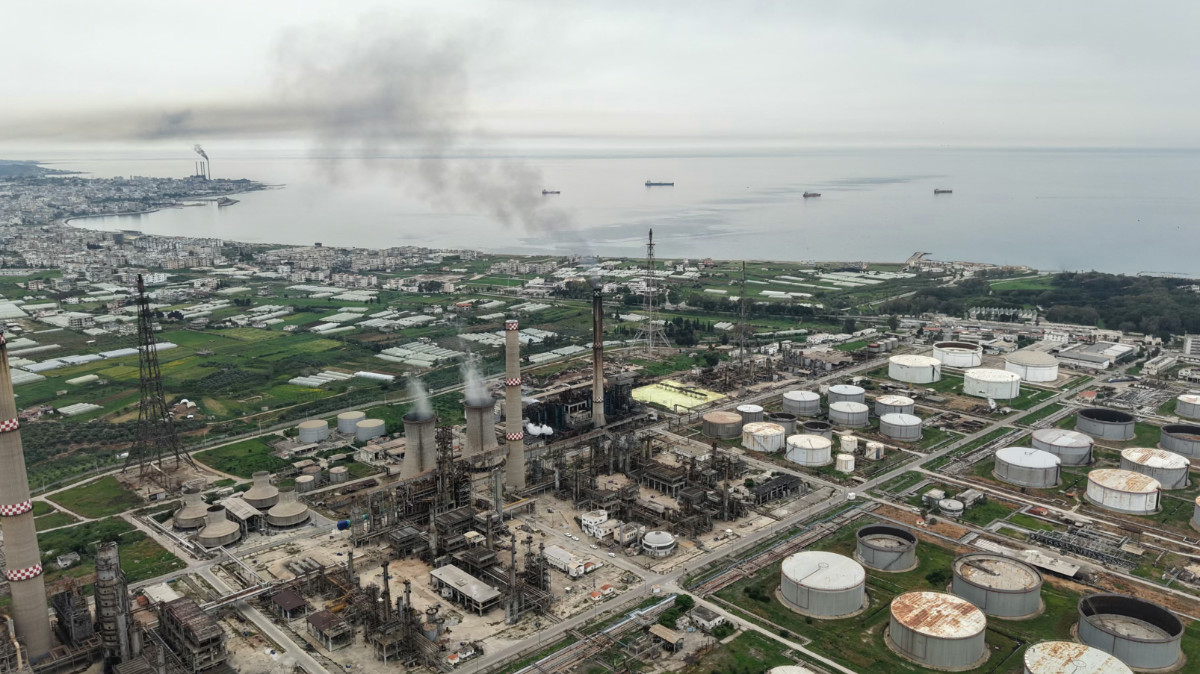
    Across the border in southern Russia, local authorities in the Krasnodar region confirmed Saturday that firefighters had fully extinguished a large blaze that broke out Friday at the Tuapse Black Sea oil terminal following a Ukrainian drone strike. This marked the fourth Ukrainian attack on the Tuapse refinery and export terminal in just over a fortnight, with previous strikes triggering large-scale fires, forcing temporary civilian evacuations, and sending thick plumes of black smoke visible for dozens of kilometers.

    Kyiv has steadily ramped up long-range drone strikes targeting Russian energy infrastructure in recent months, part of a deliberate strategy to disrupt Moscow’s oil export operations—one of the Kremlin’s largest single sources of revenue for its war campaign. To date, however, the broader economic impact of these strikes remains uncertain. Global oil price increases tied to the Iran conflict, paired with a concurrent easing of some U.S. secondary sanctions on Russian crude, have offset losses and helped replenish Russian government war coffers.

    Related recent developments include Ukrainian strikes on oil facilities deep inside Russian territory, which analysts warn could push domestic fuel prices higher inside Russia and blunt the impact of Kyiv’s energy targeting campaign. Ukrainian officials have confirmed the Tuapse terminal strike, and Ukrainian President Volodymyr Zelenskyy has stated that his administration is still gathering detailed information on a purported ceasefire proposal from Russian President Vladimir Putin tied to Russia’s annual May 9 Victory Day holiday. Coverage of the ongoing Russia-Ukraine conflict is updated continuously via the Associated Press’s dedicated conflict hub.

  • Stranded whale ‘Timmy’ released into North Sea in dramatic rescue

    Stranded whale ‘Timmy’ released into North Sea in dramatic rescue

    After weeks of a high-stakes, publicly followed ordeal that captured widespread public attention across Germany, a stranded humpback whale affectionately named Timmy has been successfully released into the North Sea off Denmark’s coast, capping a dramatic privately funded rescue operation that defied early skepticism. The massive marine mammal, which first got trapped on a sandbank near Germany’s Baltic coastal city of Luebeck on March 23, was transported to its release site aboard a specially adapted barge. Once the gates of the vessel opened, Timmy pushed out a burst of air through its blowhole before slipping into open water and swimming away under its own power — and early observations confirm the whale is heading in the correct direction toward its natural migratory route. “It has some small injuries, probably from being transported in rough seas, but they are superficial,” explained Karin Walter-Mommert, the horse racing millionaire who co-funded the project alongside another wealthy entrepreneur. “It should now swim up the Norwegian coast toward the Arctic.” The rescue effort was not originally planned as a private initiative: after multiple official attempts to free the whale failed repeatedly, German authorities announced they would abandon the mission, citing low chances of success. That decision prompted Walter-Mommert and her partner to step forward with an ambitious, widely dismissed long-shot plan: guide the exhausted whale into a water-filled hold on a custom-fitted barge, then tow it to deep open waters aligned with the species’ natural migration path. The plan did not go off without controversy, however. A number of marine wildlife experts publicly criticized the privately funded operation, arguing that the stress of capture and transport would do more harm than good, potentially worsening the whale’s already fragile condition. Still, organizers obtained official approval after veterinary specialists confirmed Timmy was healthy enough to survive the journey. Getting the massive whale onto the barge required an extraordinary on-shore engineering effort: rescuers dug a custom channel through the sand to the vessel, then used heavy straps to carefully pull the animal toward the hold, with teams of swimmers guiding it alongside as it moved. The moment Timmy slid into the barge’s water-filled hold drew loud cheers from hundreds of onlookers who had gathered on the shore to follow the days-long operation. This successful release marks the second attempt by the two entrepreneurs to save Timmy — an earlier effort using inflatable cushions and pontoons failed to move the whale, forcing the team to pivot to the barge strategy. For weeks, Timmy’s struggle dominated headlines across Germany, earning non-stop coverage from national television networks, online news outlets and social media creators, turning the stranded whale into a national viral sensation. But the high-profile saga has also been marked by division: it has sparked heated public spats over rescue strategy and spawned a wave of unsubstantiated conspiracy theories about how the young humpback ended up off course in the Baltic Sea in the first place. As of Saturday afternoon, the rescue team reported Timmy was continuing to swim steadily north, in what is being widely celebrated as an unexpected success for the risky, volunteer-led effort.

  • Ex-F1 driver turned Paralympic champion Zanardi dies

    Ex-F1 driver turned Paralympic champion Zanardi dies

    Italian sporting icon Alex Zanardi, whose remarkable career transitioned from Formula One racing to Paralympic gold-medal success after a life-altering accident, has passed away at the age of 59, his family confirmed in an official statement Saturday.

    Widely regarded as one of Italy’s most beloved and influential athletes, Zanardi died on Friday evening. In the announcement shared via Obiettivo3, the non-profit organization he founded, his family shared that he died suddenly, yet peacefully, while surrounded by loved ones.

    Zanardi’s extraordinary life was marked by repeated battles against adversity. His first catastrophic crash came in 2001 during a CART race at Germany’s Lausitzring circuit. After a spin left his car stalled on the track, another vehicle traveling at over 300 kilometers per hour collided with him, resulting in the amputation of both of his legs. Rather than ending his athletic career, the accident paved the way for a second chapter that would inspire millions around the globe.

    Prior to that 2001 incident, Zanardi had already built an impressive motorsports resume. He competed in Formula One for teams including Jordan, Minardi and Lotus in the early 1990s before moving to the United States to race in the CART championship, where he claimed back-to-back series titles in 1997 and 1998. He returned to F1 with Williams in 1999 before going back to North America to continue his CART career.

    Following his amputation, Zanardi rebuilt his life as a Paralympic athlete, earning four Paralympic gold medals: two in cycling at the 2012 London Games, and two more at the 2016 Rio de Janeiro Games. Beyond his competitive success, he was widely credited with shifting public perception of disability across Italy, breaking down stigma and showing what disabled athletes could achieve.

    Six years before his death, in June 2020, Zanardi suffered a second devastating crash when his handbike collided with an oncoming truck during a road race in Tuscany. He sustained severe traumatic brain injuries in the accident and spent 18 months in care before returning to his home.

    Tributes have poured in from across the global sporting and political community following news of his death. Italian Prime Minister Giorgia Meloni praised Zanardi as a great champion and an extraordinary human being, noting he turned every life challenge into a lesson in courage, strength and human dignity. Cordiano Dagnoni, president of the Italian Cycling Federation, added that Zanardi transformed the country’s cultural understanding of disability, bringing joy to those who met him and hope to countless people across Italy and the world. A minute of silence will be held at all Italian cycling races this weekend to honor his legacy.

    Born in Bologna in October 1966, Zanardi is survived by his wife Daniela and his son Niccolo.

  • Humpback whale stranded in Germany released into North Sea: media

    Humpback whale stranded in Germany released into North Sea: media

    A humpback whale that captured public attention after repeated strandings near Germany’s northern coast has been successfully released into the North Sea off the Danish coastline following a last-ditch, privately funded rescue mission, a member of the operation has confirmed to AFP.

    Named ‘Timmy’ by German media outlets, the large marine mammal first drew rescuers’ eyes on March 23, when it was found trapped on a shallow sandbank close to the Baltic coastal city of Luebeck. After briefly freeing itself from the sandbar, the whale became stranded again multiple times in the following weeks, leaving rescue teams scrambling to find a viable solution.

    By early April, German government wildlife officials had formally abandoned official rescue efforts, concluding that the whale’s condition made survival impossible and that intervention would do more harm than good. That decision, however, sparked immediate public outcry across the country, putting pressure on authorities to reverse course. Ultimately, officials granted approval for an unconventional rescue plan put forward by two wealthy German entrepreneurs, who agreed to cover all costs of the operation themselves.

    The team’s first attempt to re-float Timmy, which relied on inflatable cushions and floating pontoons to lift the whale off the sandbank, failed to produce the desired result. That setback led rescuers to pivot to a new strategy: transporting the animal on a specialized covered barge from its stranding site near Wismar Bay on Germany’s Baltic coast to open waters in the North Sea.

    According to Karin Walter-Mommert, a spokesperson for the rescue initiative, Timmy exited the barge at approximately 8:45 a.m. local time (0645 GMT) on Saturday. In an update after the release, she confirmed the whale is now swimming independently in open water, and is heading in the correct direction toward deeper migratory routes, at least in the immediate aftermath of the release.

    The high-stakes rescue effort was controversial from its inception. Many marine biologists and wildlife experts criticized the plan, arguing that the long transport and intervention would only subject the already weakened animal to additional unnecessary stress, and called the effort a low-probability long shot.

    Timmy’s weeks-long ordeal has turned the stranded whale into a national media sensation in Germany and across much of Northern Europe. Major television networks have run non-stop live coverage of the stranding and rescue efforts, digital news outlets have published constant updates, and social media influencers have shared content tracking the whale’s status with millions of followers. The intense public interest has also come with conflict: it has sparked heated public arguments between supporters of the rescue and critical experts, and given rise to a wave of unfounded conspiracy theories about the incident and the motivations behind the private operation.

  • Jacobs powers New Zealand to 6-wicket win over Bangladesh to level T20 series

    Jacobs powers New Zealand to 6-wicket win over Bangladesh to level T20 series

    On a rain-disrupted match day in Mirpur, Bangladesh, debutant batter Bevon Jacobs delivered a career-defining innings to drag New Zealand back from the brink of defeat, securing a six-wicket victory over Bangladesh in the third and final T20 of their three-match series on Saturday. The result left the all-square series tied at 1-1, after the hosts claimed a six-wicket win in the opening fixture and the second match was washed out entirely by bad weather.

    Bangladesh, sent into bat first by New Zealand, got off to a rocky start that foreshadowed their eventual collapse. The hosts lost their first three wickets in just 14 deliveries, slumping to 50-3 after 6.4 overs before a heavy rainstorm halted play for more than two hours. The match was cut to a 15-over-per-side contest when play resumed, and Bangladesh’s aggressive all-out attacking strategy backfired spectacularly. The hosts lost their final seven wickets for only 39 runs off 35 balls, being bowled out for 102 in 14.2 overs.

    Towhid Hridoy top-scored for Bangladesh with 33 runs, while captain Litton Das contributed 26 and opener Saif Hassan added 16. No other Bangladesh batter reached double figures, capping off a dismal batting performance. For New Zealand, pacer Josh Clarkson put in a career-best display, claiming 3 wickets for just 9 runs in his two overs. Fast bowlers Ben Sears and Nathan Smith supported Clarkson with two wickets each, tearing through Bangladesh’s lower order. Leg-spinner Ish Sodhi also made history, picking up 1 wicket for 22 runs to overtake Tim Southee as New Zealand’s leading T20 wicket-taker with 165 career wickets, one more than Southee’s 164.

    New Zealand’s chase got off to a disastrous start, putting the tourists firmly on track for a series defeat. Pacer Shoriful Islam gave Bangladesh a massive early advantage, claiming three wickets for only four runs in his opening two overs, leaving New Zealand reeling at 25-3 after just four overs. Off-spinner Mahedi Hasan extended the hosts’ momentum by dismissing stand-in captain Nick Kelly soon after, dropping New Zealand to 33-4 and leaving the side in a precarious position.

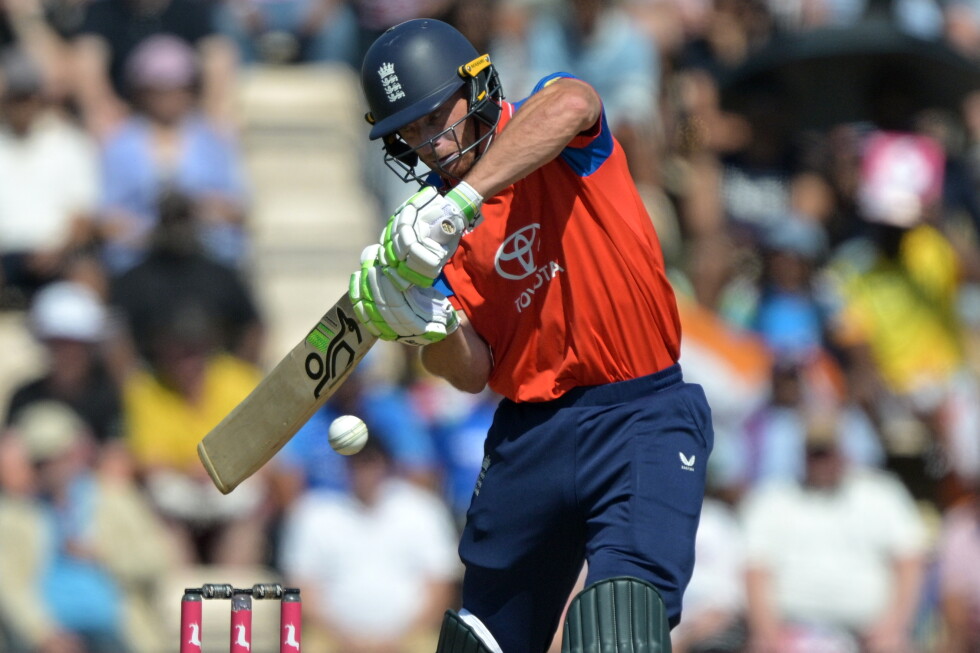
    But Jacobs, playing in the early stages of his international career, turned the tide of the match single-handedly. Captain Das kept Shoriful in the attack, and Jacobs responded by hammering consecutive boundaries off the pacer to ease mounting pressure on New Zealand. The young batter brought up his maiden international half-century off 29 balls, finishing the innings unbeaten on 62 runs off just 31 deliveries, a knock that included five fours and three towering sixes. Jacobs sealed the victory in style with back-to-back boundaries, hitting a boundary followed by a six to push New Zealand to 104-4 after 11.4 overs, completing the required chase with more than three overs to spare. Shoriful Islam finished as Bangladesh’s leading wicket-taker with 3 wickets for 19 runs, denied a match-winning performance by Jacobs’ sensational knock.