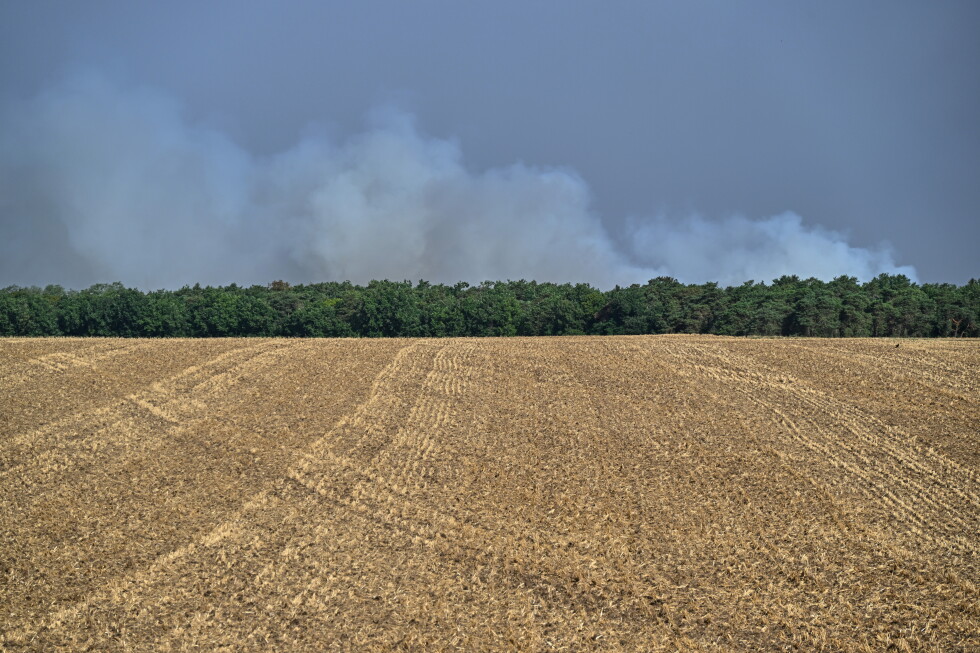
As extreme heat blankets Western Europe in the region’s third red-alert heat wave of 2024, a series of destructive wildfires have spread across France and Spain, forcing evacuations, disrupting critical infrastructure, and leaving a trail of deadly destruction.
On Monday, a rapidly expanding wildfire broke out in Fontainebleau forest, a beloved historic natural area located just 44 miles south of Paris. The forest, which surrounds the iconic Fontainebleau Chateau once favored by French leader Napoleon Bonaparte, draws millions of local and international visitors every year. The proximity of the blaze to the French capital marks an unusual and alarming development, as the region rarely faces large-scale wildfire threats this close to major population centers.
In response to the spreading fire, local officials ordered immediate evacuations of nearby residential neighborhoods. The blaze also caused widespread disruption to regional transport: train services traveling to and from Paris’ busy Gare de Lyon station were suspended late Sunday, though limited services resumed by Monday morning, and a key stretch of the A6 highway— one of Paris’ major southeast-bound routes— was closed over ongoing fire risk concerns. More than 300 firefighters have been deployed to contain the fire, supported by two water-bombing aircraft assigned to drop fire retardant and water on burning areas, regional fire service spokesperson Paul Laurain confirmed to public broadcaster France-Info.
The Fontainebleau fire is just one of dozens of wildfires burning across France. Large blazes in the country’s southern region have already scorched thousands of hectares of forest and brush land since last week, forcing organizers of the annual Tour de France cycling race to reroute stages and stretching national firefighting resources thin. France is currently at the peak of its third heat wave of the summer, with temperatures soaring above 104 degrees Fahrenheit (40 degrees Celsius) across western and central parts of the country, while Paris recorded highs of around 98 F (37 C).
To the south, Spain is reeling from one of the deadliest wildfires in its recent history. A blaze that tore through a remote remote expat community in southern Spain last week has now killed 13 people, including a 93-year-old British national who succumbed to burn injuries in a hospital Sunday. Ten additional people remain unaccounted for as of Monday. The wildfire burned through roughly 27 square miles of forest and agricultural land— an area larger than the entire island of Manhattan— before regional authorities announced it had been contained on Sunday. Spanish Prime Minister Pedro Sánchez was scheduled to visit the disaster site Monday to meet with first responders and affected families.
Officials warn that the extreme heat, combined with persistent high winds and near-zero rainfall across the Iberian Peninsula, has created perfect tinder conditions that allow small ignitions to explode into large, uncontrollable blazes almost instantly. Climate data from the European Union’s Copernicus Climate Change Service underscores the severity of the crisis: Europe is warming faster than any other continent on Earth, with average temperatures rising twice as quickly as the global average since the 1980s, a trend scientists directly link to increasing frequency and severity of extreme wildfire and heat wave events across the region.