作者: admin

  • Top EU official visits Ukraine and pledges continued support against Russia’s invasion

    Top EU official visits Ukraine and pledges continued support against Russia’s invasion

    On Ukraine’s annual Statehood Day, European Commission President Ursula von der Leyen traveled to Kyiv Wednesday to reaffirm unwavering European Union backing for the country’s ongoing defense against Russia’s full-scale invasion, now in its third year. The visit marked von der Leyen’s 11th trip to Ukraine since Moscow launched its large-scale incursion in February 2022, and comes as Kyiv has built growing battlefield momentum through deep strikes inside Russian territory.

    Ukraine’s Statehood Day, a national public holiday, honors the country’s right to self-determination — a principle that has been under active threat for more than a decade. Russian forces first seized and illegally annexed Ukraine’s Crimean Peninsula in 2014, before expanding their aggression with the full-scale invasion eight years later. The war has already claimed thousands of military and civilian lives, displaced millions of people, reduced major Ukrainian urban centers to rubble, and stoked global fears of a broader direct confrontation between Russia and the NATO alliance.

    Alongside von der Leyen, senior leaders from across Southeast Europe gathered in Kyiv Wednesday for a regular summit focused on Black Sea and regional security. Notably, Serbia’s Moscow-aligned President Aleksandar Vucic joined the gathering, marking a high-profile appearance from a Balkan state that has refused to join Western sanctions on Russia, despite officially recognizing Ukraine’s territorial integrity. Serbia remains almost entirely dependent on Russian energy imports. The 2023 iteration of this summit was held in Odesa, where leaders collectively reaffirmed their commitment to upholding Ukraine’s sovereignty and territorial integrity.

    During her visit, von der Leyen announced new targeted EU support packages tailored to Ukraine’s immediate and long-term needs. The bloc will advance new integration measures linking European and Ukrainian defense industries, and deliver additional assistance to strengthen Ukrainian air defenses ahead of the coming winter — a season when Russia has repeatedly launched large-scale strikes to cripple Ukraine’s critical energy infrastructure. To date, the EU has committed tens of billions of euros in military, financial, and diplomatic backing to Kyiv, and remains watchful of Russia’s broader expansionist ambitions across the European continent.

    The high-level diplomatic visit coincides with a shifting battlefield dynamic, Western military analysts and officials confirm. Ukraine’s increasingly frequent and precision drone and missile strikes are now successfully striking high-value targets deep inside Russian territory, disrupting key Russian military supply lines and triggering widespread civilian fuel shortages across multiple Russian regions. “Ukraine has built a strong military momentum. The tide is turning,” von der Leyen wrote on social media ahead of her Kyiv engagements.

    The day was marked by fresh Russian attacks across Ukrainian territory, which left at least eight civilians dead and 11 more injured. Three people were killed and seven wounded when Russian forces dropped six powerful glide bombs on infrastructure targets in Ukraine’s northern Sumy region, regional military governor Oleh Hryhorov confirmed. A separate Russian strike on the southern port city of Odesa killed three more civilians and injured three others, according to Odesa military head Serhii Lysak. In northern Chernihiv region, two civilians died and an 18-year-old was seriously wounded in a Russian drone attack, regional governor Viacheslav Chaus reported.

    In a corresponding update, Russia’s Defense Ministry claimed its air defense forces intercepted 93 Ukrainian drones overnight across multiple Russian regions, as well as over occupied Crimea, the Sea of Azov, and the Black Sea. No immediate reports of casualties or major damage from the intercepted drones were released by Russian officials.

    Von der Leyen’s visit adds to a string of recent international support pledges secured by Ukrainian President Volodymyr Zelenskyy, including new commitments from the Group of Seven leading industrialized nations and the broad “Coalition of the Willing” backing Kyiv’s defense. To date, no negotiated peace settlement has emerged to end the conflict, which remains deadlocked along hundreds of kilometers of front line.

  • Kenyan court dismisses Rastafari case seeking to legalize marijuana

    Kenyan court dismisses Rastafari case seeking to legalize marijuana

    NAIROBI, KENYA – In a landmark ruling delivered Wednesday, Kenya’s High Court has thrown out a legal petition that sought to grant Rastafarian worshippers an exemption from national cannabis prohibition laws for religious use. The decision has ignited fresh public conversation over the intersection of religious freedom and national drug regulation, while the petitioners have already announced plans to challenge the outcome in the country’s Court of Appeal.

    Justice Bahati Mwamuye, who presided over the case, ruled that Kenya’s existing laws banning the cultivation and consumption of marijuana do not infringe on the constitutional right to religious freedom protected for all Kenyan communities. He emphasized that any carve-out for the Rastafarian community would require clear, robust legal and constitutional grounding that the petitioners had failed to provide in their filing.

    Despite upholding the current prohibition, Justice Mwamuye used the ruling as a platform to call for a broad, inclusive national dialogue on Kenya’s decades-old drug policy framework. He noted that the question of cannabis regulation is not a niche concern limited to the Rastafarian community, but a pressing social issue that touches every corner of Kenyan society.

    Kenya’s current regulatory regime, the Narcotic Drugs and Psychotropic Substances (Control) Act, outlaws all cultivation, possession and use of cannabis across the country. Penalties for personal use are steep: violators can face fines of up to $2,000, prison sentences of as long as 10 years, or both, while trafficking convictions carry even harsher sanctions including longer prison terms and larger financial penalties.

    For the Rastafarian petitioners, cannabis is a sacred sacrament core to their religious identity and practice, making the ban a direct violation of their most deeply held religious rights. They turned to the courts to seek a formal exemption from the act’s provisions, arguing that the state had no right to bar their religious ritual.

    Shadrack Wambui, the lead attorney for the petitioners, confirmed immediately after the ruling that the legal team would move forward with an appeal to the Court of Appeal, vowing to continue fighting for their clients’ religious freedoms.

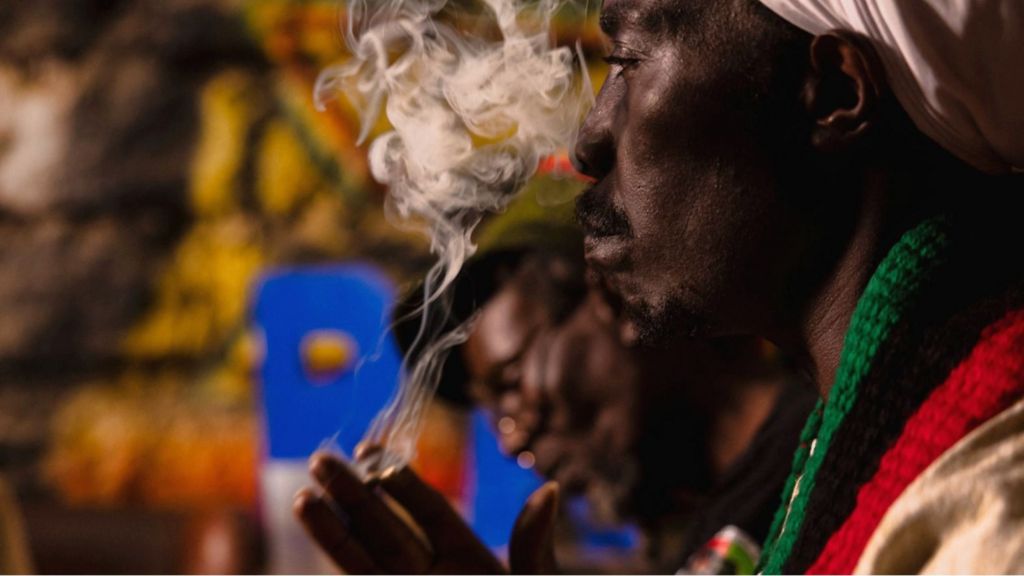
    Following the court’s decision, dozens of Rastafarian advocates gathered at Nairobi’s iconic Freedom Corner to stage a peaceful protest, where they chanted slogans, beat traditional drums, and openly smoked cannabis to demonstrate their defiance of the ruling. Wanjiru Gakiu, a 60-year-old Rastafarian who has practiced the faith for 34 years, told reporters she felt profound disappointment with the decision, describing Kenya’s current drug laws as “satanic.”

    “I’m sure if we were seeking to legalize something satanic, we would have been allowed. But when it comes to religion, the country is deaf and doesn’t want us to enjoy our religious rights,” Gakiu told the Associated Press.

    The ruling has divided public opinion across Kenya, with many Kenyans from other faith backgrounds supporting the court’s decision to maintain full prohibition. Nairobi resident Jedidah Ng’ang’a, a Christian, publicly welcomed the ruling, saying she could not support any move to legalize cannabis use in the country.

    The decision sets up a new legal battle over religious freedom and drug policy in East Africa, as advocates push for broader reform of outdated national drug laws that many argue have failed to address changing social attitudes toward cannabis both regionally and globally.

  • Air India crash report ‘expected to be ready’ in October

    Air India crash report ‘expected to be ready’ in October

    One year to the day after the deadliest aviation crash in recent Indian history killed 260 people, India’s official accident investigation body has confirmed that a draft final report on the June 2025 Air India AI171 disaster is on track to be completed by October.

    The Aircraft Accident Investigation Bureau (AAIB) outlined its investigation progress in a formal affidavit submitted to India’s Supreme Court this Tuesday, noting that the probe is currently in its evidence analysis phase, a stage expected to wrap up in approximately six weeks. The filing did not include any preliminary findings on the root cause of the crash, nor did it confirm a timeline for the full report to be released to the public.

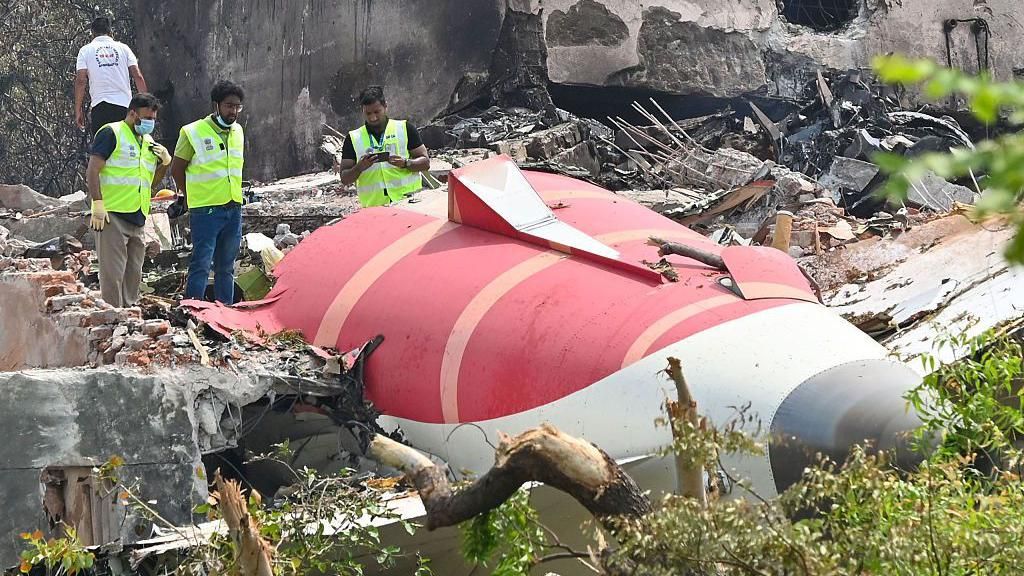
    The tragedy unfolded on 12 June 2025, when a Boeing 787 Dreamliner operating Air India’s flight from Ahmedabad, a major city in western India, to London crashed just seconds after lifting off from Ahmedabad’s airport. The aircraft crashed roughly 6 kilometers from the airport runway, slamming into a doctor’s residential building on the campus of a local medical college and triggering a massive explosion on impact.

    Of the 241 passengers and crew on board, only one passenger—Viswashkumar Ramesh, a resident of Leicester, U.K.—survived the impact. Nineteen people on the ground also died in the crash and subsequent explosion, bringing the total confirmed death toll to 260.

    Investigators launched a full probe within hours of the crash, and released an initial preliminary report just one month later, in July 2025. On the first anniversary of the disaster last month, the AAIB released a brief update confirming that it had made “significant progress” in evidence analysis, but shared no additional details about the probe’s direction.

    In this week’s court filing, the AAIB reported that it has completed 49 of the 66 required procedural steps mandated for major aircraft accident investigations. Completed work includes a full forensic examination of the crash site and aircraft wreckage, recovery and analysis of both flight data and cockpit voice recorders, and a full review of all relevant documentation, including the flight crew’s medical history and training records.

    The affidavit also confirmed that investigators have completed a full review of Air India’s organizational culture, human factors protocols, and industry safety practices, and have received the final report from an aviation psychologist who conducted a psychological autopsy as part of the human factors probe. This process typically involves a detailed assessment of crew members’ psychological profiles to rule out pre-existing mental health factors that could have contributed to the accident. Investigators have also completed a full transcript of the cockpit voice recorder recording, though no details from that transcript have been released to the public.

    The preliminary report released last year already revealed a critical, unexplained anomaly in the moments after takeoff: the aircraft’s fuel-control switches suddenly moved to the “cut-off” position, cutting all fuel flow to both engines and causing a total loss of power seconds after the plane left the runway. Cockpit audio captured one pilot asking the other why they had moved the switches, to which the other pilot replied that he had not done so. The preliminary report did not identify which pilot made each statement, leaving a critical ambiguity that sparked widespread public and media speculation.

    Some international media reports later claimed that investigators were shifting focus to senior captain Sumeet Sabharwal, suggesting the captain may have been responsible for the accidental or intentional movement of the switches. These claims sparked immediate public pushback from Sabharwal’s father, Indian national pilots’ associations, and the AAIB itself, which criticized the unsubstantiated reporting.

    The current affidavit was filed in response to a public interest lawsuit brought by Sabharwal’s father, who is demanding an independent, external investigation into the crash. In the filing, the AAIB acknowledged that unregulated media speculation placing blame on the flight crew has had a negative impact on the probe, noting that “media speculation and narrative attributing blameworthiness to the pilots have, regrettably, caused some witnesses to become restrictive and non-responsive.”

    As the investigation enters its final analysis phase, families of the victims and the global aviation industry remain waiting for the final report to answer the lingering questions that have remained unresolved for a full year after the crash.

  • Boss of fake government agency arrested in Nigeria after weeks on the run

    Boss of fake government agency arrested in Nigeria after weeks on the run

    A long-running manhunt for the self-proclaimed leader of a bogus Nigerian government agency set up within the presidential office complex has come to an end, with law enforcement officials confirming the suspect’s arrest after weeks of him evading capture.

    Adeniyi Adeyemi Matthew, who claimed the title of Director General of the non-existent Presidential Foreign Investment Promotion Council (PFIPC), was taken into custody in Osun State, a southwestern region of Nigeria. The arrest was executed following an arrest warrant issued earlier this week by the Federal High Court based in Abuja, Nigeria’s capital. The warrant was activated after Matthew failed to appear at a scheduled court hearing to answer to multiple charges of forgery and official impersonation.

    The fraud scandal has dominated national headlines in Nigeria since President Bola Tinubu ordered a full corruption probe into the fake agency just one week ago. While full details of the tactical operation that led to Matthew’s arrest remain limited as of Tuesday, Nigeria’s police force confirmed that specialists from two elite units — the Force Intelligence Department and the Intelligence Response Team — took part in the detainment. Following his arrest, Matthew is set to be transferred to the national police headquarters in Abuja to undergo further interrogation over the alleged scheme.

    The search for Matthew launched last week after allegations of the PFIPC’s illegitimacy first came to light. In an official statement shortly after the scandal broke, Tinubu’s office confirmed that an official-looking document purporting to establish the agency was entirely fabricated. The Nigerian presidency added that forensic analysis conducted by police had verified that the signature of Femi Gbajabiamila, President Tinubu’s Chief of Staff, appearing on the supposed founding appointment letter had been forged.

    The unfolding controversy has triggered widespread demands from across Nigeria’s political and civic sphere for an independent public inquiry. Civil society organizations, opposition political figures and senior legal professionals have all joined the call for greater transparency into how a fake agency was able to secure official-looking credentials and space within government facilities.

    Prior to his arrest, Matthew had repeatedly maintained his innocence in conversations with local Nigerian media. According to local reporting, Matthew had claimed his life was under threat, though he initially stated he would appear in court to clear his name. Despite this pledge, he did not attend this week’s scheduled hearing. Matthew’s legal representative, Genesis Francis, told the court he had been unable to convince his client to attend the proceedings, citing Matthew’s stated concerns for his personal safety. The lawyer also confirmed that Matthew had submitted an open letter to President Tinubu outlining these safety worries.

    Matthew had previously claimed that the PFIPC was founded in 2024 with the explicit goal of attracting new foreign direct investment to Nigeria. To date, however, there is no public or official record of any investment deals being successfully completed by the supposed agency.

    A reporting team from BBC News Pidgin uncovered that the fraudulent organization had managed to secure dedicated office space inside Abuja’s Federal Secretariat, the large central government complex that houses most of Nigeria’s federal ministries. Reports also emerged that the PFIPC was listed in the 2026 Nigerian Appropriation Act with a proposed public allocation of 1.3 billion naira, equivalent to approximately $950,000 or £700,000, and was said to hold official accounts with the Central Bank of Nigeria. However, Nigeria’s Accountant-General’s Office has since refuted these claims, confirming that the PFIPC never opened any active accounts with the central bank, never received any public funding, and never paid salaries to any supposed staff.

    Court documents outline that Matthew and two additional co-accused face charges of using forged government documentation to create and run the fake council, opening multiple bank accounts under the agency’s false name, and repeatedly seeking official state recognition for the unregistered, non-existent organization.

  • British leader Starmer faces his last question session in Parliament before leaving office next week

    British leader Starmer faces his last question session in Parliament before leaving office next week

    LONDON – As British Prime Minister Keir Starmer prepares to formally resign from office next Monday, he will face one final round of scrutiny from lawmakers this Wednesday at the weekly Prime Minister’s Questions (PMQs) in the House of Commons.

    Starting at noon, Starmer will bid goodbye to the raucous, high-stakes weekly session where he spent two years clashing with opposition politicians and defending his administration’s policy record. When he steps down at the end of next week, he will pass leadership of the country and the ruling Labour Party to Andy Burnham, the former Greater Manchester mayor who ran unopposed in the leadership contest and will be officially confirmed as the new party leader this Friday.

    Under the UK’s parliamentary democratic system, ruling parties are permitted to replace their leader — and therefore the country’s prime minister — without triggering an immediate general election. The next mandatory national vote is not scheduled to take place until 2029.

    Starmer’s time in office has been a short two-year tenure that started with a historic landslide general election victory in July 2024, but ended in resignation following a string of policy missteps and judgment errors that eroded his support among both Labour Party members and the general public. He failed to deliver on core campaign pledges to boost sustained national economic growth, repair underfunded, overstretched public services, and ease the persistent cost of living crisis that has strained household budgets across the UK.

    His position was further weakened by high-profile controversial decisions, most notably the appointment of Peter Mandelson — a figure with documented ties to disgraced financier Jeffrey Epstein — as British ambassador to the United States. After the Labour Party suffered severe losses in May’s local elections, pressure from within the party grew to a breaking point, and Starmer announced he would step down.

    In advance of his departure, Starmer is expected to use his final PMQs to highlight the policy wins his administration did secure, including expanded legal protections for residential renters, a landmark increase to the national minimum wage, and the passage of the Hillsborough Law, a reform that bans official cover-ups following public tragedies. He is also likely to reference his foreign policy work, including unwavering support for Ukraine amid Russia’s ongoing invasion and efforts to repair strained post-Brexit relations between the UK and the European Union.

    Just one day before his final PMQs, Starmer joined French President Emmanuel Macron for Paris’s annual Bastille Day celebrations, where Macron awarded him the Legion of Honor, France’s highest civilian honor, in recognition of his work strengthening European security cooperation between the two nations.

    Back in London on Tuesday, Starmer hosted a thank-you reception in the garden of 10 Downing Street for campaigners who have spent years pushing for official accountability after losing loved ones to violent tragedies. Addressing the gathering, he struck a conciliatory tone about his departure.

    “I leave on Monday with good grace,” he told attendees. “I’m very pleased I’ve had the privilege of being prime minister. I’m pleased to have delivered on the promises that are made to many people in this garden. And I’ll make this last promise, which is I will stand with you and walk with you, as long as I’ve got breath in my body.”

    The formal handover of power will take place next Monday, when Starmer travels to Buckingham Palace to officially tender his resignation to King Charles III. Following Starmer’s departure, the King will invite Burnham to form a new government and take office as the UK’s next prime minister.

  • Iran reports fresh US strikes in return to war

    Iran reports fresh US strikes in return to war

    Just one month after the United States and Iran signed an interim memorandum of understanding to de-escalate the regional conflict that erupted last February, open hostilities have resumed between the two longstanding adversaries, throwing global energy markets and Gulf stability into fresh uncertainty.

    Iranian officials confirmed Wednesday that new American airstrikes targeted the southern port city of Bushehr, the location of Iran’s only operational civilian nuclear facility, alongside multiple military and coastal sites near the strategically vital Strait of Hormuz. This escalation comes after Washington reimposed a full naval blockade of Iranian ports, marking a clear end to the brief ceasefire that had raised hopes for a negotiated peace.

    Within hours of the US strikes, Iran’s Revolutionary Guards responded by launching attacks against the US Fifth Fleet based in Bahrain. US military officials confirmed they intercepted all projectiles aimed at civilian infrastructure in the kingdom, while Jordan’s armed forces announced they had shot down three Iranian missiles launched toward its territory.

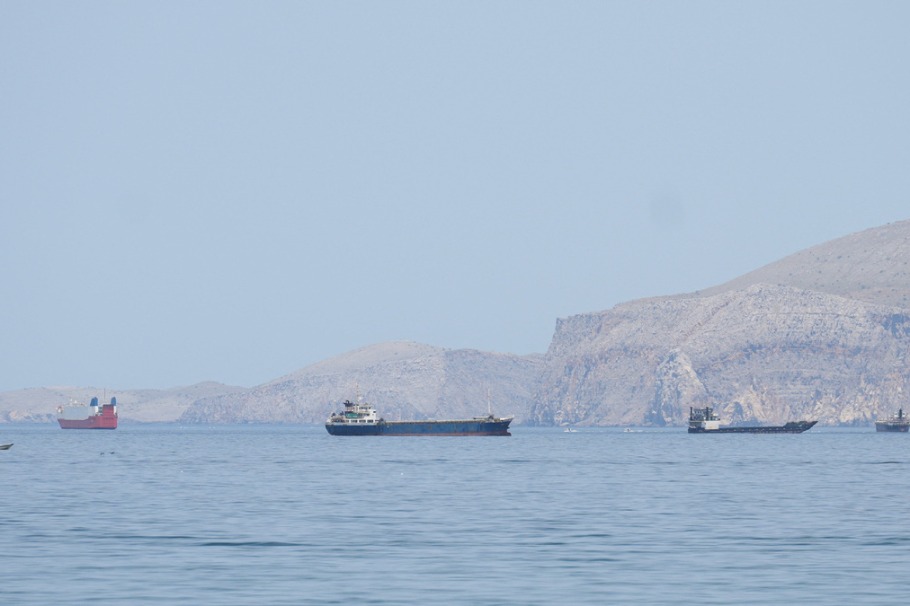
    The core dispute driving the renewed violence remains control of the Strait of Hormuz, the narrow waterway that carries roughly a fifth of the world’s daily oil and natural gas supplies, making it one of the most critical energy chokepoints on the planet. Iran first closed the strait to commercial traffic after the US and Israel launched a large-scale offensive against the country on February 28, only briefly reopening it following the Islamabad peace memorandum signed last month. Tehran has now renewed its vow to keep the strait closed “until the US ends its aggression.”

    “Retaliatory operations will continue, and the Strait of Hormuz will remain closed until the United States ends its acts of aggression,” the Revolutionary Guards said in an official statement.

    US President Donald Trump, for his part, issued a stark warning to Tehran Wednesday during an interview with Fox News, threatening to dramatically expand the scope of American strikes next week unless Iranian leadership agrees to return to negotiations. “Next week it gets really bad for them,” Trump said, signaling targeting of critical Iranian infrastructure including power plants and key bridges if no diplomatic breakthrough is reached. Despite the return to open fighting, mediated peace talks between the two sides have not been formally suspended.

    Iran’s Deputy Foreign Minister Kazem Gharibabadi called the reimposed US naval blockade a de facto termination of the interim peace deal. “The renewed US blockade has, in a way, dismantled the Islamabad memorandum,” Gharibabadi said, referring to the agreement that was meant to pave the way for broader peace negotiations.

    Five days into the resumption of hostilities, US Central Command (CENTCOM) confirmed it has carried out strikes against dozens of Iranian military targets near the strait and along Iran’s southern coastline, with the stated goal of “degrading Iran’s ability to threaten commercial shipping and civilian crews.” Iranian state media has reported multiple explosions across strategic coastal locations, including Bandar Abbas, Qeshm Island, and Bandar Imam Khomeini, in addition to the strikes on Bushehr.

    CENTCOM head Admiral Brad Cooper accused Iran of intentional attacks on civilian targets over the past week, saying “Iran has intentionally targeted civilians across the region by attacking seven commercial ships resulting in nearly a dozen civilian crew members killed, missing, or injured.” He added, “US forces are holding Iran accountable for unwarranted aggression that continues to endanger innocent lives.”

    Recent attacks have already disrupted regional shipping: crisis response firm MTI Network reported an explosion from an unidentified device hit a Norwegian tanker off the coast of Oman early Tuesday, while Kuwait confirmed one of its naval vessels was struck in an Iranian drone and missile barrage that wounded four crew members.

    In a sudden shift of policy, Trump announced Wednesday he was scrapping a planned 20 percent levy on all commercial ships passing through the Strait of Hormuz that he had unveiled just one day earlier. In a post on his Truth Social platform, Trump said the fee would be replaced with new trade and investment deals with Gulf Arab allies. “I have decided to replace the 20% United States Reimbursement Fee with Trade and Investment Deals that the various Gulf States will be making into the United States,” the post read.

    Iranian government spokesperson Fatemeh Mohajerani confirmed that renewed US airstrikes have killed at least 30 Iranians since last week, with seven additional Iranian military personnel killed in Wednesday’s strikes on the country’s southeast.

    While Israel has not yet rejoined the fighting, Israeli Prime Minister Benjamin Netanyahu issued a sharp warning to Iranian leadership Tuesday during a visit to Dimona, the southern Israeli town widely believed to host the country’s undeclared nuclear arsenal. “Do not count on things remaining quiet if you attack us,” Netanyahu said, warning Iran would face a “heavy blow” if it targets Israeli territory.

    On the ground, the impact of the renewed conflict varies sharply across the region. In Tehran, AFP correspondents reported no immediate visible signs of war preparation, with large crowds of ordinary Iranians gathering in cafes to watch the World Cup semi-final match between France and Spain as usual. But in Kuwait, which has faced repeated attacks throughout the conflict, residents are gripped by persistent anxiety over the escalating crisis.

    “Every day, I wake up wondering whether the situation will de-escalate or worsen,” said Mustafa Mohamed, a 39-year-old Sudanese accountant based in Kuwait. “It has become difficult to feel at ease or plan anything because uncertainty grips everyone.”

    George Atef, a 38-year-old Egyptian civil servant in Kuwait, echoed that frustration. “What exhausts me most is not knowing when this situation will end — the waiting itself has become draining,” he said.

  • UK unveils plans for voluntary overnight social media curfew for older teens

    UK unveils plans for voluntary overnight social media curfew for older teens

    LONDON – In a renewed push to shield young people from rising online harm, the British government outlined new policy proposals Wednesday that would introduce a voluntary overnight social media curfew for 16 and 17-year-olds, alongside default restrictions on addictive platform design features for this age group.

    Under the draft plans, auto-play functions that keep users scrolling continuously by playing consecutive videos automatically will be turned off by default for older teenagers. The announcement comes just one month after the administration unveiled a broader ban on social media access for users under the age of 16, set to take effect next spring. That ban will apply to major platforms including Snapchat, TikTok, YouTube, Instagram, Facebook and X, but will not extend to end-to-end encrypted messaging services such as WhatsApp and Signal.

    These new proposals mark one of the final policy actions from Prime Minister Keir Starmer’s sitting government, and will require formal parliamentary legislation to move forward. Political observers broadly expect Andy Burnham, Starmer’s widely anticipated successor, to advance the plans through the legislative process once he takes office.

    Critics of the measures have raised immediate questions about their effectiveness, noting that teenagers retain the option to manually disable the default curfew and auto-play restrictions. But U.K. Online Safety Minister Kanishka Narayan pushed back against this criticism, arguing that assuming all young people would immediately turn off the protections does them a disservice.

    Narayan pointed to empirical evidence from a recent national pilot involving more than 300 teenagers and their parents across the U.K. that tested similar default protections. The pilot recorded a dramatic drop in overnight social media usage, alongside reported improvements in young participants’ sleep quality and daytime concentration. He added that when major platforms rolled out comparable default restrictions last October, more than 90% of participating teenagers chose to keep the settings active rather than disable them.

    “The evidence base is clear, the motivation is very clear and I wouldn’t do the disservice to teenagers of saying they’re all going to switch it off,” Narayan told Sky News.

    Reaction to the proposals from child welfare advocacy groups has been mixed. The NSPCC, the U.K.’s leading children’s charity, acknowledged that the new rules would modestly improve young people’s social media experiences, but warned that the measures on their own are insufficient to tackle systemic harms. NSPCC Chief Executive Chris Sherwood argued that without follow-up stronger regulations, the proposals amount to no more than a temporary fix that fails to address the addictive platform design features that drive excessive screen time and erode children’s mental and physical wellbeing.

    Rachel de Souza, Children’s Commissioner for England, framed the government’s announcement as a welcome positive step. She noted that many young people want to reduce their social media consumption but struggle to do so amid platforms’ intentionally addictive design. De Souza added that she would continue monitoring the policy’s rollout closely to ensure it delivers on its stated goals, saying “I want to know more about how the policies, such as a curfew, will be delivered and will be watching closely to make sure they are effective.”

  • Trump says will withdraw plans to charge fees in Strait of Hormuz

    Trump says will withdraw plans to charge fees in Strait of Hormuz

    Just 24 hours after triggering international controversy with a plan to impose a 20 percent reimbursement fee on commercial shipping passing through the strategically critical Strait of Hormuz, U.S. President Donald Trump has announced a sudden reversal of the policy. In a post published to his Truth Social platform on Tuesday, Trump confirmed that the fee proposal will be withdrawn entirely, replaced by new trade and investment agreements that Gulf Cooperation Council states will enter into with the United States.

    The policy shift, Trump noted, followed what he described as highly productive discussions with senior leadership across Middle Eastern nations that rely on the Strait of Hormuz, the world’s busiest maritime chokepoint for global oil and natural gas shipments. “Based on highly productive conversations with Middle East leadership, I have decided to replace the 20 percent United States Reimbursement Fee with Trade and Investment Deals that the various Gulf States will be making into the United States,” Trump wrote in the post.

    Despite scrapping the fee, Trump maintained that Washington’s restrictive posture toward Iran in the waterway will remain unchanged. He clarified that the Strait will continue to be open to all commercial shipping traffic with the sole exception of vessels connected to Iran, with a full naval blockade remaining in place for any ships traveling to or from Iranian ports or carrying Iranian-origin cargo. “BY FAR, the Strait of Hormuz is open to ALL Ship traffic except for Iran,” he said. “We will therefore have a FULL Blockade, but only on Ships coming to and from Iranian ports, or carrying anything have to do with Iranian cargo,” he added.

    The reversal comes amid rapidly escalating tensions between Washington and Tehran that have derailed a recent detente between the two nations. Less than a month ago, the United States and Iran signed a 14-point memorandum of understanding designed to end open hostilities between the two sides. But a new round of U.S. airstrikes against Iranian targets, followed by retaliatory action from Tehran, has pushed the two nations back into open armed conflict. Prior to announcing the fee reversal, Trump already notified Congress on Friday that the U.S. had formally resumed military operations against Iran.

  • Committee hears final arguments in probe of Hong Kong’s deadliest fire in decades

    Committee hears final arguments in probe of Hong Kong’s deadliest fire in decades

    HONG KONG – After months of public hearings and evidence gathering, an independent statutory inquiry into Hong Kong’s worst residential fire in more than 50 years entered its final stage Wednesday, as legal teams for all parties prepared to lay out their closing arguments ahead of the panel’s upcoming final report. The deadly blaze broke out in November last year at Wang Fuk Court, a dense suburban residential complex in Tai Po, where the fire rapidly spread across seven interlinked apartment buildings. The disaster left 168 people dead and displaced hundreds of residents, destroying a tight-knit community that had anchored the neighborhood for generations.

    Within a month of the fire, the Hong Kong government established the three-member independent inquiry committee, tasked with pinpointing the root causes of the blaze and the high death toll, examining systemic gaps in building fire safety regulation, and delivering actionable policy recommendations. The panel is led by High Court Judge David Lok, with non-judicial members including Executive Council member Chan Kin-por and Hospital Authority Board director Rex Auyeung. From the start, the inquiry was scheduled to conclude its work within nine months, leaving bereaved families and displaced survivors waiting for long-awaited answers.

    Over the course of hearings that launched in March, lead inquiry counsel Victor Dawes laid out preliminary findings showing multiple overlapping failures directly contributed to the scale of the disaster. Key contributing issues included disabled fire alarms and non-functional fire hose systems, non-fire-retardant scaffolding netting used in ongoing renovation works at the complex, and unauthorized foam board window installations that accelerated the spread of flames and toxic smoke.

    Closing arguments are set to wrap up by Friday, with legal representation for survivors, the Hong Kong government, the inquiry panel, and multiple involved contractors set to present their final positions. Crucially, the inquiry committee does not have the mandate to rule on civil or criminal legal liability – that process is already being pursued independently by local law enforcement and the courts.

    Testimony throughout the hearings has revealed a web of missteps and miscommunication between contractors and property managers. Martin Ho, counsel for ISS EastPoint Properties, the complex’s property management firm, told the inquiry that the company’s in-house electrician accidentally disabled the fire alarm system while carrying out routine maintenance on water tanks. While Ho called the error regrettable, he argued the mistake could have been prevented if a representative from the complex’s fire safety installation contractor had been on-site during the work, as required. He added that when a second contractor later identified the disabled alarm, the firm failed to follow up on the issue – noting that one senior director of the contracting firm admitted the wider industry has a widespread culture of refusing to correct other companies’ errors, a practice Ho described as “baffling.”

    Aaron Chan, representing a director of one of the involved fire safety contractors, pushed back on shifting full blame to his client, acknowledging that a functional fire alarm system would have reduced casualties but asking the panel to also consider the limited window residents had to escape the rapidly spreading fire and other contextual factors. The exchange led Judge Lok to interject, reminding Chan not to imply fire alarms were ineffective, a suggestion Chan quickly denied, reiterating he only sought to have the panel consider multiple contributing factors.

    For survivors who packed the inquiry gallery Wednesday, the closing arguments have reinforced a growing sense that involved parties are working to deflect blame rather than accept accountability. Betty Ho, a former Wang Fuk Court resident who lost family in the fire, told reporters outside the hearing she is uncertain the inquiry will uncover the full truth, but still holds out hope the panel will secure justice for the 168 victims. “I don’t think we’ll get what we hoped for in the end,” she said.

    Another displaced resident, Patrick Liu, said he has little expectation of a clear accountability finding. “Basically, everyone is just shirking responsibility. There’s no need to even think about it,” Liu said, adding that he would wait for the inquiry’s final report and upcoming criminal trial to learn who bore ultimate responsibility for the disaster.

    Beyond identifying the direct causes of the blaze, the committee is also investigating deep-rooted systemic problems in Hong Kong’s building maintenance and renovation sector, including widespread bid-rigging that has been linked to lowered safety standards and unqualified contractors. On Wednesday, a representative from Hong Kong’s Competition Commission told the inquiry that bid-rigging cartels operate across the city’s construction sector, with some groups tied to criminal triad organizations. To date, the inquiry has heard evidence from former residents, government regulators, fire safety experts, and industry insiders, and has admitted CCTV footage, corporate records, and personal text messages as evidence. The committee’s final report will include a full analysis of the fire’s causes, assessment of systemic risks, and recommendations to update existing fire safety regulations and penalty frameworks to prevent similar disasters.

    Separate from the inquiry, Hong Kong law enforcement has already pursued criminal charges over the fire. In June, authorities filed charges against seven individuals and two companies involved in the Wang Fuk Court renovation project, including the lead contractor Prestige Construction & Engineering Co. and architectural consultancy Will Power Architects Company. Charges include manslaughter, conspiracy to defraud, and professional negligence. Prosecutors allege the firms and their leaders committed gross negligence in overseeing construction materials and work procedures, and conspired to defraud apartment owners by hiding prior litigation records against Prestige and inflating the firm’s score in the tender evaluation process to win the renovation contract.

  • Kenyan court dismisses Rastafarians’ bid to legalise cannabis

    Kenyan court dismisses Rastafarians’ bid to legalise cannabis

    Kenya’s highest judicial body has thrown out a legal challenge from the country’s Rastafarian community, which had pushed to exempt religious practitioners from national cannabis bans on the grounds of constitutional protection for freedom of belief. The case, which has drawn widespread public attention across the East African nation, centers on a longstanding tension between controlled drug policy and religious autonomy.

    The Rastafarian community has long held that cannabis, referred to in their doctrine as a sacred herb, is an integral part of their spiritual practice. In their submission to the court, the group argued that the blanket national prohibition on cannabis use directly violated the fundamental right to religious freedom enshrined in Kenya’s constitution.

    In the widely watched ruling delivered by Justice Bahati Mwamuye, the court dismissed the petition on the basis that the Rastafarian group failed to present sufficient evidence proving that existing drug legislation infringed on their constitutional rights. While the outcome fell short of the community’s demands, Justice Mwamuye used the ruling as an opportunity to call for a far-reaching, inclusive national conversation on the country’s cannabis policies.

    “This is not an issue that concerns only the Rastafarian community. It is a national question that touches every segment of our society,” Justice Mwamuye stated in his judgement. “We need to hold open, frank discussions about what direction our cannabis policies should take moving forward.”

    The ruling comes amid a growing movement across Kenya to review the country’s strict cannabis laws. Advocates for reform have put forward a range of economic and social arguments for loosening restrictions, noting that regulated commercial cultivation could generate new employment opportunities for thousands of Kenyans, increase public tax revenues, and unlock the potential of industrial and medical applications of cannabis that remain off-limits under current law. For the Rastafarian community, however, the debate is first and foremost a matter of religious equality, with members maintaining that their sacred use of cannabis deserves legal recognition and protection under the law.