作者: admin

  • Trump advisers step up their calls on China to help open Strait of Hormuz ahead of Beijing summit

    Trump advisers step up their calls on China to help open Strait of Hormuz ahead of Beijing summit

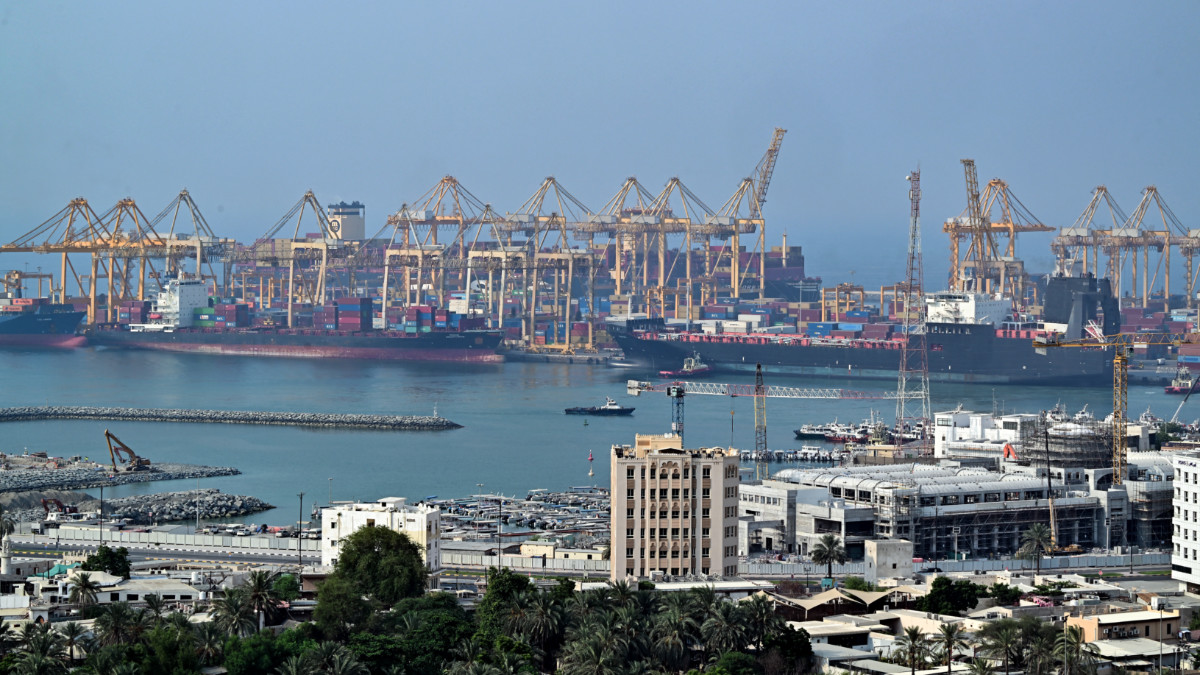
    As U.S. President Donald Trump prepares for his highly anticipated summit with Chinese President Xi Jinping in Beijing, the White House has launched an urgent push for China to leverage its considerable economic and political sway over Iran to reopen the strategically vital Strait of Hormuz, a key global energy chokepoint whose closure has shaken global energy markets over two months of ongoing conflict.

    Speaking at a White House press briefing on Tuesday, Secretary of State Marco Rubio made a direct public appeal, noting that Iranian Foreign Minister Abbas Araghchi was scheduled to travel to Beijing for talks the following day. Rubio called on Chinese leaders to deliver a clear, uncompromising message to Tehran: its actions to restrict traffic through the strait have left Iran globally isolated, casting the country as the primary aggressor in the unfolding crisis. “I hope the Chinese tell him what he needs to be told,” Rubio stated.

    Rubio emphasized that opening the strait aligns directly with Beijing’s own core economic interests. Official data from China’s General Administration of Customs shows that roughly half of China’s total crude oil imports and one-third of its liquefied natural gas supplies originate from the Middle East, nearly all of which pass through the Strait of Hormuz. Unlike the United States, which has reduced its dependence on Middle East energy supplies in recent years, China’s export-driven economy is far more exposed to the disruptions caused by the closure, Rubio argued.

    Beyond direct appeals to Beijing over the strait, a senior anonymous diplomat confirmed to the Associated Press that U.S. diplomatic teams have also been engaged in intensive negotiations to convince China not to veto a new U.S.-backed United Nations Security Council resolution that would condemn Iran’s actions and demand the immediate reopening of the waterway. Last month, China and Russia — Iran’s closest allies on the 15-member council — blocked an earlier draft resolution, arguing that it failed to address the U.S. and Israeli strikes that triggered the current two-month conflict and unfairly targeted only Tehran.

    Rubio’s public push follows remarks from Treasury Secretary Scott Bessent, who confirmed on Monday that the Strait of Hormuz dispute and Iran policy would feature prominently on the summit agenda, marking the first meeting between the two leaders during this U.S. administration and the first official presidential visit to China from the U.S. since 2017.

    The closure of the strait has sent shockwaves across Asian energy and trade markets, prompting Beijing to already pursue behind-the-scenes diplomatic outreach: Chinese officials have worked with Pakistan to help broker a fragile two-week ceasefire between warring parties, and multiple anonymous diplomatic sources have confirmed that Beijing — the world’s largest purchaser of Iranian crude oil — used its economic leverage to bring Tehran back to the negotiating table last month when talks faltered. President Trump himself has previously acknowledged China’s role in encouraging Iran to agree to that temporary ceasefire.

    Despite these existing diplomatic efforts, the Republican U.S. administration argues Beijing can and should do more to secure the permanent reopening of the strait. “The threat of attacks from Iran has closed the strait — we are reopening it,” Bessent said during an interview on Fox News. “So I would urge the Chinese to join us in supporting this international operation.”

    Trump struck a more measured tone when discussing China’s role during remarks to reporters in the Oval Office on Tuesday, noting that Beijing has not directly challenged U.S. policy even as Washington continues to press Tehran to abandon its nuclear program and reopen the waterway. Still, China has repeatedly criticized U.S. military action against Iran, one of its longest-standing economic partners in the Middle East. Trump also noted that China relies heavily on the Strait of Hormuz for energy supplies, slightly exaggerating the share of China’s oil that transits the waterway at 60%.

    Tensions over Iran-China ties have already strained bilateral relations in recent weeks. The U.S. government has long accused Beijing of supporting Iran’s ballistic missile program by supplying dual-use industrial components that can be diverted to weapons production. Last month, Trump said Xi had given assurances that China would not send weapons to Iran, amid circulating reports that Beijing was considering arms transfers. Just days after Trump confirmed receiving the assurance, he claimed U.S. forces had intercepted a vessel carrying a “gift” of military supplies from China to Iran, though he offered no additional evidence or details to back up the claim.

    The U.S. has also moved to ramp up economic pressure on Beijing over its trade ties with Tehran. On April 24, the Treasury Department announced sweeping new sanctions targeting a major Chinese oil refinery, as well as roughly 40 shipping companies and tankers involved in transporting Iranian crude. The sanctions cut all of the targeted entities off from the U.S. financial system and impose secondary penalties on any third-party business that engages with the sanctioned firms.

    Beyond the Iran dispute, the summit will also address longstanding tensions over Taiwan, the self-governing island that Beijing claims as an inalienable part of its territory. Rubio confirmed Tuesday that the issue will be on the agenda, noting that Beijing has already signaled it will push the U.S. to roll back recent arms sales to Taipei. “I think both countries understand that it is neither one of our interests to see anything destabilizing happen in that part of the world,” Rubio said. “We don’t need any destabilizing events to occur with regards to Taiwan or anywhere in the Indo-Pacific. And I think that’s to the mutual benefit of both the United States and the Chinese.”

    In December, the Trump administration announced a record $11.1 billion arms sale package to Taiwan, a move that drew fierce condemnation from Beijing. Trump later suggested he would open discussion of the arms sales with Xi during the summit, a shift that has sparked alarm among Taiwanese government officials. Last week, Chinese Foreign Minister Wang Yi emphasized in a call with Rubio that the U.S. must “make the right choices” on Taiwan to preserve bilateral stability, according to an official statement from the Chinese Foreign Ministry.

  • Uber One members can now earn Qantas Points on Uber Eats orders and premium rides

    Uber One members can now earn Qantas Points on Uber Eats orders and premium rides

    Two of Australia’s most widely used consumer service brands have deepened their collaborative ties, opening a new pathway for regular customers to turn daily spending into future travel. Qantas and Uber have announced an expansion of their long-running loyalty partnership, allowing Australians to accumulate Qantas Frequent Flyer points through routine takeaway orders and everyday ride-hailing trips, a shift that moves beyond the pair’s original airport-exclusive rewards arrangement.

    Under the updated terms of the deal, Uber One subscribers who link their Qantas Frequent Flyer accounts can now earn points on two new categories of Uber services for the first time. For eligible Uber Eats restaurant delivery orders that meet a $20 minimum spend, members earn one Qantas Point for every $2 spent. For rides booked through Uber’s premium tiers – Comfort, Comfort Electric, and Black – members earn one Qantas Point per $1 spent.

    The expansion taps into a massive existing market for on-demand delivery in Australia. Since Uber Eats launched its domestic operations in 2016, Australian users have placed more than one billion orders on the platform, with millions of orders completed across the country every week. This scale makes everyday food delivery a fertile new ground for driving frequent flyer point accumulation for Qantas members.

    Notably, the original benefits of the partnership remain in place for all Qantas Frequent Flyer members, regardless of whether they hold an Uber One subscription. All members still qualify for up to one Qantas Point per $1 spent on eligible rides to and from Australian airports, the core offering of the original partnership that launched years prior.

    Andrew Glance, chief executive of Qantas Loyalty, noted that Uber has long been a go-to service for Qantas members traveling to and from airports. “With millions of Uber Eats orders made across Australia every week, we are now rewarding members for everything from midweek dinners to their daily commute,” Glance explained. “By bringing the Uber Eats ecosystem into the fold, we’re also helping our members reach their next reward even faster.”

    Ed Kitchen, managing director of Uber Eats Australia and New Zealand, framed the expansion as a major milestone in the two companies’ ongoing relationship. “Expanding our partnership with Qantas Frequent Flyer to include Uber Eats is an exciting step forward for our Uber One members,” Kitchen said. “Whether it’s getting across town or enjoying a meal at home, Australians rely on Uber for everyday moments, and now Uber One members can be rewarded for more of them. By bringing rides and delivery together, we’re creating a more connected experience that helps members earn Qantas Points across more of their interactions with Uber.”

    Industry observers note the deal is a win-win for both companies: it increases customer retention for Uber One subscriptions, while giving Qantas more touchpoints to keep its frequent Flyer program engaged with everyday consumer spending, boosting the program’s relevance for users who may not travel frequently.

  • Dressed for succession: What Kim Ju Ae’s outfits tell us about North Korea

    Dressed for succession: What Kim Ju Ae’s outfits tell us about North Korea

    When a 9-year-old girl stepped out beside her father, North Korean leader Kim Jong Un, in front of a massive intercontinental ballistic missile in November 2022, the world’s attention quickly turned beyond the display of military power to the young figure at his side: his daughter, Kim Ju Ae. Now 13, Ju Ae’s increasingly frequent public appearances alongside her father have sparked widespread speculation that she is being groomed as Kim Jong Un’s eventual successor. What many analysts have zeroed in on, however, is not just her growing public profile, but the subtle political messaging woven into every outfit and hairstyle she wears.

    Ju Ae’s public wardrobe has evolved steadily from her debut, when she wore simple black trousers and a white padded jacket with tied-back hair, to increasingly elaborate hairstyles and sophisticated, tailored ensembles. South Korea’s National Intelligence Service has already concluded that Kim Jong Un has designated her as his heir apparent, given her prominent placement at major state events ranging from missile tests and military parades to official overseas visits. Analysts argue that her carefully curated fashion choices are no accident, but a deliberate strategy crafted by North Korea’s ruling Propaganda and Agitation Department to shape public perception of her as a future leader.

    Cheong Seong-chang, deputy director of the South Korea-based Sejong Institute, explains that the regime’s styling choices are designed to address Ju Ae’s biggest perceived vulnerability: her youth. By dressing her in formal, tailored suits and skirts that closely mirror the style of her mother, First Lady Ri Sol Ju, the regime works to project an air of maturity and authority that defies her young age. For visits to rugged locations such as military bases, Ju Ae is often styled in sharp leather jackets – a choice that balances a strong, authoritative impression with approachable casualness, while also creating a visual parallel with her father, who is famously fond of black leather jackets and trench coats.

    This pattern of “image replication” is a well-documented tactic North Korean leaders have used for generations to consolidate power and legitimize dynastic succession. When Kim Jong Un first took power, he deliberately adopted the clothing and styling of his grandfather, Kim Il Sung, the founding leader of North Korea who is revered as a near-deity within the country. Cheong notes that this deliberate resemblance helped offset concerns about Kim Jong Un’s youth and lack of experience, even spurring widespread rumors among North Korean citizens that Kim Il Sung had been reincarnated in his grandson. Today, the same strategy is being deployed to build legitimacy for a new young successor.

    Beyond shoring up legitimacy, Ju Ae’s fashion also serves a second purpose: reinforcing the unique social status of the Kim family at the top of North Korean society. High-quality leather garments, fur coats, and Western-designed luxury pieces are largely inaccessible to ordinary North Korean citizens, so Ju Ae’s frequent wear of these items sends a clear signal that she belongs to a privileged ruling class. “Wearing clothing made of high-quality leather is a way of showing off one’s special status,” Cheong explains. “Luxury brands, leather jackets and fur coats are precious clothes that can’t be worn by ordinary North Koreans.”

    This contrast between the ruling family’s wardrobe and the restrictions placed on ordinary citizens could not be starker. In 2020, North Korea passed the Reactionary Ideology and Culture Rejection Act, which bans the spread of “external culture” including Western fashion trends. Yet in 2023, state media released footage of Ju Ae wearing a black padded jacket worth an estimated $1,900 from luxury French fashion house Christian Dior. The following year, she wore a semi-sheer blouse that exposed her arms to a Pyongyang residential development completion ceremony. Shortly after that appearance, state authorities released a public directive warning ordinary citizens that such hairstyles and clothing qualify as “anti-socialist” threats to the socialist system that must be eliminated, according to a local source cited by Radio Free Asia.

    This double standard is nothing new in North Korea, where the ruling Kim family exists above the laws that apply to the general population. As Lee Woo-young, a professor at the University of North Korean Studies, points out, “Although jeans are banned in North Korea as a Western fashion item, Kim Jong Un has appeared wearing them. No matter how much they ban foreign culture and even enact laws, North Korea is a place where there is nothing the supreme leader is unable to do.”

    Even with these restrictions on ordinary citizens, Ju Ae’s high-profile fashion has already created subtle ripple effects across North Korean society. Multiple reports indicate that demand for luxury goods including Chanel cosmetics and perfumes has risen among affluent North Koreans, while fur coats have grown popular in border cities near China. Photos have emerged of children at elite Pyongyang kindergartens wearing semi-sheer blouses matching Ju Ae’s 2024 look, and leather trench coats and sunglasses modeled after the styles worn by Ju Ae and Kim Jong Un have become trendy among wealthy young North Koreans.

    This pattern of copying the ruling family’s style is also not new: for years, young North Korean men have adopted the signature hairstyle of Kim Jong Un. With most ordinary North Koreans cut off from global fashion trends and outside information, the Kim family has become an unlikely source of style inspiration for the country’s population. Now, as Ju Ae steps further into the public eye, she has taken on a new, unintended role: North Korea’s newest fashion icon.

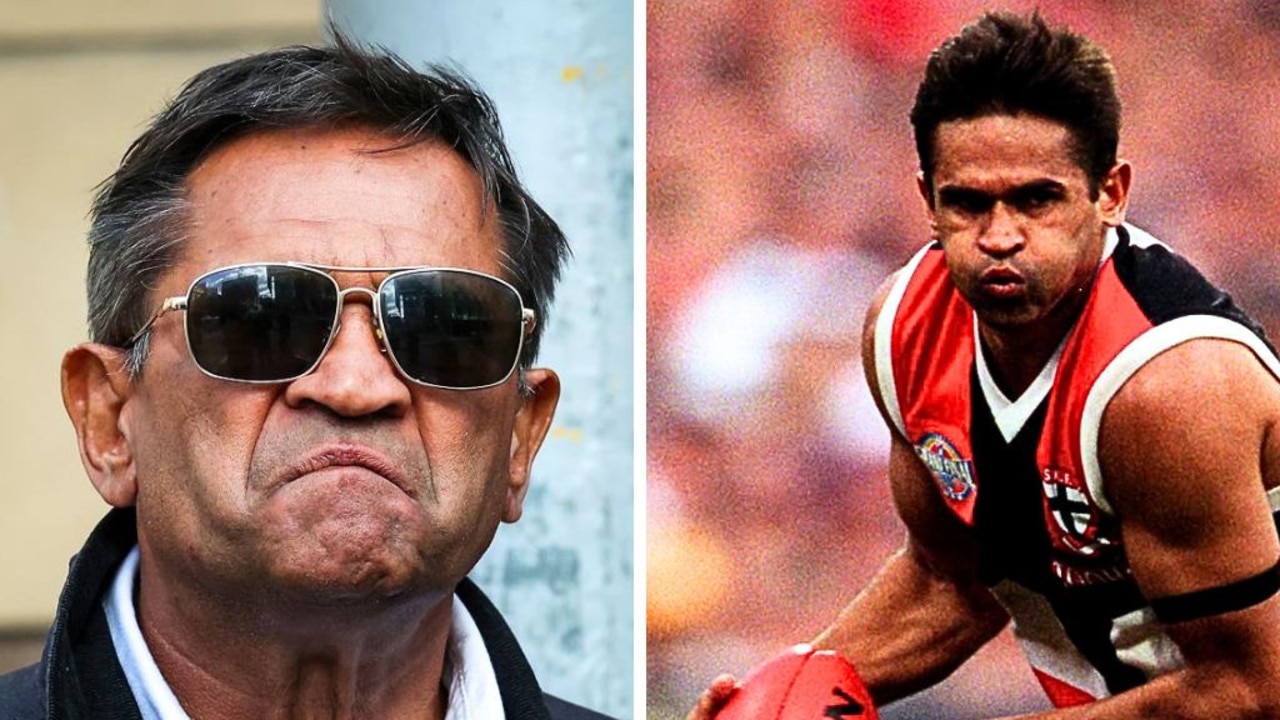
  • AFL 2026: Essendon coach Brad Scott says he ‘loved’ Nate Caddy’s post-game frustration

    AFL 2026: Essendon coach Brad Scott says he ‘loved’ Nate Caddy’s post-game frustration

    Ahead of Essendon’s upcoming clash with GWS at Engie Stadium this Saturday, two off-field controversies have dominated headlines surrounding the AFL club, but head coach Brad Scott is framing both as opportunities for growth rather than causes for division. At the center of the first talking point is star third-year forward Nate Caddy, who sparked widespread fan and media speculation last weekend after opening up about his frustration with the Bombers’ recent on-field performance. Following a lopsided loss to reigning premiers Brisbane Lions, Caddy told 3AW in a post-game interview that he refused to accept what he called Essendon’s ongoing “mediocrity”, a blunt assessment that quickly ignited debate over whether the young forward would seek a trade to another club in pursuit of premiership success. Across 34 career matches, Caddy has been on the winning side in less than a third of his outings, a stat that adds context to his public call for improvement.

    Far from criticizing Caddy for his candid comments, Scott has welcomed the young star’s hunger for victory, describing the forward’s “explicit desire” to lead the club to success as exactly the kind of attitude the developing Bombers need. In a recent media briefing, Scott spoke enthusiastically about the growth Caddy has shown throughout the 2024 season, noting that the forward has shifted his focus from simply establishing his place in the AFL lineup to taking responsibility for driving the entire club forward. “I loved what he said,” Scott explained, wearing a visible smile during the briefing. “I talk to Nate constantly about his competitiveness, and how he’s stepped up as a third-year player to lead our forward line. He’s clear about his goal to get this club into a sustained period of success, he’s hungry for it, and he’s impatient – that’s exactly what excites me. He’s the ultimate competitor, he loves this club and the environment we’re building here. I’ve watched that growth in him week by week this year, it’s been remarkable.”

    Scott also pushed back firmly against speculation that Caddy or any of Essendon’s young core are considering leaving the club to pursue success elsewhere. Throughout more than a decade of leading young developing teams as a head coach, Scott says he has seen no indication that Caddy or any of his recruited teammates are looking to exit. Instead, he argues that Caddy’s comments are proof that the club’s young leaders are taking ownership of Essendon’s future, rather than shying away from responsibility for poor results.

    The second controversy to hit the club this week has been dubbed “whiteboard gate”, after Brisbane Lions’ internal player-by-player scouting analysis of the entire Essendon squad was leaked to the public. Scott acknowledged that the leak has been an unexpected talking point for his squad, but he is choosing to frame the incident as a valuable learning opportunity rather than a distraction. Scott noted that the Lions conduct this kind of detailed opposition analysis for every club they face, and Essendon was just unlucky to have the internal document made public – a problem that ultimately rests with Brisbane, not his side. For the Bombers, however, the leak gives Scott a chance to reinforce the club’s internal evaluations of players, and to confront any gaps between how the club sees its players and how opponents perceive them. “You can either choose to ignore external opinions and pretend they don’t exist, or you can sit down, analyse them, and if that’s the perception people have, you go out and change it,” Scott said. “Our own view of our players is what matters most, but that doesn’t mean we should just dismiss what an opposition who studies us closely has to say.”

    All off-field discussion will be put aside this weekend when Essendon takes on GWS at Engie Stadium, in a match that will test whether the club can turn its growing hunger for improvement into a much-needed win.

  • How did Heidi Klum become a living Met Gala sculpture?

    How did Heidi Klum become a living Met Gala sculpture?

    The annual Met Gala, New York City’s most prestigious red carpet event that celebrates boundary-pushing fashion and art, consistently produces viral moments that capture global attention. One of the most talked-about looks in recent event history came from supermodel Heidi Klum, who transformed herself into a striking living sculpture that stopped the show when she walked the red carpet. Now, Mike Marino, the award-winning prosthetic make-up artist behind the avant-garde design, has pulled back the curtain on the intricate process that brought the eye-catching concept to life.

    Creating a one-of-a-kind costume that would stand out among hundreds of high-profile celebrity looks required months of planning and hundreds of hours of hands-on work, Marino explained in his behind-the-scenes reveal. The project began with collaborative brainstorming between Klum and the design team, centered on the theme of that year’s Met Gala exhibition, which set the creative tone for all attendees’ looks. Klum pushed for a bold, experimental concept that would lean into the event’s tradition of theatrical, art-forward fashion, settling on the idea of a living, moving sculptural form that blurred the line between clothing and fine art.

    From there, Marino and his team worked to translate the abstract concept into a wearable design, starting with detailed mold-making to ensure the prosthetics fit Klum’s body perfectly. Every element, from the texture of the sculpted surface to the weight of the finished piece, was adjusted to allow Klum to move naturally while maintaining the dramatic visual impact of the sculpture. The application process on the day of the Gala took more than six hours, with Marino carefully layering prosthetics, blending edges, and adding custom finishing touches to create the seamless, solid-sculpture effect that wowed onlookers and photographers alike.

    Marino’s reveal has shed new light on the unsung work of prosthetic and special effects make-up artists in creating the most memorable Met Gala looks, turning a simple red carpet appearance into a global cultural moment. Klum’s bold choice to embrace such an experimental design also reinforced the Met Gala’s reputation as a space where high fashion and contemporary art collide to create unforgettable work.

  • AFL 2026: Melbourne coach Steven King says Paul Guerra sacking hasn’t distracted Demons

    AFL 2026: Melbourne coach Steven King says Paul Guerra sacking hasn’t distracted Demons

    In the high-stakes world of Australian Football League (AFL) competition, off-field drama rarely stays out of the headlines, but Melbourne Demons interim head coach Steven King is pushing back against any narrative that recent front-office upheaval has thrown his playing group off course.

    The club sent shockwaves through the local footy community last week when it terminated chief executive Paul Guerra just seven months after he stepped into the top administrative role. Sources close to Guerra indicate he is currently reviewing potential legal action following his unexpected dismissal. In a swift move to steady the off-field ship, Melbourne’s board moved quickly to name former Stan chief executive Dan Taylor as Guerra’s permanent replacement.

    Despite the swirling public speculation and front-office turnover that followed the sacking, King maintains the separation between the club’s football operations and administrative division has kept the disruption from touching the playing group. “To be honest, not really,” King told reporters when asked if the off-field chaos had pulled focus from the team’s on-field preparations. “Obviously there is noise around it externally, but the football department operates entirely on its own track. What we do as coaches, and what our players need to do to prepare for game day, that doesn’t change. It hasn’t taken too much focus off what we’re here to do. Externally there might be a lot of chatter, but for us day-to-day and week-to-week, the goal of winning matches stays exactly the same. Our job doesn’t shift – it’s still to build an environment where our players can improve every day, and walk onto the field confident they can get the win. The great thing, and the great challenge, of this game is you just focus on the next week and move on from everything else.”

    The off-field shakeup came just days before Melbourne’s clash with ladder leaders Sydney Swans at the Sydney Cricket Ground, where the Demons turned in a gritty performance but fell short of an upset victory. The result broke Melbourne’s recent momentum, which had seen the side secure four wins from their previous five outings. King, who is in his first season leading the Demons and has already overseen a clear on-field rejuvenation, praised his side’s fight against one of the competition’s top sides but refused to celebrate a narrow, brave defeat.

    “At the end of the day, it was a bad loss because we lost,” King said. “We went up there to win, so of course it’s disappointing. I was really proud of the way the boys fought it out for four quarters, but you don’t get any bonus points for just competing hard – you walk away with nothing. Looking back on it, we played three really solid quarters where we stuck to our game plan and played with courage, but the second quarter got away from us. To give credit where it’s due, Sydney is a fantastic side that capitalized on that lapse. It was a good chance for us to look back at that quarter and identify clear areas where we can improve moving forward.”

  • Man charged with attempted Trump assassination indicted for assaulting Secret Service officer

    Man charged with attempted Trump assassination indicted for assaulting Secret Service officer

    A 31-year-old California man accused of plotting to assassinate former President Donald Trump during a high-profile Washington DC gala has been hit with an additional felony charge, federal prosecutors announced this week. Cole Tomas Allen, a resident of Torrance, California, now faces a fourth count of assaulting a U.S. law enforcement officer with a deadly weapon, following the brazen April 25 attack at the annual White House Correspondents Dinner.

    The new indictment, which was unsealed Tuesday and signed by U.S. Attorney Jeanine Pirro, replaces the initial criminal complaint filed against Allen last week. It comes amid ongoing public questions about the circumstances of the April 25 incident, specifically whether a wounded Secret Service officer was hit by friendly crossfire from a fellow agent responding to the threat. The officer suffered a non-life-threatening injury in the exchange of gunfire, authorities confirmed.

    Allen already faced three core charges from the initial complaint: attempted assassination of the sitting U.S. president, illegal transportation of a firearm and ammunition across state lines with intent to commit a felony, and weapons violations related to discharging a firearm during the commission of a violent crime. A grand jury formally voted to indict Allen on all four counts last week, and he made his first in-person court appearance in Washington DC last week, though he has not yet entered a formal plea to the charges. He remains in federal custody as the case proceeds.

    According to unsealed court documents, Allen arrived at the Washington Hilton hotel — the venue for the annual dinner — heavily armed: he was carrying a semi-automatic handgun, a pump-action shotgun, and three sharp-edged weapons when he attempted to breach a security checkpoint one level above the dinner’s basement ballroom space. When gunfire erupted, current President Donald Trump, Vice President JD Vance, members of the presidential cabinet, and dozens of other senior White House officials were immediately evacuated from the event, while hundreds of attendees took shelter under their dining tables.

    The attack has triggered a full internal review of White House and Secret Service security protocols for major public events attended by senior leadership. Background checks into Allen’s history show he is an alumnus of the prestigious California Institute of Technology, and attended a local congregation in the Los Angeles area. Federal campaign finance records also show he made a $25 donation to a Democratic PAC supporting Kamala Harris’s 2024 presidential campaign.

    Court filings also include details of a message Allen allegedly sent to his family immediately before the attack, stating that senior administration officials were pre-designated targets, ranked by their position in government. He added that he was willing to confront anyone in the venue to reach his intended targets, according to the documents. If convicted on all counts, Allen faces the possibility of life imprisonment, federal prosecutors confirmed.

  • Israel appoints settler who backs annexation to head powerful land authority

    Israel appoints settler who backs annexation to head powerful land authority

    In a move that has ignited fierce political and public controversy, the Israeli government has installed Yehuda Eliyahu, a West Bank settler and long-time close associate of far-right Religious Zionism leader Bezalel Smotrich, as the new director of the Israel Land Authority (ILA), the powerful state body that controls all national land allocation and management, including territory in the occupied West Bank.

    The appointment received formal approval from Prime Minister Benjamin Netanyahu on Monday, after advancing through a public appointments committee the previous week. The approval was not unanimous: the committee’s own legal adviser formally opposed the nomination, citing that Eliyahu’s decades-long personal and political ties to Smotrich create an unavoidable conflict of interest.

    Eliyahu brings a well-documented hardline record to the new role. Prior to taking this post, he led the Settlement Administration within Israel’s Ministry of Defense, a position where he oversaw what watchdog groups describe as the largest seizure of Palestinian land in the West Bank in modern Israeli history. Alongside Smotrich, he co-founded Regavim, an influential hardline nationalist group that frames its mission as protecting Israeli national land and resources. Originally focused on the West Bank, where the organization has repeatedly pushed to remove Palestinian communities from their land to expand Jewish settlements, Regavim has shifted its scope in recent years to target areas in the Negev and Galilee, regions where a large share of Israel’s Palestinian citizen population resides.

    The ILA is one of the most powerful administrative bodies in Israel, controlling roughly 92% of all state land—equaling approximately 20 million dunams of territory— and managing a multi-billion shekel annual budget. It dictates land allocation for residential housing, public infrastructure, and national development projects across the country, and holds direct authority over land management for Israeli settlements in the occupied West Bank.

    Supporters of the appointment have framed it as a critical strategic shift aligned with the current Netanyahu government’s core nationalist policy goals. Diaspora Affairs Minister Amichai Chikli, who has himself proposed a controversial large-scale land redistribution plan in the Negev that local Palestinian village leaders have decried as a “violent dispossession plan”, called the appointment as impactful as installing a new chief for the Shin Bet, Israel’s domestic intelligence agency. Chikli criticized what he called the ILA’s previous restrained stance on expanding Jewish settlement in the Galilee and Negev, saying he expects Eliyahu to pivot the agency’s policy to advance Jewish population growth in both regions—an explicit government goal designed to shift the demographic balance in favor of Jewish Israelis. Likud Knesset member Ariel Kallner, who chairs the parliamentary Galilee caucus, echoed that praise, highlighting Eliyahu’s work in the West Bank and claiming he “led a revolution” in cutting through bureaucratic barriers to expand settlement, and has long pushed for Jewish growth in northern Israel’s Galilee region.

    Critics, however, have denounced the appointment as a dangerous escalation of the government’s anti-Palestinian, ethno-nationalist agenda. Israeli NGO Kerem Navot, which monitors land policy and settlement expansion in the West Bank, documented that Eliyahu himself resides in an unauthorized West Bank settlement outpost, where Israeli forces and settlers block local Palestinian farmers from accessing and working their agricultural land. The group added that during Eliyahu’s tenure leading the Settlement Administration, he oversaw “the largest project of land dispossession and illegal construction since Israel’s 1967 occupation of the West Bank”, and charged that his entire public service career has been dedicated to violating Israeli law. In a harsh statement, Kerem Navot called the appointment further proof that the current Israeli government is “corrupt, racist, and lawbreaking”, with extreme destructive goals.

    Israel’s leading environmental umbrella group Life and Environment also condemned the nomination as inappropriate, warning it will deepen systemic discrimination against Palestinian citizens in southern Israel’s Negev, who already face widespread neglect and exclusion from planning and development processes.

    Eliyahu’s own public statements leave little doubt about his long-term policy aims. He has openly supported the full formal annexation of the occupied West Bank, and has previously stated the defense ministry was laying the groundwork for that move. He has also called for a full reoccupation of the Gaza Strip and the rebuilding of Israeli settlements there, advocating for an all-out war to “eliminate this evil” and claiming the entire Palestinian population of Gaza should be expelled “down to the very last one” to make way for Jewish settlements on what he calls Israel’s “ancestral land”.

    According to a report from Israeli financial daily Calcalist, legal challenges to the appointment are already in the works, with multiple petitions expected to be filed with Israel’s High Court of Justice in the coming days. The report notes that Eliyahu’s close ties to Smotrich and questions about his professional qualifications may limit his chances of keeping the senior post.

  • Suspected hantavirus cases to be evacuated from cruise ship

    Suspected hantavirus cases to be evacuated from cruise ship

    A rare hantavirus outbreak that has claimed three lives on a Dutch-flagged polar expedition cruise ship has triggered an international public health response, with authorities finalizing plans to evacuate severely ill crew members and redirect the vessel to Spain’s Canary Islands. The MV Hondius, operated by Netherlands-based Oceanwide Expeditions, has been anchored off the coast of Praia, the capital of Cape Verde, since Saturday when Cape Verdean authorities barred the ship from docking over virus fears, placing all remaining 85 passengers and 59 crew members in isolation onboard.

    Operators confirmed Tuesday that two gravely ill crew members will be medically evacuated through Cape Verde to the Netherlands for urgent treatment, alongside a third individual who had close contact with a German passenger that died after developing the infection over the weekend. Following the evacuation, the vessel will set sail north for the Canary Islands, a three-to-four day journey that will bring it to the closest destination with the specialized medical infrastructure required to manage the outbreak, according to the World Health Organization (WHO).

    Spanish health officials noted that once the ship docks at either the port of Gran Canaria or Tenerife, all passengers and crew will undergo comprehensive health screenings, receive necessary care, and be arranged for repatriation to their home countries. There are 23 nationalities represented among the people onboard the voyage, which departed Ushuaia, Argentina on April 1 bound for Cape Verde, carrying an original complement of 88 passengers and 59 crew.

    As of the latest update from the WHO, two cases of hantavirus have been laboratory confirmed: one of the three fatalities, and a British passenger who remains in intensive care in Johannesburg, South Africa. Five additional suspected cases have been recorded, bringing the total affected to seven. Among these cases, three have died; the British patient in Johannesburg remains in critical condition, and three people still onboard the MV Hondius experienced mild symptoms, one of whom has since become asymptomatic.

    The timeline of infections has raised questions about how the virus spread onboard. The first fatality was a Dutch man who developed symptoms on April 6 and died on April 11. His wife, also Dutch, accompanied his body off the ship at Saint Helena, a remote Atlantic island, and flew to Johannesburg with gastrointestinal symptoms. She deteriorated mid-flight and died in South Africa on April 26, making her the second fatality. The third death was the German passenger who died onboard Saturday.

    Contact tracing efforts are already underway for the 82 passengers and six crew members onboard the Airlink flight that carried the Dutch couple to Johannesburg. Airlink representative Karin Murray confirmed that the airline has followed South African health authority instructions to notify all passengers on the flight to contact local health departments for monitoring.

    Investigators are still working to identify the origin of the outbreak and confirm the specific strain of the virus. WHO epidemic preparedness director Maria Van Kerkhove told reporters that while full genomic sequencing is being conducted by South African researchers, the working hypothesis is that the responsible virus is the Andes strain, the only hantavirus variant previously linked to human-to-human transmission. Notably, Van Kerkhove added that there are no rats onboard the ship, which eliminates the common rodent-based transmission route that causes most hantavirus infections. The WHO also currently suspects the original Dutch couple were infected before boarding the vessel during travel in South America, opening the possibility that limited secondary transmission occurred among close contacts onboard.

    Ann Lindstrand, WHO representative to Cape Verde, confirmed that the evacuation process clears the way for the ship to continue to the Canary Islands as planned, bringing an end to the days-long standoff that left the vessel stranded off the African island nation’s coast.

  • Watch: Hundreds of beagles rescued from breeding facility being rehomed

    Watch: Hundreds of beagles rescued from breeding facility being rehomed

    A massive animal welfare effort is underway in the U.S. state of Wisconsin, where hundreds of beagles are currently going through the rehoming process following a high-profile rescue operation. More than 1,500 dogs total are being removed from a large-scale commercial breeding facility, after sustained public protests from animal rights activists pushed for action against the operation.

    The campaign against the breeder drew widespread public attention, with activists highlighting concerns over cramped living conditions, lack of adequate veterinary care, and the exploitative practices common in large-scale commercial dog breeding operations. Following the release of all the dogs from the facility, animal welfare organizations have stepped in to coordinate veterinary checks, behavioral assessments, and adoption placements for every beagle rescued.

    Volunteers and local animal shelters across the region have mobilized to support the effort, opening up space, providing foster care, and processing adoption applications from prospective pet owners eager to give the rescued dogs a second chance at life in a loving home. The operation marks one of the largest single canine rescue efforts in the state in recent years, shining a renewed spotlight on debates over commercial breeding regulations and animal protection standards.