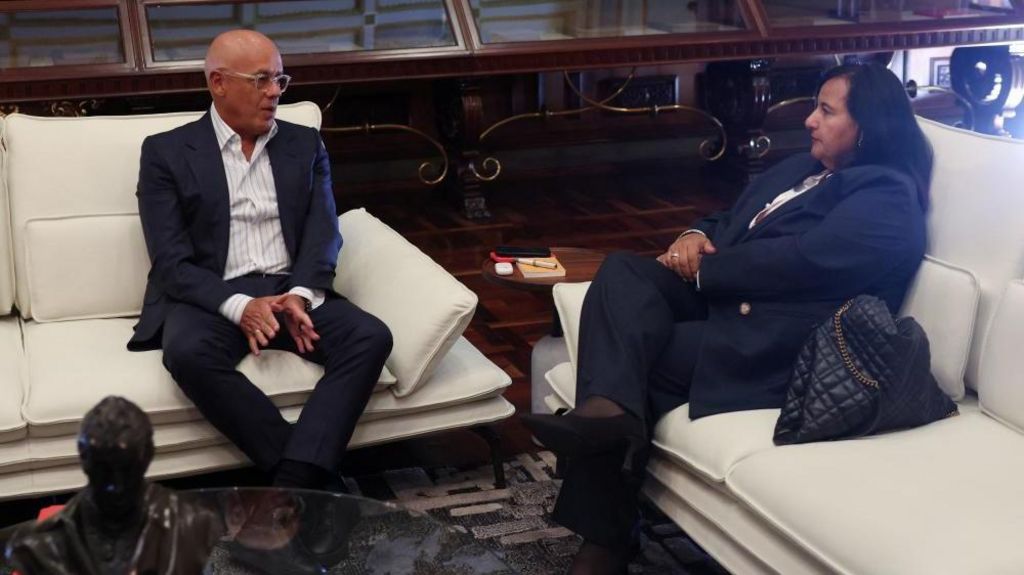
Six months after U.S. special forces carried out a dawn raid on Caracas that removed then-Venezuelan leader Nicolás Maduro and transported him to New York to face long-standing drug-trafficking charges, the country’s interim administration has scheduled formal negotiations with a faction of the political opposition to kick off on August 1. The landmark talks, announced jointly by opposition representatives and the government-aligned National Assembly led by Jorge Rodríguez, comes as Venezuela grapples with the human and economic aftermath of devastating twin earthquakes that struck the country’s northern coastal region on June 24. As of mid-July, official counts confirm at least 4,734 fatalities from the disaster, with the death toll projected to climb further as rescue crews continue pulling bodies from the rubble of thousands of collapsed structures. Rodríguez, whose sister Delcy, a former Maduro vice president who has aligned with the U.S. government, currently holds the interim presidency, framed the negotiations as a necessary step for national recovery. “Only through unity can we move forward with reconstruction and maintain peace,” he said in a brief public statement, pointing directly to the widespread destruction caused by the earthquakes as the catalyst for opening dialogue. The opposition participating in the talks, a bloc of former lawmakers who won a National Assembly majority in 2015 — the last election widely recognized as free and fair for opposition parties — has framed the negotiations as a step toward building a democratic roadmap for the country. Dinorah Figuera, a former opposition legislator who returned to Venezuela in June after nearly eight years in exile, will lead the opposition negotiating team. Figuera confirmed upon her arrival in Caracas that she came at the invitation of the U.S. State Department, with a core goal of pushing for sweeping reform of the National Electoral Council (CNE), the body that oversees Venezuelan elections. The CNE has for years been controlled by hardline Maduro loyalists, and it drew widespread international condemnation after the 2024 presidential election when it declared Maduro the winner, despite independent observer vote tallies confirming a landslide victory for opposition candidate Edmundo González. In its official statement released Tuesday, the opposition bloc laid out its clear priorities for the talks: strengthening democratic institutions, overhauling the flawed electoral system, and establishing ironclad guarantees for full political participation for all factions across the country. For decades under Maduro’s United Socialist Party (PSUV), opposition figures and government critics faced systematic persecution: thousands were jailed, and hundreds of thousands fled into exile. Even after Maduro’s ouster earlier this year, 372 political opponents remain incarcerated, according to ongoing tallies from Venezuelan prisoners’ rights organization Foro Penal. The announcement of talks also brings to light a growing divide within Venezuela’s opposition coalition, and a clear preference from the Trump administration for Figuera’s faction over the movement led by María Corina Machado, the most prominent Venezuelan opposition leader. Machado, who was awarded the 2025 Nobel Peace Prize for her work advocating for democratic transition in Venezuela, secretly fled the country in late 2025 to accept the prize, and has not been permitted to return despite repeated attempts. She dedicated her Nobel honor to U.S. President Donald Trump, but the Trump administration has nevertheless backed Figuera as the lead negotiator, rather than Machado. Machado attempted to re-enter Venezuela shortly after the June earthquakes, but was turned away at the border. While Trump has denied his administration blocked her entry, U.S. media outlets have cited anonymous senior administration officials describing Machado’s return attempt as “potentially disruptive” to ongoing post-earthquake rescue and reconstruction efforts. Machado has not yet issued a public comment on the newly announced talks, but has called a meeting of her opposition coalition for Wednesday to discuss the next steps for her faction.
作者: admin
-
Italy’s Meloni suffers surprise setback in close vote on electoral reform
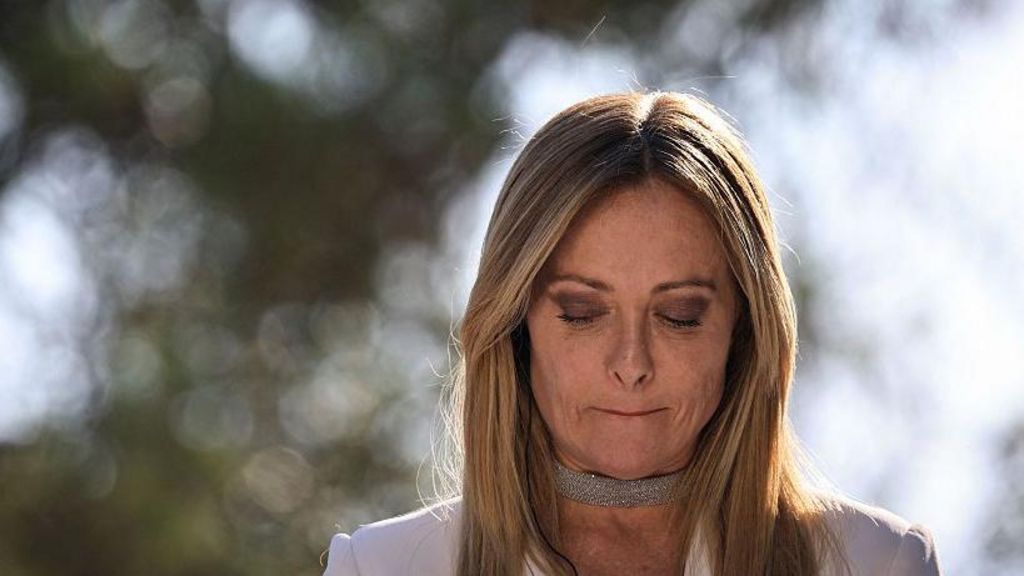
Italy’s right-wing coalition government led by Prime Minister Giorgia Meloni has been handed a major political setback after a narrow one-vote defeat for a key electoral reform amendment in the country’s Chamber of Deputies, deepening existing fractures within her ruling bloc ahead of the next general election scheduled for autumn 2027.
The secret ballot held Wednesday evening saw 188 Members of Parliament reject the preference voting provision, which was championed by Meloni’s own Brothers of Italy (FdI) party, compared to just 187 votes in support. The razor-thin margin has led to widespread speculation that multiple government-backing MPs defied party lines to vote against the amendment, a sign of growing internal discontent within Meloni’s coalition.
Speaking shortly after the result was announced, an outspoken Meloni took to social media to frame the defeat as a lost chance for Italian voters. In a heated post, she argued that opposition celebrations, which she compared to a World Cup victory, exposed their opposition to giving citizens direct control over selecting their parliamentary representatives. The Prime Minister has not yet addressed repeated opposition demands that she resign and call an early general election, breaking with the current 2027 timeline.
The broader electoral reform package pushed by FdI aims to shift Italy to a fully proportional voting system that grants a parliamentary seat bonus to the largest party or coalition, even if that bloc fails to win an outright majority. The legislation also requires all pre-election coalitions to agree to a shared policy platform and a single candidate for prime minister — a requirement that has proven unpopular with many smaller parties, which have long preferred to run independent election campaigns. While the specific preference voting amendment was struck down, the government retains the ability to advance the remaining components of the reform package through parliament.
Meloni has long defended the proposed changes, arguing they would deliver more stable governing coalitions and end the cycle of frequent government collapses that have defined modern Italian politics. But opposition parties have fiercely pushed back against the plan, dismissing it as an authoritarian power grab designed to lock in a majority for Meloni’s bloc in the next election.
Meloni has led her centre-right to hard-right coalition government since 2022, but internal tensions have risen steadily in recent months as individual coalition partners have seen their national poll numbers decline. Reservations about the electoral reform among junior coalition partners already strained alliances ahead of the vote, and the eventual defeat has amplified questions about the coalition’s long-term cohesion.
Adding to Meloni’s political challenges, centre-left and left-wing opposition groups have already begun building a unified electoral front to challenge her government in 2027. This collaboration already delivered a victory for opposition forces this spring, when they defeated a government-backed constitutional referendum — the first major high-profile loss for Meloni’s administration.
To secure a more comfortable parliamentary majority in the upcoming election, political analysts note Meloni will need to expand her appeal, either by reaching toward centrist voters or aligning more closely with newer hard-right factions such as former paratrooper Roberto Vannacci’s National Future (FN). Vannacci split from Matteo Salvini’s League party earlier this year to launch the Eurosceptic FN, which advocates for “remigration” — the mass deportation of people with migrant backgrounds. Recent polling puts FN at around 6% national support, edging out the League’s current 5.6% rating.
If Meloni is able to hold her coalition together and avoid an early election, she will make history as the first Italian prime minister since 1946 to complete a full five-year term with a single uninterrupted government.
-
Heatwave prompts Italy’s delivery riders to strike for extra rights
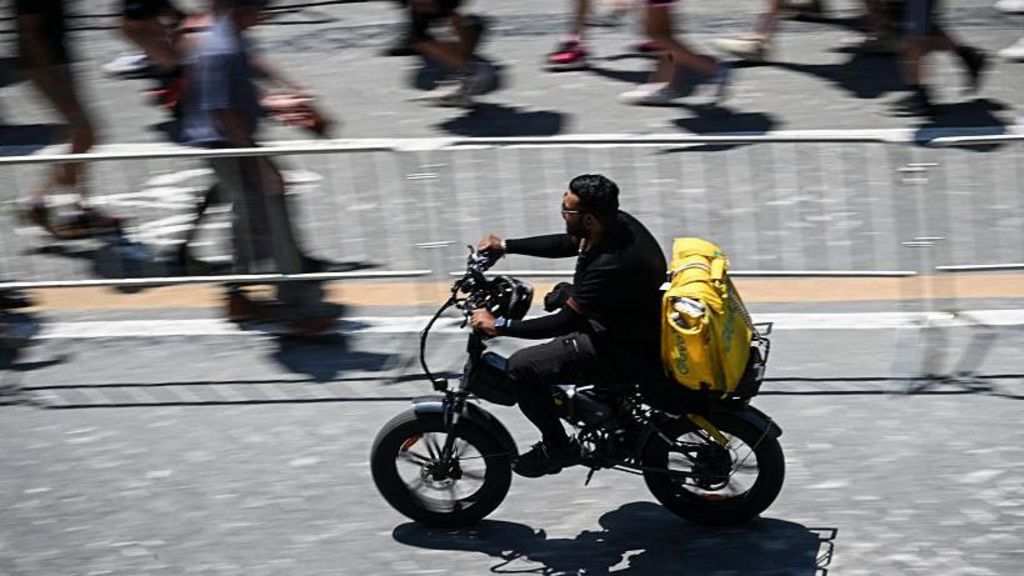
As record-shattering heatwaves push temperatures across Southern Europe above 40°C, delivery gig workers across multiple Italian cities are launching coordinated strike action this Wednesday to demand urgent improvements to exploitative working conditions that put their lives and livelihoods at risk. The industrial action comes on the heels of local regulations that attempt to mitigate heat risk, but fail to address the core economic pressure that forces riders to work through dangerous high temperatures.
-
Spanish authorities identify all 13 victims of deadly southern fire
Amid an ongoing extreme heat wave sweeping across Europe that has amplified wildfire risk across the continent, two major blazes have seen key updates in recent days: all 13 victims of a devastating wildfire that destroyed an expat community in southern Spain have now been formally identified by authorities, while French fire crews have successfully brought a major forest fire near Paris under control.
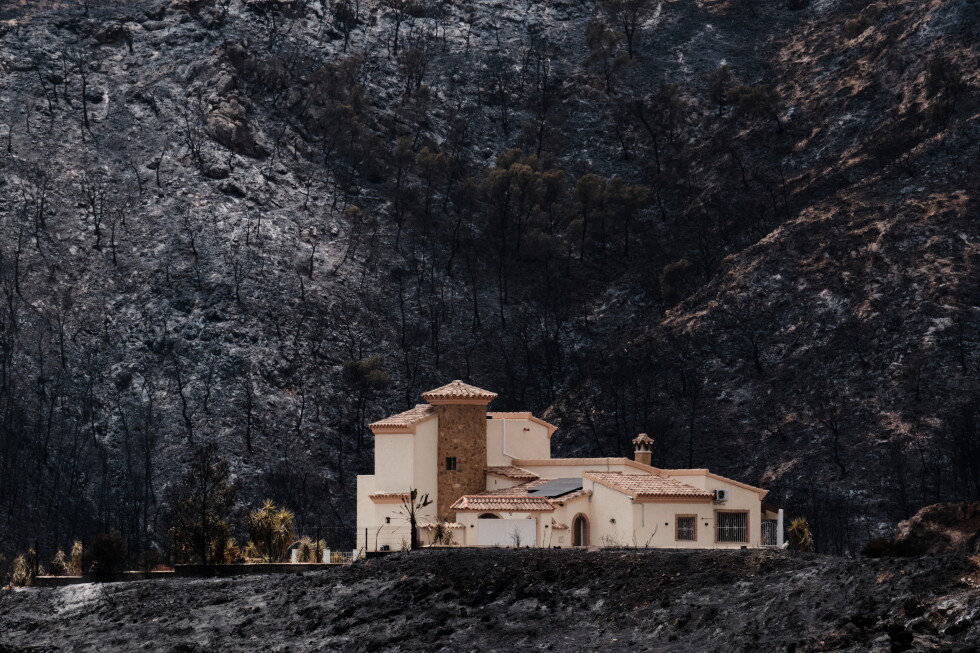
The fatal Los Gallardos fire, which tore through a remote residential area in southern Spain five days before the identification announcement, scorched roughly 70 square kilometers of mixed forest and agricultural land. Ranking among the deadliest wildfires to hit fire-prone Spain in recent years, the blaze left 13 people dead, all of whom were adults. Judicial authorities confirmed in an official statement on late Tuesday that DNA and biological testing had successfully matched remains to all missing people, closing the initial missing persons investigation.
Of the 13 victims, 12 were foreign nationals, spanning multiple countries: seven were British citizens (including a 93-year-old woman who succumbed to her injuries in a hospital after the blaze), three were Belgian, one was a French woman, and one was an American. The remaining fatality was a Spanish national. Demographically, eight of the victims were women and five were men. Initial official assessments had placed the number of missing people at 23, but all unaccounted-for residents have now been cleared, leaving no outstanding missing persons cases connected to the fire.
Across the border in France, another high-profile wildfire that broke out in the iconic, tourist-frequented Fontainebleau forest just south of the French capital has been fully contained by French firefighting teams, according to local officials. The blaze forced the evacuation of multiple nearby residential communities when it spread earlier, though crews managed to halt its expansion ahead of worsening heat. Firefighters are still working to extinguish small, isolated flare-ups across the burned area as of Wednesday.
The twin wildfire incidents come as Europe grapples with a dangerous combination of extreme heat, prolonged drought, and long-term climate warming. On Wednesday, temperatures across much of France hit exceptionally high levels, with local peaks reaching 39 degrees Celsius (102 degrees Fahrenheit). Météo-France, the country’s national weather service, has maintained warnings that the mix of record heat and parched, dry soil creates persistent severe wildfire risk across large swathes of the nation.
In Spain, the current extreme heat wave, paired with strong winds and near-absent rainfall over recent weeks, has created perfect tinder conditions that allow small ignitions to spread into large, out-of-control blazes rapidly. Long-term climate data underscores the growing risk facing the continent: the European Union’s Copernicus Climate Change Service confirms Europe is warming faster than any other continent on Earth, with average temperatures rising twice as quickly as the global average since the 1980s, a trend that is expected to continue increasing the frequency and severity of extreme heat and devastating wildfires across the region.
-
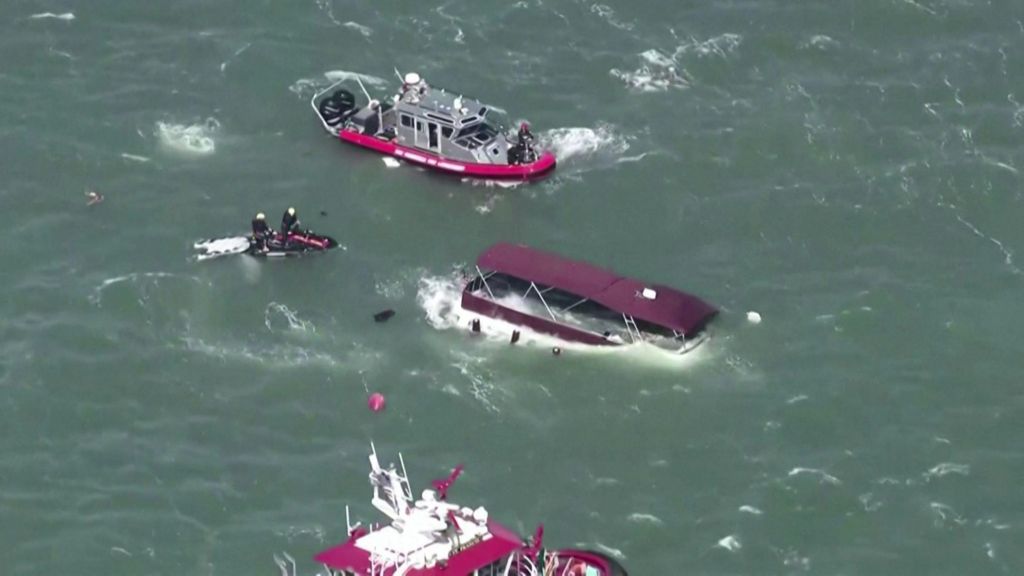
One dead and three missing after boat sinks near Alcatraz
A deadly maritime accident has left one person dead and three others unaccounted for after a multi-deck recreational vessel capsized in rough waters roughly 600 yards off California’s Alcatraz Island on Tuesday, local emergency authorities confirmed.
San Francisco Fire Department Chief Dean Crispen shared updated details on the incident during a public press briefing, noting that the first emergency call came into local dispatch at 15:37 local time. Initial reports incorrectly referenced a vessel on fire, but when first responders arrived at the scene, they found no evidence of an active blaze. Instead, witness statements and on-site assessments confirmed that choppy bay waters caused the 50-foot three-deck pontoon boat to take on water rapidly before overturning.
The first marine rescue unit to reach the overturned boat pulled a man in critical distress from the cold bay water and immediately initiated cardiopulmonary resuscitation, Crispen said. Despite emergency intervention, the man was pronounced dead after being brought back to shore.
All 20 people on board were part of a group of mostly family members who had gathered on the boat to hold a memorial service, according to Crispen. Of the 20 passengers, three injured survivors were transported to a nearby local hospital for treatment, and all three remain in stable condition as of Tuesday evening. Thirteen other passengers were able to get to safety without injury and have returned to shore.
Two local civilians, longshoreman Justin Marceline and fisherman Mike Montoya, were among the first to jump in to assist with rescue efforts before official emergency teams arrived. Marceline described the scene as total chaos when they arrived, telling Reuters that every passenger pulled from the water was either exhausted from struggling against the current or panicked and flailing in the rough conditions.
As of Tuesday evening, a joint search and rescue operation is ongoing, led by the San Francisco Fire Department and supported by the U.S. Coast Guard. Rescue teams have committed to continuing the search for the three missing people through the night, leveraging specialized maritime search assets to cover the surrounding bay area.
-
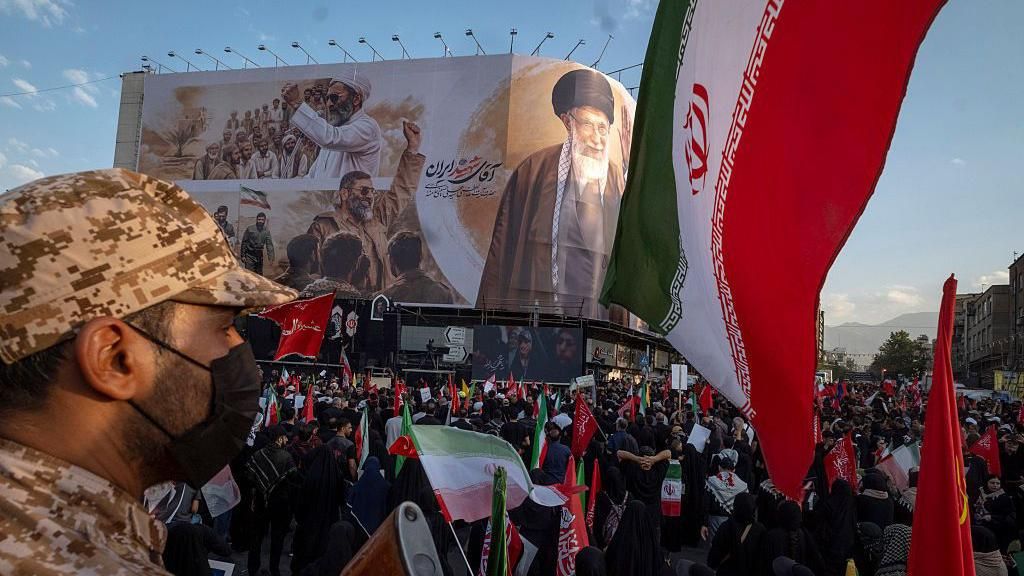
Iran threatens to block more trade routes as US launches fresh strikes
A sharp escalation of hostilities between Iran and the United States has sent shockwaves through the already volatile Middle East, with both sides launching military strikes, issuing aggressive threats, and raising fears of a full-scale regional conflict. The spiral of violence began this week as the U.S. military’s Central Command (Centcom) confirmed it had conducted coordinated multi-domain strikes against Iranian targets, combining drone attacks, air raids, and naval operations. These strikes included an overnight seven-hour operation followed by additional action on Wednesday morning, building on a series of escalating confrontations between the two nations.
Shortly after the latest U.S. strikes, Washington imposed a renewed naval blockade on all Iranian ports starting Tuesday evening, barring any commercial or civilian vessels from entering or exiting Iranian coastal waters. In a stark response to what Iran calls U.S. “acts of aggression,” the Islamic Revolutionary Guard Corps (IRGC) issued a sweeping warning that it will keep the strategically critical Strait of Hormuz closed to international shipping until the U.S. halts all hostile actions. The IRGC went further, threatening to shut down additional regional oil and gas export routes that benefit the United States and its regional allies, though it declined to specify which waterways or infrastructure could be targeted. The Strait of Hormuz is one of the world’s most vital energy chokepoints, with roughly 20% of global oil consumption passing through its waters daily, making any prolonged closure a major threat to global energy markets.
On the political front, former U.S. President Donald Trump escalated rhetorical tensions in an interview aired Tuesday night on Fox News’ *Special Report with Bret Baier*. Trump issued an explicit threat that if Iran refuses to return to nuclear and diplomatic negotiations, his administration will launch targeted strikes on Iran’s critical infrastructure starting next week. “I’ll save the energy targets for last, but ultimately we’ll hit energy targets,” Trump said, adding that bridges and power plants would be the first targets hit. This threat comes just days after Trump shifted his earlier position: he recently walked back a threat to impose a 20% tariff on all goods passing through the Strait of Hormuz, instead saying the U.S. would pursue “massive” trade and investment agreements with Gulf Cooperation Council allies instead.
Parallel to these political and maritime threats, Iran’s state-run broadcaster reported that the Iranian army has launched multiple independent attacks against U.S. military targets located in three key U.S. allies in the region: Jordan, Kuwait, and Bahrain. Officials from all three allied nations confirmed they had intercepted a barrage of drones and missiles launched from Iranian territory, though no details on casualties or significant infrastructure damage have been released as of this reporting.
The rapid sequence of escalating attacks and threats has pushed the decades-long Iran-U.S. standoff to its most dangerous point in years, with regional powers and global leaders scrambling to de-escalate the crisis before it spirals into a wider conflict that could disrupt global energy supplies and destabilize the entire Middle East.
-
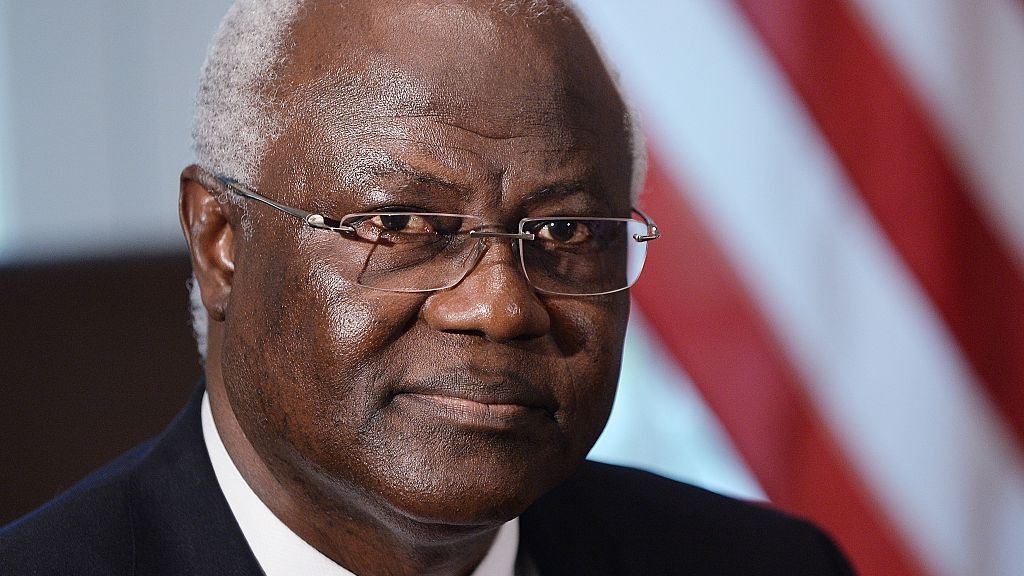
Sierra Leone drops treason charge against ex-president over attempted coup
Nearly three years after he was first arrested on charges tied to a failed coup attempt, the government of Sierra Leone has formally dismissed all criminal charges against Ernest Bai Koroma, the West African nation’s former head of state. The 72-year-old ex-president, who has maintained his innocence in the case, has been living in exile in Nigeria since early 2024 after a regional mediation deal allowed him to leave the country for medical care. Now, the office of Sierra Leone’s attorney general confirmed Tuesday that all legal barriers have been lifted, clearing the way for Koroma to return to his home country whenever he chooses.
The charges against Koroma, which included the grave offense of treason, stemmed from the November 2023 attempted uprising that shook the nation just months after a deeply contentious general election. On the day of the coup attempt, armed assailants stormed a military armoury and multiple correctional facilities across the country, enabling the escape of close to 2,000 incarcerated people. The violent unrest left roughly 20 people dead before government forces quelled the uprising.
The botched coup followed a tight re-election victory for current President Julius Maada Bio, who first defeated Koroma in the 2018 national vote to end the former president’s 11-year tenure in office. Bio’s narrow second-term win was immediately disputed by Koroma’s All People’s Congress, the main opposition political party. International election observers also issued public criticism of the poll, pointing to widespread gaps in transparency during the vote-counting process that fueled widespread public distrust in the results.
In an official statement responding to the dismissed charges this week, Koroma reaffirmed his long-held belief that peaceful resolution, justice and national reconciliation will always overcome political hardship and division. He also extended explicit public gratitude to three key actors for their role in facilitating the outcome: sitting Sierra Leonean President Julius Maada Bio, Nigerian President Bola Tinubu, who hosted his exile, and the Economic Community of West African States (ECOWAS), the regional bloc that negotiated the initial agreement to allow Koroma to leave Sierra Leone for exile and medical treatment. To date, the Sierra Leonean government has not offered any public explanation for its decision to drop the full set of charges against the former president.
-
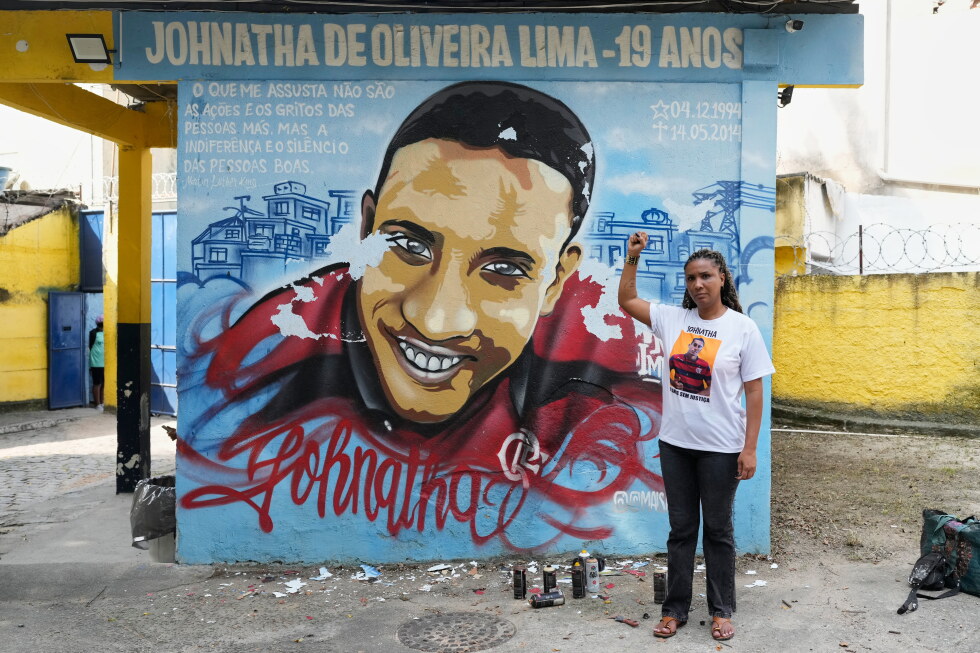
United by grief, mothers in Brazil demand reparations after police killed their sons
RIO DE JANEIRO — For Ana Paula Oliveira, the 2014 killing of her 19-year-old son Johnatha at the hands of a Rio de Janeiro police officer in the Manguinhos favela felt like an unbearable end. A mother of two, she never imagined she would outlive her child, let alone emerge from crippling grief as a leading activist demanding systemic change. Today, more than a decade later, she credits a collective of other grieving mothers with saving her life — and transforming their shared pain into a nationwide movement for justice.
“Without any doubt, if I had been alone I wouldn’t have made it here, 12 years later,” Oliveira shared at a recent memorial event held at her son’s former school to mark the anniversary of his death. “We need one another to cry together, to smile together and to fight together.”
Oliveira is one of dozens of Brazilian mothers who have turned personal loss into political action, pushing back against a rising tide of lethal police violence that has disproportionately impacted young Black men living in the country’s impoverished favela communities. Following the model of Argentina’s iconic Mothers of Plaza de Mayo — the grassroots human rights group founded by women whose children were disappeared during the country’s 1976–1983 military dictatorship — these women organize collectively to attend judicial hearings, lead public protests, host commemorative events, and provide critical mutual psychological support to one another. Their core mission is to ensure their sons are remembered as people, not just statistics in Brazil’s growing crisis of state violence. Now, they are calling on the federal government to enact a landmark national policy that guarantees support for family members of police violence victims, and to allocate public funding to sustain their grassroots work.
Official and nonprofit data underscores the urgency of their demands. The Brazilian Forum on Public Safety, a leading independent nonprofit, reports that more than 6,000 people have been killed by Brazilian police every year since 2018. In its 2025 annual report on national violence trends, the organization found that 82% of all victims of lethal police violence are Black, and the largest share of victims are young people between the ages of 18 and 24. In Rio de Janeiro alone, the nonprofit Crossfire Institute recorded 460 deaths from police operations last year — the highest annual total since 2016, and a 52% jump from 2023 figures.
Last year, Rio de Janeiro drew global condemnation for the state’s deadliest single police raid in history, when officers carried out an anti-gang operation targeting the Red Command criminal group in two Rio favelas that left 117 people dead, alongside five fallen police officers. Then-Rio Governor Cláudio Castro, an ally of former Brazilian President Jair Bolsonaro, defended the operation, labeling those targeted “narco-terrorists” — language that echoed former U.S. President Donald Trump, who last month formally classified both Red Command and its rival First Command Capital as foreign terrorist organizations. Police reported seizing 118 weapons, more than a ton of drugs, and arresting 113 people during the raid, but the incident renewed widespread international scrutiny of aggressive anti-gang tactics in Rio’s favelas.
The movement for accountability comes ahead of Brazil’s October general election, where crime and public security have emerged as top voting issues for the electorate. Supporters of presidential hopeful Sen. Flávio Bolsonaro, son of former President Jair Bolsonaro, argue that police must be given unrestricted support to combat heavily armed gang activity that has long plagued favela communities. But grieving mothers and allied nonprofits counter that Brazilian law enforcement routinely uses excessive, deadly force that disproportionately kills unarmed young Black residents with no links to gang activity.
Oliveira’s own case illustrates the long, frustrating fight for justice. Johnatha was shot in the back while walking through a Manguinhos street after visiting his grandmother, she says. Police claimed the shooting was carried out to disperse a crowd of protesters, but Oliveira has long pushed for the officer responsible to be convicted of intentional homicide. In 2024, a jury found the officer guilty of manslaughter without intent to kill; prosecutors have since successfully appealed the verdict, but a date for a retrial has not yet been scheduled.
For many mothers, activism has become a permanent calling rooted in personal loss. Monica Cunha, whose 20-year-old son was killed by police in 2006, went on to become a city councilwoman and will formally launch her pre-candidacy for state legislator in October’s upcoming elections. “I fight for memory, truth, justice, reparations and guarantees of nonrepetition — not only for myself, but so that no other family has to endure this pain,” Cunha wrote in an Instagram post marking the 18th anniversary of her son’s death. “The racism that kills our children and loved ones is not an isolated problem, and it must be confronted through state policies. I will keep going, turning grief into struggle.”
The movement has already secured small, hard-won victories that have kept other mothers hopeful. Sisters Nadia dos Santos and Glaucia dos Santos have lost three teenage sons between them to police violence: Nadia lost 18-year-old Cleyton in 2015 and 17-year-old Cleyverson in 2022, while Glaucia’s 17-year-old son Fabricio was killed by police in 2014. A large memorial to the three teenagers covers the front wall of the family’s home in Rio’s Chapadao favela complex. The pair founded their own support group and spent years pushing for accountability in Fabricio’s killing; in 2023, the officers responsible were sentenced to nine years in prison, a ruling that the wider movement celebrated as a rare win.
“We want others to stay alive, so we have to stay upright” despite the crushing weight of grief, Glaucia dos Santos said.
Last year, the movement traveled to Brazil’s capital Brasilia to meet with leaders from the judiciary, legislative, and executive branches to present their policy proposal, which was developed with support from Raave, a Rio-based network of organizations supporting people impacted by police killings. “Raave is negotiating with the federal government to implement a pilot project … developed by the mothers, so that we can provide care and guarantee the rights of this population,” explained Guilherme Pimental, a Raave coordinator.
The mothers are clear about what they want: a binding national public policy that provides financial and psychological reparations to families, alongside systemic changes to prevent future killings. Nadia dos Santos, who traveled to Brasilia to advocate for the policy, says the state bears a clear responsibility to support families whose loved ones are killed by state actors. “The state should have the obligation to give us mothers who lose our sons because of the state’s violence reparations. … We fight, we work, but we become ill. We need solutions,” she said.
Oliveira says reparations can take many forms beyond financial support, including permanent public commemoration of victims by naming schools, hospitals, daycares and other public facilities after them. Most critical, she adds, is policy change that stops the violence from happening to other families. “There are other forms of reparation as well, such as building other public policies of nonrepetition that would help prevent new cases. … Many things need to be done, repaired, so that this barbarity does not continue,” she said.
-
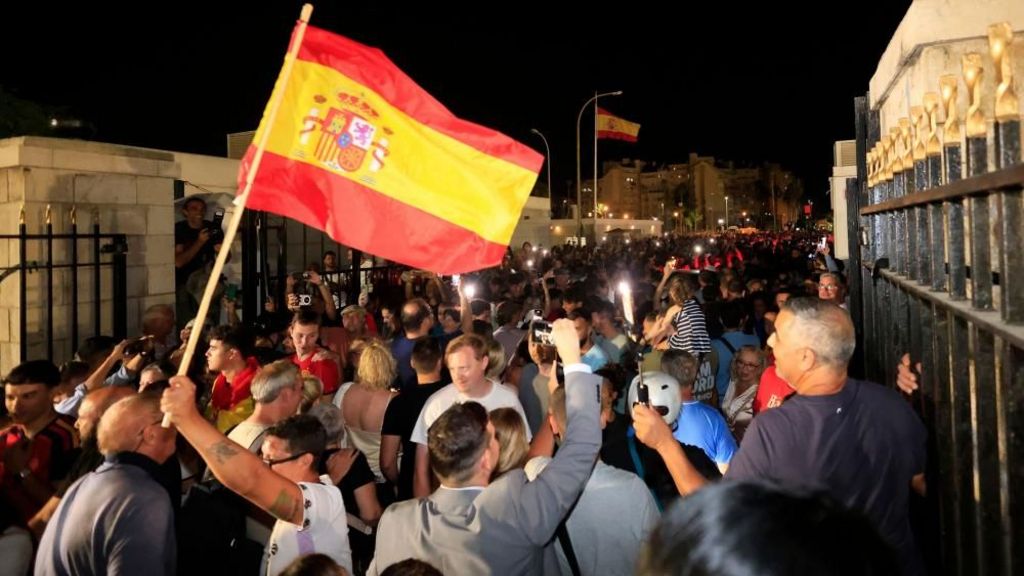
Celebrations as Gibraltar-Spain border fence removed
In a momentous step that has been hailed as a new chapter in cross-border relations, the long-standing physical barrier separating Gibraltar and Spain has been removed, triggering widespread celebrations among communities on both sides of the boundary. The landmark event kicked off with a carefully orchestrated symbolic ceremony held at the stroke of midnight, marking the end of decades of physical separation at the crossing point.
As the final sections of the fence were taken down, thousands of people from Gibraltar and neighboring Spanish towns gathered to witness the historic occasion, and immediately after the ceremony concluded, huge crowds began moving freely across the unobstructed boundary without any mandatory border checks in place. For many local residents, the removal of the fence represents more than just an infrastructure change—it is a powerful symbol of improved cooperation and easier connection between communities that have been separated by political disputes for generations.
Local leaders on both sides have framed the move as a confidence-building measure that will boost cross-border travel, support local economies that rely on movement between the two territories, and strengthen people-to-people ties across the Gibraltar-Spain border. The event has drawn international attention as a sign of progress in resolving long-standing regional tensions through diplomatic dialogue.
-

Three killed as Russian bombing of Odesa continues
A new wave of deadly Russian strikes on Ukraine’s southern Odesa region has left three civilians dead, marking five consecutive days of targeted assaults on the strategic Black Sea port area that underpins Ukraine’s wartime economy. The overnight attacks that began late Tuesday damaged a multi-story residential building, a non-civilian structure and a local gas pipeline, Odesa regional governor Oleh Kiper confirmed in a Telegram post Wednesday. Kiper accused Russian forces of intentionally targeting civilian populations alongside critical industrial and port infrastructure, a charge that contradicts Moscow’s official claims about the strikes.
Russia’s Ministry of Defense stated the attacks were deliberately focused on port facilities used to unload fuel products, and that all targets were linked to Ukrainian military weapons manufacturing and cargo transport operations. The targeted deepwater ports in the greater Odesa area handle the vast majority of Ukraine’s grain and commercial cargo exports, making them a strategically critical asset for the country’s wartime economic stability.
The assault on Odesa coincided with a major reciprocal strike by Ukrainian forces, who announced their drones had hit 20 Russian vessels operating in the Black Sea overnight. This latest attack follows a series of intensive strikes on Russian shipping in the nearby Sea of Azov, a waterway bounded by Crimea, eastern Ukraine’s coastline and mainland Russia. According to Reuters reporting, the persistent Ukrainian attacks on shipping have forced Russia — the world’s largest grain exporter — to suspend commercial traffic through the Sea of Azov, which carries roughly a quarter of the country’s total grain exports.
Parallel to the escalating military clashes on the Black Sea frontlines, Ukraine is navigating a sudden domestic political shakeup. On Tuesday, Ukraine’s parliament approved the resignation of Prime Minister Yulia Svyrydenko, who had held the post for less than a year. The dismissal came amid widespread pushback from lawmakers, who raised questions about the lack of a clear public explanation for the leadership change. Serhiy Koretskyi, the current head of Ukraine’s state-owned energy giant Naftogaz, is widely tipped as Svyrydenko’s successor, with a parliamentary confirmation vote scheduled for Thursday.
The unfolding violence and political shifts come as European Commission President Ursula von der Leyen arrived in Kyiv on Wednesday for her 11th visit to Ukraine since Russia launched its full-scale invasion in 2022. Von der Leyen called the visit a “special moment” on social media, noting that she would present new cooperation initiatives designed to ramp up joint defense production between the European Union and Ukraine. The announced initiatives are expected to streamline collaboration, enabling both sides to increase defense output at a faster pace to support Ukraine’s frontline needs.