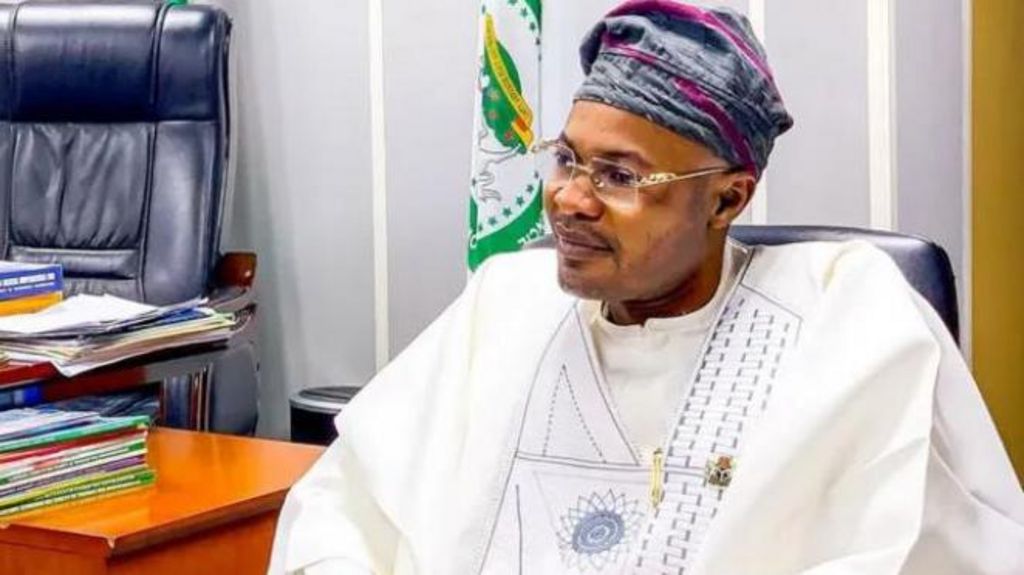
A long-running manhunt for the self-proclaimed leader of a bogus Nigerian government agency set up within the presidential office complex has come to an end, with law enforcement officials confirming the suspect’s arrest after weeks of him evading capture.
Adeniyi Adeyemi Matthew, who claimed the title of Director General of the non-existent Presidential Foreign Investment Promotion Council (PFIPC), was taken into custody in Osun State, a southwestern region of Nigeria. The arrest was executed following an arrest warrant issued earlier this week by the Federal High Court based in Abuja, Nigeria’s capital. The warrant was activated after Matthew failed to appear at a scheduled court hearing to answer to multiple charges of forgery and official impersonation.
The fraud scandal has dominated national headlines in Nigeria since President Bola Tinubu ordered a full corruption probe into the fake agency just one week ago. While full details of the tactical operation that led to Matthew’s arrest remain limited as of Tuesday, Nigeria’s police force confirmed that specialists from two elite units — the Force Intelligence Department and the Intelligence Response Team — took part in the detainment. Following his arrest, Matthew is set to be transferred to the national police headquarters in Abuja to undergo further interrogation over the alleged scheme.
The search for Matthew launched last week after allegations of the PFIPC’s illegitimacy first came to light. In an official statement shortly after the scandal broke, Tinubu’s office confirmed that an official-looking document purporting to establish the agency was entirely fabricated. The Nigerian presidency added that forensic analysis conducted by police had verified that the signature of Femi Gbajabiamila, President Tinubu’s Chief of Staff, appearing on the supposed founding appointment letter had been forged.
The unfolding controversy has triggered widespread demands from across Nigeria’s political and civic sphere for an independent public inquiry. Civil society organizations, opposition political figures and senior legal professionals have all joined the call for greater transparency into how a fake agency was able to secure official-looking credentials and space within government facilities.
Prior to his arrest, Matthew had repeatedly maintained his innocence in conversations with local Nigerian media. According to local reporting, Matthew had claimed his life was under threat, though he initially stated he would appear in court to clear his name. Despite this pledge, he did not attend this week’s scheduled hearing. Matthew’s legal representative, Genesis Francis, told the court he had been unable to convince his client to attend the proceedings, citing Matthew’s stated concerns for his personal safety. The lawyer also confirmed that Matthew had submitted an open letter to President Tinubu outlining these safety worries.
Matthew had previously claimed that the PFIPC was founded in 2024 with the explicit goal of attracting new foreign direct investment to Nigeria. To date, however, there is no public or official record of any investment deals being successfully completed by the supposed agency.
A reporting team from BBC News Pidgin uncovered that the fraudulent organization had managed to secure dedicated office space inside Abuja’s Federal Secretariat, the large central government complex that houses most of Nigeria’s federal ministries. Reports also emerged that the PFIPC was listed in the 2026 Nigerian Appropriation Act with a proposed public allocation of 1.3 billion naira, equivalent to approximately $950,000 or £700,000, and was said to hold official accounts with the Central Bank of Nigeria. However, Nigeria’s Accountant-General’s Office has since refuted these claims, confirming that the PFIPC never opened any active accounts with the central bank, never received any public funding, and never paid salaries to any supposed staff.
Court documents outline that Matthew and two additional co-accused face charges of using forged government documentation to create and run the fake council, opening multiple bank accounts under the agency’s false name, and repeatedly seeking official state recognition for the unregistered, non-existent organization.