作者: admin

  • Iran hits US bases in Bahrain, Kuwait and Jordan after 10 nights of US attacks

    Iran hits US bases in Bahrain, Kuwait and Jordan after 10 nights of US attacks

    A brutal cycle of cross-border violence in the Middle East has entered its second week of continuous escalation, after the United States carried out its 10th straight night of aerial bombardment against targets inside Iran, expanding a joint military campaign launched alongside Israel that collapsed a month-long ceasefire agreement earlier in July.

    According to US Central Command, the most recent round of offensive operations ran for approximately five hours, wrapping up at 9 p.m. Eastern Time on Monday. American military targets in the latest strikes included Iranian command and control hubs, missile and drone launch facilities, coastal naval infrastructure and national air defense networks. This renewed assault builds on the joint Israel-US campaign that first launched with coordinated attacks on Iran on February 28, before a ceasefire was reached in mid-June.

    On June 17, Washington and Tehran signed a memorandum of understanding that pledged an “immediate and permanent end” to all cross-border military operations. The terms of the deal also required the US to lift a crippling naval blockade of Iranian ports and established a 60-day negotiating window to resolve longstanding regional disputes. A core requirement of the agreement mandated Israel halt all cross-border attacks into Lebanon, a provision Washington ultimately failed to enforce even as US negotiators pushed to reinterpret clauses governing access and navigation through the Strait of Hormuz.

    The fragile truce officially collapsed on July 8, when former President Donald Trump declared the June agreement void, ordered the resumption of unilateral US strikes against Iran and reimposed the full naval blockade that had been lifted weeks earlier. In response to the resumption of US hostilities, Tehran reclosed the strategic Strait of Hormuz, a chokepoint through which roughly 20% of the world’s daily oil shipments pass, and renewed missile and drone strikes against US military bases deployed across the Middle East.

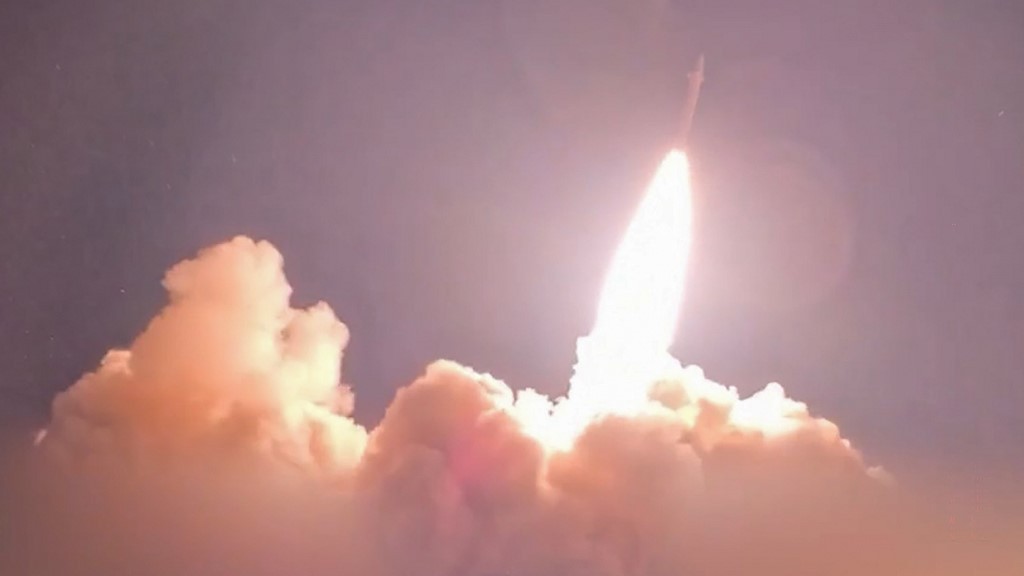
    Overnight, Iranian military officials announced a series of retaliatory strikes targeting US-aligned military installations across Bahrain, Kuwait and Jordan. The Islamic Revolutionary Guard Corps (IRGC), Iran’s elite paramilitary force, confirmed it destroyed a US air defense system and radar array located in Bahrain’s Muharraq district. A follow-up statement carried by Iran’s state-run IRIB broadcaster added that a coordinated missile and drone assault also disabled a Patriot air defense system stationed in Al-Riffa, Bahrain.

    Separately, Iran’s army told the semi-official Fars News Agency that drone strikes hit Bahrain’s Sheikh Isa military base, a critical logistics and operations hub for the US Navy’s Fifth Fleet. Iranian military officials confirmed retaliatory operations will continue until the US halts its cross-border attacks and withdraws hostile forces from the region. “Security in the region has been disrupted following the mischief of US terrorist forces, and the Armed Forces of the Islamic Republic are attempting to restore security and calm to the region in their battle against the US,” an official army statement read.

    In Kuwait, the IRGC confirmed strikes targeted US radar, telecommunications, satellite communications and missile defense infrastructure at both Ahmed Al-Jaber Air Base and Ali Al Salem Air Base. Iranian state news agency Tasnim reported additional damage to key infrastructure at Kuwait’s Camp Arifjan, a helicopter operations zone at Camp Al-Adiri, and troop housing facilities at Ahmed Al-Jaber.

    In Jordan, the IRGC reported it destroyed a missile defense radar and an F-15 fighter jet housed in a reinforced shelter at a US military base there. Iranian officials noted the strike was intended to eliminate US radar coverage ahead of expanded retaliatory missile and drone operations across the region. A senior Iranian military source told Fars that the Strait of Hormuz will remain closed to commercial shipping for as long as US attacks on Iranian territory continue.

    “The Strait of Hormuz is in full control of the Iranian armed forces,” the source said. “Any decision to reopen or continue restrictions on this passageway will be made solely based on security considerations and national interests, and this situation will not change as long as US threats and hostile actions continue.”

    The IRGC also confirmed that two commercial tankers that attempted to transit an unapproved southern route near Oman’s territorial waters suffered heavy damage from explosions that sparked large onboard fires. Local rescue teams have already launched operations to evacuate the vessels’ crews. “It is obvious that as long as America’s evils continue in the region, the Strait of Hormuz will be closed, and not even a drop of oil, gas, or a package of chemical fertiliser will be exported from the region,” the IRGC added in a statement.

    The escalating conflict has drawn growing domestic political pushback in the US, where Senate Minority Leader Chuck Schumer has called for an immediate end to hostilities and pledged Democratic lawmakers will force a new congressional vote to cut off authorization for military operations. “Every second Trump prolongs his war in Iran is another second our service members remain in danger,” Schumer wrote on social media platform X. “Senate Democrats will force Senate Republicans to take another vote to end this war and bring our troops home. Enough is enough. End this war.”

    Despite widespread disruption to global energy shipping, international oil prices dipped slightly on Monday following reports of new diplomatic mediation efforts led by neutral regional states. Global benchmark Brent crude fell 0.4% to settle at $88.87 per barrel, while US West Texas Intermediate crude for September delivery traded at $82.47 per barrel at market close.
  • Two French firefighters die tackling blaze near Bordeaux airport

    Two French firefighters die tackling blaze near Bordeaux airport

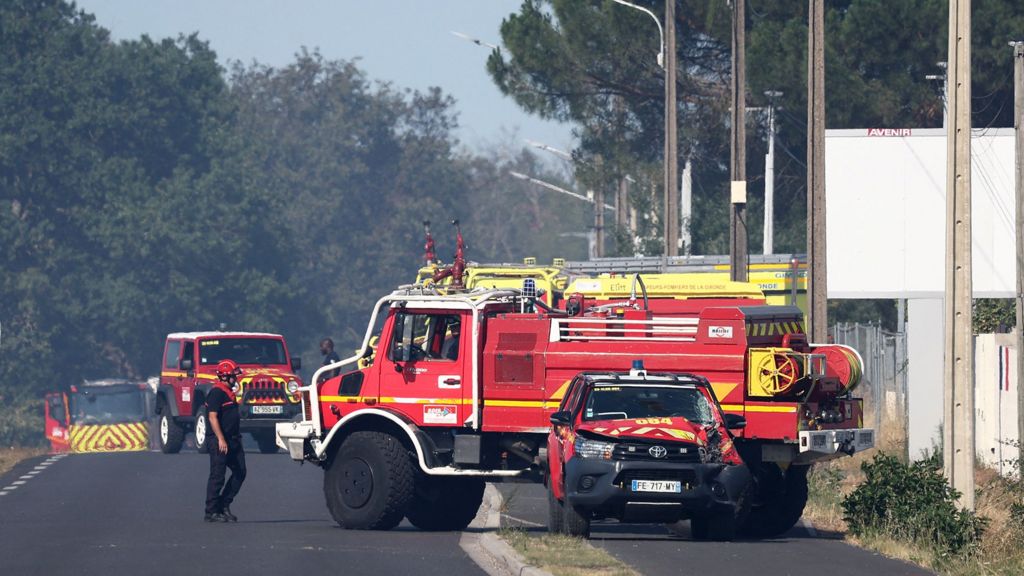
    France is grappling with an unprecedented wave of wildfires amplified by record-breaking heatwaves, with two firefighters losing their lives battling a major blaze near Bordeaux-Mérignac Airport in southwestern France, local officials have confirmed. Local French media reports indicate the fire, which ignited close to one of the airport’s public parking lots, began as an uncontrolled brush fire before rapidly spreading to an adjacent structure.

    Social media footage and imagery captured by on-site witnesses show commercial airline passengers disembarking onto airport tarmacs as a towering, dense plume of dark smoke billowed into the sky just kilometers from the runway. In response to the emergency, airport authorities implemented flight delays for all incoming scheduled services to prevent additional risk to passengers and crew. Roughly 100 ground-based firefighters, supported by specialized aerial firefighting aircraft, have been deployed to bring the blaze under control.

    French Interior Minister Laurent Nuñez confirmed the fatalities during a scheduled question-and-answer session at the French National Assembly on Tuesday, noting he had received official notification of the deaths from administrative leaders in Gironde, the department where the Bordeaux fire is burning. Nuñez added that he would travel to Gironde “as soon as possible” to personally oversee ongoing suppression efforts. Gironde is among a growing number of French departments already reeling from weeks of wildfire activity, which has been stoked by an extended, unseasonal heatwave that has pushed regional temperatures well above average.

    Hours after the Bordeaux fire was reported, a new large-scale wildfire erupted on Tuesday in the southeastern department of Var. The fire, burning across territory in the commune of Pontevès, “remains entirely out of control and is spreading at a rapid pace,” according to the Voluntary Association for Fire Monitoring in France (PSFDF). In response, officials have deployed 500 firefighters and rescue personnel to contain the blaze, and have already ordered the evacuation of 150 local residents to safe emergency shelters.

    This season’s wildfire activity has already surpassed all modern records in France. Official data compiled by the European Forest Fire Information System (Effis) shows that between the start of January and mid-July, more than 42,000 hectares (103,784 acres) of land have burned across the country — a total that already exceeds the full-year record set in 2022. French President Emmanuel Macron noted last week that France has not faced this level of wildfire activity since the end of World War Two, with nearly 11,000 separate blazes recorded nationwide since the start of 2026.

    The surge in destructive wildfires across France and broader Europe is directly tied to human-caused climate change, according to climate scientists. Data from the Copernicus Climate Change Service confirms Europe is warming twice as fast as the global average, making the continent disproportionately vulnerable to extreme weather events. Rising global temperatures are fueling longer, more intense summer heatwaves, straining regional water supplies, and creating drier conditions that increase the frequency and severity of destructive wildfires.

    The current heat and wildfire crisis is not limited to France. Neighboring Spain has already seen at least 13 fatalities linked to this summer’s wildfires, with a single massive blaze north of Madrid destroying more than 29,000 hectares of forest and populated land, marking one of the most destructive wildfires in the country’s modern history.

  • General Ghalibaf’s gamble: An IRGC veteran takes on Iran’s hardliners to pursue diplomacy

    General Ghalibaf’s gamble: An IRGC veteran takes on Iran’s hardliners to pursue diplomacy

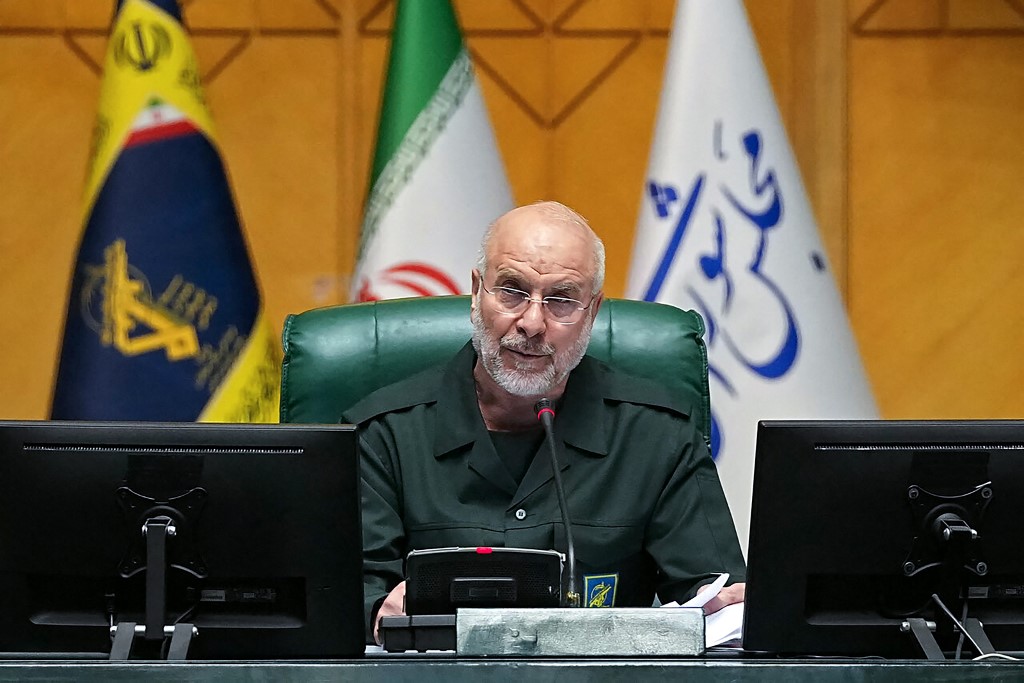
    As Iran’s parliament speaker and lead negotiator in ongoing diplomatic talks with the United States, Mohammad Bagher Ghalibaf stands at the most critical political crossroads of his decades-long career in military and public service. A lifelong conservative and former senior commander of the Islamic Revolutionary Guard Corps (IRGC), Ghalibaf is currently navigating a high-stakes balancing act: pushing to pull the Islamic Republic out of its deep confrontation with Washington through diplomatic negotiation, while fending off scathing attacks from hardline factions that accuse him of surrendering Iran’s core strategic leverage.

  • How Israel used Venezuela earthquake response for propaganda in Caracas

    How Israel used Venezuela earthquake response for propaganda in Caracas

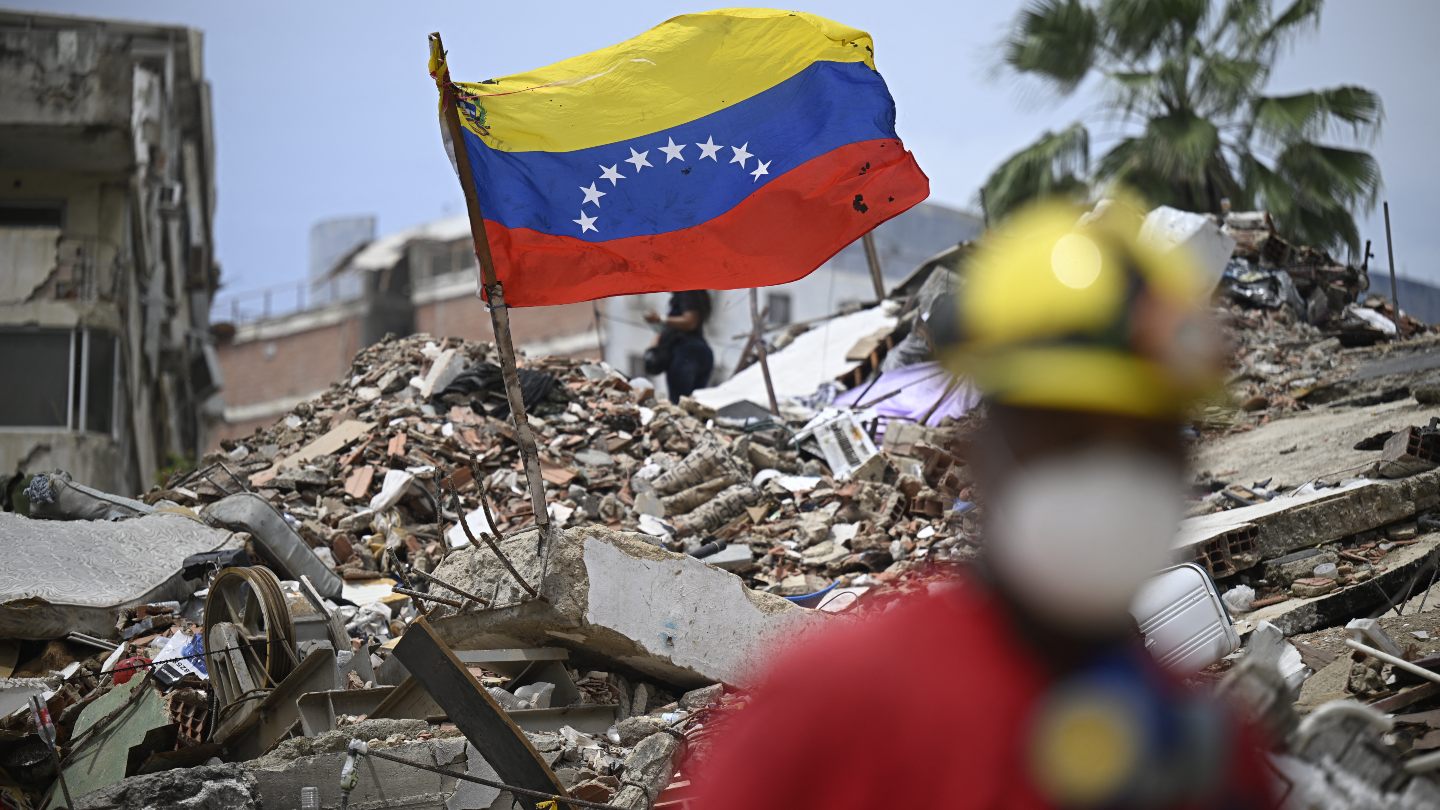
    In late June 2026, a catastrophic pair of earthquakes tore through Venezuela, leaving a trail of widespread destruction across the South American nation. In the coastal state of La Guaira alone, the seismic event reduced 80 percent of all structures to rubble, and preliminary casualty estimates place the confirmed death toll at more than 5,000 as search and recovery operations continue. In the wake of this unprecedented disaster, humanitarian support poured in rapidly from nations across the globe, including a surprising official aid delegation from Israel – a development that marks the first formal diplomatic engagement between the two countries since 2009.

    Venezuela cut all official diplomatic ties with Israel 17 years ago under then-president Hugo Chávez, a policy that remained in place through the administration of Nicolás Maduro, who held the presidency until his abduction by U.S. forces in January 2026. The current acting Venezuelan president, Delcy Rodríguez, initially maintained the long-standing anti-Israel stance of Venezuela’s ruling party, even alleging Zionist influence behind the U.S. military operation that removed Maduro from power. Today, however, her administration has openly embraced Israeli support, inviting the delegation to extend its stay by two additional weeks and approving the deployment of extra Israeli personnel to expand aid operations.

    During a July 3 press briefing, Rodríguez publicly praised the Israeli team as highly specialized and professional, outlining their work ranging from structural damage assessments of critical infrastructure to locating survivors trapped under rubble. She personally thanked Venezuelan Chief Rabbi Isaac Cohen for coordinating the deployment with Israeli authorities. Even Venezuelan Foreign Minister Yvan Gil, who has previously labeled his Israeli counterpart Gideon Sa’ar a war criminal and perpetrator of genocide, joined in expressing gratitude for the Israeli contribution to disaster response.

    Political analysts frame this unexpected rapprochement as a calculated political move by Rodríguez’s administration to curry favor with the United States. For decades, Venezuela’s ruling elite has faced sharp criticism from U.S. lawmakers across both major political parties for its close ties to Iran and Hezbollah, as well as its long-standing public support for Hamas. By opening official engagement with Israel, the current government is actively seeking to distance itself from those relationships and align more closely with U.S. regional priorities. Carlos Eduardo Pina, a Venezuelan political analyst at the National Autonomous University of Mexico, notes that diplomatic outreach to Israel did not begin in response to the earthquake – preparations for a gradual re normalization of ties have been underway for months, as the government moves slowly to avoid eroding support from its long-standing domestic political base.

    For Israel, the deployment to Venezuela is equally calculated, coming as the country faces growing international isolation over its ongoing military campaign in Gaza that has killed more than 73,000 Palestinians since October 2023, reducing most of the territory to rubble and leaving an estimated 10,000 additional people missing under millions of tons of debris. Observers point out that the use of disaster response deployments as a public relations tool is a long-standing Israeli strategy, dating back to 1953, just five years after the Nakba that displaced an estimated 750,000 Palestinians, when an Israeli humanitarian delegation was deployed to assist survivors of a Greek earthquake – a mission that earned widespread international praise and resulted in a street being named for Israel on the island of Kefalonia, a name it retains to this day.

    The 2010 Haiti earthquake offered another high-profile PR opportunity for Israel, where Israeli military and NGO personnel operated openly, carrying Israeli flags and publicizing their work globally. Critics note that this outreach came even as Israel continued its campaign of displacement and killing against Palestinians in Gaza and the West Bank, and had a long history of arms sales to Haitian dictators throughout the 20th century. In the current Venezuelan response, Israeli NGOs including IsraAID and Zaka – an organization widely discredited for spreading false claims of beheaded babies and systemic sexual violence during the October 2023 Hamas attacks – have joined the official military mission, operating under a “Humanitarian Coalition” led by Israeli Rabbi Yosef Garmon.

    This pattern of using natural disaster response as a propaganda tool is well-documented, analysts argue. “Natural disasters provide a great PR opportunity,” explained Ricardo Vaz, lead editor at Venezuelanalysis. “If you go to a family that has lost everything, you give them a box of food and ask them to take a picture with a flag, then they will say yes.” Tariq Kenney-Shawa, a U.S. policy fellow at Al-Shabaka: The Palestinian Policy Network, notes that Israeli delegations always bring media teams along to document their work, and social media outreach is a core component of these missions. He adds that Israel has recently announced plans to quadruple its spending on global social media propaganda, as support for the country has plummeted among younger demographics worldwide.

    Critics argue that the contrast between Israel’s work in Venezuela and its actions in Gaza is impossible to ignore. “They are responding to a devastating earthquake in which thousands of people are trapped under rubble across Venezuela and yet, in Gaza, we have 10,000 missing people who are also believed to be trapped under millions of tonnes of rubble from Israeli bombs and bulldozers,” Kenney-Shawa noted, pointing out that the total volume of debris created by Israel’s military campaign in Gaza is roughly 20 times the total debris generated by all global conflicts between 2008 and the start of the Gaza war. Kenney-Shawa argues that even the most well-publicized humanitarian missions are unlikely to repair Israel’s global reputation, noting that “Israel has fundamentally lost the argument when it comes to debating facts,” so it instead turns to soft power PR initiatives to improve its standing.

    Beyond public relations, Israel’s expanded engagement in Venezuela also fits into a broader push to deepen diplomatic and security ties across Latin America, where a growing number of right-wing governments – aligned with U.S. policy under current President Donald Trump’s administration – have moved to restore formal relations with Israel in recent years. These new ties include expanded trade in Israeli security equipment and surveillance technology. Vaz argues that in post-Maduro Venezuela, which is currently under de facto U.S. control, Israel’s expertise in counterinsurgency and high-tech surveillance makes it a valuable partner for both the Rodríguez administration and the U.S. as it works to consolidate regional control.

    Israeli drone manufacturer XTEND, based in Tel Aviv, has already publicly confirmed that its technology is being used for search and rescue operations in Venezuela. What the company did not highlight in its public statement is that the same drone technology is being used as an offensive weapon in Gaza, where it is employed to scan buildings and launch lethal ammunition. Aviv Shapira, XTEND’s co-founder, has confirmed that the company has worked with the Israeli military’s elite Yiftach Brigade to develop a purpose-built warhead that converts its drones into offensive strike platforms, and the company secured a 2025 contract to supply 5,000 offensive FPV drones to the Israeli military.

    Observers say the current opening of relations makes the full reestablishment of formal diplomatic ties between Caracas and Tel Aviv only a matter of time. With Israeli personnel already on the ground and Israeli surveillance technology already operating in Venezuelan airspace, the conditions for normalized relations are already in place, raising critical questions about the long-term political and humanitarian costs of Venezuela’s political calculus.

  • Evenepoel wins ‘special’ Tour de France individual time-trial

    Evenepoel wins ‘special’ Tour de France individual time-trial

    The 2024 Tour de France delivered a dramatic day of racing on Tuesday, as Belgian cycling star Remco Evenepoel claimed a memorable individual time-trial victory on Belgium’s national holiday, capping off a second consecutive stage win while the peloton was left reeling from a hard crash that eliminated one of the general classification’s top contenders.

    Staged over a 26.1-kilometer route tracing the stunning shoreline of Lake Geneva, the 16th stage of the Tour saw Evenepoel – the reigning Olympic and world time-trial champion – deliver a masterclass in controlled power. The 24-year-old crossed the finish line a full 28 seconds faster than four-time Tour champion Tadej Pogacar, who retained his overall general classification lead but saw his advantage cut to 4 minutes 32 seconds after Evenepoel’s dominant performance. No other rider came close to challenging the top two: Denmark’s Mattias Skjelmose finished third, more than a full minute behind Evenepoel, at 1 minute 4 seconds.

    For Evenepoel, the win carried extra personal and national significance. The victory marked his fourth career Tour de France stage win and his third time-trial triumph at the race, coming just two days after he claimed the mountainous 15th stage to secure his first back-to-back stage wins at the event. Compounding the moment was its timing: the race fell on Belgium’s annual national holiday, a detail Evenepoel said made the victory even sweeter.

    “It’s amazing, it was a very nice TT, a lot of people on the side of the road,” Evenepoel told reporters after the finish. “My whole family from both sides being here, my parents came just today. My wife is here with her parents and the siblings as well. And also on the Belgian national day is pretty special — I read this morning it’s been a while since Belgium won on National Day, so I’m proud to be the one.”

    Beyond cutting into Pogacar’s lead, Evenepoel also extended his advantage over third-place overall rider Isaac del Toro, pushing the gap to more than two minutes.

    But the day’s celebrations were tempered by a devastating crash that forced Evenepoel’s Red Bull-Bora-Hansgrohe teammate Florian Lipowitz to abandon the race. Lipowitz, who sat fifth overall heading into the stage and had posted the fourth-fastest time through the route’s three intermediate checkpoints, crashed heavily on a sharp mid-route bend. Just 48 hours after former two-time champion Jonas Vingegaard was forced to withdraw from the Tour following a crash while sitting second overall, the German rider was helped into a medical vehicle clutching his injured left arm.

    Pogacar and del Toro both navigated the same bend moments after Lipowitz’s crash, escaping the incident without incident after a close call.

    From the opening kilometers of the time-trial, it was clear Evenepoel was riding at a level unmatched by the rest of the field. When the top 10 general classification contenders started their races, Skjolmose set an early blistering pace that put him well ahead of most competitors, with Lipowitz, del Toro and French teenage prospect Paul Seixas all within a handful of seconds through the first two checkpoints. But Evenepoel blew those times out of the water: by the first checkpoint, he was already seven seconds faster than Pogacar – the only rider who could stay within 30 seconds of his pace – and 22 seconds ahead of Skjelmose. That gap expanded to 14 seconds over Pogacar and 56 seconds over Skjelmose by the second checkpoint, with most of Evenepoel’s advantage built on the route’s uphill section, where his sustained power proved unbeatable. He held his lead through the final descent and flat finish to claim the win.

    Evenepoel acknowledged that the victory was mixed with worry for his injured teammate, calling the moment “bittersweet” and telling reporters he hoped Lipowitz’s injury was not serious. Red Bull-Bora-Hansgrohe sporting director Klaas Lodewyck echoed that sentiment, noting the team’s joy over Evenepoel’s performance was overshadowed by the loss of one of their top general classification contenders.

    “It’s mixed emotions, let’s say. We’re over the moon with the win from Remco, but the loss of Lipo was a big blow for the team,” Lodewyck said.

  • Evenepoel wins time trial for back-to-back Tour de France stage victories, Pogačar still leads

    Evenepoel wins time trial for back-to-back Tour de France stage victories, Pogačar still leads

    The 111th edition of the Tour de France delivered another dramatic day of racing on Tuesday, as Belgian time trial world champion Remco Evenepoel claimed a dominant victory in the race’s only individual time trial of this year’s event, while a nasty crash for one of his teammates cast a shadow over the achievement.

    Held over a challenging 26.1-kilometer route that started on the banks of Lake Geneva in Évian-les-Bains, the stage featured a testing 16.4-kilometer climb up the category 2 Côte de Larringes, followed by a technically demanding descent before a flat, straight run into the finish line in Thonon-les-Bains. The technical nature of the course put riders’ bike handling skills to the test, with a sharp corner near the finish proving to be a particularly dangerous spot.

    Evenepoel, who already claimed a win on the 15th stage this past Sunday ahead of Monday’s rest day, turned in a blistering performance, crossing the finish line with a total time of 32 minutes and 19 seconds. That mark was more than a full minute faster than the previous fastest time set by Denmark’s Mattias Skjelmose, forcing the reigning world champion to wait in the hot seat for race leader Tadej Pogačar to complete his run.

    When Pogačar crossed the line, the Slovenian race leader finished with the second-fastest time of the day, but the gap to Evenepoel left Pogačar’s overall general classification lead cut by 28 seconds. Pogačar himself encountered trouble on the same sharp corner near the finish that caught out multiple riders, but he managed to steady his bike and avoid a crash, continuing on to secure his overall standing.

    The day’s victory gave Evenepoel back-to-back stage wins at this year’s Tour, but the celebration was muted by a high-profile crash for his Red Bull-Bora-Hansgrohe teammate Florian Lipowitz. The German rider slipped on the dangerous final bend, slid across the paved road, and crashed directly into the sidewalk kerb. He was unable to continue racing, with early signs pointing to a shoulder injury.

    Evenepoel spoke openly after the race about the mixed emotions of his win, calling the day a bittersweet result. “It’s a bittersweet pill with this victory. I wish him all the best,” he said of Lipowitz. “I will really miss him for the whole week.”

    The Tour de France will continue through the coming week, with the three-week Grand Tour set to conclude on July 26 on the iconic Champs-Élysées in Paris.

  • Thousands sign petition supporting Turkish governor after cycling tights row

    Thousands sign petition supporting Turkish governor after cycling tights row

    A senior Turkish provincial governor removed from office following public and political criticism over his choice of cycling attire has found overwhelming support from thousands of citizens pushing for his immediate return to post.

    Mehmet Fatih Çiçekli, who held the governorship of Turkey’s northeastern Ardahan province, was officially dismissed from his role via a presidential decree signed by President Recep Tayyip Erdoğan on July 17. No official justification for the dismissal has been released to the public, but the move came after weeks of growing backlash from opposition politicians over Çiçekli’s active social media presence and his habit of cycling in form-fitting cycling tights.

    The 50-year-old governor, who joined Turkey’s civil service in 2004 and has more than 10 years of experience in local public administration, had used his social media channels in recent months to share clips of his recreational cycling trips across Ardahan. He also promoted a local cycling festival, drew hundreds of residents to group cycling events, and shared footage of recreational rowing on nearby Lake Çıldır, framing outdoor activity as a unifying social force that encourages healthy habits among young people.

    Criticism erupted in early July from İnan Akgün Alp, a Member of Parliament from the main opposition Republican People’s Party (CHP), who accused Çiçekli of prioritizing social media content creation over his official duties and violating the expected dignity of a state office. Alp argued that cycling tights were inappropriate attire for a governor interacting with citizens, calling on the national government to remove Çiçekli from his post.

    In his public defense, Çiçekli pushed back against the criticism, emphasizing that athletic attire is standard for any sports activity. “I do sports in sports clothes,” he stated in response to questions about his outfit. Addressing broader criticism of his public approach to the role, he added that it is important for public officials to remember their shared humanity beyond formal titles, noting that recreational activities like cycling and rowing are healthy pursuits that people of all ages should enjoy. When asked about his plans after dismissal, Çiçekli simply replied: “I will keep pedalling.”

    Within 24 hours of the dismissal announcement, supporters launched a public petition on Change.org calling for Çiçekli to be reinstated as Ardahan governor. By 5 PM BST on July 21, the petition had collected more than 9,400 signatures from supporters across Turkey. The petition framing stresses that the campaign has no political alignment, noting that Çiçekli’s removal has left many residents of Ardahan concerned about the province’s future.

    Supporters highlight that beyond his recreational activity, Çiçekli delivered tangible progress for the province, expanding youth sports programming, growing local participation in athletic activity, and boosting Ardahan’s emerging cycling tourism sector. With a total population of under 100,000, Ardahan has seen growing interest in outdoor recreation in recent years, and residents argue Çiçekli’s work to promote the sector has benefited the local economy and community wellbeing. The petition concludes by calling for Çiçekli to be allowed to continue his work as the province’s governor.

  • Brazil’s Amazon sees sharp decline in size of area burned in 2025

    Brazil’s Amazon sees sharp decline in size of area burned in 2025

    Following a catastrophic 2024 fire season that scorched a record-breaking expanse of Brazil’s Amazon rainforest, newly released data from leading deforestation monitoring network MapBiomas reveals a dramatic and historic drop in burned land across the biome for 2025.

    MapBiomas’ latest annual report puts the total burned area of the Brazilian Amazon at just 3.1 million hectares in 2025, a stark plunge from the 15.8 million hectares consumed by fires in 2024. This figure marks the smallest area burned in the world’s largest tropical rainforest since the organization began consistent tracking in 1985.

    The sharp decline aligns with a core campaign pledge made by President Luiz Inácio Lula da Silva during his 2022 election run, and the positive data is widely expected to strengthen his position ahead of Brazil’s October 2026 re-election vote. The 2024 fire season, by contrast, was the most severe the Amazon had seen in more than 40 years, with the European Union’s Copernicus Climate Change Service attributing the disaster to a dangerous combination of extreme climate conditions and unregulated human activity.

    Vera Arruda, a lead researcher at the Amazon Environmental Research Institute (IPAM) and MapBiomas project coordinator, shared that the 2025 results carry major significance for rainforest conservation efforts. “The 31% drop compared to the historical average — driven primarily by the lowest number of fires recorded in the Amazon in 41 years — is positive news, but it does not yet allow us to conclude that this is an established trend or to scale back prevention efforts,” Arruda told the BBC.

    The downward trend in burned area extends far beyond the Amazon basin, covering the entirety of Brazil. Nationwide, total burned land fell from 30 million hectares in 2024 to 12.7 million hectares in 2025. The previous national record for burned area, set back in 2007, stands at 30.7 million hectares.

    Researchers attribute part of the 2025 improvement to a shift in global weather patterns: the cooling influence of La Niña replaced the heat-driving El Niño conditions that amplified 2024’s extreme drought and fire risk. Even with this year’s positive results, MapBiomas has issued a warning that El Niño’s return in 2026 could extend the Amazon’s dry season and push fire risk back up to dangerous levels.

    The Amazon rainforest plays an irreplaceable role in global climate regulation: as a healthy ecosystem, it absorbs billions of tons of planet-warming carbon dioxide each year and supports millions of unique plant and animal species. For decades, however, the biome has faced growing pressure from intentional land clearing for industrial agriculture and illegal logging, paired with rising global temperatures that create ideal conditions for large, uncontrolled fires to spread.

    When Lula took office in January 2023, he made a public promise to reverse the surge in deforestation that occurred during the presidency of his predecessor, Jair Bolsonaro. Bolsonaro had advocated for expanded agricultural development and mining operations in the Amazon, arguing that increased economic activity would reduce regional poverty, but environmental activists widely condemned his policies for enabling accelerated forest clearing. During the third year of Bolsonaro’s term, Amazon deforestation rates rose 75% compared to pre-Bolsonaro levels.

    On his first day in office, Lula reaffirmed his administration’s commitment to ending Amazon deforestation entirely, a pledge that earned widespread praise from the global environmental community. Despite this progress on reducing burned area and deforestation, Lula has faced significant backlash from climate activists for his recent approval of offshore oil exploration at the mouth of the Amazon River, a decision critics say directly contradicts his promise to protect the rainforest ecosystem.

  • Ipswich complete £20m deal for Ghana winger Fatawu

    Ipswich complete £20m deal for Ghana winger Fatawu

    As Ipswich Town ramps up its preparations for a highly anticipated comeback to the English Premier League, the Championship-bound side has sealed a £20 million transfer deal to acquire talented Ghanaian winger Abdul Fatawu from relegated Leicester City.

    The 22-year-old attacking talent, who featured for Ghana in all four of the country’s matches at the recent FIFA World Cup, has put pen to paper on a five-year contract with Gary O’Neil’s squad. Fatawu originally joined Leicester from Sporting CP back in 2023, and over his two seasons with the Foxes, he notched 16 goals across 100 appearances in all competitions. He now makes the move to Portman Road, with the club set to open the door for outgoing winger Jaden Philogene if the right bid materializes.

    The 24-year-old Philogene has drawn significant transfer interest from multiple top clubs across European football, with Serie A sides Bologna and Roma, along with Portuguese Primeira Liga giant Benfica, all listed as confirmed suitors. Ipswich’s hierarchy has confirmed they will approve a transfer for the winger as soon as an offer that meets the club’s valuation is submitted.

    Fatawu’s arrival marks Ipswich’s fifth major senior signing of the 2025 summer transfer window. Earlier this month, the club broke its transfer record to land Brazilian striker Emersonn from French Ligue 1 side Toulouse for a fee reported around £26 million. Following successful loan spells that helped the club secure promotion last season, defender Cedric Kipre and forward Chuba Akpom both made their permanent transfers to Portman Road, while goalkeeper Kayne van Oevelen joined from Dutch Eredivisie side FC Volendam to bolster the club’s goalkeeping depth.

    In comments after the transfer was confirmed, Fatawu expressed his enthusiasm for joining the ambitious promoted side, saying: “The ambition the club has is very exciting and I’m looking forward to being a part of that as we prepare for the Premier League season. After speaking to the manager, I know what the expectation is and I’m looking forward to meeting my team-mates and starting work. I have played against Ipswich a few times during my time in England and I know how passionate the supporters are for the club, so I’m excited to play for them and show them what I can do.”

    Fatawu was part of the Leicester City squad that suffered a shocking relegation out of the Championship last season, dropping the Foxes down to League One, the third tier of English football, for the 2025-26 campaign. Leicester will now spend their second consecutive season outside of the top two divisions of English football, while Ipswich, who secured automatic promotion after finishing second in the Championship last term, is gearing up to kick off its top-flight return with a home fixture against Sunderland on August 22.

  • Israeli media says Turkey was ready to intervene over Kurdish incursion into Iran

    Israeli media says Turkey was ready to intervene over Kurdish incursion into Iran

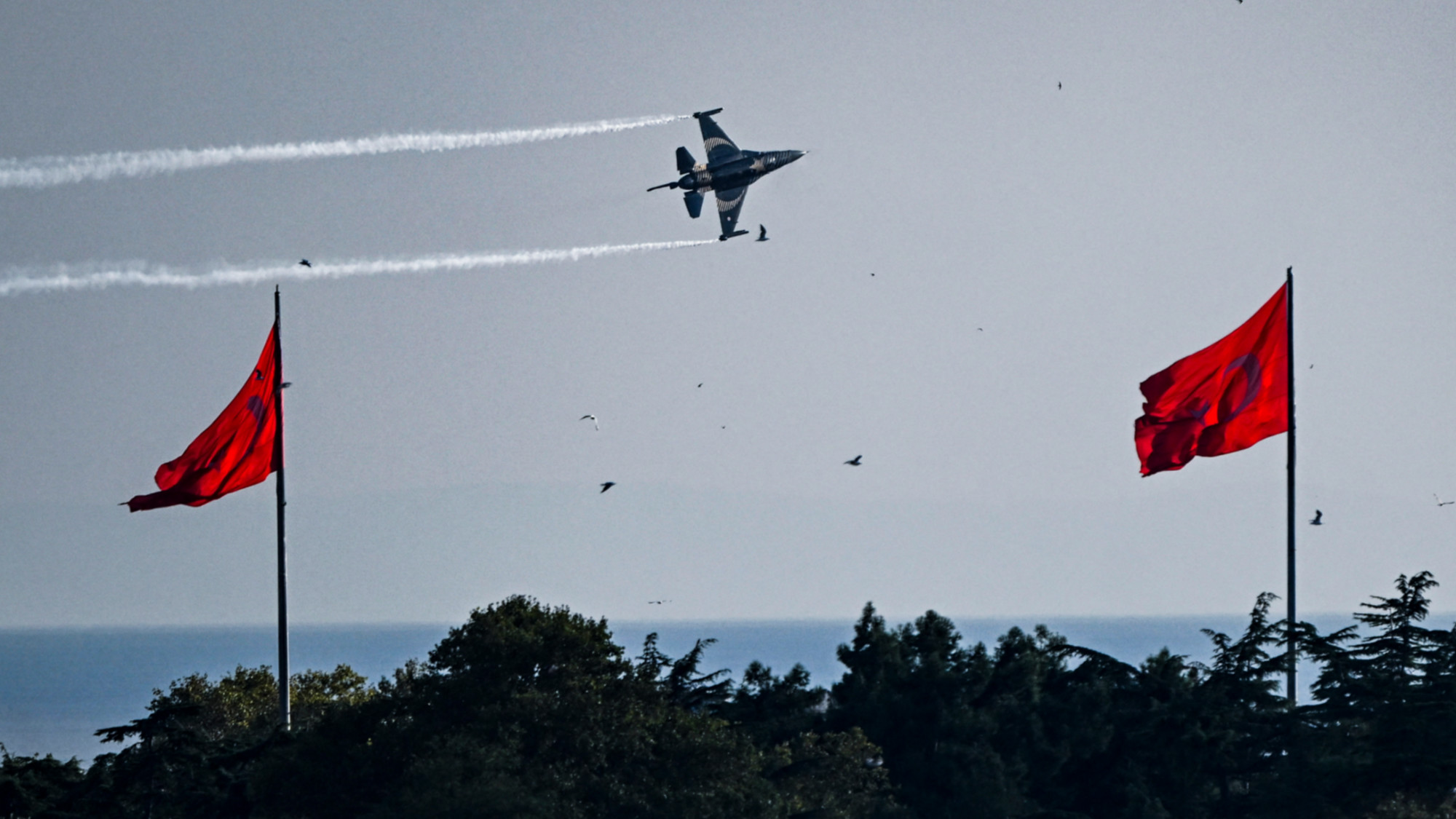
    New allegations emerging from Israeli public broadcasting have brought fresh tensions to the already volatile geopolitics of the Middle East, claiming Turkey had prepared to deploy aerial military backing to Iran if Israeli and US-backed Kurdish militias launched an incursion into Iranian territory earlier this year during the planned war against Tehran.

    In a report published Sunday by Kan 11, Israel’s public broadcaster, Turkish authorities issued a formal warning that they would take active military steps to block any cross-border Kurdish incursion into Iran – a move that ultimately derailed a joint Israeli-US military plan that had been in development for months ahead of the war’s outbreak in February. Unnamed Israeli sources cited in the Kan 11 report noted that Turkey came remarkably close to direct intervention in the conflict, with senior Turkish officials openly debating a proposal to supply Iran with aerial defense capabilities to counter incoming Israeli and US airstrikes.

    The explosive new claims dovetail with repeated public statements from former US President Donald Trump, who has for weeks taken credit for convincing Turkish President Recep Tayyip Erdogan to stay out of the conflict. Speaking earlier this month at the NATO summit held in Ankara under Erdogan’s hosting, Trump told assembled reporters that Turkey was fully prepared to join the fight against Israeli and US forces, adding “Maybe they didn’t do that because of me.”

    This is not the first time Trump has highlighted his role in deterring Turkish intervention. During a White House press briefing last month, Trump noted that Erdogan – whom he has repeatedly referred to as “my friend” – was positioned to enter the war on Iran’s side, a alignment rooted in long-standing Turkish tensions with Israel. “I asked him to stay out. He stayed out,” Trump stated at the time.

    As the exchange of strikes between US and Iranian forces entered its tenth consecutive day, bilateral tensions between Israel and Turkey have simultaneously ramped up, with senior Israeli officials increasingly framing Ankara as a fast-growing threat to Israeli national security. This is not the first allegation of Turkish interference in the joint Israeli-US plan: last month, Israeli outlet i24News already reported that Turkey had foiled the Kurdish incursion backed by Jerusalem and Washington, derailing months of joint planning by Israel’s Mossad intelligence agency and the US Central Intelligence Agency.

    A separate earlier investigation by The New York Times confirmed that the plan to support a Kurdish incursion into Iran was part of a broader Israeli-US strategy to oust the current ruling government in Tehran. The outlet also reported that the plan included provisions to reinstate former Iranian president Mahmoud Ahmadinejad to power.

    Turkey’s alleged actions during the Iranian conflict are far from the only source of Israeli unease about Ankara. Israeli officials have repeatedly expressed discomfort with the close personal and diplomatic ties between Erdogan – a well-known outspoken critic of Israeli policy – and Trump, viewing the relationship as evidence of Turkey’s expanding regional and global influence.

    Last week, Israeli right-wing newspaper Makor Rishon published a warning that Turkish influence across the Middle East and Africa has grown far beyond its traditional footprint. “Turkey’s influence is no longer limited to the Eastern Mediterranean and Syria, but extends to the Horn of Africa, the Sahel and North Africa,” the outlet noted, pointing to Ankara’s growing overseas military deployments, large-scale economic investments, and high-profile diplomatic initiatives as clear proof of its expanding reach.

    On Monday, two Kan 11 correspondents, Roi Kais and Itay Blumental, posted on social media platform X that what they called Erdogan’s antisemitic leadership is driving a rapid expansion of Turkish military and political influence in both Egypt and Syria, arguing that Ankara is actively building “a chokehold” that surrounds Israel.