作者: admin

  • Gulf turns to Turkey for air defence systems amid Iran threats

    Gulf turns to Turkey for air defence systems amid Iran threats

    Escalating regional security pressures and crippling backlogs in U.S. weapons deliveries have sparked a sharp shift in arms procurement across the Middle East, with Gulf and other Arab states increasingly turning to Turkish defence manufacturers for drones and air defence systems.

  • Yemen: The rise of Saudi-backed Salafi commanders

    Yemen: The rise of Saudi-backed Salafi commanders

    For decades, Yemeni Salafi preacher Gawed cut a familiar figure across Lahj governorate’s mosque circuit. Dressed in traditional Yemeni attire—a mawaz, the men’s sarong-like garment common across the region—and sporting a full beard, the 43-year-old Quranic sciences graduate spent his days proselytizing, teaching a Salafi interpretation of Islam that strictly separated religious guidance from political affairs, a framework he learned from iconic Salafi leader Muqbil al-Wadi’i, who founded the movement’s foundational Dammaj religious center in Yemen’s Saada governorate in the 1980s after studying in Saudi Arabia.

    The Salafi movement, a Sunni Islamist current that adheres to a literalist reading of Islamic scripture centered on the practices of Islam’s earliest three generations, would see its apolitical posture upended by decades of escalating conflict with Yemen’s Houthi movement. A Zaydi Shia faction rooted in Saada governorate, the Houthis share with other Shia sects a core belief that leadership of the Muslim community following the Prophet Muhammad rightfully belonged to Ali ibn Abi Talib, the Prophet’s cousin and son-in-law, and his line of descendant Imams, a doctrine that places it at ideological odds with Salafi thought.

    Tensions between the two groups simmered for more than a decade in Saada, their shared historic stronghold, before boiling over in 2013, when Houthi forces laid siege to Dar al-Hadith, the prominent Salafi center in Dammaj. The siege left more than 250 people dead, and by 2014, Salafis were forced to evacuate the facility entirely. Thousands fled to other Yemeni governorates, including Gawed and a contingent that resettled in Lahj. Shortly after the Salafi evacuation, Houthi forces advanced on Yemen’s capital Sanaa, securing a decisive victory that brought roughly 30 percent of the country—most of the densely populated northern and western regions—under their control.

    When Houthi forces pushed into Lahj in 2015, Gawed and his fellow displaced Salafis abandoned their apolitical tradition and picked up arms. “We didn’t fight for political reasons; we fought to protect our lands and our faith from the Houthis as they tried to invade our villages and distort Islam,” Gawed told Middle East Eye in an interview. For the Salafi preacher and his followers, the fight against the Houthis has never paused: Gawed says his group has remained on the front lines continuously since 2015, vowing not to stop until the entire country is “liberated” from Houthi control. “If we purify our intentions for Allah, we will defeat them across the nation. That is all that is required now,” he said.

    Though Salafis fought alongside various anti-Houthi factions for nearly a decade, 2023 brought a major strategic shift. Backed by Saudi Arabia, Yemen’s internationally recognized Presidential Leadership Council (PLC) launched the National Shield Forces (NSF), a new unified military formation led by Salafi commanders. Drawing on Gawed’s years of frontline combat experience and religious standing, the NSF appointed him a commander despite his lack of formal military academy training.

    Gawed explained that the decision to form an independent, Salafi-led force grew out of longstanding friction fighting alongside factions that did not share the movement’s core ideological commitments. “At times, fighting under groups that did not share our beliefs was a struggle, so forming the NSF was a priority,” he said, adding that the NSF welcomes all committed anti-Houthi fighters regardless of ideological background. “I am not speaking only of Salafis; I believe in any fighters committed to liberating Yemen from the Houthis above all other purposes.” Today, the NSF includes hundreds of non-Salafi fighters serving alongside Salafi troops.

    After its formation, the NSF first operated quietly, but it emerged as a decisive player amid rising tensions between the PLC and the Southern Transitional Council (STC), a rival southern Yemeni separatist faction. Moving from positions along the Saudi border and in Marib governorate, NSF forces successfully pushed STC influence out of large swathes of Hadhramout, Shabwa, and Abyan before advancing into Aden, the PLC’s temporary headquarters. Though this campaign was not directed at the Houthis, Salafi fighters took an active role, with Gawed noting that Salafi doctrine frames obedience to legitimate governing authority as a core religious duty rooted in Quranic teachings that command believers to obey Allah, the Prophet, and those placed in authority over the community. “We fight under the banner of Islam, and our faith commands us to obey Wali Al-Amr (the leader in authority). Therefore, we fought alongside the PLC against those attempting to create chaos,” Gawed said. “If a new faction emerges today to sow disorder and hinder our primary goal of fighting the Shia, we will fight them as well.”

    This shift from mosque outreach to formal military power is an unprecedented turning point for Yemeni Salafis, who have only intermittently engaged in armed conflict in the past. The movement played a key allied role in the 1994 Yemeni Civil War, backing former president Ali Abdullah Saleh’s northern government against southern secessionist forces, but for most of modern Yemeni history, Salafis remained focused on religious outreach and avoided formal political or military leadership roles.

    Salafis’ formal entry into high-level Yemeni governance began in 2022, when the PLC was formed, and prominent Salafi anti-Houthi commander Abu Zara’a al-Maharami was given a seat on the council. A new milestone was reached in April 2026, when PLC head Rashad al-Alimi appointed Salafi Brigadier General Hamdi Shukri as Commander of the Fourth Military Region, a strategic command that covers Aden, Lahj, Taiz, Abyan, and parts of al-Dhale. Today, Salafis hold top military leadership positions across nearly all PLC-controlled Yemeni territory, with other anti-Houthi forces—including fighters affiliated with the Islamist Islah party and the Yemeni Republican Guard—now operating under Salafi command in multiple governorates.

    Gawed, for his part, says he welcomes the movement’s growing institutional power, framing it as part of a broader push to unify fragmented anti-Houthi forces under a single PLC-aligned military umbrella. “It is not only the Salafis; the Yemeni army is currently restructuring military groups to fight under a single umbrella, the PLC, represented by the Ministry of Defence. Once unified, we will all direct our weapons toward the Houthis,” he explained. After years of debilitating internal infighting between anti-Houthi factions—including repeated violent clashes between Islah and the STC—Gawed says internal tensions have calmed as military restructuring progresses.

    Not all Yemeni military officials frame the rise of Salafi leadership through an ideological lens, however. Speaking to Middle East Eye on condition of anonymity due to restrictions on speaking to media, a senior Yemeni Defence Ministry source said he opposes dividing military forces along factional, regional, or religious lines. “I am against the division of military groups based on party, region or religious beliefs. We are all Yemenis, and we fight to liberate Yemen from the Iran-backed militia,” he said. The source pushed back against framing top commanders exclusively by their Salafi affiliation, noting: “If there is a good leader, he is promoted to commander because he is skilled and loyal to the country, not because he is a Salafi, an Islahi or anything else. All military regions and units have official names and should be referred to by their designated unit, brigade or region title, rather than being called ‘the Salafi forces’.” Even so, the source acknowledged Salafis’ critical frontline contributions, confirming they have played a major role in battles across multiple governorates and deserve representation in top military leadership, and noted that military restructuring to unify command is largely complete.

    Political analyst Mohammed Sultan, however, argues that Salafis’ rapid rise to power is less a product of institutional restructuring and more a reflection of Saudi geopolitical priorities in Yemen. “The National Shield Forces were formed by Saudi Arabia under the exclusive leadership of Salafis,” Sultan explained. “Saudi Arabia took this step in 2023 when it felt it had almost no other reliable forces on the ground to support its interests.” By 2023, Sultan noted, the STC and Republican Guard were backed by the United Arab Emirates, while the Islah party was no longer viewed as loyal to Riyadh, leaving Salafis as the only major faction aligned with Saudi goals. When STC forces positioned themselves near Saudi borders in Hadhramout in late 2025, it was Salafi NSF forces that successfully displaced them, cementing Saudi trust in the movement. “Since then, Saudi Arabia has placed greater trust in the Salafis. Consequently, they have secured more positions within the Yemeni army, as Saudi Arabia is the primary benefactor funding the military,” he said.

    While Sultan acknowledges that Salafi fighters are brave, effective, and loyal to their command, he warns that their rise to power carries long-term risks for Yemen’s future governance. The core challenge, he argues, is that top positions are being allocated based on factional loyalty rather than professional proficiency—a dynamic that will complicate efforts to build a unified civil state if a peace deal with the Houthis is ever reached. “If a reconciliation with the Houthis is reached or the war ends, establishing a civil state will be extremely difficult,” he said.

  • Netanyahu hints at US troop deployment against Iran in CBS interview

    Netanyahu hints at US troop deployment against Iran in CBS interview

    In a televised interview with CBS’s iconic news program *60 Minutes* that aired Sunday evening, Israeli Prime Minister Benjamin Netanyahu has raised the possibility of deploying United States ground forces inside Iranian territory, confirming that the ongoing Middle East crisis is far from over. Netanyahu argued that on-the-ground military operations would be required to seize and secure Iranian nuclear material, though he declined to share any specific timeline for when such an operation might be launched.

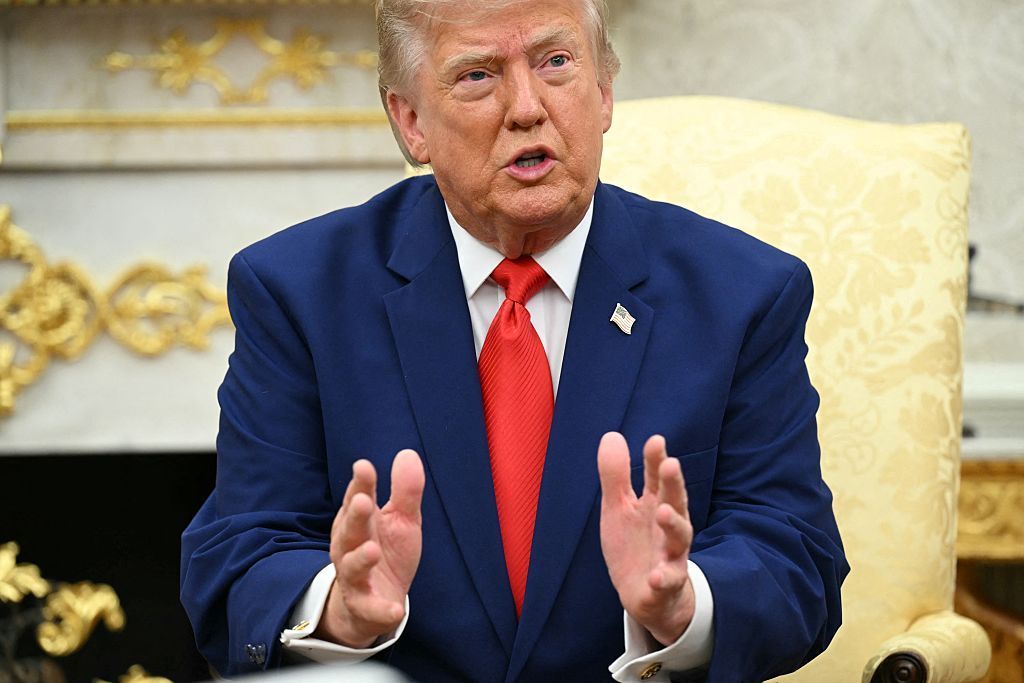
    “I’m not going to discuss specific military tactics, but what President Trump told me is that he is prepared to go in,” Netanyahu stated in the interview, adding that he believes a ground incursion is physically achievable. This current conflict, widely viewed as having been orchestrated by Netanyahu, first erupted in late February when a joint surprise strike by U.S. and Israeli forces targeted multiple sites across Iran, including Iranian political leadership hubs, a girls’ school, and key military infrastructure.

    According to reporting from multiple U.S. media outlets, U.S. President Donald Trump did not anticipate the initial wave of attacks would fail to force Iran to surrender. Contrary to Trump’s expectations, Tehran mounted a fierce resistance campaign against the U.S.-Israeli coalition: it targeted American military bases across the Persian Gulf, struck Israeli military infrastructure, and blocked all commercial traffic through the Strait of Hormuz, the world’s most critical energy chokepoint that carries roughly 20% of global oil supplies.

    Trump negotiated a ceasefire with Iran on April 8, but subsequent talks have failed to produce a permanent end to hostilities. Iranian public and political sentiment remains deeply skeptical of the U.S. and Israel, with widespread belief that the coalition will resume attacks once it has regrouped and replenished its military capabilities.

    In a surprising announcement during the interview, Netanyahu also said he favors ending the long-standing annual U.S. military aid package to Israel, which currently stands at $3.8 billion per year and balloons substantially during periods of open conflict. In place of traditional aid, Netanyahu proposed a new bilateral military partnership under which the U.S. would share advanced weapons technology with the Israeli military.

    This proposal comes amid growing criticism within the U.S. over Israel’s outsized influence over American foreign policy and its decades-long reliance on U.S. military funding. While establishment politicians on both sides of the aisle continue to express unwavering support for Israel, American public opinion has shifted sharply against the country in recent months. A Gallup poll conducted in February found that 41% of U.S. adults now hold more sympathetic views of Palestinians, compared to just 36% who sympathize more with Israel. This marks a dramatic reversal from 2023, when 54% of respondents sympathized more with Israel and only 31% leaned toward Palestinians.

    On social media and in public discourse, three key factors are most frequently cited to explain the shift in U.S. public opinion: the ongoing humanitarian crisis and allegations of genocide in Gaza, Israel’s extensive lobbying efforts to influence U.S. political decision-making, and Israel’s long track record of pushing the U.S. to enter into foreign wars that primarily serve Israeli interests.

  • Elon Musk and Tim Cook among CEOs expected to accompany Trump on China trip

    Elon Musk and Tim Cook among CEOs expected to accompany Trump on China trip

    As Washington prepares for a high-stakes official visit to Beijing this week, U.S. President Donald Trump is set to be accompanied by an unprecedented roster of 17 chief executives from America’s most influential business and technology sectors, according to a senior White House official familiar with the travel itinerary who spoke to the BBC.

    The lineup of corporate leaders joining the presidential delegation includes some of the most high-profile names in global industry: Apple CEO Tim Cook, Tesla and SpaceX founder Elon Musk, and BlackRock Chairman and CEO Larry Fink, alongside senior representatives from other major American firms spanning technology, finance, aviation, and agriculture. These additional companies include tech giant Meta, global payments processor Visa, leading investment bank JP Morgan, aerospace manufacturing leader Boeing, and agribusiness conglomerate Cargill, among others.

    The four-day state visit comes at a particularly consequential juncture for bilateral relations between the world’s two largest economies, with mounting frictions over trade, market access, and technological competition creating heightened tensions in recent months. During the trip, President Trump is scheduled to hold formal bilateral talks with Chinese President Xi Jinping, with the business delegation’s presence widely interpreted as a signal of Washington’s priority on expanding commercial opportunities for U.S. companies in the Chinese market while addressing longstanding bilateral economic and trade concerns.

    Analysts note that the inclusion of so many top C-suite leaders from key sectors underscores the depth of American corporate interest in stabilizing U.S.-China economic ties, even as geopolitical and technological disagreements continue to test the bilateral relationship. For both governments, the meeting is seen as a critical opportunity to ease escalating tensions and open new pathways for constructive engagement on shared economic and trade priorities.

  • US passengers from ship quarantined as officials say public risk ‘very low’

    US passengers from ship quarantined as officials say public risk ‘very low’

    Eighteen American passengers evacuated from the Dutch cruise vessel MV Hondius over potential hantavirus exposure are now under close public health supervision in the United States, with federal and state authorities repeatedly emphasizing that the overall risk to the general American public remains extraordinarily low.

    The current incident marks the first confirmed case of Andes virus — a rare strain of hantavirus — detected in an American passenger who was aboard the ship, which is currently docked in Spain’s Canary Islands. One passenger received a positive test result for the virus, while a second individual has developed mild, non-specific symptoms that could be consistent with infection. More than 90 passengers from the ship are in the process of being repatriated to their home countries following the outbreak.

    Of the 18 monitored Americans, 16 are being held at the United States’ only national quarantine facility located in Nebraska, while the remaining two, including the symptomatic passenger and their travel partner, have been transferred to monitoring sites in Atlanta to avoid overcrowding the Nebraska unit, according to Centers for Disease Control and Prevention (CDC) official Brendan Jackson. “No-one who poses a risk to public health is walking out the front door onto the streets of Omaha,” Nebraska Governor Jim Pillen confirmed during a joint press conference with state and federal health leaders on Monday morning.

    Admiral Brian Christine of the U.S. Department of Health and Human Services (HHS) reinforced the official risk assessment, saying, “Let me be crystal clear: the risk of hantavirus to the general public remains very, very low. The Andes variant of this virus does not spread easily, and it requires prolonged close contact with someone who is already symptomatic.”

    Unlike most hantavirus strains, which are carried by rodents and cannot spread between human hosts, public health experts confirm that the Andes variant — the strain detected in multiple passengers on the MV Hondius — is capable of person-to-person transmission. The outbreak on the ship has already resulted in three deaths, two of which have been confirmed by the World Health Organization to be linked to hantavirus infection. To date, two British nationals have also tested positive for the virus, and are receiving treatment in the Netherlands and South Africa respectively. One British-U.S. dual national is among the passengers quarantined in Nebraska.

    Michael Wadman, medical director of the National Quarantine Unit in Nebraska, reported that the 16 passengers held at the facility are in good physical condition and positive spirits. The passenger who received the confirmed positive test result has been placed in a specialized biocontainment unit, and is currently not experiencing any symptoms of infection.

    Jackson explained that the CDC is taking an overly cautious approach to monitoring: even mild cold-like symptoms trigger further evaluation, as these can overlap with early signs of hantavirus infection. Earlier confusion over a “mildly positive” PCR test result from one passenger was clarified by Jackson, who noted the original sample was collected on the ship rather than in the U.S., and that one of two collected samples returned positive while the other was negative. “With these PCR tests… there’s sort of a range in where they can fall,” Jackson said. “And so for that reason, we just want to make sure there’s further testing to evaluate that.”

    U.S. health officials are currently prioritizing active symptom monitoring for all quarantined passengers. Wadman added that passengers in Nebraska will undergo full clinical assessment after they have had time to rest following their travel, and will remain at the facility for several days of evaluation. Officials will then review each case individually to decide whether passengers need to complete the full 42-day quarantine period before being released.

  • ‘Britain at the heart of Europe’: How Starmer’s plans are going down in the EU

    ‘Britain at the heart of Europe’: How Starmer’s plans are going down in the EU

    As the 10th anniversary of the Brexit referendum approaches this June, UK Prime Minister Keir Starmer has reignited debate over Britain’s post-Brexit relationship with the European Union, launching a high-profile push to rebuild tighter ties just one week after his Labour Party suffered a devastating defeat in local elections.

    In a widely anticipated defiant address, Starmer framed closer alignment with the EU as a core priority for his government, promising to lay the groundwork for deeper collaboration ahead of this summer’s EU-UK summit. “This Labour government will be defined by rebuilding our relationship with Europe, by putting Britain at the heart of Europe, so that we are stronger on the economy, stronger on trade, stronger on defence,” he told the audience. Starmer also argued that incremental changes are insufficient to address the UK’s current challenges in growth, energy and security, calling for a bolder approach to EU engagement than what his administration outlined after taking power in 2024.

    However, the speech has drawn widespread criticism for its lack of concrete new policies. Jill Rutter, a former British civil servant and senior research fellow at the UK in a Changing Europe think tank, dismissed Starmer’s announcement as “a damp squib”, noting it failed to deliver a single tangible new proposal. Reactions from across the Channel are deeply divided, split along the lines of defence and security versus economic and trade cooperation.

    On defence and global security, European leaders view the UK as a reliable and critical ally. With the EU focused on pressing threats including the ongoing Russia-Ukraine conflict, rising tensions with Iran, and shifting transatlantic relations under Donald Trump’s second U.S. administration, Brussels sees consistent UK cooperation as a strategic asset. This stable dynamic is not expected to change regardless of Starmer’s political future: EU officials widely believe UK foreign policy will remain consistent, including continued support for Ukraine and plans to assemble an international maritime force to protect shipping in the Strait of Hormuz, even if Starmer is ousted by internal leadership rivals.

    The mood shifts dramatically when it comes to economic ties, where Brussels holds a stance of weary cynicism. While the EU has repeatedly stated it welcomes closer relations if the UK commits to that path, the sector-specific talks Starmer’s government has pursued so far remain extremely limited. The only active negotiations focus on three areas: a food and drink safety agreement (known as SPS), a carbon emissions trading pact, and a youth mobility scheme that Starmer now touts as a major initiative for underprivileged British youth. Even that proposal, however, was originally an EU demand led by Germany that the Labour government initially rejected. Analysts widely agree that none of these limited deals will deliver meaningful, broad-based growth to the UK economy, even if expanded to other small sectors such as electricity market integration.

    The policy measures that could actually move the needle economically – joining the EU single market or forming a full customs union to eliminate most trade barriers – remain off the table for now, bound by Starmer’s pre-election “red lines” that rule out accepting free movement of workers, a non-negotiable requirement for full single market access. When pressed by journalists on whether these red lines might be dropped ahead of the next general election scheduled for 2029, Starmer declined to give a direct answer, sparking speculation of a potential policy shift. But the long timeline to the next election has left Brussels frustrated with the government’s vague positioning.

    One senior EU diplomat from a traditionally UK-friendly member state summed up the widespread European view: “For the last two years since Labour won power, we have heard the same thing: we want a ‘reset’ with the EU after Brexit. But what is this famous reset? The words from UK ministers sound increasingly enthusiastic but the actual steps they take are baby steps. Probably because they know the closer you get back to us, the more we ask from you in return. Do their voters know that?”

    To date, even modest steps toward closer cooperation have required the UK to accept EU terms, including the “pay to play” model for participation in EU programs. Rejoining the Horizon science research program, agreed by the previous Conservative government, costs the UK £2.2 billion annually, though proponents note British researchers have emerged as leading beneficiaries after two years of membership. In the ongoing sectoral talks, Starmer’s government has also had to agree to align with current and future EU regulations on relevant issues – a compromise that has already drawn fire from eurosceptic opponents. Nigel Farage’s Reform Party, which saw strong gains in last week’s local elections, has accused Labour of quietly reversing Brexit through incremental regulatory alignment. This alignment also complicates the UK’s long-held goal of reaching a comprehensive free trade agreement with the United States, as closer alignment with EU rules narrows the room for negotiating a separate deal that meets U.S. demands.

    Reform’s strong performance in last week’s local elections has not gone unnoticed in Brussels. Farage, who spent more than 20 years as a Member of the European Parliament campaigning for Brexit, is a well-known and controversial figure across the EU. While the EU will continue negotiating with the current Labour government, insiders say the European Commission is considering adding penalty clauses to future agreements, which would require the UK to pay compensation if a future eurosceptic government withdraws from existing cooperation deals.

    UK Minister for EU Relations Nick Thomas-Symonds has defended the government’s approach, saying Labour is pursuing a “ruthlessly pragmatic” and “ambitious” strategy that will never accept deals that conflict with UK national interests. But with the public increasingly divided over Brexit a decade on, and a rising eurosceptic opposition gaining traction, Starmer’s push to reset relations with the EU remains mired in vagueness – leaving both British voters and European leaders waiting for concrete action.

  • Israel kills three, including police officers, in latest Gaza truce violation

    Israel kills three, including police officers, in latest Gaza truce violation

    Fresh Israeli military operations across the Gaza Strip have left three Palestinians dead, including two local police officers, marking the latest breach of the U.S.-brokered ceasefire agreement reached in October 2024. In an official announcement released Sunday, Gaza’s General Directorate of Police confirmed that an Israeli air strike targeted the vehicle of senior police official Wissam Abdel Hadi, director of the Khan Younis Police Investigations Department, and Sergeant Fadi Heikal in the al-Amal neighborhood of southern Gaza. The attack also left an unspecified number of additional Palestinians wounded. Hamas, the governing authority in Gaza, issued a sharp condemnation of the strike, framing the deliberate targeting of Gaza’s police force as an ongoing campaign of criminal violence and state-sponsored terrorism against the Palestinian people. The movement argued that these attacks are intentionally designed to entrench lawlessness, spread widespread chaos, and block all efforts to rebuild civilian infrastructure and restore normal daily life to the blockaded enclave. Hamas has called on the international community to exert meaningful pressure on Israel to end its ongoing military assaults on Palestinian civilians and security personnel. Sunday’s targeted killing of two police officers is not an isolated incident, but the most recent in a consistent pattern of Israeli attacks on Gaza’s official security forces. The strikes come at a sensitive moment, as regional stakeholders hold ongoing discussions about the potential formation of a new unified police force to maintain order in the blockaded territory. In addition to the police officers, a third Palestinian was killed and multiple other people – including two minor children – were injured in separate attacks across Gaza over the 24-hour reporting period. Anadolu Agency, citing an anonymous medical source, reported that an Israeli drone strike targeted a group of civilian residents gathered in the al-Maghazi refugee camp in central Gaza. A key detail that underscores the ceasefire violation is that both the southern and central Gaza strikes took place outside the existing deployment lines of Israeli ground troops, in an area located beyond the so-called “Yellow Line” – a unilateral military boundary Israeli forces established inside Gaza after the October ceasefire took effect. The Yellow Line is designated as a no-go zone for Palestinians, barring local residents from accessing large swathes of agricultural and residential land across the northern, southern, and eastern edges of the enclave. While the terms of the October truce required Israeli forces to withdraw from territory behind this boundary, Israeli authorities have instead steadily expanded the zone, bringing previously accessible civilian areas under Israeli fire control and resulting in growing numbers of dead and wounded civilians in territory Israel did not control immediately after the ceasefire. In additional incidents reported Monday, Israeli ground forces opened fire on displaced Palestinian civilians sheltering in northern Gaza and Gaza City. Off the coast of Gaza City, Israeli naval forces shelled a group of Palestinian fishermen working in their traditional fishing grounds, wounding an unspecified number of the workers. Local reports confirm that naval personnel also arrested at least six of the fishermen, and their current whereabouts and physical condition remain unknown to family members as of press time. Recent official data from Gaza’s Ministry of Health shows that since the October ceasefire went into effect, at least 854 Palestinians have been killed by Israeli military actions across the enclave, with more than 2,540 others suffering injuries. Since the start of Israel’s large-scale military campaign in Gaza in October 2023, the total death toll has surpassed 72,740 Palestinians killed, according to the latest official counts. Thousands more Palestinians remain missing and are presumed dead, trapped under the rubble of destroyed residential and civilian buildings across the strip. This report was compiled by Middle East Eye, an outlet that provides independent, on-the-ground coverage of the Middle East, North Africa, and global affairs.

  • Aid group says Libyan-linked vessels fired on a migrant rescue ship in the Mediterranean

    Aid group says Libyan-linked vessels fired on a migrant rescue ship in the Mediterranean

    In a dramatic confrontation that underscores deep-seated tensions over Mediterranean migration routes, vessels affiliated with the Libyan coast guard opened live fire on a German humanitarian rescue ship just hours after the craft pulled 90 vulnerable migrants from a sinking overcrowded wooden vessel Monday, according to the non-profit operating the rescue ship.

  • ‘Total lack of respect’: Macron interrupts speaker to ask for silence

    ‘Total lack of respect’: Macron interrupts speaker to ask for silence

    During an official conference held on Kenyan soil, French President Emmanuel Macron took an unexpected step to restore order, rising from his seat and interrupting the ongoing speaking program to demand that disruptive audience members stop talking.

    The incident unfolded as persistent noise from parts of the audience made it difficult for the scheduled speaker to be heard by attendees. Frustrated by the continued commotion and what he framed as a failure to extend basic courtesy to the person at the podium, Macron publicly called out the disruption, stating that the lack of quiet amounted to a complete disregard for the speaker and the event itself. He emphasized that it was simply impossible for a speaker to deliver their remarks effectively when the audience was not willing to maintain a respectful level of silence.

    The conference, which formed part of Macron’s official visit to Kenya, was focused on deepening bilateral cooperation between France and the East African nation, covering issues ranging from development partnership to climate action. The unexpected interruption drew immediate attention from other attendees and observers, highlighting the friction that can arise between diplomatic protocol and on-the-ground event dynamics during high-profile international visits.

  • US health officials: Hantavirus risk to Americans ‘very low’

    US health officials: Hantavirus risk to Americans ‘very low’

    U.S. national health authorities have moved to calm public anxiety after a single case of hantavirus was detected among a group of cruise ship passengers repatriated to the country. According to official statements, 18 travelers who were aboard the MV Hondius have completed their return to the United States, and routine public health screening following the voyage identified one passenger who received a positive test result for the rare rodent-borne virus.

    In the wake of the confirmation, public health leaders have moved quickly to downplay widespread concerns, stressing that the overall level of risk hantavirus poses to the general American population remains extremely low. Hantavirus infections are rare in the United States, typically transmitted to humans through contact with infected rodent droppings, urine, or saliva, rather than through sustained person-to-person spread in most common scenarios. Health agencies note they are continuing to monitor the situation and conduct follow-up with close contacts of the infected patient to prevent any potential further transmission, while urging the public to avoid unnecessary panic over the isolated case.