作者: admin

  • Washington dinner shooting suspect pleads not guilty

    Washington dinner shooting suspect pleads not guilty

    A 31-year-old man charged in connection with a violent attempted breach at last month’s high-profile White House Correspondents’ Dinner in Washington D.C. has entered a formal not guilty plea to federal charges that include firearms violations and a plot to assassinate former and current U.S. President Donald Trump.

    Cole Tomas Allen, the defendant named in the indictment, faces two separate federal gun charges on top of the attempted assassination count: illegal use of a firearm during a violent criminal act, and interstate transportation of a firearm with the explicit intent to carry out a felony offense. The case stems from an April incident that unfolded at the Washington Hilton hotel, where the annual media gathering was set to welcome Trump, top administration officials, and hundreds of working journalists.

    According to court documents and reporting from CBS News, the BBC’s U.S. partner, Allen made his first in-person court appearance on Monday before U.S. District Judge Trevor McFadden, who will oversee all future proceedings in the case. During the hearing, held in federal court in Washington, Allen appeared in a standard-issue orange inmate jumpsuit, with shackles secured to both his wrists and ankles.

    Prosecutors’ official account of the incident lays out a premeditated plan: Authorities say Allen departed his Torrance, California, home near Los Angeles on April 21, traveling cross-country by train via Chicago before arriving in the nation’s capital. Hours before the dinner was scheduled to begin, prosecutors allege Allen documented his preparations in photos taken in his local hotel room around 8:03 p.m. EST. The images, included in a U.S. government court memorandum, show Allen wearing formal attire alongside a shoulder holster, pliers, wire cutters, multiple strapped weapons including a sheathed knife, and a bag loaded with ammunition, posing in front of a mirror. Over the next 30 minutes, prosecutors say Allen accessed multiple websites to pull up live streams of the White House Correspondents’ Dinner to confirm the event’s timeline before leaving his hotel.

    When Allen reached the Washington Hilton, prosecutors allege he attempted to rush through an outer security checkpoint, sprinting through a metal detector while holding a loaded shotgun in a raised, ready position with both hands. In the ensuing confrontation, Allen exchanged gunfire with a U.S. Secret Service agent, striking the agent who was ultimately protected from serious injury or death by his bulletproof vest. Law enforcement agents tackled Allen just a few feet short of a staircase leading directly to the ballroom where the dinner was just getting underway, with Trump, Vice President JD Vance, cabinet members, and dozens of senior White House officials already inside the venue. Immediately after shots were fired, the president, vice president, and other senior officials were urgently evacuated from the ballroom as a security precaution.

    A key development unfolded during Monday’s initial hearing: Allen’s defense team has formally requested that Judge McFadden disqualify the entire Washington office of U.S. attorneys, including D.C. U.S. Attorney Jeanine Pirro, from participating in the prosecution. The defense is also pushing to remove Attorney General Todd Blanche from any role in the case. Eugene Ohm, lead defense counsel for Allen, argued that both Pirro and Blanche have publicly positioned themselves as victims of the April attack, making it improper for them to lead the prosecution against his client. Judge McFadden has ordered the U.S. Department of Justice to file a formal response to the disqualification request by June 22.

  • Warning that increase in shipping around South Africa to avoid Middle East could harm whales

    Warning that increase in shipping around South Africa to avoid Middle East could harm whales

    Geopolitical instability unfolding across the Middle East has triggered an unexpected ecological crisis off South Africa’s south-western coast, where a sharp redirection of global shipping lanes has drastically raised the threat of fatal collisions between commercial vessels and endangered whale populations, leading marine scientists have warned.

    The cascading security crisis in the Red Sea and Gulf of Aden, which began when Houthi rebels seized a British-flagged cargo ship off Yemen in 2023, has forced the majority of container and cargo vessels traveling between Asian and European markets to abandon the direct Suez Canal route and instead detour around the southern tip of Africa via the Cape of Good Hope. This shift has accelerated dramatically amid escalating regional tensions between the U.S.-Israel bloc and Iran, pushing shipping volumes far higher than pre-crisis levels.

    New data from the International Monetary Fund’s PortWatch monitoring tool, cited by Agence France-Presse, shows that between March and April 2024, an average of 89 commercial vessels transited the Cape of Good Hope each week – nearly double the 44 vessels recorded in the same two-month period in 2023. This sudden doubling of maritime traffic has overlapped directly with critical feeding and migration habitats for multiple whale species native to the Western Cape region, creating a high-stakes risk scenario that scientists say is already unfolding.

    Professor Els Vermeulen, chief scientist at the University of Pretoria’s renowned Whale Unit, recently presented her team’s groundbreaking research to the International Whaling Commission, outlining the growing danger. Vermeulen explained that her researchers mapped detailed distribution models for all major whale populations along the Western Cape coastline, then cross-referenced these habitats with the newly diverted shipping lanes to identify overlapping high-risk zones.

    One of the biggest challenges to addressing the threat, Vermeulen noted, is the widespread phenomenon of “cryptic mortality” that hides the true scale of whale collisions. Most ship strikes occur far offshore in deep waters, and mortally wounded whales almost always sink to the ocean floor rather than washing ashore for recovery and documentation. This lack of onshore evidence makes it extremely difficult to collect accurate data on how many whales are killed each month by collisions, leaving scientists without a clear picture of just how severe the crisis has become.

    Despite the data gap, Vermeulen has outlined actionable preliminary measures to reduce collision risk. She recommends minor adjustments to current shipping lanes to move traffic away from the densest whale habitats, as well as mandatory speed limits for vessels transiting the region during peak whale migration and feeding seasons. Still, Vermeulen emphasized that long-term, effective solutions will not be possible until more comprehensive population and collision data is collected.

    To fill this critical knowledge gap, Vermeulen and her team are planning a systematic aerial and marine survey of offshore whale populations across the Western Cape. The ambitious project will require significant financial and logistical support, which the team is currently working to secure. Vermeulen told the BBC she has been encouraged by the widespread public and institutional interest in collaborating to address the crisis.

    “It’s been nice to see how much people want to come together to solve this,” she said. “So now the onus is on the scientific community to come up with reliable data on the offshore whale population that can guide effective policy and industry action.”

  • EU sanctions Hamas leaders and Israeli settlers, but shelves stronger economic pressure

    EU sanctions Hamas leaders and Israeli settlers, but shelves stronger economic pressure

    BRUSSELS — After years of gridlock and mounting public anger fueled by the ongoing humanitarian catastrophe in Gaza, the 27-member European Union has struck a historic unanimous political deal to impose fresh sanctions on senior Hamas leaders and extremist actors within the Israeli settler movement, top EU diplomatic officials confirmed Monday.

    The breakthrough came during a meeting of EU foreign ministers in the Belgian capital, where EU High Representative for Foreign Affairs and Security Policy Kaja Kallas hailed the agreement as a long-overdue shift from stalemate to action. “Extremism and violence should carry consequences,” Kallas wrote in a social media statement following the vote. “It was high time we move from deadlock to delivery.”

    While the bloc ultimately rejected bolder penalties pushed by a cohort of progressive European governments and has not yet published the full text of the new sanctions framework, French Foreign Minister Jean-Noël Barrot outlined the scope of the agreed measures: sanctions will target top Hamas commanders, as well as leading figures and key organizations tied to the Israeli settler movement operating in the occupied West Bank.

    “The European Union is sanctioning today the main Israeli organizations guilty of supporting the extremist and violent colonization of the West Bank, as well as their leaders,” Barrot wrote in his own social media post Monday. “These most serious and intolerable acts must cease without delay.”

    Addressing the targeting of Hamas leaders, Barrot added: “It is sanctioning the main leaders of Hamas, responsible for the worst antisemitic massacre in our history since the Shoah during which 51 French people lost their lives, a terrorist movement that must imperatively be disarmed and excluded from any participation in the future of Palestine.”

    The push for new sanctions against West Bank settler groups comes amid growing international alarm over a sharp surge in settler violence against Palestinian communities in the occupied territory. Palestinian authorities, human rights organizations and international monitors have repeatedly warned that routine attacks by settlers — including arson, property vandalism, the displacement of agricultural communities, and lethal violence against civilians — are worsening at an alarming rate. Data from the United Nations Office for the Coordination of Humanitarian Affairs shows that at least 40 Palestinians have been killed in the West Bank since the start of 2026, with a record 11 of those deaths at the hands of Israeli settlers — two more fatalities than were recorded in all of 2025.

    Diplomatic analysts widely attribute the sudden breakthrough on sanctions to the recent electoral ouster of former Hungarian Prime Minister Viktor Orbán, who stepped down last month after 16 consecutive years in power. A steadfast ally of Israeli Prime Minister Benjamin Netanyahu, Orbán had single-handedly blocked all previous EU attempts to impose sanctions on Israeli settlers for years, leaving the bloc unable to act despite widespread support among other member states.

    Orbán was defeated in April’s general election by opposition leader Péter Magyar, who was sworn in as Hungary’s new prime minister just days before Monday’s vote. Martin Konečný, head of the Brussels-based European Middle East Project, noted that the successful approval of the sanctions package confirms long-held assessments that Orbán was the sole barrier to action. “This validates the notion that Orbán was blocking them single-handedly,” Konečný said.

    Many foreign policy observers say the new sanctions could mark a pivotal shift in the EU’s long-standing approach to Israel. For months, a growing bloc of European governments led by Spain, Ireland and the Netherlands has pushed for punitive measures over the Israeli government’s military campaign in Gaza, as well as its expanding settlement activity and rising violence in the West Bank, and escalating cross-border conflicts in Lebanon, Syria and Iran.

    Ahead of Monday’s meeting, Luxembourg Foreign Minister Xavier Bettel summed up the growing pressure to act: “You can’t just turn a blind eye.”

    Even with the historic agreement, the EU fell short of adopting the more sweeping measures that many activists and progressive governments had called for. Diplomats failed to reach consensus on harsher economic measures, such as a bloc-wide ban on goods produced in Israeli settlements in the West Bank or the suspension of a key bilateral trade agreement between the EU and Israel.

    Hugh Lovatt, a senior fellow at the European Council on Foreign Relations, criticized the bloc’s limited scope of action. “There’s so much that you can and should be doing, and so to get stuck in this question of adding a few more settlers is missing the big picture,” Lovatt said. “The EU’s narrowed the scope of action now to individuals and to a few entities, and in doing that it’s ignoring the far more systemic issues at play.”

    Claudio Francavilla, associate EU director at Human Rights Watch, called the sanctions a tentative step forward but said far more action is required to bring the bloc into compliance with international law. The measures are “a step in the right direction, but so many more needed for the EU to comply with international law,” Francavilla said.

    Italy, one of the more prominent EU member states skeptical of harsher measures, has already signaled it is not ready to back a French-Swedish proposal that would cut West Bank settlers off from EU markets. Ahead of Monday’s meeting, Italian Foreign Minister Antonio Tajani said his government needed additional time to review the plan, withholding its support despite growing public pressure across the continent for tougher action.

    Dutch Foreign Minister Tom Berendsen noted that individual EU member states retain the right to implement national bans on settlement goods if bloc-wide negotiations stall in Brussels. The next meeting of the EU Foreign Affairs Council, scheduled for later this May, will focus specifically on trade policy related to the region.

    Spanish Foreign Minister José Manuel Albares Bueno pushed for swift action on broader measures in comments to reporters in Brussels Monday. “We have been talking about measures for too long,” he said. “Let’s move on to a vote and stop saying that there is no qualified majority for it. Let’s see how many of us are in agreement and who is not.”

  • Dozens of Nigerian fishermen feared dead after Chad air strikes on Boko Haram

    Dozens of Nigerian fishermen feared dead after Chad air strikes on Boko Haram

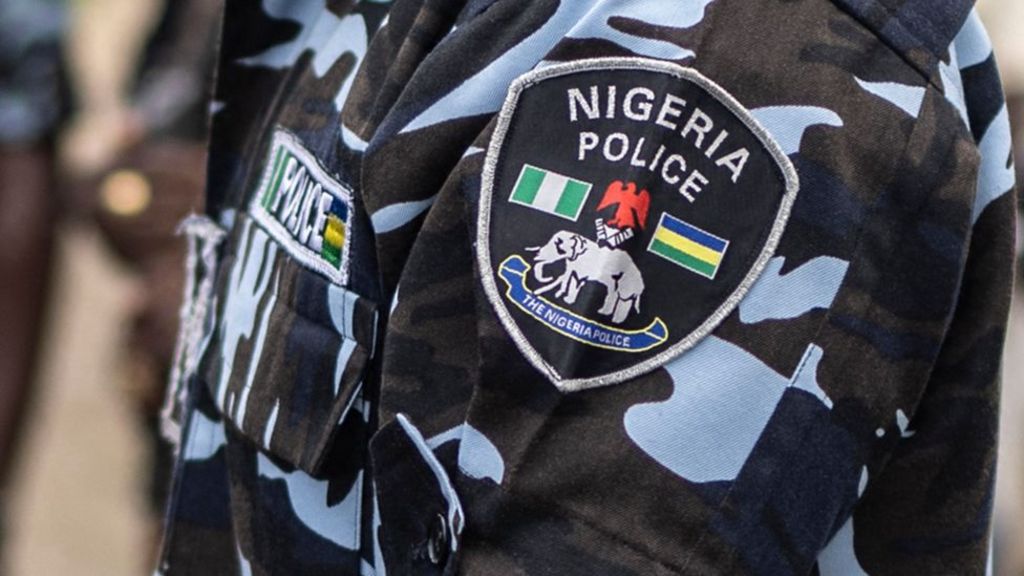
    A devastating incident in the volatile Lake Chad basin has left dozens of Nigerian fishermen feared killed after Chadian military forces launched retaliatory air raids targeting Boko Haram militants in the shared transboundary region, a top local fishing industry leader has confirmed to the BBC.

    Abubakar Gamandi Usman, who heads the Lake Chad Basin Fisheries Association of Nigeria, confirmed that dozens of union members remain unaccounted for following the strikes, with his preliminary death estimate placing the toll at more than 40. While no casualties have been officially recovered or identified to date, Usman says two distinct fatal scenarios have emerged: some fishermen were directly hit by the air strikes, while others drowned when their overloaded vessels capsized as they fled the attack in panic.

    Officials from both the Chadian and Nigerian governments have not yet released an official statement or responded to requests for comment on the civilian casualties. However, Chad’s presidency confirmed over the weekend that it had conducted intensive retaliatory air strikes against Boko Haram strongholds in the region. In a public announcement posted to its official Facebook page, the presidency explained the operation was launched in response to two unprovoked Boko Haram attacks targeting Chadian military outposts near Lake Chad on the previous Monday and Wednesday. Those militant assaults left at least 24 Chadian soldiers and two senior generals dead, according to local reports.

    The Lake Chad basin is a vast ecologically and economically critical region of interconnected waterways and swampland, shared across the borders of Nigeria, Chad, Niger and Cameroon. For more than a decade, the area has served as a primary operational hub and stronghold for the Islamist extremist group Boko Haram, as well as its splinter rival faction, the Islamic State West Africa Province (ISWAP).

    Usman explained to the BBC that after attacking Chadian security forces, Boko Haram fighters retreated to remote archipelago positions they use as bases — islands that are also permanently inhabited by artisanal fishing communities who depend on the lake for their livelihoods. When Chadian warplanes entered the airspace above the islands starting Friday, widespread chaos erupted, with both militants and local fishermen scrambling to evacuate the area at the same time.

    Search and recovery operations for missing fishermen have proceeded at a frustratingly slow pace, Usman added, hampered by the lake’s extreme depth in the targeted area and critical logistical constraints. Most functioning canoes and watercraft in the region are controlled by Boko Haram, leaving local communities with limited resources to launch search missions. Even before the strike, Usman noted, Boko Haram effectively controls all access to the lake’s most productive fishing grounds, regulating transport of fishermen between their villages, fishing sites and regional fish markets, and collecting regular illegal taxes from working fishermen operating in the area.

    Security analysts note that the Lake Chad region has seen a sharp escalation in militant activity in recent months, with a rising tide of attacks on regional security forces, mass kidnappings of local civilians, and cross-border raids on settled communities.

    This is not the first time Chadian military counter-terrorism operations have been accused of causing mass civilian casualties among fishing communities. In October 2024, Chadian air strikes targeting Boko Haram positions on Lake Chad’s Tilma Island were also reported to have killed dozens of Nigerian fishermen who were working in the area. Nigerian federal authorities have so far not released any public comment on allegations that civilian fishermen were caught in the crossfire of this latest counter-terrorism operation.

  • Indigenous Amazon groups urge the UN to curb organized crime, not militarize territories

    Indigenous Amazon groups urge the UN to curb organized crime, not militarize territories

    BOGOTA, COLOMBIA – Indigenous collectives spanning the Amazon basin and Latin America are set to deliver a formal letter to the United Nations on Monday, sounding the alarm that transnational organized criminal networks—engaged in illegal mining, drug trafficking, and unregulated logging—are fueling deadly violence and speeding up irreversible environmental destruction across Indigenous rainforest territories. In a key policy demand, the groups are pushing global leaders to reject the heavy-handed militarized crackdowns that many regional governments have deployed to address the crisis, arguing these measures do more harm than good to Indigenous communities.

    The open letter, addressed to all UN member states and specialized agencies including the UN Office on Drugs and Crime (UNODC) and the UN Permanent Forum on Indigenous Issues, details how criminal syndicates are expanding their control across large swathes of the Amazon and other Indigenous-held lands across Latin America, putting at risk local communities, fragile ecosystems, and traditional Indigenous self-governance structures. Signatories emphasize that the spread of these illegal activities is eroding centuries-old Indigenous governance systems, while directly threatening the communities that have long served as the most effective stewards of one of the planet’s most biologically diverse regions.

    The appeal arrives at a moment when Amazonian Indigenous communities increasingly find themselves trapped between two advancing forces: expanding criminal operations and heavy state security deployments. Over the past decade, illegal gold extraction, unlicensed logging, and drug trafficking routes have pushed deeper into the remote rainforests of Brazil, Peru, Colombia, and Ecuador, leaving a trail of violence, toxic mercury pollution, and widespread deforestation in their wake.

    International human rights organizations and independent UN experts have repeatedly warned of a sharp rise in targeted attacks against Indigenous leaders and environmental defenders, tied directly to disputes over land access, natural resources, and control of illicit regional economies. Data from advocacy group Global Witness shows that between 2012 and 2024, at least 2,253 land and environmental defenders have been killed or disappeared globally, with Latin America accounting for more than 80% of these deadly cases. Many of these attacks occur in the Amazon, and rights groups note that the vast majority of these killings never result in prosecutions or convictions—one recent high-profile example is the 2023 murder of Indigenous defender Quinto Inuma Alvarado in Peru, who repeatedly spoke out against illegal logging and drug trafficking in his territory; five men are currently on trial for his killing, a rare case that has reached the courts.

    Raphael Hoetmer, Western Amazon Program Director at Amazon Watch, an advocacy group that supports Indigenous rights and environmental protection, told the Associated Press that the letter reflects a sharp escalation in urgency among Indigenous organizations as criminal threats spread across the region. “More and more Indigenous Peoples are experiencing the violence and impacts of illicit economies in their territories, so it is higher on the agenda,” Hoetmer explained in a written statement. “Even four years ago this was not a central topic for most of our partners, but now it is one of the central topics for the wide majority.”

    Hoetmer added that the growing control of organized crime is reshaping daily life across most of the Amazon basin, with consequences that extend far beyond the region. “The expansion and control of organized crime and violent conflict is taking over more and more of the Amazon, becoming a risk to their ways of living and to the global climate,” he said.

    Of all the illegal activities plaguing the region, unregulated small-scale gold mining has emerged as one of the most damaging drivers of deforestation and toxic contamination, with mercury from mining operations leaching into rivers and food chains across large parts of the Amazon. Armed criminal groups and trafficking networks have also moved to seize control of strategic river transport routes and resource-rich Indigenous lands, creating an interconnected criminal ecosystem where different illegal activities reinforce one another.

    “Drug trafficking in the Amazon often connects with illegal mining, logging and land grabbing — a criminal ecosystem where environmental degradation disproportionately impacts local populations and Indigenous people,” explained Jeremy Douglas, Deputy Director of Operations for UNODC, in pre-written comments to AP. Douglas noted that addressing the crisis requires a targeted approach: “Pushing back requires territorial protection, prioritizing environmental crimes, and cooperation against transnational organized crime networks active across the Amazon.” At the time of sharing his comments, UNODC had not yet received the Indigenous organizations’ letter, and the agency noted that Douglas’s comments did not constitute an endorsement of the document’s contents. UNODC added that its regional offices across Latin America are already collaborating with Indigenous communities and national governments to strengthen territorial protections and crack down on environmental crimes linked to organized crime networks. The AP did not receive a response from the UN Permanent Forum on Indigenous Issues requests for comment ahead of publication.

    The letter bears the signatures of nearly every major Indigenous organization across the Amazon, including the Coordinator of Indigenous Organizations of the Amazon River Basin (COICA), Brazil’s national Indigenous umbrella group APIB, Peru’s leading Indigenous organization AIDESEP, and Ecuador’s CONAIE, alongside dozens of regional Indigenous federations and global advocacy groups.

    Ercilia Castañeda, vice president of CONAIE, Ecuador’s largest Indigenous organization, pointed out that regional governments have increasingly responded to rising organized crime and illegal mining with widespread militarization, a strategy that has consistently failed to resolve the crisis for Indigenous communities. “Militarization has not provided answers,” Castañeda said. Instead, she explained, militarized deployments have forced many Indigenous communities from their traditional lands, leaving residents living in constant fear and suffering long-term psychological harm. “It has affected their relationship with the land, with the water, with sacred sites, with their spiritual life,” she said. “We are talking about a deterioration of the identity and life of Indigenous peoples.”

    Herlín Odicio, vice president of Organización Regional AIDESEP Ucayali (ORAU), which represents Indigenous communities in Peru’s Ucayali Amazon region, said criminal groups have adapted their operating strategies in recent years to maintain control of Indigenous territories. “Organized crime in Indigenous territories has changed its strategies significantly,” Odicio said in a phone interview with AP. “They no longer make direct threats. Now they use other strategies.” Odicio explained that criminal networks are increasingly infiltrating local political structures and election campaigns to entrench their influence and continue operating with impunity. He added that the expansion of organized crime has exploited deep existing inequalities in Indigenous communities, where widespread poverty and a persistent lack of basic state services leave many young people vulnerable to recruitment into illegal activities. “They recruit young people to work as ‘mochileros,’” he said, referring to low-level couriers who transport drugs and illegal supplies across remote rainforest terrain. “Then, in the end, when they no longer want them or do not want to pay them, they kill them.” Odicio also warned of a growing crisis of sexual exploitation of Indigenous girls in communities and border areas controlled by criminal groups, with some victims as young as 13 or 14.

    In the letter, Indigenous organizations warn that government responses focused exclusively on military force are likely to worsen conditions for Indigenous communities if they fail to recognize formal Indigenous territorial rights and legitimate traditional self-governance systems. “In light of this situation, it is essential that responses to organized crime and illicit economies do not translate into new processes of militarization, criminalization, or the subordination of Indigenous governance systems,” the letter states.

    The groups are calling on the UN Permanent Forum on Indigenous Issues to launch a formal, dedicated study on the impact of organized crime and illicit economies in Indigenous territories, and are urging all UN agencies to center Indigenous perspectives when developing regional anti-crime and anti-corruption policies. Castañeda reiterated that the stakes of inaction could not be higher for Indigenous peoples across the Amazon: “We are talking about a deterioration of the identity and life of Indigenous peoples.”

    This reporting on climate and the environment by The Associated Press is supported by funding from multiple private foundations. AP retains full editorial control over all content. More information on AP’s ethical standards for philanthropic partnerships, a full list of supporters, and funded coverage areas is available at AP.org.

  • Police dog locates missing 96-year-old man in Florida woods

    Police dog locates missing 96-year-old man in Florida woods

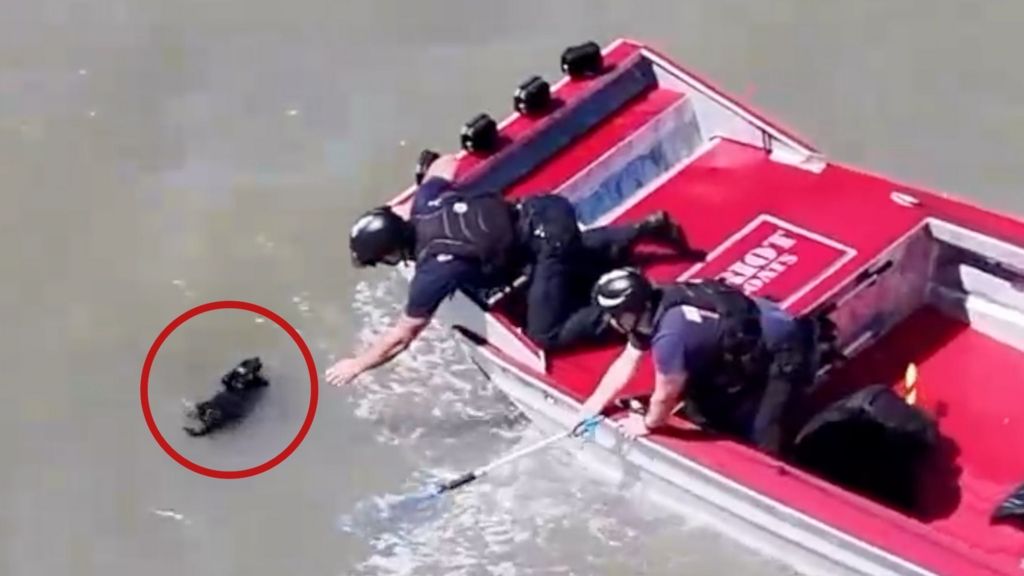
    A skilled K-9 officer from a Florida law enforcement agency pulled off a successful rescue mission this week, tracking down a missing 96-year-old local man who had become lost in dense woodlands north of Tampa. The hero of the hour, Boomer the police dog, guided sheriff’s deputies to the elderly man’s location, enabling first responders to extract him unharmed from the brush and return him to his residence.

  • Bosnia’s powerful peace envoy quits, with questions over role’s future

    Bosnia’s powerful peace envoy quits, with questions over role’s future

    After more than three years in one of the most contentious positions in Balkan politics, Christian Schmidt, the international High Representative for Bosnia and Herzegovina, has formally announced he will step down from his role, ending a tenure marked by persistent confrontation with ethno-separatist leaders and growing geopolitical friction.

    Schmidt, who took up the post in 2021, leaves behind a role that has been central to Bosnia’s post-conflict stability since the 1995 Dayton Peace Agreement. That landmark accord, which brought an end to three years of devastating ethnic conflict that tore the country apart, established the Office of the High Representative (OHR) as a UN-mandated watchdog tasked with upholding the terms of the peace deal. Endowed with sweeping executive authority known as the Bonn Powers, the post holder can intervene to override domestic legislation and remove fractious ethno-political leaders from office to preserve the country’s territorial integrity.

    Early high-profile office holders like Paddy Ashdown, who held the role in the early 2000s, embraced these expansive powers, famously removing 60 Bosnian-Serb officials from office in a single 2004 day over their refusal to cooperate with the UN’s war crimes tribunal for the former Yugoslavia. The move earned Ashdown the unflattering moniker the “Viceroy of Bosnia”, and later office holders adopted a far more restrained approach, pushing for Bosnian leaders to take ownership of domestic affairs. This hands-off strategy ultimately yielded limited progress, however, paving the way for Schmidt to take a far more activist approach when he assumed the role.

    Schmidt’s tenure was defined almost entirely by his standoff with Milorad Dodik, the powerful Bosnian-Serb leader who has long pushed for separatist secession from Bosnia and Herzegovina. Schmidt repeatedly used his Bonn Powers to block laws advanced by Dodik that would have advanced separatist goals, a confrontation that ultimately resulted in a one-year prison sentence and six-year ban from public office for Dodik. But the conflict ultimately eroded Schmidt’s own position: after Dodik spent heavily on high-powered Washington lobbying, the U.S. reversed its long-standing sanctions on the Bosnian-Serb leader. Observers have linked this policy shift to Dodik’s decision to award a major trans-Balkan gas pipeline contract to a little-known U.S. firm with close ties to former President Donald Trump’s family, a project that Schmidt openly opposed.

    Beyond his standoff with Dodik, Schmidt’s appointment was never formally recognized by Russia from the start. With the loss of U.S. backing, his position became untenable, leading to his personal decision to end his service supporting peace implementation in Bosnia, as confirmed by his office.

    Schmidt has confirmed he will remain in post until a successor is appointed, but the future of the OHR itself is now in serious question. Russia has long aligned with Dodik in calls to shut down the office entirely. If the U.S. now joins Russia in supporting closure, Bosnia will lose the only international check on ethno-nationalist separatist ambitions, leaving the country’s future stability and territorial integrity deeply uncertain.

  • Pentagon will review Senator Mark Kelly’s comments about US weapon stockpiles, Hegseth says

    Pentagon will review Senator Mark Kelly’s comments about US weapon stockpiles, Hegseth says

    A fresh high-profile political clash has erupted between U.S. Defense Secretary Pete Hegseth and Democratic Senator Mark Kelly, centered on claims that the Arizona lawmaker disclosed classified information during a public television interview regarding depleted American weapons stockpiles in the wake of the recent conflict with Iran.

    Appearing on CBS News’ flagship public affairs program *Face the Nation* on Sunday, Kelly, a former U.S. Navy captain, raised urgent alarms about the state of America’s munition reserves following military operations against Iran. He told interviewers that it was “shocking how deep we have gone into these magazines,” referencing details he received during an official briefing from Pentagon officials on specific stockpile levels.

    Within hours of the interview airing, Hegseth took to social media platform X to publicly accuse Kelly of irresponsible disclosure, claiming the senator had inappropriately shared details from a classified Pentagon briefing. “Did he violate his oath…again?” Hegseth wrote, announcing he had directed the Pentagon to launch a formal review of Kelly’s comments to assess whether any security protocols were broken.

    Kelly immediately pushed back against the defense secretary’s accusations, denying he had revealed any sensitive or classified material. The senator countered that the remarks he made on *Face the Nation* had already been discussed openly during a public Senate hearing held just one week prior. To back up his claim, he shared a video clip of a previous hearing featuring both he and Hegseth, pointing out that his assessment that it would take “years” to replenish key depleted stockpiles was actually a direct quote from Hegseth himself.

    In his response, Kelly also seized the opportunity to criticize the Trump administration’s handling of the Iran conflict, noting that the war has exacted a severe toll on U.S. military resources while the president and his defense team have still failed to outline clear strategic goals for the operation to the American public.

    The latest dispute is only the newest chapter in a bitter ongoing legal and political battle between the Trump administration and Kelly. Just days before Hegseth’s call for the review, a federal appeals court indicated it was likely to reject the Pentagon’s bid to punish Kelly over separate remarks where he urged U.S. service members to refuse unlawful orders.

    The conflict dates back to November, when Kelly and five other House and Senate lawmakers published a public video encouraging active-duty troops to disobey any orders they judged to be illegal. The Pentagon moved to discipline Kelly over the remarks, prompting the senator to file a lawsuit against the federal government in January. In his court filing, Kelly alleged that Hegseth had attempted to illegally demote him from the Navy Reserve as retaliation for his public criticism of the Trump administration.

    In February, a U.S. district judge granted a temporary injunction blocking the proposed demotion while the legal proceeding moves forward. The Pentagon appealed that ruling to the federal circuit court, where arguments were recently held. A rejection of the Pentagon’s appeal would represent another major legal setback for the administration in its conflict with Kelly.

    The BBC has reached out to Kelly’s office requesting additional comment on the latest dispute, while the Pentagon, when asked to confirm whether a formal investigation into Kelly’s comments is underway, declined to issue any new statement and instead referred reporters back to Hegseth’s original social media post.

  • EU imposes sanctions over helping Russia abduct thousands of Ukrainian children

    EU imposes sanctions over helping Russia abduct thousands of Ukrainian children

    BRUSSELS – In a coordinated action condemning the mass forced displacement of Ukrainian minors, the European Union rolled out a new round of restrictive measures on Monday, targeting 16 individuals and seven facilities tied to Russia’s alleged campaign of abducting tens of thousands of Ukrainian children.

    The newly sanctioned individuals span senior Russian government representatives, military officers overseeing youth training programs, and directors of children’s facilities operating in Russian-occupied Ukrainian territories. Among the named targets is Lilya Shvetsova, head of the so-called “Red Carnation” children’s camp in occupied Crimea. EU regulatory documents outline that Shvetsova oversaw deliberate programming designed to reshape the political and ideological identities of detained Ukrainian children, aligning with broader efforts to force assimilation of the minors.

    The seven additional sanctioned entities are institutions suspected of running coercive ideological indoctrination programs for abducted children, or providing military training to the minors for service in Russian armed forces or pro-Moscow separatist militias active inside Ukraine. All sanctioned individuals and groups face immediate asset freezes across EU member states and strict bans on entering or traveling through the bloc.

    With this latest update, the total number of individuals and entities placed under EU sanctions for involvement in the child abduction campaign now exceeds 130. EU authorities justify the measures by noting the targeted actors are “responsible for actions undermining or threatening the territorial integrity, sovereignty and independence of Ukraine,” a framing that aligns with the bloc’s longstanding position on Russia’s full-scale invasion of Ukraine launched in early 2022.

    Since the invasion began, Ukrainian and international authorities have documented that an estimated 20,500 Ukrainian children have been unlawfully deported to Russia or forcibly transferred to Russian-held territories in eastern Ukraine. Multiple investigations confirm that most of these children are systematically stripped of their Ukrainian cultural and national identities, issued Russian citizenship documents, and placed for adoption by Russian families. Others are funneled into state-run camps for forced ideological reeducation or military training ahead of deployment.

    Addressing her fellow EU foreign ministers in Brussels ahead of the sanctions endorsement, Latvian Foreign Minister Baiba Braže emphasized the gravity of the campaign. “Russia is trying to erase their identity,” Braže stated. “When you look at the Genocide Convention, it’s one of the features of the genocide crime. So, it’s very serious.”

    The forced deportation of Ukrainian children is already the subject of an international arrest warrant from the International Criminal Court, which named Russian President Vladimir Putin as personally responsible for the war crime in its 2023 warrant. Despite ongoing diplomatic and legal pressure, progress on returning the abducted minors has been slow: only roughly 2,200 children have been successfully repatriated to date. International aid workers note that the process of locating, identifying, and bringing children home remains extraordinarily challenging: children taken at very young ages often have little memory of their original families, and physical and identifying details shift dramatically over just a few years, making matches difficult. Even after repatriation, many children face social and integration hurdles in returning to Ukrainian life.

    Monday’s sanctions announcement coincided with a major diplomatic gathering hosted by the EU and Canada in Brussels, bringing together the 47-member International Coalition for the Return of Ukrainian Children. The coalition’s core goals are to ramp up collective diplomatic pressure on Moscow to end the abduction campaign, and coordinate global support for the painstaking work of tracing, verifying, and repatriating displaced minors.

    Speaking ahead of the coalition meeting, EU Enlargement Commissioner Marta Kos framed the child abduction campaign as one of the most egregious atrocities of the ongoing war. “War has really many faces, but stealing the children is really one of the most horrific,” Kos said. “We should stop this, and Russia should pay.”

  • BBC visits Argentine city in hunt for hantavirus outbreak origins

    BBC visits Argentine city in hunt for hantavirus outbreak origins

    A team from the British Broadcasting Corporation has launched an on-site investigation in the southern Argentine city of Ushuaia, working to unpack the origins of a dangerous hantavirus outbreak linked to the Dutch expedition vessel MV Hondius. Located on the edge of Tierra del Fuego, billed as the world’s southernmost city, Ushuaia has emerged as the key suspect in the spread of the virus that has already sickened multiple people who sailed on the vessel.