作者: admin

  • Beauty brands find fertile ground for expansion in the Middle East

    Beauty brands find fertile ground for expansion in the Middle East

    The Middle East’s beauty sector is rapidly transforming into one of the world’s most influential markets, creating unprecedented expansion opportunities for professional haircare brands. According to industry insights from leading brand It’s a 10, the region demonstrates remarkable resilience and dynamic growth driven by increasingly discerning consumers who prioritize premium, salon-quality products.

    Market analysis reveals two significant consumer behavior shifts gaining momentum across the region: a heightened demand for ingredient transparency and a growing emphasis on scalp health as the foundation of overall hair wellness. These evolving preferences are reshaping product development and marketing strategies throughout the GCC nations.

    The professional salon segment remains the cornerstone of market penetration strategies, with hairdressers continuing to serve as crucial brand ambassadors. This channel’s importance is particularly pronounced in the Middle East, where consumers exhibit strong financial readiness to invest in high-performance beauty solutions.

    Distribution partnerships are proving vital to successful market expansion. The Nazih Group, It’s a 10’s regional distributor for the past five years, exemplifies the critical role local partners play in navigating import regulations, compliance requirements, and logistical challenges while simultaneously building brand presence.

    Looking toward 2026, major beauty brands are preparing significant market investments including expansion into all Ulta stores scheduled to open across the GCC. The upcoming year will also see the introduction of two new brands—FAST Haircare and Rewind It 10—specifically designed to address regional consumer needs while maintaining global quality standards.

    Brands are balancing international consistency with local relevance by maintaining uncompromising product quality while developing tailored marketing approaches and region-specific messaging that resonates with Middle Eastern professionals and consumers alike.

  • Japan ex-PM Abe’s alleged killer faces verdict

    Japan ex-PM Abe’s alleged killer faces verdict

    A Japanese court is poised to deliver its verdict on Wednesday in the landmark trial of Tetsuya Yamagami, the 45-year-old defendant charged with assassinating former Prime Minister Shinzo Abe in July 2022. The shooting, which occurred during a campaign speech in Nara, sent shockwaves through a nation unaccustomed to gun violence and triggered profound societal repercussions.

    Yamagami has admitted to the murder charges but continues to contest certain ancillary allegations, according to media reports. Despite his partial admission of guilt, Japanese legal procedures mandate the continuation of the trial. Prosecutors have sought life imprisonment, characterizing the assassination as an ‘unprecedented event in post-war history’ with ‘extremely serious consequences’ for Japanese society.

    The trial, which commenced in October, revealed Yamagami’s motive stemmed from his family’s financial devastation caused by his mother’s excessive donations to the Unification Church. Prosecutors asserted that Yamagami targeted Abe—Japan’s longest-serving prime minister—believing the assassination would expose the church’s political connections and ignite public criticism.

    Defense attorneys pleaded for leniency, emphasizing how Yamagami’s upbringing was marred by ‘religious abuse’ after his mother donated approximately 100 million yen (then equivalent to $1 million) to the church. These donations forced Yamagami to abandon higher education and preceded his brother’s suicide in 2005.

    The assassination exposed extensive ties between the Unification Church and conservative lawmakers within the ruling Liberal Democratic Party, ultimately prompting the resignation of four government ministers. The case also revealed security shortcomings, as officials failed to immediately recognize the gunshot due to Japan’s exceptionally rare incidence of firearm violence.

    Public interest remains intense, with queues forming outside the Nara courtroom ahead of the verdict announcement. One attendee, 31-year-old logistics worker Manabu Kawashima, expressed his desire to ‘know the truth about Yamagami,’ describing Abe’s death as ‘the incident of the century.’

  • CE Ventures backs $55 million Series A funding of US biotech pioneer, Think Bioscience

    CE Ventures backs $55 million Series A funding of US biotech pioneer, Think Bioscience

    In a significant move for the biotechnology sector, UAE-based CE Ventures has announced its participation in a $55 million Series A funding round for Colorado-based Think Bioscience. The investment round, notably oversubscribed, was spearheaded by Regeneron Ventures, Innovation Endeavors, and Janus Henderson Investors.

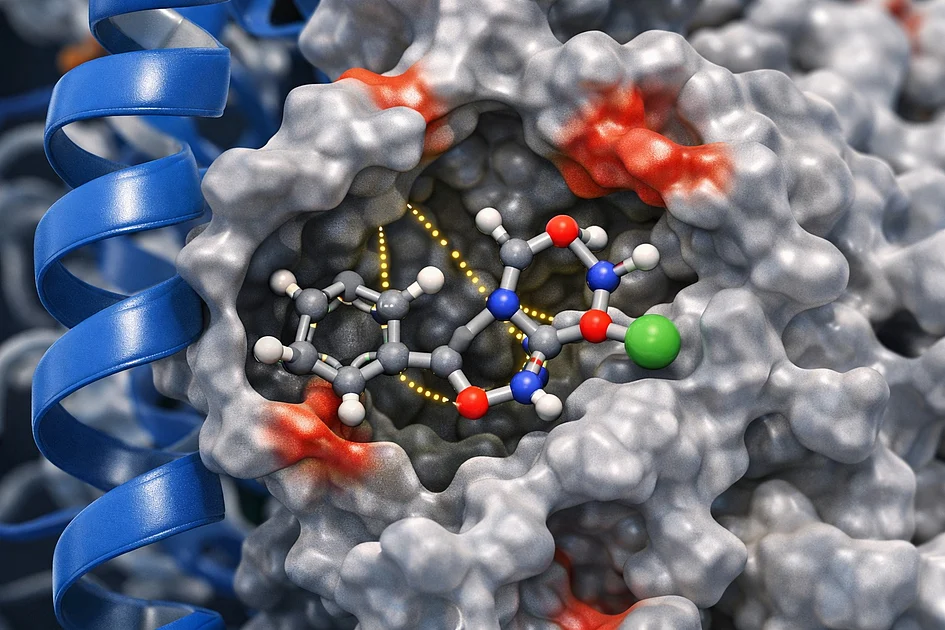
    Think Bioscience is pioneering a revolutionary synthetic biology platform designed to tackle one of medicine’s most persistent challenges: so-called ‘undruggable’ protein targets. The company’s innovative approach identifies previously hidden binding sites on proteins, enabling the development of small-molecule therapeutics for conditions that have long eluded conventional treatment modalities.

    The company’s lead program addresses Noonan syndrome, a genetic disorder affecting approximately 1 in 2,500 births worldwide. This condition presents serious cardiac and lymphatic complications, cognitive impairment, chronic pain, and short stature. Currently, no approved therapies target the underlying biology of this syndrome, representing a significant unmet medical need.

    Tushar Singhvi, Deputy CEO and Head of Investments at Crescent Enterprises, expressed strong conviction in the investment: ‘Think Bioscience is building a differentiated platform at the frontier of synthetic biology and drug discovery, with the potential to expand what is pharmaceutically possible for patients with high unmet need.’

    Dr. Jerome Fox, co-founder and CEO of Think Bioscience, emphasized the transformative potential of their work: ‘Our lead programme has the potential to give a broad set of Noonan patients a normal life. We are grateful to our investors for supporting our vision to develop life-changing therapies.’

    The funding will accelerate the advancement of Think Bio’s internal pipeline of first-in-class small molecule programs while further developing their proprietary discovery platform. This investment aligns with CE-Ventures’ strategy of backing R&D-intensive, asset-light business models in deep-tech and biotech sectors with global competitive potential.

    Dr. Damir Illich, Manager of Life Sciences at CE-Ventures, who will join Think Bio’s board as an observer, noted: ‘Think Bioscience is addressing one of drug discovery’s most critical bottlenecks by enabling small-molecule drugs against historically undruggable targets.’

    The announcement comes as CE-Ventures prepares to host ‘The Microbiome Revolution’ on February 5, 2026, in Dubai, bringing together global experts to explore the growing human microbiome market, projected to exceed $4 billion by 2030.

  • Watch: Will Trump get friendly welcome as world leaders meet in Davos?

    Watch: Will Trump get friendly welcome as world leaders meet in Davos?

    President Donald Trump’s inaugural appearance at the World Economic Forum in Davos confronts an unexpectedly frosty reception from global leaders, contrasting sharply with his customary domestic rally environments. The diplomatic cooling stems primarily from his administration’s controversial pursuit of Greenland’s acquisition, which has generated substantial international skepticism and diplomatic friction.

    European diplomats and economic representatives indicate that traditional diplomatic decorum may give way to more confrontational exchanges regarding U.S. protectionist policies and unconventional geopolitical maneuvers. The Greenland situation has particularly alarmed European allies, creating an atmosphere where even traditionally cordial interactions are expected to be notably restrained.

    Analysts suggest this forum will serve as a critical testing ground for Trump’s “America First” doctrine within elite global circles. Unlike previous U.S. presidents who used Davos to strengthen multilateral relationships, Trump faces the challenge of advancing his nationalist agenda while navigating increasingly complex international dynamics. The setting promises to reveal significant tensions between traditional diplomatic approaches and the current administration’s unconventional foreign policy methodology.

  • UN chief condemns Israeli demolition of UN compound in East Jerusalem

    UN chief condemns Israeli demolition of UN compound in East Jerusalem

    United Nations Secretary-General Antonio Guterres has issued a forceful condemnation of Israel’s demolition of a United Nations facility in East Jerusalem, characterizing the action as a severe breach of international law. Through deputy spokesperson Farhan Haq, Guterres denounced the destruction of the Sheikh Jarrah compound operated by the UN Relief and Works Agency for Palestine Refugees (UNRWA) in the strongest possible terms.

    The demolition, which occurred on January 20, 2026, targeted a facility that the UN chief had previously identified as inviolable United Nations premises enjoying full diplomatic immunity. Guterres referenced his prior communication to the Israeli Prime Minister dated January 8, 2026, in which he explicitly affirmed the compound’s protected status under international agreements.

    The Secretary-General demanded the immediate cessation of any further demolition activities and called for the complete restoration of the destroyed compound and other UNRWA facilities to their original condition without delay. He characterized the escalating actions against UNRWA as fundamentally unacceptable and inconsistent with Israel’s obligations under multiple international legal frameworks, including the UN Charter and the Convention on the Privileges and Immunities of the United Nations.

    The incident represents a significant escalation in tensions between Israeli authorities and international organizations operating in contested territories, raising serious concerns about the protection of diplomatic premises and humanitarian operations in the region.

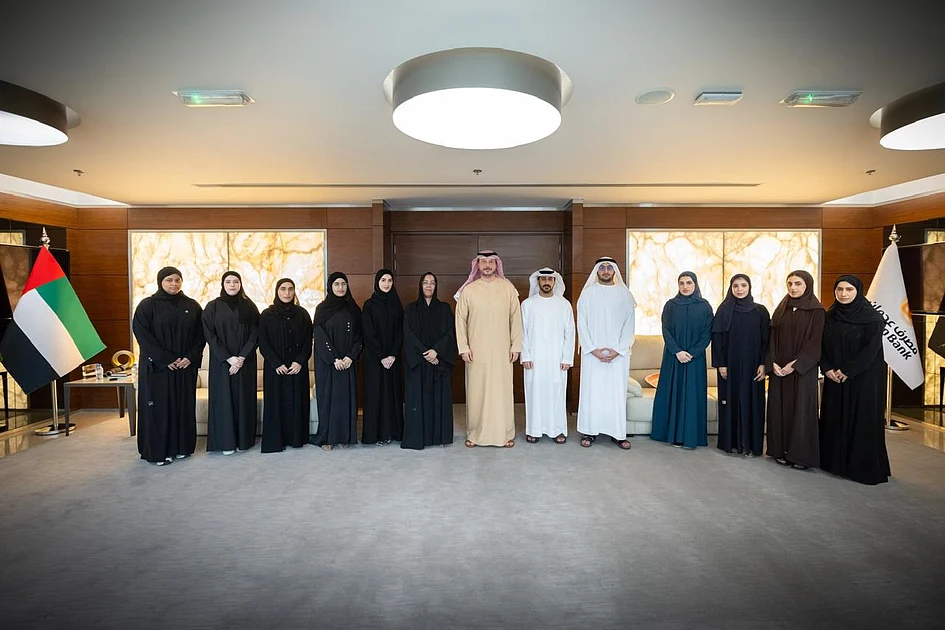
  • Ajman Bank welcomes new employees as part of Emiratisation and talent development journey

    Ajman Bank welcomes new employees as part of Emiratisation and talent development journey

    Ajman Bank has inaugurated a new cohort of Emirati professionals through its comprehensive ETHRAA development framework, marking a significant advancement in its nationalization strategy. The initiative represents a strategic commitment to cultivating homegrown talent within the UAE’s financial services industry.

    The bank’s leadership emphasizes that human capital development serves as a fundamental pillar for institutional resilience and sustainable growth. Chief Executive Officer Mustafa Al Khalfawi stated: ‘Our deliberate focus on Emiratization enables us to build critical capabilities, leadership depth, and organizational continuity. This investment in national talent aligns perfectly with our governance framework and core values, ultimately enhancing our capacity to deliver long-term value to the communities we serve.’

    The newly recruited employees will undergo an intensive week-long orientation program developed in partnership with the Emirates Finance Institute. This curriculum transcends conventional onboarding by incorporating executive-led sessions, structured learning across essential banking disciplines, and immersion into the bank’s Islamic finance principles and operational methodologies.

    Chief Human Resources Officer Hend Ismail Al Ali elaborated on the program’s design: ‘ETHRAA establishes a sustainable ecosystem for empowering UAE Nationals through clear professional development pathways. This initiative supports both the evolving requirements of the banking sector and the nation’s broader objective of building a knowledge-based economy driven by national capabilities.’

    The program’s distinctive feature involves active participation from the Executive Committee members, who serve as presenters and mentors to reinforce institutional alignment and cultural values. This leadership engagement ensures early exposure to decision-making principles and performance expectations, fostering accountability and organizational belonging from the outset.

    Ajman Bank’s systematic approach to talent development recently garnered recognition when the institution secured first place in the Medium-sized Entities category at the prestigious Nafis Awards. The ETHRAA program continues to serve as a persistent catalyst within the bank’s talent ecosystem, integrating skills-based development, mentorship, and strategic exposure to prepare Emirati professionals for leadership positions across the organization.

  • Jessie James Tumaliuan pleads guilty to murdering wife Czarina Gatbonton Tumaliuan

    Jessie James Tumaliuan pleads guilty to murdering wife Czarina Gatbonton Tumaliuan

    In a significant development to a tragic domestic violence case, Jessie James Tumaliuan, a 42-year-old Melbourne father, has formally entered a guilty plea for the murder of his wife, Czarina Gatbonton Tumaliuan. The admission occurred during a Supreme Court of Victoria hearing on Wednesday, just weeks before his trial was scheduled to commence on February 3.

    The horrific incident unfolded on the morning of March 27 last year, when emergency services discovered the body of the 42-year-old mother of four in the backyard of a residential property on Retford Close in Werribee. The victim, Czarina, was found with multiple fatal stab wounds. Tumaliuan was apprehended by Victoria Police at the scene shortly after the discovery.

    Legal proceedings saw a pivotal shift earlier this month when Tumaliuan sought a sentence indication from Justice Amanda Fox on January 16. Following this, his legal counsel informed the court that he had accepted the indication and intended to change his plea to guilty. The formal arraignment was subsequently delayed until an accredited Filipino interpreter could be present to assist, a measure Justice Fox deemed essential given the gravity of the charge, despite Tumaliuan’s demonstrated ability to communicate in English.

    With his guilty plea now officially recorded, Tumaliuan has been remanded in custody. The court has scheduled a pre-sentence hearing for March 13, during which a formal psychological assessment of the defendant will be presented to aid in determining his final sentence.

  • Albanese government’s housing target falls short by 81k homes as quarter-time called on housing accord policy

    Albanese government’s housing target falls short by 81k homes as quarter-time called on housing accord policy

    The Albanese government’s flagship National Housing Accord has reached its quarter-time mark with concerning performance gaps, as official data reveals Australia has fallen short of its housing targets by approximately 81,000 dwellings. Despite some progress in construction activity, the ambitious housing initiative continues to face significant challenges in meeting its objectives.

    According to the latest Building Activity report from the Australian Bureau of Statistics, dwelling commencements experienced a 6.6% increase in September 2025, reaching 48,778 units. Private sector house commencements accounted for more than half of this growth, rising 6.9% to 28,845 units. However, the completion rates tell a different story, with finished private sector house dwellings declining by 5.1% compared to September 2024, totaling only 27,066 completions.

    Urban Taskforce CEO Tom Forrest highlighted the concerning gap between targets and reality. “Under the National Housing Accord, the pro-rata new housing completions target for the first 15 months was 300,000,” Mr. Forrest stated. “Despite some improvement, the first 15 months saw only 218,974 new dwellings completed across Australia.”

    The state-level analysis reveals mixed results. New South Wales, Australia’s most populous state, reported 47,198 commencements for the year ending September 2025—an increase of 4,186 from the previous year. However, the state completed only 55,557 new dwellings against an Accord target of 94,000 for the same period.

    Mr. Forrest identified critical systemic challenges hindering progress, including insufficient federal support for housing-enabling infrastructure and excessive state-level taxation on housing projects, particularly in NSW. “Today’s ABS data is a timely reminder to federal officials that more support is needed for housing-related infrastructure and taxation reform,” he emphasized.

    The Queensland government separately addressed construction productivity issues, with Home Ownership Minister David Janetzki attributing lagging housing construction to union deals under the previous administration. “The decade of declining construction productivity has reduced housing affordability and increased the cost of vital infrastructure projects,” Minister Janetzki stated.

    As the National Housing Accord moves beyond its initial phase, stakeholders emphasize that planning approvals alone are insufficient without the necessary infrastructure funding and tax reforms to convert approvals into actual housing completions.

  • Unions and students seek Columbia University board reforms after Trump deal

    Unions and students seek Columbia University board reforms after Trump deal

    A coalition of students and faculty at Columbia University has initiated a comprehensive campaign to fundamentally restructure the institution’s highest governing body, the Board of Trustees. This movement emerges from mounting concerns over what participants describe as systemic governance failures and the disenfranchisement of university stakeholders.

    The campaign, spearheaded by the Columbia chapter of the American Association of University Professors (AAUP), cites multiple catalysts for reform. Primary among these is the administration’s handling of pro-Palestine protests, particularly the decision to involve law enforcement which resulted in hundreds of student arrests, numerous suspensions, and several students facing deportation proceedings. Activists maintain these actions have created a chilling effect on free speech across campus.

    Additional grievances include the university’s settlement with the Trump administration, wherein Columbia agreed to pay $220 million to resolve allegations of violating federal anti-discrimination laws rather than contesting the charges. Professor Michael Thaddeus, AAUP vice-president, characterized this as a ‘deeply misguided decision’ that involved unprecedented concessions to government demands regarding hiring practices, curriculum development, and admissions policies.

    The campaign also highlights the case of Dr. Robert Hadden, a former gynecologist convicted of sexual assault, whose misconduct they allege was systematically concealed by university administration for decades.

    Critics identify structural deficiencies within the current governance model. The 20-member board, composed primarily of finance sector executives with minimal academic representation, operates through a self-perpetuating nomination process without stakeholder input. Professor Jean E Howard notes the board’s concerning lack of transparency, refusing to publish meeting minutes while simultaneously curtailing the powers of the University Senate.

    The proposed reforms envision transforming the board into a democratically elected body that better reflects the Columbia community’s diversity. Advocates argue this structural change would counter what they describe as oligarchic governance serving the interests of the wealthiest one percent rather than the broader university population.

    While organizers acknowledge the long-term nature of this initiative, they emphasize the urgency of establishing more representative governance to restore Columbia’s ethical and intellectual integrity amid what they characterize as the challenges of the Trump era.

  • Global markets on alert as Europe to suspend approval of US trade deal

    Global markets on alert as Europe to suspend approval of US trade deal

    The European Parliament is poised to formally suspend ratification of a major US-EU trade agreement originally negotiated in July, marking a significant deterioration in transatlantic relations. This decision, scheduled for announcement in Strasbourg on Wednesday, comes in direct response to President Donald Trump’s renewed efforts to acquire Greenland and his accompanying threats of punitive tariffs.

    The escalating tensions have triggered substantial financial market volatility across continents. European markets registered a second consecutive day of declines, while US indices experienced sharp drops—the Dow Jones fell 1.7%, the S&P 500 declined over 2%, and the Nasdaq closed approximately 2.4% lower. Asian markets showed mixed performance, though safe-haven assets surged with gold exceeding $4,800 per ounce for the first time.

    Key European legislators have condemned Washington’s approach. Manfred Weber, an influential German MEP, stated approval was ‘not possible at this stage,’ while Trade Committee Chair Bernd Lange declared there was ‘no alternative’ to suspension given threats against EU territorial integrity. Lange emphasized that using tariffs as coercive instruments undermines the stability of EU-US trade relations.

    The suspended agreement, initially hailed as a breakthrough, would have reduced US levies on most European goods to 15% from previously threatened 30% rates. In return, Europe committed to investment pledges and regulatory changes benefiting US exports. However, the pact requires parliamentary approval to take effect.

    With a temporary truce on EU retaliatory measures set to expire February 6th, the bloc must now decide whether to implement previously prepared tariffs targeting $109 billion in American goods. French President Emmanuel Macron has advocated considering retaliatory options, including the EU’s ‘trade bazooka’ anti-coercion instrument, calling Washington’s tariff accumulation ‘fundamentally unacceptable.’

    US officials delivered contrasting messages at Davos. Treasury Secretary Scott Bessent urged European leaders to refrain from retaliation and ‘have an open mind,’ while Trade Representative Jamieson Greer warned that the US would respond to any retaliatory measures. The dispute occurs within a broader context of technological and metals tariff disagreements that have strained the world’s largest trade partnership, which exchanged over €1.6 trillion in goods and services in 2024.

    As middle powers like Canada advocate for coordinated responses to great power rivalry, the legal foundation of Trump’s tariff regime remains uncertain pending a Supreme Court decision on their constitutionality.