作者: admin

  • Albanese government to spend $600m on multi-year Bondi response

    Albanese government to spend $600m on multi-year Bondi response

    Nearly six months after the deadly December 14 terror attack at Bondi Beach that claimed 15 lives, most of them Jewish, the Albanese government has formally detailed a $604.2 million multi-year funding package in its 2026-27 federal budget, released on Tuesday, to boost Jewish community security, expand national counter-terrorism capacity, and combat rising anti-Semitism across Australia. The five-year allocation, which includes $8.1 million in permanent annual funding after the initial period, will be distributed across dozens of key stakeholders, from peak Jewish representative bodies and educational institutions to counter-terrorism police units and regulatory agencies. More than $120 million of the total package will be allocated over four years to the Executive Council of Australian Jewry to upgrade community-wide security infrastructure, with $22 million of that sum drawn from the Confiscated Assets Account established under the Proceeds of Crime Act over three years. An additional $46.7 million over the same four-year period will go toward upgrades for major Jewish communal and cultural sites, including the Hakoah Club and the National Jewish Memorial Centre, as well as a targeted non-competitive grant program for local projects led by Chabad of Bondi. Roughly $5 million in targeted support is earmarked for affected stakeholders including Lewis’ Continental Kitchen, a Jewish business that was firebombed in a separate earlier attack, Jewish youth camps across the state of Victoria, and directly impacted survivors and families of victims of the Bondi Beach attack. A further $42.9 million allocated over two years will fund immediate and accessible mental health support services for community members affected by the attack and rising hate violence. Ahead of the federal budget announcement, the government already revealed an $80 million two-year investment to establish a new national counter-terrorism center dedicated to addressing the growing crisis of online radicalization among young Australians. When combined with new allocations in the 2026-27 budget, total spending targeting anti-Semitism and violent extremism in this fiscal cycle tops $207 million. This allocation includes almost $70 million for the Australian Federal Police’s National Security Investigations teams, as well as sustained funding for cross-agency initiatives: a teacher resource hub managed by the Department of Education, and a hate group monitoring framework developed by the Department of Home Affairs. Another $32.6 million in 2026-27 will fund national public awareness campaigns designed to strengthen national security and reinforce social cohesion across diverse Australian communities. The long-running Together for Humanity interfaith education program will also receive a $20 million four-year investment to extend and expand its reach, while public broadcaster SBS will get $3 million over three years to continue its *SBS Examines* podcast series focused on hate and extremism. The newly launched Royal Commission on Anti-Semitism and Social Cohesion, which held its first public hearings last week, will also receive sustained resourcing, with more than $131 million allocated to the Attorney-General’s Department from the 2025-26 fiscal cycle to support the commission’s work. The budget also confirms continued funding for national firearms licensing reforms, though the government has declined to disclose the specific total amount, stating that public release would prejudice ongoing negotiations with state and territory jurisdictions over funding levels. In addition, the budget sets aside a contingency reserve for the stalled National Gun Buyback Scheme, which has faced significant delays and pushback from multiple state and territory governments since it was proposed. The scheme has already received partial funding, and the new contingency allocation aims to support its implementation moving forward.

  • New Zealand moves to halt lawsuits over climate damage

    New Zealand moves to halt lawsuits over climate damage

    In a controversial policy shift that has drawn sharp criticism from climate campaigners, New Zealand’s center-right government confirmed plans Tuesday to amend national legislation to block courts from holding private companies legally liable for climate change damage connected to their greenhouse gas emissions.

    Justice Minister Paul Goldsmith announced the change, pointing specifically to an ongoing high-profile lawsuit filed by Indigenous Māori climate activist Michael Smith, which targets six major New Zealand firms, including dairy industry giant Fonterra, over their contribution to climate-related environmental harm. Goldsmith argued that civil tort law—the legal framework under which such compensation claims are filed—is ill-equipped to address a systemic issue like climate change, which intersects with complex environmental, economic, and social priorities. He added that allowing such lawsuits to proceed would create crippling uncertainty that undermines business confidence across the country.

    “The courts are not the right venue to resolve claims of climate harm,” Goldsmith said, confirming the amendment will explicitly bar courts from issuing findings of liability for climate damage tied to greenhouse gas emissions.

    Smith, the activist leading the pending case, condemned the government’s move as a direct attack on democratic principles. Speaking to Radio New Zealand, he warned that if parliament can intervene to cancel an active court case simply because it has become politically inconvenient, no individual’s legal claims can ever be considered secure. The proposed law change is widely expected to pass parliament, as the ruling national coalition holds a clear majority of legislative seats.

    The announcement is the latest in a series of rollbacks of climate-friendly policies by the current administration, which took office in 2023. Since assuming power, the government has scrapped a popular clean car discount designed to boost electric vehicle adoption, reversed a nationwide ban on new offshore oil and gas exploration, and implemented a streamlined fast-track approval process for new mining permits.

    The government’s 2025 emissions target has also faced separate legal pushback. In January, officials announced a goal to cut carbon emissions 51% below 2005 levels by 2035—an almost negligible adjustment from the previous administration’s target of a 50% cut by 2030. In March, two major environmental legal groups, Lawyers for Climate Action and the Environmental Law Initiative, sued Climate Change Minister Simon Watts, arguing the weak, delayed target fails to meet the government’s legal obligations to cut emissions. New Zealand’s long-term legally binding target remains net-zero greenhouse gas emissions by 2050, excluding agricultural and waste methane.

    Globally, climate litigation has emerged as a key tactic for activists and affected communities to push for greater accountability from major emitters and governments. From South Korea to Germany, courts around the world have increasingly accepted climate liability cases, pushing both public and private actors to strengthen their climate action. New Zealand’s proposed law change marks one of the most explicit efforts by a national government to block this growing trend of climate accountability.

  • Canberra teen allegedly motivated by ‘nationalist, racist extremism’ hit with additional charges over alleged plan to commit terror attack

    Canberra teen allegedly motivated by ‘nationalist, racist extremism’ hit with additional charges over alleged plan to commit terror attack

    A 17-year-old Canberra resident, already in custody on earlier firearm and terrorism-related charges, has been hit with two new, historic charges in the Australian Capital Territory (ACT) in connection to an alleged far-right extremist plot to carry out a deadly terror attack against random civilians. This development marks the first time any individual has been charged with terrorist act planning in the ACT’s history.

    The teenager was first taken into custody by law enforcement in November 2023, when authorities executed a search warrant at his residential property. During that operation, investigators seized a cache of prohibited items: explosive precursor chemicals, gas masks, military-style tactical clothing, a replica imitation firearm, printed extremist ideological material, and the teen’s personal mobile phone. He has remained in detention ever since his initial arrest.

    On Tuesday, the teen made a brief first appearance at the ACT Children’s Court to face the newly filed charges: one count of preparation and planning for a terrorist act, and a second count of transmitting violent extremist material. In a joint official statement, the Australian Federal Police (AFP), ACT Policing, and Australia’s national security agency ASIO confirmed that additional evidence uncovered during the ongoing investigation justified the expanded charges.

    Authorities allege the planned attack was targeted at people unknown to the teenager, and was driven by ideological views aligned with violent nationalist and racist extremism. AFP Assistant Commissioner Peter Crozier, who leads the force’s counter-terrorism division, described the radicalization of young Australians by online extremist propaganda as a deeply alarming trend for the country.

    “Violent extremist material is circulated deliberately by terrorist networks to sow violence, hate, and deep division within Australian society,” Crozier explained in his statement. He emphasized that the AFP and its national security and law enforcement partner agencies remain unwavering in their work to protect Australian communities. “It is our core mandate to defend and protect the Australian public, and we will relentlessly pursue any actor that seeks to undermine our democracy or fracture our social cohesion,” he added.

    Crozier also highlighted the shared responsibility of non-law enforcement stakeholders in countering youth radicalization, saying: “We strongly emphasise the important role that parents, schools, social services and technology companies have in preventing access to violent extremist material by our youth.”

    ACT Policing Deputy Chief Police Officer Richard Chin echoed this focus on prevention and early intervention, noting that community safety remains the top priority for the local Joint Counter Terrorism Team (JCTT). “We are focused on limiting the accessibility of violent extremist material and promoting education and awareness for those in frontline protective roles, including parents, educators and health care providers in the ACT, to maximise prevention and early intervention options,” Chin said.

    Chin pointed out that parents and teachers are often the first adults to notice warning signs of radicalization in young people. Strengthening awareness and building confidence within trusted, supportive community networks, he explained, is a core strategy to stop young people from being exposed to harmful extremist influences and stop radicalization before it leads to violence.

  • UAE secretly joined Israeli-US strikes on Iran: Report

    UAE secretly joined Israeli-US strikes on Iran: Report

    In a stunning revelation published by The Wall Street Journal, the United Arab Emirates has secretly carried out offensive military strikes against Iran, pulling the Gulf monarchy directly into the expanding Israeli-U.S. conflict that has already destabilized the broader Middle East region.

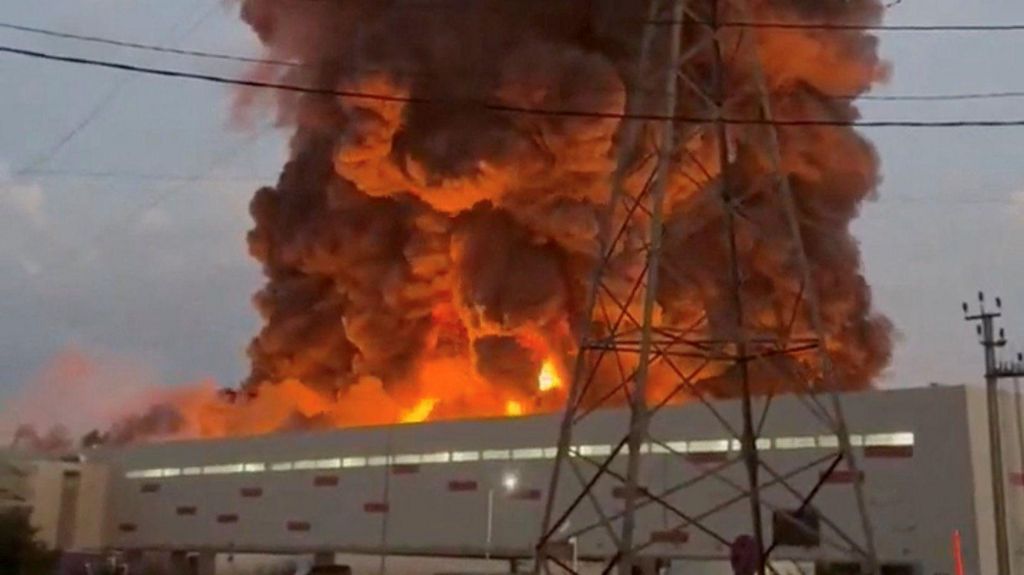
    According to anonymous sources familiar with the operation, Emirati military units targeted a key oil refinery located on Iran’s Lavan Island in the Persian Gulf during the first week of April. The UAE has not issued any public statement confirming or acknowledging its role in the attack. The strike, the Journal reports, ignited a massive blaze at the facility that knocked most of the refinery’s production capacity offline for months.

    The attack comes at a particularly sensitive juncture: just as former U.S. President Donald Trump was pushing for a ceasefire to end a five-week sustained air campaign against Iran, making the covert strike a major escalation of already soaring tensions. Tehran quickly labeled the incident an “enemy attack” and launched an immediate counteroffensive, firing a large volley of ballistic missiles and attack drones at both the UAE and neighboring Kuwait.

    In the weeks since the strike, Iran has concentrated the vast majority of its retaliatory firepower on the Emirates, launching more than 2,800 projectiles – a total that far outpaces the volume of attacks against any other adversary involved in the conflict, including Israel and the United States. This large-scale retaliation has sent shockwaves through the UAE’s economy, disrupting commercial air travel across the country, cutting deep into vital tourism revenue, and triggering widespread instability in the country’s once-booming property market. As the economic fallout spreads across key sectors, dozens of domestic and international companies have implemented mandatory furloughs and begun cutting staff to offset losses.

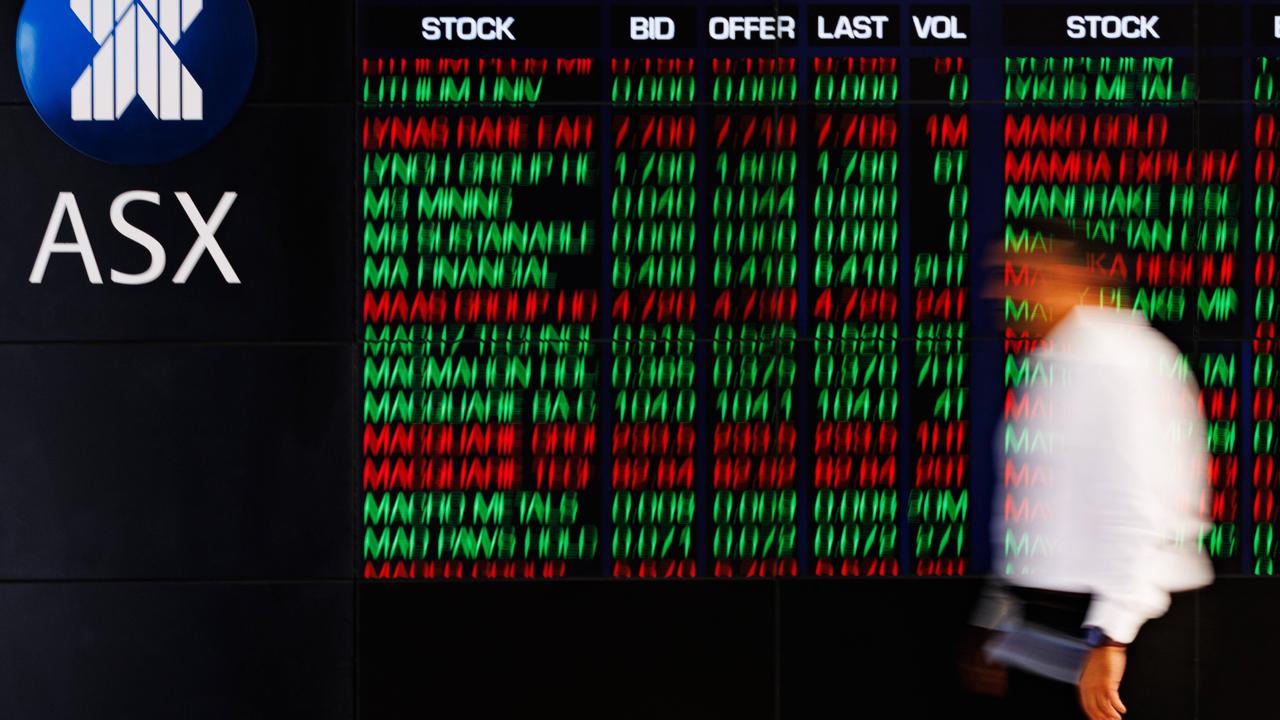
    By the end of April, data shows more than $120 billion had been erased from the total market capitalization of the Dubai and Abu Dhabi stock exchanges, while more than 18,400 commercial flights to and from the UAE have been canceled amid persistent security risks.

    The Wall Street Journal’s report also confirms that Washington has privately given its approval to the UAE’s decision to join offensive operations, reinforcing widespread analysis that Abu Dhabi is now operating in full coordination with U.S. and Israeli military goals in the region. This deepening alignment, critics argue, has formed a new confrontational axis that has prolonged and intensified the regional conflict, rather than working to de-escalate or contain it.

    In recent years, the UAE has emerged as one of the most hawkish Gulf states, maintaining continuous close military coordination with both the U.S. and Israel throughout the ongoing conflict. This openly confrontational posture has pulled Abu Dhabi directly into the line of Iranian retaliation, despite decades of careful diplomatic balancing by Gulf monarchies seeking to avoid open conflict with Tehran.

    Speculation about direct Emirati involvement in offensive operations against Iran first began circulating in mid-March, after publicly shared footage captured an unidentified fighter jet operating inside Iranian airspace that did not match the markings or design of any known U.S. or Israeli aircraft. Around the same time, independent outlet Middle East Eye reported that Iranian air defenses had shot down a Chinese-made Wing Loong II reconnaissance and attack drone near the city of Shiraz, leading independent analysts to question whether other Gulf states, including Saudi Arabia or the UAE, had joined active offensive operations against Iran.

    Beyond the military escalation, Tehran has moved to exploit existing tensions among Gulf Cooperation Council members to isolate Abu Dhabi. Per The Wall Street Journal, Iran issued explicit warnings to Saudi Arabia and Oman that it would “heavily target” the UAE in response to its participation in the Israeli-U.S. campaign, a move widely interpreted as an attempt to split the Gulf bloc.

    Existing rifts among Gulf powers are already becoming more visible. Long-simmering tensions between the UAE and Saudi Arabia have grown increasingly tense in recent years, and the fallout from the Iran strike has only worsened frictions. The UAE’s recent decision to withdraw from OPEC further strained diplomatic and economic ties with Riyadh, indicating that the ongoing conflict with Iran is deepening historical rivalries rather than uniting Gulf powers against a common perceived threat.

  • Patrick Cripps has pledged to steer Carlton through Michael Voss’ sudden exit

    Patrick Cripps has pledged to steer Carlton through Michael Voss’ sudden exit

    The Australian Football League community was thrown into unexpected upheaval this week after news broke that senior Carlton Football Club coach Michael Voss had stepped down from his role, with the club confirming his immediate exit on Tuesday. In the hours following the official announcement, Blues captain and two-time Brownlow Medal winner Patrick Cripps stepped forward to address fans, the media, and the entire club, pledging to steady the side through the ongoing transition and the remainder of the 2025 season.

    Voss first tendered his resignation to Carlton general manager Chris Davies during a meeting in Brisbane last Friday, but details of the coaching exit were not made public until early Tuesday, triggering immediate reaction from across the AFL landscape. Cripps confirmed Tuesday that he was among the first senior figures at the club to learn of Voss’ decision, saying the sudden news came as a major shock to the playing group.

    Speaking to reporters twice on Tuesday — first informally in the club car park ahead of the official press conference, then in a formal address to club stakeholders — an emotional Cripps reaffirmed his unwavering commitment to the Carlton Football Club, pushing back against any speculation that he might abandon the side mid-season. Currently under contract with the Blues through the end of next year, Cripps emphasized he has no intention of writing off the remaining 14 rounds of the current campaign.

    “Mate, I am contracted until next year. Like I said before, I am really committed in terms of this season,” Cripps told reporters. “I am not going to just wave the white flag and waste a year, there’s a lot of footy to be played this year. The privilege to play AFL, any game of AFL, is a massive honour. There’s so many people in the world that would love to play any game of footy. That never gets lost on me and especially for this footy club, I am going to lead it the same way I’ve been doing it for the last six to eight years. Wear the jumper with pride and keep going for it.”

    Cripps also opened up about his reaction to Voss’ exit, admitting he was still processing the sudden change just days after the coach made his decision to step down. Amid intense public scrutiny and on-field pressure that has followed Carlton through the early part of the season, Cripps said he could not praise Voss enough for his composure and leadership through adversity.

    “I was shocked, it’s early in the year and I think everyone that’s watched footy this year in terms of the attention around him and the way he’s handled himself,” he said. “I just couldn’t speak highly enough of a person, who through a lot of adversity, showed up so well as a leader for us as players. I didn’t think it was going to happen like this, shocked is one way (to describe it). I am just trying to absorb it all, I suppose.”

    With more than half of the AFL regular season still ahead, Cripps’ public commitment has served as a rare anchor of stability for a Carlton side navigating unexpected off-field turmoil, as the club begins the process of searching for a permanent replacement for Voss.

  • Inside the Carlton press conference after Michael Voss’ immediate resignation

    Inside the Carlton press conference after Michael Voss’ immediate resignation

    A fresh wave of uncertainty has swept through AFL’s Carlton Football Club after senior coach Michael Voss’s abrupt resignation, with club president Rob Priestley sidestepping critical questions about the organization’s long-running pattern of coaching turnover during a Tuesday media briefing.

    Voss’s exit marks the sixth head coaching change for the Blues over just 14 seasons, with three of those departures coming before the end of the departing coach’s final contracted year. When directly asked if the club has a systemic failure in setting up its coaching hires for long-term success, Priestley dodged the query much like a champion boxer avoids a fight-ending punch, declining to address past institutional missteps.

    “You can’t expect me to be bound by looking back,” Priestley told reporters, flanked by chief executive Graham Wright and football general manager Chris Davies. “I’ve only served as president for the past 12 months, so I can only speak to that period. My focus right now is bringing top-tier football talent into this club and ensuring we have the right people leading the process to find Voss’s replacement. I won’t comment on past decisions, but moving forward we will run a thorough, expert-led process to hire the best candidate for Carlton’s future.”

    Carlton supporters have grown all too familiar with this cycle: the team has now seen sudden exits from Mick Malthouse, Brett Ratten, Brendon Bolton, David Teague, and now Voss, leaving long-suffering fans questioning the club’s off-field leadership. When pressed to offer a concrete guarantee of better outcomes after Voss’s departure, Priestley said actions, not words, would be the only way to rebuild trust with the club’s membership base.

    “You don’t build trust through rhetoric, you build it through what you do,” he explained. “What I can tell our members today is that we are bringing in experienced, qualified football leaders to guide this process. My job, and the board’s job, is to create the stable, supportive environment that Graham and Chris need to get this done and set the club up for success.”

    The press conference delivered a surprising revelation early on: Priestley confirmed that club leadership already wanted to part ways with Voss at the end of the 2023 season, but opted to give him the opportunity to remain at the helm through the first half of 2024. “I’m not going to apologize for allowing Vossy to coach out this final year. We wanted to give him that chance,” he said.

    According to Priestley, Voss initiated the resignation conversation last Friday, ahead of Carlton’s match against the Brisbane Lions at the Gabba. Faced with ongoing public speculation about his job security, Voss told club management it was the right time to step aside. “He said it was the right moment to clear the air, give the club space to move forward and focus on what comes next,” Priestley recounted. “We had debated waiting until the mid-season bye, but Voss made the call that this was the right time.”

    The vacancy now opens one of the most high-profile jobs in Australian rules football, with Carlton’s membership base already eagerly waiting to see if the club can break its decades-long cycle of coaching instability and off-field turmoil.

  • Exit fee increased for tourists, health spending spree in federal budget

    Exit fee increased for tourists, health spending spree in federal budget

    The Albanese government has introduced a suite of policy changes and targeted funding commitments in its newly released 2026-27 federal budget, headlined by a planned increase to Australia’s international departure charge for all outbound passengers.

    From January 1 next year, the passenger movement charge applied to every person leaving Australia via air or sea — regardless of citizenship or future return plans — will rise by $10 to a total of $80. To avoid disrupting travel planning, a six-month transition period will be implemented, meaning passengers who purchased their tickets before the fee hike takes effect will not be required to pay the extra $10.

    Government projections estimate the increased exit fee will generate approximately $755 million in additional revenue over the five-year period starting from 2025-26. Implementing the change will come with a one-off administrative cost of $700,000 for the Department of Home Affairs in the coming financial year. Alongside this departure fee increase, the government is also forecasting a significant jump in revenue from inbound visa application charges, predicting total earnings of $6.18 billion in 2026-27, up from the previous year’s projected $4.66 billion.

    Beyond border charge adjustments, the budget allocates funding to a wide range of policy sectors spanning emergency management, renewable energy transition, public health, and cultural initiatives.

    In emergency management, the government has committed $6 million to roll out AusAlert, a new national emergency warning system set to launch in October. The system will deliver geographically targeted emergency alerts to local communities and first responders during natural disasters and crisis events, improving early warning and response capacity.

    For clean energy and sustainability, the federal government is continuing its support for a national solar panel recycling pilot scheme. The initiative, which first received $25 million in last year’s budget, aims to cut electronic waste as the country transitions to renewable energy, with plans to establish up to 100 dedicated solar panel collection sites across the nation. Separately, Australia Post will receive $40.5 million to speed up the electrification of its national delivery fleet, funding the purchase of new electric trucks, vans, and postal bicycles.

    Public health and social services receive substantial new permanent and one-off funding in this budget. In a historic move, the government is committing $431 million in permanent ongoing funding to the Public Dental Services for Adults agreement, allocating $107.8 million annually to deliver accessible, critical dental care for eligible low-income and vulnerable adult patients.

    Life Education Australia, a not-for-profit that delivers school-based health education across the country, will receive $1.7 million to develop new learning modules covering mental health and wellbeing, online safety, and respectful relationships. The Maggie Beer Foundation, a group focused on improving nutrition for aged care residents, will get more than $7 million to upgrade food quality in aged care facilities across Australia. Melbourne’s Royal Children’s Hospital will receive a $2 million boost for its Good Friday Appeal, which supports preventative health projects and expands access to pediatric healthcare in regional areas. Additionally, the government has set aside more than $68 million over three years to support Australia’s goal of eliminating HIV transmission by 2030, with funding focused on expanding access to HIV treatment for people who do not qualify for Medicare coverage.

    Cultural and civic initiatives also receive targeted support. A total of $10 million has been allocated to fund Australia Day celebrations across the country, including a $4.5 million community events stream that supports local councils and not-for-profit organisations to host local activities on January 26. Additional funding is specifically reserved for events in regional and remote areas, where residents often face barriers to attending large celebrations in capital cities. Canberra’s Museum of Australian Democracy will also receive $3 million to plan and host national commemorations for the centenary of the opening of Old Parliament House, scheduled for 2027.

  • He was a refugee – now he’s Lord Mayor of Bristol

    He was a refugee – now he’s Lord Mayor of Bristol

    Fifteen years after putting down roots in Bristol’s St Jude’s neighborhood, a former Somali refugee is poised to take on one of the city’s highest civic honors. Green Party councillor Yassin Mohamud, who has represented the Lawrence Hill ward since 2021, will be sworn in as Bristol’s new Lord Mayor in a ceremony at City Hall, succeeding outgoing Conservative incumbent Henry Michallat.

    Mohamud’s journey to civic leadership began 20 years ago, when he left Somalia to reunite with family members who had already settled in Bristol. Recounting his early days as a new arrival, he reflected on the steep challenges of building a new life from scratch, navigating barriers to secure housing, employment and stable footing. What made the difference, he says, was the targeted guidance he received from local community members. That early support shaped his lifelong commitment to lifting up other new arrivals and marginalized residents.

    After starting out as a volunteer, Mohamud went on to earn a degree from the University of Plymouth before holding multiple public sector roles, including a position with Bristol City Council. Today, he counts himself as a proud Bristolian, with a family that has grown up and put down roots in the city. “My children were born in Bristol. We are a Bristol family,” he emphasized.

    His path into local politics grew directly out of his community and voluntary work, fueled by personal experience of the struggles that face many working-class and migrant residents in the city. As a councillor for Lawrence Hill, one of Bristol’s more deprived wards, Mohamud has already led high-profile response efforts for local residents. In November 2023, he was on the frontlines supporting hundreds of residents after Barton House was evacuated over dangerous major structural faults that threatened a building collapse. Even months later, many displaced families continue to live with the trauma of the displacement, Mohamud says. He hopes the incident will push the city to learn from technical and administrative missteps, and he has made improving local governance accountability a key personal priority.

    Mohamud says his unique background as a refugee, a member of Bristol’s black and minority ethnic community, and a representative of a low-income ward will define his tenure in the ceremonial role of Lord Mayor, a post that rotates annually between the city’s four major political groups: the Greens, Labour, Conservatives and Liberal Democrats. While the role is mostly ceremonial, with responsibilities including chairing full council meetings and representing Bristol at major civic events such as the Remembrance Sunday parade and the annual Lord Mayor’s Christmas Appeal for Children, Mohamud plans to center his tenure on a core mission.
    “Unity is the biggest priority for the city, working with all the parties and for all our communities,” he said. When he takes office, he aims to bring “unity, working together and helping each other” to the role, fulfilling the public service mission he set out when he first entered office: to listen, serve, and collaborate with Bristol residents to build a city where every person has the opportunity to thrive.

    A core focus of his tenure will be lifting up residents in the city’s most deprived communities, many of whom are former refugees like himself. He wants to send a clear message that migrant residents are full, contributing members of the Bristol community, and that any path is open to them: “They are no longer refugees, they are Bristolians and are part of the city. They can be anyone they want to be: as doctors, engineers, Lord Mayor.”

  • Trump brushes aside Taiwan concerns ahead of Xi meet

    Trump brushes aside Taiwan concerns ahead of Xi meet

    As U.S. President Donald Trump prepares for his first visit to Beijing as U.S. president since 2017, set to run from Wednesday to Friday, the upcoming summit has emerged as a defining test of bilateral relations between the world’s two largest economies, with long-simmering tensions over Taiwan, trade and Iran policy taking center stage. Speaking to reporters in the Oval Office on Monday, Trump addressed one of Beijing’s most contentious flashpoints: U.S. arms sales to the self-governing island, which China claims as part of its sovereign territory. When asked whether Washington would continue its longstanding policy of selling defensive weapons to Taipei, the president declined to give a direct answer, saying only, “I’m going to have that discussion with President Xi. That’s one of the many things I’ll be talking about.” Drawing on his personal rapport with the Chinese leader, Trump expressed confidence that a Chinese military incursion into Taiwan was unlikely, despite growing regional anxiety. “I don’t think it’ll happen. I think we’ll be fine. I have a very good relationship with President Xi. He knows I don’t want that to happen,” he said, though he acknowledged China’s geographic proximity to the island far outpaces that of the United States. Ahead of the visit, China has struck a conciliatory yet firm tone, framing the high-level meeting as an opportunity to anchor bilateral ties amid global volatility. “China is willing to work with the United States in the spirit of equality, respect, and mutual benefit, to expand cooperation, manage differences, and inject more stability and certainty into a volatile and intertwined world,” foreign ministry spokesman Guo Jiakun told reporters Monday in Beijing. In response to Trump’s comments, Taiwan’s foreign ministry reaffirmed its commitment to deepening security cooperation with Washington, Taipei’s primary international security backer, and advancing robust defensive capabilities. “We will continue to strengthen cooperation with the United States and build effective deterrence capabilities in order to jointly maintain peace and stability in the Taiwan Strait,” the ministry said. U.S. policy on Taiwan is rooted in longstanding frameworks: Washington officially recognizes only Beijing, but domestic law requires it to provide defensive arms to Taiwan, and the 1982 Six Assurances bar Washington from consulting Beijing on arms sales to the island. Ahead of Trump’s trip, a bipartisan group of U.S. senators led by Jeanne Shaheen, top Democrat on the Senate Foreign Relations Committee, is pressing the president to immediately approve a $14 billion arms package for Taipei, emphasizing in a letter that “American support for Taiwan is not up for negotiation.” The call came days after Taiwan’s parliament approved a $25 billion defense spending bill – a step that aligns with Trump’s longstanding push for global allies to increase their own defense spending, though the final budget fell short of the Taipei government’s original proposal. Beyond Taiwan, the visit will also tackle long-running frictions over trade and Iran policy. Trump originally delayed the trip amid the ongoing U.S.-Israel campaign against Iran, which has so far rejected Trump’s appeals for a new nuclear agreement. The United States has imposed unilateral sanctions aimed at halting all global purchases of Iranian oil, and China – Tehran’s largest international oil customer – has emerged as a flashpoint on this issue. On Monday, just days ahead of the Beijing summit, the U.S. Treasury Department announced new sanctions targeting 12 individuals and entities it accuses of facilitating the shipment and sale of Iranian oil to China. The sanctions move comes as Treasury Secretary Scott Bessent prepares to lay groundwork for the presidential talks during a scheduled meeting with Chinese Vice Premier He Lifeng, Beijing’s top trade negotiator, in Seoul this Wednesday. The meeting will mark a key follow-up to the last face-to-face encounter between Trump and Xi, which took place in October on the sidelines of a regional summit in South Korea. At that meeting, the two leaders agreed to a one-year truce in the bruising U.S.-China trade war that had pushed tariffs on hundreds of billions of dollars worth of bilateral goods above 100 percent. The upcoming summit is expected to place heavy focus on Trump’s goal of expanding U.S. trade access to the Chinese market, and the president will travel to Beijing accompanied by a cohort of top American business leaders, including Tesla CEO Elon Musk – once a public critic of Trump – and Apple CEO Tim Cook. Israeli Prime Minister Benjamin Netanyahu has already added another layer of tension to the talks, saying in a Sunday interview with CBS News’ 60 Minutes that he is dissatisfied with Beijing’s transfer of missile technology to Iran. On the Iran issue, China has reiterated its longstanding position, with Guo saying Monday that Beijing’s stance on the country is “consistent” and that it will continue to play a “positive role” in pushing for a ceasefire and diplomatic peace talks.

  • BBC unmasks key people smuggler in network behind most small boat crossings

    BBC unmasks key people smuggler in network behind most small boat crossings

    For years, a shadowy 28-year-old Iraqi Kurd smuggling kingpin operated under the alias ‘Kardo Ranya’, his true identity a closely guarded secret that stymied law enforcement across Europe and the United Kingdom. Believed to control the bulk of illegal small-boat crossings of the English Channel in recent years, his anonymity allowed him to evade international arrest warrants and cross-border tracking efforts, enabling his sprawling criminal network to thrive. Now, a year-long investigative project by BBC journalists has pulled back the curtain on one of the world’s most active people smuggling rings, unearthing Kardo Ranya’s real identity and laying bare the human cost of his illicit trade.

    The investigation, which is the subject of the new BBC Radio 4 podcast *Intrigue: To Catch A King*, traced a trail of clues from migrant encampments on France’s northern coast, across the European continent, all the way to Kardo Ranya’s hometown of Ranya, a small town in the semi-autonomous region of Iraqi Kurdistan. A 2024 Chatham House report notes that this region is rife with established smuggling networks that move people from conflict zones across the Middle East to Western Europe, and senior UK law enforcement officials confirm that Kurdish-led gangs dominate the cross-Channel illegal migration trade. “We’d say the majority of the small-boat criminal business model is controlled by Kurds,” Dan Cannatella-Barcroft, acting deputy director of the UK’s National Crime Agency (NCA), told the BBC. The NCA has recently ramped up targeted operations against smugglers with ties to Ranya, a network known within migrant communities as the “Ranya Boys.”

    Unlike many high-level smugglers who operate in the shadows, Kardo Ranya actively marketed his services openly on social media, posting photos of luxury London life and fake testimonials from supposed clients to lure vulnerable migrants. His network charges a premium for its services: roughly €17,000 (£15,000) for a single adult to travel from Iraq to the UK, with a premium VIP package for those able to pay more. Even with prices higher than competing smuggling rings, desperate migrants consistently choose his network, a former smuggler told the BBC. But this premium price does not deliver on promises of safety: the entire journey from the Middle East to Northern Europe is rife with danger, and hundreds of migrants have died attempting the final crossing of the English Channel.

    The human cost of Kardo Ranya’s operation is embodied in the story of Shwana, a 24-year-old man from Ranya who fell for the smuggler’s social media ads promising a better life in the UK. Shwana reached northern France in November last year, where he was packed onto an overloaded small boat alongside roughly 100 other migrants — a vessel rated to carry fewer than 20 people. Mid-voyage, the boat began to sink. While most passengers were rescued by French coastguards and returned to France, four people including Shwana went missing in the dark. His body was never recovered. A fellow passenger told the BBC the crossing was coordinated via a WhatsApp group linked to a phone number that appeared in one of Kardo Ranya’s own social media advertisements. Shwana’s family in Ranya confirmed he had been influenced by the smuggler’s marketing, lured by lack of economic opportunity at home: unemployment remains high across Iraqi Kurdistan, leaving many young people with few prospects, making them easy targets for smuggling gangs.

    Local activists in Ranya have begun pushing back against the smuggling trade, despite grave risks. Bakra Ali, a local resident, opened a small museum in the town dedicated to honoring local residents who died attempting crossings to Europe. Its walls are covered with hundreds of photos of lost loved ones like Shwana, but Ali has received repeated death threats from smuggling gangs and requires 24-hour police protection. Still, he remains defiant, and when shown a photo of Kardo Ranya during the BBC investigation, he immediately recognized the kingpin and connected journalists to low-level associates within the network.

    That connection ultimately led to the breakthrough: a disgruntled low-level smuggler, who claimed to be as close as a brother to Kardo Ranya, leaked the kingpin’s full identity to the BBC team, after days of negotiation. The leaked document confirmed the smuggler’s full legal name: Kardo Muhammad Amen Jaf. With the identity in hand, the BBC team arranged a confrontation: a translator contacted Jaf via his operational WhatsApp number, posing as a wealthy migrant seeking to move his entire family to the UK for the £160,000 VIP package. When Jaf called back to close the deal, journalists confronted him with the evidence of his smuggling operation. Jaf denied all allegations, claiming he had only ever given advice to people leaving Iraq and did not believe he had committed any crime. He denied any involvement in the crossing that killed Shwana, then immediately ended the call and disconnected the phone number.

    Jaf is not the first member of the Ranya Boys to face justice. In recent months, associate Noah Aaron — another senior member of the network who has organized crossings since 2019 — was convicted in France of money laundering and organized illegal migration, and sentenced to 10 years in prison. Despite being wanted in multiple countries and linked to two Channel crossing deaths, Aaron evaded detection for years, moving freely between the UK and mainland Europe.

    Now that Jaf’s real identity has been exposed, legal experts say moving freely across borders will become far more difficult for the kingpin. He is currently wanted for questioning by at least one European police force, though his current whereabouts remain unknown. Law enforcement agencies across the continent now have the information needed to issue a coordinated international arrest warrant, a step that was impossible while his identity remained a secret.

    The investigation comes as small-boat crossings remain the most common form of detected illegal entry into the UK since 2020, with nearly all arrivals claiming asylum to escape persecution and violence in their home countries. Official data shows 9 out of 10 small-boat arrivals between 2018 and 2025 were men and boys under 40, and more than 100,000 people were housed in UK asylum accommodation as of December 2025.