作者: admin

  • Attempted abduction near Sydney primary school

    Attempted abduction near Sydney primary school

    A primary school in Sydney’s upper north shore has issued an urgent safety advisory to parents, urging them to stop letting their children walk home unaccompanied, following a frightening attempted abduction of a student earlier this week. The incident, which unfolded around 3:15 p.m. Monday on Campbell Drive in Wahroonga, has sent ripples of concern through the tight-knit community of Warrawee Public School, which educates roughly 400 students between the ages of 4 and 11.

    In a circular email sent to all families on Tuesday, obtained by the Sydney Morning Herald, acting deputy principal Meriki Barnes outlined the allegations: two male youths in a passing car attempted to force a student walking home off the street and into their vehicle. The child managed to break free from the attackers and quickly alerted their guardians once they reached safety, the email confirmed.

    New South Wales Police have officially launched an investigation into the incident. Law enforcement has released a preliminary description of the suspect vehicle, noting it is a silver or light white sedan, likely fitted with red P-plates indicating a newly licensed driver. As detectives work through initial leads, they are calling on members of the public who were in the area at the time to come forward with any relevant footage, including CCTV from homes or businesses, mobile phone recordings, or dashcam footage captured across nearby streets — including Roland Avenue, Lucinda Avenue South, Rothwell Road, Mitchell Crescent and Fox Valley Way. Anyone with information is urged to contact Crime Stoppers anonymously at 1800 333 000.

    In their official statement, police emphasized that the incident serves as a critical reminder for young people to maintain ongoing awareness of personal safety practices, most importantly to immediately report any suspicious interactions to trusted adults. Authorities also noted that parents and caregivers play a key role in reinforcing these habits through regular open conversations with their children.

    In line with the police advisory, Warrawee Public School has updated its guidance for families, asking that all caregivers collect their children directly from the school gate and hold conversations about protective safety behaviors at home. “We ask all families to review their child’s travel arrangements to and from school to ensure the highest possible level of safety at this time,” the school’s email read.

    Local parents have voiced significant anxiety over the incident, which has upended routine travel plans for many families. One parent, who requested anonymity to protect their child’s privacy, told the Sydney Morning Herald that the community is on edge. “This is the main route that dozens of kids take to walk home every day — the idea that it isn’t safe right now is terrifying,” they said. Another parent added that he is already reconsidering his longstanding permission for his 10-year-old son to make the walk to and from campus alone.

    This is not the first suspicious incident targeting children at the school in recent years. Last July, the school’s on-site after-care centre issued a similar warning to families after an unidentified adult male approached a child and attempted to convince them to leave with him. That child also immediately alerted staff, who contacted police right away, and no harm came to the student.

  • NSW Health issues measles alert after confirmed case linked to overseas traveller, multiple exposure sites listed

    NSW Health issues measles alert after confirmed case linked to overseas traveller, multiple exposure sites listed

    Public health officials in New South Wales (NSW), Australia, have issued a broad public health warning after a confirmed case of highly contagious measles was detected in an international traveller returning from a region with ongoing outbreaks. The case, which was confirmed earlier this week, has already been linked to dozens of exposure sites across greater Sydney, ranging from popular retail and community hubs to medical facilities and an international flight.

    NSW Health confirmed the infected individual had recently travelled through South and Southeast Asia, a region where health officials are currently reporting persistent measles outbreaks. The traveller remained infectious while moving through multiple NSW communities, leading authorities to publish an ever-expanding list of exposure locations that is updated regularly as contact tracing work progresses.

    Among the sites identified so far are well-trafficked locations including 7-Eleven Emerald Hills, Southgate Shopping Centre in Sylvania, Caringbah Auto Repairs and Service, Philter Brewery in Marrickville, as well as multiple medical centres, retail outlets, and major transport hubs across western, southern, and inner Sydney. A China Airlines flight travelling from Taipei to Sydney, which arrived at Sydney Airport on April 26, has also been listed as an exposure site.

    Officials were quick to clarify that the identified venues no longer carry an ongoing risk of transmission, but have issued urgent guidance for anyone who visited these locations during the active exposure windows to monitor their health closely for 18 days following potential contact. As of the latest update, 48 confirmed measles cases have been recorded in NSW since the start of 2026, leaving public health teams warning that the risk of further community spread remains significantly elevated.

    Dr Alvis Zibran, a public health staff specialist with the Nepean Blue Mountains Local Health District, emphasized that ongoing vigilance is critical, especially for individuals who may have visited one of the listed exposure sites. “If you develop symptoms and have been at one of the locations during the specified times, contact your doctor or local health service, including an emergency department,” Dr Zibran advised. “Be sure to call ahead before you arrive to let providers know you may have been exposed to measles, that way you won’t wait in shared waiting rooms with other patients, and always wear a mask during your visit.”

    Dr Zibran outlined the key symptoms of measles that the public should watch for: initial symptoms typically include fever, irritated sore eyes, runny nose, and a cough, with a distinctive red, blotchy rash developing three to four days after symptoms first appear. The rash usually starts on the head and face before spreading outward to the rest of the body. Even people who have not visited any of the identified exposure sites should consider testing if they develop these classic symptoms, he added.

    Unlike many common infectious diseases, measles can take up to 18 days from the time of exposure for symptoms to emerge, meaning people who may have been exposed need to monitor their health for the full incubation window. The virus spreads easily through respiratory droplets that enter the air when an infected person coughs or sneezes, making highly contagious in crowded indoor spaces.

    In addition to guidance for people who may have been exposed, public health officials are urging all community members to review their vaccination status to confirm they are protected. “One of the most important messages we can share right now is that people need to ensure their measles vaccinations are up to date,” Dr Zibran said. “Crucially, the measles vaccine can even prevent infection after exposure if it is administered quickly enough.”

    Officials recommend that anyone born after 1965 confirm they have received two full doses of the measles vaccine. This check is especially critical before planning any international travel, as active measles outbreaks are currently circulating in multiple regions across the globe. In NSW, the combined measles-mumps-rubella (MMR) vaccine is provided free of charge as part of the routine childhood immunization schedule, with doses given at 12 months and 18 months of age. The vaccine is also available free of charge to any person born after 1965 who has not yet received two doses.

    For children under 12 months of age who are travelling internationally, an additional early dose of the vaccine can be given as early as six months of age, though families are advised to consult with a medical provider before travel. For people who are unsure of their vaccination history, health authorities confirm that receiving an extra dose of MMR is completely safe, and eligible age groups can access the vaccine through general practitioners and participating pharmacies across the state.

  • Lego-hoarding mother begs court not to jail her after pleading guilty to $320k stolen haul

    Lego-hoarding mother begs court not to jail her after pleading guilty to $320k stolen haul

    In a case that has drawn widespread public attention, a 34-year-old mother of three in South Australia has pleaded guilty to theft-related charges after police uncovered a massive cache of stolen Lego estimated by prosecutors to be worth as much as $320,000, and is now begging the court to spare her a jail term for the sake of her children.

    The incident unfolded on March 31 this year, when officers from South Australia Police executed a search warrant at Dai Truong’s former home in Dudley Park. What they found exceeded expectations: countless boxes of unopened Lego, all hidden away in a garden shed on the property. The sheer volume of the stolen goods was so large that law enforcement needed 15 pallets and two large horse trailers to transport the entire stash out of the residence.

    On Tuesday, Truong appeared before the Port Adelaide Magistrates Court, where she entered guilty pleas to four charges brought against her: three counts of handling property without the owner’s consent and one count of unlawful possession. Court documents detail three proven instances of direct theft by Truong from a Kmart store located at the Marion Shopping Centre between September and November last year. Each time, Truong visited the store pushing a pram holding one of her young children. CCTV footage from the store captured her hiding boxes of Lego in the lower storage compartment of the pram, covering the stolen items with a blanket, and exiting the store without completing payment.

    The first recorded theft took place on September 11, when Truong stole four Lego boxes valued at a total of $600. Four days later, she returned to the same location and stole another four boxes worth $300. On November 7, she struck again, this time taking eight boxes with a combined value of $874. Prosecutors noted that these confirmed thefts only account for a small fraction of the total stash found at Truong’s home. The entire collection of Lego, all in unopened, brand-new condition, matches descriptions of Lego reported stolen in other open cases across the region, leading prosecutors to value the entire haul at roughly $320,000. Truong disputes this valuation, arguing the total worth of the collection is closer to $200,000.

    Truong’s legal defense team has made an impassioned plea to Magistrate Aaron Almeida to avoid imposing a custodial sentence, laying out the far-reaching consequences a jail term would have for the defendant and her family. The court heard that Truong is a Vietnamese national who relocated to Australia on a partner visa in 2017, and is the primary caregiver for three children aged 4, 7, and 10. Two of her three children have been diagnosed with autism and require specialized, consistent parental care that would be impossible to provide if Truong is jailed. Under Australia’s Migration Act, any prison sentence of 12 months or longer would result in the automatic revocation of Truong’s visa, which would lead to her deportation back to Vietnam. The defense argues this outcome would be catastrophic for the children, all of whom have grown up in Australia.

    When asked by Magistrate Almeida to explain what led Truong to commit the offenses, her solicitor described the offending as a series of escalating bad decisions. “It started as a stupid decision,” he told the court. Truong noticed how popular Lego was at children’s birthday parties, and began stealing sets before the operation eventually grew into an enterprise for financial gain. The defense added that Truong has expressed full remorse for her actions and accepted complete responsibility for her crimes. In a statement relayed to the court, she promised never to offend again, saying “I acknowledge what I did was wrong and accept full responsibility for my actions. I promise I will not reoffend in the future and still have responsibility to care for my family.”

    After the conclusion of this week’s hearing, Truong left the courthouse with her identity concealed by a hooded coat, face mask and sunglasses. A separate unlawful possession charge laid against Thanh Van Ta, a 42-year-old man who shared Truong’s former address, has been withdrawn by prosecutors. Truong, who currently resides in Devon Park, will return to court next week for her final sentencing.

  • Ukraine officials name Zelenskyy’s ex-chief of staff as a suspect in money-laundering probe

    Ukraine officials name Zelenskyy’s ex-chief of staff as a suspect in money-laundering probe

    KYIV, Ukraine — In a move that sends significant ripples through Ukraine’s political landscape amid its bid for European Union membership, two of the country’s leading anti-corruption watchdogs have formally named former presidential chief of staff Andriy Yermak as an official suspect in a large-scale money laundering investigation.

    The National Anti-Corruption Bureau of Ukraine and the Specialized Anti-Corruption Prosecutor’s Office made the announcement public via the Telegram messaging platform late Monday, detailing that the alleged scheme involves roughly 460 million Ukrainian hryvnia, equal to around $10.5 million. Investigators confirmed that the case remains active and ongoing, with the formal suspect designation coming before any official criminal charges are filed.

    Yermak, who stepped down from his post in November, previously served as Ukraine’s lead negotiator in high-stakes talks with the United States. His resignation came amid a growing political scandal that has emerged as the most significant challenge to President Volodymyr Zelenskyy’s administration since Russia launched its full-scale invasion of the country in 2022.

    Once one of Zelenskyy’s closest and most trusted confidants, Yermak held considerable power within the Ukrainian government. Zelenskyy for months resisted widespread calls to remove Yermak from his role, a fact that makes the current corruption probe deeply politically damaging for the president as he works to advance Ukraine’s EU accession agenda. Long-standing systemic corruption is widely cited as one of the key barriers slowing Kyiv’s progress toward membership, a process that is already projected to take years to complete.

    Investigators allege that Yermak was complicit in laundering illicit funds through a series of construction projects located in the outskirts of Kyiv. Authorities executed a search of Yermak’s personal residence back in November, and no additional suspects have been publicly named as part of the investigation to date.

    Zelenskyy has so far declined to issue any public comment on the anti-corruption agencies’ announcement. His press spokesperson, Dmytro Lytvyn, stated that with the investigation still unfolding, it is too premature to draw any definitive conclusions about the case. A final decision on whether to file formal criminal charges against Yermak could still be months away, according to official updates.

    At the time of Yermak’s departure from the presidential office, Zelenskyy framed the resignation as part of a broader restructuring of his administration, publicly thanking Yermak for his work leading international peace negotiations.

  • Bomb rigged to rickshaw explodes in Pakistan bazaar, killing 9 and wounding more than 2 dozen others

    Bomb rigged to rickshaw explodes in Pakistan bazaar, killing 9 and wounding more than 2 dozen others

    On Tuesday, a devastating improvised explosive device hidden in a rickshaw detonated in a crowded bazaar in northwest Pakistan, leaving at least nine people dead and wounding more than 24 others, local law enforcement confirmed. The blast marks the latest episode in a sharp upward trend of militant violence across the Pakistan-Afghanistan border region.

    The attack occurred in Lakki Marwat, a rural district located in Khyber Pakhtunkhwa province, according to Azmat Ullah, the district’s chief of police. Among the fatalities were two serving traffic police officers and one civilian woman, Ullah confirmed. The local police chief noted that traffic police personnel appeared to be the intended target of the bombing, which also left nearby retail shops heavily damaged. The majority of casualties, he added, were ordinary pedestrians and market-goers caught in the blast radius.

    No militant organization immediately issued a claim of responsibility for the attack. In past similar attacks in the region, suspicion has routinely fallen on Tehrik-e-Taliban Pakistan (TTP), commonly referred to as the Pakistani Taliban, an insurgent group that has ramped up its militant campaign against Pakistani state security forces over the past several years. While the TTP is operationally separate from Afghanistan’s ruling Taliban government, the two groups maintain close ideological and tactical alliances. Contrary to common assumptions, the TTP issued an official statement Tuesday denying any role in the bazaar bombing, stating that the group had only learned of the incident after the fact and was not involved in its planning or execution.

    Tuesday’s attack comes just four days after a large-scale coordinated assault on a Pakistani security outpost in neighboring Bannu district left 15 police officers dead. That incident, which Pakistan formally blamed on the TTP, prompted Islamabad to summon a senior Afghan diplomatic representative to issue an official diplomatic protest over the violence.

    Pakistani Prime Minister Shehbaz Sharif quickly issued a formal condemnation of Tuesday’s bombing, extending his deepest condolences to the families of those killed in the attack. In an official public statement, Sharif reaffirmed that the Pakistani government and all relevant national security institutions remain fully committed to rooting out terrorism from the country’s territory. He added that militants would not be allowed to derail Pakistan’s progress toward peace and broad-based socioeconomic development. Sharif also directed law enforcement and investigative agencies to move quickly to conclude their probe, identify all actors responsible for the blast, and ensure that the perpetrators face full legal accountability for their actions.

    For years, Pakistani authorities have publicly accused the Afghan Taliban government of providing safe shelter and operational support to TTP militants on Afghan territory. The Taliban-led government in Kabul has consistently rejected these claims, asserting that it does not permit any militant group to use Afghan soil to plan or launch cross-border attacks against neighboring states.

    Pakistan has recorded a dramatic surge in militant attacks across its territory in recent years, a development that has significantly strained bilateral relations between Islamabad and Kabul. Security analysts note that the TTP and other allied extremist groups have grown increasingly emboldened in their operations since the Afghan Taliban retook control of Kabul in 2021 following the withdrawal of U.S. and NATO forces.

    Cross-border tensions have remained elevated between the two South Asian nations, with repeated armed clashes along the poorly demarcated border killing hundreds of people on both sides since late February 2024. In an effort to de-escalate the crisis, senior diplomatic representatives from Pakistan and Afghanistan held a new round of peace talks in early April, mediated by China. While talks produced tentative agreements to reduce hostilities, sporadic cross-border clashes have continued in the months since, even as violence has dropped to lower levels than seen in the early weeks of 2024.

  • The Kabul rehab centre hit by deadly Pakistani strike

    The Kabul rehab centre hit by deadly Pakistani strike

    A deadly airstrike carried out by Pakistani military forces targeted a rehabilitation center in Afghanistan’s capital Kabul, triggering a sharp dispute over the nature of the facility and the legitimacy of the operation.

    According to official statements from Islamabad, the strike was a legitimate counterterrorism operation that destroyed key militant and terrorist infrastructure hidden in the area. Pakistani authorities have framed the action as a necessary measure to defend national security against cross-border militant threats that have long plagued the country’s western border regions.

    However, this narrative has been immediately and firmly rejected by two key groups: the United Nations and the families of those killed or injured in the attack. The UN has challenged Islamabad’s claim that the site housed terrorist assets, while grieving relatives of the victims confirm the location operated as a drug addiction rehabilitation center serving vulnerable local residents.

    The incident has stoked already tense cross-border relations between Pakistan and Afghanistan, raising new questions about proportional use of military force, civilian protection, and the human cost of counterterrorism operations. Global observers are now calling for a full independent investigation into the strike to clarify the facts and hold accountable those responsible for any civilian casualties.

  • Pakistan struck a rehab centre and killed 269 Afghans. Their families want to know why

    Pakistan struck a rehab centre and killed 269 Afghans. Their families want to know why

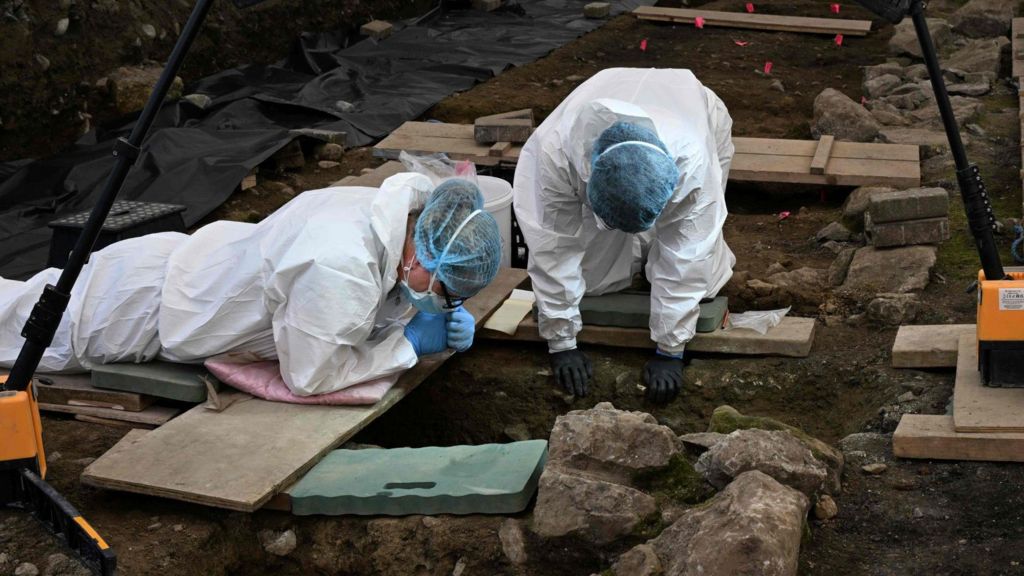
    On a frigid, rain-soaked morning in northwest Kabul, 27-year-old Masooda climbs a sloped hillside cemetery to pay her respects to her 24-year-old younger brother Mirwais — a young man killed two months prior in a Pakistani airstrike. What makes her grief even more agonizing is that she cannot pinpoint his exact burial spot. Mirwais is one of dozens of victims laid to rest in an unmarked mass grave, a patch of land neatly covered with small white stones and crudely marked by rough grey granite slabs, holding the remains of those killed in the deadliest single attack Afghanistan has seen in modern history.

    The target of the March 16 airstrike was the Omid Drug Rehabilitation Hospital, a facility that had operated quietly in Kabul for a decade, treating Afghans struggling with substance use disorder at a time when an estimated three million people across the country battle addiction. On that fateful evening, at 20:50 local time, three bombs slammed into the facility, which sits just a kilometer from major United Nations offices along the Kabul-Jalalabad highway. What followed was a carnage so brutal it has shocked even a nation long hardened by decades of war.

    A doctor on duty that night, speaking to the BBC on condition of anonymity over fears of retaliation from the Taliban government, described the scene of chaos and horror he encountered. “One bomb hit a large hangar that housed newly admitted patients, while two others struck patient quarters, food storage, and administrative offices,” he explained. The bombs also hit the center’s vocational training wings, which were constructed mostly of wood, sparking an intense fire that compounded the death toll. “I walked through piles of bodies searching for anyone still alive, screaming for help. The smell of burning flesh was everywhere,” the doctor recalled. “I have never seen anything this horrific in my life.”

    The United Nations, which was granted full access to the attack site in the aftermath, confirmed Tuesday that it has verified at least 269 fatalities from the strike, but acknowledged that the actual death toll is almost certainly far higher. The Taliban government places the count above 400. Many bodies were burned beyond recognition or torn apart by shrapnel and fire, leaving families with nothing to bury and no closure to their grief. The center’s full patient list was also destroyed in the blaze, turning the search for missing loved ones into a weeks-long nightmare of harrowing uncertainty.

    For Sediq Walizada, that nightmare ended on Eid, the Muslim holiday of celebration, when he and his brothers finally identified the remains of his 35-year-old brother Mohammad Anwar Walizada, who had been admitted to Omid just four days before the attack to treat his addiction to synthetic street drug “Tablet-K.” “We moved from hospital to hospital for days, hoping he had escaped. Not knowing if he was dead or alive was agony,” Sediq said, his voice still thick with trauma. When they finally found Mohammad Anwar’s remains, severed in half by the blast, it was devastating — but still a relief: hundreds of other families leave without ever recovering their loved ones. “He didn’t turn to drugs for fun, he turned to it out of poverty and helplessness,” Sediq said of his brother, a father of six who sold bottled water from a tricycle cart to feed his family.

    Mirwais’s story follows the same pattern. Orphaned young, Mirwais was raised by Masooda like a son. He was studying to become a pharmacist when he developed an addiction to Tablet-K, and had only been in treatment at Omid for 10 days when the bombs fell. “My brother’s body was just a torso. I identified him only by a birthmark he had,” Masooda said, breaking down in tears. “They found barely anything left of him.”

    The airstrike has exacerbated already soaring tensions between neighboring Pakistan and the Taliban-led Afghan government, a conflict that has stretched across months and left hundreds dead, most from Pakistani cross-border airstrikes. Islamabad says the strikes are targeted at militant groups that launch attacks inside Pakistan and are sheltered by the Taliban regime. Kabul has repeatedly denied allowing militants to operate from Afghan soil.

    Pakistan has also pushed back against claims that the strike hit a civilian facility, telling the BBC that “no hospital, no drug rehabilitation center, and no civilian facility was targeted” and that the targets were “military and terrorist infrastructure.” Senior Pakistani military spokesman Lt Gen Ahmed Sharif Chaudhry went further, claiming the center was “most likely a suicide bomber training facility” that used drug addicts as bombers.

    Every victim’s family the BBC spoke to rejected these claims, and the United Nations, Human Rights Watch, and independent observers have confirmed the facility was a well-documented drug treatment center, operating openly since 2016 in a former US-NATO military base. The center was so well known that the BBC was granted access to interview patients there in 2023, and UN agencies provided direct support to patients at the facility. “It’s literally about a kilometre away from the main UN offices. We have UN agencies, support to the patients of that hospital. So the site was well known to us,” said Fiona Frazer, the representative of the UN High Commissioner for Human Rights in Afghanistan.

    Human Rights Watch has labeled the strike an “unlawful attack and a possible war crime,” and there are growing international calls for a full independent investigation into the incident. The Taliban government has echoed these calls, saying the intentional targeting of innocent civilians amounts to a war crime that demands accountability.

    For Afghans, the attack has shattered the fragile relative peace that settled over the country after the end of the 20-year NATO-Afghan war in 2021, sparking widespread fears that the country is being pulled back into sustained, large-scale violence. For the grieving families of Omid’s victims, however, the pain is deeply personal. Most say they hold little hope that anyone will ever be held accountable for the deaths of their loved ones. “We are an oppressed people. We do not have the power to respond,” said one victim’s brother. “We have suffered injustice and brutality. May God bring the perpetrators to justice.”

  • BJP leader back to head India’s Assam state for second time in a row

    BJP leader back to head India’s Assam state for second time in a row

    In a landmark political event held in Guwahati this week, senior Bharatiya Janata Party leader Himanta Biswa Sarma officially took the oath of office for a second consecutive term as Chief Minister of India’s northeastern state of Assam. The ceremony drew high-profile attendees, including Prime Minister Narendra Modi, multiple federal cabinet ministers, and BJP chief ministers from across the country, alongside thousands of supporters gathered from across Assam.

    Sarma’s return to power follows a landslide victory for the BJP-led alliance in the recent Assam Assembly elections, held on April 9. The ruling coalition secured a commanding majority, with the BJP itself winning 82 of the 126 available seats, and its regional allies adding an additional 20 seats to the coalition’s total. This result extends the BJP’s uninterrupted control of Assam, which began when the party first won power in the state in 2016.

    Widely regarded as one of the key architects of the BJP’s explosive growth in India’s northeast, a region once dominated by regional smaller parties and the national Indian National Congress, Sarma has been central to reshaping the state’s political landscape over the past decade. Just 10 years ago, the BJP held less than 12% of the popular vote in Assam; today, that share has climbed to 38%, a shift political analysts largely credit to Sarma’s organizational work and strategic leadership.

    Sarma’s political career has been defined by striking longevity and strategic influence. Representing the Jalukbari constituency on the outskirts of Guwahati, Assam’s largest city, he has held the seat continuously since 2001, even after switching political affiliation. Prior to joining the BJP in 2015, Sarma was a top Congress leader and cabinet minister under former long-serving Chief Minister Tarun Gogoi. When he left the Congress alongside dozens of loyal legislators, the departure dealt a crippling blow to the state Congress party that has yet to fully recover, a moment widely viewed as the turning point for the BJP’s expansion across the entire northeast region.

    In the years after joining the BJP, Sarma built his reputation as the party’s most effective behind-the-scenes organizer during former Chief Minister Sarbananda Sonowal’s tenure from 2016 to 2021, helping the party forge alliances with local groups and extend its influence into neighboring northeastern states including Arunachal Pradesh, Manipur, and Tripura. He first assumed the office of Chief Minister in 2021, and this latest election victory has significantly solidified his standing as one of the most powerful leaders within the national BJP.

    Within the party, Sarma’s success is attributed to his relentless campaigning style, robust grassroots organizational control, and implementation of high-impact public welfare programs. Supporters hail him as a results-driven administrator who has prioritized core infrastructure development, including expanding road and bridge connectivity across the state. One of his most popular initiatives, the Orunodoi scheme, delivers direct monthly financial assistance to low-income women households, earning broad support among marginalized communities.

    However, Sarma’s tenure and political rise have not been without intense controversy. Critics argue that his political messaging has increasingly leaned into divisive rhetoric centered on long-running debates over migration and communal identity, issues that have dominated Assam politics for generations. The state has grappled with political tensions around illegal immigration from neighboring Bangladesh for decades, with debates over language, land rights and indigenous identity shaping every recent election cycle.

    Opposition parties and human rights organizations have repeatedly accused Sarma’s BJP government of systematically targeting religious minority communities, particularly Bengali-speaking Muslims. Policies pursued by his administration related to unregulated Islamic schools and child marriage have sparked fierce political pushback, and earlier this year, a deleted AI-generated deepfake video shared by the state BJP party showed Sarma shooting at images of political opponents wearing traditional Muslim skull caps, drawing widespread condemnation from opposition and civil society groups. Sarma and national BJP leaders have rejected these accusations, framing their policies as necessary measures to protect indigenous Assamese culture and address the ongoing crisis of illegal migration.

    Despite these ongoing controversies, Sarma has emerged as one of the most influential BJP leaders in eastern India, and has become an increasingly prominent campaign surrogate for the party across national elections. Alongside Sarma, four other legislators – two from the BJP and two from its regional alliance partners – were also sworn in as cabinet ministers for the new state government this week.

    Political analysts say Sarma’s winning electoral strategy in Assam rests on three core pillars: identity politics, targeted outreach to key voter blocs, and tangible development progress. “The BJP has worked to bring indigenous communities closer to a broader Hindu identity, while portraying certain minority groups as outsiders,” explained Akhil Ranjan Dutta, a professor of political science at Gauhati University. “At the same time, under Sarma’s leadership the party has effectively engaged women, young voters, farmers and small business owners through targeted welfare schemes and messaging tailored directly to their needs. Development also played a major role – improvements to roads and rural connectivity have significantly boosted the party’s appeal across the state.”

  • Michael Voss breaks silence after immediate resignation as Carlton coach

    Michael Voss breaks silence after immediate resignation as Carlton coach

    In his first public comments since resigning as senior coach of the Carlton Football Club, Michael Voss has laid out the chain of events and internal reflections that led him to walk away from the role, revealing that a pivotal meeting with club executives left him certain his tenure was drawing to a close.

    A former champion player for the club, Voss met with Carlton CEO Graham Wright and club president Rob Priestley for an informal dinner ahead of his final game in charge. Speaking exclusively to AFL.com.au, Voss explained that the unspoken cues from that meeting made it clear his position was unstable. “I think your read in these situations is often what they don’t say, not what they do say,” Voss said. “I read enough into what they didn’t say, it was on shaky ground and the inevitable was starting to become clearer.”

    Even with that clarity, the competitive instinct that defined Voss’s playing and coaching career pushed him to consider holding onto the role longer. “But the fighter in you and competitor in you wants to take it as far as you can,” he added.

    It was not until last week, after reflecting on the team’s recent performance, the current state of the playing group, and the club’s long-term goals, that Voss decided to proactively advance discussions about his future. He met with his agent in Brisbane last week to formalize his choice to step down, making the call before his final scheduled match against his hometown club Brisbane Lions. Voss emphasized that he chose to decide early to avoid letting the emotion of the final game cloud his judgment.

    “I didn’t want the result, whether we got the result done or we didn’t get the result done, to be the emotional or acute response to change my mind,” he explained. “Maybe if you won under those circumstances… you sort of think, ‘I’ve been swept up in that emotion and maybe I hang a little bit longer’. But I didn’t want the game to do that, if I was feeling that, which was the first time I felt that, I was getting to a point where a decision had to be made.”

    After settling on his choice, Voss contacted Carlton’s general manager of football Chris Davies, who initiated the official process to confirm the departure. Rather than joining a joint press conference with club leadership on Tuesday, Voss chose to share his perspective directly with AFL.com.au. He noted that while he is at peace with his call to resign, breaking the news to the Carlton playing group remained a difficult conversation.

    “I had a few days to think about it and then you get the final pieces of the puzzle but there’s one thing knowing it and another saying it,” Voss said. “Today you obviously get to say it.”

  • How Keir Starmer could be replaced as UK prime minister after Labour suffers local election drubbing

    How Keir Starmer could be replaced as UK prime minister after Labour suffers local election drubbing

    LONDON – Just eight months after securing a landslide national general election victory, British Prime Minister Keir Starmer finds himself locked in a battle to hold onto his office, following a catastrophic string of losses for his Labour Party in last week’s local elections. Political analysts warn that if the poor local election performance is replicated at the next national vote, Labour will be swept out of power entirely.

    Starmer has borne the brunt of growing frustration within the party over plummeting public approval, with multiple factors driving the downward trend. Critics point to a string of poorly executed policy missteps, a widespread perception that the prime minister has failed to articulate a clear, compelling long-term vision for the country, and ongoing turbulence in the British economy. Additional questions have been raised about Starmer’s political judgment, most notably over his decision to appoint Peter Mandelson as British ambassador to Washington, despite Mandelson’s well-documented connections to convicted sex offender Jeffrey Epstein.

    While the next UK general election is not constitutionally required to be held until 2029, British parliamentary rules allow a governing party to replace its leader mid-term without triggering a full national vote. A growing bloc of Labour lawmakers is now pushing for an immediate leadership change, arguing it is the only way to steady the beleaguered government and fend off electoral threats from both the far right and far left of UK politics.

    “We have to change and we have to do it quickly,” said Labour Member of Parliament Catherine West. “We have to lay out a timetable and we have to turn this ship around.” Despite the growing calls for departure, ousting a sitting Labour leader is far from a simple process, as the party has no recent institutional history of removing mid-term leaders, unlike the main opposition Conservative Party.

    There are multiple pathways that could lead to Starmer’s exit, varying widely in complexity. The most straightforward scenario would see Starmer voluntarily announce his resignation, which would automatically trigger a formal leadership contest. Such an announcement could come as soon as this week, if Starmer’s own Cabinet members deliver a clear message at their weekly Tuesday meeting that he has lost the confidence of the parliamentary party.

    If Starmer steps down immediately, the Cabinet and Labour’s National Executive Committee would appoint an interim prime minister and interim party leader, typically a figure not running in the leadership contest. Current Deputy Prime Minister David Lammy is widely seen as a likely fit for this temporary role.

    Under Labour’s formal rulebook, any candidate for leader must secure the backing of at least one-fifth of the party’s sitting House of Commons lawmakers – a threshold that currently stands at 81 supporters. More than 70 Labour MPs have already publicly called on Starmer to lay out a departure timetable, a clear signal of widespread internal discontent, even though no formal challenge has yet been launched.

    Once candidates meet the parliamentary support threshold, they must then secure backing from 5% of local Labour constituency parties, or from at least three major affiliated groups including trade unions and cooperative societies. After that, eligible party members and affiliate representatives vote through a ranked-choice electoral system, with the first candidate to win a majority of votes declared the winner. The final step would see King Charles III formally invite the new leader to form a government and take office as prime minister.

    Thus far, Starmer has shown no willingness to step aside. On Monday, he reaffirmed his refusal to resign, arguing that leaving office mid-term would “plunge the country into chaos”. If Starmer digs in, he could still face a formal leadership challenge from one or more sitting Labour MPs.

    West was the first lawmaker to openly signal a potential challenge, saying Saturday that she would launch a leadership bid if the Cabinet failed to remove Starmer by Monday. She has acknowledged that she currently falls far short of the 81 parliamentary backers needed to force a contest, framing her move instead as an effort to pressure higher-profile potential contenders to enter the race.

    Unlike the Conservatives, which removed sitting prime ministers Margaret Thatcher in 1990 and Boris Johnson in 2022, Labour has no recent tradition of mid-term leader ousters. No sitting Labour prime minister has ever been forcibly removed from office, though former prime minister Tony Blair did announce his planned resignation in 2006 following years of low-level internal pressure.

    If a formal challenge is launched, any eligible candidates would need to meet the same support thresholds outlined above, while Starmer would automatically be placed on the ballot as the incumbent leader.

    Multiple high-ranking Labour figures are already seen as potential contenders if a leadership contest opens up. Health Secretary Wes Streeting has long been linked to leadership ambitions, as has former deputy prime minister Angela Rayner, who stepped down from her post last year after admitting she underpaid taxes on a property purchase; an official investigation into the matter is still ongoing.

    Andy Burnham, the widely popular mayor of Greater Manchester, is often cited as one of the strongest potential candidates, but he is currently ineligible to stand for leader because he does not hold a seat in Parliament. Earlier this year, Labour party officials blocked Burnham from running in a special parliamentary by-election, but political insiders say a path could be cleared if Starmer signals he will step down by Labour’s annual autumn conference in September. In that scenario, a sitting Labour MP in a safe seat could resign to trigger a by-election, giving Burnham a chance to win a seat in the Commons. Even that would be no guarantee, however, given the scale of Labour’s recent losses in local contests.