作者: admin

  • Ministers take office in Hungary’s first non-Orbán government in 16 years

    Ministers take office in Hungary’s first non-Orbán government in 16 years

    In a landmark political shift that reshapes both Hungary’s domestic trajectory and European Union dynamics, Péter Magyar’s new 16-member cabinet was officially sworn into office on Tuesday in Budapest, completing the full transfer of power away from Viktor Orbán, who led Hungary with a nationalist-populist agenda for 16 years. This historic handover follows a stunning electoral upset last month, where Magyar’s pro-European Tisza Party secured an unprecedented two-thirds parliamentary majority — a result unmatched in Hungary’s post-Communist history.

    Magyar, a 45-year-old lawyer who assumed the prime ministership on Saturday, moved through parliamentary confirmation hearings for his cabinet in just two days, a deliberate timeline that signals his urgency to dismantle the political system Orbán built over nearly two decades. Tisza’s landslide victory gave the party 141 of the 199 total seats in parliament, pushing Orbán’s long-ruling Fidesz party from 135 seats to just 52, with the far-right Mi Hazánk movement holding the remaining six seats.

    In remarks delivered moments after his cabinet’s swearing-in inside Hungary’s parliament, Magyar drew a clear line between his administration and his predecessor’s leadership. Stating that the new government would “be the government of all Hungarians” and act as “a servant of the nation and not of the prime minister”, he directly challenged the concentrated power that defined Orbán’s tenure. He outlined his core mandate: undoing the “destruction, division, backwardness and loss of trust” accumulated over the past 20 years, and rebuilding Hungary into a “functioning, livable and self-reliant country”.

    A top priority for Magyar’s electorate is holding former Fidesz officials and their affiliated business allies accountable for alleged widespread corruption and misconduct during Orbán’s administration. To advance this goal, the new government plans to establish a National Asset Recovery and Protection Office, a dedicated body tasked with investigating and recovering public funds misused under the previous regime. Magyar has also committed to Hungary joining the European Public Prosecutor’s Office, a move that will allow EU investigators to probe cross-border fraud and the mismanagement of EU funding allocated to the country.

    Media reform is another immediate policy focus: Magyar has vowed to suspend programming at Hungary’s public broadcaster, long decried as a partisan mouthpiece for Fidesz, until full editorial objectivity can be guaranteed. He has also called on all senior public officials appointed during Orbán’s tenure — including the Hungarian president, attorney general, head of the national media authority, and chief justice of the Constitutional Court — to resign by May 31 to clear the way for independent appointments aligned with democratic norms.

    Structurally, the new government expands the cabinet from 12 ministries under Orbán’s final administration to 16, with standalone portfolios for health, environmental protection, and education, all of which were merged into larger departments under the previous government. This restructuring is part of a broader overhaul of state institutions, with Magyar prioritizing the restoration of democratic governance and the rule of law, both of which eroded significantly during Orbán’s time in power.

    Beyond domestic reform, Magyar’s administration is set to transform decision-making dynamics within the EU. Orbán frequently used veto power to block bloc-wide initiatives, most recently blocking new support packages for Ukraine, creating repeated deadlock for the union. The new Hungarian government has made unlocking approximately 17 billion euros ($20 billion) in frozen EU funds its top foreign policy priority. The funds, frozen by the EU over rule-of-law and corruption concerns during Orbán’s tenure, are critically needed to revitalize Hungary’s stagnant economy, which has seen little to no growth for four consecutive years.

    In a Facebook video posted the day before the cabinet swearing-in, new Hungarian Foreign Minister Anita Orbán, a career diplomat and foreign policy expert, confirmed that her ministry’s core mission will be to “bring EU funds home” and “consolidate Hungary’s place in Europe and in the EU”. Other key cabinet appointees include former Shell executive István Kapitány, who takes on the role of Minister of Economy and Energy, and former Erste Bank economist András Kármán, who serves as Minister of Finance. This report included contributions from AP correspondent Don McNeil reporting out of Brussels and AP writer Béla Szandelszky based in Budapest.

  • Trump due in China for superpower summit with Xi

    Trump due in China for superpower summit with Xi

    In a landmark diplomatic moment marking the first visit by a sitting US president to China in nearly ten years, former and current President Donald Trump is set to arrive in Beijing on Wednesday for a critically important bilateral summit with Chinese President Xi Jinping, against a backdrop of simmering tensions fueled by the February US-led war on Iran that has added new strains to the already fraught relationship between the world’s two largest economies.

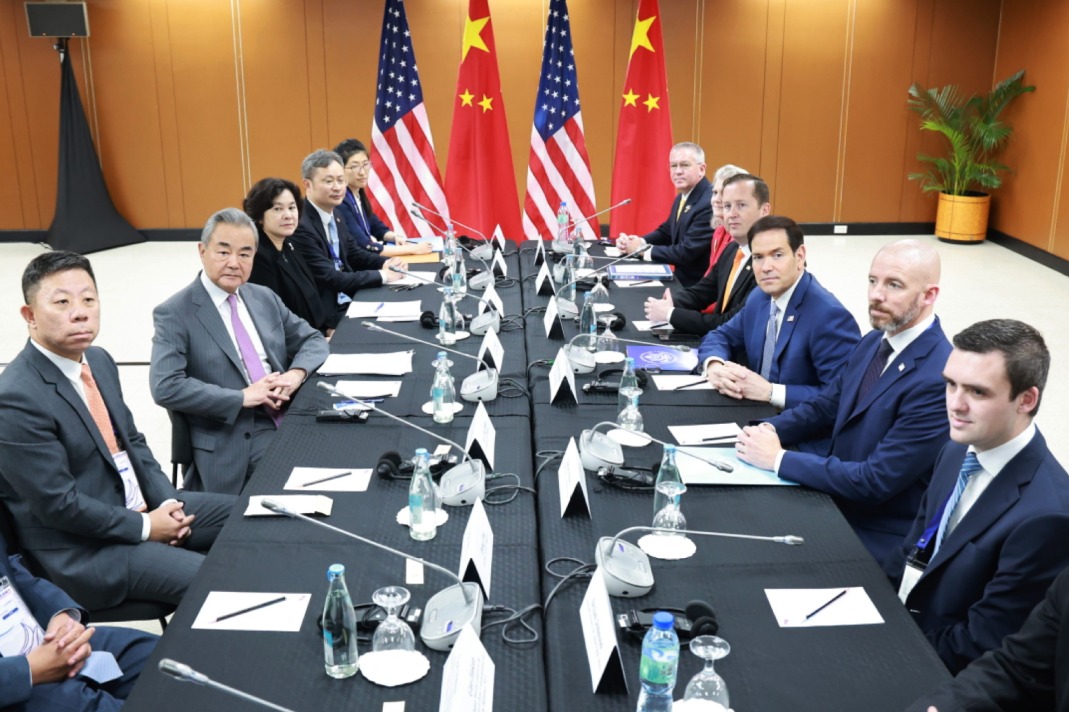
    This upcoming meeting, the first between the two leaders on Chinese soil since Trump’s 2017 visit, will feature two days of high-stakes negotiations scheduled for Thursday and Friday, wrapped into a packed official itinerary that includes a formal state banquet and a ceremonial tea reception with senior Chinese officials. The agenda for the talks covers a wide range of longstanding and newly emergent flashpoints, from long-running disputes over US arms sales to self-ruled Taiwan and Chinese export controls on critical rare earth minerals to the two countries’ deeply interconnected but often contentious trade relationship. The ongoing conflict in the Middle East will also take a top spot on the discussion list: a senior anonymous US administration official confirmed to reporters earlier this week that Trump will push Xi to make concessions on Iran, as the White House pursues a negotiated deal to end the two-month-old conflict.

    In the lead-up to the summit, signs of heightened security were already visible across Beijing on Tuesday. AFP correspondents on the ground reported that uniformed police were deployed to monitor major urban intersections, while transit authorities conducted routine ID checks for passengers on the city’s metro system, a common security step ahead of major high-level diplomatic events. Ordinary Chinese residents expressed a range of outlooks on the landmark meeting. 24-year-old Nanjing native Wen Wen, who was traveling through Beijing when speaking to AFP, called the visit a major event for global relations. She said she expected the summit to deliver at least some tangible progress, and shared her hope that both nations can work toward lasting peace despite widespread recent global instability.

    Bilateral trade ties between Washington and Beijing have remained rocky for years, though the two sides have upheld a one-year truce in their costly tariff war, an agreement struck during Trump and Xi’s last meeting in South Korea last October. Trump has long criticized China’s persistent large trade surplus with the US, a grievance that led him to impose sweeping tariffs on hundreds of billions of dollars worth of Chinese goods during his first term in office. Accompanying Trump on his Beijing trip is a high-profile delegation of top American business leaders, including Tesla CEO Elon Musk and Apple CEO Tim Cook, according to White House announcements.

    The summit comes at a moment of significant economic uncertainty for China, which has battled years of sluggish domestic consumer spending and a prolonged systemic debt crisis in its once-booming real estate sector, issues that have weighed on global growth projections. Not all ordinary Beijing residents are optimistic about a quick resolution to longstanding bilateral rifts. Li Jiahao, a 30-year-old manager of a karaoke bar in central Beijing, told AFP he does not expect the meeting to solve every issue in US-China ties, though he remains hopeful for positive incremental outcomes. “Coming here and actually resolving the issues are two different things,” he explained. “China and the United States both have responsibilities as major powers. Only through friendship can we achieve mutual development and become stronger.”

    The Iran war, launched jointly by the US and Israel on February 28, has thrown a new set of complications into the already tangled relationship between the two global powers. Trump previously delayed this Beijing trip once to focus on managing the conflict, which has effectively shut down commercial shipping through the strategic Strait of Hormuz, a critical global energy chokepoint, for more than two months. China is Iran’s largest customer for crude oil, but the Trump administration has imposed sweeping unilateral sanctions to cut off all Chinese purchases of Iranian energy. Just on Monday, the US Treasury Department expanded those sanctions, blacklisting 12 individuals and entities—several based in Hong Kong—that it accuses of facilitating the sale and shipment of Iranian oil to Chinese buyers. When asked about the new sanctions at a Tuesday press briefing, Chinese Foreign Ministry spokesman Guo Jiakun reaffirmed Beijing’s position that “China firmly opposes illegal unilateral sanctions.”

    Another core sticking point for Chinese leadership remains longstanding US military support for Taiwan, the self-governing democratic island that Beijing claims as an inalienable part of its territory. Speaking on Monday, Trump said he was open to discussing US arms sales to Taiwan during the summit, and claimed his personal relationship with Xi would prevent any Chinese military invasion of the island. “I think we’ll be fine. I have a very good relationship with President Xi. He knows I don’t want that to happen,” Trump told reporters.

  • Dali ship operator charged over deadly  Baltimore bridge collapse

    Dali ship operator charged over deadly Baltimore bridge collapse

    It has been two years since the cargo ship Dali crashed into Baltimore’s iconic Francis Scott Key Bridge, triggering a catastrophic collapse that claimed six lives and upended regional commerce. Now, federal prosecutors have brought formal criminal charges against the vessel’s operator and a senior company employee over the disaster.

    Synergy Marine, the Singapore- and India-based firm that managed the Dali’s operations, and Radhakrishnan Karthik Nair, the ship’s technical supervisor, face a slate of charges including conspiracy, obstruction of justice, and misconduct leading to death, according to the recently unsealed indictment. Prosecutors allege the company and its staff intentionally misled federal investigators and hid critical safety hazards from the U.S. Coast Guard in the wake of the March 26, 2024 collision.

    In court documents, prosecutors laid out a detailed timeline of preventable failures that led to the crash. They say the Dali lost electrical power twice in just four minutes before striking the bridge. The first outage stemmed from a loose wire in the ship’s switchboard, while the second was caused by the crew’s reliance on an unapproved flushing pump to supply fuel to the vessel’s generators. Unlike purpose-built fuel pumps, this flushing pump was not designed to automatically restart after an outage, meaning the crew could not restore power in time to avoid the collision. Prosecutors argue that with a properly configured fuel system, the ship would have regained power before hitting the bridge.

    The indictment further alleges that Synergy employees were fully aware of the improper use of the flushing pump not only on the Dali but across other vessels in the company’s fleet, and actively took steps to cover up the noncompliant practice. Prosecutors also accuse the firm of falsifying official safety records to hide the violations from regulators.

    Acting U.S. Attorney General Todd Blanche framed the charges as a long-awaited step toward accountability in a tragedy he called entirely preventable. “This indictment is a critical step toward holding accountable those whose reckless disregard for maritime safety regulations caused this disaster,” Blanche said in a public statement released Tuesday.

    In response to the charges, a Synergy Marine spokesperson told The New York Times that the company “will defend against these allegations with vigor.” The BBC has also reached out to the firm for additional comment, and no further response has been issued as of publication.

    The disaster itself unfolded in the early hours of that March morning, when the powerless Dali drifted into the bridge, collapsing the entire span within minutes. Six construction workers who were conducting maintenance on the bridge were killed when their work vehicles plunged into the Patapsco River below. The collapse shut down the Port of Baltimore for weeks, triggering massive shipping disruptions that rippled through regional and national supply chains, costing billions of dollars in lost economic activity.

    Reconstruction of the Key Bridge is still ongoing, with officials projecting the project will take several years and cost billions of dollars to complete. Prior investigations by the National Transportation Safety Board identified multiple contributing factors to the disaster, beyond the ship’s mechanical and operational failures, including a lack of protective design measures to reduce the bridge’s vulnerability to ship strikes.

    This is not the first legal action stemming from the collapse. The Dali’s owner has already paid more than $100 million to the U.S. Department of Justice to settle a civil claim for bridge damage, plus an additional $350 million to Maryland’s state insurance agency. Another separate civil trial against Synergy Marine is scheduled to begin next month.

  • South Africa declares natural disaster as flooding kills at least 10

    South Africa declares natural disaster as flooding kills at least 10

    JOHANNESBURG – A catastrophic weather system bringing record-breaking torrential rainfall has unleashed devastating flooding across six of South Africa’s provinces, leaving at least 10 people dead and destroying hundreds of vulnerable residential structures, with low-income informal communities bearing the brunt of the destruction. Since May 4, extreme weather spanning flooding, severe thunderstorms, powerful high winds, and unseasonal snowfall has impacted regions including Western Cape, North West, Free State, Eastern Cape, Northern Cape, and Mpumalanga, prompting national authorities to issue an official natural disaster designation. This official declaration unlocks immediate access to emergency government funding and priority deployment of response resources, allowing rapid relief action to reach affected communities. The coastal hub of Cape Town, located in Western Cape, has emerged as one of the hardest-hit urban centers. In response to rapidly deteriorating conditions, the Western Cape provincial government has ordered temporary closures for all public and private schools across high-risk flood zones, as well as restricted access to portions of the iconic Table Mountain, one of the city’s most popular global tourist attractions. Local officials confirmed Tuesday that at least 26 informal settlements on the outskirts of Cape Town have been inundated by floodwaters, damaging more than 10,000 informal residential structures that largely lack engineered flood-resilient infrastructure. South African President Cyril Ramaphosa, speaking Monday as winter officially gets underway across the Southern Hemisphere, voiced deep sorrow over the lives lost to the extreme weather event. “We grieve with the families who have lost their loved ones, and we are standing with all those who have lost their homes and livelihoods to this disaster,” Ramaphosa stated, adding that national disaster management authorities are leveraging modern meteorological science to improve early warning for future extreme weather events and streamline response efforts in the wake of disasters. The current disaster marks the second major flooding crisis to hit South Africa in 2024, underscoring a growing regional trend of intensifying extreme weather linked to shifting global climate patterns. Climate researchers have repeatedly warned that severe flood events across Southern Africa are growing more frequent and more destructive, driven by rising global temperatures that amplify extreme rainfall patterns. In recent months, neighboring Mozambique and Zimbabwe have also experienced unusually high rainfall and the worst regional flooding in decades. Back in January, South Africa was forced to declare a separate national disaster after torrential rains and flooding in the country’s northern regions killed at least 30 people, destroyed thousands of homes, and washed out critical road and bridge infrastructure connecting rural and urban communities.

  • Italian rider Ciccone seizes the Giro lead as Thomas Silva cracks and Narváez wins stage 4

    Italian rider Ciccone seizes the Giro lead as Thomas Silva cracks and Narváez wins stage 4

    After three opening stages held in Bulgaria and a scheduled rest day, the 109th edition of the Giro d’Italia finally crossed into Italian territory this week, marking a major turning point in one of cycling’s most prestigious Grand Tours. When racing resumed on Tuesday, it was Ecuador’s Jhonatan Narváez who claimed the top spot on the podium for the 138-kilometer fourth stage, which ran from the southern Calabrian city of Catanzaro — located on the toe of the Italian peninsula — to the regional hub of Cosenza.

    Heading into Tuesday’s stage, history-making Uruguayan rider Guillermo Thomas Silva held the overall general classification lead. Silva made Giro history as the first Uruguayan rider to ever win a stage and claim the iconic pink jersey, but his run at the top came to an abrupt end on Tuesday. Struggling with fatigue on a long, second-category climb that came in the latter half of the route, Silva faded dramatically mid-ascent and ultimately crossed the finish line more than 10 minutes behind the stage’s leading pack, losing his hold on the overall standings.

    Italy’s own Giulio Ciccone, a home favorite, was in contention for the stage win right until the final sprint, but Narváez outpaced him in the final dash to the line. Venezuela’s Orluis Aular crossed the line in second place to round out the stage podium. Ciccone, who finished third, secured four valuable bonus seconds for his placement — a small margin that proved just enough to propel him into the overall lead. He currently holds a four-second advantage over his closest challengers: Jan Christen, Florian Stork, and 2021 Giro champion Egan Bernal.

    The competition is set to intensify significantly on Wednesday, when riders take on the fifth stage of the race. The 203-kilometer route from Praia a Mare to Potenza is one of the most demanding stages of this year’s race, featuring nearly 4,000 meters of total climbing and almost no flat terrain, a profile that is widely expected to reshuffle the general classification standings.

    The 109th men’s Giro d’Italia will conclude on May 31, with the final stage finishing in Rome. Following the men’s race, the annual women’s Giro will run from May 30 to June 7, with Italian star Elisa Longo Borghini set to defend her 2024 title.

  • Musk, Cook and other prominent US executives invited to join Trump on trip to China

    Musk, Cook and other prominent US executives invited to join Trump on trip to China

    A senior anonymous White House official has confirmed that a roster of high-profile U.S. leaders spanning big tech, aerospace, finance and agriculture will accompany former President Donald Trump on his official trip to Beijing this week, where Trump is set to hold pivotal bilateral talks with Chinese President Xi Jinping. The U.S. delegation departs Tuesday, with trade disputes and artificial intelligence governance emerging as two core agenda items, alongside discussions focused on the ongoing Iran crisis.

    Among the most closely watched attendees is Elon Musk, the eccentric billionaire CEO of electric vehicle giant Tesla and aerospace firm SpaceX, who once chaired Trump’s short-lived Department of Government Efficiency. The agency, which drew widespread controversy from its launch, wound down operations last November, following Musk’s exit from the role in spring 2025. Musk’s presence on the trip comes after a very public falling out with Trump last summer: the social media mogul, who also owns platform X, made unsubstantiated claims that the U.S. government hid information linking Trump to disgraced convicted sex offender Jeffrey Epstein, triggering a fiery public war of words. Musk later walked back portions of his remarks, acknowledging he regretted several of his public posts about the president on X.

    Today, Musk has shifted his focus back to managing his global business portfolio, which includes substantial manufacturing and sales operations in China that he has visited multiple times. He is currently navigating a slew of legal challenges outside the U.S. as well: French prosecutors are pursuing criminal charges against Musk and X over allegations that the platform failed to moderate child sexual abuse material, hosted harmful deepfakes and disinformation, and allowed the platform’s AI chatbot Grok to amplify content that denies crimes against humanity. He is also engaged in a high-profile civil trial against OpenAI CEO Sam Altman, centered on competing visions for the future of artificial intelligence development.

    Another key figure in the delegation is Apple CEO Tim Cook, whose 15-year tenure leading the world’s most valuable company is set to conclude on September 1, when he will hand the CEO role to John Ternus, Apple’s current head of hardware engineering, and transition to the position of executive chairman. During Cook’s leadership, Apple grew exponentially: the company’s market capitalization swelled by more than $3.6 trillion, driven by booming global demand for iPhones and Apple’s expanding ecosystem of consumer technology.

    Throughout his time at Apple’s helm, Cook has repeatedly had to navigate the shifting tides of U.S.-China trade relations, particularly during Trump’s previous and current presidential terms when the White House launched sweeping tariff measures targeting Chinese goods. In Trump’s first term, Cook successfully negotiated exemptions for iPhones and other core Apple products from the initial round of tariffs. In the current second term, Trump has pushed for Apple to move all of its iPhone manufacturing out of China and back to the U.S., and imposed new tariffs on the devices. Cook has managed to mitigate the financial impact of these measures by shifting production of U.S.-bound iPhones to India, and securing additional exemptions after committing Apple to a $600 billion U.S. investment over the course of Trump’s second term.

    Aerospace industry leader Kelly Ortberg, CEO of Boeing, is also part of the delegation. Ortberg took the top job at Boeing in 2024, stepping in to lead the American manufacturing giant as it grappled with overlapping legal, regulatory, production crises that triggered severe financial losses. Last year, Ortberg publicly downplayed the impact of the escalating U.S.-China trade war on Boeing’s recovery, arguing that tit-for-tat tariffs would not derail the company’s efforts to return to stable growth or meet delivery targets for Chinese airlines, which had paused acceptance of new Boeing jets amid rising trade tensions.

    The trade conflict escalated sharply in April 2025, when Beijing raised import tariffs on U.S. goods to 125% in retaliation for the Trump administration’s hike of tariffs on Chinese-made products to 145%. For Boeing, the U.S.’s largest exporter, the new tariffs would more than double the cost of its commercial passenger jets, which already sell for tens of millions of dollars apiece. However, the impact has been softened in recent years by Boeing’s gradual reduction of direct finished aircraft exports to China, making the market less central to its bottom line than it once was. Ahead of the Beijing trip, Boeing confirms it has been holding ongoing negotiations with Chinese officials over a potential large-scale new aircraft order.

    The delegation also includes a dozen other top C-suite leaders from across major U.S. industries: BlackRock Chairman and CEO Larry Fink, Blackstone co-founder, Chairman and CEO Stephen Schwarzman, Cargill Chairman and CEO Brian Sikes, Citi Chairman and CEO Jane Fraser, Coherent CEO Jim Anderson, GE Aerospace Chairman and CEO H. Lawrence Culp, Goldman Sachs Chairman and CEO David Solomon, Illumina CEO Jacob Thaysen, Mastercard CEO Michael Miebach, Meta President and Vice Chairman Dina Powell McCormick, Micron Chairman, President and CEO Sanjay Mehrotra, Qualcomm President and CEO Cristiano Amon, and Visa CEO Ryan McInerney.

    Reporting from Washington D.C. contributed by Aamer Madhani.

  • Rahm has faith LIV will develop good survival plan

    Rahm has faith LIV will develop good survival plan

    As the 2025 PGA Championship prepares to tee off this Thursday at Philadelphia’s Aronimink Golf Club, two-time major champion and current LIV Golf points leader Jon Rahm is pushing aside off-course uncertainty surrounding LIV Golf’s future to focus on his performance on the greens. The Spanish star, who has dominated LIV Golf competition this season, says he remains confident that league officials will craft a viable long-term plan after Saudi Arabia’s Public Investment Fund (PIF) confirmed it will pull all future funding beyond the end of 2025.

    Rahm, who left the PGA Tour to join LIV Golf in December 2023 and has since claimed back-to-back LIV season titles, opened up about the funding crisis at a pre-tournament press conference Tuesday. He noted that while the financial shakeup is a significant challenge for the league, it is ultimately an issue outside of his control as a player.

    “It’s something we’ve had to deal with, but these are just matters out of my hands,” Rahm said. “Fixing this is the job of the people leading LIV Golf, and I don’t envy that task for a second. I do have full faith in the work they’re doing, and I trust they will come up with a strong survival plan. Until that plan is shared with the players, there’s no use in me expending extra energy worrying about it.”

    The 31-year-old, who claimed major wins at the 2021 U.S. Open and 2023 Masters, has been in stellar form this LIV season, notching tournament victories in Hong Kong (March) and Mexico City (April) along with runner-up finishes in Riyadh, Adelaide and South Africa. He pointed out the stark irony of his situation: golf requires intense focus and control over every shot, but off-course business decisions are completely out of the players’ hands.

    “It’s funny, in a sport where we crave control over every single detail, how little control we actually have off the course,” Rahm explained. “I have full control over my own golf game and how I perform this week. Everything else? That’s out of my hands.”

    When asked about reflections on his 2023 decision to leave the PGA Tour for LIV, Rahm said any takeaways are personal, but added his core philosophy is to approach decisions without regret. “If circumstances change after you make a choice, like what’s happening with LIV right now, that’s an after-the-fact development, not a flaw in the original decision,” he said. Rahm also pushed back on the idea that his high-profile move was intended to help bridge the long-running rift between the PGA Tour and LIV Golf. “I never thought I’d be some kind of catalyst to tip the scales and bring the two sides together,” he said. “We don’t know what tomorrow will bring, and all we can do is learn from both good and bad experiences from the past.”

    Not everyone shares Rahm’s optimism, however. Reigning Masters champion Rory McIlroy, a longstanding critic of LIV Golf, pointed out that the funding cut was always a foreseeable risk for players who jumped to the breakaway league for eight-figure contracts and large purses. “This was always a possibility, and everyone knew it,” McIlroy said. “Geopolitical shifts in the Middle East played a big role in this. When your entire funding model is tied to global political priorities, you’re on an inherently unstable path. When the Saudis’ priorities changed, that put LIV in a very precarious position — but this was a risk those players chose to take.”

    McIlroy added that he was aware PIF would be ending future support before LIV Golf made the news public. “It looks like the rug was pulled out from under them out of nowhere, and a lot of people were caught off guard,” he said. “Right now, there’s a huge amount of uncertainty. From what I’ve seen, LIV has some sponsorship revenue lined up, but it’s unclear how long that will last. If they do manage to put together a schedule for 2026, it’s almost certainly going to look drastically different than what we’ve seen from them so far.”

  • Jilin’s ecological restoration spurs massive migratory bird wave

    Jilin’s ecological restoration spurs massive migratory bird wave

    Nestled in Northeast China, Jilin province has emerged as a glowing testament to what targeted environmental recovery can achieve, as years of systematic ecological restoration and species protection efforts have triggered a dramatic rise in the number of migratory birds that use the region as a resting stop during their annual journeys.

    As a critical hub along the globally important East Asia-Australasia Flyway, Jilin’s network of protected wetlands has become an irreplaceable refuge for long-distance migratory birds. Fresh government statistics released in early May confirm that this year’s migratory season has brought a remarkable wave of avian visitors: more than 1 million individual birds across 385 different species have already been recorded stopping over in the province’s wetland systems to rest and refuel.

    Among the most striking recent observations is a large flock of vulnerable white-headed cranes foraging peacefully in the Boluo Lake Wetlands located in Nong’an County, a sight captured in official photographs shared by local authorities. This scene of abundant wildlife stands in stark contrast to conditions decades ago, when habitat degradation and human activity threatened the integrity of Jilin’s wetland ecosystems. Through targeted restoration projects that have restored wetland hydrology, reduced pollution, and limited disruptive human activity in key bird habitats, the province has rebuilt the critical stopover sites that migratory birds depend on to complete their long journeys between breeding and wintering grounds.

    Conservation officials note that the surge in migratory bird numbers and diversity is not just a win for biodiversity — it also serves as a powerful, tangible example of successful harmonious coexistence between human development and wildlife protection. Jilin’s ongoing work to protect its wetland networks continues to support global migratory bird conservation efforts, while providing a model for other regions working to reverse ecological damage and restore native habitats.

  • Nigerian military airstrike kills 100 civilians at a market, rights group claims

    Nigerian military airstrike kills 100 civilians at a market, rights group claims

    ABUJA, Nigeria — A fresh public dispute has emerged over civilian casualties in Nigeria’s long-running counter-insurgency campaign in the country’s restive northern region, after the nation’s military rejected a prominent human rights group’s allegation that a weekend airstrike killed 100 civilian people at a local market.

  • Israel passes law to publicly try and execute Palestinians linked to 7 October attacks

    Israel passes law to publicly try and execute Palestinians linked to 7 October attacks

    On Monday, Israel’s legislative body the Knesset passed a sweeping new bill by a landslide 93-0 vote that creates a framework of public special trials and allows the imposition of the death penalty for Palestinian detainees linked to the deadly October 7, 2023 attacks that sparked the ongoing Gaza war. The rare unanimous cross-political support for the controversial measure highlights the unified hardening of Israeli political sentiment in the months following the assault.

    Israeli Justice Minister Yariv Levin framed the parliamentary vote as a historic turning point for the current governing body, arguing that the legislation would deliver long-awaited accountability for individuals accused of perpetrating or aiding the attacks. Under the new law, a special judicial body operating in the structure of a military court will oversee an estimated 200 to 300 open cases involving detainees accused of involvement in the October 7 events.

    All indictments will be filed at a Jerusalem-based military court, with charges ranging from terrorism and murder to genocide, incitement to armed conflict and charges of undermining Israeli state sovereignty. A key provision of the bill permanently bars any detainee accused or convicted of connection to the attacks from being included in future prisoner exchange agreements, ensuring that convicted individuals will face either permanent life incarceration or execution.

    Per the legislation’s structure, the Israeli Army Chief of Staff will hold the authority to appoint military prosecutors to the special court. Judicial panels will be made up of three judges, with a requirement that at least one panel member has previously served as the head of a military court. The bill also explicitly overrides standard Israeli criminal procedure and evidence rules, granting courts permission to bypass core due process steps including formal evidence collection requirements, witness testimony cross-examination and formal plea bargain arrangements when issuing convictions and sentences.

    A separate amendment to the legislation creates a specific protocol for carrying out death sentences against Palestinians convicted under the new law, distinguishing it from a broader death penalty law for Palestinian prisoners approved by the Knesset in a 62-48 vote back in late March. That earlier bill also faced widespread international calls for withdrawal before its passage.

    The latest legislation has triggered fierce pushback from human rights organizations, Palestinian advocacy groups and legal analysts across the globe. Critics warn that the bill comes amid a documented surge in mass arrests of Palestinians on broadly defined terrorism charges, as well as growing reports of torture, abuse and fatalities in Israeli custody since the launch of Israel’s military campaign in Gaza.

    Palestinian prisoners’ rights organizations have labeled the new law an “unprecedented act of savagery”, arguing that it formalizes systemic extrajudicial killing of detainees amid a rapidly escalating crisis of abuse inside Israeli detention facilities. Multiple prominent Israeli human rights groups, including Adalah, the Public Committee Against Torture in Israel (PCATI), HaMoked and Physicians for Human Rights-Israel, have also joined in condemning the legislation. These groups warn that the bill enshrines a discriminatory legal framework that systematically denies Palestinians equal protection under Israeli law, strips them of fundamental fair trial rights, and removes existing legal safeguards against torture and cruel, inhuman treatment.