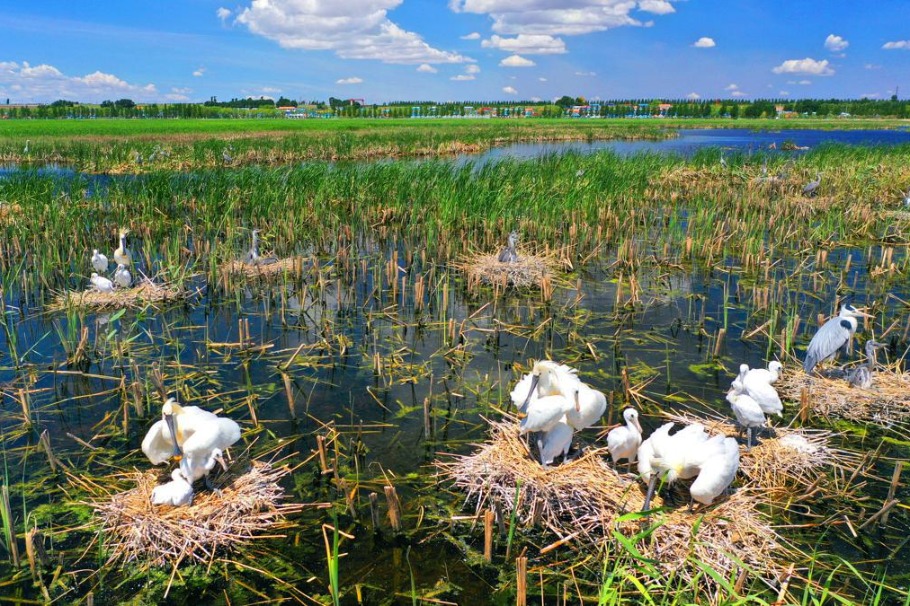
Nestled in Northeast China, Jilin province has emerged as a glowing testament to what targeted environmental recovery can achieve, as years of systematic ecological restoration and species protection efforts have triggered a dramatic rise in the number of migratory birds that use the region as a resting stop during their annual journeys.
As a critical hub along the globally important East Asia-Australasia Flyway, Jilin’s network of protected wetlands has become an irreplaceable refuge for long-distance migratory birds. Fresh government statistics released in early May confirm that this year’s migratory season has brought a remarkable wave of avian visitors: more than 1 million individual birds across 385 different species have already been recorded stopping over in the province’s wetland systems to rest and refuel.
Among the most striking recent observations is a large flock of vulnerable white-headed cranes foraging peacefully in the Boluo Lake Wetlands located in Nong’an County, a sight captured in official photographs shared by local authorities. This scene of abundant wildlife stands in stark contrast to conditions decades ago, when habitat degradation and human activity threatened the integrity of Jilin’s wetland ecosystems. Through targeted restoration projects that have restored wetland hydrology, reduced pollution, and limited disruptive human activity in key bird habitats, the province has rebuilt the critical stopover sites that migratory birds depend on to complete their long journeys between breeding and wintering grounds.
Conservation officials note that the surge in migratory bird numbers and diversity is not just a win for biodiversity — it also serves as a powerful, tangible example of successful harmonious coexistence between human development and wildlife protection. Jilin’s ongoing work to protect its wetland networks continues to support global migratory bird conservation efforts, while providing a model for other regions working to reverse ecological damage and restore native habitats.