作者: admin

  • Trump arrives in China for high-stakes meeting with Xi Jinping

    Trump arrives in China for high-stakes meeting with Xi Jinping

    On the evening of May 13, U.S. President Donald Trump touched down in Beijing, stepping off Air Force One to a formal, high-level welcome that set the tone for two days of critical bilateral discussions with Chinese President Xi Jinping. The arrival, marked by a red carpet laid across the airport tarmac, saw Trump greeted by China’s Vice President Han Zheng — a gesture widely interpreted as a deliberate show of respect from Beijing, a step up from the lower-ranking official who welcomed Trump during his last visit to China in 2017.

    Joining the U.S. delegation at the welcome ceremony were Trump’s son Eric Trump and a roster of prominent American technology industry leaders, including Tesla CEO Elon Musk and NVIDIA founder Jensen Huang. Ahead of his landing, Trump shared his priorities on social media, noting that his first official request to Xi would be to push for greater market access in China for American businesses. “I will be asking President Xi, a Leader of extraordinary distinction, to ‘open up’ China so that these brilliant people can work their magic, and help bring the People’s Republic to an even higher level,” Trump wrote.

    The visit, originally planned for March, was postponed due to the ongoing U.S.-Israel military campaign in Iran, a conflict that has sent shockwaves through global energy markets and remains the top item on the bilateral agenda. China maintains a decades-long strategic alliance with Iran and is Tehran’s largest trading partner, relying heavily on Iranian crude oil imports. The conflict has effectively halted these shipments, as commercial vessels are unable to safely traverse the Strait of Hormuz, and the U.S. is pushing Beijing to use its considerable economic and political leverage to pressure Tehran to end hostilities.

    Beyond the Iran crisis, a range of thorny bilateral issues will be on the negotiation table. Cross-strait tensions over Taiwan loom in the background, as the Trump administration has taken an inconsistent approach to the island: it has approved a major arms package for Taipei while simultaneously downplaying commitments to defend Taiwan in the event of conflict with Beijing. On trade, Trump is expected to press China to ramp up purchases of American agricultural goods, while Chinese negotiators will push for the U.S. to roll back punitive tariffs on thousands of Chinese imports. Tech competition between the two global powers will also feature heavily in talks, a longstanding point of friction that has intensified in recent years.

    This meeting comes at a pivotal moment for both sides. Since Trump’s last visit to China in 2017, China has adopted a more assertive stance on global and regional affairs, while Trump faces growing domestic and international scrutiny over his administration’s handling of the Middle East conflict. The outcome of these talks carries significant implications for global economic stability, security cooperation, and the future of U.S.-China relations.

  • The European Commission seeks to ban gay ‘conversion therapy’

    The European Commission seeks to ban gay ‘conversion therapy’

    BRUSSELS – Days ahead of the capital’s annual Brussels Pride celebration of LGBTQ+ rights and culture, the European Commission announced Wednesday it will formally request all 27 European Union member states enact legal bans on discredited gay ‘conversion therapy’ practices, responding to a mass public campaign that has drawn support from more than a million EU residents.

    The policy push delivers on a long-standing commitment LGBTQ+ protections that Commission President Ursula von der Leyen made when she took office in 2019. In her statement Wednesday, von der Leyen emphasized that so-called conversion practices, which aim to change a person’s sexual orientation or gender identity, have ‘no place in our Union.’

    Data from the EU’s Agency for Fundamental Rights collected in 2024 underscores the urgency of this action: one in every four LGBTQ+ EU residents surveyed reported they had been subjected to the thoroughly discredited practice. The highest rates of documented conversion therapy attempts were recorded in Greece, Cyprus, the Czech Republic, Estonia, and Slovakia. Currently, only 10 of the bloc’s 27 member states have implemented full or partial prohibitions on the practice, according to regional advocacy group ILGA-Europe (the International Lesbian, Gay, Bisexual, Trans and Intersex Association Europe).

    Malta made history as the first EU country to ban all attempts to alter the sexual orientation of LGBTQ+ people back in 2016. Following Malta’s lead, France enacted its own ban, imposing criminal penalties including jail time and monetary fines for anyone who performs conversion therapy targeting the LGBTQ+ community.

    European Commissioner for Equality Hadja Lahbib called out the harmful foundation of the practice, noting that conversion practices are rooted in a dangerous falsehood: the claim that LGBTQ+ people need to be ‘fixed’ because there is something inherently wrong with their identity. ‘There is, of course, nothing to fix, there is nothing to cure, and there is no one to change,’ Lahbib stated. ‘You cannot torture away a person’s identity, and you cannot legislate it away. And yet these practices continue, unfortunately.’

    The commission’s announcement comes just three days before Brussels’ 30th annual Brussels Pride parade, which organizers expect will draw tens of thousands of marchers to the streets of the EU’s institutional capital to celebrate LGBTQ+ culture and demand expanded equal rights protections across the bloc.

  • Epstein abused me while under house arrest, survivor tells US lawmakers

    Epstein abused me while under house arrest, survivor tells US lawmakers

    More than 15 years after Jeffrey Epstein’s first controversial conviction, one of his survivors has opened up publicly for the first time about the repeated sexual abuse she endured at the hands of the disgraced financier — even while he was serving a sentence under court-supervised house arrest. The testimony, delivered at an unofficial field hearing organized by Democratic members of the U.S. House Oversight Committee in West Palm Beach, Florida, has reignited scrutiny of systemic failures that allowed Epstein to evade full accountability for decades and put new focus on the Trump administration’s handling of the now-infamous Epstein case files.

    The survivor, identified publicly only by her first name Roza, was one of multiple victims to share their accounts at the hearing. A teenager from Uzbekistan, she was recruited in 2008 by Jean-Luc Brunel, a well-connected modeling agent and long-time close associate of Epstein, who lured her with promises of a lucrative, high-profile modeling career. Coming from a low-income, financially unstable background, Roza told the tearful session she was an easy target for the trafficking network’s coercive tactics. By mid-2009, she had secured a travel visa and relocated to New York, with Brunel making the formal introduction to Epstein at his West Palm Beach estate that July — just months after Epstein’s 2008 conviction for soliciting prostitution from a minor, when he was permitted to serve most of his sentence in home confinement, with leaves of up to 16 hours per day for work at his private foundation.

    It was not long before the abuse began, Roza testified. She was first called into Epstein’s private room by his masseuse, where she was sexually assaulted, and the abuse escalated into repeated rape over the course of three years. Epstein offered her a position at his Florida Science Foundation as a cover for the exploitation, framing the opportunity as a way to ease her ongoing financial struggles.

    Democratic Representative Robert Garcia, who led the organization of the unofficial hearing, noted that the location was intentionally chosen: West Palm Beach is where Epstein’s pattern of criminal abuse first came to the attention of authorities decades ago, and the venue sits just a short distance from former President Donald Trump’s Mar-a-Lago resort. The Republican-controlled House Oversight Committee is already conducting a formal probe into Epstein’s coordinated sex trafficking ring, but Democratic members launched their own parallel hearing to keep public attention focused on the case, particularly over how the Trump administration managed the release of Epstein court documents. While the unofficial hearing carries no binding legal power, its organizers say it fills a critical gap for survivors who have long been denied a public platform to share their experiences.

    In a newly released report published ahead of the hearing, Democratic committee members laid out how the controversial 2008 plea deal negotiated by Epstein’s legal team allowed the financier to continue his abuse and trafficking operations for nearly an additional 11 years. The deal, which reduced the severity of charges against Epstein and granted immunity to many of his co-conspirators, has been widely criticized by survivors and activists as a prime example of how wealth and connections can distort the U.S. justice system.

    For Roza, the failures of the system did not end when Epstein died by suicide in a New York prison cell in August 2019, while he awaited trial on federal sex trafficking charges. She told lawmakers that she was retraumatized earlier this year when the U.S. Department of Justice accidentally released her full name in publicly posted Epstein court files, while the identities of many powerful connected associates of Epstein remained redacted and protected from public view. “Now reporters from across the globe contact me. I cannot live without looking over my shoulder. I can only imagine the long term impact this ‘mistake’ will have on my life,” Roza told the hearing. She added that the abuse she suffered while Epstein was already in court supervision “made justice feel impossible,” though she eventually found the strength to come forward to seek support.

    The DOJ has previously acknowledged the error, stating that the agency “takes victim protection very seriously” and that the flawed redactions were the result of “technical or human error.” Officials quickly pulled the problematic documents from public view after multiple survivors reported that their identities had been compromised by the mistake.

    Another prominent survivor, Maria Farmer, who first reported Epstein’s abuse to law enforcement all the way back in 1996, also contributed testimony via pre-recorded video. Farmer accused federal and local law enforcement agencies of repeatedly dropping investigations into Epstein over decades, turning a blind eye to his crimes because of his wealth and connections. “The government needs to start telling the truth,” she told the hearing.

    The hearing comes amid ongoing pressure on congressional investigators to fully disclose all records related to the Epstein case, answer lingering questions about why systemic failures allowed his abuse to continue for so long, and deliver long-delayed accountability to the hundreds of survivors who have come forward in the years since his death.

  • Warsh set to take over a divided Fed facing Trump assaults

    Warsh set to take over a divided Fed facing Trump assaults

    As the U.S. Senate gears up to confirm Kevin Warsh, President Donald Trump’s nominee for Federal Reserve Chair, the incoming leader confronts a trio of extraordinary challenges: unprecedented political interference from the White House, persistent inflationary pressures buffeting the American economy, and deep internal divisions among the central bank’s top policymakers.

    The confirmation vote is scheduled for 2:00 pm local time (1800 GMT) Wednesday, with Trump’s Republican party holding a narrow majority that is all but guaranteed to push Warsh’s nomination through to replace departing chair Jerome Powell. Once a well-known hardliner on inflation (commonly referred to as a monetary “hawk”), Warsh has shifted his policy stance in recent months to align with Trump’s aggressive public campaign for deep interest rate cuts. He has also pledged to implement what he calls “regime change” at the central bank, criticizing the institution for what he claims is excessive politicization and overly transparent communication around its monetary policy decisions.

    But Warsh’s path to immediate rate cuts faces steep barriers. Inflation currently remains well above the Fed’s long-term 2% target, climbing to 3.8% year-over-year in April amid soaring global oil prices sparked by the escalating conflict between the U.S.-backed Israeli campaign against Iran. With price growth still stubbornly elevated, the new chair faces an uphill battle convincing members of the Federal Open Market Committee (FOMC), the Fed’s rate-setting body, to back an immediate rate reduction. That gridlock sets the stage for renewed public attacks from Trump, who spent years relentlessly criticizing Powell over his policy decisions and has made no secret of his demand for lower borrowing costs to boost the economy ahead of elections.

    “Warsh’s biggest challenge will likely be dealing with President Trump,” noted David Wessel, senior fellow at the Brookings Institution. “The president does not respect the independence of the Fed and he wants interest rates to be lower.”

    Trump’s repeated attacks on the Fed and its leadership already represent an unprecedented assault on the central bank’s long-held institutional independence. Earlier this year, Powell claimed a criminal probe launched by the Department of Justice into cost overruns for a Fed building renovation project was a deliberate attempt to pressure him into changing his monetary policy stances. That move came on the heels of a separate Trump administration effort to remove Fed Governor Lisa Cook from the central bank’s board.

    The Justice Department dropped the criminal probe into Powell as the administration moved to clear procedural hurdles for Warsh’s nomination, but the Supreme Court still has a pending case on the legality of Cook’s attempted removal. Columbia Law School professor Kathryn Judge, an expert in banking regulation, called both actions “unprecedented,” warning that the pressure on Fed officials is unlikely to ease even after Warsh takes office.

    “Fed officials have been put on notice that this president is willing to use all available tools to bully them into acceding to his demands,” Judge explained.

    Beyond political interference, Warsh takes the helm of the world’s largest economy still reeling from years of successive economic shocks. The COVID-19 pandemic sent inflation soaring to a 40-year peak of 9.1% in mid-2022; while price growth has cooled from that high, American households have still been grappling with persistent above-target price increases that have eroded purchasing power.

    The Fed’s dual mandate creates a particularly intractable policy dilemma for the new chair. While the unemployment rate has held steady at roughly 4.3% — a level near historic lows — that stable headline number hides significant underlying turbulence. Monthly job growth has been weak and volatile for months, swinging between small gains and losses, with nearly all new job creation concentrated in the health care sector. The stable unemployment rate is also propped up by a sharp drop in labor supply, driven by both Trump’s aggressive deportation policies and the ongoing aging of the American population.

    The conflicting signals leave policymakers stuck between competing goals: raise rates to bring inflation fully back to target, or cut rates to stimulate sagging job growth?

    Compounding these challenges is deep internal division on the FOMC over the appropriate path forward. At the committee’s most recent meeting, an unusual three members publicly dissented from the group’s position, arguing the Fed should signal that a rate hike remains a possible option to rein in persistent inflation. Wessel pointed out that these divisions, which sometimes fall along partisan lines, represent a marked shift from the Fed’s traditionally consensus-driven culture of the past.

    Adding an extra layer of institutional uncertainty is the unusual situation of outgoing chair Powell, who will remain on the Fed’s board of governors after stepping down from the leadership role — a break from more than 70 years of precedent where departing chairs leave the board when their term as chair expires.

  • Dozens of dogs rescued and suspect arrested in Uganda after BBC investigation

    Dozens of dogs rescued and suspect arrested in Uganda after BBC investigation

    A major joint rescue operation by Ugandan police and animal welfare groups has freed dozens of dogs held at bogus animal rescue shelters, where the animals were exploited to run fraudulent international fundraising schemes, the operation was launched after an undercover investigative project by the BBC.

    Officers executed raids on two neighboring fake shelter facilities in Mityana, central Uganda, where the scam operation was based. One suspect, 54-year-old Owen Godfrey Membe, has been taken into custody, while two other individuals linked to the racket remain at large, according to animal rights activists working on the case.

    Membe has entered a plea of not guilty to a single count of animal cruelty brought under Uganda’s 100-year-old Animals (Prevention of Cruelty) Act, which accuses him of killing an animal through unnecessarily cruel methods. He has been remanded in custody ahead of a next court hearing scheduled for 27 May.

    All dogs seized during the raids, including animals from Membe’s operation and a connected nearby scam facility, remain at the original shelter sites but are now under the care of Animal Welfare Alliance Uganda (AWAU), a coalition of local and international animal protection groups focused on dismantling organized animal exploitation networks. The coalition, which includes board-certified veterinary professionals, has already secured a plot of land to build an emergency temporary shelter where the rescued dogs will receive ongoing care, treatment, and eventually be matched with adopters.

    The prosecution against Membe is being handled as a private case by the Animal Justice Center, a Ugandan animal rights legal organization, with financial backing from We Won’t Be Scammed, a UK-based community group that conducts targeted online investigations to expose fraudulent animal rescue operations based in East Africa.

    The legal action and rescue come one month after the BBC published its undercover investigation, which lifted the lid on a widespread scam ring in Mityana that manipulates photos and videos of distressed dogs to trick animal lovers across Europe and North America into donating hundreds of thousands of pounds. The scheme, which has grown rapidly over the past three years as social media algorithm changes prioritized emotional animal content, sees scammers create dozens of fake shelter accounts to harvest donations from well-meaning donors.

    Secret filming by the BBC’s Africa Eye investigative unit found that instead of directing funds to veterinary care and shelter upkeep, most of the scammers funneled the donated money into high-end personal purchases including new motorcycles, designer clothing, and private housing.

    Most disturbing of all, the investigation uncovered multiple confirmed cases where scammers intentionally injured healthy dogs to create graphic, shareable content that would drive higher donations. One high-profile case highlighted by the BBC was that of Russet, a mixed-breed dog who suffered devastating severe leg injuries that were shared across dozens of scam social media accounts alongside urgent calls for emergency treatment funding.

    BBC investigators traced Russet’s journey from the Mityana fake shelters to a private veterinary clinic in Kampala, Uganda’s capital, where the operating surgeon concluded the dog’s leg injuries were most likely intentionally inflicted to generate fundraising content. Despite emergency surgery, Russet did not survive his injuries.

    Bart Kakooza, vice-chairperson of AWAU, called the arrest a watershed moment for efforts to crack down on the growing scam industry. “This is the first arrest since the entire world saw how what started as small-time begging has developed into a full-fledged online scamming business built on animal suffering,” Kakooza said in an interview after the raids.

    “The entire global community is now watching to see whether Uganda’s judicial system will hold these exploiters accountable, and whether we can deliver on our promise to give these rescued dogs a new chance at a life free from cruelty and exploitation,” he added.

    The investigation has sparked international outcry from animal welfare groups, who are calling on social media platforms to implement stricter verification processes for animal rescue accounts soliciting donations, to prevent similar exploitation from occurring on their platforms.

  • What to know about Nigerian military airstrikes that kill civilians

    What to know about Nigerian military airstrikes that kill civilians

    ABUJA, NIGERIA — A deadly airstrike targeting alleged armed militants in northwestern Nigeria has once again left scores of civilians dead, fueling renewed questions about the counterinsurgency practices of a key U.S. security partner in the fight against regional extremism and organized armed violence. The incident, which unfolded Sunday in the market of Tumfa, Zamfara State, has claimed the lives of at least 100 civilians — including multiple children, according to Amnesty International’s Nigeria branch. A senior state-level Red Cross official corroborated the airstrike to the Associated Press, confirming the deaths of multiple civilian non-combatants.

    Nigeria’s military has publicly rejected claims of civilian harm, however. Major General Michael Onoza confirmed that an airstrike was carried out at the Tumfa market location, but claimed there is “no verifiable evidence of civilian casualties.” He added that counterinsurgency operations are still ongoing across the area.

    Accidental civilian deaths from mistaken military airstrikes are not a new issue in Nigeria’s conflict-affected northern regions, where security forces rely heavily on aerial bombardment to target scattered armed group hideouts. Unlike conventional military forces, these non-state fighters typically travel in large groups on motorcycles across remote forest and village areas that are largely inaccessible to Nigerian ground troops, making air attacks a go-to tactic for military command.

    Data collected by Lagos-based independent research firm SBM Intelligence, which aggregates on-the-ground reports from conflict-impacted communities, shows that mistaken military airstrikes have killed more than 500 civilians across Nigeria since 2017. While Nigerian authorities have on rare occasions acknowledged accidental civilian casualties from these operations, local residents and security analysts agree such incidents are growing more frequent. Nigeria’s Defense Minister Christopher Musa has pushed back against this criticism, asserting that the military has made tangible progress improving its human rights record and holds service members accountable for errors.

    The United States, a key security ally to Nigeria, recently deployed additional U.S. troops and surveillance drones to the country to provide intelligence and logistics support for counterinsurgency operations. It remains unclear whether intelligence provided by the U.S. was used to plan and execute the latest Sunday airstrike.

    Beyond the well-documented Boko Haram insurgency that launched in 2009 to establish a radical Islamist state in northeastern Nigeria, dozens of separate armed factions operate across the country’s northwest and central regions. Most of these groups originated from long-simmering conflicts between pastoralist communities and farming populations competing for access to shrinking land and water resources. Once armed only with basic weapons, these factions now have access to large stockpiles of illegally smuggled firearms, fueling a crisis that kills thousands of Nigerians annually.

    Analysts note that these armed groups carry out mass casualty attacks and kidnappings for ransom across the northwest, while also extorting illegal “taxes” from local communities to fund their operations. With little sustained security presence in many remote rural villages, fighters can launch multi-day attacks and then evade detection by relocating frequently and blending into civilian populations.

    Nigerian government officials have long argued that avoiding civilian casualties is uniquely challenging in this conflict because armed groups deliberately use local civilians as human shields. “Bandits and terrorists, unlike professional soldiers, don’t respect the rules of engagement. They don’t care about killing their hostages if they come under attack,” former Nigerian President Muhammadu Buhari previously stated.

    But Abuja-based security analyst Senator Iroegbu argues that the consistent pattern of civilian deaths stems from more than insurgent tactics: gaps in intelligence gathering, and poor coordination between ground troops, air command and local community stakeholders also play a major role.

    While the Nigerian government and military have repeatedly promised to launch post-incident investigations to prevent future accidental civilian deaths, analysts say these probes rarely result in meaningful policy or procedural changes. In 2024, military officials took a rare step forward by prosecuting two service members in connection with a 2023 airstrike that killed more than 80 civilians in Kaduna State. While authorities promised to release the full public investigation report for that incident, no document has been made public to date.

    Oluwole Ojewale, a security researcher with the Africa-focused Institute for Security Studies, says long-term reform requires targeted investment: improved pilot training, upgraded aircraft and modern precision targeting systems are critical to reducing accidental casualties. Beyond equipment and training, Ojewale adds that the military must first rebuild trust with local communities, whose on-the-ground intelligence about armed group movements is irreplaceable for accurate targeting of militant hideouts.

  • Philippine Senate in lockdown after gunshots fired

    Philippine Senate in lockdown after gunshots fired

    Manila, Philippines – A dramatic standoff unfolded at the Philippine Senate Wednesday evening, as the legislative complex was placed under full lockdown after Senator Ronald Dela Rosa, a high-profile figure wanted by the International Criminal Court (ICC) over his role in the country’s deadly war on drugs, took refuge inside the building. Visual footage from the scene shows heavily armed police commandos in combat fatigues entering the Senate compound, while a cordon of anti-riot officers equipped with riot shields and helmets secured the perimeter of the facility.

    Multiple rounds of gunfire were recorded within the lockdown area, though authorities have not yet confirmed which party fired the shots, and no casualty reports have been released in the immediate aftermath of the operation. Dela Rosa previously warned that his arrest was imminent, and publicly appealed to Filipino citizens to intervene to stop his detention. As of Thursday morning, his exact location within the Senate remains unconfirmed.

    The ICC investigation centers on allegations that Dela Rosa oversaw the extrajudicial killing of dozens of suspected drug offenders during his tenure as national police chief under former Philippine President Rodrigo Duterte’s administration. Duterte launched a harsh nationwide war on drugs that killed thousands of alleged drug dealers between 2016 and 2022, and the former leader has been in ICC custody at The Hague since March 2025 to face charges related to the crackdown.

    Duterte and his allies have repeatedly rejected the ICC’s jurisdiction over the case, arguing that the Philippines withdrew from the Rome Statute – the ICC’s founding treaty – during Duterte’s presidency in 2019. However, judges on the ICC Pre-Trial Chamber dismissed that legal argument last month, ruling that the alleged crimes under investigation occurred between 2011 and 2019, when the Philippines was still an active member of the court. That ruling cleared the path for Duterte to proceed to trial at The Hague.

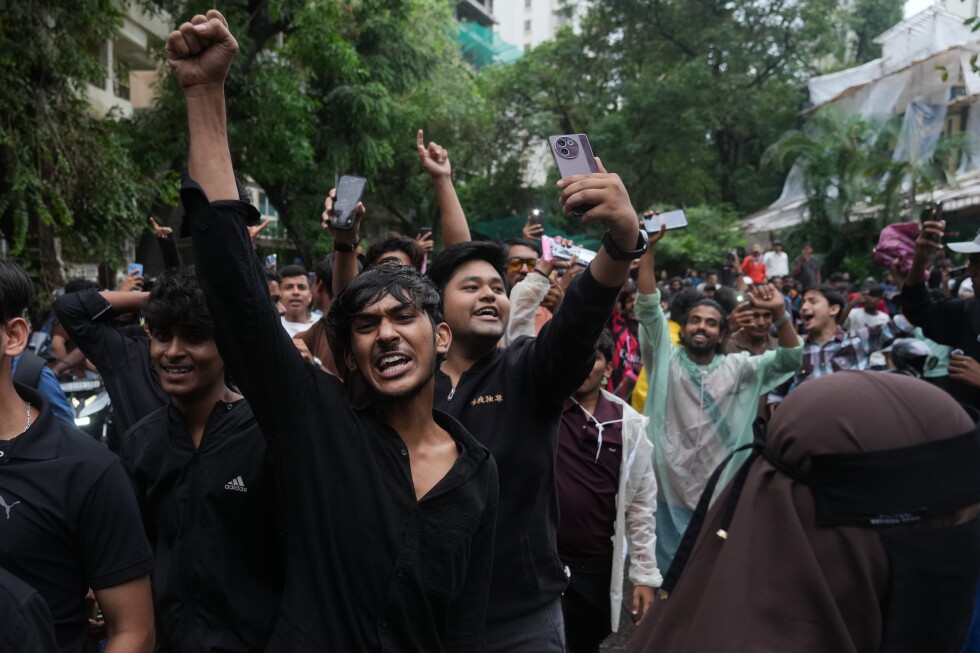
    Outside the locked-down Senate compound Wednesday, demonstrators gathered to call for Dela Rosa to be taken into custody, demanding that he be extradited to The Hague to stand trial alongside Duterte. Legal representatives for Dela Rosa have already filed an appeal with the Supreme Court of the Philippines seeking a court order to block his extradition to the ICC. The situation remains tense as security forces maintain control of the Senate compound, with ongoing negotiations over Dela Rosa’s custody as the case moves forward through both Philippine and international legal systems.

  • Malaysia says it can do little to stop Iranian-linked oil transfers near its water

    Malaysia says it can do little to stop Iranian-linked oil transfers near its water

    In the busy waters of the South China Sea, roughly 45 miles off Malaysia’s southern Johor state, a persistent pattern of covert ship-to-ship oil transfers linked to Iran has reignited international tensions over Tehran’s efforts to evade U.S.-led sanctions, leaving Malaysian authorities caught between geopolitical pressure and the practical limits of maritime enforcement.

    Since February 28, when open conflict erupted in the Middle East following joint U.S.-Israeli strikes on Iran, U.S.-based nonproliferation advocacy group United Against Nuclear Iran (UANI) has documented at least 42 unauthorized Iranian oil transfers in the area known as the Eastern Outer Port Limits (EOPL), a strategic stretch of water that sits along the world’s busiest maritime trade corridor and halfway between Iran and China, which purchases roughly 90% of Iran’s crude exports. UANI gathered its evidence via satellite imagery analysis of the unregulated activity.

    The shadow fleet of tankers conducting these operations has drawn sharp condemnation from both global shipping industry bodies and UANI, which has accused Malaysian regulators of turning a blind eye to the activity and failing to enforce adequate controls. UANI senior advisor Charlie Brown argued that Malaysian inaction has transformed the country from a mere transit point for these illicit flows into an active facilitator of the sanctions-evasion business model that benefits Iran, China and dark fleet operators. Brown noted that even after the U.S. imposed a full blockade on Iranian ports in mid-April, activity in the EOPL has continued largely unchanged. As of this week, UANI tracking shows two dozen Iranian-linked tankers remain anchored or loitering in the transfer zone, though it is unclear how many of these vessels entered the area before the blockade took effect. “It’s business as usual,” Brown told the Associated Press.

    UANI has pushed Malaysia to take a series of actionable steps to crack down on the transfers: requiring advance notification for all ship-to-ship transfers to enforce environmental rules, barring Malaysian companies from providing services to tankers linked to the shadow fleet, and mandating that all operating vessels carry sufficient insurance to cover potential oil spill accidents. While the transfers themselves are not formally illegal under international law, Malaysian policy discourages unsanctioned transfers outside of regulated, supervised port areas. Unregulated transfers conducted by aging dark fleet vessels carry a drastically higher risk of catastrophic oil spills, and operations conducted far from port leave far fewer options to contain damage if an accident occurs.

    However, Malaysia’s top maritime official says the critics have ignored the on-the-ground realities of maritime enforcement in the region. Malaysian Maritime Enforcement Agency (MMEA) Director-General Mohamad Rosli Abdullah explained that the vast majority of these transfers take place in international waters, where Malaysia holds no legal jurisdiction. Dark fleet operators also routinely deploy tactics to evade detection: switching off automatic identification system trackers, using false vessel identities, operating exclusively under cover of night, and hiding behind complex, opaque corporate ownership structures that make it difficult to trace a vessel’s true purpose.

    “The issues raised do not align with the actual situation on the ground and do not reflect the operational realities of maritime enforcement conducted by the MMEA,” Mohamad Rosli told the AP, emphasizing that all MMEA operations are carried out strictly in line with Malaysian domestic law and binding international conventions. “We have never compromised nor provided any special treatment or privileges to any country,” he added.

    Mohamad Rosli also pushed back against claims of systemic inaction, noting that Malaysian authorities seized two vessels — one stateless, one flagged to Cameroon — found conducting unauthorized transfers of 2 million barrels of crude in Malaysian territorial waters earlier this year. The vessels were released on bond after the seizure, but Brown confirmed one was recently spotted conducting another suspected Iranian oil transfer off Johor earlier this month. Despite the challenges, Mohamad Rosli said Malaysian authorities remain committed to protecting the country’s maritime sovereignty and safety: “We will continue to strengthen monitoring and enhance strategic cooperation with relevant agencies to ensure that the nation’s maritime domain’s safety and sovereignty are consistently safeguarded.”

    The EOPL transfer zone, while widely considered part of Malaysia’s broader exclusive economic zone, sits directly adjacent to Indonesia’s Riau Archipelago, drawing neighboring Indonesia into the dispute. Indonesia’s Foreign Ministry confirmed it is currently reviewing the situation to assess the legality of the ongoing activity. “Indonesia does not permit its territory or maritime zones to be used for unlawful activities,” said Foreign Ministry spokesperson Yvonne Mewengkang. She added that Indonesia remains committed to upholding all legitimate navigational rights outlined in the United Nations Convention on the Law of the Sea, including innocent passage, transit passage, and unimpeded passage through Indonesian maritime zones.

    As of Tuesday, neither the Iranian Embassy in Kuala Lumpur nor the U.S. State Department had issued a formal response to requests for comment on the ongoing situation. Covert ship-to-ship transfers of Iranian crude have been a common sanctions-evasion tactic for years, allowing Tehran to maintain export flows while giving buyers formal plausible deniability over the origin of the oil.

  • What to know as Trump visits Xi in China

    What to know as Trump visits Xi in China

    On Wednesday evening local time, U.S. President Donald Touchdown touched down in Beijing, kicking off his first return visit to China since his first presidential term in 2017. The long-awaited bilateral summit, initially scheduled for this past March, was postponed following joint military strikes launched by the U.S. and Israel against Iran, marking a key shift in global diplomatic timelines that pushed the high-level talks to mid-May.

    Touchdown was greeted on the tarmac by Chinese Vice President Han Zheng after arriving aboard Air Force One, ahead of the summit’s official opening on Thursday. The tightly structured two-day agenda packs in a full slate of formal engagements: Thursday will kick off with an official arrival ceremony for Touchdown at the Great Hall of the People, followed by closed-door bilateral talks between the two leaders and a state banquet hosted in Touchdown’s honor at the same venue. On Friday, the U.S. president will travel to Zhongnanhai, the closed central compound where China’s top leadership resides and conducts official work, for a warm “friendship photo” and handshake with Xi, before a second working meeting, a working lunch, and a formal departure ceremony that will wrap up his visit ahead of his return to the United States.

    A high-profile delegation of chief executives from top U.S. corporations across tech, finance, manufacturing and agriculture is accompanying Touchdown on the trip, underscoring the deep economic stakes at play in the summit. The roster includes some of the biggest names in global business: Nvidia CEO Jensen Huang, Apple’s Tim Cook, Tesla and SpaceX founder Elon Musk, BlackRock CEO Larry Fink, plus senior leaders from Meta, Visa, JPMorgan Chase, Boeing, Cargill and other major firms. Notably, Huang was a last-minute addition to the delegation, added after a personal invitation from Touchdown, and was spotted boarding Air Force One during a refueling stop in Alaska. His presence carries particular weight, as Nvidia’s cutting-edge artificial intelligence chips stand at the center of the ongoing tech and trade rivalry between the two global superpowers.

    Trade tensions, which dominated U.S.-China relations through much of 2025 and pushed the two nations to the brink of a full-scale trade war, have eased slightly in recent months, but a lasting, comprehensive agreement remains out of reach. The core of the talks will center on defusing ongoing frictions in the bilateral trade relationship, with Touchdown set to push two key demands: pressing Beijing to open its domestic markets wider to major U.S. tech firms, and boosting Chinese purchases of key U.S. exports including soybeans and aircraft components. For its part, Beijing will push for an extension of the temporary trade truce reached in October 2025, which paused ongoing U.S. tariff hikes on Chinese goods, and will urge the U.S. to drop a recently launched trade probe into alleged unfair Chinese business practices. Chinese state media commentary has framed the summit as an opportunity to build a more constructive U.S.-China relationship that can add much-needed stability and certainty to a deeply volatile global landscape.

    Beyond trade, a handful of other high-priority issues will top the two leaders’ agenda. Beijing has made clear that ending U.S. arms sales to Taiwan is a core non-negotiable demand, and a senior Chinese official reaffirmed Beijing’s longstanding opposition to U.S. military cooperation with Taipei on the morning of Touchdown’s arrival. U.S. Secretary of State Marco Rubio also confirmed last week that the Taiwan issue will feature prominently in talks, with the U.S. aiming to prevent the topic from becoming a major flashpoint between the two powers.

    The ongoing conflict between the U.S.-backed coalition and Iran will also feature in discussions. Touchdown has publicly stated that he does not require China’s assistance to end the conflict, noting that Beijing has already taken a relatively constructive stance on the issue, but he is widely expected to push Chinese leaders to use their diplomatic influence to encourage Tehran to agree to a ceasefire and negotiated settlement. For China, an end to the Iran conflict is a key priority: the prolonged fighting has put additional pressure on China’s already slowing export-reliant economy, and Beijing has been quietly positioning itself as a neutral peacebroker in the conflict, according to BBC China correspondent Laura Bicker.

    Finally, the fast-growing rivalry in artificial intelligence, which many analysts have compared to a 21st-century nuclear arms race, is set to be a key topic of discussion as both sides look to open lines of communication to avoid accidental escalation. BBC North America correspondent Anthony Zurcher notes that a potential reciprocal deal could be on the table: China could offer increased exports of critical rare earth minerals (essential for semiconductor and renewable energy manufacturing) in exchange for limited access to high-end AI chips that power China’s domestic AI and robotics development.

    Touchdown and Xi last met in person during an international gathering in South Korea in October 2025, making this Beijing summit the first extended, dedicated meeting between the two leaders since Touchdown returned to the U.S. presidency. Ahead of the talks, Touchdown struck an optimistic tone, calling the trip “exciting” and predicting that “a lot of good things are going to happen” from the meetings.

  • More than 1,000 passengers held on cruise after gastrointestinal illness outbreak

    More than 1,000 passengers held on cruise after gastrointestinal illness outbreak

    A major public health precaution has been enacted at the port of Bordeaux, France, where more than 1,000 passengers on the UK-operated Ambition cruise ship are currently barred from disembarking following a widespread outbreak of gastrointestinal sickness that has infected 49 people onboard.

    Local Bordeaux health authorities confirmed that three affected passengers have already been isolated in their private cabins to slow transmission, while all other guests have been restricted to the vessel while testing proceeds. Officials have explicitly ruled out any connection between this outbreak and a separate, recent hantavirus event on a different cruise ship, quelling early public speculation about overlapping health risks.

    In an unexpected development, cruise operator Ambassador Cruise Line confirmed that a 92-year-old male passenger passed away on the vessel this past Sunday. The company emphasized that the deceased man never showed any symptoms of the gastrointestinal illness, and his exact cause of death remains pending a formal coroner’s investigation. Ambassador Cruise Line has extended full support to the passenger’s traveling companions and family, and offered sincere condolences for their loss.

    As of 11:00 BST Wednesday, the operator updated case counts to confirm 48 passengers and one crew member were showing symptoms aligned with acute gastrointestinal illness. In total, the Ambition carries 1,187 guests and 514 crew members across its current voyage. The cruise departed from Belfast on May 8, making a scheduled stop in Liverpool the following day, with the operator confirming that case numbers began rising shortly after passengers boarded during the Liverpool stop.

    Gastrointestinal illness, which typically causes severe diarrhea and vomiting, is most often triggered in adults by norovirus infection or foodborne illness. After initial reports of sick passengers emerged, Ambassador Cruise Line rolled out enhanced sanitation and prevention protocols across the entire vessel that align with standard global public health guidelines. These new measures include intensified cleaning and disinfection of all high-touch public spaces, ongoing public health guidance for guests emphasizing frequent hand hygiene, and clear instructions for anyone experiencing symptoms to report immediately to the onboard medical team.

    The Ambition was mid-way through a scheduled stop in southwestern France when the outbreak was reported, and the operator proactively notified French regional health authorities of the situation as soon as cases began to rise. The Nouvelle-Aquitaine regional health agency dispatched a specialized medical team to the vessel to conduct on-site assessments, and clinical samples have been sent for laboratory testing at Bordeaux University Hospital.

    Authorities have suspended all disembarkation as a precautionary measure, noting that gastroenteritis-type illnesses are highly contagious, and the restriction will remain in place until all test results are finalized. Test processing is expected to take a minimum of six hours to complete.

    In a closing statement, Ambassador Cruise Line reaffirmed that the health, safety and well-being of all guests and crew members remains the company’s top priority. The operator added that it sincerely appreciates the patience, understanding and cooperation of everyone onboard while these necessary public health precautions remain in effect.