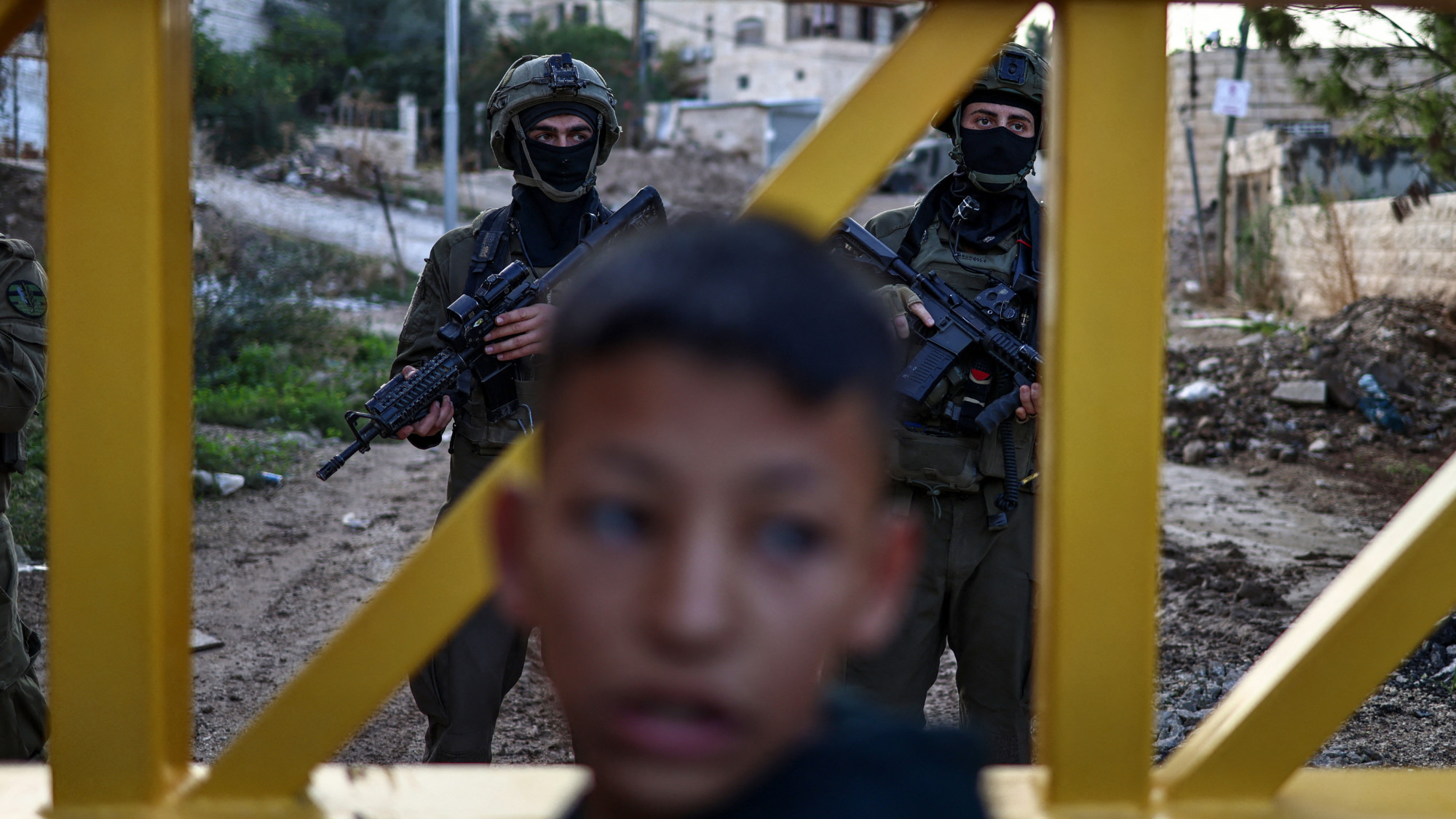
On Tuesday, a spokesperson for the United Nations Children’s Fund (UNICEF) issued a stark, alarming report on the mounting humanitarian crisis facing Palestinian children in the Israeli-occupied West Bank, revealing that since the start of 2025, Israeli security forces have killed an average of no fewer than one Palestinian child every week.
James Elder, the UNICEF spokesperson speaking on the crisis, confirmed that at least 70 Palestinian children have been killed since January 2025, with hundreds more left with life-altering injuries. He emphasized that children are paying what he called an “intolerable price” for the rapid escalation of Israeli military operations and repeated violent attacks carried out by Israeli settlers against Palestinian communities. To date, 850 children have been wounded in violence in the territory, and the vast majority of these injuries are the result of live ammunition fire, according to UNICEF data.
In a breakdown of the threats facing children, Elder noted that the rising civilian casualties are unfolding alongside a historic surge in violent attacks by Israeli settlers against Palestinian communities. Documented assaults targeting children alone include a range of brutal acts: pepper spray attacks, severe beatings, stabbings and shootings. Beyond direct violence, children also face a growing risk of arbitrary arrest and prolonged detention by Israeli forces. Current data shows at least 347 Palestinian children are currently held in Israeli military detention, all detained on alleged security-related offenses.
According to international children’s rights organization Save the Children, Palestinian children remain the only group of children globally that are systematically prosecuted through Israeli military court systems, rather than civilian juvenile justice frameworks. Of the 347 detained children, more than half – 180 – are being held under administrative detention, a long-controversial Israeli policy that permits the imprisonment of Palestinians without formal charge or public trial, with detention terms that can be renewed indefinitely.
Multiple testimonies collected by leading international and local human rights groups, corroborated by independent media reporting, detail consistent patterns of inhumane treatment against detained Palestinian children. Accounts from released detainees document widespread abuse including intentional starvation, physical beatings, sexual violence and other cruel, inhumane or degrading treatment. This systemic risk of detention was expanded further in late 2024, when the Israeli parliament passed a controversial piece of legislation that legally permits the detention of children as young as 12 years old.
Elder stressed that the violent attacks and human rights violations targeting children are not random, isolated incidents. Instead, he argued, they form part of a deliberate, wider pattern of violations that target not just individual children, but their basic human rights, their homes, their schools and the critical infrastructure that their communities rely on to function. Over recent years, Israeli movement restrictions have progressively cut off Palestinian communities in the West Bank from access to basic necessities including clean water, education, safe shelter and emergency healthcare, while severely limiting freedom of movement across the territory.
“What is unfolding is not only an escalation in violence against Palestinian children; it is the steady dismantling of the conditions children need to survive and grow,” Elder told reporters. Education, he added, has become a specific target of sustained assault, turning what should be a routine daily trip to school for thousands of West Bank children into a dangerous journey marked by constant fear.
In 2025 alone, UNICEF has documented 99 separate incidents that have disrupted access to education across the West Bank. These incidents include the killing, detention and wounding of student and education staff, the forced demolition of school buildings, the repurposing of educational facilities for Israeli military use, and widespread restrictions that bar children from reaching their places of study. “Schools, which should be places of safety and stability, are increasingly becoming sites of fear,” Elder said. “Attacks on schools and the denial of children’s access to education are grave violations against children with long-term consequences for their safety, wellbeing, and future.”
Beyond violence and restricted access to services, Elder also drew attention to the rapidly accelerating rate of forced displacement of Palestinian communities in the West Bank. Between January and April 2025 alone, more than 2,500 Palestinians have been forcibly expelled from their homes, over 1,100 of whom are children. This four-month total already exceeds the full-year displacement figures recorded for all of 2024. Critical Palestinian water infrastructure, including community sanitation systems and agricultural irrigation networks, has also been repeatedly targeted for destruction by Israeli forces and settlers.
“This has serious implications for both the Palestinian economy and children’s health, hygiene, and dignity,” Elder said. “Taken together, these patterns reveal an overarching reality: children are being targeted both through direct violence, and through the dismantling of essential systems and services. Their suffering cannot be normalised.”
This report was originally brought to audiences by Middle East Eye, a media outlet that provides independent, in-depth coverage of the Middle East, North Africa and surrounding regions.