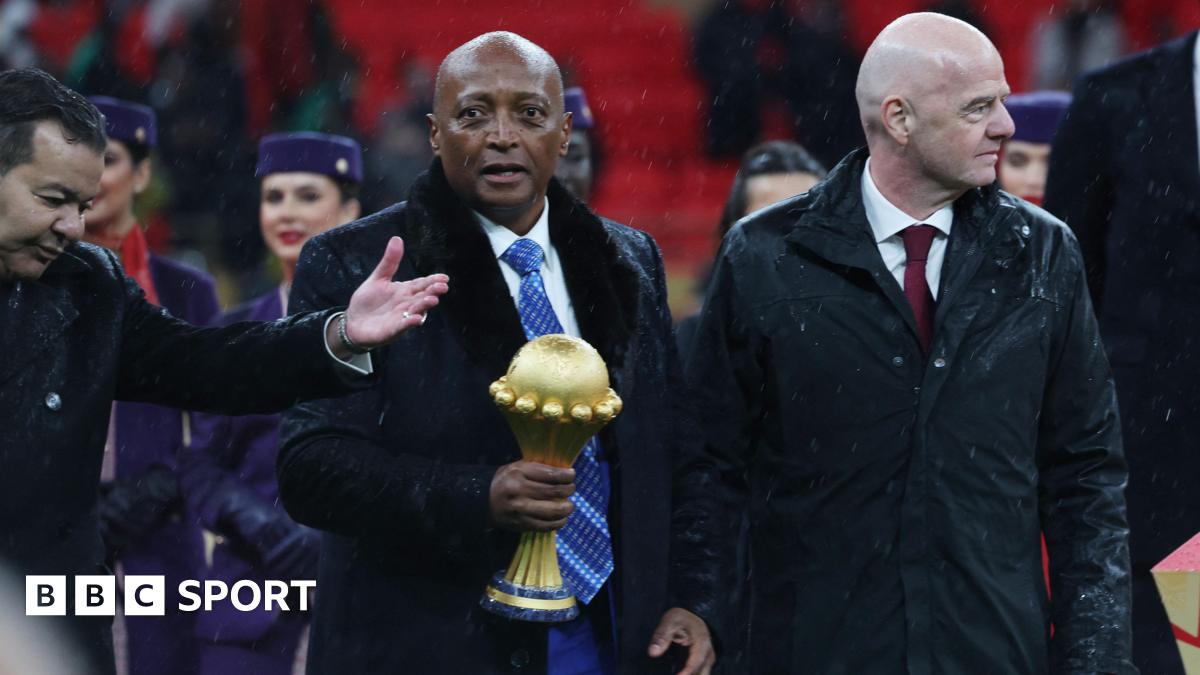
The 2025 Africa Cup of Nations (Afcon) final in Morocco remains one of the most contentious episodes in African football history, and the global sporting world is now waiting on a final ruling from the Court of Arbitration for Sport (CAS) to resolve the ongoing dispute. What began as a tense match between hosts Morocco and defending hopeful Senegal has spiraled into a crisis that has tested the credibility of the Confederation of African Football (Caf), prompting the governing body to implement sweeping changes to prevent future chaos.
On match day in January, Senegal secured a 1-0 extra-time victory and were immediately crowned champions on the pitch, with star forward Sadio Mane poised to lift his second consecutive continental title. But the outcome was overturned just two months later by a Caf appeal board, which stripped Senegal of the trophy and awarded it to Morocco. The decision came in response to Senegal’s players walking off the pitch in protest during second-half injury time, when referee Jean-Jacques Ndala awarded Morocco a controversial penalty following an extended VAR review that critics have called the longest in the tournament’s history.
The final was marred by multiple other unseemly incidents: stadium security clashed with visiting fans, and Morocco faced accusations of unsportsmanlike conduct in the so-called “towelgate” affair, where players and ball boys repeatedly moved the Senegal goalkeeper’s training towel to disrupt his focus. In the wake of the fallout, Caf president Patrice Motsepe has acknowledged the governing body’s missteps, confirming that the organization has already moved to address systemic deficiencies that allowed the chaos to unfold.
“We’ve done good work in terms of building the confidence and the trust amongst the football community of our referees and of our VAR,” Motsepe told BBC Sport Africa on the sidelines of the Africa Forward Summit in Nairobi. “But there are still these challenges and we’ve recognised what the deficiencies were that led to the unfortunate incidents we had in Morocco. We’ve introduced new laws, new regulations which will ensure that doesn’t happen again.”
Despite Motsepe’s claim that African football emerged from the tournament “stronger than ever before”, the controversial ruling has dealt significant damage to Caf’s efforts to rebuild its international reputation. Former England international midfielder Nigel Reo-Coker was among the most high-profile critics, describing the decision to strip Senegal of the title as an embarrassment that opens the door for global football bodies to dismiss African football governance.
The Senegalese Football Federation has repeatedly called the outcome a “robbery” and formally challenged the Caf ruling at CAS, where a final decision is imminent. Motsepe, who was re-elected unopposed for a second term as Caf president in March 2024, has already completed a diplomatic outreach tour to both nations to ease tensions and says the organization will abide by whatever ruling CAS delivers.
“Whatever decision comes, we will respect and implement,” Motsepe said.
The controversy has reignited with fresh debate in recent weeks after Caf retained Ndala, the referee who oversaw the chaotic 2025 final, as the official for the first leg of the 2025 African Champions League final. Both participating clubs — South Africa’s Mamelodi Sundowns and Morocco’s AS FAR — have publicly voiced concerns over the appointment, but Motsepe defended the decision, noting that the independent Caf refereeing committee cleared Ndala after a full review that found his performance aligned with global best practices.
“The referee’s committee is independent. We don’t get involved and should not get involved in identifying who should ref at which match,” Motsepe explained. “I’ve been told that both the football clubs have expressed their reservations, but we have to respect the decisions that are taken by this independent body. The very specific thing is to continue training our referees. Some of our referees are as good as the best in the world.”
Beyond the 2025 Afcon fallout, Motsepe also addressed preparations for the 2027 Afcon, which will make history as the first edition of the tournament co-hosted by three nations: Kenya, Tanzania and Uganda. The tournament will mark the first return of Afcon to East Africa since Ethiopia hosted the event in 1976. A recent Caf inspection flagged ongoing delays to stadium upgrades and critical transport infrastructure across all three host nations, but Motsepe expressed full confidence that the event will be a success, pointing to unprecedented commitment from the three national governments. A permanent Caf team is based in the region to oversee daily progress on preparations.
In Kenya, preparations are proceeding against the backdrop of an ongoing governance dispute within the Football Kenya Federation (FKF). Nine of the federation’s 12 executive committee members have called for FKF president Hussein Mohammed to step down over allegations of financial misconduct, claims Mohammed has rejected, blaming a power grab led by his deputy, former Inter Milan and Kenya international McDonald Mariga. Both Fifa and Caf have requested formal clarification on the dispute, and Motsepe said he is confident the issue will be resolved in line with global football governance statutes. Kenya was previously banned from international football for nine months in 2022 over similar administrative irregularities, a suspension that was lifted in late 2022.